
Experts Matter. Find Yours.
Connect for media, speaking, professional opportunities & more.

In Georgia governor's race, women could cast deciding vote
With the 2018 midterm elections looming less than a month away, Georgia gubernatorial candidates Stacey Abrams and Brian Kemp are neck-and-neck according to the latest Atlanta Journal Constitution/Channel 2 poll. In an election year with record voter registration numbers in the Peach State—and amid allegations of voter suppression—women voters could cast the deciding vote. But for which side? To find the answer, says Dr. Mary-Kate Lizotte, associate professor of political science at Augusta University, look to the issues. “Women, in particular Republican and Independent women, differ from men of the same party on the issues of government spending on childcare, public schools, welfare, social security, and aiding the homeless,” Lizotte said. “Women typically favor increased spending on the issues.” Examining data from 1994 to 2008, Lizotte, an expert on gender differences relating to public opinion, found that women are also more liberal than men of the same party on the issues of gay rights, government-guaranteed standard of living, and on the provision of more government services. “For races where these issues have become salient, it might be the case that women would be more likely to be motivated to turn out to vote and to vote for candidates that have liberal positions on these issues,” she said. That could be excellent news for the Abrams campaign, which has emphasized public education funding. “Women in Georgia who believe in increasing public education funding should be more likely to vote for Abrams,” Lizotte said. “This may also be the case for several House races where the issue of tax reform and tax cuts has become salient.” The confirmation of Justice Brett Kavanaugh to the Supreme Court earlier this month could also sway election results, albeit in less clearly defined ways. Lizotte said the confirmation could either motivate conservative women voters to turn out or, alternatively, dissuade Republican women with Pro-Choice leanings from voting entirely. The expectation is a little more cut-and-dry for liberal women voters. “The Kavanaugh confirmation is just one more reason to expect an increase in voter turnout among liberal women,” she said. “The Women's March in 2017 and 2018 along with the increase in female interest in running for office all indicate that the Trump election and presidency had already galvanized liberal women voters.” Finally, Lizotte said, although white women are divided politically—with college-educated white women swaying Left and those without a college degree favoring the Right—there was no such division among African American women voters. “And as we've seen, African American women turnout at high rates and can influence elections like the Alabama Senate race,” she said. Dr. Lizotte is available to discuss: "Gender gaps" on various issues leading up to the 2018 midterm elections The role of women voters in State and National elections The perception of voters, in terms of public opinion, toward candidates in Georgia's gubernatorial election.


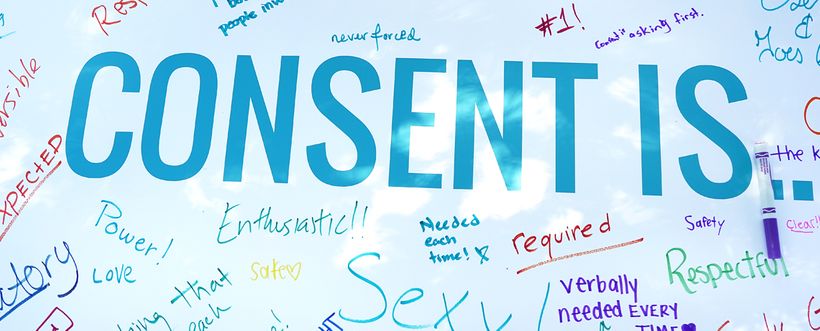
Women often don't label their sexual assaults as rape. Our experts can explain.
Many sexual violence survivors do not label their experiences as rape but instead use more benign labels, such as “bad sex” or “miscommunication.” Laura C. Wilson, an assistant professor of psychology at the University of Mary Washington, led a review of 28 academic studies to estimate how often women who’ve been sexually assaulted do not label their experience as rape. Across the studies, the researchers find that 60.4 percent of women, on average, did not recognize their experience as rape even though it fit the definition — an unwanted sexual experience obtained through force or the threat of force or a sexual experience they did not consent to because they were incapacitated. “This finding has important implications because it suggests that our awareness of the scope of the problem may underestimate its true occurrence rate, depending on the type of measurement,” the authors write. “This impacts policy reform, allocations of mental health services, survivors’ perceptions of their experiences, and society’s attitudes toward survivors.” For more information on this study, visit: http://journals.sagepub.com/doi/abs/10.1177/1524838015576391 Laura C. Wilson is available to speak with media regarding this topic and study. To contact her, simply click on her icon to arrange an interview.



Out of Office: New Baylor Management Study Examines Relationship Between Stress and Remote Work
Researchers say people with high emotional stability and autonomy are best suited for remote-work opportunities Many U.S. employees believe working from home – or at least away from the office – can bring freedom and stress-free job satisfaction. A new Baylor University study says, “Not so fast.” The study, published recently in the European Journal of Work and Organizational Psychology, examines the impact of remote work on employee well-being and offers several strategies to help managers provide remote-work opportunities that are valuable to the employee and the company. “Any organization, regardless of the extent to which people work remotely, needs to consider well-being of their employees as they implement more flexible working practices,” the researchers wrote. A total of 403 working adults were surveyed for the two studies that made up the research, said lead author Sara Perry, Ph.D., assistant professor of management in Baylor University’s Hankamer School of Business. The research team measured each employee’s autonomy (the level of a worker’s independence), strain (defined in this study as exhaustion, disengagement and dissatisfaction) and emotional stability. Emotional stability, Perry explained, “captures how even keeled someone is or, on the opposite end, how malleable their emotions are. An example would be if something stressful happens at work, a person who is high on emotional stability would take it in stride, remain positive and figure out how to address it. A person low on emotional stability might get frustrated and discouraged, expending energy with those emotions instead of on the issue at hand.” The research found that: • Autonomy is critical to protecting remote employees’ well-being and helping them avoid strain. • Employees reporting high levels of autonomy and emotional stability appear to be the most able to thrive in remote-work positions. • Employees reporting high levels of job autonomy with lower levels of emotional stability appear to be more susceptible to strain. Perry said the study contradicts past research that says autonomy is a universal need that everyone possesses. Per this research, those who are lower in emotional stability may not need or want as much autonomy in their work. “This lower need for autonomy may explain why less emotionally stable employees don’t do as well when working remotely, even when they have autonomy,” researchers wrote. In addition to their findings, the researchers offered several recommendations for managers who design or oversee remote-work arrangements. The research team advised managers to consider their employees’ behavior when deciding who will work remotely. “I would suggest managers look at employee behaviors, rather than for personality traits, per se,” Perry said. “For example, if someone does not handle stress well in the office, they are not likely to handle it well at home either. If someone gets overwhelmed easily, or reacts in big ways to requests or issues in the office, they are likely less well positioned to work remotely and handle that responsibility and stress.” Based on this study, individuals with high emotional stability and high levels of autonomy are better suited for remote work, but such candidates might not always be available. “If less emotionally stable individuals must work remotely, managers should take care to provide more resources, other than autonomy, including support to help foster strong relationships with coworkers and avoid strain,” they wrote. Managers might also consider providing proper training and equipment for remote work, including proper separation of work and family spaces, clear procedural and performance expectations and regular contact (virtual or face-to-face) with coworkers and managers. ABOUT THE STUDY “Stress in Remote Work: Two Studies Testing The Demand-Control-Person Model,” published in the European Journal of Work and Organizational Psychology, is authored by Sara Perry, Ph.D., assistant professor of management, Hankamer School of Business, Baylor University, Emily Hunter, Ph.D., associate professor of management, Hankamer School of Business, Baylor Univeersity, and Cristina Rubino, professor of management, David Nazarian College of Business and Economics, California State University Northridge. ABOUT BAYLOR UNIVERSITY Baylor University is a private Christian University and a nationally ranked research institution. The University provides a vibrant campus community for more than 17,000 students by blending interdisciplinary research with an international reputation for educational excellence and a faculty commitment to teaching and scholarship. Chartered in 1845 by the Republic of Texas through the efforts of Baptist pioneers, Baylor is the oldest continually operating University in Texas. Located in Waco, Baylor welcomes students from all 50 states and more than 80 countries to study a broad range of degrees among its 12 nationally recognized academic divisions. ABOUT HANKAMER SCHOOL OF BUSINESS Baylor University’s Hankamer School of Business provides a rigorous academic experience, consisting of classroom and hands-on learning, guided by Christian commitment and a global perspective. Recognized nationally for several programs, including Entrepreneurship and Accounting, the school offers 24 undergraduate and 13 graduate areas of study. Visit www.baylor.edu/business and follow on Twitter at www.twitter.com/Baylor_Business.




Ethics Quandary? Women in PR More Apt to Seek Allies Before Giving Execs Advice
Women in public relations are more likely than men to seek allies and form coalitions before they give ethics counsel to senior leaders, while men are more likely to rely on presenting research, according to a Baylor University study. The study also showed that while senior public relations executives in the study overall tend to use “rational approaches,” such as research, case studies and appeals about what is right and lawful, success depends on building relationships with colleagues in other departments so that they have backup when ethical issues arise. “A PR person can be the conscience, but are they listened to? Are they respected? Are they at the table?” one woman said. “You can be doing everything right, but if nobody is listening to you, it really doesn’t matter a whole lot. Except that you can sleep at night.” The study — “The Use of Influence Tactics by Senior Public Relations Executives to Provide Ethics Counsel” — is published in the Journal of Media Ethics. The article highlights the need for younger PR practitioners to seek out senior PR executives as mentors before and during confrontation of ethics issues, said lead author Marlene Neill, Ph.D., assistant professor of journalism, public relations and new media in Baylor’s College of Arts & Sciences and author of the book “Public Relations Ethics: PR Pros Tell Us How to Speak Up and Keep Your Job.” “What inspired us to conduct this research were findings from a study I conducted in 2016 with Millennials working in public relations,” Neill said. “Survey results indicated that Millennials did not feel prepared to provide ethics counsel, were unlikely to speak up and did not even expect to face ethical dilemmas. We decided to conduct this study to instruct them how to do this effectively based on the experiences of senior executives working in our industry.” Researchers conducted through in-depth interviews with an elite selection of 55 public relations executives, many of them with Fortune 500 companies. They included members of the *Public Relations Society of America (PRSA) College of Fellows and The Arthur W. Page Society, with the combined sample averaging 33 years in PR. They represented 19 states and industries including government, healthcare, telecommunications, financial services and energy. Interviewees discussed ways to exert influence, ethics training and whether they are of value as an ethics counselor. “Some see it as being of little use; some recommend the PR practitioner take a modest role in encouraging consideration of ethics among multiple leaders,” Neill said. But others felt strongly that they should be an “organizational conscience” when they think company actions might pose an ethical dilemma with troubling consequences. One reason to do so is that without “boat-rocking” with straightforward tactics an organization, some may turn outside the company by whistleblowing or leaking information to stakeholders, media or government officials. “Our study found that building relationships was critical for practitioners to ensure that other executives would listen to and respect their counsel,” Neill said. “That doesn’t mean they always won the debate, but relationship building has to do with building respect and trust.” While the interviewees’ most common approach to influencing was rational, followed by coalition-building, “some said they relied on persistence and assertiveness if they felt an issue was so objectionable they could not stay silent,” Neill said. “A few people turn to ingratiation, such as flattery.” When it comes to differences in how genders approach the role of ethics counselor, one reason women may recruit allies is that they tend to be outnumbered by men in the boardroom, Neill said. One woman said that “Going in force can help your case. But sometimes it can backfire . . . you know, if somebody wants to kill the messenger. But if several people come to you with the same messaging, I think you take notice.” Another woman said that she was “reprimanded for being so forthright. So, I didn’t do it that way anymore.” Some women were wary of using emotional appeals. Because of stereotypes about women being emotional in the workplace, “I probably erred in the other direction,” one woman said. Men, meanwhile, were more likely to prefer informational sources of power such as research and case studies, Neill said. But both genders said they ask questions, discuss, listen, share alternatives or solutions and recommend. A few men and women used more confrontational descriptions, such as saying, “We absolutely put our foot down” and “Tell them it’s wrong.” But in the case of women, “some of these more confrontational accounts were used in connection with allies or coalitions,” Neill said. In a few cases, men and women gave examples of resigning accounts or refusing to accept new clients if they decided the client’s business was not worth the ethical cost. Many interviewees said they had received ethics training through PRSA. A few said they had received training through their employer, college courses, personal study and mentors. A few pointed to their religious upbringing. Some of the more common ethics issues centered around communication, such as open disclosure of information, inaccurate information or sending fake letters to an editor. But others were business challenges, such as abusive behavior toward subordinates, misuse of public funds, smear campaigns and conflicts of interest. Neill said that because the study was limited to 55 individuals, a larger study and surveys of senior PR executives in other nations would be valuable. She and a colleague next plan to study to women’s leadership experiences. *PRSA College of Fellows is an exclusive group of approximately 350 senior professionals, each with a minimum of 20 years of experience in PR, Accreditation in Public Relations and recognition for distinguished careers. The Arthur W. Page Society is open by invitation to chief communications officers of Fortune 500 corporations and leading nonprofit organizations, chief executive officers of PR agencies and senior professors from business and communications schools. The study was funded by The Arthur W. Page Center for Integrity in Public Communication and supported by the PRSA Board of Ethics and Professional Standards and PRSA College of Fellows. Co-author is Amy Barnes, associate professor in the School of Mass Communications at the University of Arkansas at Little Rock and co-author of “Public Relations Ethics: PR Pros Tell Us How to Speak Up and Keep Your Job.” ABOUT BAYLOR UNIVERSITY Baylor University is a private Christian University and a nationally ranked research institution. The University provides a vibrant campus community for more than 17,000 students by blending interdisciplinary research with an international reputation for educational excellence and a faculty commitment to teaching and scholarship. Chartered in 1845 by the Republic of Texas through the efforts of Baptist pioneers, Baylor is the oldest continually operating University in Texas. Located in Waco, Baylor welcomes students from all 50 states and more than 80 countries to study a broad range of degrees among its 12 nationally recognized academic divisions. ABOUT BAYLOR COLLEGE OF ARTS & SCIENCES The College of Arts & Sciences is Baylor University’s oldest and largest academic division, with 25 academic departments and seven academic centers and institutes. The more than 5,000 courses taught in the College span topics from art and theatre to religion, philosophy, sociology and the natural sciences. Faculty conduct research around the world, and research on the undergraduate and graduate level is prevalent throughout all disciplines.


Ethical Leadership Can Have Negative Consequences, Baylor University Researchers Say
Coupled with stress, ethical leadership can lead to employee deviance and turnover Ethical leadership is a good thing, right? Certainly, management experts say. But ethical leadership can have negative consequences, too, according to new research from management faculty in Baylor University’s Hankamer School of Business. A 2018 Baylor study published in the Journal of Business Ethics reveals that ethical leadership compounded by job-hindrance stress and supervisor-induced stress can lead to employee deviance and turnover. The research reflects the thoughts of 609 employees who were surveyed across two studies. “If someone is an ethical leader but induces stress, our research shows that his or her employees will feel less support,” said lead author Matthew Quade, Ph.D., assistant professor of management. “Thus, employees who do not feel supported are more likely to consider leaving their jobs or engage in workplace deviance – things like coming in late to work, daydreaming, not following instructions or failing to be as productive as they could be.” Quade said that ethical leadership is a good thing and often beneficial in terms of employee resources. An example would be a trusted supervisor who listens to her employees and has her employees’ best interests in mind. The trouble comes, he said, when supervisor-induced stress or job-hindrance stress enters the picture. “When those stressors are added, there is a depletion of resources,” Quade explained. “Many of the gains or benefits from ethical leadership are negated.” What does stress-inducing ethical leadership look like? Quade said it could be as simple as supervisors setting expectations too high or, in the interest of “following all the rules,” not allowing for any deviation from a process, even if a shortcut, still within the bounds of behaving ethically, would deliver a desired result. The researchers wrote: “Ethical leadership can be an exacting process of sustaining high ethical standards, ensuring careful practice and enforcement of all rules and meeting leaders’ lofty expectations, all of which can consume time and energy and be perceived by employees as overly demanding or an obstacle to job performance.” As part of the study, those surveyed were asked to what extent they agreed or disagreed with the following statements: My supervisor makes it so that I have to go through a lot of red tape to get my job done. Working with my supervisor makes it hard to understand what is expected of me. I receive conflicting requests from my supervisor. My supervisor creates many hassles to go through to get projects/assignments done. Working with him/her thwarts my personal growth and well-being. In general, I feel that my supervisor hinders my personal accomplishment. I feel that my supervisor constrains my achievement of personal goals and development. Quade said his team in no way wants to discourage ethical leadership. Research consistently shows such leadership is very beneficial, he said. But this new research shows that there are boundaries to those benefits. “This places quite an onus on appropriately managing the stress that comes from the leader and the job, in efforts to most fully realize the potential of ethical leadership,” the researchers wrote. The study listed some tips and takeaways for organizations and leaders. They include: Strike a balance between promoting ethical behavior and providing resources to help employees meet those standards. Encourage employees in word and deed by reducing ambiguity in ethical dilemmas that might otherwise drain resources. Model fair and ethical behavior. Communicate efficient methods to meet standards and reduce unnecessary steps or procedures. Equip and train leaders to balance the demands of leading ethically while not overburdening their employees. ABOUT THE STUDY “Boundary Conditions of Ethical Leadership: Exploring Supervisor-Induced and Job Hindrance Stress as Potential Inhibitors” is published in the Journal of Business Ethics. Study authors are Baylor University Hankamer School of Business faculty members Matthew Quade, Ph.D., assistant professor of management; Sara Perry, Ph.D., assistant professor of management; and Emily Hunter, Ph.D., associate professor of management. ABOUT BAYLOR UNIVERSITY Baylor University is a private Christian University and a nationally ranked research institution. The University provides a vibrant campus community for more than 17,000 students by blending interdisciplinary research with an international reputation for educational excellence and a faculty commitment to teaching and scholarship. Chartered in 1845 by the Republic of Texas through the efforts of Baptist pioneers, Baylor is the oldest continually operating University in Texas. Located in Waco, Baylor welcomes students from all 50 states and more than 80 countries to study a broad range of degrees among its 12 nationally recognized academic divisions. ABOUT HANKAMER SCHOOL OF BUSINESS Baylor University’s Hankamer School of Business provides a rigorous academic experience, consisting of classroom and hands-on learning, guided by Christian commitment and a global perspective. Recognized nationally for several programs, including Entrepreneurship and Accounting, the school offers 24 undergraduate and 13 graduate areas of study. Visit www.baylor.edu/businessand follow on Twitter at twitter.com/Baylor_Business.


The Storm After the Storm: Scam Contractors Who Prey on Those Suffering After a Natural Disaster
‘The key is to get a lawyer to look at the contract before you sign it,’ Baylor legal expert says WACO, Texas (Oct. 11, 2018) – Following a natural disaster or strong storm like Hurricane Michael, there is usually a second wave of potential destruction – scam artists looking to line their pockets. “After any major weather-related incident, insurance adjusters and contractors swarm the affected area and, unfortunately, some are looking to take advantage of those in distress,” said Stephen Rispoli, L.L.M, J.D., assistant dean of student affairs and pro bono programs at Baylor Law School. As an attorney, he works with victims of insurance scams. Rispoli said most contractors are legitimate businesspeople helping neighbors rebuild. But there are the unscrupulous ones whose practices inflict financial and emotional pain on people already suffering from storm damage. “The primary result of these scams is financial loss,” Rispoli said. “The homeowners may pay much, much more than they should have to fix the damage, sometimes having to pay multiple contractors for the same work. Sadly, in some cases, homeowners could even lose their homes.” In this Q&A, Rispoli shares some tips to help those reeling from storm damage identify and avoid scammers. Q: Who are the most common victims? A: The most common targets are those in distress following a major storm, the elderly and the disabled. Q: How will scam artists approach a potential victim? A: Usually, contractors will approach homeowners they know have been affected. This happens as simply as the contractor driving through neighborhoods looking for damaged homes. Let’s say, for example, they see a damaged roof with a homeowner standing outside looking at it. They’ll quickly pull over and offer to tarp the roof to prevent damage. The homeowner, already distressed by the storm and the damage to the house, agrees. Once the tarp is on, the contractor then starts asking questions about insurance coverage, which insurance company has insured the house, and helpfully offering his or her opinion on how much it will cost to fix the damage. Unscrupulous contractors will try to take advantage of this situation by pressing the homeowner to sign a contract with them. I have even seen cases where the contractor left all the blanks in the form contract unfilled, including the work to be done and the price, saying things like, “Don’t worry about that, we’ll talk to your insurance company and get it all taken care of, just sign it.” Once the unscrupulous contractor has a signed contract, they can fill in the blanks at their leisure. At this point, they are in total control – they know how much the insurance company will pay, and they can try to squeeze the homeowner for more money by charging too much or with add-ons that may or may not be necessary. Q: What are some of the potential losses victims can suffer? A: Financially, victims could lose money by paying more – sometimes much more – than they should for repairs. Or, in extreme cases, they could even lose their homes. That could happen if the homeowner signs a contract with the contractor that contains a mechanic’s or materialman’s lien provision. Under these provisions, contractors can file a lien with the county for work done on the house to ensure payment. If the homeowner does not pay the contractor the amount owed under the contract, the contractor can seek to foreclose on the house to recover the amount owed. Q: What about dealing with the insurance company? A: It’s important that you cooperate with your insurance company and your adjustor. Call your insurance company as soon as you can. Waiting to file a claim may make the process take longer or complicate matters. You should be responsive to their requests, but don’t be afraid to ask questions if you have them. Be sure to take photographs of any damage or evidence of the storm if it’s safe to do so. After your initial conversation with your insurance company, the company will send an adjustor out and will give you a quote. However, after you’ve had two or three contractors come out and give you estimates, if the adjustor’s quote looks too low, don’t be afraid to ask for another adjustor to come out and give you a quote. You should feel comfortable with the process as you move forward. Q: Is it illegal or unethical for contractors to file liens? A: It is not necessarily unscrupulous for contractors to include a mechanic’s or materialman’s lien provision in the contract. Generally, creditors cannot foreclose on a person’s homestead in Texas. The purpose of a mechanic’s or materialman’s lien provision is to protect the contractor should the homeowner wrongfully refuse to pay for work done on a homestead. On large jobs where several thousands of dollars are at stake, the contractor may rightfully want to make sure that they can be paid for the job. Whether they are appropriate can only be decided on a case-by-case basis. Q: Are there red flags people should look for when presented with a contract? A: Do not sign a contract you are not comfortable with. There are several red flags to look for: pressure to sign a contract, giving you little time to think about it, refusing to let you take the contract to a lawyer, and asking to collect the money directly from the insurance company or pressuring you to give them the check from the insurance company. Q: How do people know if the repair costs presented to them are too high? A: Be sure to get written estimates from several (at least three) contractors. By getting three estimates, you’ll have a better idea of how much the repair should cost. Any estimates that are way lower or way higher than the others are good indications that something is off. If that happens, get another estimate from a different contractor. Do not be afraid to ask contractors to come give you an estimate. It is a normal part of their job, and good contractors will not mind taking the time to do it. Q: How do you know if a contractor is legitimate? A: Do your homework on the contractors. Ask for references and call them, and check with the Better Business Bureau. Be cautious when dealing with contractors who are not from your area, and extra cautious if they are not from Texas or will not provide local references. Q: Contractors often ask for upfront money, don’t they? A: Once the contract is signed and the work begins, be sure to control the money. The contractor will likely ask you to pay some of the contract up front so that they can begin to purchase materials and hire the crew to work on your repair. Try to pay as little as possible. You do not want to give them the bulk of the money up front, because then the incentive to get the job done quickly is diminished. After the job starts, ask the contractor to give you, in writing, progress reports when they ask for more money. Do not pay more than the progress report. Do not give the contractor the final payment until all the work is done. Q: If someone feels they’ve been taken advantage of, are there legal steps they can take? A: The key here is to get a lawyer to look at the contract before you sign it. Once the contract is signed, it will be difficult for a lawyer to undo the damage. If the contractor is trying to foreclose on the home using a mechanic’s or materialman’s lien, a lawyer may be able to save your home. There are several Texas Constitutional and statutory protections for homeowners. If the contractor did not strictly follow the steps necessary to properly attach a lien, a lawyer may be able to keep the foreclosure from happening. ABOUT BAYLOR UNIVERSITY Baylor University is a private Christian University and a nationally ranked research institution. The University provides a vibrant campus community for more than 17,000 students by blending interdisciplinary research with an international reputation for educational excellence and a faculty commitment to teaching and scholarship. Chartered in 1845 by the Republic of Texas through the efforts of Baptist pioneers, Baylor is the oldest continually operating University in Texas. Located in Waco, Baylor welcomes students from all 50 states and more than 80 countries to study a broad range of degrees among its 12 nationally recognized academic divisions. ABOUT BAYLOR LAW SCHOOL Established in 1857, Baylor Law was one of the first law schools in Texas and one of the first west of the Mississippi River. Today, the school has more than 7,400 living alumni. It is accredited by the American Bar Association and is a member of the Association of American Law Schools. Baylor Law has a record of producing outstanding lawyers, many of whom decide upon a career in public service. Baylor Law boasts two governors, members or former members of the U.S. House of Representatives and the U.S. Senate, two former directors of the FBI, U.S. ambassadors, federal judges, justices of the Texas Supreme Court and members of the Texas Legislature among its notable alumni. In its law specialties rankings, U.S. News & World Report ranked Baylor Law’s trial advocacy program as one of the top 5 in the nation. Baylor Law School also is ranked No. 50 in the magazine’s 2019 edition of “America’s Best Graduate Schools.” The National Jurist ranks Baylor Law as one of the “Best School for Practical Training” and No. 4 in the nation in its most recent “Best Law School Facilities” listing. The Business Insider places Baylor Law among the top 50 law schools in the nation. Baylor Law School received the 2015 American Bar Association Pro Bono Publico Award, making it only the third law school in the nation to be honored with the award since the award’s inception in 1984. Learn more at baylor.edu/law.

Sainthood and the legacy of Oscar Romero in El Salvador
If you’re covering the Canonization of Archbishop Oscar Romero, consider Rick Jones, who’s spent his entire career working on poverty and social justice issues in El Salvador. Rick knows first-hand that Romero’s messages are as relevant and necessary as ever. As he puts it: Changing repressive policies, calling on gangs and organized criminal groups to stop the killing, denouncing human rights abuses and caring for the victims is as urgent today as when Romero was archbishop. Based in El Salvador for more than 20 years, Rick works closely with the Church in Latin America on justice issues, including migration, internal displacement and youth violence. He understands well the poverty, violence and political divisions that compelled Romero to defend human rights in the face of death threats and even opposition from his colleagues in the Church. Oscar Romero was Archbishop of San Salvador until he was brutally assassinated on March 24, 1980 while celebrating Mass in the chapel of the Divine Providence cancer hospital where he lived. More than three decades later he was declared a martyr of the Church, killed out of hatred of the faith, and was beatified on May 23, 2015. Rick is available to speak with media regarding Romero’s legacy and what his sainthood represents for El Salvador and Latin America. To arrange an interview, simply click on his icon and we will be in touch immediately.

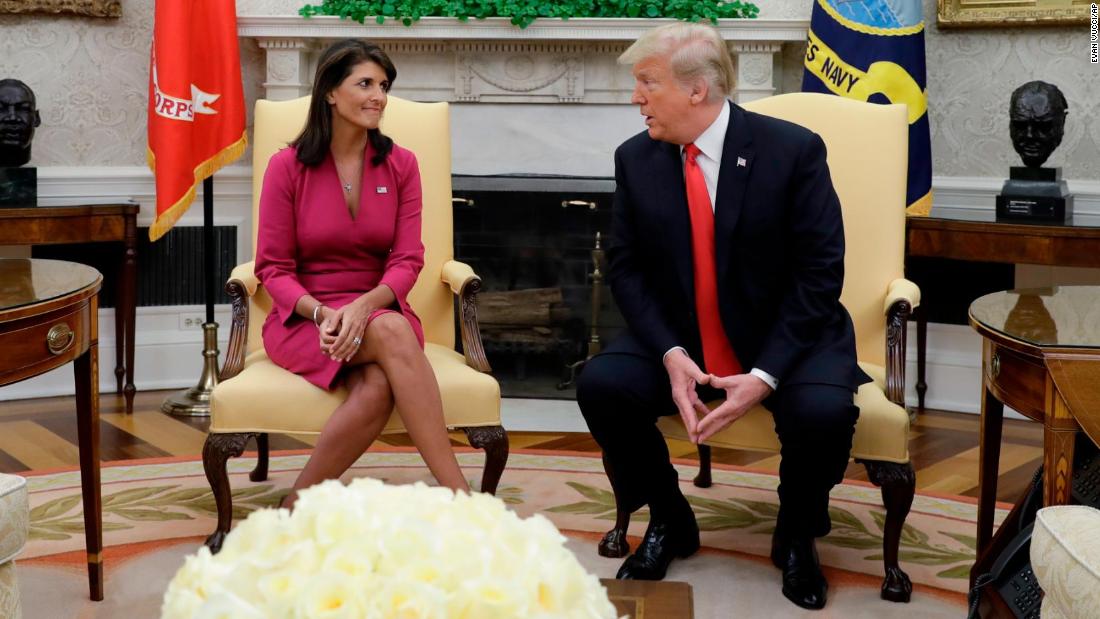
Ivanka to the United Nations? Ask our experts if it is possible!
One of the few shining stars is fading from the Washington skyline – and Nikki Haley’s departure as America’s Ambassador to the United Nations has the beltway speculating on her replacement. President Trump had eyebrows raised and tongues wagging when he trial-ballooned his daughter Ivanka as a suitable replacement. There’s also talk of Dina Powell, the well respected former Deputy National Security Advisor for Strategy to President Donald Trump. But who else is on the list and how key of a role is this as America reshapes its foreign policy. There are a lot of questions and a lot of educated guessing going on right now and that’s where the experts from Cedarville University can help. Dr. Glen Duerr’s expertise and research interests include nationalism and secession, comparative politics and international relations theory. Dr. Duerr is available to speak to media regarding this topic – simply click on his icon to arrange an interview.


Cloudhopper - What is it and should we worry?
Earlier this week, the Department of Homeland Security issued a warning that a Beijing based group of hackers -dubbed ‘cloudhopper’ was mounting a potential cyber-attack on American based institutions. The Chinese government has denied these claims vigorously and stated that China does not support hacking. So, what is cloudhopper? What businesses and institutions are most vulnerable? And does America need to increase its focus on cyber-security and digital threats? There are a lot of questions – and only a few leading experts who can help explain the situation. That’s where Cedarville can help. Dr. Seth Hamman is an assistant professor of computer science at Cedarville. Seth is an expert in cybersecurity education. Dr. Hamman is available to speak with media – simply click on his icon to arrange an interview.
Bigly: the effect of Trump's rhetoric on national security
Going against the findings of his own intelligence community, President Donald Trump has called Russian meddling into the 2016 U.S. presidential election a “hoax.” In a recent turn of events, though, the president accused China of interfering with the midterm elections. Has President Trump’s rhetoric on the intelligence community and hesitancy to hold Russia accountable influenced countries, such as China, to also try meddling in U.S. elections? “If people and foreign officials start believing President Trump’s rhetoric, there is a possibility, that we will face issues of doubt and trust concerning U.S. policy and commitments,” said Craig Albert, an expert in U.S.-Russian security affairs, director of the master of arts in intelligence and security studies and associate professor of political science at Katherine Reese Pamplin College of Arts, Humanities and Social Sciences at Augusta University. “Also, President Trump’s rhetoric helps prop up Vladimir Putin as being equal in stature to the leader of the free world and gives Kremlin and Putin greater credibility with Russian citizens and the near abroad.” Midterm elections are on the horizon, and Putin will continue election meddling regardless of Trump’s actions or rhetoric, Albert said. “Russia, under Putin’s leadership, will continue to increase its cyber activity against all sectors of the U.S., including and especially into the cognitive hacking of our electoral process,” he said. Cognitive hacking is when fake sources are used to spread fake news on social media. The success of Russia’s meddling in the 2016 election is emboldening other actors, like China. “Non-state actors like ISIS and Al Qaeda feel empowered to engage in both cognitive and source hacking in order to shift American public opinion,” Albert said. “We already believe China and Iran have engaged in similar operations. It won’t be long before ISIS utilizes the same type of intelligence operations because they are low risk, extremely high reward operations. Albert is available to discuss: • How President Trump’s rhetoric affects the U.S. intelligence community • How Trump’s apparent support for Russia empowers Putin and the Kremlin to continue meddling into U.S. elections • How Russia’s actions are emboldening other non-state actors • Why Trump’s denial of Russian meddling into U.S. elections can further damage U.S. relations with its allies Contact us to schedule an interview with Albert or to learn more about his expertise. Source:
