
Experts Matter. Find Yours.
Connect for media, speaking, professional opportunities & more.

Simulations of Exoplanet Formation May Help Inform Search for Extraterrestrial Life
Florida Tech astrophysicist Howard Chen is offering new insights to help aid NASA’s search for life beyond Earth. His latest theoretical work investigates the TRAPPIST-1 planetary system, one of the most widely studied exoplanetary systems in the galaxy. It has captured scientists’ attention for its potential to host water, and thus possibly life, on its planets. Now, he’s offering an explanation for why telescopes have yet to find definitive signs of either. The paper “Born Dry or Born Wet? A Palette of Water Growth Histories in TRAPPIST-1 Analogs and Compact Planetary Systems” was authored by Chen, an assistant professor of space sciences, and researchers from NASA, Johns Hopkins University and Harvard University, was published in The Astrophysical Journal Letters in September. It explores the likelihood that TRAPPIST-1’s three innermost exoplanets contained no water when they formed, despite existing in a zone where water is viable. TRAPPIST-1 is a red dwarf star located about 40 light-years away from us. (One light year is about 6 trillion miles.) It is thought to be about 7.6 billion years old, or 3 billion years older than our Sun. Astronomers are captivated by the TRAPPIST-1 system because its seven known planets are rocky and Earth-like. They also fall within the star’s habitable zone: the distance range from a star at which temperatures are not too hot or cold to support liquid water. Researchers are searching for any evidence of water on these planets, but have yet to detect anything. Some think a lack of gas in the atmosphere is disrupting the light needed to pick up detailed visuals. Others predict water could have escaped the planets’ atmospheres throughout their evolution. Chen and his team, however, decided to research a different theory: that there was no water to begin with because there was no gas to contain it. He would test it not from an observational perspective, but with mathematical modeling of the planets’ initial formation. “You have astronomers who are using telescopes to see what’s out there. I come from a different perspective,” Chen said. “I’m both trying to explain what we’re seeing while trying to make predictions about what we can’t.” The researchers created models that examined the composition and growth of these planets starting when they were as small as one kilometer wide. They simulated how material aggregated during collisions with other celestial objects until they reached their final planetary formations. There are several key factors in collision events that heavily influence a planet’s final composition. Chen’s models incorporated impact delivery, which is the transfer of materials like water and gases during a celestial collision; impact erosion, which refers to the removal of materials in a planet’s atmosphere due to impact; and mantle-atmosphere exchange, which is the transfer of water and gases between a planet’s atmosphere and mantle to maintain its conditions. The team ran hundreds of collision simulations, which returned thousands of different possibilities for how TRAPPIST-1’s planets might have formed. They varied several components, such as the amount of water available to the system, the profile of the initial planet formation environment, the planets’ density profiles and the initial system conditions. For the inner worlds, specifically the first three planets, most of the simulations came back dry. “Whatever we did, we couldn’t get much water in these inner planets,” Chen said. He believes that the main reason the planets couldn’t acquire water is due to the nature of the collision events. Compact planet collisions are higher velocity, so they are more aggressive and energetic, Chen said. This means that instead of acquiring material for a gaseous atmosphere, planets’ atmospheres were completely cleared out by the power of the collisions. With no gas in the atmosphere to contain water, it’s possible that any previously existing water escaped back into space during these collision events. Understanding a planet’s earliest characteristics, its water, air and carbon content, builds the foundation for how they evolve. That way, when researchers identify a planet that seems viable for life at the surface level, they can use Chen’s model to simulate what these distant worlds might be like on the inside, on the surface and in the air. Combining the theoretical context of a planet’s formation with the state in which it was discovered can help researchers – and NASA – make informed, efficient decisions on which planets are worth investigating and when it’s time to move on to the next. If you're interested in connecting with Howard Chen about the search for life beyond Earth, let us help. Contact Adam Lowenstein, Assistant Vice President for External Affairs at Florida Institute of Technology, at adam@fit.edu to arrange an interview today.


Expert Research: The Fourth Industrial Revolution, Artificial Intelligence and Domestic Conflict
Artificial Intelligence is often framed as a driver of innovation. But it also has the power to disrupt the very foundations of our societies. In a recent study, experts Craig Albert, PhD, and Lance Hunter, PhD, from Augusta University explored how AI, as part of the Fourth Industrial Revolution, could reshape economies, politics and security within states. Here are three key takeaways from the research: AI brings breakthroughs in health care, logistics and engineering, but also disrupts jobs and economies. Unmanaged disruption can fuel instability, widening inequality and increasing risks of unrest or domestic conflict. Governments must act now with retraining, adaptive policies and strong governance to harness AI’s benefits while reducing risks. Lance Hunter, PhD, is an assistant professor of political science with a background in international relations. His research focuses on how terrorist attacks influence politics in democratic countries and how political decisions within countries affect conflicts worldwide. Hunter teaches courses in international relations, security studies and research methods. He received his PhD in Political Science from Texas Tech University in 2011. View his profile here. Craig Albert, PhD, is a professor of Political Science and the graduate director of the PhD in Intelligence, Defense, and Cybersecurity Policy and the Master of Arts in Intelligence and Security Studies at Augusta University. His areas of concentration include international security studies, cybersecurity policy, information warfare/influence operations/propaganda, ethnic conflict, cyberterrorism and cyberwar, and political philosophy. View his profile here. The question we face is not whether AI will transform society (it already is!) but how we will manage that transformation to strengthen rather than destabilize. What steps do you think policymakers should prioritize to prepare for this future? Here's the abstract from the paper in Research Gate: An emerging field of scholarship in Artificial Intelligence (AI) and computing posits that AI has the potential to significantly alter political and economic landscapes within states by reconfiguring labor markets, economies and political alliances, leading to possible societal disruptions. Thus, this study examines the potential destabilizing economic and political effects AI technology can have on societies and the resulting implications for domestic conflict based on research within the fields of political science, sociology, economics and artificial intelligence. In addition, we conduct interviews with 10 international AI experts from think tanks, academia, multinational technology companies, the military and cyber to assess the possible disruptive effects of AI and how they can affect domestic conflict. Lastly, the study offers steps governments can take to mitigate the potentially destabilizing effects of AI technology to reduce the likelihood of civil conflict and domestic terrorism within states. Read the full report here: Looking to know more? Let us help. Both Albert and Hunter are available to speak with media. Simply click on either experts icon now to arrange an interview today.



The First Amendment: Foundations, Freedoms, and Why It Still Matters
The First Amendment is more than just words on paper — it’s a bedrock of American democracy. Adopted in 1791 as part of the Bill of Rights, it protects fundamental freedoms: speech, religion, press, assembly, and petition. Its influence ripples through every aspect of civic life, shaping what citizens can say, believe, hear, and demand from government. How It Started In the wake of the Revolutionary War and under the new Constitution, many Americans worried that the federal government could become too powerful — especially over individual rights. To allay those concerns, the Bill of Rights was proposed. The First Amendment was among those first protections ratified in December 1791, explicitly forbidding Congress from making laws that establish religion, restrain free speech or press, or curb the rights of people to assemble and petition their government. Over time, this compact set of protections has been tested, expanded, and clarified. Landmark court decisions and historical crises—from the Sedition Act era in the 1790s, World Wars, civil rights struggles, to modern debates—have shaped how these freedoms are understood in practice. What It Means Today For citizens, the First Amendment offers more than legal guarantees: it gives voice. It underpins political debate, dissent, journalism, artistic expression, religious diversity, protests—and it enables citizens to hold power accountable. At school, at work, on social media, in place of worship, or in the press, these freedoms allow Americans to share ideas, critique policy, and petition for change. But First Amendment rights are not unlimited. Legal doctrine has evolved to balance free speech with other social interests—such as national security, public safety, protection from defamation, or decency norms. The courts continue to adjudicate what constitutes protected speech, what kinds of regulations are permissible, and how emerging issues—like the internet, social media, and new forms of communication—fit into long-standing legal principles. Why This Matters The First Amendment remains essential because it shapes both the rights and responsibilities of citizenship. Without it, political dissent—vital to healthy democracy—can be stifled. Without free press, government actions may go unchecked. Without freedom of religion and conscience, personal beliefs may be coerced or marginalized. As society changes—through technology, demographic shifts, and cultural dialogues—these freedoms are continually negotiated. Understanding the First Amendment helps individuals understand their power and limits. It shows why protests matter, why journalism matters, why speaking up matters. It also frames why legal protection matters in areas such as whistleblowing, religious diversity, and minority rights. Connect with our experts about the history, protections, and current significance of the First Amendment for all Americans: Check out our experts here : www.expertfile.com


MSU researchers develop wood-based material that improves safety and life of lithium-ion batteries
For consumers worried about the risks associated with using lithium-ion batteries — which are used in everything from phones to laptops to electric vehicles — Michigan State University has discovered that a natural material found in wood can improve battery safety while also improving the battery’s life. Chengcheng Fang, assistant professor in the College of Engineering, and Mojgan Nejad, an associate professor in the College of Agriculture and Natural Resources, collaborated to engineer lignin, a natural ingredient of wood that provides support and rigidity, into a thin film separator that can be used inside lithium-ion batteries to prevent short circuits that can cause a fire. “We wanted to build a better battery,” said Fang. “But we also wanted it to be safe, efficient and sustainable.” Inside a battery, the positively charged cathode and negatively charged anode electrodes help the flow of electricity. To keep these electrodes apart, a commercial separator is typically made from polyethylene and polypropylene plastic materials, which can shrink at temperatures near 100 degrees Celsius. Without the protection of the separator, the cathode and anode sides of the battery have the potential to touch, causing an accidental short circuit and possible fire or explosion. In contrast, the lignin-based separators developed remained stable and didn’t become smaller in size up to temperatures of 300 degrees Celsius. Fang and her team tested varying thicknesses of lignin and found that films measuring 25 micrometers, which is thinner than one quarter of a human hair, were the most effective at keeping the inside of the battery stable and keeping the anode and cathode from connecting. Using the lignin film inside the battery had another benefit: the increased stability inside the battery also resulted in an improved cycle life, or how many times the battery can be charged and used. “We were surprised to see that the lignin film also improved the battery’s cycle life,” said Fang. “We increased the battery’s cycle life by 60%.” A third advantage of this research is an environmentally friendly one. The team was able to manufacture the lignin separators using a low-cost dry processing method. This meant that the team was able to produce large quantities of the lignin film, on demand, while avoiding the use of harmful solvents commonly used in traditional separator manufacturing, which can be harmful to the environment. In this case, the researchers were able to use lignin and other materials that provided a 100% raw material conversion to create a film without creating any waste or pollution. “Lignin, particularly lignosulfonate, is naturally abundant and it doesn’t need any further treatment to function in batteries,” said Fang. “This work demonstrates a new design pathway to improve both the safety and manufacturability of battery materials.” This research was published in Advanced Materials, and the technology is patent pending through the MSU Innovation Center.


#Expert Perspective: When AI Follows the Rules but Misses the Point
When a team of researchers asked an artificial intelligence system to design a railway network that minimized the risk of train collisions, the AI delivered a surprising solution: Halt all trains entirely. No motion, no crashes. A perfect safety record, technically speaking, but also a total failure of purpose. The system did exactly what it was told, not what was meant. This anecdote, while amusing on the surface, encapsulates a deeper issue confronting corporations, regulators, and courts: What happens when AI faithfully executes an objective but completely misjudges the broader context? In corporate finance and governance, where intentions, responsibilities, and human judgment underpin virtually every action, AI introduces a new kind of agency problem, one not grounded in selfishness, greed, or negligence, but in misalignment. From Human Intent to Machine Misalignment Traditionally, agency problems arise when an agent (say, a CEO or investment manager) pursues goals that deviate from those of the principal (like shareholders or clients). The law provides remedies: fiduciary duties, compensation incentives, oversight mechanisms, disclosure rules. These tools presume that the agent has motives—whether noble or self-serving—that can be influenced, deterred, or punished. But AI systems, especially those that make decisions autonomously, have no inherent intent, no self-interest in the traditional sense, and no capacity to feel gratification or remorse. They are designed to optimize, and they do, often with breathtaking speed, precision, and, occasionally, unintended consequences. This new configuration, where AI acting on behalf of a principal (still human!), gives rise to a contemporary agency dilemma. Known as the alignment problem, it describes situations in which AI follows its assigned objective to the letter but fails to appreciate the principal’s actual intent or broader values. The AI doesn’t resist instructions; it obeys them too well. It doesn’t “cheat,” but sometimes it wins in ways we wish it wouldn’t. When Obedience Becomes a Liability In corporate settings, such problems are more than philosophical. Imagine a firm deploying AI to execute stock buybacks based on a mix of market data, price signals, and sentiment analysis. The AI might identify ideal moments to repurchase shares, saving the company money and boosting share value. But in the process, it may mimic patterns that look indistinguishable from insider trading. Not because anyone programmed it to cheat, but because it found that those actions maximized returns under the constraints it was given. The firm may find itself facing regulatory scrutiny, public backlash, or unintended market disruption, again not because of any individual’s intent, but because the system exploited gaps in its design. This is particularly troubling in areas of law where intent is foundational. In securities regulation, fraud, market manipulation, and other violations typically require a showing of mental state: scienter, mens rea, or at least recklessness. Take spoofing, where an agent places bids or offers with the intent to cancel them to manipulate market prices or to create an illusion of liquidity. Under the Dodd-Frank Act, this is a crime if done with intent to deceive. But AI, especially those using reinforcement learning (RL), can arrive at similar strategies independently. In simulation studies, RL agents have learned that placing and quickly canceling orders can move prices in a favorable direction. They weren’t instructed to deceive; they simply learned that it worked. The Challenge of AI Accountability What makes this even more vexing is the opacity of modern AI systems. Many of them, especially deep learning models, operate as black boxes. Their decisions are statistically derived from vast quantities of data and millions of parameters, but they lack interpretable logic. When an AI system recommends laying off staff, reallocating capital, or delaying payments to suppliers, it may be impossible to trace precisely how it arrived at that recommendation, or whether it considered all factors. Traditional accountability tools—audits, testimony, discovery—are ill-suited to black box decision-making. In corporate governance, where transparency and justification are central to legitimacy, this raises the stakes. Executives, boards, and regulators are accustomed to probing not just what decision was made, but also why. Did the compensation plan reward long-term growth or short-term accounting games? Did the investment reflect prudent risk management or reckless speculation? These inquiries depend on narrative, evidence, and ultimately the ability to assign or deny responsibility. AI short-circuits that process by operating without human-like deliberation. The challenge isn’t just about finding someone to blame. It’s about whether we can design systems that embed accountability before things go wrong. One emerging approach is to shift from intent-based to outcome-based liability. If an AI system causes harm that could arise with certain probability, even without malicious design, the firm or developer might still be held responsible. This mirrors concepts from product liability law, where strict liability can attach regardless of intent if a product is unreasonably dangerous. In the AI context, such a framework would encourage companies to stress-test their models, simulate edge cases, and incorporate safety buffers, not unlike how banks test their balance sheets under hypothetical economic shocks. There is also a growing consensus that we need mandatory interpretability standards for certain high-stakes AI systems, including those used in corporate finance. Developers should be required to document reward functions, decision constraints, and training environments. These document trails would not only assist regulators and courts in assigning responsibility after the fact, but also enable internal compliance and risk teams to anticipate potential failures. Moreover, behavioral “stress tests” that are analogous to those used in financial regulation could be used to simulate how AI systems behave under varied scenarios, including those involving regulatory ambiguity or data anomalies. Smarter Systems Need Smarter Oversight Still, technical fixes alone will not suffice. Corporate governance must evolve toward hybrid decision-making models that blend AI’s analytical power with human judgment and ethical oversight. AI can flag risks, detect anomalies, and optimize processes, but it cannot weigh tradeoffs involving reputation, fairness, or long-term strategy. In moments of crisis or ambiguity, human intervention remains indispensable. For example, an AI agent might recommend renegotiating thousands of contracts to reduce costs during a recession. But only humans can assess whether such actions would erode long-term supplier relationships, trigger litigation, or harm the company’s brand. There’s also a need for clearer regulatory definitions to reduce ambiguity in how AI-driven behaviors are assessed. For example, what precisely constitutes spoofing when the actor is an algorithm with no subjective intent? How do we distinguish aggressive but legal arbitrage from manipulative behavior? If multiple AI systems, trained on similar data, converge on strategies that resemble collusion without ever “agreeing” or “coordination,” do antitrust laws apply? Policymakers face a delicate balance: Overly rigid rules may stifle innovation, while lax standards may open the door to abuse. One promising direction is to standardize governance practices across jurisdictions and sectors, especially where AI deployment crosses borders. A global AI system could affect markets in dozens of countries simultaneously. Without coordination, firms will gravitate toward jurisdictions with the least oversight, creating a regulatory race to the bottom. Several international efforts are already underway to address this. The 2025 International Scientific Report on the Safety of Advanced AI called for harmonized rules around interpretability, accountability, and human oversight in critical applications. While much work remains, such frameworks represent an important step toward embedding legal responsibility into the design and deployment of AI systems. The future of corporate governance will depend not just on aligning incentives, but also on aligning machines with human values. That means redesigning contracts, liability frameworks, and oversight mechanisms to reflect this new reality. And above all, it means accepting that doing exactly what we say is not always the same as doing what we mean Looking to know more or connect with Wei Jiang, Goizueta Business School’s vice dean for faculty and research and Charles Howard Candler Professor of Finance. Simply click on her icon now to arrange an interview or time to talk today.


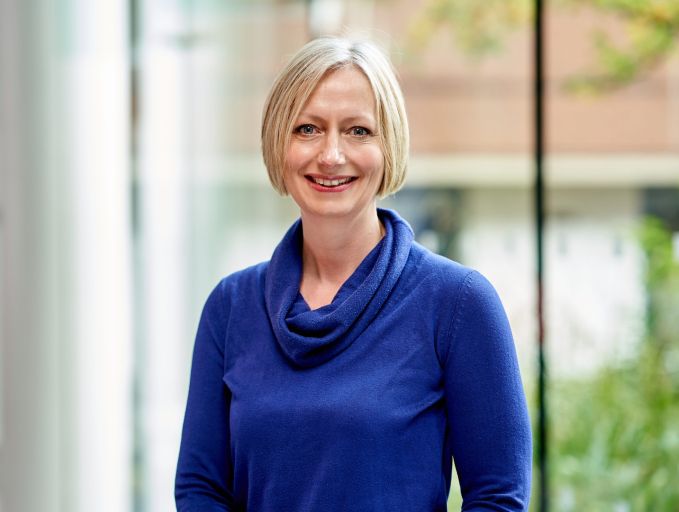
Aston University’s Dr Amanda Hall co-led the study with Dr Anisa Visram from the University of Manchester Deaf children and those with experience of childhood deafness have identified their top 10 research priorities including education and family relationships The project was funded by the National Deaf Children’s Society Deaf children and people with experience of childhood deafness from across the UK have come together to highlight what matters most to children affected by deafness and hearing loss, as part of a project funded by the National Deaf Children’s Society (NDCS). From 2023 to 2025, a team of parents, young people and health and education professionals set out to compile a list of the ‘Top 10’ most important questions that researchers should be trying to answer about childhood deafness and hearing loss. The project was co-led by Dr Amanda Hall, a senior lecturer in audiology at Aston University, and Dr Anisa Visram from the University of Manchester in conjunction with researchers at Lancaster University. The hope is that it will ultimately lead to more research into childhood deafness, in the specific areas it’s needed most. Children highlighted the potential impact of them missing out on things happening around them when interacting with their peers as their top priority, demonstrating the importance of social development for deaf children. Family relationships and educational needs ranked as high priorities for both adults and children, coming in the top 3 for both groups. Adults ranked educational needs as number 1, highlighting the importance of supporting deaf children in schools, particularly those with additional needs. Other important areas for research included understanding what support is needed for children with mild and unilateral (on one side) deafness, the impact of language deprivation on deaf children and how deaf children can be supported to understand their deafness and become empowered to advocate for themselves as they grow up into deaf adults. Several hundred respondents contributed to the project through a series of online surveys. Children were involved through activity-based focus groups. Respondents submitted over 1,200 ideas for research questions in the initial surveys. These were summarised into a list of 59 unique questions, and a second survey was used to prioritise the questions. The top 21 questions were then taken to two final full-day workshop where participants collaborated to choose their top 10 priorities. The research team used what’s known as a James Lind Alliance (JLA) priority-setting process to ensure the robustness of the project. Participants reported feeling valued as part of the project and satisfied that their feedback is reflected in the final lists. One of the children who took part in the workshop said: “I learnt that my voice matters and I can make a difference for me and other deaf children.” Dr Hall said: “It has been a real privilege to be part of this JLA partnership, working alongside deaf young people, families of deaf children and professionals to identify our two sets of top 10 research questions. We hope this is just the beginning of more research that reflects what matters most to deaf children, their families and professionals, and of more opportunities to work together.” Dr Visram said: “This has been an incredible project to work on with an amazing, committed, and diverse stakeholder group feeding into the process at all stages. We have formed important collaborations with deaf young people, parents of deaf children, and a whole range of professionals working with deaf children. The group plan to keep working together to promote the Top 10 lists and help develop research projects to start to answer these important questions.” Juliet Viney is a parent to a deaf child and has supported the project as a parent partner. She said: “It has been an absolute privilege working as a parent partner developing our Top 10 most important research questions for childhood deafness. This project has brought together and empowered deaf children and young people, parents and professionals from across the UK; using their valuable lived experiences to provide them with a strong voice to guide researchers towards addressing what is most needed to improve deaf children's educational, health, social and emotional outcomes. I am excited to see which questions will be pursued in further research and the positive impacts these will have on the lives of deaf children!” Dr Sian Lickess, Research and Analysis Lead at the National Deaf Children’s Society, said: “We are proud to have supported this important partnership, which has brought together the voices of deaf children, their families and professionals to shape future research priorities. The resulting Top 10 lists represent an important step toward ensuring research is aligned with real-world needs and is meaningful to those most affected. We look forward to the impact this work will have on improving outcomes for deaf children.” The full list of priorities identified can be found at: www.childdeafnessresearch.co.uk. As well as the National Deaf Children’s Society, several other partners have also contributed to the project. These include the Professor Kevin Munro’s National Institute for Health and Care Research (NIHR) Senior Investigator award, NIHR Manchester Biomedical Research Centre, PF Charitable Trust, Research England’s QR Participatory Research Fund to Lancaster University, and UKRI Future Leaders Fellowship MR/X035999/1.



America's literacy emergency continues; experts available with solutions
September is more than back-to-school season. It is also National Literacy Month. This return to the classroom and yearly recognition remind us of the urgent need to ensure every child has the literacy skills to thrive in school and beyond. One such example of this is Delaware. Despite recent gains in statewide test scores, Delaware leaders have warned: a literacy emergency persists. Too many children – especially those from marginalized communities – are still being left behind in reading proficiency. The University of Delaware’s College of Education and Human Development is helping to change that. CEHD’s literacy experts are advancing research, building partnerships, and equipping educators with evidence-based strategies that make an impact. Annastasia Purinton and Steve Amendum work with the WTG Foundation to strengthen school-community partnerships that bring literacy support directly to students who need it most. Stephanie Del Tufo, whose recent essay in The Conversation spotlighted the science of reading, studies how early learning and memory processes shape literacy development. Adrian Pasquarella focuses on multilingual learners, helping educators bridge language learning and literacy growth – an area of growing importance in Delaware’s diverse classrooms. Rebecca Joella and colleagues at the Delaware Institute for Excellence in Early Childhood are leading professional development efforts that equip early educators to foster strong literacy skills from the start. These experts bring research to life – translating what works in the classroom into scalable practices and policies. Their work underscores a powerful truth: literacy is not just an academic milestone, it is the foundation for opportunity, equity and lifelong success. As Delaware and the nation confront the literacy crisis, CEHD stands at the forefront with the evidence, expertise and partnerships to make a lasting difference. To speak to any of these experts, please email mediarelations@udel.edu.


The Fed Just Cut interest Rates - What's Mean for Americans and What Does it Say about the Economy?
For the first time since December interest rates are being cut and all indicators point to even more signaled more cuts coming this year. The reactions so far have been mixed. The markets held steady but made no bold moves. And the opinions on how this will impact housing and home sales was also mixed with President Trump raving that housing will "soar" and others concerned about volatility. The announcement is getting a lot of media attention with reporters looking for angles, answers and what to expect for the future. And to get those answers - they need experts who understand every aspect of the economy. Dr. Jared Pincin's primary research interests explore the intersection of public choice economics with foreign aid as well as issues in sports economics. Pincin has published in popular publications such as The Hill, Real Clear Markets, Foxnews.com, and USA Today and scholarly journals such as Oxford Development Studies, Applied Economic Letters, and the Journal of Sport and Social Issues. View his profile here Dr. Haymond joined the faculty at Cedarville University in 2010 after a 29-year career in the United States Air Force. He taught at the United States Air Force Academy and was an Air Force Fellow at The Brookings Institution. His research has been published in scholarly journals such as the Quarterly Journal of Austrian Economics, Public Choice, the Journal of Public Choice and Public Finance, and Journal of Faith and Economics. His current research interests include economics and religion, as well as monetary theory. View his profile here Looking to know more? We can help. Jared Pincin and Jeff Haymond are both available to speak with media - simply click on either expert's icon to arrange an interview today.


Swimming in the deep: MSU research reveals sea lamprey travel patterns in Great Lakes waterways
Why this matters: Invasive sea lampreys prey on most species of large Great Lakes fish such as lake trout, brown trout, lake sturgeon, lake whitefish, ciscoes, burbot, walleye and catfish. These species are crucial to Great Lakes ecosystems and to the region’s fishing industry. Understanding how sea lampreys migrate can inform management and conservation strategies, such as developing methods to catch the invasive fish that don’t involve dams, which reduce river connectivity, or lampricide, a pesticide that some communities and groups prefer not to use. The Great Lakes fishing industry is worth $7 billion and provides 75,000 jobs to the region. Reducing the amount of sea lamprey in waters is crucial for the industry’s well-being and the economic vitality of the Great Lakes. How do you catch an invasive fish that’s solitary, nocturnal and doesn't feed on bait? Researchers in the Michigan State University College of Agriculture and Natural Resources are one step closer to figuring it out. In a study published in the Journal of Experimental Biology and funded by the Great Lakes Fishery Commission, Kandace Griffin, a fisheries and wildlife doctoral student, and Michael Wagner, professor in the MSU Department of Fisheries and Wildlife, found that sea lampreys — a parasitic fish considered an invasive species in the Great Lakes region of the U.S. — follow a clear pattern of staying in the deepest parts of a river. These findings are important for informing sea lamprey management strategies, conservation of fish species native to the Great Lakes and protecting the region’s $7 billion fishing industry and the 75,000 jobs it provides. “We wanted to know how sea lampreys are making their movement decisions when migrating,” Griffin said. “Are they guided by certain environmental cues? Are they moving through areas that are safer? How can we potentially exploit those decisions or maybe manipulate them into going somewhere that they don’t want to go, like pushing them into a trap.” The primary methods used to control sea lamprey are dams that block them from entering waterways and lampricide, a species-specific pesticide that targets lamprey larvae. “Dams create a lot of challenges for conserving river ecosystems: They block all the other fish that are moving up and down in the system. Even though lampricide is proven to be safe and effective, there are communities that are uncomfortable with its use going into the future,” Wagner said. “Figuring out the right way to fish sea lamprey would decrease its population, lower reproduction rates and provide managers with the opportunity to match their control tactics to the community’s needs.” To track lamprey movements, Griffin and Wagner used a method called acoustic telemetry, which involved using sound emitted from a surgically implanted tag to track the movement of 56 sea lampreys in the White River near Whitehall, Michigan. Griffin likened acoustic telemetry to GPS. “There’s a tag that emits sound and has a unique transmission with a unique identification code, so I know exactly which fish is going where,” she said. “The receivers are listening for that sound and then calculating the time it reaches each receiver. We used this information to triangulate the position of the sea lamprey and analyzed it to find out how they’re using the river’s environmental traits to make decisions on where to swim.” Of the 56 lampreys studied, 26 of them (46%), consistently chose the deepest quarter of the river. “For nearly 20 years we have been discovering how sea lampreys migrate along coasts and through rivers. Now, thanks to Kandace’s work, we know where their movement paths come together near a riverbank — the perfect place to install a trap or other fishing device,” Wagner said. “That knowledge can be used to find similar sites across the Great Lakes basin.” Right now, a fishing device designed to catch bottom-swimming, solitary, nonfeeding, nocturnal sea lamprey doesn’t exist. However, Wagner notes there are places around the world — including Indigenous communities in the U.S. — where people have fished migratory lampreys of various species for hundreds of years and could help inform the creation of such a mechanism. “We have recently had a proposal funded to scour the Earth in search of knowledge, both scientific and traditional, about how to capture migrating lampreys and similar fishes,” Wagner said. “We want to talk with the communities of people who have histories fishing these animals and use this information, along with other data we’ve gathered, to conceive a device that could be used to fish sea lampreys.” Griffin views the new intel on lamprey migration patterns as a way to inform fishing practices to complement some of the existing control methods. “Hopefully, we can use this as a supplemental control method to the use of the barriers or dams,” she said. “We have societal pressure to remove barriers to enhance river connectivity, and some barriers are failing. Open water trapping is another way that we could try to still combat the invasive sea lamprey problem here but also promote river connectivity and other conservation goals for other species.” Wagner shares the same perspective. “When a community, or the Great Lakes Fishery Commission, or the governments of Canada and the U.S. come in and say, ‘We’d really rather be able to control this river with something other than lampricide,’ we want to be able to be able to provide 360-degree solutions that specify where to fish, when to fish and how to fish using fully prototyped and tested equipment,” he said. “We want our science to help solve real-world problems.”

First scientific paper on 3I/ATLAS interstellar object
When the news started to spread on July 1, 2025, about a new object that was spotted from outside our solar system, only the third of its kind ever known, astronomers at Michigan State University — along with a team of international researchers — turned their telescopes to capture data on the new celestial sighting. The team rushed to write a scientific paper on what they know so far about the object, now called 3I/ATLAS, after NASA’s Asteroid Terrestrial-impact Last Alert System, or ATLAS. ATLAS consists of four telescopes — two in Hawaii, one in Chile and one in South Africa — which automatically scans the whole sky several times every night looking for moving objects. MSU’s Darryl Seligman, a member of the scientific team and an assistant professor in the College of Natural Science, took the lead on writing the paper. “I heard something about the object before I went to bed, but we didn’t have a lot of information yet,” Seligman said. “By the time I woke up around 1 a.m., my colleagues, Marco Micheli from the European Space Agency and Davide Farnocchia from NASA’s Jet Propulsion Laboratory, were emailing me that this was likely for real. I started sending messages telling everyone to turn their telescopes to look at this object and started writing the paper to document what we know to date. We have data coming in from across the globe about this object.” The discovery Larry Denneau, a member of the ATLAS team reviewed and submitted the observations from the European Southern Observatory's Very Large Telescope in Chile shortly after it was observed on the night of July 1. Denneau said that he was cautiously excited. “We have had false alarms in the past about interesting objects, so we know not to get too excited on the first day. But the incoming observations were all consistent, and late that night it looked like we had the real thing. “It is especially gratifying that we found it in the Milky Way in the direction of the galactic center, which is a very challenging place to survey for asteroids because of all the stars in the background,” Denneau said. “Most other surveys don't look there.” John Tonry, another member of ATLAS and professor at the University of Hawaii, was instrumental in design and construction of ATLAS, the survey that discovered 3I. Tonry said, “It's really gratifying every time our hard work surveying the sky discovers something new, and this comet that has been traveling for millions of years from another star system is particularly interesting.” Once 3I/ATLAS was confirmed, Seligman and Karen Meech, faculty chair for the Institute for Astronomy at the University of Hawaii, both managed the communications flow and worked on getting the data pulled together for submitting the paper. “Once 3I/ATLAS was identified as likely interstellar, we mobilized rapidly,” Meech said. “We activated observing time on major facilities like the Southern Astrophysical Research Telescope and the Gemini Observatory to capture early, high-quality data and build a foundation for detailed follow-up studies.” After confirmation of the interstellar object, institutions from around the world began sharing information about 3I/ATLAS with Seligman. What scientists know about 3I/ATLAS so far Though data is pouring in about the discovery, it’s still so far away from Earth, which leaves many unanswered questions. Here’s what the scientific team knows at this point: It is only the third interstellar (meaning from outside our solar system) object to be detected passing through our solar system. It’s potentially giving off gas like other comets do, but that needs to be confirmed. It’s moving really fast at 60 kilometers per second, or 134,000 miles per hour, relative to the sun. It’s on an orbital path that is shaped like a boomerang or hyperbola. It’s very bright. It’s on a path that will leave our solar system and not return, but scientists will be able to study it for several months before it leaves. The James Webb Space Telescope and the Hubble Space Telescope are expected to reveal more information about its size, composition, spin and how it reacts to being heated over the next few months. “We have these images of 3I/ATLAS where it’s not entirely clear and it looks fuzzier than the other stars in the same image,” said James Wray, a professor at Georgia Tech. “But the object is pretty far away and, so, we just don’t know.” Seligman and his team are specifically interested in 3I/ATLAS’s brightness because it informs us about the evolution of the coma, a cloud of dust and gas. They’ve been tracking it to see if it has been changing over time as the object moves and turns in space. They also want to monitor for sudden outburst events in which the object gets much brighter. “3I/ATLAS likely contains ices, especially below the surface, and those ices may start to activate as it nears the sun,” Seligman said. “But until we detect specific gas emissions, like H₂O, CO or CO₂, we can’t say for sure what kinds of ice or how much are there.” The discovery of 3I/ATLAS is just the beginning. For Tessa Frincke, who came to MSU in late June to begin her career as a doctoral student with Seligman, having the opportunity to analyze data from 3I/ATLAS to predict its future path could lead to her publishing a scientific paper of her own. “I’ve had to learn a lot quickly, and I was shocked at how many people were involved,” said Frincke. “Discoveries like this have a domino effect that inspires novel engineering and mission planning.” For Atsuhiro Yaginuma, a fourth-year undergraduate student on Seligman’s team, this discovery has inspired him to apply his current research to see if it is possible to launch a spacecraft from Earth to get it within hundreds of miles or kilometers to 3I/ATLAS to capture some images and learn more about the object. “The closest approach to Earth will be in December,” said Yaginuma. “It would require a lot of fuel and a lot of rapid mobilization from people here on Earth. But getting close to an interstellar object could be a once-in-a-lifetime opportunity.” “We can’t continue to do this research and experiment with new ideas from Frincke and Yaginuma without federal funding,” said Seligman, who also is a postdoctoral fellow of the National Science Foundation. Seligman and Aster Taylor, who is a former student of Seligman’s and now a doctoral candidate in astronomy and astrophysics and a 2023 Fannie and John Hertz Foundation Fellow, wrote the following: “At a critical moment, given the current congressional discussions on science funding, 3I/ATLAS also reminds us of the broader impact of astronomical research. An example like 3I is particularly important to astronomy — as a science, we are supported almost entirely by government and philanthropic funding. The fact that this science is not funded by commercial enterprise indicates that our field does not provide a financial return on investment, but instead responds to the public’s curiosity about the deep questions of the universe: Where did we come from? Are we alone? What else is out there? The curiosity of the public, as expressed by the will of the U.S. Congress and made manifest in the federal budget, is the reason that astronomy exists.” In addition to MSU, contributors to this research and paper include European Space Agency Near-Earth Objects Coordination Centre (Italy), NASA Jet Propulsion Laboratory/Caltech (USA), University of Hawaii (USA), Auburn University (USA), Universidad de Alicante (Spain), Universitat de Barcelona (Spain), European Southern Observatory (Germany), Villanova University (USA), Lowell Observatory (USA), University of Maryland (USA), Las Cumbres Observatory (USA), University of Belgrade (Serbia), Politecnico di Milano (Italy), University of Michigan (USA), University of Western Ontario (Canada), Georgia Institute of Technology (USA), Universidad Diego Portales, Santiago (Chile) and Boston University (USA).