
Experts Matter. Find Yours.
Connect for media, speaking, professional opportunities & more.

From collecting candy to carving pumpkins, Halloween is defined by its traditions, and few are as time-honored as the telling of ghost stories. Whether recounted by crackling campfires, read from well-worn books or streamed on big-screen TVs, supernatural tales seem to take on a special resonance in the lead-up to October 31. And, on the whole, we seem more than comfortable enduring chills and braving thrills to enjoy them. But what draws our attention, season after season, to things that go bump in the night? And what makes the paranormal such a powerful, and persistent, storytelling device? Mary Mullen, PhD, is an associate professor of English at Villanova University and the instructor of the course "Ghostly Matters," which delves into haunting's role in culture, history and society. From her perspective, our longstanding fascination with spirits, specters and phantoms speaks as much to our concern for the world around us as to our interest in the hereafter. "At their core, ghost stories unsettle us," says Dr. Mullen. "They raise questions about what we consider normal, what we view as 'everyday life,' what we value as 'modern' and whether the past is still with us or not." As Dr. Mullen explains, when we're presented with something that's "haunted," we're essentially being asked to consider the reasons why. The very existence of spirits, emerging from beyond the grave, compels us to reflect on their presence's meaning—and to think about what developments might draw the ire, intrigue or intervention of the dead. (When watching Steven Spielberg's "Poltergeist," for instance, a viewer might feel the movie's ghosts are completely justified in terrorizing the profit-hungry real estate firm that disturbed their eternal slumbers.) Spirits, in turn, consistently set our focus on items left unsaid, unconsidered or overlooked. Departed yet still present, drifting somewhere between this plane and the next, they often challenge the living's notions of progress, propriety and success—and signal a last-ditch effort at preserving something that has all but faded from recollection. In effect, they bring the past into dialogue with the present for the sake of the future. "Ghost stories are really useful for contemplating transition and change and what's lost in the process," says Dr. Mullen. "They give a name to things that are liminal… For example, Luke Gibbons [a professor at Maynooth University] says that ghost stories, in modern Irish writing, are frequently connected to memories that haven't yet become public history. So, they speak to facets of social life that exist, or have existed, but are not present in monuments or official accounts." From Virginia Woolf's "A Haunted House" to Toni Morrison's "Beloved," tales of the supernatural provide us with what Dr. Mullen terms "glimmers of possibilities." They serve to mirror and embody our complicated feelings on transformative happenings, whether personal, communal or generational, and they afford us the language and vocabulary to express sadness over what is done and hope for what is yet to come. "There are certainly ghost stories, like Elizabeth Bowen's 'The Demon Lover,' that end in absolute terror with no seeming resolution," says Dr. Mullen. "But I think that, in a lot of these tales, haunting leads to reconciliation, or different kinds of healing or important acknowledgements—of things that need to be acknowledged." As Dr. Mullen proceeds to explain, it's no coincidence that the roots of the contemporary ghost story can be traced to the 19th century, a period of great social upheaval, cultural displacement and scientific and technological advancement. The product and reflection of a tumultuous "new age," the genre, as we know it, took hold as a means of reckoning with that which was lost, actively transpiring and still to occur. Perhaps it's no surprise then that, as the leaves begin changing and autumn starts giving way to winter, we have an affinity for tales that center on visits from the afterlife, bridging the past, present and future. "I think that we tell ghost stories when we're open to moving beyond our sense of 'the everyday,'" says Dr. Mullen. "And there are certain points of the year, like the holidays and gatherings with family and friends, that are so rich with emotion and memory that the boundary between this world and the 'otherworld' seems maybe—just maybe—capable of being crossed."


SEO: Why Expertise Ranks Higher
When the internet took off in the mid-90s, finding content wasn’t for the faint of heart. There were no directories or search engines and if you didn’t know where you wanted to go, you weren’t going very far. In the wild west of URLs, it became abundantly clear that we needed a better way to search. Yahoo brought us our first directory but in a list of websites, everyone’s content looked equal. That’s when Google stepped up to the plate. Right from the early days of search algorithms, they understood that people valued expert content and we needed a way to rank the credibility and integrity of a webpage. Drawing on his academic background, Larry Page introduced the concept that links could act like citations in a research paper. The original idea operated like a voting system; the more links, the higher the rank. While Google still places tremendous value on expertise, their algorithm for search engine optimization (SEO) has become significantly more complex. We know that it’s combination of on-page and off-page factors but at the end of the day, it boils down to delivering the quality content people are searching for. Source: Search Engine Land Give the People What They Want Today’s audiences want to build more meaningful connections with the institutions and businesses they engage, and that requires information. It’s not enough to put out an unimaginative website or tri-fold brochure. While these tactics may have worked a short time ago, traditional marketing often fails to deliver the level of detail audiences need to make purchasing decisions. From transparency to accountability, they have high expectations for organizations and the content they provide. They want to know how a product or service will uniquely work for them and how your organization aligns with their vision and values. Most of all, they need expert perspectives and proof you can deliver results. If you want to remain competitive, it’s essential to keep up with these rising demands for easy-to-find, high-quality content and secure you a key spot on Google’s SERP. Climbing the Ranks with Expertise Organizations, particularly those in knowledge-based industries (academia, consulting, professional services, medicine etc.), need to pay special attention to how Google is tuning its search algorithm to index information that is attributed to experts. Factors like quality, keyword research and freshness are all on-page tactics that help webpages improve their rank. With this in mind, here are just a few ways your experts and their content are contributing to your rank on Google: Meta-Tagging: Meta tags are snippets of text or rich media that help audiences understand what’s on your webpage from the Google SERP. To ensure they deliver the most relevant search results, both Google and YouTube have been updating their meta tagging and schema options to allow expert content to be indexed more descriptively. This includes everything from author attribution to expert answers the prestigious Rank Zero which highlights the best possible result to users at the very top of the page. Freshness: The freshness of content is correlated with content relevance, and it’s something Google highly values when ranking search. Not only will outdated employee biographies and profiles on your site negatively impact your ranking on search engines, but failing to deliver timely, relevant content on trending topics will also hold you back. By regularly updating your website with expert content, you’re showing that you’re an active contributor to that topic – building trust your audiences and increasing your rank on Google. Keywords: Google collects and indexes searches from users every day, so the richness of your keywords is critical to your search ranking. In many cases, you’ll find that expert content has a holistic way of providing information about high-searched topics in your industry. When an expert creates content, they not only include the targeted keywords, but they naturally incorporate latent semantic indexing as well which accounts for related terms. This all feeds into Google’s desire to surface the most relevant content and who better to do that than your experts. All of these factors are important considerations for improving your organic search rank. As a key driver in inbound traffic, improving your organic rank will not only increase brand awareness, but it also delivers higher-quality leads. And by sharing expert content on your digital channels, you’re showing your audiences and Google exactly what makes you an industry authority and why they should engage your business. Download The Complete Guide to Expertise Marketing For a comprehensive look at how expertise marketing benefits the entire organization and drives measurable return on investment, follow the link below to download a copy of ExpertFile’s Complete Guide to Expertise Marketing for Corporate & Professional Services, Higher Education Institutions, Healthcare Institutions or Association & Not-for-Profits.



Enhancing environmental governance in the Caribbean
The University of Delaware's Island Policy Lab has launched a first-of-its kind initiative to ensure that future development projects in the Caribbean are equipped to adapt to climate risks effectively. When completed, this work will set a new benchmark for sustainable development across the region. The research initiative is led by Professor Kalim Shah, Director of the UD Island Policy Lab, with colleagues at the University of the West Indies. The collaborative effort, which kicked off this month in Barbados, will integrate climate services into Environmental Impact Assessments (EIA) and bring together key stakeholders from public agencies, academic institutions and private organizations. Funded by NOAA and the U.S. Department of State, the project aims to strengthen environmental governance by embedding scientific climate data into regulatory frameworks. The work will cover multiple Caribbean islands chosen for their contrasting regulatory frameworks, with the aim of addressing critical gaps in how climate risks are incorporated into EIA processes, which often lack consistent and actionable climate data. On this first Barbados leg, the project has drawn support from the Barbados Meteorological Services, the Ministry of Environment and National Beautification, the Coastal Zone Management Unit and international financial institutions such as the Caribbean Development Bank and the Inter-American Development Bank. Private sector project developers are working alongside regulatory bodies and academic institutions to ensure the success of the initiative. Minister of Planning and Development William Duguid emphasized the importance of the project during the launch event, held at the Savannah Beach Club in Christ Church. “Our very survival as a nation depends on building climate resilience,” Duguid said, highlighting the vulnerability of Barbados’ key infrastructure — such as airports, seaports, and hospitals — located along the coast. He stressed the significance of using climate data in EIA processes to mitigate risks such as sea-level rise and storm surges, which threaten the island’s long-term sustainability. The initiative follows a phased approach, beginning with assessments of the existing institutional frameworks in Barbados, Dominica, Trinidad and Tobago, with other countries following in the future. The research team will evaluate how well current climate services align with the needs of both public agencies and private developers. In subsequent phases, stakeholders will participate in co-designing tailored climate tools to enhance EIA processes, leading to the development of Climate Services Implementation Plans. These plans will provide a roadmap for integrating climate services sustainably across sectors and jurisdictions. “This project is about more than just collecting data – it’s about turning scientific insights into practical tools for decision-makers,” Shah explained. The co-design process, which involves collaboration with local stakeholders and international partners, aims to reduce conflicts between regulators and developers by embedding climate considerations early in the project approval process. This alignment will ensure that new developments are both environmentally sound and climate-resilient. The research is expected to deliver several key outcomes, including enhanced coordination among regulatory bodies, improved access to climate data, and greater institutional capacity to manage environmental risks. Dr. Sylvia Donhert, Chief of the Inter-American Development Bank’s Compete Caribbean program, endorsed the project saying that it reflects the growing urgency for climate action across the region. “Embedding climate science into development planning is essential not just for policy but for the economic well-being of the region."


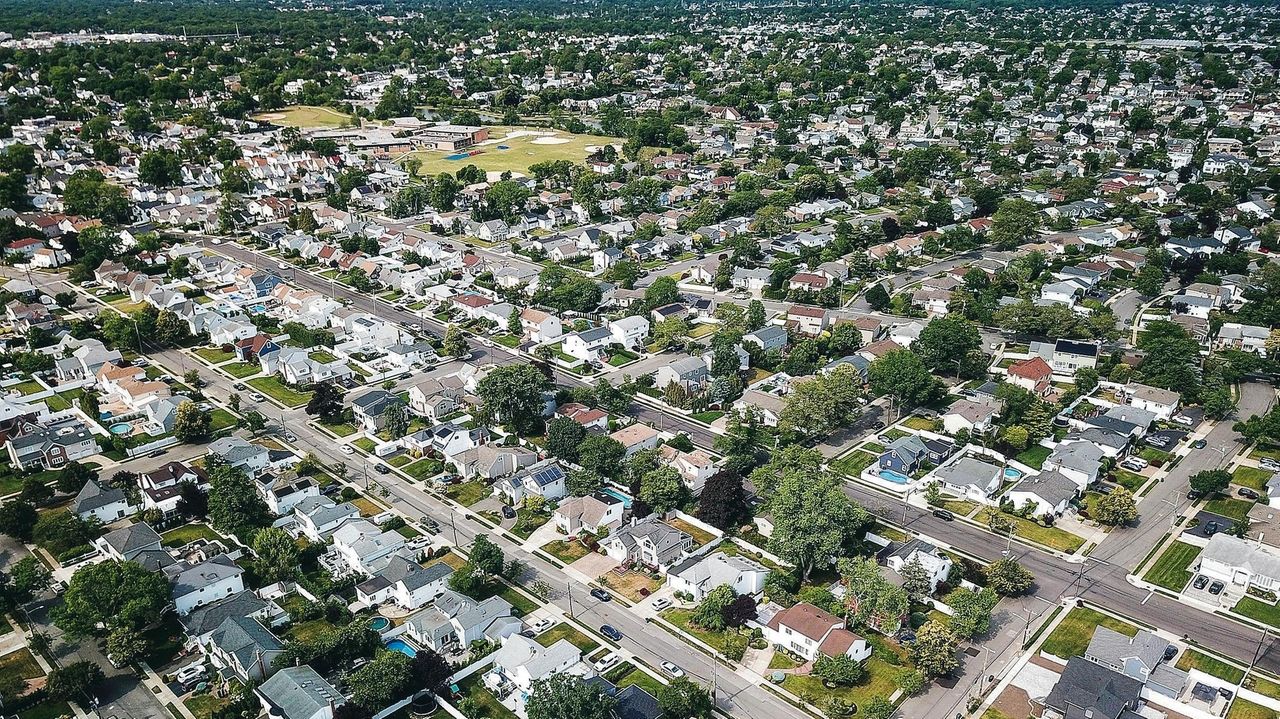
Lawrence Levy, executive dean of the National Center for Suburban Studies, broke down all the key New York races. He appeared on The Point with Marcia Kramer on WCBS-TV 10/20; News 12 on both 10/16 and 10/17, and WCBS-FM on 10/20. He also spoke with Fox 5, which syndicated to several outlets including Yahoo!news. Levy also contributed to a Newsday article about property tax relief. “There is no chance that it [STAR credit] would be anything but increased because it has now become something that people count on,” he said.


LSU expert in social and economic issues: Rural America’s unique struggles affect how it votes
An expert in social and economic issues, Professor Slack explains the unique struggles facing rural communities—like changes in jobs, health concerns, and population shifts. In this Q&A, he clears up common misunderstandings about rural life, discusses the problems rural voters face, and explores how these issues may affect their votes in this important election. What is your area of expertise? I am a professor of sociology at LSU. My research coalesces around the areas of social stratification and social demography with an emphasis on geographic space and the rural-urban continuum as axes of difference. With my colleague Shannon Monnat (Syracuse University), I recently authored the book Rural and Small-Town America: Context, Composition, and Complexities, published by the University of California Press. What are the key socio-economic challenges facing rural voters in this election? Wow. Where to start? There are so many myths and misunderstandings about rural America. One is that “rural” is synonymous with farming. To be sure, agriculture is a vital industry in terms of sustenance and national security. But technological advances and farm consolidation—the shift from many smaller farms to fewer larger farms—means most rural Americans don’t have direct economic ties to agriculture anymore. The two largest sectors of employment in rural America today are services and manufacturing, respectively. A concern regarding the service sector is that it produces jobs that vary greatly in quality depending on people’s educational level; good professional jobs for the more educated and lower quality jobs—low wages, low hours, and few to any fringe benefits—for less educated folks. Those good professional jobs tend to be concentrated in urban areas (the emergence of remote work may reshape this in the future). Manufacturing employment, which has historically been the “good jobs” sector for less educated people, has been in steady decline in terms of its share of jobs for the past 50 years. While people sometimes think of plant and factory work as urban, it has provided a larger share of jobs and earnings in rural America for decades. Deindustrialization is causing real pain in rural America: it is one thing for a plant to shut down in a large and diversified metropolis, but quite another when it is the lone “good jobs” employer in town. Other big issues are the challenges posed by population aging and youth out-migration in rural America, as well as increasing racial and ethnic diversity. Another is the factors underlying the “rural mortality penalty”—that rural America has higher death rates and lower life expectancy than urban America. These are all pressing issues. What role will rural voters play in this close presidential race, and what may sway their vote? Rural voters will play a key role in this election, assuming the margins end up being as close as they have been in the last two presidential cycles. A persuasive working-class message and a sense that rural people and places are seen—that they aren’t just “flyover country”—will help. Given that the two leading candidates hail from New York City and San Francisco, both picked running mates with a rural and small-town backstory as a nod to that constituency. All of that said, the power of the rural vote should not be overstated. The contemporary U.S. is mainly an urban society, so the winning candidate will ultimately pull most of their votes from cities and suburbs. Can you discuss any recent research on how rural voting patterns have evolved over the last few election cycles? The short answer is that the rural vote has been steadily trending Republican for decades. The last presidential election in which voters in metropolitan and nonmetropolitan counties were essentially equal regarding party preferences was in 1976 when Jimmy Carter was elected. Since that time, the percentage of nonmetro votes for the Republican candidate has trended steadily upward. In 2020, roughly two-thirds of the nonmetro vote went to Donald Trump, more than 20 points higher than in metro counties. That said, rural voters are not a monolith. The flip side of the 2020 numbers above is that roughly 1 in 3 voters in nonmetro counties cast their ballot in the other direction. And rural places with majority Black, Latino, and Indigenous populations often vote in the Democratic column. Moreover, you have political legacies particular to certain places that matter—like the left-leaning Farmer-Labor Party in Minnesota (today the Democratic-Farmer-Labor Party or DFL) or the rural state of Vermont electing a socialist to the U.S. Senate (Bernie Sanders). So, there are notable deviations from the aggregate trend. “ The problems and prospects facing rural America in the 21st century matter for this nation. Personally, I would love to see a less ideological and more pragmatic politics emerge that puts that in focus. ” How do political campaigns target rural voters, and how effective do you think these strategies are? This is a bit outside my area of expertise, and I want to stay in my lane. But I will raise two issues. One is what the political scientist Katherine Cramer has called “rural consciousness”: a belief that rural areas are ignored by policymakers, that rural areas do not get their fair share of resources, and that rural folks have distinct values and lifestyles that are misunderstood and disrespected by city folks. The message from some quarters that rural people vote “against their own self-interest” or vote “the wrong way,” essentially that they are rubes, feeds into this. The other issue is that much of rural America is a local “news desert.” That is, there simply are no sources of comprehensive and credible local news. So, people rely on cable TV news or—if they have access to broadband—the internet. The result is that all news becomes national, even when those issues may have little bearing on local life. It used to be said that “all politics is local,” but in today’s media environment, that is increasingly untrue. Is there anything else you want to add? I would just emphasize that common myths and misunderstandings about rural America run deep. Rural America is not a paragon of stability, social and economic change abounds. And rural America is not a monolith, it is socially and regionally diverse. The problems and prospects facing rural America in the 21st century matter for this nation. Personally, I would love to see a less ideological and more pragmatic politics emerge that puts that in focus. Link to original article here.



Digital Contracting Is Broken. A Little "Friction" Could Go a Long Way in Fixing It
In mid-October, the Federal Trade Commission (FTC) announced a final “click-to-cancel” rule, which, after its provisions go into effect, will make it easier for consumers to cancel recurring memberships and subscriptions. The rule is an undoubtable victory for consumers who have run into roadblocks attempting to protect their wallets amid the flurry of oversubscription in today’s world, but it also begets an important question: Why is oversubscription occurring in the first place? “One important reason for that problem is that getting into contracts is frictionless, it’s too easy,” said Brett Frischmann, JD, the Charles Widger Endowed Professor in Law, Business and Economics in Villanova University’s Charles Widger School of Law. “The FTC is addressing a real concern in making it easier for people to exit agreements of this sort. But while making it as easy to unsubscribe as to subscribe sounds great – we all like even playing fields and symmetry – it might be better to also make subscribing a little more burdensome, so people understand what they are getting themselves into in the first place.” This idea is the focus of Frischmann’s recent paper, titled "Better Digital Contracts with Prosocial Friction-in-Design," the publication of which coincides with public dissatisfaction over digital contracting processes. In August, Disney attempted to have a wrongful death lawsuit blocked, citing print in terms and conditions from a one-month Disney+ free trial the plaintiff signed up for in 2019. Since then, other companies have succeeded in recently blocking the commencement of similar lawsuits. In the research, Frischmann and his co-author, Rice University computer scientist Moshe Vardi, describe these contracts as “dehumanizing” and that they “undermine human autonomy and sociality, by design,” citing how they elicit behavior in a pre-determined manner (such as clicking on cue) and often include side agreements with other entities, unbeknownst to the users. “One-click” contracts rely on legal fictions, such as presuming that clicking an “I have read the terms and conditions” button actually means that they have. They are structured this way intentionally. “The idea behind digital contracting is ‘Let’s make the contract as quick as possible before people leave or change their mind,” Frischmann said. “They only want to do the minimum that the law requires, and all the law requires is notice of terms and action that says, ‘I agree.’” For these reasons, he argues, modern digital contracting contradicts the purpose of contract law in the first place; enabling people to reach genuine agreements and cooperate. “It’s antithetical to the underlying values of a contract,” Frischmann said. “Autonomy is undermined because people are not able to exercise autonomy in a meaningful way when they are not actually capable of deliberating about the terms to which they are agreeing. As for being cooperative, there is no relationship. Digital contracts are completely one-sided.” So what can be done to combat this? “Speedbumps,” Frischmann says, referring to measures that can cause friction in the contracting process to better protect the user. Physical road speedbumps represent a useful analogy, because while they make things slightly more inconvenient for the user, they are deployed strategically where other values are at stake, like the safety of children playing outside. “People tolerate speedbumps,” Frischmann says, “because they serve a social purpose. Friction in digital contracts is similar.” With respect to improving digital contracting, there are multiple measures that can be taken that inherently have such friction, but not all of them are always appropriate. Completely Automated Public Turing Test to Tell Computers and Humans Apart (CAPTCHAs), for example, are a type of friction-in-design that serve a useful social purpose (security) and have become normalized and tolerated, but some CAPTCHAs are ableist and others may generate proprietary data. Where he sees the most beneficial friction existing is in comprehension, which in software form could be completing a task or passing a test to prove an individual understands the agreement. Comprehension is the basis for one of Frischmann’s proposed alterations to contract law. Currently, the oft-criticized concept of informed consent is utilized. He argues it should be replaced with demonstrably informed consent, in essence requiring entities to further show that people truly comprehend what they are agreeing to. “Right now, individuals assent to contracts, going along with terms someone else insisted upon,” he said. “But assenting to terms is very different than being informed and consenting. To demand demonstrably informed consent shifts the burden on the provider to generate evidence showing in fact a person understood and agreed.” In the recent Disney case, for example, demonstrably informed consent would have required not just clicking an agreement when signing up for Disney+, but that Disney somehow explained to an individual that if they sign up for a free trial, they cannot take the company to court, and further generating reliable evidence that the individual understood that. If that were the case, perhaps the individual would not have signed up. “Or, they may not have ever gone to the Disney park if they had [signed up],” Frischmann said. This proposed change in contract law, along with the various potential methods of engineered friction in digital contracts all circle back to the same goal: slowing down contracting where it affects people in ways they do not understand. “You can’t have digital contracting built like a highway, where it’s all as fast as possible all the time,” Frischmann said. “For our digitally networked environment, it needs to be built like a neighborhood.”


New light technique could revolutionise non-invasive medical diagnostics Orbital Angular Momentum could be harnessed to improve imaging and data transmission through biological tissues Could eventually have potential to make procedures such as surgery or biopsies unnecessary. An Aston University researcher has developed a new technique using light which could revolutionise non-invasive medical diagnostics and optical communication. The research showcases how a type of light called the Orbital Angular Momentum (OAM) can be harnessed to improve imaging and data transmission through skin and other biological tissues. A team led by Professor Igor Meglinski found that OAM light has unmatched sensitivity and accuracy that could result in making procedures such as surgery or biopsies unnecessary. In addition it could enable doctors to track the progression of diseases and plan appropriate treatment options. OAM is defined as a type of structured light beams, which are light fields which have a tailored spatial structure. Often referred to as vortex beams, they have previously been applied to a number of developments in different applications including astronomy, microscopy, imaging, metrology, sensing, and optical communications. Professor Meglinski in collaboration with researchers from the University of Oulu, Finland conducted the research which is detailed in the paper “Phase preservation of orbital angular momentum of light in multiple scattering environment” which is published in the Nature journal Light Science & Application. The paper has since been named as one of the year’s most exciting pieces of research by international optics and photonics membership organisation, Optica. The study reveals that OAM retains its phase characteristics even when passing through highly scattering media, unlike regular light signals. This means it can detect extremely small changes with an accuracy of up to 0.000001 on the refractive index, far surpassing the capabilities of many current diagnostic technologies. Professor Meglinski who is based at Aston Institute of Photonic Technologies said: “By showing that OAM light can travel through turbid or cloudy and scattering media, the study opens up new possibilities for advanced biomedical applications. “For example, this technology could lead to more accurate and non-invasive ways to monitor blood glucose levels, providing an easier and less painful method for people with diabetes.” The research team conducted a series of controlled experiments, transmitting OAM beams through media with varying levels of turbidity and refractive indices. They used advanced detection techniques, including interferometry and digital holography, to capture and analyse the light's behaviour. They found that the consistency between experimental results and theoretical models highlighted the ability of the OAM-based approach. The researchers believe that their study’s findings pave the way for a range of transformative applications. By adjusting the initial phase of OAM light, they believe that revolutionary advancements in fields such as secure optical communication systems and advanced biomedical imaging will be possible in the future. Professor Meglinski added: "The potential for precise, non-invasive transcutaneous glucose monitoring represents a significant leap forward in medical diagnostics. “My team’s methodological framework and experimental validations provide a comprehensive understanding of how OAM light interacts with complex scattering environments, reinforcing its potential as a versatile technology for future optical sensing and imaging challenges.” ENDS https://www.nature.com/articles/s41377-024-01562-7 Light: Science & Applications volume 13, Article number: 214 (2024) August 2024 https://doi.org/10.1038/s41377-024-01562-7 Authors: Igor Meglinski, Ivan Lopushenko, Anton Sdobnov & Alexander Bykov About Aston University For over a century, Aston University’s enduring purpose has been to make our world a better place through education, research and innovation, by enabling our students to succeed in work and life, and by supporting our communities to thrive economically, socially and culturally. Aston University’s history has been intertwined with the history of Birmingham, a remarkable city that once was the heartland of the Industrial Revolution and the manufacturing powerhouse of the world. Born out of the First Industrial Revolution, Aston University has a proud and distinct heritage dating back to our formation as the School of Metallurgy in 1875, the first UK College of Technology in 1951, gaining university status by Royal Charter in 1966, and becoming The Guardian University of the Year in 2020. Building on our outstanding past, we are now defining our place and role in the Fourth Industrial Revolution (and beyond) within a rapidly changing world. For media inquiries in relation to this release, contact Nicola Jones, Press and Communications Manager, on (+44) 7825 342091 or email: n.jones6@aston.ac.uk


#ExpertSpotlight - Remembering the invasion of Grenada
The U.S. invasion of Grenada in 1983 stands as a key moment in Cold War history, reflecting the complex dynamics of American foreign policy in the Caribbean. Known as Operation Urgent Fury, this military action was a response to political instability on the island and perceived threats to U.S. citizens and interests. The invasion not only shaped Grenada’s future but also influenced global perceptions of U.S. interventionism, raising questions about sovereignty, international law, and regional geopolitics. The significance of this event continues to resonate, offering numerous story angles for journalists. Key sub-topics include: Cold War Geopolitics and U.S. Foreign Policy: Exploring the broader Cold War context, the U.S.’s strategic interests in the Caribbean, and how the invasion shaped subsequent American foreign policy decisions. Debates on Sovereignty and International Law: Investigating the legal and ethical implications of the invasion, including debates about military intervention, national sovereignty, and international diplomacy. Impact on Grenada’s Political and Social Landscape: Examining the long-term effects of the invasion on Grenada’s political stability, economy, and society, and how the event is remembered locally. Media Coverage and Public Opinion: Analyzing how the invasion was covered by the media at the time, the public’s reaction in the U.S. and globally, and how it shaped perceptions of U.S. military power. The Role of Regional Powers and Alliances: Looking at the involvement of regional organizations like the Organization of Eastern Caribbean States (OECS), and how the invasion impacted relationships between the U.S., Latin America, and the Caribbean. Lessons for Modern U.S. Military Interventions: Reflecting on the invasion’s legacy and what it teaches about the risks, justifications, and consequences of U.S. military interventions in other nations. As the anniversary of the U.S. invasion of Grenada approaches, this event offers an opportunity to revisit critical discussions on international intervention, geopolitical strategy, and the balance between national interests and global governance. Connect with an expert about the 1983 U.S. invasion of Grenada : To search our full list of experts visit www.expertfile.com Photo credit: Encyclopedia Britannica

Money vs Memories in Retirement
Summary: This article explores whether or not money or memories will bring more comfort to the elderly. It is written with the underlying assumption that there is already enough money to meet basic living expenses. As we age, the question of what will bring us the most comfort in our twilight years becomes increasingly relevant. For many, it comes down to two key aspects: money and memories. On the one hand, financial security provides a foundation of comfort, ensuring that one’s needs are met without the fear of lacking resources. On the other hand, cherished memories bring emotional warmth, helping individuals navigate the often-challenging aging journey. In this article, we will explore which of these two — money or memories—plays a more significant role in delivering comfort in old age, assuming one has enough financial resources to cover basic living expenses. While I appreciate that good health takes precedence over money and memories, we unfortunately do not have complete control over our health. However, we have control over our decision to save our money to give us comfort. Or we can choose to spend our money to create memories that will provide us with comfort. Financial Security: A Foundation for Comfort Money is a powerful enabler, allowing us to meet our needs and desires. It's particularly important in the context of aging because it can mitigate many of the hardships of growing older. 1. Access to Quality Healthcare: One of the most significant concerns for elderly individuals is health. With aging comes a higher likelihood of chronic conditions, disabilities, and the need for regular medical attention. Financial security allows individuals to afford quality healthcare, access advanced treatments, and have the freedom to choose the best facilities. Having sufficient money provides a critical safety net for those who experience sudden medical emergencies or need long-term care. 2. Comfortable Living Arrangements: As people age, they often face the decision of where to live. While some prefer to stay home, others may move to assisted living facilities or hire caregivers. Financial resources enable elderly individuals to choose comfortable living environments tailored to their needs and preferences. A well-maintained home, access to mobility aids, or a peaceful retirement community can significantly enhance an individual’s day-to-day life. 3. Freedom and Autonomy: Financial independence in old age allows for greater autonomy. With money, elderly individuals can control their lives by making choices that suit their preferences, such as travelling, pursuing hobbies, or supporting loved ones. The ability to make decisions about healthcare, leisure, or everyday living preserves dignity and independence, both of which are central to feeling comfortable and fulfilled. 4. Reducing Stress and Anxiety: Aging can bring about several uncertainties, especially health and mobility. However, financial security can significantly reduce the stress and anxiety of worrying about the future. Knowing that expenses, including potentially unforeseen ones, are covered allows elderly individuals to focus on enjoying life rather than constantly fretting over how to afford their basic needs. This peace of mind is invaluable in ensuring a comfortable old age. While money plays a crucial role in creating a foundation of comfort, it has emotional and psychological well-being limitations. This is where memories come into play. Memories: Emotional Anchors in the Journey of Aging As the years pass, memories become a primary source of emotional sustenance. They connect individuals to their past, their loved ones, and the experiences that shaped their lives. When people reflect on what matters most to them in old age, it’s often not material wealth but the moments that brought them joy, love, and meaning. 1. Emotional Fulfillment: Memories of joyful experiences, adventures, and time spent with loved ones can offer deep emotional fulfillment in old age. Recalling meaningful moments provides a sense of accomplishment and satisfaction, reminding individuals of the richness of their lives. For many, the bonds formed with family and friends, the challenges overcome, and the dreams pursued give life meaning and offer comfort in later years. 2. Connection to Loved Ones: As elderly individuals have fewer physical responsibilities, they often spend more time reminiscing. Positive memories help bridge the gap between generations, allowing the elderly to connect with their children, grandchildren, and even great-grandchildren. Sharing stories from the past strengthens family bonds and ensures that their legacy lives on, creating a sense of continuity and significance. 3. Combatting Loneliness: People may experience increased isolation as they age, particularly after losing a spouse or friends. In such times, memories serve as a balm for loneliness. Even in moments of solitude, recalling past experiences, adventures, or time spent with loved ones can bring comfort. Memories provide companionship in their own right, filling the gaps left by physical absence and reducing feelings of loneliness. 4. Identity and Self-Continuity: Our memories are integral to our identity. They help us understand who we are by reminding us of the paths we've taken, the challenges we’ve faced, and the triumphs we’ve celebrated. For elderly individuals, the ability to look back on a life well-lived reinforces their sense of self. Memories act as an anchor, helping them feel grounded as they navigate the changes that come with aging. 5. Psychological Resilience: Life is inevitably full of hardships, and old age is no exception. However, memories of overcoming past difficulties provide emotional strength and resilience. Looking back on moments of hardship reminds elderly individuals that they’ve faced challenges before and emerged stronger. This sense of resilience can be empowering in the face of the physical and emotional challenges of aging. Balancing Money and Memories It’s essential to recognize that money and memories are not mutually exclusive; they often complement each other. While financial security provides the external comfort and security needed to navigate old age, memories provide the internal warmth and emotional fulfillment that give life depth and meaning. In determining which offers more comfort, it’s essential to consider an underlying assumption: there is already enough money to meet basic living expenses. In this scenario, it becomes clear that while financial resources are essential, memories are more significant. Consider the following: 1. Life Experiences Are Often Enabled by Money: The ability to create cherished memories often depends on financial resources. Travelling, pursuing hobbies, and spending quality time with loved ones may all require money. However, the memories created from these experiences—not the money spent—bring lasting comfort. In old age, the satisfaction of having lived a rich life full of meaningful experiences often outweighs the material possessions acquired. 2. Financial Security Loses Meaning Without Emotional Fulfillment: Imagine having all the money needed in old age but lacking meaningful memories or connections to loved ones. In this case, wealth would bring only a hollow sense of comfort. With emotional fulfillment, money is likely to provide lasting satisfaction. In contrast, those with a lifetime of cherished memories may find comfort even in modest circumstances, as their inner wealth—their experiences—remains invaluable. 3. The Longevity of Memories vs. Material Wealth: As we age, our ability to enjoy material goods and external pleasures may diminish due to declining health or physical limitations. However, memories transcend physical limitations. Even if elderly individuals cannot travel or engage in once-loved activities, they can still find joy in recalling their past. In this sense, memories have a longevity that material wealth may lack. 4. Regret and Fulfillment in Old Age: Many studies have shown that people regret missed opportunities and unfulfilled relationships far more than financial shortcomings at the end of life. The things that bring peace and comfort in old age are often intangible: love, connection, purpose, and meaning. Memories of having lived a full life, having nurtured relationships, and having followed one’s passions often bring a greater sense of contentment than wealth alone. The Enduring Power of Memories In the context of aging, both money and memories play significant roles in creating comfort. Financial security provides the practical means to ensure health, independence, and a comfortable lifestyle, while memories offer emotional sustenance, a sense of identity, and a connection to loved ones. At Retire with Equity, we suggest everyone create an emergency fund of at least 5% of their retirement savings. One primary purpose of this fund is to pay for unexpected healthcare needs, such as assisted living or hiring caregivers. Given that basic financial needs are met, memories—those intangible, priceless moments—tend to provide the most incredible comfort in old age. They remind us of the richness of life, the love we’ve shared, and the experiences that have shaped who we are. While money offers external comfort, memories provide internal peace, warmth, and solace as we navigate the later stages of life. Ultimately, what will comfort us in our golden years is not how much money we have in the bank but how much life we’ve genuinely lived. Don't retire---Re-Wire



It's the right of every citizen - and with a presidential election less than two weeks away, a team of social workers from UConn are working to make sure every voice is heard as the U.S. choses a new leader on Nov. 5. Voting Is Social Work - a campaign led by Tanya Rhodes Smith, director of the Nancy A. Humphreys Institute for Political Social Work at the UConn School of Social Work - is getting a lot of attention for its work engaging social workers to help empower some of the most vulnerable and disenfranchised groups to get registered and cast their ballots in local elections. “Voting is complicated, and it’s intimidating, especially for vulnerable populations, like the unhoused, the formerly incarcerated, or those living in congregate care,” says Rhodes Smith. “We know that being a non-voter is a very isolating space, because voting is highly relational. Campaigns generally ignore non-voters— you don’t get campaign materials, or someone knocking on your door. Information on candidates in state and local elections in communities with low turnout can be very hard to find or even nonexistent.” That’s where social workers, explains Rhodes Smith, can play an important role in helping disenfranchised voters understand their rights – and register to vote. Money, Power, and Resources As co-founders since 2015, UConn’s Humphreys Institute has been the institutional home for Voting Is Social Work. Also known as the National Social Work Voter Mobilization Campaign, Voting Is Social Work supports nonpartisan voter engagement as central to social work’s mission, ethical mandate, and impact. “We’ve always believed that social work has the power to transform democracy,” says Rhodes Smith, “and we believe every social worker – and social service agency – should include nonpartisan voter engagement into their practice and work. Because we reach non-voters – those who are least likely to vote.” October 16 - UConn Today It's an initiative catching attention across the country. Research has linked voting to higher earning and education, better health outcomes, and lower rates of recidivism. But education is key, particularly for individuals with special circumstances, like the formerly incarcerated, people living in congregate care, and the unhoused. Homelessness comes with a new, unique set of challenges during an election cycle. However, homeless residents have protections, including voting rights. Nationwide, only 10% of unhoused people vote each year, according to the Institute of Political Social Work at the University of Connecticut. Many social workers in Connecticut are working to educate unhoused residents about their voting rights, according to UConn Social Work professor Tanya Rhodes Smith, director of the Nancy A. Humphreys Institute for Political Social Work. “When you ask somebody if they would like to check their voter registration, they may say, ‘I'm not eligible,’ or ‘I've never voted,’ and that's really important information for you to know,” Rhodes Smith said. “It really tells a story about them.” About 60% of eligible voters turnout in presidential election years, but increasing voting rates is important for local elections as well, Rhodes Smith said. “When you have 10% to 15% [voter turnout], that's not an accountable government, that's a government that's accountable to the 10% to 15%,” Rhodes Smith said. “We've seen it over and over in Bridgeport, that nothing changes because that turnout rate doesn't go up, and so there is no accountability when you have an unhealthy democracy.” October 10 - WNPR Looking to know more about this important work? If so, let us help. Tanya Rhodes Smith specializes in policy development, nonprofit administration, voter engagement and legislative advocacy. She's available to speak with media about this important topic - simply click on her icon now to arrange an interview.
