
Experts Matter. Find Yours.
Connect for media, speaking, professional opportunities & more.

Exploring Milwaukee and Wisconsin's Cultural and Urban Landscape
As the Republican National Convention 2024 approaches, journalists from across the nation and the world will converge on Milwaukee, not only to cover the political spectacle but also to uncover the rich cultural, architectural, and urban tapestry that makes this city truly unique. Milwaukee, often referred to as the "Cream City" for its distinctive cream-coloured bricks, with many historical and contemporary narratives is waiting to be explored. To help visiting journalists navigate and understand the depth of Milwaukee's heritage and modern vibrancy, our MSOE experts are available to offer insights. Discover the rich tapestry of Milwaukee and Wisconsin through the lens of two distinguished experts. Dr. Michael Carriere and Kurt Zimmerman bring unparalleled expertise in the fields of culture, architecture, and urban planning, offering deep insights into the region's unique historical and contemporary narratives. Dr. Michael Carriere Professor, Honors Program Director Expertise: Sustainability, American History, General Social Science, Honors Program, History, General Humanities, Student Affairs, Urban Studies View Profile Dr. Michael Carriere, a Professor and Honors Program Director, is an urban historian specializing in American history, urban studies, and sustainability. With a focus on the growth and challenges of Milwaukee's neighborhoods, Dr. Carriere provides valuable perspectives on urban agriculture, creative placemaking, and the Milwaukee music scene. His extensive knowledge of Milwaukee and Wisconsin history and politics makes him a key resource for understanding the region's evolving urban landscape. “To me, it’s a no-brainer,” says Carriere, now a professor of history at Milwaukee School of Engineering and author of The City Creative: The Rise of Urban Placemaking in Contemporary America. “Cities like Louisville, like Buffalo, like Boston have really leveraged the Olmsted spaces in their cities. … The reason I’m really excited about [the bicentennial] is that this could be the chance to have useful, and in some cases uncomfortable, conversations on how public spaces should look and operate in a 21st-century city like Milwaukee.” The Lasting Legacy of Frederick Law Olmsted and His 3 Signature Milwaukee Parks Milwaukee Magazine April 1, 2022 Kurt Zimmerman Assistant Professor Expertise: Deep Energy, Retrofit Integrated Project, Delivery Architecture, Design, Building Envelope, Building Science, Sustainability, LEED AP View Profile Kurt Zimmerman, an Assistant Professor, offers expertise in Milwaukee's architectural history, urban planning, and sustainable design. His insights into the city's architectural evolution and design principles contribute to a deeper appreciation of Milwaukee's unique urban fabric and sustainable development efforts. “If you’re trying to build buildings that are meant to last, look back in history and see what is still standing. Those are your models. It’s all about build it once, build it right, build it to last. I’m very conscious of the environmental aspects of our projects, whether the clients ask for it or not.” The Daily Reporter October 2, 2014 For further information and to arrange interviews with our experts, please contact: JoEllen Burdue Senior Director of Communications and Media Relations Phone: (414) 839-0906 Email: burdue@msoe.edu About Milwaukee School of Engineering (MSOE) Milwaukee School of Engineering is the university of choice for those seeking an inclusive community of experiential learners driven to solve the complex challenges of today and tomorrow. The independent, non-profit university has about 2,800 students and was founded in 1903. MSOE offers bachelor's and master's degrees in engineering, business and nursing. Faculty are student-focused experts who bring real-world experience into the classroom. This approach to learning makes students ready now as well as prepared for the future. Longstanding partnerships with business and industry leaders enable students to learn alongside professional mentors, and challenge them to go beyond what's possible. MSOE graduates are leaders of character, responsible professionals, passionate learners and value creators.




Opening the Debate on Enforcing Fireworks Laws
Lawrence Levy, associate vice president and executive dean of the National Center for Suburban Studies, talked to Newsday for a article about the challenges of enforcing the New York state law that says the use of fireworks by anyone other than a certified pyrotechnic is a Class B misdemeanor, punishable by up to 90 days in jail. “Broad enforcement of laws forbidding fireworks is virtually impossible for local police departments, and perhaps even perilous for politicians,” Levy said. “Cops and fire departments already have their hands full with serious emergencies, including some due to mishandling of illegal fireworks, plus everything else they need to do on a busy holiday when people are drinking too much.” Lawrence Levy is available to speak with media - simply click on his icon now to arrange an interview today.


Cosmetic or Drug? The FDA's Classification of Sunscreen Limits Which Products Hit US Shelves
As stifling rays of sunshine beat down across the United States, it’s the time of year citizens flock to the store to load up on sun protection. It’s also the time of year consumers and media raise the annual question of why Europe is able to market sunscreen that contains more potentially effective ingredients, but the U.S. isn’t. The answer is not related to sunscreen or its ingredients, but rather how the country’s regulatory body – The Food and Drug Administration (FDA) – legally operates. “In order for the FDA to legally regulate products, those products are given classifying labels,” said Ana Santos Rutschman, a professor of law at Villanova University who studies health law. “A toothbrush, for instance, is labeled a medical device. That’s because it has to fit in one of the sources of authority of the FDA and the FDA, per the law, regulates drugs or medical devices.” Here is where it gets tricky. The FDA does not have to approve cosmetics, aside from certain color additives, before those products go to market. In the European Union’s European Medicines Agency (EMA), sunscreen is labeled as a cosmetic. Many other countries also classify it as such. In the U.S., however, sunscreen is labeled a drug because it has a therapeutic effect, and thus falls under the authority of the FDA. To make the classification system even more convoluted, some items are labeled as both a cosmetic and drug by the FDA. Shampoo, for instance, is inherently cosmetic. “But if it’s anti-dandruff shampoo, then it’s also a pharmaceutical,” said Santos Rutschman. “It’s super common for this to happen with a lot of products that you and I would not think are classified as drugs. It’s very natural under the regulatory regime that we have, but then it is very hard to bring anything to market – harder than other countries.” Case in point, sunscreen used in the EU that contains ingredients which may be more effective against certain types of ultraviolet rays cannot simply just come to market in the U.S. “If sunscreen fits the definition of a drug, then it must meet drug requirements,” said Santos Rutschman. “If you want a new drug to enter the U.S., you have to show efficacy and safety. But in order to do that, there must be clinical trials, and if those trials happened elsewhere, they would not conform to our domestic protocols. “Even if another country performed their own clinical trials, the odds the FDA would utilize the data are not incredibly high. If you think another country recognizes something we should, based on their data, then immediately this is going to raise questions of why we are deferring to a foreign regulator.” The FDA could go through the process of approving ingredients in question – and has indicated it will do so – but it’s a complicated process, and there is “also a matter of risk,” according to Santos Rutschman. “The FDA has always been less risk averse than its counterparts in Europe. I understand the market concerns, but this seems about right from a regulatory perspective… We aren’t talking about a specific drug that people need and cannot access. Sunscreen is available for the average American to purchase.” Barring an overhaul to the regulatory system in the U.S. to include an agency for cosmetics – an idea some argue has merit, but Santos Rutschman described as “not feasible” with the available funding – the only way Europe’s sunscreen would be available for Americans to purchase is if the FDA moved forward in regulating the ingredients. And that will continue to take time. “The FDA has never moved quickly on anything,” said Santos Rutschman. “It just can't.”



Small Changes Can Save Lives: How a Police Officer’s First Words Can Transform Communities
Britt Nestor knew something needed to change. Nestor is a police officer in North Carolina. Unlike many in her field, who recite interview-ready responses about wanting to be a police officer since childhood, Nestor admits that her arrival to the field of law enforcement was a serendipitous one. Told by teachers to start rehearsing the line “do you want fries with that?” while in high school, Nestor went to college to prove them wrong—and even graduated with a 3.9 GPA solely to prove those same people wrong—but she had absolutely no idea what to do next. When a local police department offered to put her through the police academy, her first thought was, “absolutely not.” “And here I am,” says Nestor, 12 years into her career, working in Special Victims Investigations as an Internet Crimes Against Children detective. A Calling to Serve Community Brittany Nestor, New Blue Co-Founder and President Though she’d initially joined on a whim, Nestor stuck around and endured many growing pains, tasting some of the problematic elements of police culture firsthand. As a woman, there was particular pressure to prove herself; she resisted calling for back-up on dangerous calls for fear of being regarded as weak, and tried out for and joined the SWAT team to demonstrate her mettle. "It took time to realize I didn’t need to make the most arrests or get the most drugs and guns to be a good cop. What was important was recognizing that I was uniquely positioned and given opportunities every single shift to make a difference in people’s lives—that is what I wanted to focus on." Britt Nestor Nestor found she took great pleasure in interacting with different kinds of people all day. She’s deeply fond of her community, where she is also a youth basketball coach. One of her greatest joys is being on call or working an event and hearing someone hail her from the crowd by yelling, “hey, coach!” When she landed in the Juvenile Investigations Unit, Nestor truly felt she’d found her calling. Still, what she’d witnessed in her profession and in the news weighed on her. And she’s not alone; while there is continued debate on the urgency and extent of changes needed, 89% percent of people are in favor of police reform, according to a CBS/YouGov poll. A few weeks after George Floyd’s murder in 2020, Nestor’s colleague Andy Saunders called her and told her they had to do something. It felt like the tipping point. “I knew he was right. I needed to stop wishing and hoping police would do better and start making it happen.” Andy Saunders, New Blue Co-Founder and CEO That conversation was the spark that grew into New Blue. Founded in 2020, New Blue strives to reform the U.S. Criminal Justice system by uniting reform-minded police officers and community allies. The organization focuses on incubating crowd-sourced solutions from officers themselves, encouraging those in the field to speak up about what they think could improve relations between officers and the communities they serve. “Over the years I’ve had so many ideas—often addressing problems brought to light by community members—that could have made us better. But my voice was lost. I didn’t have much support from the police force standing behind me. This is where New Blue makes the difference; it’s the network of fellows, alumni, partners, mentors, and instructors I’d needed in the past.” Nestor and Saunders had valuable pieces of the puzzle as experienced law enforcement professionals, yet they knew they needed additional tools. What are the ethical guidelines around experimenting with new policing tactics? What does success look like, and how could they measure it? The Research Lens Over 400 miles away, another spark found kindling; like Nestor, Assistant Professor of Organization & Management Andrea Dittmann’s passion for making the world a better place is palpable. Also, like Nestor, it was an avid conversation with a colleague—Kyle Dobson—that helped bring a profound interest in police reform into focus. Dittmann, whose academic career began in psychology and statistics, came to this field by way of a burgeoning interest in the need for research-informed policy. Much of her research explores the ways in which socioeconomic disparities play out in the work environment, and—more broadly—how discrepancies of power shape dynamics in organizations of all kinds. When people imagine research in the business sector, law enforcement is unlikely to crop up in their mind. Indeed, Dittmann cites the fields of criminal justice and social work as being the traditional patrons of police research, both of which are more likely to examine the police force from the top down. Andrea Dittmann Dittmann, however, is a micro-oriented researcher, which means she assesses organizations from the bottom up; she examines the small, lesser-studied everyday habits that come to represent an organization’s values. “We have a social psychology bent; we tend to focus on individual processes, or interpersonal interactions,” says Dittmann. She regards her work and that of her colleagues as a complementary perspective to help build upon the literature already available. Where Dittmann has eyes on the infantry level experience of the battleground, other researchers are observing from a bird’s eye view. Together, these angles can help complete the picture. And while the “office” of a police officer may look very different from what most of us see every day, the police force is—at the end of the day—an organization: “Like all organizations, they have a unique culture and specific goals or tasks that their employees need to engage in on a day-to-day basis to be effective at their jobs,” says Dittmann. Theory Meets Practice Kyle Dobson, Postdoctoral Researcher at The University of Texas at Austin What Dittmann and Dobson needed next was a police department willing to work with them, a feat easier said than done. Enter Britt Nestor and New Blue. "Kyle and I could instantly tell we had met people with the same goals and approach to reforming policing from within." Andrea Dittmann Dittmann was not surprised by the time it took to get permission to work with active officers. “Initially, many officers were distrustful of researchers. Often what they’re seeing in the news are researchers coming in, telling them all the problems that they have, and leaving. We had to reassure them that we weren’t going to leave them high and dry. If we find a problem, we’re going to tell you about it, and we’ll work on building a solution with you. And of course, we don’t assume that we have all the answers, which is why we emphasize developing research ideas through embedding ourselves in police organizations through ride-alongs and interviews.” After observing the same officers over years, they’re able to build rapport in ways that permit open conversations. Dittmann and Dobson now have research running in many pockets across the country, including Atlanta, Baltimore, Chicago, Washington, D.C. and parts of Texas. The Rise of Community-Oriented Policing For many police departments across the nation, there is a strong push to build closer and better relationships with the communities they serve. This often translates to police officers being encouraged to engage with citizens informally and outside the context of enforcing the law. If police spent more time chatting with people at a public park or at a café, they’d have a better chance to build rapport and foster a collective sense of community caretaking—or so the thinking goes. Such work is often assigned to a particular unit within the police force. This is the fundamental principle behind community-oriented policing: a cop is part of the community, not outside or above it. This approach is not without controversy, as many would argue that the public is better served by police officers interacting with citizens less, not more. In light of the many high-profile instances of police brutality leaving names like Breonna Taylor and George Floyd echoing in the public’s ears, their reticence to support increased police-to-citizen interaction is understandable. “Sometimes when I discuss this research, people say, ‘I just don’t think that officers should approach community members at all, because that’s how things escalate.’ Kyle and I acknowledge that’s a very important debate and has its merits.” As micro-oriented researchers, however, Dittmann and Dobson forgo advocating for or dismissing broad policy. They begin with the environment handed to them and work backward. “The present and immediate reality is that there are officers on the street, and they’re having these interactions every day. So what can we do now to make those interactions go more smoothly? What constitutes a positive interaction with a police officer, and what does it look like in the field?” Good Intentions Gone Awry To find out, they pulled data through a variety of experiments, including live interactions, video studies and online experiments, relying heavily on observation of such police-to-citizen interactions. "What we wanted to do is observe the heterogeneity of police interactions and see if there’s anything that officers are already doing that seems to be working out in the field, and if we can ‘bottle that up’ and turn that into a scalable finding." Andrea Dittmann Dittmann and her colleagues quickly discovered a significant discrepancy between some police officers’ perceived outcome of their interactions with citizens and what those citizens reported to researchers post-interaction. “An officer would come back to us and they’d say it went great. Like, ‘I did what I was supposed to do, I made that really positive connection.’ And then we’d go to the community members, and we’d hear a very different story: ‘Why the heck did that officer just come up to me, I’m just trying to have a picnic in the park with my family, did I do something wrong?’” Community members reported feeling confused, harassed, or—at the worst end of the spectrum—threatened. The vast majority—around 75% of citizens—reported being anxious from the very beginning of the interaction. It’s not hard to imagine how an officer approaching you apropos of nothing may stir anxious thoughts: have I done something wrong? Is there trouble in the area? The situation put the cognitive burden on the citizen to figure out why they were being approached. The Transformational Potential of the “Transparency Statement” And yet, they also observed officers (“super star” police officers, as Dittmann refers to them) who seemed to be especially gifted at cultivating better responses from community members. What made the difference? “They would explain themselves right from the start and say something like, ‘Hey, I’m officer so-and-so. The reason I’m out here today is because I’m part of this new community policing unit. We’re trying to get to know the community and to better understand the issues that you’re facing.’ And that was the lightbulb moment for me and Kyle: the difference here is that some of these officers are explaining themselves very clearly, making their benevolent intention for the interaction known right from the start of the conversation.” Dittmann and her colleagues have coined this phenomenon the “transparency statement.” Using a tool called the Linguistic Inquiry & Word Count software and natural language processing tools, the research team was able to analyze transcripts of the conversations and tease out subconscious cues about the civilians’ emotional state, in addition to collecting surveys from them after the encounter. Some results jumped out quickly, like the fact that those people whose conversation with an officer began with a transparency statement had significantly longer conversations with them. The team also employed ambulatory physiological sensors, or sensors worn on the wrist that measure skin conductivity and, by proxy, sympathetic nervous system arousal. From this data, a pattern quickly emerged: citizens’ skin conductance levels piqued early after a transparency statement (while this can be a sign of stress, in this context researchers determined it to reflect “active engagement” in the conversation) and then recovered to baseline levels faster than in the control group, a pattern indicative of positive social interaction. Timing, too, is of the essence: according to the study, “many patrol officers typically made transparency statements only after trust had been compromised.” Stated simply, the interest police officers showed in them was “perceived as harassment” if context wasn’t provided first. Overall, the effect was profound: citizens who were greeted with the transparency statement were “less than half as likely to report threatened emotions.” In fact, according to the study, “twice as many community members reported feeling inspired by the end of the interaction.” What’s more, they found that civilians of color and those from lower socioeconomic backgrounds —who may reasonably be expected to have a lower baseline level of trust of law enforcement—“may profit more from greater transparency.” Talk, it turns out, is not so cheap after all. Corporate Offices, Clinics, and Classrooms The implications of this research may also extend beyond the particulars of the police force. The sticky dynamics that form between power discrepancies are replicated in many environments: the classroom, between teachers and students; the office, between managers and employees; even the clinic, between medical doctors and patients. In any of these cases, a person with authority—perceived or enforceable—may try to build relationships and ask well-meaning questions that make people anxious if misunderstood. Is my boss checking in on me because she’s disappointed in my performance? Is the doctor being nice because they’re preparing me for bad news? “We believe that, with calibration to the specific dynamics of different work environments, transparency statements could have the potential to ease tense conversations across power disparities in contexts beyond policing,” says Dittmann. More Research, Action, and Optimism What could this mean for policing down the road? Imagine a future where most of the community has a positive relationship with law enforcement and there is mutual trust. "I often heard from family and friends that they’d trust the police more ‘if they were all like you.’ I can hear myself saying, ‘There are lots of police just like me!’ and I truly believe that. I believe that so many officers love people and want to serve their communities—and I believe a lot of them struggle with the same things I do. They want to see our profession do better!" Britt Nestor “When I get a new case and I meet the survivor, and they’re old enough to talk with me, I always explain to them, ‘I work for you. How cool is that?’ And I truly believe this: I work for these kids and their families.” The implications run deep; a citizen may be more likely to reach out to police officers about issues in their community before they become larger problems. An officer who is not on edge may be less likely to react with force. Dittmann is quick to acknowledge that while the results of the transparency statement are very promising, they are just one piece of a very large story with a long and loaded history. Too many communities are under supported and overpoliced; it would be denying the gravity and complexity of the issue to suggest that there is any silver bullet solution, especially one so simple. More must be done to prevent the dynamics that lead to police violence to begin with. “There’s a common narrative in the media these days that it’s too late, there’s nothing that officers can do,” says Dittmann. Yet Dittmann places value on continued research, action and optimism. When a simple act on the intervention side of affairs has such profound implications, and is not expensive or difficult to implement, one can’t help but see potential. “Our next step now is to develop training on transparency statements, potentially for entire agencies,” says Dittmann. “If all the officers in the agency are interacting with transparency statements, then we see this bottom-up approach, with strong potential to scale. If every interaction you have with an officer in your community starts out with that transparency statement, and then goes smoothly, now we’re kind of getting to a place where we can hopefully talk about better relations, more trust in the community, at a higher, more holistic, level.” While the road ahead is long and uncertain, Dittmann’s optimism is boosted by one aspect of her findings: those community members who reported feeling inspired after speaking with police officers who made their benevolent intentions clear. "That was really powerful for me and Kyle. That’s what gets me out of bed in the morning. It’s worth trying to move the needle, even just a little bit." Andrea Dittmann Looking to know more? Andrea Dittman is available to speak with media about this important research. Simply click on her icon now to arrange an interview today.


#ExpertSpotlight: Who is Julian Assange?
In the ever-evolving landscape of digital information and cybersecurity, Julian Assange stands as a central figure, symbolizing the complex intersection of transparency, secrecy, and journalism in the modern world. This topic is not only newsworthy because of Assange’s controversial role in founding WikiLeaks and exposing classified information, but also due to the profound implications his actions have had on national security, international relations, and the ethics of journalism. Furthermore, Assange's ongoing legal battles and the broader debates they spark about freedom of speech, whistleblower protections, and government accountability are crucial for understanding the dynamics of information control in contemporary society. The story of Julian Assange offers multiple angles of interest, including: The Genesis of WikiLeaks: Exploring the foundation and mission of WikiLeaks, and how it has changed the landscape of journalism and whistleblowing. Major Leaks and Their Impact: Analyzing significant leaks published by WikiLeaks, such as the Iraq War Logs and the diplomatic cables, and their impact on global politics and public opinion. Legal Battles and Extradition: Investigating Assange’s legal challenges, including the charges against him, the extradition process, and the implications for international law and human rights. Freedom of Speech vs. National Security: Examining the debates surrounding Assange's actions, balancing the right to information with concerns over national security and the protection of sensitive information. Role of Journalism in the Digital Age: Discussing the ethical considerations and responsibilities of journalists and media organizations in handling leaked information. Assange’s Personal Journey: Delving into Assange’s personal life, his motivations, and the psychological and physical toll of his prolonged legal and diplomatic battles. The life and actions of Julian Assange provide journalists with a wealth of storylines that illuminate the complex and often contentious relationship between transparency, security, and the right to know in the digital age. Connect with an Expert about Julian Assange : Keith Werhan Professor Emeritus · Tulane University School of Law Samantha Bradshaw Doctor of Philosophy Candidate · Oxford Internet Institute Michael Moreland, JD, PhD University Professor of Law and Religion; Director, Eleanor H. McCullen Center for Law, Religion and Public Policy | Charles Widger School of Law · Villanova University Craig Albert, PhD Professor of Political Science and Graduate Director of the Master of Arts in Intelligence and Security Studies · Augusta University Michael S. Rogers Senior Advisor, Washington, D.C. · Brunswick Group Robert Anderson National Security Consultant & Intelligence Analyst · Altadena Group To search our full list of experts visit www.expertfile.com Photo credit: Markus Spiske


New research from Goizueta’s Diwas KC unpacks the dual impact of Prescription Drug Monitoring Programs on opioid prescriptions and heroin overdose deaths. More than two million individuals in the US are experiencing Opioid Use Disorder (OUD). The CDC defines OUD as “a problematic pattern of opioid use that causes significant impairment or distress.” Around 130 people die of opioid overdoses every day. Perhaps more startlingly, four million people over the age of 12 have reported using pain medication recreationally, including opioids. Prescription opioids are a highly-regulated class of drug. They interact with the opioid receptors on nerve cells throughout the body, as well as the brain, which reduces the intensity of pain signals to the body. For many, they are a necessary prescription to get through the pain of surgery or injury, as the body heals itself. Unfortunately, the function of opioids in the body—releasing endorphins and boosting feelings of pleasure, as well as reducing pain—also make them highly addictive. PDMP: A Successful Federal Mandate The United States continues to see increases in deaths from opioid overdoses. So, federal and state governments have been working in enact policies that are designed to decrease those fatalities. One of the methods states are using to prevent common abuse patterns like “doctor shopping,” which is the pattern of visiting multiple physicians to obtain prescriptions, is the Prescription Drug Monitoring Program (PDMP), designed to be used in conjunction with Health Information Technology (HIT) programs. PDMP serve two purposes: identifying drug-seeking behaviors in patients, and identifying physicians with patterns of inappropriate prescribing. Nearly all 50 states have enacted PDMPs of some degree. Some programs require physicians to check the PDMP before prescribing restricted pharmaceuticals, but in others it’s only suggested. Intrastate communication between PDMPs is not always possible, however. The Unintended Consequences The use of PDMPs has been shown to reduce the number of opioid prescriptions, the intended outcome of the program. Enter a recently published study by Diwas KC, Goizueta Foundation Term Professor of Information Systems & Operations Management. The research shows that during time the research was conducted, prescriptions for opioids declined by 6.1%. However, the research also brought to light a very serious and unintended consequence of the implementation of PDMPs. The study concluded that while the implementation of PDMPs did reduce opioid prescriptions, it did not reduce overall numbers of prescription opioid deaths. In fact, it may have contributed to a 50% increase in heroin overdose fatalities. “The heroin increase was definitely something we were not expecting, it was a total surprise,” says KC. "It was something that we had hypothesized. You’ve got a bunch of individuals who have used prescription opiates and had presumably been dependent. Now with the passage of this PDMP law, it has become more difficult to obtain prescription opiates. Therefore, some people might be forced to turn to the street version of it." Diwas KC “We didn’t expect the effect size it to be as significant as it is,” says KC. Heroin and commonly prescribed opioids like oxycodone and hydrocodone are very similar on a biochemical level. What’s more, they generate a similar sensation in the body, according to KC. That’s why he and his team had the initial hypothesis that some addicted individuals, when unable to get prescription medication, might turn to street drugs, which are much more dangerous on many levels. “There are many aspects to this. One has to do with the potency and the toxicity of the things you get on the streets. There are very little checks and balances on those. There’s no control in quality for sure,” KC says. He also notes the lack of checks and balances on the frequency of usage. “So the frequency of usage, the quality of the substances you’re putting inside your body, and possibly the circumstances of acquiring it might also be very risky too.” A Dual Impact The research concludes that mandating PDMP use is an example of a successful use of policy for intervention. It does, in fact, decrease the number of opioid prescriptions available to patients. That’s critical information for policy makers and physicians to take in. And it’s a solid reason to keep using and expanding PDMP usage, according to KC. "I should point out very clearly that the policy did have the intended effect of reducing prescriptions. So, it definitely benefited people who might otherwise have become addicted." Diwas KC “By reducing unnecessary prescriptions it might have limited the number of people who would have gotten hooked on the drugs in the first place. So there’s definitely the benefit of that,” says KC. “It’s just that when the policy was implemented, there was also this side effect because of people who were already using it. So, when those people were forced to look for alternatives, that’s when things got bad.” Research papers like this one show an important side of using data to mark successes and failures of government policies. Taken on the surface, data can show a policy’s impact for the greater good. But a deeper dive into the surrounding data—like the increase in heroin use after the implementation of PDMPs—gives everyone a better idea of the full impact of this mandate. "Policies have intended as well as unintended consequences. In this case of PDMP it had the desired effect of reducing prescriptions. That probably helped a lot of people not get addicted to opiates in the first place." Diwas KC “But sometimes policies also have unintended consequences,” says KC. “Like in the case of people who were already addicted to painkillers suddenly stopping it, causing them to take drastic actions, and that’s what happened for some of the people in the study. Policies need to consider the possibility of unintended consequences and take actions to also mitigate those unintended consequences.” Interested in knowing more? Diwas KC is the Goizueta Foundation Term Professor of Information Systems & Operations Management. He is available to talk about this important topic - simply click on his icon now to arrange an interview today


Aston University researcher develops method of making lengthy privacy notices easier to understand
It has been estimated it would take 76 days per year to fully read privacy notices New method makes notices quicker and easier to understand by converting them into machine-readable formats Team designed a JavaScript Object Notation schema which allowed them to validate, annotate, and manipulate documents. An Aston University researcher has suggested a more human-friendly way of reading websites’ long-winded privacy notices. A team led by Dr Vitor Jesus has developed a system of making them quicker and easier to understand by converting them into machine-readable formats. This technique could allow the browser to guide the user through the document with recommendations or highlights of key points. Providing privacy information is one of the key requirements of the UK General Data Protection Regulation (GDPR) and the UK Data protection Act but trawling through them can be a tedious manual process. In 2012, The Atlantic magazine estimated it would take 76 days per year to diligently read privacy notices. Privacy notices let people know what is being done with their data, how it will be kept safe if it’s shared with anyone else and what will happen to it when it’s no longer needed. However, the documents are written in non-computer, often legal language, so in the paper Feasibility of Structured, Machine-Readable Privacy Notices Dr Jesus and his team explored the feasibility of representing privacy notices in a machine-readable format. Dr Jesus said: “The notices are essential to keep the public informed and data controllers accountable, however they inherit a pragmatism that was designed for different contexts such as software licences or to meet the - perhaps not always necessary - verbose completeness of a legal contract. “And there are further challenges concerning updates to notices, another requirement by law, and these are often communicated off-band e.g., by email if a user account exists.” Between August and September 2022, the team examined the privacy notices of 50 of the UK’s most popular websites, from globally organisation such as google.com to UK sites such as john-lewis.com. They covered a number of areas such as online services, news and fashion to be representative. The researchers manually identified the notices’ apparent structure and noted commonly-themed sections, then designed a JavaScript Object Notation (JSON) schema which allowed them to validate, annotate, and manipulate documents. After identifying an overall potential structure, they revisited each notice to convert them into a format that was machine readable but didn’t compromise both legal compliance and the rights of individuals. Although there has been previous work to tackle the same problem, the Aston University team focused primarily on automating the policies rather than data collection and processing. Dr Jesus, who is based at the University’s College of Engineering and Physical Sciences said: “Our research paper offers a novel approach to the long-standing problem of the interface of humans and online privacy notices. “As literature and practice, and even art, for more than a decade have identified, privacy notices are nearly always ignored and ”accepted” with little thought, mostly because it is not practical nor user-friendly to depend on reading a long text simply to access, for example a news website. Nevertheless, privacy notices are a central element in our digital lives, often mandated by law, and with dire, often invisible, consequences.” The paper was published and won best paper at the International Conference on Behavioural and Social Computing, November 2023, now indexed at IEEE Xplore. The team are now examining if AI can be used to further speed up the process by providing recommendations to the user, based on past preferences.


The anniversary of the Watergate arrests marks a pivotal moment in American political history, symbolizing the enduring importance of accountability, transparency, and the role of the media in a democratic society. This event matters to the public because it highlights the critical function of investigative journalism and its impact on government oversight. The Watergate scandal fundamentally transformed American politics and media, providing numerous compelling story angles for journalists to explore: The role of investigative journalism in uncovering the Watergate scandal The impact of Watergate on American political culture and public trust in government Personal accounts from journalists, political figures, and historians who lived through the era The evolution of political scandals and their handling in the media since Watergate The influence of Watergate on contemporary issues of government transparency and accountability Educational initiatives and resources for teaching the significance of Watergate to new generations As we commemorate the anniversary of the Watergate arrests, journalists have an opportunity to delve into these multifaceted narratives, shedding light on the historical significance and lasting impact of this monumental event in American history. Connect with an Expert about the history of Watergate: Stephen Griffin W.R. Irby Chair and Rutledge C. Clement Jr. Professor in Constitutional Law · Tulane University Thomas Schwartz Distinguished Professor of History · Vanderbilt University Michael A. Genovese Professor of Political Science and International Relations · Loyola Marymount University Jim Riddlesperger Professor · Texas Christian University Walter Isaacson University Professor · Tulane University To search our full list of experts visit www.expertfile.com Photo credit: Library of Congress

Need to know more about the importance of Miranda Rights? Our experts are here to help
The anniversary of the landmark Supreme Court decision in Miranda v. Arizona, which established the Miranda Rights, is a pivotal moment in American legal history. This ruling, which ensures that individuals are informed of their rights during an arrest, has profound implications for the criminal justice system, civil liberties, and police procedures. The importance of Miranda Rights remains a relevant and critical topic, especially in discussions about law enforcement practices and legal protections. Understanding the impact of this decision helps to illuminate broader issues of justice and rights in the United States. Key story angles include: Historical Context and Significance: Exploring the background of the Miranda v. Arizona case, its significance at the time, and its long-term effects on the criminal justice system. Impact on Law Enforcement: Analyzing how the Miranda ruling has changed police procedures, training, and accountability measures. Civil Liberties and Legal Protections: Investigating the role of Miranda Rights in protecting individual freedoms and ensuring fair treatment under the law. Contemporary Legal Challenges: Discussing ongoing legal debates and challenges related to Miranda Rights, including Supreme Court interpretations and potential reforms. Public Awareness and Education: Examining efforts to educate the public about their rights during interactions with law enforcement and the importance of knowing one's rights. Personal Stories and Case Studies: Sharing stories of individuals whose cases were affected by Miranda Rights, highlighting the human impact of this legal protection. These angles provide journalists with a comprehensive framework to explore the historical significance and enduring impact of Miranda Rights on the American legal landscape. Connect with an Expert about the importance of Miranda Rights: Christopher Smith Professor of Criminal Justice · Michigan State University Patricia Wilson, J.D. Associate Dean & Professor of Law · Baylor Law School Stephen Griffin W.R. Irby Chair and Rutledge C. Clement Jr. Professor in Constitutional Law · Tulane University Julian Ku Professor of Law and Interim Dean · Hofstra University Ganesh Sitaraman New York Alumni Chancellor's Chair in Law · Vanderbilt University To search our full list of experts visit www.expertfile.com Photo credit: Claire Anderson
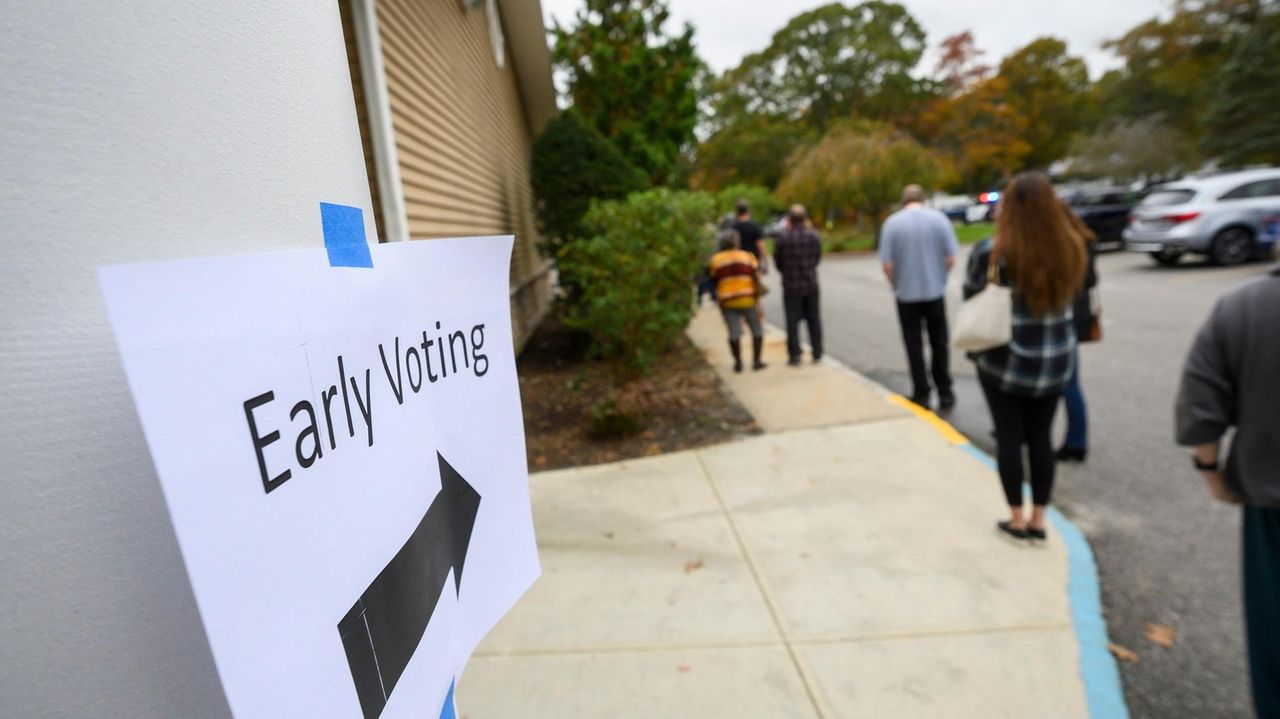
Recent Expert Placement: GOP-Led LI Towns Challenge Moving Elections to Even-Numbered Years
Lawrence Levy, associate vice president and executive dean of the National Center for Suburban Studies, spoke to Newsday about five GOP-led towns in Nassau and Suffolk that are challenging a new state law to move most local elections to even-numbered years. Levy called the law “a mixed bag” for political parties and candidates. He said the candidate at the top of the ticket could impact many of the results. “There is the risk that local issues will be drowned out … but it’s also an opportunity for a lot of people, who never bothered to pay attention to local races, to maybe do so if they don’t want to click a lever for just any old person without knowing something,” he said. Lawrence Levy is the Executive Dean of the National Center for Suburban Studies at Hofstra University. He's available to speak with media - simply click on his icon now to arrange an interview today.