
Experts Matter. Find Yours.
Connect for media, speaking, professional opportunities & more.

AI as IP™: A Framework for Boards, Executives, and Investors
Under current corporate accounting practices, artificial intelligence (AI) companies’ most valuable resources – large language models, training datasets, and algorithms – remain “off the books” or uncapitalized. As the importance of AI continues to grow in the global knowledge-based economy, financial statements are becoming less representative of a company’s true worth, creating a recognition gap. In this article, James E. Malackowski, Eric Carnick, and David Ngo present several conceptual frameworks to bridge this gap. They explain how the triangulation of three valuation approaches can reveal both the tangible investment base and the intangible, strategic upside of AI assets. In turn, these approaches provide board-level visibility into where AI capital resides and how it contributes to enterprise value. James E. Malackowski is the Chief Intellectual Property Officer (CIPO) of J.S. Held and Co-founder of Ocean Tomo, a part of J.S. Held. Mr. Malackowski has served as an expert on over one hundred occasions on intellectual property economics, including valuation, royalty, lost profits, price erosion, licensing terms, venture financing, copyright fair use, and injunction equities. He has substantial experience as a Board Director for leading technology corporations, research organizations, and companies with critical brand management issues. This article is the second installment in our three-part series, Artificial Intelligence as Intellectual Property or “AI as IP™”, which explores how artificial intelligence assets should be treated as a form of intellectual property and enterprise capital. The first article, “A Strategic Framework for the Legal Profession”, explored the legal foundations for recognizing and protecting AI assets. The upcoming third article, “Guide for SMEs to Classify, Protect, and Monetize AI Assets”, will provide practical steps for small and mid-sized enterprises to turn AI into measurable economic value. To explore the topic further, simply connect with James through his icon below.


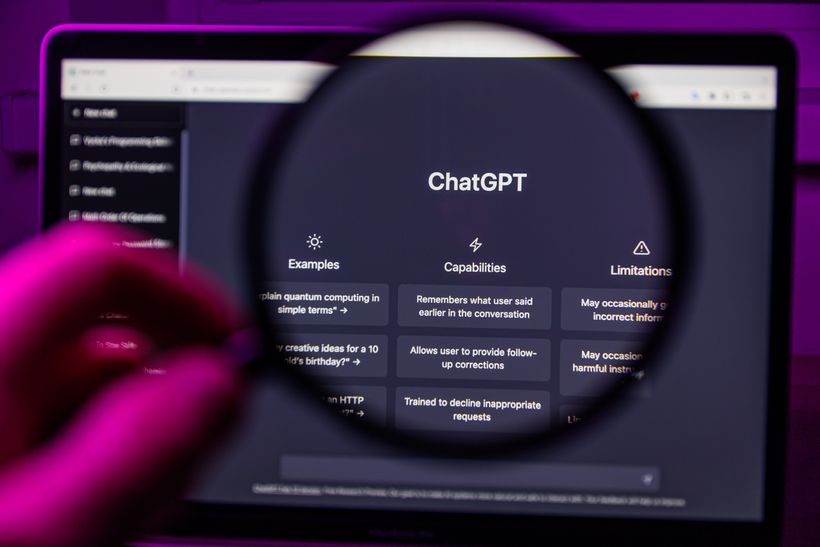
With OpenAI’s latest release, GPT-5.2, AI has crossed an important threshold in performance on professional knowledge-work benchmarks. Peter Evans, Co-Founder & CEO of ExpertFile, outlines how these technologies will fundamentally improve research communications and shares tips and prompts for PR pros. OpenAI has just launched GPT-5.2, describing it as its most capable AI model yet for professional knowledge work — with significantly improved accuracy on tasks like creating spreadsheets, building presentations, interpreting images, and handling complex multistep workflows. And based on our internal testing, we're really impressed. For communications professionals in higher education, non-profits, and R&D-focused industries, this isn’t just another tech upgrade — it’s a meaningful step forward in addressing the “research translation gap” that can slow storytelling and media outreach. According to OpenAI, GPT-5.2 represents measurable gains on benchmarks designed to mirror real work tasks. In many evaluations, it matches or exceeds the performance of human professionals. Also, before you hit reply with “Actually, the best model is…” — yes, we know. ChatGPT-5.2 isn’t the only game in town, and it’s definitely not the only tool we use. Our ExpertFile platform uses AI throughout, and I personally bounce between Claude 4.5, Gemini, Perplexity, NotebookLM, and more specialized models depending on the job to be done. LLM performance right now is a full-contact horserace — today’s winner can be tomorrow’s “remember when,” so we’re not trying to boil the ocean with endless comparisons. We’re spotlighting GPT-5.2 because it marks a meaningful step forward in the exact areas research comms teams care about: reliability, long-document work, multi-step tasks, and interpreting visuals and data. Most importantly, we want this info in your hands because a surprising number of comms pros we meet still carry real fear about AI — and long term, that’s not a good thing. Used responsibly, these tools can help you translate research faster, find stronger story angles, and ship more high-quality work without burning out. When "Too Much" AI Power Might Be Exactly What You Need AI expert Allie K. Miller's candid but positive review of an early testing version of ChatGPT 5.2 highlights what she sees as drawbacks for casual users: "outputs that are too long, too structured, and too exhaustive." She goes on to say that in her tests, she observed that ChatGPT-5,2 "stays with a line of thought longer and pushes into edge cases instead of skating on the surface." Fair enough. All good points that Allie Miller makes (see above). However, for communications professionals, these so-called "downsides" for casual users are precisely the capabilities we need. When you're assessing complex research and developing strategic messaging for a variety of important audiences, you want an AI that fits Miller's observation that GPT-5.2 feels like "AI as a serious analyst" rather than "a friendly companion." That's not a critique of our world—it's a job description for comms pros working in sectors like higher education and healthcare. Deep research tools that refuse to take shortcuts are exactly what research communicators need. So let's talk more specifically about how comms pros can think about these new capabilities: 1. AI is Your New Speed-Reading Superpower for Research That means you can upload an entire NIH grant, a full clinical trial protocol, or a complex environmental impact study and ask the model to highlight where key insights — like an unexpected finding — are discussed. It can do this in a fraction of the time it would take a human reader. This isn’t about being lazy. It’s about using AI to assemble a lot of tedious information you need to craft compelling stories while teams still parse dense text manually. 2. The Chart Whisperer You’ve Been Waiting For We’ve all been there — squinting at a graph of scientific data that looks like abstract art, waiting for the lead researcher to clarify what those error bars actually mean. Recent improvements in how GPT-5.2 handles scientific figures and charts show stronger performance on multimodal reasoning tasks, indicating better ability to interpret and describe visual information like graphs and diagrams. With these capabilities, you can unlock the data behind visuals and turn them into narrative elements that resonate with audiences. 3. A Connection Machine That Finds Stories Where Others See Statistics Great science communication isn’t about dumbing things down — it’s about building bridges between technical ideas and the broader public. GPT-5.2 shows notable improvements in abstract reasoning compared with earlier versions, based on internal evaluations on academic reasoning benchmarks. For example, teams working on novel materials science or emerging health technologies can use this reasoning capability to highlight connections between technical results and real-world impact — something that previously required hours of interpretive work. These gains help the AI spot patterns and relationships that can form the basis of compelling storytelling. 4. Accuracy That Gives You More Peace of Mind...When Coupled With Human Oversight Let’s address the elephant in the room: AI hallucinations. You’ve probably heard the horror stories — press releases that cited a study that didn’t exist, or a “quote” that was never said by an expert. GPT-5.2 has meaningfully reduced error rates compared with its predecessor, by a substantial margin, according to OpenAI Even with all these improvements, human review with your experts and careful editing remain essential, especially for anything that will be published or shared externally. 5. The Speed Factor: When “Urgent” Actually Means Urgent With the speed of media today, being second often means being irrelevant. GPT-5.2’s performance on workflow-oriented evaluations suggests it can synthesize information far more quickly than manual review, freeing up a lot more time for strategic work. While deeper reasoning and longer contexts — the kinds of tasks that matter most in research translation — require more processing time and costs continue to improve. Savvy communications teams will adopt a tiered approach: using faster models of AI for simple tasks such as social posts and routine responses, and using reasoning-optimized settings for deep research. Your Action Plan: The GPT-5.2 Playbook for Comms Pros Here’s a tactical checklist to help your team capitalize on these advances. #1 Select the Right AI Model for the Job: Lowers time and costs • Use fast, general configurations for routine content • Use reasoning-optimized configurations for complex synthesis and deep document understanding • Use higher-accuracy configurations for high-stakes projects #2 Find Hidden Ideas Beyond the Abstract: Deeper Reasoning Models do the Heavy Work • Upload complete PDFs — not just the 2-page summary you were given • Use deeper reasoning configurations to let the model work through the material Try these prompts in ChatGPT5.2 “What exactly did the researchers say about this unexpected discovery that would be of interest to my <target audience>? Provide quotes and page references where possible.” “Identify and explain the research methodology used in this study, with references to specific sections.” “Identify where the authors discuss limitations of the study.” “Explain how this research may lead to further studies or real-world benefits, in terms relatable to a general audience.” #3 Unlock Your Story Leverage improvements in pattern recognition and reasoning. Try these prompts: “Using abstract reasoning, find three unexpected analogies that explain this complex concept to a general audience.” “What questions could the researchers answer in an interview that would help us develop richer story angles?” #4 Change the Way You Write Captions Take advantage of the way ChatGPT-5.2 translates processes and reasons about images, charts, diagrams, and other visuals far more effectively. Try these prompts: Clinical Trial Graphs: “Analyze this uploaded trial results graph upload image. Identify key trends, and comparisons to controls, then draft a 150-word donor summary with plain-language explanations and suggested captions suitable for donor communications.” Medical Diagrams: “Interpret these uploaded images. Extract diagnostic insights, highlight innovations, and generate a patient-friendly explainer: bullet points plus one visual caption.” A Word of Caution: Keep Experts in the Loop to Verify Information Even with improved reliability, outputs should be treated as drafts. If your team does not yet have formal AI use policies, it's time to get started, because governance will be critical as AI use scales in 2026 and beyond. A trust-but-verify policy with experts treats AI as a co-pilot — helpful for heavy lifting — while humans remain accountable for approval and publication. The Importance of Humans (aka The Good News) Remember: the future of research communication isn’t about AI taking over — it’s about AI empowering us to do the strategic, human work that machines cannot. That includes: • Building relationships across your institution • Engaging researchers in storytelling • Discovering narrative opportunities • Turning discoveries into compelling narratives that influence audiences With improvements in speed, reasoning, and reliability, the question isn’t whether AI can help — it’s what research stories you’ll uncover next to shape public understanding and impact. FAQ How is AI changing expectations for accuracy in research and institutional communications? AI is shifting expectations from “fast output” to defensible accuracy. Better reasoning means fewer errors in research summaries, policy briefs, and expert content—especially when you’re working from long PDFs, complex methods, or dense results. The new baseline is: clear claims, traceable sources, and human review before publishing. ⸻ Why does deeper AI reasoning matter for communications teams working with experts and research content? Comms teams translate multi-disciplinary research into messaging that must withstand scrutiny. Deeper reasoning helps AI connect findings to real-world relevance, flag uncertainty, and maintain nuance instead of flattening meaning. The result is work that’s easier to defend with media, leadership, donors, and the public—when paired with expert verification. ⸻ When should communications professionals use advanced AI instead of lightweight AI tools? Use lightweight tools for brainstorming, social drafts, headlines, and quick rewrites. Use advanced, reasoning-optimized AI for high-stakes deliverables: executive briefings, research positioning, policy-sensitive messaging, media statements, and anything where a mistake could create reputational, compliance, or scientific credibility risk. Treat advanced AI as your “analyst,” not your autopilot. ⸻ How can media relations teams use AI to find stronger story angles beyond the abstract? AI can scan full papers, grants, protocols, and appendices to surface where the real story lives: unexpected findings, practical implications, limitations, and unanswered questions that prompt great interviews. Ask it to map angles by audience (public, policy, donors, clinicians) and to point to the exact sections that support each angle. ⸻ How should higher-ed comms teams use AI without breaking embargoes or media timing? AI can speed prep work—backgrounders, Q&A, lay summaries, caption drafts—before embargo lifts. The rule is simple: treat embargoed material like any sensitive document. Use approved tools, restrict sharing, and avoid pasting embargoed text into unapproved systems. Use AI to build assets early, then finalize post-approval at release time. ⸻ What’s the best way to keep faculty “in the loop” while still moving fast with AI? Use AI to produce review-friendly drafts that reduce load on researchers: short summaries, suggested quotes clearly marked as drafts, and a checklist of claims needing verification (numbers, methods, limitations). Then route to the expert with specific questions, not a wall of text. This keeps approvals faster while protecting scientific accuracy and trust. ⸻ How should teams handle charts, figures, and visual data in research communications? AI can turn “chart confusion” into narrative—if you prompt for precision. Ask it to identify trends, group comparisons, and what the figure does not show (limitations, missing context). Then verify with the researcher, especially anything involving significance, controls, effect size, or causality. Use the output to write captions that are accurate and accessible. ⸻ Do we need an AI Use policy in comms and media relations—and what should it include? Yes—because adoption scales faster than risk awareness. A practical policy should define: approved tools, what data is restricted, required human review steps, standards for citing sources/page references, rules for drafting quotes, and escalation paths for sensitive topics (health, legal, crisis). Clear guardrails reduce fear and prevent preventable reputational mistakes. If you’re using AI to move faster on research translation, the next bottleneck is usually the same one for many PR and Comm Pros: making your experts more discoverable in Generative Search, your website, and other media. ExpertFile helps media relations and digital teams organize their expert content by topics, keep detailed profiles current, and respond faster to source requests—so you can boost your AI citations and land more coverage with less work. For more information visit us at www.expertfile.com


A Roadmap or a Rift? Examining Trump’s 28-Point Ukraine Peace Proposal
As negotiations around the war in Ukraine continue to dominate global headlines, a newly surfaced 28-point peace proposal associated with former U.S. President Donald Trump has triggered intense debate across NATO capitals, Kyiv, and Moscow. The document — described in reporting by Reuters, Axios, Sky News, Al Jazeera and other outlets — outlines a framework aimed at ending the conflict but includes provisions that many analysts say could significantly reshape Europe’s security landscape. A Plan Built Around Ceasefire, Guarantees, and Reconstruction At its core, the plan calls for a formal ceasefire, a non-aggression pact between Russia, Ukraine, and European states, and a set of “security guarantees” meant to deter future conflict. Reporting indicates that Ukraine would receive assurances that any renewed Russian offensive would trigger a coordinated international response. The plan also proposes the creation of a major reconstruction program — potentially financed in part with frozen Russian assets — to rebuild infrastructure and modernize Ukraine’s economy. The proposal references pathways for deeper Ukrainian integration with Europe, including support for progressing toward EU membership and providing enhanced access to European markets. A large “Ukraine Development Fund” is also mentioned in multiple summaries of the plan. Provisions Driving the Most Global Pushback The most controversial elements relate to Ukraine’s territorial integrity and long-term security posture. Outlets such as Sky News and Al Jazeera report that the draft would recognize Russian control over Crimea and large parts of Donetsk, Luhansk, Zaporizhzhia, and Kherson — areas currently occupied by Russian forces. Ukraine would also be required to formally abandon NATO membership and cap its military at 600,000 personnel. Additional provisions include restrictions on the presence of foreign troops in Ukraine, phased lifting of sanctions on Russia, full amnesty for war-related actions, and the reintegration of Russia into global economic and political structures. These components have drawn sharp responses, particularly from European leaders who argue the plan could reward aggression and undermine international legal norms. Dr. Glen Duerr is a citizen of three countries. He was born in the United Kingdom, moved to Canada as a teenager, and then to the United States to obtain his Ph.D. His teaching and research interests include nationalism and secession, comparative politics, international relations theory, sports and politics, and Christianity and politics. View his profile. What Remains Unclear or Still Under Discussion Reporting from Reuters and AP notes that many sections of the plan remain undefined or are still in flux. The exact mechanism behind the proposed security guarantees is not detailed. Oversight of reconstruction funds, timelines for reintegration of Russia, and the legal handling of frozen assets also require further clarification. Some reporting suggests parts of the plan draw from a prior informal Russian “non-paper,” raising questions about the provenance and intent of specific provisions. Why the Proposal Matters With the war approaching four years of fighting, any formal proposal for ending hostilities carries significant geopolitical weight. Supporters of the plan frame it as a pragmatic attempt to halt loss of life and begin rebuilding. Critics argue it risks legitimizing territorial conquest and weakening the broader post-Cold-War security order. As governments evaluate the implications, journalists covering defense, diplomacy, and international law will find this evolving proposal central to understanding where U.S., European, Russian, and Ukrainian negotiators may — or may not — be willing to go next.


A popular on-the-go sandwich is now the subject of a mega trademark lawsuit between two food industry giants. The J.M. Smucker Company, more commonly known as Smucker's, recently filed a trademark lawsuit against grocery chain Trader Joe's over what it alleges is infringement upon its iconic billion-dollar investment: the Uncrustables sandwich. Smucker's seeks to obtain unspecified monetary damages from Trader Joe's, as well as profit from its similar product. But beyond the novelty of the sandwich suit lies a complex case built around a lesser-known morsel of trademark law, says Waseem Moorad, Esq., assistant professor of Law at Villanova University Charles Widger School of Law and director of the school's Intellectual Property Clinic. Professor Moorad, a former U.S. Patent and Trademark Office Patent (USPTO) examiner, recently discussed the actual claims of the lawsuit, and how both parties are preparing for a potential trial. Q: Since this lawsuit was filed, it has been a popular topic of public discourse, much of which has centered on the product—a crustless peanut butter and jelly sandwich—itself. Is that what this is truly about? Professor Moorad: Much of the commentary has been focused on the argument of whether Smucker's is permitted to have a monopoly of peanut butter and jelly sandwiches, or if Trader Joe's can actually infringe upon the Uncrustables product without necessarily using the actual trademarked name. While both discussions are legitimate conversations folks could have while munching on the delicious snack products, they are not necessarily the relevant legal claims at the crux of this lawsuit. Q: Before we get into what those relevant legal claims are, Smucker's has filed dozens of trademarks in its 128-year history. What sorts of intellectual property do these trademarks generally protect? PM: Most of their trademarks filed with the USPTO are registered to protect against competitors from using words, logos, slogans, symbols and other materials that are linked to the brand name of the company, its affiliates, or its respective products. Well-known examples include Smucker's, Folgers, Jif and, of course, Uncrustables. If a competing company has a brand or a product that has a similar sounding name or appearance, such as "Giff Peanut Butter," then Smucker's could sue that company for trademark infringement. That name is not only infringing upon a trademark that Smucker's has federal protection over, but also is in the same related industry (food products), within which Smucker's has protection. Q: But Trader Joe's did not necessarily infringe on any trademarked words, symbols, slogans or the like. What, then, is the basis for the claims of infringement? PM: The issue is related to a deeper subset of trademark law, specifically the concept of "trade dress." Trade dress is the intellectual property associated with the visual and aesthetic characteristics of a product or its related packaging that allows a consumer to know with whom that product or packaging is associated. For example, Coca-Cola's name, which is federally protected, is well known as a registered trademark; however, the Coca-Cola bottle, with the curvy appearance where it gets slimmer in the middle, is an example of a registered trade dress belonging to Coca-Cola. If there was no logo or word mark on the bottle, the average consumer would still be able to recognize it as a Coke bottle. There are several trademarks that Smucker's owns that are related to the trade dress of its products. Smucker's isn't alleging that Trader Joe's is copying any of the branding names of their products; they are accusing their competitor of mimicking the trade dress or aesthetic appearances, textures and characteristics of its Uncrustables products and packaging. Q: What specific trade dress trademarks are they claiming have been infringed upon? PM: There are at least two registered trademarks that Smucker's is drawing legal attention to. In 2002, Smucker's had trademarked the image of an Uncrustables sandwich that has pie-crimping indentations or marks along the circumference of the sandwich, and in 2019, the company trademarked the image of an Uncrustables sandwich with a bite taken out of it. Smucker's argument is that the Trader Joe's packaging for a similar crustless peanut butter and jelly shows an image of a sandwich with a bite taken out of it, as well as the crimping along the outer edges. Q: How does one make a legal case out of something like this? PM: In order to effectively file a trademark infringement lawsuit, the plaintiff must not only show that their federally-protected intellectual property rights are being infringed upon, but also demonstrate that as a result of this infringement, the customer or consumer is being confused. Smucker's alleges that as result of Trader Joe's actions, customers are now confused over the product and are purchasing Trader Joe's peanut butter and jelly sandwiches thinking they are actually Smucker's Uncrustables sandwiches. Smucker's is of the belief that if the Trader Joe's packaging did not show pie-like crimped edges and the image of the sandwich with a bite taken out of it, confused consumers would not have purchased the Trader Joe's products and would have instead purchased Smucker's Uncrustables. It is this argument that will be the crux of the court cases to follow. Q: Assuming this goes to trial, how will the two parties prepare and what are some of the challenges for Smucker's as plaintiff? PM: Part of the case on Smucker's end will be to gather customer feedback or testimony that demonstrates confusion in the marketplace as a result of the similar packaging and trade dress. Trader Joe's will focus on the fact that even though the packaging may be similar, there would be no reason or basis for a customer to be confused between a Trader Joe's-branded product and a Smucker's-branded product. As the plaintiff in this case, the burden shall be on Smucker's to prove the confusion element necessary to have trademark infringement. The Trader Joe's product clearly says Trader Joe's, and the chain has a marketplace reputation for selling its own products rather than other-branded products. The challenge in such a scenario will be to prove, despite this, that customers purchasing this product would still have gotten confused and either assumed that they were purchasing Uncrustables, or mistakenly believed that Uncrustables may now have a commercial relationship with Trader Joe's.


Detecting Fraud Using Emerging Technology: Innovating Beyond Traditional Controls
Fraud and financial crime are evolving at a pace that challenges even the most established detection systems. From cyber-enabled schemes and complex financial misappropriations to subtle internal manipulations, traditional audit and compliance methods are often too slow or too narrow to keep up. In a world where billions of data points can hide a single irregularity, the investigative advantage now lies in speed, intelligence, and technological adaptability. J.S. Held’s Ken Feinstein recently authored an article exploring how artificial intelligence, machine learning, and advanced data analytics tools are transforming how organizations uncover and prevent fraud. In his piece, “Detecting Fraud Using Emerging Technology: Don’t Be Afraid to Innovate,” Feinstein illustrates how the integration of digital investigation techniques — from automation to predictive analytics — is reshaping the fraud-detection landscape, helping companies not just react to wrongdoing but anticipate and deter it. Ken Feinstein specializes in investigative data analytics and has over 25 years of experience. He provides data analytics solutions spanning multiple sectors, including retail and consumer products, life sciences, technology, financial services, and industrial products. His clients include law firms and Fortune 500 legal and compliance teams for whom he delivers large-scale, complex investigations, regulatory response matters, proactive anti‐fraud efforts, and compliance programs. View his profile here Why This Matters As fraudsters exploit digital tools and globalized networks, detection efforts must evolve in kind. Regulators expect faster, data-driven investigations, and boards demand real-time risk visibility. Those who innovate with AI-enabled detection and forensic analytics are better positioned to protect assets, reputation, and shareholder trust. Looking to know more? Connect with Ken Feinstein today by clicking on his icon below.


As sustainability moves from niche topic to boardroom central, companies face an increasingly complex global environment of regulatory divergence, disclosure demands and reputational risk. A recent article by J.S. Held's John Peiserich examines how multinational firms can respond effectively to the “crosscurrents” of ESG compliance, litigation exposure and evolving definitions of corporate responsibility. John Peiserich specializes in environmental risk and compliance. With over 30 years of experience, John provides consulting and expert services for heavy industry and law firms throughout the country with a focus on Oil & Gas, Energy, and Public Utilities, including serving as an expert witness in arbitration proceedings and in state and federal courts. View his profile here Key Insights: Sustainability now touches every major business function — environmental, social, and governance — and must be embedded in strategy rather than treated as an add-on. Regulatory landscapes are diverging: while the U.S. federal approach remains fragmented, individual states like California are moving ahead with mandatory climate and emissions-related corporate disclosures. In contrast, the European Union’s Green Deal and related frameworks promote a more unified regulatory model, creating operational tension for multinational corporations. Litigation and disclosure risk are increasing, with “greenwashing” (overstating sustainability achievements) and “greenhushing” (avoiding or under-reporting ESG performance) emerging as major board-level concerns. Effective risk management now requires scalable data systems, transparent communication, strong governance, and agility to adapt across multiple regulatory regimes. Why this matters: The widening divide between jurisdictions — and intensifying scrutiny of corporate sustainability claims — means ESG compliance can no longer be treated as a checkbox exercise. Organizations that fail to anticipate regulatory expectations or align ESG strategy with business goals risk legal exposure, reputational harm, and missed opportunities for value creation. Strategic Insights for Corporate Leadership on Sustainability Boards and executives must adjust their mindset, seeing sustainability not as a burden but as a catalyst for growth and differentiation. Proactive investment in research, development, and stakeholder engagement will help organizations seize new opportunities and maintain credibility in a fast-changing world. Documentation and transparency are vital defenses against legal challenges, while ongoing monitoring of policy and market trends ensures adaptability. Ultimately, the most successful companies will treat sustainability as an essential tenet of strategy—aligning profit, purpose, and governance to secure their position in the global marketplace. Navigating the crosscurrents of sustainability requires courage, judgment, and a commitment to continuous learning. By embracing these principles, corporations can build a future that is not only profitable but also just, resilient, and worthy of the trust placed in them by shareholders and society alike. Looking to know more or connect with John Peiserich about this important topic? Simply click on his icon now to arrange an interview today.


Op-Ed: Stablecoin 'rewards' are a risk to financial stability
Congress has long recognized that stablecoins should not function as unregulated bank deposits. The intent of the recently enacted GENIUS Act is clear: to prohibit stablecoin issuers from paying interest or yield to holders, maintaining a distinction between payment instruments and bank deposits which are not only used for payment purposes but also as a store value. Yet loopholes have already emerged. Some crypto exchanges and affiliated platforms now offer “rewards” to stablecoin holders that work much like interest, potentially undermining the stability of the traditional banking system and constraining credit in local communities. Terminology matters. Credit card rewards are funded by interchange fees and paid to encourage spending — you earn points for using your card. Stablecoin “rewards” are different. They’re funded by investing the reserves backing stablecoins, typically in Treasury bills or money market funds, and passing that interest income to holders. You earn returns for holding the stablecoin, not for using it. Economically, this is indistinguishable from a bank deposit paying interest. When a platform advertises “5% rewards” on stablecoin holdings, it’s generally backing those tokens with Treasuries yielding about 4.5%, then passing that yield to users. Whether labeled rewards, yield or dividends, the function is the same: interest on deposits. Banks perform a similar activity — taking deposits, investing in loans and paying depositors a return — but face far higher costs, including FDIC insurance, capital requirements and compliance obligations that stablecoin issuers largely avoid. This dynamic has a precedent. In the 1970s and early 1980s, Regulation Q capped bank deposit rates at 5.25% while inflation and Treasury yields soared above 15%. Money market funds filled the gap, offering market rates directly to consumers. Deposits fled smaller banks, which lost their funding base, while large money-center institutions gained reserves. The result was widespread disintermediation, the collapse of the savings and loan industry and the farm-credit crisis of the 1980s. Stablecoin “rewards” risk repeating that history. Just as money market funds exploited the gap between regulated deposit rates and market rates, stablecoin platforms exploit the difference between what banks can profitably pay and what lightly regulated issuers can offer by passing through Treasury yields with minimal overhead. Some ask why banks can’t just raise deposit rates. The answer lies in structure. Banks operate under a fundamentally different business model and cost framework. They pay FDIC premiums, maintain capital reserves and comply with extensive supervision — costs most stablecoin issuers don’t bear. Banks also use deposits to make loans, which requires holding capital against potential losses. Stablecoin issuers simply hold reserves in ultra-safe assets, allowing them to pass through nearly all the yield they earn. To match 5% “rewards,” banks would need to earn 6% to 7% on their loan portfolios — an unrealistic target in today’s environment, especially for smaller community banks. The consequence is not fair competition, but a structural disadvantage for regulated depository institutions. The Consumer Bankers Association warns this loophole could trigger a massive shift of deposits from community banks to global custodians. Citing Treasury Department estimates, the Association notes that as much as $6.6 trillion in deposits could migrate into stablecoins if yield programs remain permissible. Because the GENIUS Act’s prohibition applies narrowly to issuers, exchanges and intermediaries may still offer financial returns under alternate terminology. This opens the door to affiliate arrangements that replicate the essence of interest payments without legal accountability. Those reserves don’t stay in local economies. The largest stablecoin issuers hold funds at global custodians such as Bank of New York Mellon, in money market funds managed by firms like BlackRock or — if permitted — directly with the Federal Reserve. When a community-bank depositor moves $100,000 into stablecoins, that capital exits the local bank and concentrates at systemically important institutions. The community bank loses lending capacity; the megabank or the Fed gains reserves. The result is disintermediation with a concentrated risk profile reminiscent of the money-market fund crisis. The Progressive Policy Institute estimates that community banks — responsible for roughly 60% of small-business loans and 80% of agricultural lending nationwide — could be among the most affected. In Louisiana, where local banks finance small businesses and family farms, that risk is especially relevant. If deposits migrate to unregulated digital assets, community-bank lending could tighten, particularly in rural parishes and underserved communities. Research from the Brookings Institution reinforces the need for regulatory parity. The label “rewards” doesn’t change the fact that these payments are economically interest. Allowing intermediaries to generate yield without deposit insurance or prudential oversight could recreate vulnerabilities similar to those seen during the 2008 money market fund crisis. To preserve financial stability, policymakers should move to close the stablecoin-interest loophole. Clarifying that the prohibition on interest applies to all entities— not just issuers — would uphold Congress’ intent. Regulators such as the Securities and Exchange Commission, Commodities Futures Trading Commission and federal banking agencies could also treat “reward” programs as equivalent to deposit interest for supervisory purposes. Stablecoins offer genuine efficiencies in payments, but unchecked yield features risk turning them into unregulated banks. History shows what happens when regulatory arbitrage allows competitors to offer deposit-like products without oversight: deposit flight, institutional instability and capital flowing away from community lenders. Acting now could help sustain stability, protect depositors and preserve the credit channels that support community lending — especially in states like Louisiana, where community banks remain the backbone of Main Street.



Motor vehicle crashes remain one of the leading causes of death among teenagers. For the youngest drivers, getting behind the wheel marks freedom but also comes with measurable risk. At the University of California, Irvine, Dr. Federico Vaca, professor and executive vice chair of emergency medicine, is determined to change that trajectory. “Driving licensure among our youngest drivers remains a major life milestone, and it allows for newfound freedom and opportunity for not only youth but their parents as well. At the same time, learning to drive and licensure come at a time when youth are rapidly moving through life with new transitions in school, with friends, and likely exposure to alcohol and drugs,” he says. “Our priority … is to examine the complexities of young driver behavior and to thoroughly understand crash injury risk and crash prevention among this special group of drivers.” Vaca’s work is at the intersection of health, transportation science and policy. A fellow of the Association for the Advancement of Automotive Medicine and a researcher at UC Irvine’s Institute of Transportation Studies, he previously served as a medical fellow at the U.S. Department of Transportation’s National Highway Traffic Safety Administration in Washington, D.C. His long-standing goal is to prevent the injuries he has seen and treated in emergency departments and trauma centers through rigorous research, using the findings to inform and advance evidence-based programs and policies that save lives on the road. Innovating safety science UC Irvine is home to a new hub for understanding and preventing crash injuries among young drivers, the Brain, Body & Behavior Driving Simulation Lab, founded by Vaca and his interdisciplinary team. At the heart of the B3DrivSim Lab is a high-fidelity, half-cab driving simulator capable of replicating real-world conditions with precision. It uses advanced software to design customized driving scenarios – from complex roadway environments to the inclusion of such human elements as distraction and fatigue – all while capturing real-time video and driving behavior as well as vehicle control metrics. This integration of medicine, behavioral science and engineering enables researchers to measure how developmental and socioecological factors shape driver decisions in unique and consequential ways. The B3DrivSim Lab also represents a growing mentorship ecosystem at UC Irvine. In mid-June, the facility welcomed Siwei Hu, a postdoctoral scholar who earned a Ph.D. in civil and environmental engineering, with a focus on transportation studies, at UC Irvine. Hu works closely with Vaca to combine engineering and modeling analytics with behavioral and crash risk insights. The half-cab driving simulator uses advanced software to replicate real-world conditions and design customized driving scenarios – from complex roadway environments to the inclusion of such human elements as distraction and fatigue – all while capturing real-time video and driving behavior as well as vehicle control metrics. Steve Zylius / UC Irvine From the lab to policy Beyond simulation, Vaca’s latest National Institutes of Health-funded study, separate from his lab’s work, takes this philosophy to the national level. His project, “Modeling a National Graduated-BAC Policy for 21- to 24-Year-Old Drivers,” explores whether lowering the legal blood alcohol limit for young adults could reduce alcohol-related crashes and deaths. “When you turn 21, at that very moment, the application of several alcohol-related prevention laws changes in the blink of an eye,” Vaca says. “Before that, the minimum legal drinking age and zero-tolerance laws are in place to protect young drivers from alcohol-impaired driving. Effectively, the second you turn 21, those prevention policies don’t apply, and you’re suddenly allowed to have a much higher blood alcohol concentration in your body that’s intimately tied to serious and fatal crash risk. It’s a very dangerous disconnect.” The study will use national crash data, behavioral surveys and system dynamics modeling to examine how a “graduated BAC policy” might bridge that gap, giving young adult drivers a safer transition into full legal responsibility and saving many more lives. Bridging science, education and prevention Earlier this year, Vaca and his B3DrivSim team joined prevention program educators, policymakers, engineers and law enforcement professionals in Anaheim at a Ford Driving Skills for Life event, part of a Ford Philanthropy-sponsored national effort teaching teens hands-on safe driving techniques – from hazard recognition to impaired-driving awareness. Speaking to more than 130 high school students and their parents from local and distant communities, Vaca emphasized the connection among driving, independence, opportunity and responsibility. That message aligns with his broader initiative, Youth Thriving in Life Transitions with Transportation, which introduces high school students to traffic safety and transportation science and their role in promoting health, education and employment in early adulthood. By linking research and real-world experience, the project empowers youth to see mobility as a foundation for opportunity with safety as its cornerstone. With overall young driver crash fatalities rising 25 percent nationally over the last decade and a 46 percent increase in fatal crashes where a young driver had a BAC of ≥ .01/dL, Vaca’s work represents a crucial step toward reversing that trend. Through a combination of clinical insight and prevention, transportation and data science underscored by community collaboration, he and his team are redefining how researchers and policymakers think about youth driver safety.


The missing AI revolution: Smarter leadership, not smarter machines, says workforce expert
Artificial intelligence has transformed industries, but its most overlooked potential lies in helping leaders themselves think more clearly and decide more effectively, according to Saleem Mistry, Associate Professor of Management at the University of Delaware’s Alfred Lerner College of Business & Economics. Mistry focuses on enabling leaders to be more productive, think clearly and make better decisions. Focusing on the leader, not just the organization Mistry’s work examines how leaders at every level can use AI to enhance productivity and decision-making. While most organizational conversations about AI focus on operational efficiency or customer service, he argues that the true frontier is leadership productivity. “Leadership productivity directly shapes organizational performance. AI can be transformative when it helps leaders think faster, decide better and regain the time they’ve lost to administration.” – Mistry As a professor of management and leadership, Mistry is often asked how AI will change the workplace. Those conversations usually revolve around automating workflows, not empowering leaders. Yet, as he notes, an MIT report found that 95 percent of generative AI pilots are failing — largely due to the absence of clear business use cases. That insight shaped his direction: leadership itself may be the missing use case. Having spent much of his earlier career in high technology, Mistry saw firsthand that innovation succeeds or fails based on how effectively leaders model new tools. Demonstrating practical applications Mistry recently analyzed the 2024-2025 U.S. Office of Inspector General reports on leadership challenges based. He analyzed each leadership challenge using three guiding questions: 1) Do the problems stem from leaders struggling with time, decisions or task management? 2) How might AI help? 3) Where could AI have the greatest impact? The results included: Executive Example (Amtrak): AI could power a real-time RACI dashboard to clarify accountability, track decisions and eliminate bottlenecks. Mid-Level Example (EPA): “Agentic AI” could cross-check allegations against verified data before termination decisions, preventing ethical and legal missteps. Supervisor Example (CISA): AI could scan incentive data for waste and anomalies, saving hours of manual review. Why it matters By automating repetitive, data-heavy tasks, AI gives leaders something they desperately need: time. Time to think strategically, coach teams and make better decisions. Mistry’s findings link AI adoption directly to mental well-being, arguing that improved decision productivity leads to improved organizational health. “Decision productivity is business productivity. Organizations that make faster, fairer and more informed decisions outperform those that don’t.” – Mistry Next steps: Building the framework for responsible AI leadership Mistry’s next milestone is to develop a set of leadership use cases that can be used by business leaders at all levels where AI can deliver the greatest impact. He is also developing frameworks for responsible AI adoption that help leaders determine when and how to deploy these tools ethically — across decision-making, communication, planning and task management. “AI won’t replace leaders,” Mistry concludes, “but leaders who learn to use AI effectively will outperform those who don’t.” ABOUT SALEEM MISTRY Associate Professor of Management Alfred Lerner College of Business & Economics Mistry’s research focuses on the future of work, with a particular emphasis on how individuals navigate workplace transitions. His research explores how people adjust to both minor and major changes in their careers, such as shifts in jobs, responsibilities, teams or entire organizations. A growing area of his expertise is the strategic use of artificial intelligence to enhance productivity for leaders, teams and human resource professionals. His research connects academic insights with practical applications, helping to shape how people and organizations adapt to an evolving professional landscape. Reporters who would like to speak to Mistry can click on his profile.



Professor James Sample Featured in DOJ Coverage
James Sample, professor at the Maurice A. Deane School of Law, was recently featured in an ABC News segment examining high-profile cases and controversies involving the Department of Justice. As a legal contributor, he discussed the constitutional and ethical issues at the center of this national story.

