
Experts Matter. Find Yours.
Connect for media, speaking, professional opportunities & more.

The demands of fast fulfillment
Consumers now expect packages to arrive in hours, perhaps days but not weeks. Amazon fueled this demand with the promise of speedy delivery of nearly everything you can buy online. Indeed, your doorstep now rivals the loading dock as the main destination for goods. Supply chains are the key to such quick turnarounds: in short, how items move from manufacturers to distributors to consumers. Any hiccups along the way exasperates our increasingly demanding consumers. In short, they want fulfillment to be as easy as clicking to buy something online. Through years of research and experience, NJIT’s Sanchoy Das has become an expert on fast fulfillment, even writing a book on it. It continues to evolve, however, with the prospect of drone deliveries on the horizon. He’s versed on that as well, making him an ideal source for stories that explain how goods and services are delivered in our on-demand economy. Specifically, Sanchoy can explain Logistics Breakdowns in supply chains Industrial engineering Business operations management Data-driven technology To interview him, simply click on the button below.



Aston University cyber expert to appear at FinTech event in Birmingham
'FinTech Secured – Next Generation' will showcase the work of leading stakeholders in the research and development of financial technology (FinTech) and security Professor Vladlena Benson will offer insight on illicit money flows and trends in Financial Security Registrations are now open for the event on 7 June 2022 at The Compound, Birmingham. The director of the Cyber Security Innovation (CSI) Centre at Aston University is set to appear at a networking event around financial technology (FinTech). Following the success of their first flagship event of 2022 ‘Secure by Design, Advanced Manufacturing’, Midlands Cyber will launch 'FinTech Secured – Next Generation' on the 7 June 2022. The event will be the first face to face event after the pandemic in Birmingham, bringing together thought leaders and service applications specialists for an evening of industry networking. Professor Vladlena Benson, who also serves on the EU’s Agency for Cybersecurity (ENISA) task force defining the Cybersecurity Skills Framework at the European level, will be joined by contacts from within the cryptocurrency sector and offer insight on illicit money flows and trends in financial security. The event will also showcase the work of leading stakeholders in the research and development of FinTech and financial security. FinTech’s academic innovators, CEOs and company founders, entrepreneurs, contractors, investors and policymakers are encouraged to register now to discuss, participate, network and put their questions to our panel of industry experts. Professor Vladlena Benson, an industry-recognised expert in cybersecurity risk management and director of CSI Centre at Aston Business School, said: “Financial services are core to the UK economy and continue to be a common target for cyber criminals. Challenges to the insurance sector and cyber crime prosecution when crypto assets are involved are emerging and at the CSI we are working to provide forensic and data integrity solutions which help secure the FinTech sector.” User of contactless Europay, Mastercard, and Visa (EMV) may be interested in the insights of Tom Chothia, reader in cyber security at the University of Birmingham, on how the vulnerabilities of Apple Pay and Visa could enable hackers to ’Take £1000 from a locked iPhone’. Registrations are now open to join the cluster at 18:00 hrs on the 7 June 2022 at The Compound, Birmingham.


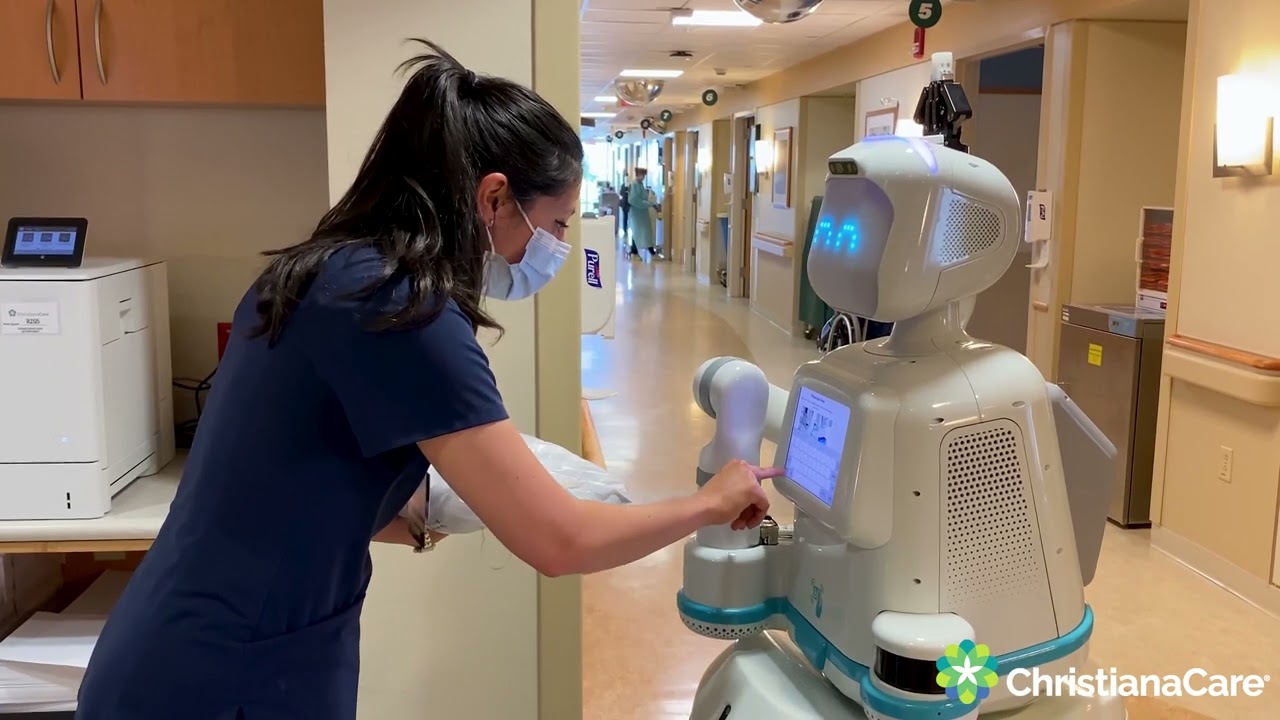
ChristianaCare is the first health system in the Philadelphia region piloting an innovative tool called Moxi, a collaborative robot — or “cobot”— that can assist in the hospital by making deliveries and performing other non-clinical tasks so that nurses and other clinical staff can spend more time focused on what they do best—caring for patients. With a landmark $1.5 million grant from the American Nurses Foundation, ChristianaCare will deploy a total of five Moxi cobots at Christiana Hospital. It is the largest single grant in the history of Nursing at ChristianaCare. Research published in the Journal of Nursing Management shows that nurses spend a significant amount of time — up to 33% of their shifts — on time-consuming but simple tasks such as dropping off lab specimens, collecting supplies or picking up medications from the pharmacy. By taking over these time-consuming but simple tasks, Moxi enables nurses to focus on patient care, where their skills are most needed. “Nurses need the time and space to deliver care and patient education at the top of their license,” said Ric Cuming, Ed.D., MSN, RN, NEA-BC, FAAN, chief nurse executive and president, ChristianaCare HomeHealth. “Moxi will be doing those hunting and gathering tasks such as getting equipment and supplies, which nurses are doing today but don’t need to be doing.” Cobots are designed to share workspace and interact directly with people. In ChristianaCare’s initiative, the Moxi cobots will be integrated with the Cerner Corporation electronic health record (EHR) platform and use artificial intelligence to proactively identify when nurses will need equipment, supplies, medications and lab tests. The Moxi cobots will be deployed to 11 inpatient units, partnering with more than 400 nurses. The American Nurses Foundation grant will enable ChristianaCare to evaluate the impact of cobots on nursing practice with the goal of scaling the technology if successful. “Moxi is not a replacement for a nurse or nursing position — or any position,” Cuming said. “It is an additional resource for nurses and their teams. “With robotic technology, we are using resources wisely and effectively, creating more efficient workflows, reducing repetitive tasks and freeing up nurses’ time for the complex clinical work that they excel at doing.” Reimagining Nursing ChristianaCare is one of 10 grant recipients from the American Nurses Foundation Reimagining Nursing (RN) Initiative. “We are proud that the American Nurses Foundation has the confidence in bold nurse-led ideas that will lead to large-scale, replicable change,” said Katherine Collard, MS, RN-BC, chief nursing informatics officer at ChristianaCare. “This grant will support nurses at ChristianaCare and our nursing colleagues across the nation in realizing their full potential, giving them the tools, resources and power to improve health care now and in the future.” With the American Nurses Foundation grant, ChristianaCare will conduct research on driving nursing outcomes through robotics. “We have a transformative opportunity to generate new knowledge and to move the science forward around robotics in nursing and in health care,” said Susan Birkhoff, Ph.D., RN, nurse scientist at ChristianaCare. “Through research, we will study Moxi’s impact to nursing caregivers that will have broad implications for nursing practice, workforce and education,” she said. ChristianaCare began exploring the potential of robotics to support Nursing with two Moxi cobots acquired in February, funded through the generosity of donors including Good Samaritan, Inc. and E.J. “Woody” Rice. With the grant, said Birkhoff, ChristianaCare will take Moxi to the next “bold frontier,” adding three more cobots with the goal of automating and optimizing nurses’ workflow without interrupting care. With five total cobots, ChristianaCare will be home to the largest number of Moxi robots in health care. The Little Bot That Can Before Moxi can become fully part of the care team, it must learn to navigate the hospital and respond to the nurses’ needs. Using artificial intelligence, Moxi is mapping out Christiana Hospital through sensors and other machine-learning technology so that the cobots can ultimately navigate and work autonomously. “When the Moxi cobots are fully integrated, we anticipate that they will complete up to 200 delivery tasks a day,” Collard said. “By making point-to-point deliveries, Moxi can save nurses hours of time and thousands of steps.” Designed to be compatible with the busy environments of hospitals, Moxi’s features include: Social intelligence: Moxi won’t bump into people or objects in hallways, waves when it sees someone new and happily poses for selfies. Mobile manipulation: Moxi can learn to use its robotic arm to operate existing automatic doors and elevator panels. Human-guided learning: The more Moxi is used, the more Moxi learns and adapts to the environment and specific ways of doing things. Friendly and safe design: With heart-shaped eyes and a friendly appearance, Moxi is designed to navigate safely and get the job done so nurses can focus on patient care. “What Moxi is doing in health systems like ChristianaCare is really transforming the way we think about health care and allowing staff to focus on the people in the hospital as opposed to the tasks,” said Dr. Andrea Thomaz, CEO and co-founder of Diligent Robotics, which created Moxi. “Robots are not something way in the future. Our robots work side-by-side with humans to ease the stress and workload of one of the most demanding jobs in society, nursing. The partnership between Diligent and ChristianaCare shows that the future is now.” Hospital Helper Directly from the Cerner EHR, Moxi will be able to anticipate clinician and patient needs and perform tasks without human involvement. Examples could include: Delivering items to patients based on nurses’ order requests. Making rounds across units to deliver lab samples on collections completed in the electronic health record. Making just-in-time deliveries of pharmaceuticals not stocked on the floor. Prioritizing tasks based on the nursing workload in a unit, so that the busiest nurses will get help first. “Connecting Moxi to the existing technology that clinicians use on a daily basis is key to making it easier to anticipate needs so clinicians can spend more time on patient care,” says Eva Karp, DHA, MBA, RN-BC, senior vice president, chief clinical and patient safety, Cerner. “Moxi could make a real difference in a nurse’s day — alleviating burnout and staffing shortages, which have become especially prevalent since the pandemic.” Incorporating the electronic health record into Moxi is part of the study funded by the American Nurses Foundation. “It’s absolutely in the best interest of our patients that Moxi can work alongside nurses so we can spend more time working directly with our patients to do what we do best,” said Pam Owen, MSN, RN-BC, nurse manager on 7E, one of the pilot units. “And Moxi brings a smile to people’s faces.” Fast Facts About Moxi Works in 22-hour shifts. Needs only two hours of charging time. Weighs about 300 pounds. Can carry a total weight of 70 pounds. Gender-neutral. Pronouns are “it” for a single Moxi cobot and “they” for more than one. Named one of America’s Greatest Disruptors in 2021 by Newsweek and one of the Best Inventions of 2019 by Time Magazine. About ChristianaCare Headquartered in Wilmington, Delaware, ChristianaCare is one of the country’s most dynamic health care organizations, centered on improving health outcomes, making high-quality care more accessible and lowering health care costs. ChristianaCare includes an extensive network of primary care and outpatient services, home health care, urgent care centers, three hospitals (1,299 beds), a freestanding emergency department, a Level I trauma center and a Level III neonatal intensive care unit, a comprehensive stroke center and regional centers of excellence in heart and vascular care, cancer care and women’s health. It also includes the pioneering Gene Editing Institute. ChristianaCare is nationally recognized as a great place to work, rated by Forbes as the 2nd best health system for diversity and inclusion, and the 29th best health system to work for in the United States, and by IDG Computerworld as one of the nation’s Best Places to Work in IT. ChristianaCare is rated by Healthgrades as one of America’s 50 Best Hospitals and continually ranked among the nation’s best by U.S. News & World Report, Newsweek and other national quality ratings. ChristianaCare is a nonprofit teaching health system with more than 260 residents and fellows. With its groundbreaking Center for Virtual Health and a focus on population health and value-based care, ChristianaCare is shaping the future of health care.



Will out of this world ideas be the next big thing for Florida's tourism industry?
Look up. That's where you may find the next billion-dollar tourism idea in America. Space tourism seems to be the next frontier for the industry to conquer. With a price tag of at least $50,000 per customer, the potential is huge. With companies like World View test launching in Florida and Space Perspective already headquartered in the Sunshine State, Florida is on the verge of being a destination for tourists looking to go out of this world. The concept sounds impressive, but there still are questions: • Will customers line up for a $50,000 price-point? • How big (or small) is the market for potential customers? • Is it safe and what are the liabilities? • And, if it takes off, what will the ripple effect be for Florida with an influx of high-end tourists? If you are a journalist covering the potential impact of space tourism in Florida, let us help. Peter Ricci, Ph.D., is a clinical associate professor and director of the Hospitality and Tourism Management program in Florida Atlantic University’s College of Business. He is a hospitality industry veteran with more than 20 years of managerial experience in segments including food service, lodging, incentive travel and destination marketing. Peter is available to speak with the media about space-travel tourism as well as other topics such as the labor shortage in hospitality and tourism. Simply click on his icon to arrange an interview.



Metaverse...have you met AcceleRoute?
The Internet is a testament to the power of evolution. But there's a bigger picture looming. A discontinuity. Driven by a new breed of application environments including the Metaverse, multi-player gaming, VR and more. Will this drive the need for a "new Internet"? Many believe, as a minimum, networking will need a serious upgrade. Moore's Law can cover us for throughput for awhile, but latency is a different story. The speed of light creates the limit. No getting around that. There is only one solution. Park the services closer to the users. And that ushers in a new architectural paradigm in the form of Edge Data Centers. Those facilities will operate in global federations, serving tight geographies while hot-syncing with each other. A tidy solution. Job done, right? Not so fast. If people only cared about what and who is geographically close to them, we might be ok. Remember we need to park the services AND THE DATA close to the users. We're not talking about old slow data like websites, but the fast stuff like fast-twitch gaming, or VR, or avatar movements in the Metaverse. How can a byte in Tokyo stay in "white-hot" sync with a byte in London? Predictive caching, that's how. The new frontier. The geography-buster. Let's say you’re VR-interacting with someone across the planet, there will be a lag. It won't feel real. But what if the application servers use laws of physics to predict far-end movement for local render, with algorithms to reconcile laggy incoming real-position data. Done right, that might feel real. Take that example and scale it in all directions. That's the future. Can incrementally-evolved networks handle that? Its anybody's guess what the future of networking will look like but let's try anyway. Some believe this brave new application world will be the catalyst for significant infrastructure change. Not the " N+1" kind, but the "all-new" kind. The kind we thought we'd never need because incremental upgrades were getting it done. But that was before the Metaverse discontinuity. AcceleRoute is a forward-thinking next-generation network architecture designed for this category of challenge. All-new thinking. Designed from the ground up around a bufferless core architecture, AcceleRoute achieves network throughput and latency on a scale not seen before. Bufferless means no hops. Essentially an endless supply of instantly provisioned virtual direct links, each with as much dynamic bandwidth as needed at any point in time. Incorporating novel paradigms like network fusion and expansion by constellations, AcceleRoute can scale to new orders of magnitude, all while embracing absolute simplicity for network control and management. An infinitely-expandable network, based on new principles, that can glue CPUs/DPUs/GPUs to globalized data with one seamless fabric. Perhaps a full AcceleRoute solution won't be required, but it’s likely the pursuit of network optimizations will be relentless. AcceleRoute represents 2 decades of invention embodied by 36 patents with over 700 claims and more on the way. That's a massive starting position for anyone playing the long game.


How should we measure faculty expertise? This week the UK provides its answer to this question via its highly significant and formal (government-directed) assessment of academic research - which grades academic teams on a scale of 1* to 4* for their ability to deliver, share and create impact globally outstanding research. This process is known as the REF (the Research Excellence Framework) - and the results will be publicly released this Thursday (12th May) with universities themselves finding out how they’ve performed in advance today (Monday 9th May). The process was last carried out 8 years ago and has been delayed by a year due to the pandemic. Why is the Research Excellence Framework (REF) Significant? The Research Excellence Framework steers the level of UK public funds - allocated via research councils - that will be invested in research for each academic department (or so-called “Unit of Assessment”) for the next few years. It is also a way of comparing performance against other universities that are offering similar research expertise, and of strengthening (or weakening) global research reputations. During the next three days, UK universities will be digging into the detail of their REF gradings and the accompanying feedback. There will be some very nervous university leaders and research heads delving into why this peer-assessed review of their research has not gone as well as they expected and why their percentages in each of the four grade areas have dropped - or even been given the “unclassified” career-damaging stamp. How are the REF Scores for Universities Determined? The measurement process is based on three aspects: Quality of outputs (such as: publications, performances, and exhibitions), Impact beyond academia The environment that supports research The preparation, participation, and assessment process takes a massive amount of time, attention and energy. Last time (2014) there were 1,911 submissions to review. Research teams, designated REF leaders and senior staff will have spent long hours across many months preparing their submissions and making sure they are presenting hard evidence and the best case possible to meet the above criteria at the highest possible level. There are 34 subject areas that are covered in the latest REF - and three tiers of expert panels (some with about 20 or more senior academics, international subject leaders, and research users) will have reviewed each submission and compared notes to come to decisions. How do these Key Categories within the REF Contribute to the Rating for a University? The Research Excellence Framework is actually an intensive and highly important approach to expert assessment. These are the key factors and their definitions (with the assigned weighting of each of the criteria in steering final grades): Outputs (60%): the quality of submitted research outputs in terms of their ‘originality, significance and rigour’, with reference to international research quality standards. This element will carry a weighting of 60 per cent in the overall outcome awarded to each submission. Impact (25%): the ‘reach and significance’ of impacts on the economy, society, culture, public policy or services, health, the environment or quality of life that were underpinned by excellent research conducted in the submitted unit. This element carries a weighting of 25 per cent. Environment (15%): the research environment in terms of its ‘vitality and sustainability’, including the approach to enabling impact from its research, and its contribution to the vitality and sustainability of the wider discipline or research base. This element accounts for 15 per cent. Taking a Closer Look at the Categories - Are We Focusing Enough on Research Impact? In 2014 a formal review was carried out in order to improve and evolve the REF process which made a number of recommendations. Most notably the weighting for “impact” was increased by five percent, with “outputs” being reduced by the same percentage. This is certainly a recognition that the external contribution difference that research makes is more important - but is it enough? Should there be greater emphasis on the return on investment from a beneficiaries and user experience perspective? Many argue that academic research should retain a strong element of ‘”blue sky” experimentation - where outright evidence of impact may take several years (even decades) and so can’t demonstrate such immediate value. A particularly notable benefit of the timing of the COVID-19 pandemic and the effect of this in REF deadlines has allowed the extended assessment period for ‘proof of impact’ from 1 August 2013 to 31 December 2020. This is an extension from the previous end date of 31 July 2020. The extension has been put in place to enable case studies affected by, or focusing on the response to, COVID-19 to be assessed in REF 2021. Going back to the original question: how should we measure faculty expertise? It will be interesting to monitor the views and responses of university leaders and faculty members at the end of this week as to whether they feel that - standing back from it all - this UK-centric method of measurement is the best that can be done, a neat compromise or isn’t really what we really need. For more information on the Research Excellence Framework visit www.ref.ac.uk/ Justin Shaw Justin is UK and Ireland Development Director for ExpertFile and Chief Higher Education Consultant at Communications Management. An authority on University strategy and communications, he has worked in and with leadership teams at UK universities for over 30 years. In his role he has advised universities on how to promote their expertise and on communications strategies related to the REF.



School to provide increased access to preventative health services for young students so they can learn, grow and thrive To address health issues at the earliest and most preventable stages, provide whole child health, and advance health equity in the community, ChristianaCare opened a new school-based health center at Kuumba Academy Charter School in Wilmington on Friday, May 6th. The creation of the center, made possible through ChristianaCare’s partnership with the Community Education Building (CEB), which houses Kuumba Academy, means that students at the kindergarten-through-8th grade school will have increased access to an array of health services. “At ChristianaCare, we recognize the comprehensive health needs of adolescents in our community and are committed to partnering and using our resources wisely and effectively to expand our school-based health centers,” said Bettina Tweardy Riveros, J.D., chief health equity officer and senior vice president of Government Affairs and Community Engagement at ChristianaCare. “We know that childhood trauma adversely affects the ability of children to learn and build healthy relationships and it increases their risk of mental health issues and lifelong chronic disease. The opening of our school-based health center at Kuumba Academy means that ChristianaCare can support medical and behavioral health services and wraparound social care our children need, so we can positively influence their health, their education and their futures.” With the latest opening, ChristianaCare now operates 21 school-based health centers throughout the First State, in partnership with the Delaware Department of Health & Social Services, the Delaware Division of Public Health and several school districts. Kuumba Academy students, who spoke at an event Friday to celebrate the grand opening, will have access through its school-based health center to the following: Comprehensive behavioral health services. Crisis intervention and suicide prevention. Substance use disorder treatment. Tobacco cessation. Nutrition and weight management. Physical examinations. Health screenings. Treatment for minor illnesses and injuries. Reproductive health. In addition, Kuumba Academy students also will have access to resources that help their families surmount obstacles such as transportation, challenging appointment times, and worries about cost and confidentiality. “Kuumba Academy remains committed to meeting the needs of the whole child and family,” said Sally Maldonado, head of school at Kuumba Academy, the mission of which is to provide an innovative learning environment for the whole child from kindergarten through eighth grade. “The opening of this school-based health center means that our students and families will have daily access to the high-quality behavior and health services that they deserve, and we are grateful to ChristianaCare and CEB for their partnership. We are beginning to see ourselves on the other side of this pandemic and we are energized to emerge with these newfound partnerships focused on health and wellness for our village.” ChristianaCare has partnered with CEB and Kuumba Academy on community-focused health initiatives in the past. In February 2021, ChristianaCare provided more than 800 vaccinations to community members and staff at CEB. On February 7th of this year, ChristianaCare vaccinated 38 people, including 19 children, against COVID-19. This added to the more than 6,000 vaccinations that ChristianaCare Community Health has administered since 2021. “At CEB, we understand the importance that health plays on a child’s ability to learn and succeed,” said Linda Jennings, CEO at CEB. “We are beyond excited to partner with Kuumba and ChristianaCare to launch the Kuumba Academy School-Based Health Center at CEB and add to the list of holistic and integrated support we provide to students and their families.” Today’s event coincides with Better World Day, an annual, national event on the first Friday in May. During Better World Day, students showcase their learning about initiatives that they believe will have a positive impact on their community and the world. Through collaboration and acts of service, students learn the power of their voice to make change. About ChristianaCare Headquartered in Wilmington, Delaware, ChristianaCare is one of the country’s most dynamic health care organizations, centered on improving health outcomes, making high-quality care more accessible and lowering health care costs. ChristianaCare includes an extensive network of primary care and outpatient services, home health care, urgent care centers, three hospitals (1,299 beds), a freestanding emergency department, a Level I trauma center and a Level III neonatal intensive care unit, a comprehensive stroke center and regional centers of excellence in heart and vascular care, cancer care and women’s health. It also includes the pioneering Gene Editing Institute. ChristianaCare is nationally recognized as a great place to work, rated by Forbes as the 2nd best health system for diversity and inclusion, and the 29th best health system to work for in the United States, and by IDG Computerworld as one of the nation’s Best Places to Work in IT. ChristianaCare is rated by Healthgrades as one of America’s 50 Best Hospitals and continually ranked among the nation’s best by U.S. News & World Report, Newsweek and other national quality ratings. ChristianaCare is a nonprofit teaching health system with more than 260 residents and fellows. With its groundbreaking Center for Virtual Health and a focus on population health and value-based care, ChristianaCare is shaping the future of health care. About Kuumba Academy Charter School Kuumba Academy Charter School’s mission is to provide an innovative learning environment for the whole child from kindergarten through eighth grade. Our directors, staff, and families share the core belief that parents are children’s primary educators. KACS parents, in partnership with teachers and administrators, believe that every child can maximize his or her learning potential given the opportunity to do so. In response to the outcry from Wilmington parents looking for a high-quality public education and increased access to arts education for their children, Christina Cultural Arts Center leaders, parents, and community supporters took action and were granted a Department of Education charter to create Kuumba Academy Charter School (KACS) in 2001. KACS was the first school model in the state that partnered a public charter school with a nonprofit community organization. Christina Cultural Arts Center (CCAC) and KACS form a unique nonprofit/public school partnership committed to educational excellence. Through the innovative union of academics, arts, technology, and family engagement, each KACS student’s individual learning style is nurtured—resulting in creative learners who are agents of positive change in the community. The CCAC/KACS model is regarded by many as the single most significant achievement in Wilmington’s post public school desegregation history. About the Community Education Building (CEB) CEB was established in 2012 after Bank of America donated the former MBNA Bracebridge IV building to The Longwood Foundation. Living up to its commitment of increasing access to education, the Longwood Foundation created CEB as an independent entity, and transformed the space into an ecosystem to support the social, emotional, physical, and academic development of Wilmington’s youth. CEB is an innovative co-location and shared services model. Focused on supporting the entire family, CEB offers vibrant programs and support systems that provide a sound foundation for each student. It serves as a hub for families by offering services such as healthy meals, life coaches, and mental health services. This model leads to deeper family engagement in their child’s learning and allows schools to focus on teaching and learning, not operations and overhead. CEB is an educational ecosystem that holistically integrates programs and resources for students and their families, ensuring that every student has an equitable opportunity to succeed.


In a post-COVID workplace, do employees hold the cards when it comes to work-life balance?
For the most part, COVID-19 is in the rearview mirror for the businesses, restaurants and workplaces it played havoc with for the better part of two years. As Americans pivot back to normal, there are a few things the pandemic may have changed for good. How we work and the dynamics of the traditional American workplace are likely among those permanent changes. For some Americans, the novelty of working from home may shift back to the traditional workplace, but experts say that is dependent on industry, job roles and location. Meanwhile, some employers are now realizing the benefits and efficiencies of working from home with less rigid 9-5, Monday-to-Friday schedules. Employees are working more, costing less and still delivering. The new workplace is a topic that is top of mind. Work-life integration is quickly becoming part of policy and procedure for employers as it remains a priority for employees. "Some employers simply don’t have a choice," said Melissa Furman, a leading management consultant and lecturer in the James M. Hull College of Business at Augusta University. "If they are not recognizing the needs of their employees, they are going to have a hard time recruiting and retaining employees. 'Work-life balance' is a dated term that is recognized by the older generations. "The younger generations are seeking 'work-life integration' and in some cases view their jobs as 'side hustles' to support their career of 'life.'" There are many different mindsets present in the workplace and employers need to better understand the needs and preferences of their employees and “one size does not fit all,” adds Furman. "This environment has created some new/unique challenges for organizational leaders." There are a lot of questions to consider when it comes to how America adapts to the new working environment, and if you are a journalist covering this topic, that’s where Augusta University can help. Furman is a respected leader in management with over 20 years of business coaching, mentoring and higher education administration. She's available to speak with media; simply click on her icon to schedule an interview today.


Leo Quinn says transport, defence and energy projects are set to benefit from potential government-funded boom The UK Government has committed £4.8bn for infrastructure investment in towns across the country Balfour Beatty is working on a number of projects including Hinkley Point C and HS2. A decade of UK ‘infrastructure growth’ has been predicted by Balfour Beatty CEO and Aston University visiting professor, Leo Quinn, as the construction industry gets ready for a potential boom following financial commitments from the Government. £4.8bn has been promised for infrastructure investment in towns across the country and £26bn for public capital investment to hit emissions targets as part of the Government’s ‘levelling up’ agenda to raise living standards in regions outside of London. Leo Quinn said: “If you start to look at infrastructure and you look at either HS2, you look at nuclear - in terms of defence nuclear or civil nuclear - you look at the green agenda . . . we are entering into an era of 10 years of infrastructure growth. “I think the future looks very optimistic.” Balfour Beatty, the UK’s largest construction group, is working on a number of projects, including Hinkley Point C, the first new nuclear power station built in the UK in more than 20 years, and HS2, the high-speed rail link between London and the north of England. Overall, the UK group and French construction company Vinci have secured about £6bn in HS2 projects as part of a joint venture. This includes a £5bn civil engineering contract for the stretch of HS2 between Warwickshire and Staffordshire and a £1bn construction management deal for Old Oak Common station in north London, alongside engineering group Systra. The group was also awarded a £52m contract to deliver ‘environmental works’ across the HS2 route from the West Midlands to Crewe, creating new habitats along this 64km section of track.

Will tourism bounce back as the Sunshine State gets ready for a post-COVID return?
The COVID-19 pandemic wreaked havoc on the globe, leaving few industries untouched in its wake. Florida’s tourism industry was hit particularly hard, with resorts shuttered and millions of visitors to the Sunshine State canceling their vacation plans. In fact, it’s estimated Walt Disney World lost more than $7 billion in 2020, all because of COVID. But with Florida back open and visitors returning, what's next for hospitality and tourism? And how will organizations handle staffing, pricing, inflation and other issues? If you are a journalist looking to cover the tourism sector in Florida, let us help. Peter Ricci is a clinical associate professor and director of the Hospitality and Tourism Management program in FAU’s College of Business. He is a hospitality industry veteran with more than 20 years of managerial experience in segments including food service, lodging, incentive travel and destination marketing. Peter is available to speak with the media. Simply click on his icon to arrange an interview.