
Experts Matter. Find Yours.
Connect for media, speaking, professional opportunities & more.

More on VP Kamala Harris Speaking Out
Professor of Constitutional Law James Sample appeared on WNYW Fox 5 and on WABC-TV Eyewitness News to discuss next steps for the Democratic party and Vice President Kamala Harris’s first public appearance since President Joe Biden dropped his reelection bid and endorsed her for president. James is available to speak with media - simply click on his icon now to arrange an interview today.


Largest Prisoner Swap Since the Cold War
In a unexpected move, the United States and Russia have conducted the largest prisoner swap since the end of the Cold War. Among those exchanged are Wall Street Journal reporter Evan Gershkovich and former US Marine Paul Whelan. This significant exchange marks a unique moment in US-Russia relations opening up numerous avenues for analysis such as: Geopolitical Ramifications: Analyzing how this prisoner exchange might alter the dynamics between the US and Russia and shape future global diplomatic strategies. Domestic Political Considerations: Understanding how the swap might impact public opinion, leadership images, and future policy decisions in both countries, especially in the context of the upcoming US presidential election. Humanitarian Issues: Shedding light on the conditions and treatment of the exchanged prisoners before the swap and the broader human rights concerns that this exchange brings to the forefront. Broader International Effects: Exploring the potential for encouraging hostage diplomacy and other unintended consequences. The following experts are available for media looking for greater insights and commentary on some of the deeper implications of this historic event. Select experts include: For additional experts on related and other topics, visit expertfile.com.


The Vanderbilt Policy Accelerator for Political Economy and Regulation (VPA) is leading the way in research and policy recommendations on the governance of artificial intelligence. At the Third Annual Networks, Platforms & Utilities conference hosted by the VPA in June, the groundbreaking initiative was commended by FTC Chair Lina Khan for its impact on her work with the agency. As part of Discovery Vanderbilt, Vanderbilt Policy Accelerator for Political Economy and Regulation is a groundbreaking initiative to bolster innovative research and education at Vanderbilt. The mission of VPA is to swiftly develop and advance cutting-edge research, education and policy proposals at a pace that aligns with the urgency of today’s challenges. The VPA encompasses several projects, including one dedicated to revitalizing the study of the law and political economy of networks platforms, and utilities (NPUs) in transportation, communications, energy and banking. “Many of our country’s most pressing economic and social challenges are directly tied to how we govern network, platform, and utility industries, including airline flight cancellations, social media regulation, banking failures and electric grid crashes,” said Ganesh Sitaraman, the New York Alumni Chancellor’s Chair in Law at Vanderbilt Law School and director of VPA. VPA’s Project on Networks, Platforms and Utilities has developed a series of papers and policy proposals to improve the governance of these sectors. Among this work are a set of proposals to policymakers for regulating air travel, a plan for stabilizing and regulating the banking sector, and 40 recommendations to promote competition throughout the American economy. With growing interest in AI, VPA has turned its eye to how policymakers can address the harms that come from concentration in the AI technology stack. VPA’s papers have developed an antimonopoly approach to regulating AI, addressed public capacity for AI, and offered proposals on federal procurement of AI resources. VPA’s work in this field has gotten increasing attention. VPA director Ganesh Sitaraman participated in one of the U.S. Senate’s AI Fora in 2023. And during the Third Annual Networks, Platforms & Utilities conference hosted by the VPA in June, FTC Chair Lina Khan specifically noted VPA’s impact on the agency. “I think the work that VPA has been doing on AI has been so enormously useful,” said Khan. “It’s really striking how it took 15 years before the NPU toolkit was even discussed alongside the Web 2.0 giants. So, the fact that from the very get-go this kind of framework is being applied in the context of AI policy discussions really marks that forward movement.” During the June conference, participants—which included 64 attendees from 15 different countries— discussed how their jurisdictions of study approach the regulation of network, platform and utility industries. This year’s conference was structured around eight panels, one on general themes and seven featuring a specific NPU sector: railroads, electricity, banking & finance, airlines, social infrastructure, tech platforms and telecommunications. “Vanderbilt is a leader in research on these topics, and we were very excited to welcome scholars from around the world to Nashville and to Vanderbilt, in order to explore these issues from a comparative and global perspective,” said Sitaraman. In the coming months, the conference organizers intend to compile the papers presented at the conference into an edited volume. To learn more, visit the Vanderbilt Policy Accelerator website.


A recent study on dangerous driving conducted by CAA South Central Ontario (CAA SCO) revealed that more than half of Ontario motorists, 55 per cent, admit to engaging in risky and unsafe driving behaviours in the past year. According to the survey, this number increases to 61 per cent amongst young drivers aged 18 to 34. “Dangerous driving behaviours, such as speeding, distracted driving, and aggressive driving, continue to pose significant risks on our roads,” says Michael Stewart, community relations consultant for CAA SCO. “These actions not only endanger the lives of the drivers themselves but also put all road users at risk. We must prioritize road safety by promoting responsible driving habits." Of those surveyed, the top five dangerous driving behaviours that motorists engaged in are, 1. Speeding (41 per cent) 2. Distracted driving (20 per cent) 3. Unsafe lane changes (9 per cent) 4. Aggressive driving (8 per cent) 5. Running red lights (7 per cent) In contrast, those surveyed say they frequently witnessed others driving dangerously far more often. 1. Speeding (84 per cent) 2. Unsafe lane changes (76 per cent) 3. Aggressive driving (76 per cent) 4. Distracted driving (73 per cent) 5. Running red lights (56 per cent) “The data tells us that it is far more prevalent for people to see others driving dangerously rather than admitting that they themselves are carrying out the same behaviour,” adds Stewart. The survey found that speeding continues to be the leading concern for Ontario motorists, especially on roads with higher speed limits. According to the study, 86 per cent of motorists feel safe on residential streets, compared to only 68 per cent on posted 110-kilometre-per-hour highways. “Ontarians frequently witness dangerous driving behaviours, especially on highways,” says Stewart, “the important thing to remember is that the risk of collision can increase when travelling at higher speeds.” Four out of 10 Ontario drivers will actively avoid roads with ASE Ontario drivers favour stricter fines and penalties to combat the increasing amount of dangerous driving across the province. This year alone, 35 per cent of Ontarians indicated that penalties and fines for speeding and stunt driving have influenced their driving behaviour – up seven per cent from last year. The study also found that more than three-quarters of Ontario drivers (78 per cent) believe that automated speed enforcement (ASE) can help deter drivers from speeding, as 70 per cent of Ontario drivers admit that they will slow down in the presence of an ASE camera. “It is no surprise that Ontario motorists are in favour of stricter penalties as speeding and dangerous driving continue to be an issue,” says Stewart, “what is surprising, however, is that despite the support for ASE, four out of 10 Ontario drivers will actively avoid roads where an ASE is present, an increase from last year.” According to the survey, Ontarians support the presence of ASE on all types of streets, especially near schools (84 per cent) and community centres (81 per cent). A total of 17 per cent of Ontario drivers, equivalent to more than 1.5 million individuals, have received a ticket from an ASE camera in the past. “CAA SCO continues to advocate for road safety for all road users,” says Stewart. “Our hope is that through education and awareness of the repercussions, we can begin to see a steady decrease in dangerous driving across all roads.” For more information, please visit www.caasco.com/speeding The online survey was conducted by DIG Insights from April 1 to April 16, 2024, with 1,509 Ontario drivers aged 18 and older. Based on the sample size of n=1,509 and with a confidence level of 95 per cent, the margin of error for this research is +/- 2%.)



Lawrence Levy, associate vice president and executive dean of the National Center for Suburban Studies, was interviewed by Spectrum News and National Public Radio about President Biden dropping his bid for reelection and how that might impact down-ballot elections this fall. Lawrence Levy is available to speak with media - simply click on his icon now to arrange an interview today.

#Expert Insight: Political Fandom
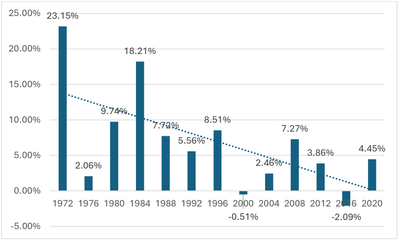
The 2024 Presidential campaign has been a roller coaster ride this summer. The upheavals are so fast and unprecedented that the reaction to each event often seems too muted. An assassination attempt and sudden pre-convention withdrawal? In a past generation, these events would be decisive, but in 2024, they seem like just the latest blip in the news cycle. The polls never seem to move more than a couple of points. In such an oddly volatile but also stable environment, our best bet to understanding what is going to transpire during the last 100 days of the election cycle is to look at data that gets to the heart of how voters view the candidates. My choice of fundamental data or essential metric is candidate fandom. Fandom is an unusual metric in politics, but it should be more common. Fandom is about passion for and loyalty to a cultural entity, be it a team, singer, university, or even politician. In fact, MAGA Trump supporters and Bernie Bros share many characteristics with Swifties and Lakers fans. Fans of all these things show up, spend, wear branded apparel, and fiercely defend the object of their fandom. The politicians who inspire fandom, such as AOC, Donald Trump, Barack Obama, and Marjorie Taylor Green, enjoy many advantages and are the celebrities of the political world. Fandom is critical in politics because fans are loyal, engaged, and resilient. Fans are not casual potential voters who may change preferences and are unlikely to make an effort to stand in line to vote. Fans are the voters who will show up rain or shine and who can’t be swayed. In 2024, a fan will interpret a conviction of their candidate as political “lawfare” rather than evidence of criminality. Also, in 2024, a fan will make excuses for signs of aging that would result in children taking a senior’s car keys. The flip side of fandom, anti-fandom, is also a powerful political force. Indeed, politics may be the cultural context in which anti-fandom has the most impact. Taylor Swift may have haters, but these anti-Swifties are not buying tickets to see Katy Perry in protest. But in politics, hatred of a candidate might be as powerful a tool for generating a vote as fandom. Joe Biden’s 2020 campaign was notoriously bad at drawing crowds, suggesting he inspired little passion. In contrast, Trump’s rallies looked like rabid sports crowds complete with matching hats. However, the hatred and fear of Donald Trump inspired sufficient anti-fandom to make Biden competitive. Of course, fandom doesn’t entirely decide elections. In most elections, there isn’t all that much fandom or passion. Beyond the presidency and senatorial contests, most candidates are barely known, and identity factors (race, gender, party affiliation) and candidate awareness are the determining factors. Even in presidential elections, get-out-the-vote efforts (ballot harvesting) and election regulations (voter suppression) combined with effective marketing to the few percent of swing (low information) voters are often the determining factors. Looking toward the future, fandom may be an increasingly salient political metric for multiple reasons. First, the last two decades have witnessed many candidates raised quickly from obscurity with somehow Hollywood-worthy origin stories (Barack Obama, AOC, JD Vance, etc.). In the modern media environment, candidates’ reputations (brands) are increasingly the product of marketing narratives rather than a lifetime of real-world accomplishments. In this new world of politics, fandom will be a critical metric. Second, with the increasing diversity of the American electorate, voting will be increasingly based on identity rather than ideology. Identity-based voting segments are likely to be driven by fandom (and anti-fandom) rather than policy. We see a form of this in 2024, as high inflation has barely made a dent in voters’ preferences for the two parties. A fragmented electorate comprised of racial and gender segments whose preferences are driven by fandom and anti-fandom will lead to increasingly negative campaigns featuring ads highlighting the threat of the non-preferred party’s candidates. When voters are focused on identity, negative advertising becomes the ideal method to use fear to create anti-fandom (hate) to motivate turnout. Kamala Harris versus Donald Trump Barring further disruptions, the matchup is set for the 2024 presidential contest (as of this writing, we do not know the Democratic VP). We do know the matchup between Donald Trump and Kamala Harris is a contest between polarizing figures. Donald Trump is a movement candidate who has redefined the Republican party. He inspires passionate fandom from his followers and amazing antipathy from major media and cultural outlets. Harris is also polarizing. In the immediate aftermath of Biden’s withdrawal, Harris received massive media and donor support. However, Harris has not demonstrated any significant national voter appeal, and her time as VP has generated ample blooper real material. My approach to assessing the race is to examine each candidate's fandom and anti-fandom. Fandom is the candidate’s core, resilient support, while anti-fandom is about antipathy. Fandom and anti-fandom are especially powerful metrics for a candidate because they are relatively fixed after a candidate gains high awareness. Once an individual identifies with the candidate (e.g., they are on the same team), an attack on the candidate is an attack on the individual. This means attack ads do not work because fans feel they are being attacked. Anti-fans are also important because they constrain a candidate’s support. A Trump anti-fan is unpersuadable by efforts from the Trump campaign because their identity is steeped in opposition to him. Fans and anti-fans are trapped in a cycle of confirmation bias where all information is processed to fit their fandom. I use data from the Next Generation Fandom Survey to assess candidate fandom and anti-fandom. The Next Generation Fandom Survey involves a nationwide sample of the U.S. population regarding fandom for sports and other cultural entities. In the 2024 edition, political figures such as Donald Trump, Joe Biden, Kamala Harris, and RFK Jr were included. The survey captured responses from 2053 subjects split evenly across the four primary generations (Gen Z, Millennials, Gen X, and Baby Boomers), and the sample is representative in terms of racial background. The survey does not focus on likely or registered voters, so the results reflect overall societal sentiments rather than the electorate's opinions. The critical survey question asks subjects to rate how much of a fan they are of a celebrity on a 1 to 7 scale. In the following discussion, individuals who rated their fandom a 6 or 7 on the 7-point scale are categorized as Fans, while those who rate their fandom a 1 or 2 are classified as Anti-Fans. Table 1 shows the Fandom and Anti-Fandom rates for the entire sample. Donald Trump has a 27% fandom rate compared to Harris's 21%. The fandom rate is crucial because it identifies the candidate's core support. It also indicates something important about the candidate’s potential likability. In terms of anti-fandom, Harris has a slightly higher Anti-Fandom rate. Anti-Fandom is also critical as it shows the percentage of people who hate a candidate. The data suggests that Americans find Harris to be more dislikable than Trump. Notably, the anti-fandom rates are significantly higher than the fandom rates. The American public has significant disdain for politicians. The high anti-fandom rates are both the product of past negative advertising and the cause of future negative campaign strategies. Table 1: Candidate Fandom and Anti-Fandom Table 2 reports fandom rates based of the two gender segments. Trump has a 7%-point advantage with men and a surprising 4% advantage with women. This is a stunning result as Trump is generally regarded as having weakness with female voters. However, this weakness shows up in the anti-fandom rates. In the male segment, Trump has a 5%-point advantage in anti-fandom (fewer anti-fans), but a 3% disadvantage in the female segment. This reveals that Trump is polarizing to women, and almost half of women find Trump to be highly dislikable. This finding is why the Harris campaign is likely to use advertising that casts Trump as misogynistic or a threat to women to motivate turnout by female voters. Table 2: Candidate Fandom by Gender Table 3 shows the fandom rates for the two younger demographic segments: Gen Z and Millennials. This Table also shows Trump’s relative performance versus Biden (in parentheses in the last column). Trump enjoys higher fandom and lower anti-fandom than Harris in both the Gen Z and Millennial segments. In terms of fandom, Trump is plus 6% in Gen Z and plus 11% with Millennials. Critically, Harris outperforms Biden. The Gen Z anti-fandom gap between Trump and Biden favored Trump by 6% points. However, this gap shrinks to just 1% point when Harris is the comparison. The data suggests that Harris is stronger with Gen Z than Biden. Table 3: Candidate Fandom in Younger Generations Table 4 reports the fandom rates based on a racial segmentation scheme. Specifically, the sample is divided into White and Non-White categories. This is a crude segmentation, but it illustrates some essential points. Trump enjoys a significant 14% positive fandom advantage in the White demographic. He also enjoys a 10-point edge in (lower) anti-fandom. The pattern essentially reverses in the Non-White segment, as Harris has a 10-point advantage in fandom and a 17-point edge in anti-fandom. Trump’s anti-fandom in the Non-White segment is critical to the campaign. Nearly half of this segment has antipathy or hate for Trump. This high anti-fandom suggests an opportunity for the Harris campaign to emphasize racial angles in their attacks on Trump. Table 4: Candidate Fandom by Race In addition to fandom and anti-fandom rates across demographic categories, insights can be gleaned by looking at segmentation variables that reflect cultural values or personality. Table 5 shows fandom and anti-fandom rates for Trump and Harris for segments defined by fandom for Taylor Swift (Swifties) and Baseball. The Swifties skew towards Harris. The implication is that young women engaged in popular culture have more positive fandom for Harris and more negativity toward Trump. This is unsurprising given the content of the popular culture and Swift’s personal liberalism. The Swiftie segment shows a much stronger skew for Harris than all but the Non-White segment. Examining the data at a cultural level is vital as it indicates that it isn’t necessarily youth or gender where Harris has an advantage but a combination of youth, gender, and a specific type of cultural engagement. The table also includes fandom rates for baseball fans. In the Baseball Fan segment, Trump enjoys an 8% point fandom advantage and a 7% anti-fandom advantage (lower anti-fandom). Like the case of the Swifties, the fandom rates of Baseball Fans reveal something about Trump’s core support. Baseball is a very traditional game with an older fan base, and traditionalism is probably the core value of Trump fans. Trump’s negative advertising is likely to focus on the threats to traditional values (i.e., Harris is a San Francisco liberal). Table 5: Candidate Fandom and Cultural Segments Commentary and Prediction Fandom is a powerful metric for predicting political success, but like most data points, it doesn’t tell the whole story. Fandom is a measure of unwavering core support while anti-fandom measures the group that will never support and is likely to show up to vote against a candidate. Examining fandom rates across multiple segments reveals that Harris’ core support is concentrated in specific cultural and racial segments. The analysis also suggests that Trump's core support is broader than is usually acknowledged and that his main problem is significant anti-fandom with women and minorities. Harris’ problem is a lack of love, while Trump’s is too much hate. Notably, I am not paying too much attention to the current wave of excitement and enthusiasm surrounding Harris. The recent enthusiasm is likely more a manifestation of the Democratic base’s hopes and a relentless media onslaught than an actual increase in passion for Harris. Maybe there will be a permanent shift upward in Harris’s fandom, but I don’t see any logic for why this would occur. Harris isn’t suddenly more likable or aspirational than she was last month. The argument that the American people are becoming more acquainted with her is dubious, given that she has been the Vice President or a major presidential candidate for almost five years. What are the implications for the upcoming election? Voting is not only about fandom or hate, so we must consider some additional factors. For instance, many potential voters lack passion and knowledge and are more prone to vote based on identity rather than ideology. If a region or demographic segment consistently votes for a party 75% of the time, that’s voting more based on fixed identities than current societal conditions. The American electorate has many of these types of fixed-preference voter segments. Furthermore, as the American electorate becomes more diverse, identity-based voting seems to be making presidential contests more predictable. The baseline seems to be that the Democratic candidate will win the popular vote by a few percentage points, and the Electoral College will come down to a few states, such as Michigan, Pennsylvania, and Wisconsin. Examining past electoral maps shows far more shifting of states across elections. Now, all but a handful of states are regarded as non-competitive. The Figure below shows the presidential popular vote margins for the last 50 years. It shows a trend towards smaller margins for the winning candidate, which is at least partly due to growing ethnic diversity and more fixed (at least in the near and medium terms) identity-based voting. Over the last 13 cycles, the margin of victory has dropped by about 1% every four years. Demographic change has also locked in a high baseline level of support for Democratic candidates. The last time a Republican won the popular vote was in 2004, with George Bush as the incumbent. Figure 1: Presidential Vote Margin 1972 to 2020 In addition to shrinking election margins, demographic change promises to change future campaign tones. The increasing relevance of fandom and anti-fandom, combined with the growing diversity of the electorate, will make 2024 an extremely negative campaign. The 2024 election will be determined by identity-based demographic trends and negative (anti-fandom) marketing campaigns. Demographics are destiny, and America is changing rapidly in ways that make it increasingly difficult for the Republicans to win the popular vote. It doesn’t matter if the Democrat is Harris, Newsom, Clinton, or Whitmer while the Republican is Rubio, Haley, Cruz, or Burgum. The baseline is probably 52% to 48%, D to R. Candidate fandom and anti-fandom probably shift the vote 2 or 3 percent in either direction. The correlation of demographic traits with voting behaviors creates incentives for campaign strategies that focus on identity. Republicans are eager to shift some percentage of Black or Hispanic voters to their cause because it simultaneously reduces the Democrats' base and grows Republican totals. In contrast, Democrats need to motivate marginal voters in the female, Black, and Hispanic segments to turn out. Fear-based appeals are the most effective tool for both parties' goals. Negative messaging is also prevalent because of the general view of politicians. Politicians tend to inspire more antipathy (anti-fandom) than admiration (fandom). The fandom data shows this, as both candidates have far more anti-fans than fans (this holds with other politicians) . The modern election calculus is, therefore, focused on aggressive negative ads that inspire marginal voters to take the initiative to vote against a hated candidate. Passion drives behavior, and it's far easier to drive fear and hatred of a candidate than to inspire passion and admiration. Considering the fandom data and the current electorate, I have two predictions. First, we will witness an incredibly nasty race. Harris’s best bet is to demonize Trump to motivate the anti-Trump voters to turn out. The American culture of 2024 includes constant repetition that many Democratic voting constituencies are marginalized and threatened. These segments are best motivated by using messages that cast the Republicans as the danger or oppressor. Women will fear losing reproductive rights, and African Americans will be primed with threats to voting rights. Trump will also employ negative messaging, but Trump’s adoption of a negative campaign comes from a slightly different motivation. Trump’s core support consists of conservatives who are frustrated by a lack of cultural power and representation. This group is looking for someone who will fight for their values. This desire for a “fighting advocate” explains much of Trump’s appeal, as his supporters are enthusiastic about his “mean tweets and nicknames.” There will also be fear-based advertising as Harris will be positioned as wanting to defund police and open the border. Second, Trump wins in a close contest. Comparing Trump’s and Harris’ fandom and anti-fandom suggests the Harris campaign faces an uphill challenge. Despite the current blitz of enthusiasm for Harris as a replacement for a failing Joe Biden, her “brand” has not shown an ability to stimulate passion, and her dislike levels exceed Trump's. It seems unlikely that she will be able to inspire fans. While Trump has a significant fanbase and weaknesses in terms of strong anti-fandom levels in minority and cultural segments, he probably beat Clinton in 2016 because her anti-fandom was equivalent to his. In contrast, he lost to Biden because Biden had less anti-fandom (in 2020). Kamala Harris seems more like Clinton than Biden, so look for a similar outcome as in 2016. The bottom-line prediction: An exceptionally negative campaign, with Trump’s greater baseline fandom and Harris’s charisma deficit leading to a narrow Trump victory. As in 2016,Trump wins the Electoral College while losing the popular vote. Addendum: Future Fandom Lesson The structure of the American electorate and the propensity of people to vote based on identity rather than ideology mean that negative campaigns are the standard in the near future. The essential observation is that demographic trends create an electorate that is more a collection of identity segments than a homogeneous population that varies in ideology. An increasingly diverse electorate likely means increasingly negative presidential campaigns as negative or fear-based appeals are especially effective when elections focus on threats to identity groups. The tragedy of this situation is that the negative messages of campaigns amplify racial division and acrimony. When the next election occurs, the electorate is even more polarized, and negative or fear-based appeals are again the most effective. Mike Lewis is an expert in the areas of analytics and marketing. This approach makes Professor Lewis a unique expert on fandom as his work addresses the complete process from success on the field to success at the box office and the campaign trail. Michael is available to speak with media - simply click on his icon now to arrange an interview today. Interested in following Future Fandom! Subscribe for free to receive new posts.



Could This Be the Ultimate Way to Showcase Your Experts?
Getting more media coverage is all about helping journalists find everything they need to get their stories out on deadline. Simple right? Well, that depends. Our research shows that most media relations and comms departments are significantly resource-constrained when it comes to pitching experts. And even when you are pitching it’s a challenge. Industry research shows that 97% of pitches fail to generate coverage. The secret is to publish content that draws in journalists in a way that helps them immediately understand (within seconds) how you can help them enhance their stories with your experts. What if there was a way to get all this done in minutes? Not days. Welcome to our latest Spotlight release, designed to help you organize your expert content in the most engaging ways possible. We’ve made enhancements in 5 key areas: Create a More Engaging Design that is Optimized for Mobile Your brand’s identity matters. Our new design ensures your Spotlight Posts reflect your unique style and voice. With bolder headers, enhanced logo placements, customizable fonts, and color schemes, you can create more visually stunning posts. And unlike a lot of other websites, your pages will be beautifully optimized for mobile—which is how most journalists will see your content. Tell a More Visual Story with Images Research from HubSpot indicates that content with relevant images gets 94% more views than content without. It’s time to get more visual. With our higher image resolution plus new editing tools like text wrap and captions, you can really make your images stand out. Plus we’ve helped solve the problem of sourcing images. We’ve now added access to thousands of royalty-free stock images for your posts - it’s all covered as part of your ExpertFile subscription. Make Your Experts Really Stand Out We’ve now made it even easier to display your experts more prominently with enhanced “expert callouts,” which are specially designed to engage journalists with the key information they are looking for. And our pagination features allow you to add content that sets your experts apart. Within seconds you can add videos and images or even stylized quotes from your previous media coverage. Leverage the Latest AI Tools for Faster Content Creation We’ve turbocharged our AI writing tools using OpenAI’s latest release. Enhance your content by generating innovative story ideas and draft posts with AI. This power is all conveniently built right into our editor to save you time. Save Time with Content Repurposing Creating high-quality content takes time and effort, and we want to help you get the most out of it. With our new publishing date feature, along with our current scheduling capabilities, it is easier than ever to make use of existing content effectively. This gives it a second life as part of your expertise marketing efforts while allowing you to better connect it to your experts to drive inquiries. Clone Your Posts for Even Faster Creation. Being able to leverage that perfectly crafted post going forward quickly and easily can help you jump on opportunities as they present themselves. With cloning you can take the layout elements and simply updated the content to highlight new experts or areas of expertise that you wish to showcase. And that's not all… You’ll still enjoy all the current benefits of "Spotlight Posts," including distribution through expertfile.com, integration into expert profiles, full SEO compliance with advanced meta and schema data, and various options for adding this valuable content to your website. Ready to elevate your expertise marketing game? Dive into these new features and watch your content—and your experts—shine brighter than ever. Want to see it in action? Check out the sample we’ve shown here, which we generated with Milwaukee School of Engineering (MSOE) to feature their experts during the Republican National Convention. We can also set you up with a customized demo showing how all this can make your experts stand out. Let us know what you think! About ExpertFile ExpertFile is changing the way organizations tap into the power of their experts to drive valuable inquiries, accelerate revenue growth, and enhance their brand reputation. Used by leading corporate, higher education and healthcare clients worldwide, our award-winning platform helps teams structure, manage and promote their expert content while our search engine features experts on over 50,000+ topics. Download our "Guide to Expertise Marketing", book a demo and more here.


Veronica Chandler’s north Wilmington home is her sanctuary, and it shows. From the soft instrumental music to the scent of lavender to the comfy seats that invite visitors to put up their feet, the message is clear – rest, relax, recharge. Original artwork by Veronica Chandler In this space, Chandler celebrates her rediscovered self, and it’s a journey she shares with all who visit. Part of the cozy feeling in her home comes from the artwork that lines the walls – mostly her own paintings and drawings created over the last six years as she navigates the challenges and triumphs of motherhood and discovers new ways to care for herself and those she loves. After experiencing anxiety, panic attacks and profound depression following the birth of her daughter in 2018, Chandler sought help at the ChristianaCare Center for Women’s Emotional Wellness, where a combination of medication and therapy helped her feel healthier and reconnected. She also returned to a former passion – art. “When I started painting, I found a way of silencing my brain, of calming it down. Being able to just focus on one thing on its own let my body regulate my nervous system,” she said. “I didn’t know what was happening to me. I just felt amazing.” More than ‘baby blues’ Perinatal mood and anxiety disorders are among the most common complications that occur in pregnancy or in the first year after delivery, according to the American College of Obstetricians and Gynecologists. Although many parents experience feelings of anxiety, fatigue and sadness in the first days with a new baby, postpartum depression can occur several months after childbirth. Symptoms are often more severe and can include extreme stress. Despite increased awareness efforts in recent years, perinatal mood and anxiety disorders – including postpartum depression, which occurs in up to 20% of all births – remain underdiagnosed, untreated or undertreated, even though the health impact extends beyond the person giving birth, said Malina Spirito, Psy.D., MEd, director of the Center for Women’s Emotional Wellness. The center opened in 2013 to help patients and their loved ones understand the challenges associated with perinatal mood and anxiety disorders. Since then, the program has tripled the number of clinicians and expanded services to include inpatient and outpatient consultations, ongoing psychotherapy and psychiatric medication management. “Just because we know something is common does not mean we have to put up with it, especially because the effects will be lasting if we don’t address them,” Spirito said. “Perinatal mood disorders have an impact on the overall health of a family. When a mom feels better, the relationships they have with the people around them are better as well.” Breaking the ‘super mom’ stereotype Looking back, Chandler recognizes her struggles with sleeping and anxiety following the birth of her first child may have been signs of postpartum depression. The symptoms went away only to return after her daughter was born two years later. Veronica Chandler sought help from the ChristianaCare Center for Women’s Emotional Wellness for postpartum depression. Caring for herself helped her rediscover her love of creating art. Although overjoyed by her growing family, Chandler deeply missed her mother, who lived in her native Ecuador. Added to those challenges were longer stays in the hospital for Chandler, who had a Caesarean section birth, and for her daughter, who had some minor health issues. In the weeks after giving birth, Chandler battled dizziness caused by anemia. Though exhausted by caring for a newborn, she couldn’t sleep. She constantly felt on edge, and her skin itched without relief. Worried when her symptoms didn’t abate after three months, Chandler’s husband broached the idea of postpartum depression. For Chandler, it was a relief another person noticed something was wrong, but she was scared to think about what might be needed to get better. “I think we’re programmed by our cultures and by our beliefs to think that we need to be ‘super moms’ and give everything we have,” said Chandler, who grew up in Ecuador and moved to the United States after marrying her husband. “I was in such a fog that I didn’t know I could still shine and be happy and content. The default for so many moms is to pour until there’s nothing left.” ‘Rediscovering who I was’ Chandler sought help at the Center for Women’s Emotional Wellness and soon began taking an anti-depressant as part of her treatment. She also saw a therapist to talk about the feelings she was experiencing. “Therapy was such a big part of this whole journey of rediscovering who I was. When you talk and someone listens, you figure things out,” Chandler said. While on a trip to Arizona with a cousin, Chandler discovered kachina dolls, a Native American art form often used to provide guidance to young people and instill the connection between nature and the spirit. The intricately designed images further fueled Chandler’s reignited passion for art. That passion helped Chandler manage the additional challenges brought on by the COVID-19 pandemic when her anxiety and depression resurfaced. Using painting, sculpture and other media, she has examined her own feelings relating to motherhood, family and society. Her work has been featured internationally in Vogue and closer to home in local art galleries. “Some people like to cook, and some people like to write. Art is my creative outlet that allowed me to come back to who I am,” she said. “We all have to release that creativity in some way.” Entering care sooner While the Center for Women’s Emotional Wellness has always focused on pregnant and postpartum patients, it has grown to address mental health needs related to preconception health, including artificial reproductive technology such as in vitro fertilization, Spirito said. The center also sees patients grieving a pregnancy or neonatal loss. More people are thinking about their mental health before they give birth, said Malina Spirito, Psy.D., MEd, director of the ChristianaCare Center for Women’s Emotional Wellness. “One of the most notable observations I’ve seen over the years is that birthing people are entering care sooner. It isn’t uncommon for women to seek out consultation prior to getting pregnant about how to manage their mood disorder should they become pregnant,” said Megan O’Hara, LCSW, a behavioral health therapist with the Center for Women’s Emotional Wellness. “Patients are educating themselves now and expecting their providers to consider their mental health as well as their physical health when getting care.” Women’s mental health care also has become more accessible, said Cynthia Guy, LMSW, MSCC, a women’s health behavioral consultant with the Center for Women’s Emotional Wellness. Behavioral health services are available in every ChristianaCare women’s health practice, including virtual and in-person care. “I can be the bridge connecting the patient with the resources they need to help them manage symptoms and what they are going through,” Guy said. Filling the cup As a result of her own experiences, Chandler teaches classes to help other mothers create their own art as a means of expression. It’s a small way of helping them to fill their own cup. The woman who once hid in her own closet to hide her feelings speaks openly about mental health with the hope people will lose their preconceived ideas about depression and anxiety. “I am so thankful for the journey and the many people I’ve met that have postpartum depression,” she said. “When we talk about what makes the best moms, I think the best mom is a healthy mom who is in balance and harmony.”



Examining Biden's Decision to Forgo a 2024 Presidential Run in Historical Perspective
Presidential historian Meena Bose talked to Reuters, The New York Times, Voice of America, WCBS-AM radio, and News 12 Long Island about President Joe Biden’s historic withdrawal from the 2024 race and next steps for the Democrats as the DNC approaches. Dr. Bose is a professor of political science, executive dean of the Public Policy and Public Service program, and executive director of the Kalikow Center for the Study of the American Presidency. She is available to speak with media - simply click on her icon now to arrange an interview today.


CNBC talked to presidential scholar Meena Bose about next steps for the Democrats if President Joe Biden withdraws from the 2024 race. Dr. Bose is professor of political science, executive dean of the Public Policy and Public Service program, and executive director of the Kalikow Center for the Study of the American Presidency. “The vice president is the logical choice, obviously,” said Dr. Bose, who noted that Kamala Harris has already been vetted, and the fundraising war chest that the Biden campaign has amassed in the current election cycle would transfer to her if she took over the ticket. Dr. Meena Bose is available to speak with media - simply click on her icon now to arrange an interview today.