
Experts Matter. Find Yours.
Connect for media, speaking, professional opportunities & more.

The 2024 Cision State of the Media Report is jam-packed with all sorts of detailed PR info which can be somewhat overwhelming. But there's an important theme to be found in the data. Kudos to the team at Cision for running this survey that polled over 3,000 staff journalists and freelancers, which is now in its 15th year. The big takeaway for me? Give journalists what they want. Sounds simple enough. Yet, with so many organizations competing for media attention amidst a sea of new AI-enabled platform hacks, many need to focus on the fundamentals of media relations, which this report nicely captures. The media is inundated with pitches. So, the secret to success lies in understanding what jobs journalists have to do and giving them what they need to file their stories…fast. According to the Cision 2024 survey, at the top of the journalists' wish list are: Topical Relevance (68%): Understanding the target audience and what they find relevant. Access to Experts (52%): Connecting journalists with experts and setting up interviews. Credible Data and Research (48%): Providing data and key research. Speed of Response (47%): Responding quickly to inquiries and respecting journalists’ deadlines. In short, journalists want relevant pitches, expert connections, and credible data, and they want it ASAP so they can meet their deadlines. While the Cision report outlines many other best practices that will undoubtedly improve your coverage rate (such as helping journalists quickly source multimedia assets like images), I want to focus on the importance of nailing these first four rules. Rule #1: Pitch Relevant Topics to Journalists Irrelevant pitches not only waste a journalist's time but also damage your credibility. In fact, 77% of journalists in the Cision study cited being spammed with irrelevant pitches as a reason to block a PR professional or put them on the "do not call" list. The study also reported that journalists are "fed up" with follow-ups to unsolicited pitches. Now, only 8% of journalists think it's okay to follow up more than once to check on a story they have pitched. Rule #2: Get Your Experts in Front of Journalists Connecting with credible expert sources is time-consuming. Joint research conducted by ExpertFile and the Associated Press revealed it takes on average, over 2 hours for journalists to secure an expert source for an interview. We can do better than that. As a PR/Media Relations pro, one of your "superpowers" needs to be the ability to spot a story opportunity and get your subject matter experts lined up for the media interview. This is an area where journalists see comms and media pros playing a vital role inside the organization. But if your pitch "sounds like a marketing brochure" the Cision survey shows that 55% of journalists would add you to their naughty list. One of the best ways to avoid this trap and enrich your story is to bring experts and their unique, specialized knowledge to the interview. That means ensuring you are attributing the source of your blog posts to experts in your organization and including links to their expert profile in your pitch. Enclosing a link to an outdated, boring biography on your website or a LinkedIn profile that hasn't been updated since the Yankees last won the World Series (2009), won't score points with journalists. Rule 3: Provide Journalists with Credible Data and Key Research Providing this information not only supports your story but also builds trust. Ensure that your pitches include the latest research findings, statistics, and data from reputable sources within your institution. This evidence-based approach enhances the credibility of your pitches and increases the likelihood of them being picked up by the media. While primary data is best, if you are curating data from other sources, it's critical to cite sources and, ideally, create derivative insights that help the journalist look at the information in a fresh way. For example we have many economists on our ExpertFile network that provide insights regularly on data they didn't gather. But their ability to critically analyze economic data from trusted sources such as the US Census Bureau or the European Union and generate unique, often counterintuitive or provocative insights is what sets them apart from other experts. Rule #4: Help Meet the Journalist's Deadline Journalists often work under tight deadlines and timely responses from PR professionals. Our software has helped organizations handle thousands of media requests every year and if there is one thing we've learned, media is all about speed. If you are a "serious player" you need protocols and processes to quickly respond to media inquiries and get your expert sources lined up to provide the necessary information and insights to meet same-day deadlines. This shows journalists you respect their time and are a reliable source and you will be on speed dial for future stories. Are You Pitching Effectively? Here’s a few tough questions. Answer truthfully. Are You Personally Wasting Time Pitching? How much time do you spend pitching the media vs. responding to inbound media opportunities? Data from Propel Media shows 97% of media pitches fail. While journalists open approximately half of the pitches they receive they only respond to an average of 2.99% of the pitches. Yet the Cision data shows that it's not always your fault. Why? Well, unless you're a gifted psychic, you simply can't know for sure how a journalist is going to react to your pitch. That's why more media departments and their PR agencies are cutting back on spammy pitch activities and moving to more strategic activities that get more traction. With the extra time they save, they can focus on promoting their experts online where journalists are actively searching for credible sources. The result is more qualified inbound inquiries from journalists genuinely interested in interviewing your experts. And that means a lot less anxiety about meeting your media coverage targets. Are You Wasting Journalists' Time? Is your newsroom or media relations page set up to allow journalists to quickly serve themselves 24x7? Can they easily search by specific topics to find an expert within seconds to help meet their deadlines? Or are you expecting them to email or call you for help. (hint: journalists don't have time for that kind of friction). Here's a nice example of how US-based health system, ChristianaCare makes their medical experts available to journalists round the clock while saving hundreds of hours a year for their Comms and Digital team. I'd love to hear more about how you are helping journalists and how that's paying off with increased media coverage. Let me know in the comments below or connect/follow me on LinkedIn or on ExpertFile.


Recent Expert Placement: GOP-Led LI Towns Challenge Moving Elections to Even-Numbered Years
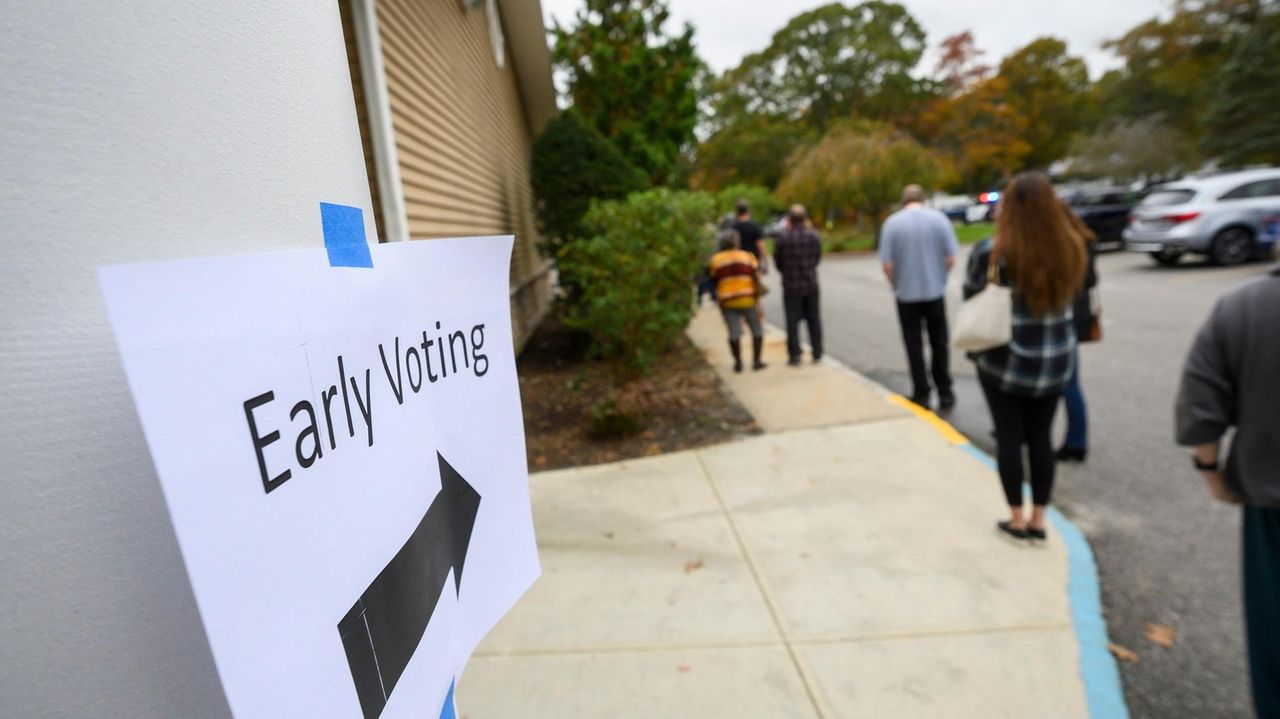
Lawrence Levy, associate vice president and executive dean of the National Center for Suburban Studies, spoke to Newsday about five GOP-led towns in Nassau and Suffolk that are challenging a new state law to move most local elections to even-numbered years. Levy called the law “a mixed bag” for political parties and candidates. He said the candidate at the top of the ticket could impact many of the results. “There is the risk that local issues will be drowned out … but it’s also an opportunity for a lot of people, who never bothered to pay attention to local races, to maybe do so if they don’t want to click a lever for just any old person without knowing something,” he said. Lawrence Levy is the Executive Dean of the National Center for Suburban Studies at Hofstra University. He's available to speak with media - simply click on his icon now to arrange an interview today.


Presidential Race Continues After Trump’s Guilty Verdict
Dr. Meena Bose, professor of political science, executive dean of the Public Policy and Public Service program, and executive director of the Kalikow Center for the Study of the American Presidency, was interviewed by Courthouse News about the guilty verdict in former President Donald Trump’s “hush money” trial and how it might impact voters this coming election. Trump is the first U.S. president to be charged with — and now convicted of — a crime “The presidency is the highest office in the land, and there is an expectation that presidents are supposed to represent kind of the best the United States has as far as character, leadership, responsibility,” said Dr. Bose. “And the convicted felon obviously doesn’t meet those expectations.” Dr. Bose added that Trump has proven himself repeatedly to be a “different candidate” from any other who has preceded him, primarily for his ability to evade career-crushing consequences since he first emerged on the presidential ticket in 2016. “Politically, other politicians would feel pressure to step aside,” she said. “But Donald Trump didn’t do so in 2016, he did everything he could to try and stay in office in 2020, and even after January 6 and an unprecedented second impeachment in 2021, ran for reelection and kind of effectively ended the primary contest very early without participating in a single primary debate.” Dr. Meena Bose is Executive Dean of Hofstra University’s Peter S. Kalikow School of Government, Public Policy and International Affairs. She is available to speak with media - simply click on her icon now to arrange an interview today.


It's the anniversary of the Six-Day War - Our experts are here to help if you're covering
The anniversary of the Six-Day War is a significant historical event that continues to shape the geopolitical landscape of the Middle East. This war, which took place in 1967, had far-reaching consequences, including territorial changes, shifts in political power, and long-lasting effects on regional and international relations. The event remains newsworthy because of its ongoing impact on peace processes, security issues, and the socio-political dynamics of the region. Understanding the Six-Day War's legacy provides insights into current conflicts and diplomatic efforts. Key story angles include: Historical Context and Consequences: Analyzing the causes, key events, and immediate aftermath of the Six-Day War, and how it reshaped the Middle East. Geopolitical Impact: Exploring the war's influence on regional politics, including the Arab-Israeli conflict, territorial disputes, and alliances. Peace Processes and Diplomatic Efforts: Investigating ongoing peace efforts, negotiations, and the role of international organizations in resolving conflicts stemming from the war. Military Strategy and Tactics: Examining the military strategies used during the war, innovations in warfare, and lessons learned by modern military forces. Humanitarian and Social Implications: Discussing the war's impact on civilian populations, displacement, and the long-term social and economic effects on affected communities. Media Representation and Public Perception: Analyzing how the Six-Day War has been portrayed in media over the years and its influence on public opinion and policy-making. Connect with an Expert about the anniversary of the Six-Day War: Kelly Shannon, Ph.D. Associate Professor and Executive Director, Center for Peace, Justice, & Human Rights (PJHR) · Florida Atlantic University Brian Edwards Dean & Professor of English School of Liberal Arts · Tulane University Ali A. Olomi Assistant Professor of History · Loyola Marymount University Jeremy Pressman, Ph.D. Associate Professor of Political Science, Director of Middle East Studies · University of Connecticut Ranjit Singh Associate Professor of Political Science and International Affairs · University of Mary Washington To search our full list of experts visit www.expertfile.com Photo Credit: Jewish Virtual Library

Trump’s Election Interference Case on Hold
Professor of Law James Sample appeared on CNN with Julia Chatterley to discuss the Georgia Court of Appeals putting an indefinite hold on former President Donald Trump’s election interference case. James Sample is a Professor of Law at Hofstra University and previously served as an attorney in the Democracy Program at the Brennan Center for Justice at New York University School of Law. James is available to speak with media - simply click on his icon now to arrange an interview today.


MEDIA RELEASE: More than half of Manitobans think roads are not safe – CAA survey
A recent member survey conducted by CAA Manitoba (CAA MB) found that 43 per cent of cyclists who are members have been involved in a collision or a near-collision while riding their bike. The survey also found that 63 per cent of Manitobans think the roads are unsafe for all users. These statistics reinforce CAA Manitoba's continuous call for cyclists and motorists to share the road this summer regardless of whether they drive, bike or walk. "As more Manitobans rely on cars and bikes to get around, we all need to do our part to share the road safely," says Ewald Friesen, manager government and community relations for CAA Manitoba. "We must all remain vigilant and considerate to ensure everyone reaches their destinations safely." In the survey, the top three poor motorist behaviours identified included, • Aggressive drivers (56 per cent) • Drivers not looking for cyclists when turning corners (55 per cent) • Drivers not looking for cyclists when opening their doors, aka "dooring" (47 per cent) The most common poor cycling behaviours identified were, • Not stopping at stop signs (85 per cent) • Rolling through stop signs (84 per cent) • Not signaling when intending to turn (80 per cent) • Not stopping at traffic signals (76 per cent) "Both cyclists and motorists have identified behaviours on the road that can be improved," adds Friesen. "While motorist behaviour is a safety concern for cyclists, our members also see cyclists doing things like not stopping at stop signs and not signaling turns. We can all be part of the solution, whether driving or biking, by looking out for each other and using clear signals." As warmer, summer-like weather rolls in, CAA Manitoba is reminding drivers to maintain a one-metre distance from cyclists, signal clearly, and check mirrors and blind spots before turning or changing lanes. Cyclists should equip their bikes with bells or horns and add reflectors for improved visibility and safety. Some additional key findings from the survey show that: • Only 46 per cent of Manitoban cyclists say they typically wear a helmet, while 35 per cent say they never do. • 61 per cent of Manitobans think that too little information is available about cycling and sharing the road. CAA Manitoba is participating in two community events this month to encourage bike riding and road safety. On Saturday, June 1, Bike Tune-Up Day, CAA MB provided free tune-ups and maintenance tips in partnership with Bike Winnipeg, The WRENCH and Valour Community Centre. CAA Manitoba is also the presenting sponsor for Bike to Work Day and will host a Pit Stop on June 11, 2024, on the southwest lawn behind the Manitoba Legislature. CAA Manitoba has more safety tips for drivers and cyclists on its website at caa.ca/driving-safely/cycling/ The online survey was conducted among CAA members in Manitoba and south-central Ontario from July 20 to August 3, 2023, with 361 responses from Manitoba, including 183 cyclists and 178 non-cyclists. Based on the sample size and the confidence level 95 per cent), the margin of error for this study was +/- 5 per cent.



From Boring to Brilliant: Writing that Transforms Your Thought Leadership into Must-Read Content
Insights from our Webinar with Author, Rhea Wessel Ask anyone who develops Thought Leadership programs, and they will tell you that experts are essential to a successful program. But experts are busy people. That makes expert engagement strategies a very popular topic with our Comms and Media Relations pros. That’s why we invited Rhea Wessel, Founder of The Institute for Thought Leadership, to join us last week for our ExpertFile webinar. Rhea, a former tech and financial journalist and author of “Write Like a Thought Leader,” has worked with organizations such as Harvard, CFA Institute, Accenture and the Max Planck Institute to help their experts focus on developing unique story angles while getting high-quality work produced. Having seen her in action at last year's IABC Global Conference, speaking to a standing-room-only crowd, I was really impressed by Rhea’s approach. Rhea uses a system that experts and comms teams can use to brainstorm topics and craft story angles that frame expertise and research to make them more compelling. In the session, she showed us how she helps brainstorm and select the best angles for thought-leadership stories using ideas such as “origin” stories, “what if” scenarios, personal-impact stories, and opinion pieces. Experts often have issues with the "dreaded first draft.” The frameworks Rhrea showed us from her book were clever and designed to pragmatically move experts from brainstorming into a writing mode that doesn’t feel forced. Here are some key points I took away from Rhea’s session: Defining Thought Leadership An essential attribute of Thought Leaders is that they share their knowledge for free, using journalistic skills to engage their audience by articulating emerging ideas, steering conversations and influencing others. Finding the Niche Finding and framing thought leadership is not about covering a broad topic. The best topics are often very narrow. And they are best found at the intersection of the expert’s passion, purpose, and big ideas. Think Like a Journalist Write in a conversational tone and include data, quotes & statistics, but not too much. Use short sentences and paragraphs while keeping the story fast-moving. And don’t forget your sense of humor. Spend Time on the Headlines By “thinking like a journalist” and focusing on headlines, one can narrow the focus when examining research and insights to create more clarity. Quoting Author Sean Coyne, Rhea referred to headlines as having the benefit of being an “enabling constraint." "One of the curses of subject matter expertise is that your experts know a lot. They tend to pack a lot [of their knowledge] in, and for a good story, you've got to slice out a narrow bit. That’s the constraint.” Rhea Wessel Time & Place Matters Stories are best anchored in time and place. When you are working with an expert and you want to enrich a story, don’t just think about how they developed their research and insights. Also, think about “where they were” and “when did it happen?” A good origin story explains why an insight is significant for the expert, creating a more emotional, relatable connection for the audience. Frame Your Story Keep it focused on a single yet relevant problem the audience has. Then explain why this matters to your audience and why now. Based on the feedback we received from this session, we'll have Rhea Wessel join us for more conversations on topics related to storytelling. We'd love to know what you think. Details about this session are below: Full Webinar Recording bit.ly/4e9YuWb Presentation Slides To get a copy of the presentation & Templates, just hit the connect button on my profile and let me know. Enjoy!
Experts in the Media: Not a gym rat? Here’s how to get started on an outdoor exercise routine
Summer is here and there's no better time to get out and get active. And for some, the idea of going to the gym just isn't an option or a place they want to be. So recently, the Associated Press was looking for alternatives and connected with TCU's Deborah J. Rhea, Director of the LiiNK Center for Healthy Play. Rhea is also an expert in the areas of physical activity and education and the importance of unstructured play. The health benefits of spending time in nature have long been established, and exercise in general, of course, improves physical and mental well-being. Combine the two and you double down on what adults need to stay healthy, said Debbie Rhea, professor in kinesiology at Texas Christian University. “We’ve got to get outside. We’ve got to be active,” Rhea said. “If we’re going to live long lives, this is what it’s about.” May 29 - Associated Press If you're interested in learning more about the importance of being active and the different ways to do it - then let us help. Deborah J. Rhea is available to speak with media about this topic - simply click on her icon now to arrange an interview today.


NYS Budget Provisions May Protect Incumbent Democrats
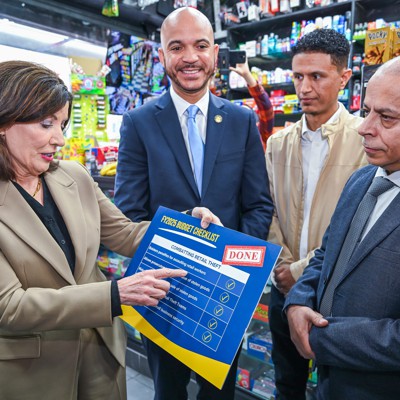
Lawrence Levy, associate vice president and executive dean of the National Center for Suburban Studies, was interviewed by City & State New York about how Governor Kathy Hochul’s budget and focus on issues like affordable housing and retail theft may provide some protection for incumbent Democrats this November. The state budget may be designed to insulate Democrats from Republican attacks, but it’s not clear that it will be the deciding factor in various races. The 2024 election cycle is an entirely different beast than 2022. Two years ago, Hochul was at the top of the ticket in New York. This year, she’s not even on the ballot. That may actually be a boon for Democrats, as many observers credited her lackluster performance with negatively impacting races down ballot and the latest Siena College polling has her favorability and job approval ratings at all-time lows. Hochul notably did not stump for Suozzi during his high-profile race in February despite her role as de facto head of the state Democratic Party. And in the weeks following the state budget, she has only visited a swing district to celebrate her policy successes in the spending plan once. Instead, President Joe Biden and Donald Trump will be at the top of the ticket, and any thoughts about the specific policies included in the state budget could be reflected by voters’ sentiments about the two presidential candidates. “With the presidential campaign at the top of the ticket, I don’t think what Hochul does, or doesn’t do, will make a particular difference in any of the competitive congressional races,” said Lawrence Levy, executive dean of the National Center for Suburban Studies at Hofstra University. “Yes, she may be cited by Republicans along with several other high-profile Democrats as supposedly insensitive to their constituents on housing and crime, to see if that still sticks, but mostly it’s going to be about Trump and Biden.” May 13 - City and State New York Covering New York politics - we have experts ready to help with any of your questions and stories. Lawrence Levy is the Executive Dean of the National Center for Suburban Studies at Hofstra University. He's available to speak with media - simply click on his icon now to arrange an interview today.

It's Pride Month - We have experts who can help with all your coverage.
Pride Month stands as a vital commemoration of the LGBTQ+ community's ongoing fight for equality, acceptance, and visibility. Rooted in the historic Stonewall Riots of 1969, Pride Month not only celebrates the progress made in LGBTQ+ rights but also highlights the persistent struggles faced by the community. This topic is newsworthy due to its significant social, cultural, and political implications, reflecting broader societal issues of human rights, diversity, and inclusion. Furthermore, Pride Month's impact on public discourse, policy changes, and cultural awareness underscores its relevance. Key story angles include: The Evolution of Pride: Tracing the history of Pride Month from the Stonewall Riots to its current global celebrations, and its role in shaping LGBTQ+ rights. Intersectionality in the LGBTQ+ Community: Exploring the experiences and challenges faced by LGBTQ+ individuals who belong to multiple marginalized groups. Policy and Legal Milestones: Reviewing significant legal and policy advancements in LGBTQ+ rights and the ongoing legislative battles. Corporate and Community Engagement: Analyzing how businesses and local communities are participating in Pride Month, including corporate responsibility and support for LGBTQ+ causes. Media Representation: Investigating the portrayal of LGBTQ+ individuals in media and entertainment, and its impact on public perception and acceptance. Mental Health and Well-being: Discussing the mental health challenges within the LGBTQ+ community and the resources available to support them. Connect with an Expert about the History of Pride Month: Margaret Galvan Assistant Professor · University of Florida Genny Beemyn Director of The Stonewall Center · University of Massachusetts Amherst Melanie Wilcox, PhD Assistant Professor and Researcher · Department of Psychological Sciences, the Institute of Public and Preventive Health, and the Department of Psychiatry · Augusta University Emily Fisher Professor · Loyola Marymount University Ryan J. Watson, Ph.D. Ryan J. Watson, Ph.D. Assistant Professor of Human Development and Family Studies · University of Connecticut To search our full list of experts visit www.expertfile.com Photo credit: Sara Rampazzo