
Experts Matter. Find Yours.
Connect for media, speaking, professional opportunities & more.

Looking Back on the January 6th Insurrection
Dr. Meena Bose appeared on Canada’s Global News on January 6 to discuss the fourth anniversary of the Capitol Hill attack in Washington, where supporters of Donald Trump stormed the historic building in an attempt to overturn Joe Biden’s election win. Dr. Bose is a Hofstra University professor of political science, executive dean of the Public Policy and Public Service program, and director of the Kalikow Center for the Study of the American Presidency.


Expert: Meta ditches fact checking, a major loss for the American people
Meta moving away from fact-checking towards a "community notes" model is the equivalent of crowd-sourcing truth, says the University of Delaware's Dannagal Young. This shift in policy is a victory for intuition, common sense and lived experience over data, expertise and evidence. It also stands as another example of media institutions acting preemptively to avoid political and economic fallout under the incoming administration. Young, director of UD's Center for Political Communication and professor of communication, can talk about epistemology (how people understand the world) and how it relates to populism and populist leaders like incoming President Donald Trump. Young can also discuss the following: • The contents of Meta CEO Mark Zuckerberg's announcement video, in which he explains that recent elections mark a "cultural tipping point" in the direction of "free speech." "He's acknowledging that this policy change isn't a principled stance Meta is now taking, as much as a response to what he thinks the public is calling for (a dubious conclusion to draw from a narrow electoral victory)," Young said. • Zuckerberg's new stance, and how it will allow him to curry favor with the incoming administration because it allows Meta to avoid having to moderate Trump-friendly content. • Why content moderation and fact checking are expensive, and how moving away from that model is a "WIN-WIN-WIN for Meta: politically, culturally, and economically. And a LOSE LOSE LOSE for the American people: socially, culturally, and democratically," Young said.


Legacy of Former President Jimmy Carter
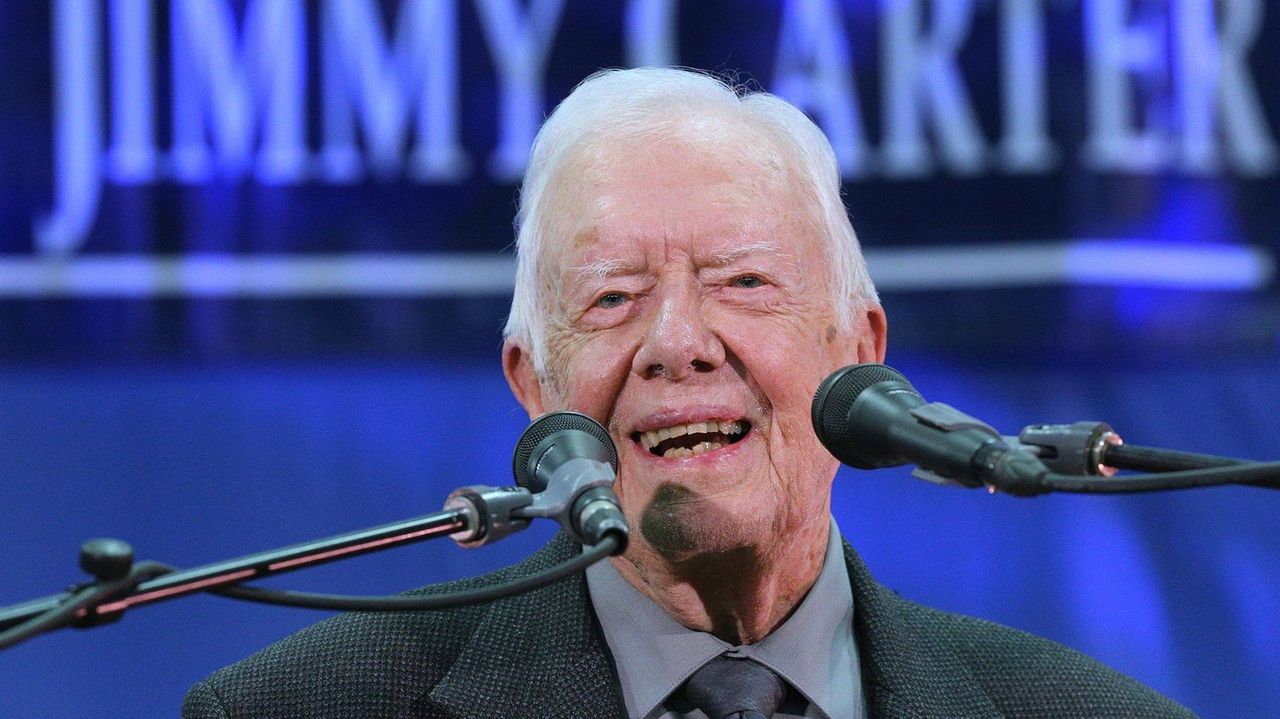
Following the death of Jimmy Carter, the 39th president of the United States, Dr. Meena Bose was featured in a Newsday article about his legacy. Dr. Bose is a Hofstra University professor of political science, executive dean of the Public Policy and Public Service program, and director of the Kalikow Center for the Study of the American Presidency. She noted that Carter served under difficult economic and political times. “But then, of course, he went on to have a highly successful post-presidency winning the Nobel Peace Prize, being highly active in public housing policy, voting rights … and really was quite active on the public scene until just a few years ago,” she said. The article also referenced the Hofstra Cultural Center’s 1990 three-day presidential conference on the Carter administration, which President Carter and First Lady Rosalynn Carter attended.

Trump Administration Likely to Bring Policy Changes to Higher Ed
Rebecca Natow, associate professor and director of the EdD in Educational Leadership & Policy Studies program and the MSEd in Higher Education Leadership & Policy Studies, was interviewed for “Higher Ed Changes Loom Under a Second Trump Administration,” that appeared in the latest issue of Governing. The article explains that when Donald Trump becomes president, he will likely undo federal regulations enacted by the Biden administration, affecting issues such as Title IX enforcement and protections for transgender students. Those regulations were partly an undoing of Trump’s first-term policies. “It’s been a burden because the people who are working on the college campuses implementing these policies on the ground are having to learn all new policies,” said Dr. Natow.


Drops in the Bank of Canada rate will not solve housing affordability.
Summary: The Bank of Canada’s interest rate cuts won’t resolve Canada’s housing affordability crisis. Factors such as skyrocketing home prices, unaffordable down payments, and stagnant wage growth are other primary challenges to address. A personal example offered by the author shows how the price of her Toronto home surged over 1,000% from 1983 and 2024 while her wages during the same period rose only 142%. While some see this issue as a consequence of Baby Boomers remaining in their homes, it's more nuanced than that. We have systemic barriers in Canada that necessitate targeted policy changes. It’s time to tackle affordability and implement effective solutions. The Bank of Canada met today, to determine interest rates for the last time this year. They announced a drop of .50 basis points. This is part of a broader effort to stimulate economic growth in Canada, which faces challenges, especially a softening labor market and persistent inflation. Why Should You Care? Interest rates determine how affordable our debt will be and what return we can expect on our savings. Since mortgages represent most consumer debt, interest rates directly impact affordable housing costs, making them very newsworthy. However, interest rates only tell part of the story. When the Bank of Canada lowers its rate, it primarily impacts variable-rate mortgages. These are tied directly to the BoC's overnight rate, so a rate cut can reduce the interest costs on these loans. Homeowners with variable rates would likely see a reduction in their payments, with more of their payments going toward principal rather than interest. People without debt and savings (primarily seniors) will see a drop in their investment returns. In contrast, fixed-rate mortgages, which are not directly tied to the BoC's rate, are influenced more by the bond market, particularly the 5-year government bond yield. The current trend in bond yields suggests that fixed mortgage rates could also decrease over time. Let’s pause here and talk about the affordability of houses and how interest rates are not the reason housing is out of reach for most first-time buyers. A walk down memory lane might offer some perspective. I purchased my first home in the fall of 1983 for $63,500 (insert head shake). I was 27 years old, and before you do the math, yes, I am a Baby Boomer. My first serious (so I thought) live-together relationship had just ended, and I was looking for a place to live. I had finished school and had a good full-time job with Bell Canada. A rental would have been preferred, except I had a dog. Someone suggested that I buy a home. I did not know very much about purchasing real estate or homeownership, for that matter. But I was young and willing to learn. I had been working full-time for two and a half years. During my orientation at Bell Canada, my supervisor told me to sign up for their stock option program. She said I would never miss the money or regret signing up for the plan. She was right. When I purchased my home, there was enough money in my stock account for a down payment and closing costs. My interest rate was a terrifying 12.75%, yielding a mortgage payment of just under $670 monthly. The lender deemed this affordable based on my $18,000 annual wage. Life was good. This was in 1983, when the minimum down payment for a home purchase in Canada was typically 10% for most buyers. However, a lower down payment could be possible with mortgage insurance (provided by organizations like Canada Mortgage Housing Corporation (CMHC), which allowed buyers to put down as little as 5%, provided they qualified for insurance. This was commonly available for homes under $150,000, with stricter terms for higher-priced homes. If you had a higher down payment of 25% or more, mortgage insurance wasn't required, and you could avoid extra costs associated with insured mortgages. This was part of broader efforts by the government to make homeownership more accessible, especially amid the high interest rates of the time. So let's do the math. Circa 1983 I first needed to prove that I had saved $3,175 in down payments and $953 in closing costs for $4128. In the 2.5 years I worked at Bell Canada, I saved $4,050 (including Bell Canada’s contribution) in stocks. I also had another $5,000 in my savings account. $9,000 was enough to complete the transaction and leave me with a healthy safety net. Fast forward to 2024 Let’s compare what the same transaction would look like today. Using the annual housing increase cited on the CREA website, the same house would be valued at approximately $700,000 today. Interest rates are much lower today, at 4.24%, yielding a mortgage payment of $3,545. 1. The down payment rules have changed. For the first $500,000, The minimum down payment is 5%. 5% X 500,000=25,0005\% \times 500,000 = 25,0005% X 500,000 = $25,000 2. The minimum down payment for the portion above $500,000 is 10%. 10% X (700,000−500,000) = 20,00010\% \times (700,000 - 500,000) = 20,00010% X (700,000−500,000) = $20,000 3. Total minimum down payment: 25,000+20,000 =4 5,00025,000 + 20,000 = 45,00025,000+20,000 = $45,000 Thus, the minimum down payment for a $700,000 home is $45,000. Here is the comparison: 1983 Scenario 2024 Scenario Variance Purchase Price: $63,500 $700,000 up 1002% Down Payment: $3,175 $45,000 up 1317% Loan Amount: $60,325 $655,000 up 986% Interest Rate: 12.75% 4.24% down 200% Monthly Mortgage Payment: $670 $3,545 up 429% Wage: $18,000 $43,500 up 142% Gross Debt Service Ratio: 44.6% 97.8% up 119% Time to Save for Down payment: 2 years 12.4 years up 520% *Please note that this example does not include mortgage insurance The real problem As you can see, housing was much more affordable for me in 1983 and far from cheap in 2024. During the past 41 years, wages have increased by 142%, yet interest rates have dropped by 200%. But the most significant impact on affordability has been the over 1,000% increase in housing prices. So why is all the focus on interest rates? At the risk of oversimplifying a complicated issue, I believe the media often uses interest rates as a "shiny penny" to capture attention, diverting focus from deeper housing affordability issues. This keeps the spotlight on inflation and monetary policy, aligning with economic agendas while ignoring systemic problems like down payment barriers and the shortage of affordable homes. Indeed, a movement in interest rates often has an immediate and noticeable impact on borrowers' affordability, making it a hot topic for news and policymakers. However, the frequency and consistency of the Bank of Canada meetings on interest rates give the impression that rates are the primary issue, even though they are just one part of a complex system. For example, even if the Bank of Canada dropped interest rates below zero, it would do little to solve today’s homeownership affordability issue. The real problems: 1. Down Payment Challenges: With housing prices skyrocketing, the 5%- 20% down payment required has become insurmountable for many, particularly younger buyers. High rents, stagnant wage growth relative to home prices, and rising living costs make saving nearly impossible. 2. Lack of Affordable Starter Homes: Due to profitability and zoning restrictions, housing developments often prioritize larger, higher-margin homes or luxury condos over affordable single-family starter homes. 3. Misplaced Generational Blame: Blaming Baby Boomers for "holding onto homes" oversimplifies the issue. They are staying put due to limited downsizing options, emotional attachments, or the need for housing stability in retirement, not a desire to thwart younger generations. 4. Political Challenges: Addressing structural issues like zoning reform or incentivizing affordable housing construction requires political will and collaboration, which can be slow and contentious. A broader lens is needed to understand and address the actual barriers to home ownership. Interest drops are merely a band-aid solution that misses the central issue of saving a down payment. The suggestion that we have an intergenerational issue needs to be revised. The fact that Baby Boomers are holding on to their homes should not surprise anyone. However, Real Estate models that predicted copious numbers of Baby Boomers selling their homes to downsize got it wrong. Downsizing was a concept conceived in the 1980s. Unfortunately, it did not account for record-setting home price increases or inflation, leaving it undesirable for today’s seniors. Although this is a complex issue, a few suggested solutions are worth exploring. What can be done? Focus on Policy Innovations: To create housing, increase supply, curb speculative investments, and provide targeted assistance for builders to build modest starter homes. To create rentals, homeowners should also receive income tax incentives to build Accessory Dwelling Units (ADUs). These could be used as affordable rentals or to house caregivers for senior homeowners. Today, The federal government announced a doubling of its Secondary Suite Loan Program, initially unveiled in the April 2024 budget. This is a massive step in the right direction. To create down payments, adopt a policy allowing first-time home buyers to avoid paying tax on their first $250,000 of income. Then, they could use the tax savings as a down payment. Focus on Education and Advocacy: Include a warning that helps consumers understand that withdrawing from RSPs results in a significant loss of compound interest related to withdrawals and how this can harm income during retirement. Encourage early inheritance to create gifted down payments. Normalize the concept by emphasizing the benefits to the giver and the receiver. Educate the public on using financial equity safely and create down payments as an early inheritance for their heirs. This will shift the conversation and initiate an intergenerational transfer of wealth that empowers the next generation to own a home. The Bottom Line While the Bank of Canada interest rate cut may ease some financial strain for homeowners with variable-rate mortgages, it will do little to address the core issue of housing affordability. The media's fixation on interest rates as a "shiny penny" distracts from more profound systemic barriers, such as the inability to save for a down payment and the lack of affordable housing stock. These challenges require targeted policies, structural reforms, and intergenerational collaboration to be tackled effectively. The focus must shift from short-term rate adjustments to long-term solutions that prioritize accessibility and affordability in housing. Without meaningful action, homeownership will remain out of reach for many, perpetuating the cycle of financial inequity across generations. Dont't Retire... Re-Wire! Sue


Charges Dropped Against President-Elect Trump
Dr. Meena Bose talked to Fox News Radio stations around the country about a judge dropping the charges against President-elect Donald Trump in the D.C. case against him. The dropping of charges followed a request made by Special Counsel Jack Smith. Dr. Bose spoke to: WILS in Lansing, MI; WFLA in Orlando, FL; and WKIM in Memphis, TN. Dr. Bose is a Hofstra University professor of political science, executive dean of the Public Policy and Public Service program, and director of the Kalikow Center for the Study of the American Presidency.

Covering the new Trump Administration - We can Help
With each day seems to come an new appointee to cabinet or significant role, a new policy twist and even the occasional walk back or withdrawal. The steps leading up to January 20, 2025 when Donald Trump resumes office as President of the United States will be getting a lot of coverage - and UC Irvine has it's own team of experts ready to lend their experience, perspective and expert opinion on what is happening. Louis DeSipio examines how democratic nations incorporate new members, including policymaking in the areas of immigration. Topics of Expertise: Foreign Affairs / NATO Immigration and Deportation Department of Education, EPA, Homeland Security, Department of Interior, NOAA, HHS and FDA Jeffrey Wasserstrom specializes in modern Chinese cultural history & world history, who has written on many contemporary as well as historical issues. Topics of Expertise: Foreign Affairs / NATO Free Speech Department of Education, EPA, Homeland Security, Department of Interior, NOAA, HHS and FDA Eric Swanson is an expert on inflation, recessions and what changes in interest rates mean for the economy. Topics of Expertise: Foreign Affairs / NATO Tariffs Impact of Downsized Government Senior's Health and Social Security Heidi Hardt is an expert on NATO, defense, security, foreign policy, organizations, the EU, UN, operations, gender, climate and change. Topics of Expertise: Foreign Affairs / NATO Climate Change Gender and LGBTQ+ Rights Tony Smith’s knowledge of politics includes Constitutional Law, the U.S. Supreme Court and election law. Topics of Expertise: Free Speech Department of Education, EPA, Homeland Security, Department of Interior, NOAA, HHS and FDA Jon Gould is a distinguished scholar in justice policy, social change and government reform. Topics of Expertise: Deregulation Gender and LGBTQ+ Rights All of these experts are available to speak with media - simply click on a profile now to arrange an interview time today.


The social media platform TikTok is on the verge of a U.S. ban—unless it can be stopped by President-elect Donald Trump. The policy will take effect on January 19, requiring that TikTok find a U.S. parent company or face a ban in the United States. This comes after concerns about user data falling into possession of the Chinese government and fears that they could use TikTok to spread misinformation. Derrick Green, communication expert at Cedarville University, has spoken about the motive behind this ban and why Trump may reverse it. Here are three key points from his recent interview: Trump has pointed out that he would not let TikTok be banned, if elected as president. How could he actually implement this and block this ban from taking effect? The President-elect used TikTok as a part of his campaigning strategy and found success on the app, this coming after he proposed to ban it in 2020. Did his use of TikTok influence his desire to save the app? The proposed ban of TikTok was based on national security and the mental health of young people in the United States. If TikTok was shut down in the United States, what would the effects be? If you are a journalist covering the TikTok ban or the effects of social media, our experts are here to help with all of your questions and stories. Derrick Green is the Chair of the Department of Communication at Cedarville University. Green is available to speak with the media regarding digital media and its effects. Simply click on his icon or email mweinstein@cedarville.edu to arrange an interview.



NYS Elected Officials Worry About Retribution
Meena Bose and Lawrence Levy were interviewed for the Newsday article, “NYS Democrats facing a red reality with Trump’s return to power.” New York Democrat officials worry that President-Elect Trump’s return to office may have consequences for federal aid, environmental and public health regulations, and immigrants and marginalized groups. “New York residents and those of others in blue states that again weren’t hospitable to Trump have to hope that he and his allies won’t declare a war of retribution,” said Dean Levy. “If nothing else, it could punish millions of Republicans who live in the same neighborhoods as the Democrats who voted against him.” Dr. Bose added that states have a better chance under the U.S. Constitution to push back on federal measures involving reproductive rights, but less legal authority to fight the White House or Congress on immigration and environmental issues that require national policies. Dr. Bose is a Hofstra University professor of political science, executive dean of the Public Policy and Public Service program, and executive director of the Kalikow Center for the Study of the American Presidency. Lawrence Levy is associate vice president and executive dean of Hofstra’s National Center for Suburban Studies.


Does Donald Trump Like Seniors?
At 78, Donald J. Trump already has 13 years of experience as a senior citizen. During his previous presidency, he occasionally referenced his senior status, particularly when discussing issues affecting older Americans. For example, in the 2020 election campaign, he acknowledged his age and addressed fellow seniors directly in his messaging, sometimes referring to himself as part of the senior community. Looking at his record, Trump appears to have a complex relationship with seniors. While expressing support for essential programs such as Social Security and Medicare, he often weaves the needs of seniors into his rhetoric. Yet some of his policy decisions have created mixed feelings among older Americans and advocacy groups. While pledging to protect these programs, he’s considered budget-cut proposals to reduce the funding of both these programs. Plus, his administration attempted to repeal the Affordable Care Act. While even the smartest of experts have learned it’s difficult to predict what Donald Trump will do on key policy decisions, there are some clues as to how his move back into the Oval Office will impact Canada and, more specifically, seniors. This topic got me wondering. Does Trump (a senior himself), like seniors? Let’s look closer at this demographic. Everyone knows that older people are the most reliable voters. The stats are compelling. According to Elections Canada - 75% of Canadians aged 65-74 voted compared to 48% of those aged 18-24. - The statistics for our US neighbours are similar, with 70% of Americans aged 65+ voting and 50% of Americans aged 18-29 voting. Knowing this voting power of the senior demographic, did Trump pander to this voting cohort? Yes, he most certainly did. He knew that as people age, their concerns narrow to a smaller list of critical topics such as Financial Security, Health, and Safety. During his 2024 presidential campaign, Donald Trump focused heavily on appealing to older voters, who historically make up a significant portion of the electorate and are more likely to vote. His campaign emphasized economic stability, protecting Social Security and Medicare, and national security—particularly relevant to older demographics. Let’s take a closer look at how the Trump administration could impact Canada's senior demographic in the following areas: Inflation Background: Inflation has a direct correlation to the cost of living. As the prices of goods and services rise over time, the purchasing power of money decreases – a challenge for many seniors. Critical expenses like housing, healthcare, food, and utilities could increase noticeably, putting pressure on limited retirement incomes and pensions. All this is stressful. According to a 2024 national survey of over 2,000 Canadians (conducted by Leger on behalf of FP Canada), money remains the top stressor for Canadians, with 44 percent citing money as their primary concern; That's up from 40 percent in 2023 and 38 percent in both 2022 and 2021. What This Means: Two of Trump’s biggest promises in his campaign (mass deportation of undocumented immigrants and more restrictive trade regulations) would have a "significant impact," according to an article by Ellen Cushing in the Atlantic. A domestic labour shortage plus double-digit import taxes would raise food prices on both sides of the border. Cushing goes on to say that “deporting undocumented immigrants would reduce the number of workers who pick crops by 40-50%.” While this rhetoric may have played well during the campaign, you can't fake the simple math here. Fewer workers means higher wages. That means higher prices. And the senior demographic will be hit hard because of their fixed incomes. Many will eat less of the expensive grocery store items like fresh meat, fruits and vegetables to make ends meet. Food prices will inevitably climb with these policies. The only question is when. According to a new poll conducted for CIBC and Financial Planning Canada on November 27, 2023, approximately 75% of working Canadians still need a formal financial plan for retirement. And many retirees face economic difficulties. A whopping 25% are still carrying debt into retirement. Many also report they have a substantial portion of debt and report that their retirement lifestyle isn't as comfortable as expected. The impact of inflation could be dire with few solutions; it is different for these older Canadians because they cannot re-enter the workforce. The only saving grace is that many of the hardest-hit Canadians are homeowners with equity options. Interest Rates Prediction: According to Beata Caranci, SVP & Chief Economist of TD Bank, the US is likely to raise interest rates to control growth. Canada is also expected to increase its rates, mainly to keep the Canadian dollar stable against the U.S. dollar. The Bank of Canada could be forced to rescind the projected planned interest rate reductions or at least reduce them. However, it's a delicate balancing act. Our economy could suffer if we don’t mirror the US increases in interest rates. Impact: Increasing Canadian interest rates will impact seniors by increasing mortgage carrying costs. At the same time, older Canadians with investment savings could see increased returns on these savings. A rise in interest rates would also impact housing prices and foreign exchange rates. House Prices Background: Economic, demographic, and policy-related factors influence home prices in Canada. The new Trump administration will undoubtedly impact these factors. To understand this area, let's examine some significant variables affecting housing costs. 1. Supply and Demand When housing supply is limited, and demand is high, prices rise. Conversely, when supply exceeds demand, prices stagnate or fall. Should the new administration adopt more restrictive immigration policies in the US, Canada might see an increased influx of skilled workers and families seeking an alternative place to live. Housing demand will likely increase in major Canadian cities—Toronto, Vancouver, and Calgary- resulting in price increases. 2. Population Growth An increase in population or immigration boosts housing demand, particularly in urban centers, consequently increasing home prices. Canada welcomed 485,000 immigrants in 2024, many of whom settled in cities like Toronto and Vancouver. This influx has driven up demand for housing, contributing to price increases. The Canadian government has recently reduced the number of immigrants we allow into our country, dropping the number from 500,000 to 395,000 in 2025. Current immigration numbers plus any overflow from the US should keep demand buoyant and we could see home prices continue to rise. However, Canada needs more housing, especially in high-demand urban areas. In addition to immigration, slow construction timelines and zoning restrictions are contributing factors. Canada's ongoing housing shortage and the potential impacts of Donald Trump's election win in the U.S. could exert upward pressure on home prices, particularly in major cities like Toronto and Vancouver. These cities, already grappling with limited housing and high prices, will likely see further price increases due to increased demand. Without robust policy interventions to increase the housing supply, Canada’s housing prices, particularly in major centers, will likely continue rising. And there will be winners and losers here. This is great news for seniors wishing to sell and exit the market by finding other living arrangements, such as renting, moving in with family, or entering retirement homes. It is even better news for seniors wishing to age in place as they will have more equity to fund their retirement. But it’s disappointing news for those wishing to downsize and stay in the same communities. They may be able to sell high, but they could also be forced to buy high. 3. Foreign Currency Trump's policies, such as tax cuts and protectionist trade measures, have historically strengthened the U.S. dollar. If similar policies are reintroduced, the U.S. dollar could become more robust due to increased investor confidence and perceived economic growth in the U.S. That’s bad for Canadians traveling or living in the U.S. Trump's potential trade disputes, particularly with China, and his aggressive geopolitical stance could also create uncertainty in global markets. While this might temporarily strengthen the U.S. dollar as a haven, long-term concerns about trade wars and deficits could cause fluctuations, impacting the Canadian dollar's stability against the U.S. dollar. This volatility directly impacts Canadians, especially those with significant financial exposure to the U.S. dollar. A second Trump presidency will likely impact the exchange rate between Canadian and U.S. dollars, which is especially relevant for 85% of Canadian Snowbirds, who, according to Snowbird Advisor, spend winters in the United States. This number was estimated to be 900,000 in 2023. These seniors may face increased expenses for property taxes, utilities, and other daily living costs in the U.S. If exchange rate volatility persists, locking in more favourable rates or using specialized currency exchange services, US credit/debit cards with lower transaction fees, and using US dollar accounts might be wise - especially for more significant financial transactions. The Bottom Line One thing is certain. Trump's second term has the potential to impact many Canadian seniors if he implements the policies he discussed during his election campaign. While some could benefit financially from higher home equity and investment returns, many may need help with increased living costs, especially food and foreign exchange challenges, particularly Snowbirds and those on fixed incomes. While we are all watching this situation unfold, one thing is sure. It's difficult to predict if Trump’s second term will make Canadian or US seniors "great again."
