
Experts Matter. Find Yours.
Connect for media, speaking, professional opportunities & more.

Small island states forging climate legacy
Comprising nations that are often overshadowed by larger counterparts on the economic stage, the Alliance of Small Island States (AOSIS) has become a formidable presence in shaping the discourse around climate change. Despite their limited economic clout, the AOSIS group wields influence by virtue of their vulnerability to the frontlines of climate impacts, making them pioneers in advocating for climate justice. Now at the heart of global climate negotiations, the AOSIS group has successfully spearheaded the establishment of a breakthrough in climate justice: A dedicated fund geared towards assisting less developed nations in bolstering their adaptation and resilience efforts. Kalim Shah, associate professor of energy and environmental policy at the University of Delaware, can comment on AOSIS and its role at The United Nations Framework Convention on Climate Change (also known as UNFCCC). He makes the following points: The AOSIS group, which is the negotiating body for small island developing states (SIDS) in The United Nations Framework Convention on Climate Change (UNFCCC), has emerged over the last decade as a major force in the global negotiations (even though the group comprises of small island nations which are typically not significant economic powerhouses=). They continue to lead on a number of key components of the UNFCCC climate agreement and wield this power largely because small islands are on the frontlines of climate impacts like seal level rise and are among the first to be impacted, even as they hold "no responsibility" for global warming. Small island states have now successfully led the negotiations for and approval of acknowledgement of "loss and damage" and a specific new loss and damage fund. This fund is dedicated to helping less developed countries with their adaptation and resilience building needs. “Loss and damage” is a general term used in UN climate negotiations to refer to the consequences of climate change that go beyond what people can adapt to, or when options exist but a community doesn’t have the resources to access or utilize them. This could be a turning point for the Alliance of Small Island States, since over 70% of climate funds to date have been allocated or distributed to climate mitigation efforts and very little to the SIDS. Since SIDS do not account for massive amounts of Greenhouse gas emissions, this was of little real help to them. But now the global consensus is understanding that the 1.5 degrees threshold of the Paris Accord will be passed and more efforts on the adaptation side must be available for the most vulnerable, such as SIDS to cope with climate impacts that are inevitable. To set up an interview with Professor Shah, visit his profile and click on the "contact" button.


President Joe Biden is set to meet Chinese president Xi Jinping during this week’s APEC Summit in California, marking the first in-person communication between the two leaders since they spoke in Bali almost exactly a year ago. While this meeting is not expected to produce notable changes to the United States’ policy toward China, or new initiatives between the countries, the hope is that it will at least keep the doors cracked on such conversations moving forward. “The purpose of this summit—for both the U.S. and China—is to show that each country is willing to talk to the other,” said Preston Jordan Lim, an assistant professor of international law at Villanova University and expert in Chinese foreign policy. “The fact that both leaders are willing to meet face to face and restart their conversation could well lead to more regularized bilateral communication and, down the road, to some small, bite-sized agreements.” However, that does not mean the upcoming meeting – and the careful language from both countries during the leadup – are just for show. Lim says that it is very likely the two heads of state will discuss “topics of real concern,” noting that President Biden indicated following their talk in November 2022 that they had “been very blunt with one another.” There is even more at stake now. Tensions have been soaring over the last 12 months between the U.S. and China, figuratively and literally. The incident with the Chinese balloon flying over the U.S, along with aggressive maneuvers from Chinese fighter jets near American military planes have earned harsh condemnation from U.S. officials. Separately, China believes the U.S. is trying to “economically cripple” them through a “mix of measures,” according to Lim. Those are not the only factors fueling tensions. “The U.S. continues to express significant concerns about aggressive Chinese actions in the South China Sea,” Lim said. “U.S. officials also continue to criticize China’s ongoing genocide of the Uyghur people. “On top of that, the geopolitical situation is even more tempestuous than it was in November 2022. In addition to the Russia-Ukraine war, both countries are now dealing with the effects of the Israel-Hamas War.” These are all topics Lim thinks could be discussed this week, in a meeting he says President Xi has more incentive to go through with than President Biden. “The Chinese economy entered a prolonged economic slowdown in April and there is mounting domestic dissatisfaction with how the Party-state has handled the economy,” Lim explained. “Xi has, on several recent occasions, indicated that the two countries should cooperate more closely. After Governor of California Gavin Newsom’s recent meeting with Xi, the Chinese Ministry of Foreign Affairs emphasized that China’s U.S. policy ‘remains one of mutual respect, peaceful coexistence and win-win cooperation.’ “Clearly, Xi and the Chinese government want to give off the impression that they are willing to have cooperative conversations with the U.S. government, even if they are unlikely to respond in good faith to U.S. concerns.” That unlikeliness to respond in good faith underscores the true nature of the meeting between the two powers, despite the largely positive messaging from both parties in advance. Does simply meeting at the table mean they will break bread? “U.S.-China relations are at a nadir right now and may well decline further, even if Xi and Biden meet,” Lim said. “There are serious roadblocks standing in the way of more harmonious bilateral relations, even though cooperation between the two countries has never been so necessary. It remains to be seen whether the U.S. and China will be able to work together on areas of mutual concern given the many stressors in the relationship.”


University of Delaware researcher one of 500 contributors to Fifth National Climate Assessment
A.R. Siders, core faculty with the University of Delaware's Disaster Research Center, is one of 500-plus experts who developed the Fifth National Climate Assessment (NCA5), the preeminent source of authoritative information on the risks, impacts and responses to climate change in the United States. Leaders and practitioners highlighted the findings and raised awareness of climate impacts and solutions at a release event on Nov. 14. White House and climate leaders from across the country elevated the key themes of NCA5 and further highlight the Biden Administration’s whole-of-government approach to mitigating and adapting to climate change. Siders focuses on managed retreat, which is the purposeful movement of people, buildings and other assets from areas vulnerable to hazards. She also specializes in climate change adaptation decision-making and evaluation in general: how and why communities decide when, where, and how to adapt to the effects of climate change and how these decisions affect risk reduction and equity outcomes. Joining Siders on the NCA5 were Jing Gao, Assistant Professor of Geospatial Data Science, and Kimberly Oremus, assistant professor of marine science and policy. Siders is available for interviews. Click on her profile to connect.

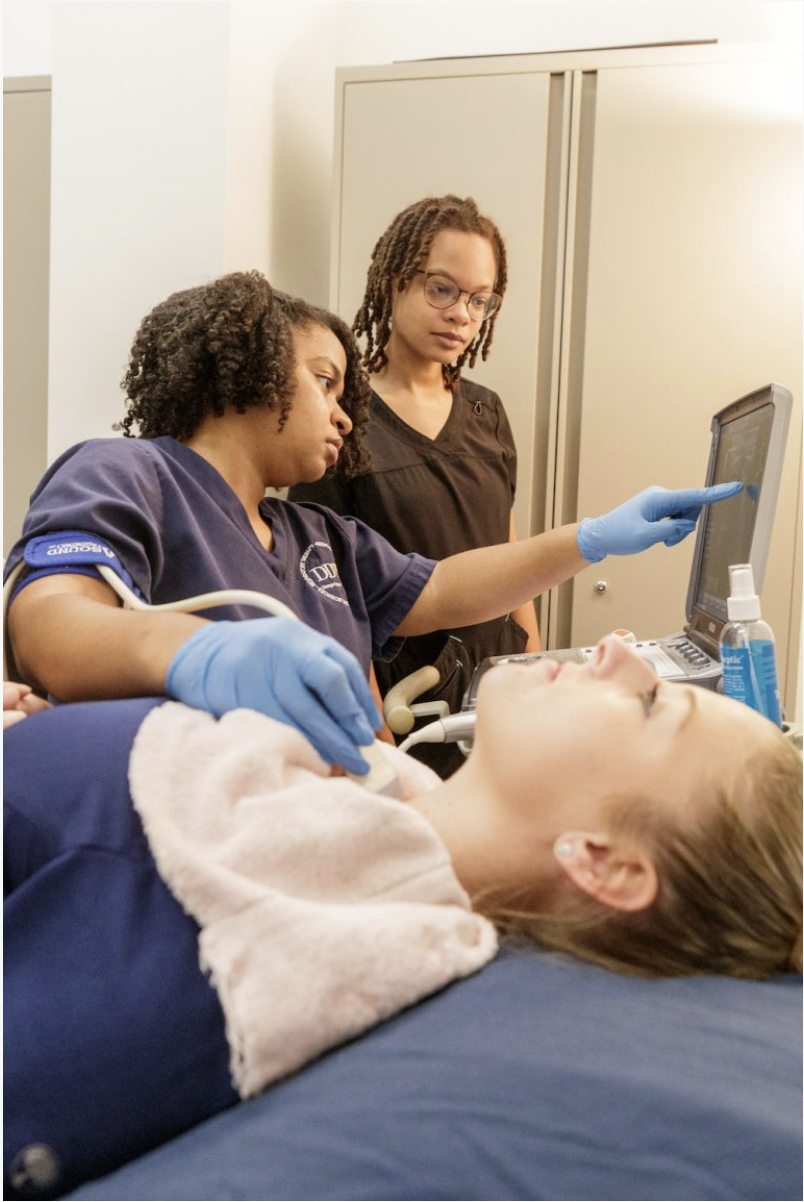
Georgia Southern’s public health center receives $4 million to assist rural hospitals nationwide
Georgia Southern University’s Center for Public Health Practice and Research at the Jiann-Ping Hsu College of Public Health (JPHCOPH) received a $4 million grant from the Health Resources and Services Administration (HRSA) to provide targeted technical assistance to rural hospitals nationwide. The funding will support the team’s implementation of the Targeted Technical Assistance for Rural Hospitals Program over a five-year period (2023-2028). “Many rural hospitals are struggling financially across the U.S.,” said JPHCOPH Dean Stuart Tedders, Ph.D. “Long-term, the primary program goal of this grant is to ensure that all rural hospitals are financially viable and positioned to serve their communities with the essential health care services that we all need and expect. A viable health care system is essential for assuring that all communities and their residents thrive. I am very proud of the Center for Public Health Practice and Research at the JPHCOPH and the commitment they have made to improving the quality of life of rural and underserved populations across the country.” Bettye Apenteng, Ph.D., and Charles Owens, both professors of health policy and management, serve as the co-principal investigators for the grant. “We are proud to be selected to work cooperatively with rural hospitals across the U.S. to strengthen their viability so they can continue to provide essential health care locally so the residents, the local hospital and the community may thrive,” said Owens. As part of this cooperative agreement, the team will work in partnership with HRSA and rural health stakeholders to provide in-depth and tailored technical assistance to rural hospitals at risk of financial distress nationwide. Technical assistance delivered as part of this program will help rural hospital communities implement a prioritized strategy for maintaining essential services locally through capacity building in evidence-based decision-making, operational and financial improvement, strategic management, community partnership, project implementation and evaluation. “We are excited to extend the work we have done in Georgia with rural hospitals, for close to a decade, to the rest of the nation,” said Apenteng. “We look forward to building strong collaborative relationships with rural hospital communities nationwide.” The grant activities will be executed by a multidisciplinary team that includes additional JPHCOPH faculty Angie Peden; Andrew Hansen, DrPH; Linda Kimsey, Ph.D.; William Mase, DrPH; Tilicia Mayo-Gamble, Ph.D., and Samuel Opoku, Ph.D.; and Parker College of Business’ Kwabena Boakye, Ph.D.; and the College of Arts and Humanities’ Jason Murdock. Interested in learning more or looking to talk with Bettye Apenteng, Ph.D., and Charles Owens about this grant? Simply click on an expert's icon or contact Georgia Southern's Director of Communications Jennifer Wise at jwise@georgiasouthern.edu to arrange an interview today.


Where Will Millennials Take Us?
They’ve been described as entitled, self-centered and shallow. “Selfie-stick wielding, ‘KeepingUp with the Kardashians’-watching, soft-in-the-middle whiners” – Psychology Today. Worldwide, though, millennials (to whom also are attributed awesome characteristics like adaptability and creativity) are 1.8 billion strong, the most populated age group in modern history. And they’re soon to be our political, economic and social leaders. Where will they take us? How will their views shape our world? Jared McDonald’s new book, Citizens of the World, Political Engagement and Policy Attitudes of Millennials Across the Globe, uses data to examine this generation, born into technology, the “war on terror,” global interconnectedness and high unemployment. Published by Barnes & Noble in October 2022, the text looks at millennials’ attitudes about lifestyle, family life, gender roles, politics, religion and the future to better understand how governance might change under their leadership … and the influence they already wield. Millennials are a hot topic ... and for better or worse always in the news it seems as journalists, employers, parents and even professors work to figure this generation out. And if you'd like to know more - that where we can help. Published author and Assistant Professor of Political Science and International Affairs, Jared McDonald is available to speak with media - simply click on his icon now to arrange an interview today.



Research explores recreational shark fishing's impact on protected species
In Delaware, recreational shark fishing is popular, with anglers taking part in half- and full-day shark fishing trips. However, they are prohibited from keeping protected species of sharks. A University of Delaware research team led by Aaron Carlisle, assistant professor in UD's School of Marine Science and Policy (SMSP), is studying the impact of releasing these sharks, aiming to understand their post-release survival and how fishing operations handle them. Carlisle, graduate student Bethany Brodbeck and Ed Hale, assistant professor and aquaculture specialist for Delaware Sea Grant, are conducting the field research for the study, riding along with recreational fishing vessels to better understand what happens to sharks when they are caught and released. Another component to the research is being led by George Parsons, E.I. du Pont Professor at UD’s College of Earth, Ocean and Environment, who is looking at the economic aspect, using survey-based research to value the shark fishery and study anglers’ perceptions and attitudes toward sharks and their management. Carlisle said the two concurrent studies will help gauge the biological and economic impacts of the shark fishery in Delaware. “We want to find out how much money the fishery is actually drawing to the economy,” Carlisle said. “We also want to find out how the fishery is actually impacting the populations of sharks in Delaware, especially the protected ones.” The research was funded by Delaware Sea Grant, which helps communities wisely use, manage and conserve coastal resources. To arrange an interview with Carlisle, simply click on the link to his profile. Pressing the contact button and using the form will send your request directly to him and a member of UD's media relations team.


Highlighting the Impacts of Insufficient WIC Funding on Low-Income Families
Since the beginning of the COVID-19 pandemic, the cost of food has risen 25%, and many are struggling to provide enough nutritious food to their families. Federal safety net programs – like the Special Supplemental Nutrition Program for Women, Infants, and Children (WIC) for example – are intended to provide needed support for healthy foods during hard times, serving millions each year. The WIC program, however, is not guaranteed to all that might need it. Instead it relies on budget appropriations, which for the first time in the history of the program may not be enough to cover those in need. There is a chance that as many as 600,000 young children, pregnant and new mothers who qualify for WIC will not be able to receive benefits in the upcoming year. Allison Karpyn is Co-Director of the Center for Research in Education and Social Policy (CRESP) and Professor in the Department of the Human Development and Family Sciences at the University of Delaware. She is able to speak holistically about WIC and other federal food programs and what this funding can accomplish. "Federal Nutrition and related programs also need to address issues of stigma," Karpyn says. Recent frameworks developed by Dr. Karpyn and colleague suggest that more needs to be done to adequately understand and support families to use the benefits intended for them. Research is clear that food and nutrition security are closely tied to our health, she notes. Karpyn is able to speak about this and more. If you would like to speak to her, click her "View Profile" link.


Expert reaction to the UK AI Safety Summit
Today the UK government announced a "world first agreement" on how to manage the riskiest forms of AI. It focuses on so-called "frontier AI" - what ministers consider highly advanced forms of the tech - with as-yet unknown capabilities. The agreement, signed by countries including the US, the EU and China, was announced at the UK's AI Safety Summit. Dr Alina Patelli, Senior Lecturer in Computer Science, Aston University, comments: “A summit on AI safety is long overdue. As is the case with all groundbreaking technologies, AI’s transformative potential for public good is only matched by its risks, which are unlikely to be successfully avoided, if AI tech design and deployment are left unregulated and therefore open to misuse, either intentionally or accidentally. The scope of the summit is appropriate, reflective of Government’s cautious approach to managing interactions with AI safety experts from multiple nations and disciplines: the summit focus is kept narrow, to five objectives only, and the number of participants is wisely limited to 100, to keep the conversation productive.” What is likely to come out of this summit? “The summit’s main output will most likely be a bare-bones regulatory document comprising (1) a shared understanding of AI (i.e., a generally accepted definition of the term reflective of all summit participants’ views, not just those of tech experts), (2) a list of major risks associated to AI misuse, both in terms of potential damage as well as likelihood of becoming a reality, and (3) a policy draft outlining the core elements that a yet-to-be-developed governance framework should include.” What AI safety could/should look like? “Although it would be premature to venture a definition of AI safety ahead of the summit, one thing that is certain is that a comprehensive, therefore effective, AI regulatory framework would encompass more than just laws. Non-legally binding codes of conduct, tech design and development processes that are bound by moral and ethical values, both in the commercial ecosystem, as well as when it comes to individual entrepreneurs, revised open-access licenses under which AI should be used in the public domain, etc. are equally important pieces. The best way to integrate all these in a cohesive, overarching governance plan is perhaps a topic to explore in one of the post-summit events.” What are the potential practicalities for a route forward towards safe AI? “The practical way to systematically regulate AI is incremental. Initially, the development and application of those AI tools deemed to be high-risk will most likely be restricted to controlled environments, where the potential benefits justify the risks and where sound mitigation procedures can be quickly and effectively enforced to mitigate those risks. As regulations become better prescribed, AI’s (safe and legal) application space will gradually expand, making its benefits available to larger groups of people without any of the downsides.” To interview Dr Alina Patelli or request further details contact Nicola Jones, Press and Communications Manager, on (+44) 7825 342091 or email: n.jones6@aston.ac.uk


• Rice straw could be a fuel of the future in rural Philippines • Across Asia 300 million tonnes of rice straw go up in smoke every year • New proposals includes scaling up harvesting system with straw removal, biogas-powered rice drying and storage and efficient milling. An Aston University bioenergy researcher has been explaining how rice straw could be a fuel of the future in rural Philippines. Dr Mirjam Roeder who is based at the University’s Energy & Bioproducts Research Institute (EBRI) is collaborating with the UK company Straw Innovations Ltd, Southeast Asian Regional Center for Graduate Study and Research in Agriculture (SEARCA) and Koolmill Systems Ltd to showcase their research. The Food and Agriculture Organisation (FAO) states that rice is the number one food crop globally and 91% of it is produced and consumed in Asia. As a crop it is responsible for 48% of global crop emissions and for every kilogram of rice, a kilo of straw is produced. Across Asia 300 million tonnes of rice straw go up in smoke every year when burnt after harvest, releasing emissions and air pollutants that triple risks of increased respiratory diseases and accelerate climate change. To raise awareness of sustainable uses for rice straw Dr Roeder has travelled to the sixth International Rice Congress in Manila, Philippines to explain the potential of the emerging technology. Rice straw is an underdeveloped feedstock and can be collected and digested to produce biogas, unlocking sustainable straw management options and renewable energy for farmers using anaerobic digestion (AD) from rice straw. Dr Roeder has been working with Straw Innovations on their UK Innovate project demonstration facility in the Philippines, the Rice Straw Biogas Hub, which is scaling up a complete harvesting system with straw removal, biogas-powered rice drying and storage, together with efficient milling. Craig Jamieson, Straw Innovations said: “The International Rice Congress is only held every four years and is a key event for coordinating and tracking progress in rice research. “Our partnership with Aston University and SEARCA adds independent, scientific rigour to the work we do and amplifies our message to government policy makers. We are grateful to Innovate UK for their ongoing support through the Energy Catalyst Programme, which is accelerating our development.” At the conference Dr Roeder has been explaining how independent environmental and social research can increase farmer incomes, equality of opportunity, food security and decarbonisation benefits. She said: “Engaging with stakeholders and working in partnership across organisations is vital to the successful adoption of new technologies. I am delighted to have had the opportunity to host an event with our project partners at this prestigious conference, bringing the cutting-edge research of using rice straw for clean energy to the forefront of the rice research community and supporting the pathway to net zero.” Dr Glenn B Gregorio, Center Director of SEARCA, added: "We are gaining insights into the environmental impact of rice straw utilisation and implementing policies to unleash its potential to empower us to make informed decisions that are instrumental to climate change mitigation and decarbonisation," Professor Rex Demafelis, University of the Philippines, is also working with SEARCA and is leading the project on life cycle analyses and measurements of rice straw greenhouse gas emissions. He said: “Rice straw is a valuable resource, and we are grateful to be part of this team which seeks to harness its full potential and promote circularity, which would ultimately contribute to our goal of reducing our greenhouse gas emissions.” ENDS The Supergen Bioenergy Hub works with academia, industry, government and societal stakeholders to develop sustainable bioenergy systems that support the UK’s transition to an affordable, resilient, low-carbon energy future. The Hub is funded jointly by the Engineering and Physical Sciences Research Council (EPSRC) and the Biotechnology and Biological Sciences Research Council (BBSRC) and is part of the wider Supergen Programme. For further information contact Rebecca Fothergill and Catriona Heaton supergen-bioenergy@aston.ac.uk Follow us on Twitter @SuperBioHub Visit our website at supergen-bioenergy.net Visit our YouTube Channel to watch the video on Carbon Balance FAO: RICE PRODUCTION IN THE ASIA-PACIFIC REGION: ISSUES AND PERSPECTIVES - M.K. Papademetriou* (fao.org) https://www.fao.org/3/x6905e/x6905e04.htm About Aston University For over a century, Aston University’s enduring purpose has been to make our world a better place through education, research and innovation, by enabling our students to succeed in work and life, and by supporting our communities to thrive economically, socially and culturally. Aston University’s history has been intertwined with the history of Birmingham, a remarkable city that once was the heartland of the Industrial Revolution and the manufacturing powerhouse of the world. Born out of the First Industrial Revolution, Aston University has a proud and distinct heritage dating back to our formation as the School of Metallurgy in 1875, the first UK College of Technology in 1951, gaining university status by Royal Charter in 1966, and becoming The Guardian University of the Year in 2020. Building on our outstanding past, we are now defining our place and role in the Fourth Industrial Revolution (and beyond) within a rapidly changing world. For media inquiries in relation to this release, contact Nicola Jones, Press and Communications Manager, on (+44) 7825 342091 or email: n.jones6@aston.ac.uk


Net-zero emissions targets: Genuine goals or Fortune 500 greenwashing?
Moving towards “net-zero” emissions has become a popular “target” for multinational corporations that have committed to improving their sustainability. But is it a new tagline from marketing departments or something firms are actually committed to? About half of the U.S.-based Fortune 500 firms have declared their intent to reach net zero – the point at which the emissions from an entity equals the amount of greenhouse gasses being taken out of the atmosphere – as early as by 2030. The University of Delaware’s Kalim Shah, an expert on energy and climate policy, has some thoughts on these targets, their feasibility and why these companies are pursuing these goals. We should question why the language has changed in less than a decade from lowering emissions or low carbon options to “net-zero” when targets to meet lower emissions have not really been fulfilled in the first place. Part of the explanation could be to get ahead of would-be legislated pressure, that is, to dissuade legislative efforts which would imply compliance requirements, whereas now, these pledges are completely voluntary. Net zero is more technologically feasible in some sectors/ processes and not in others. In other words, there is likely not a cost effective, technological fix for net zero in the aluminum smelting or iron or concrete making industries in the immediate future. Lack of industry standards for measuring net zero – or perhaps more correctly, several competing methods of calculating net zero – can give some cover, for now, to firms attempting to “greenwash.” In effect, one firm's net zero may not be comparable to another's net zero. A company’s “emissions scope” must be examined closed. Are firms referring to direct emissions related to on-site fuel combustion or fleet vehicles; Indirect emissions related to emission generation of purchased energy, such as heat and electricity; and/or Other indirect emissions related to both emissions from upstream and downstream business activities when setting targets? We have to "read the fine print" as well, as terms that sound as ambitious but have slightly different strategies, such as “carbon neutral” and “carbon negative” targets can also complicate how we hold firms accountable. Where net zero is less possible, emissions could be “offset” through various schemes like carbon credits of forest offsets. A carbon offset is a reduction or removal of emissions of greenhouse gases made in order to compensate for emissions made elsewhere. En vogue since the 2000s, largely because it presented a way for indebted developed countries to capture market value by preserving endangered forests when multinationals ‘"offset" operations emissions by paying said developing countries, this mechanism has become highly questionable of late for its unverifiability. To arrange an interview, click on Dr. Shah's profile and press the contact button found there.