
Experts Matter. Find Yours.
Connect for media, speaking, professional opportunities & more.

Think your city is ready for a cyber-attack? Think again according to our experts
There is no way around it; every day there are new cybersecurity threats to not only individuals, but governments at all levels as well. There have been some high-profile breeches that involve major cities like Atlanta and Baltimore. But those attacks are going to all levels, and recent research has shown most municipalities and cities are ill-prepared for cyberattacks. Research conducted by Donald Norris, PhD, and Laura Mateczun, JD, of the University of Maryland, Baltimore County along with William Hatcher, PhD, Wesley Meares, PhD, and John Heslen, PhD, of Augusta University, found various reasons why local governments struggle with cybersecurity. The research shows local governments recognize the need for cybersecurity but are not taking crucial next steps to ensure cybersecurity by integrating policies into daily management practices. Not just that, some local governments were unaware how often they were under cyberattack. Throw in budgetary constraints, and it leads local governments to be in a tough situation. That, unto itself, is a major sticking point, but the burden could be lessened. “Effective cybersecurity is expensive and too much of a strain on the budgets of many cities and counties,” said Hatcher, chair of the Department of Social Sciences in Pamplin College of Arts, Humanities, and Social Sciences at Augusta University. “This is why we suggest regional solutions to the program, so multiple governments carry the cost.” Meares, associate professor and MPA director in Pamplin College, added it’s not just the financial aspect, but said there’s a shortage of cybersecurity talent nationwide, which compounded with limited budgets, makes it tough to compete. In the quest for talent between private and public sector, usually the private sector can offer more to entice a cybersecurity expert to come work for them. There’s also an issue of many local governments using dated technologies, which may be easier for cyber criminals to attack. “Local government is increasingly being more digitally connected, with vital infrastructure, data and services connected which creates more opportunities for cyber-attacks. Additionally, local governments tend to lag in updating critical technology due to limited resources (both human and financial resources),” added Meares. None of this comes as a surprise in the lack of cybersecurity training. “It’s an expensive service for local governments to provide. This is why we suggest more budgetary support for the training,” said Heslen, assistant professor in Pamplin College. “We’re also unsurprised because local governments often struggle to fund professional training in other areas.” But researchers say there are ways to improve upon safety of critical data most notably adopting dedicated cybersecurity budgets funded at an appropriate level in all local governments. Those resources can help address many limitations in local government cybersecurity programs, from staffing and hardware and software deficiencies to awareness training for all parties in local governments. They also recommend the adoption and implementation of cybersecurity policies to manage and regulate actions taken by all that affect the organization’s cybersecurity. By taking the recommended actions, local governments will have a better chance to provide high levels of cybersecurity and protect their information assets more effectively. This is an important topic and if you are a journalist looking to know more about the importance of being ready and able to react if and when a municipality comes under threat from a cyber-attack - then let us help/. William Hatcher and John Heslen are both available to speak with media - simply contact them now to arrange an interview today.



'Shake it Off' - Do Grammy-Winning Pop Artists Take More Creative Risks Than Their Runners-Up?
Taylor Swift has had a career marked by an evolution in sound and style. Swift emerged into the industry a country star and was later rebranded a pop icon. She’s gone on to explore alternative rock and indie folk sounds. Research by Giacomo Negro, professor of Organization & Management and professor of Sociology (by courtesy), suggests Grammy award wins may be credited as the catalyst for these changes. Swift, who holds 11 Grammy awards, won her first in 2010, taking home Album of the Year for country album “Fearless,” then again for her first exclusively pop album “1989” and again in 2021 for her indie folk album “Folklore.” Each time she earned another Grammy, she tried something new. Swift is not the only one. After winning Album of the Year in 1988 for classic arena rock album “The Joshua Tree,” U2 released “Achtung Baby,” an album that dabbled with kraut rock and electronic music. Similarly, Fleetwood Mac’s “Rumours” won them Album of the Year in 1978, after which, they released their double album “Tusk,” an experimental record that incorporated punk-rock. Does Missing out on a Grammy Win Make Artists Timid? Negro’s research shows Grammy award winners tend to release albums that are more distinct from the work of other artists, whereas Grammy nominees who do not win create music that is more similar to other artists than they had prior to their nomination. Negro co-authored the research with Balázs Kovács from Yale University and Glenn Carroll from Stanford University–a culmination of more than five years of work. Negro says he has always been interested in cultural production, and he set out to study the patterns of differentiation in the music market. He chose the Grammys because these symbolic awards provide a situation similar to a natural experiment that is hard to find in real life or without a controlled environment. The Grammys are also unique because they share the names of both the award winners and the nominees, presenting a comparison among candidates of similar quality. To explore this question, Negro obtained data from four main sources: Grammy Awards Academy, online music database AllMusic, Spotify, and Billboard. From the academy information, he collected data for the Grammy nominated artists and winners from 1959 to 2018 in four “general” categories: Album of the Year, Record of the Year, Song of the Year,and Best New Artist. From AllMusic, they collected data based on the Grammy information that included artist name, recording name, year of release, record labels the artists released the music with, the production team they worked with, and the stylistic tags attached to each recording. Spotify holds a repository of popular songs; from here, they sourced data on the songs’ sonic features, which are the objective parameters of the music that qualify how the music sounds and is measured by algorithms, including tempo, genre, and key. Looking at the Billboard charts for the 2000s, they found the most albums that sold the most copies. “We combined all of this information coming from different sources, which was a challenge and an endeavor by itself, to attach information related to styles, sonic features, performance on the chart, and performance with the awards,” Negro says. They compared albums of Grammy winners with the albums of the nominees, then compared these with albums from a group of artists in the general market matched on a series of characteristics (such as genre and length of recording career). The researchers found that after artists win a Grammy, they become more experimental with their work, whereas the runners-up make music that is stylistically more conventional. This latter result was unexpected. Negro argues that there is value to be seen in the Grammys–even though it may be criticized for being too commercial or questioned for its relevance–because it has an impact on the music market and the careers of artists who are nominated and awarded. “These prizes celebrate creativity and innovation but may have unintended consequences in terms of their artists’ behavior,” he adds. “If more people become more conventional because of not receiving an award, one implication for cultural production is that awards have mixed impact. They benefit winners because they afford them more autonomy and, perhaps, confidence to explore new ideas, but they don’t necessarily benefit innovation in the field overall because more artists are just becoming more conventional.” He offers that, conversely, there may be a positive impact for artists who were not nominated at all. These artists may try to imitate the winners and try different things in the future. From this, it is clear that there is a benefit to mention who wins an award, but he says it is inconclusive whether there is a benefit to sharing the names of shortlisted candidates. What are the Greater Cultural Implications? “It’s interesting to observe how cultural production is sensitive to symbolic awards,” Negro says. “We tend to think that artists mainly follow their muse or their inspiration, but they respond to the stimuli around them.” Negro speculates that the results found in this study might apply to other industries in which producers or artists can combine different elements of styles to create their products, such as book publishing, visual arts, film, or television. He adds, these results may apply more generally to other markets and professional settings, in which employers create programs of rewards for employees. A bestowal of such awards may empower winners to continue with their behaviors, while discouraging those who were not recognized for their efforts, leading them to return to more typical behaviors. Negro is interested in following up this research by looking at the general impact of all Grammy Awards–not just the general ones–to see if specialized awards have a similar impact. He is also curious to investigate the patterns of collaboration between artists, and if stylistic changes are related to changes in the people artists work with. When Business Meets Research, What Can Students Take Away? Negro says this research also yielded findings that his team did not expect, as in the difference between winners and non-winning nominees. Where they thought they may see similarities, they, instead, saw differences, reiterating the importance of questioning how industries operate. To inquisitive students he advises, “Keep your eyes open and be curious about understanding why or how things work the way they do. Then, be persistent because it can take a long time to bring your idea to fruition.” Interested in knowing more or connecting with Giacomo Negro - simply click on his icon now to arrange an interview or time today.



Is too much of a good thing actually a bad thing? That’s what researchers in Georgia Southern’s Biodynamics and Human Performance Center aim to find out through a recent study of 75 ultramarathon runners during the 50th anniversary of the Western States 100-mile Endurance Run (WSER) in California. The study focuses on the benefits of physical activity beyond the typical recommended amount by examining the cardiovascular effects of extreme exercise in the WSER, a 100-mile trail race through the Sierra Nevada mountains that climbs more than 18,000 feet and descends nearly 23,000 feet before runners reach the finish. Drs. Grosicki and Babcock (University of Colorado, Anschutz Medical Campus) work through the night to collect cardiovascular measures on race finishers. “We know that exercise is beneficial for health, and national and international public health agencies, such as The American Heart Association, advise that adults get at least 150 minutes of moderate or 75 minutes of vigorous physical activity per week,” said Gregory Grosicki, Ph.D., associate professor in the Waters College of Health Professions Department of Health Sciences and Kinesiology. “Moreover, there is a dose-response relation between exercise and health, whereby an individual can gain even more health benefits by being active for up to 300 minutes per week,” he continued. “However, it is uncertain whether exercising for greater than 300 minutes will confer any additional health benefits, and importantly, excess exercise may actually detract from cardiovascular health.” It is important to note, Grosiciki said, that this apparent “partial loss of health benefits” from excess exercise is theoretical for the time being. “Studies such as ours will help to determine whether this hypothesis is valid, and if so, what can be done about it,” he said. This is the third year Grosicki and colleagues attended WSER to collect data on some of the world’s most extreme athletes. Previous studies focused on changes in gut health during exercise, which, believe it or not, may actually be linked to changes in cardiovascular health. Associate Professor Gregory Grosicki, Ph.D., and research colleagues stand at the start line of the Western States Endurance Run. Grosicki recruited 10 research faculty and students from Auburn University, Florida State University, San Francisco State University and the University of Colorado Anschutz to assist in the data collection. “We measured blood pressure, arterial stiffness, heart size and function and kidney blood flow, and we collected blood and urine from 75 athletes pre-race, 55 of which completed the race and returned for post-race measures,” stated Grosicki. “This is, without question, the largest and most comprehensive dataset ever to be collected at a single event like this.” WSER begins in Olympic Valley, California, and ends in Auburn, California, and is considered one of the oldest and most competitive ultramarathons in the United States. Participation is highly selective, and if chosen, athletes have only 30 hours to cover the distance. The Western States Endurance Run Research Foundation funded this project. This is exciting research and you are a reporter looking to contact Gregory Grosicki, Ph.D. from the Waters College of Health Professions Department of Health Sciences and Kinesiology - then let us help. Simply contact Georgia Southern's Director of Communications Jennifer Wise at jwise@georgiasouthern.edu to arrange an interview today.


Wilmington Hospital Emergency Department Earns Lantern Award for World-Class Excellence
ChristianaCare’s Wilmington Hospital Emergency Department is one of 53 emergency departments around the world to receive the Emergency Nurses Association (ENA) Lantern Award for 2023, recognizing the excellence of its caregivers in incorporating evidence-based practice and innovation. The ENA Lantern Award celebrates emergency departments that demonstrate exceptional leadership, practice, education, advocacy and research performance. It honors the late Florence Nightingale, who is credited as the founder of modern nursing and is referred to as the “Lady With the Lamp” for her round-the-clock care given to wounded soldiers during the Crimean War. “Every day, our caregivers bring to life the ChristianaCare values of love and excellence through the ways they care for our neighbors who come to the Wilmington Hospital Emergency Department,” said Danielle Weber, MSN, MSM, RN-BC, NEA-BC, chief nurse executive and chief nursing officer of Wilmington Hospital. “By putting the patient first and rethinking outdated models of care, we have created a better experience for patients at a time when they are often most in need. This recognition signifies the transformative effect of our commitment to being exceptional today and even better tomorrow.” Rooted in history, focused on the future Wilmington Hospital has served the community for nearly 125 years, meeting diverse medical needs and providing a safety net for people in underrepresented communities. The Wilmington Hospital Emergency Department is the second-busiest ED in the state, with 58,744 visits in fiscal year 2023. Combined, ChristianaCare’s emergency departments are ranked 12th in the United States and 7th on the East Coast in number of patient visits, according to the American Hospital Association. A highly engaged staff supports the high volume of work in the department, where nurses serve in collaborative decision-making, shared governance and nurse autonomy, “practicing in an environment of empowerment,” said ED nurse Christina Hoddinott, MSN, RN, FNP-BC, CEN, CPE, who helped work on the Lantern application for Wilmington ED. “The staff who perform the work participate in decision-making that directly affects their practice,” Hoddinott said. “When our patients walk through our emergency department doors in their unexpected and stressful moments of need, we do everything we can to see that they receive the highest level of care.” Doreen Nord, MSN, RN, CEN, NPD-BC, nurse manager for Wilmington Hospital ED, said the Lantern award reflects the greatness seen every day among its nursing caregivers. “Their commitment and compassion shine, and there is never a doubt about who is most important — our patients,” Nord said. “We are honored by this recognition, the highest available in emergency nursing.” A collaborative effort Wilmington Hospital ED and the other Lantern recipients were recognized in the Hall of Honor at Emergency Nursing 2023, ENA’s annual conference, Sept. 21-23, in San Diego, California. See the list of other award recipients here. “Each and every emergency department on this list has worked extremely hard implementing innovations to better their emergency department for staff and patients alike,” said ENA President Terry Foster, MSN, RN, CEN, CPEN, CCRN, TCRN, FAEN. “Hearing the excitement these EDs had when notified that they were a recipient was so heart-warming and reminded me of the commitment that ED nurses have to continuous improvement.” In Wilmington, the spirit of collaboration and support among caregivers creates an environment that ensures patients receive the highest level of care. Hoddinott likens her fellow caregivers to puzzle pieces — each one is dynamic and unique. “When the pieces come together, we have one big complete puzzle. We are a team that supports each other during stressful moments, happy occasions and all the in between,” she said. “Our team does not take for granted the ‘specialness’ we have here, and our patients can truly feel that when they come through our doors.”


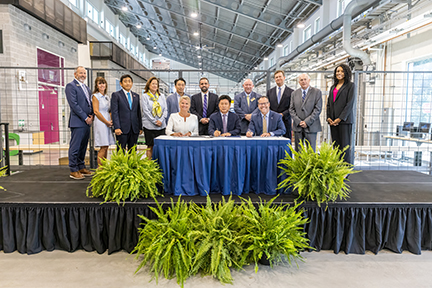
In a milestone collaboration aimed at fostering workforce development, innovation, and community enrichment, Hyundai Motor Group Metaplant America (HMGMA), Georgia Southern University and Ogeechee Technical College are signing a formal agreement to work together in addressing regional workforce needs while advancing academic excellence and technological innovation. Ogeechee Technical College President Lori Durden, HMGMA CEO and President Oscar Kwon, and Georgia Southern University President Kyle Marrero sign transformative agreement surrounded by officials from both institutions and HMGMA. The partnership will encompass a diverse range of initiatives that reflect the shared commitment HMGMA and its local education partners have to catalyze positive change for both the academic community and the broader society. Leveraging their respective strengths, this collaboration aims to address workforce demands, create transformative educational pathways, and drive impactful research endeavors. “Together, we are not just building cars; we are building futures, strengthening the community and driving progress,” said HMGMA CEO Oscar Kwon. “That is part of Hyundai’s mission: progress for humanity. Our partnership with these institutions reflects our shared vision for a brighter, more innovative future.” As part of this partnership, Georgia Southern University has committed to build on the success it has already seen in recruitment services for HMGMA. These services will include on-campus information sessions, dedicated company recruiting events, and on-campus interview days for graduating seniors. By bridging the gap between academia and industry, the University is ensuring that its students are well-prepared for the demands of the professional world. The university also will offer professional development certifications and courses for the company’s employees through its Continuing and Professional Education programs. “This partnership stands as a testament to the value of collaboration between academia and industry in driving holistic growth,” said Georgia Southern President Kyle Marrero. “By uniting forces, HMGMA and Georgia Southern University are forging a path that not only elevates educational opportunities but also cultivates a thriving community equipped to meet the challenges and opportunities of the future.” Georgia Southern also will strengthen its alliance with Ogeechee Technical College to create revised and expanded articulation agreements, pathway programs, and credit transfers. These initiatives will pave the way for the development of collaborative academic programs tailored to meet the specific workforce needs of the region. This includes exploring innovative degree pathways such as Advanced Manufacturing Engineering, as well as fostering additional academic collaborations that align with workforce-driven educational programs. Ogeechee Tech’s commitment includes continuing its record of providing training to local companies to include implementing the Electric Vehicle Professional Technical Certificate of Credit and Hybrid/Electric Vehicle Repair Technician Technical Certificate of Credit programs, and developing Industrial Maintenance Noncredit Training for HMGMA Employees. Additionally, Ogeechee Tech agrees to provide on-campus recruitment events and career fairs to current and past graduates. “Ogeechee Technical College is very excited about entering into this MOU with HMGMA,” said Lori Durden, president of Ogeechee Tech. “This has been several months in the making, and like other institutions and technical colleges in our region, we are going to do all that we can to support the efforts of our Governor to make Georgia the electric mobility capital of America. This is an exciting day for Ogeechee Technical College, and we look forward to supporting the evolving workforce development needs of this region.” With the Memorandum of Understanding, HMGMA will help promote educational opportunities in the region; develop internship, career pathway programs, and other appropriate work-based learning opportunities; and commit to exploring potential research, innovation, and commercialization projects. Interested in learning more or looking to talk with Georgia Southern President Kyle Marrero about this exciting new partnership ? Contact Georgia Southern's Director of Communications Jennifer Wise at jwise@georgiasouthern.edu to arrange an interview today.

UC Irvine expert on metacognition: Megan Peters
How do our brains take in complex information from the world around us to help us make decisions? And what happens when there’s a mismatch between how well your brain thinks it’s performing this function and how well it’s actually doing? UC Irvine cognitive scientist Megan Peters takes a deep dive into metacognition - our ability to monitor our own cognitive processing. To reach Prof. Peters, contact Heather Ashbach at hashbach@uci.edu or 949-284-1577. “Our brains are fantastically powerful information processing systems. They take in information from the world around us through our eyes, ears, and other senses, and they process or transform that sensory information into rich internal representations — representations that we can then use to make useful decisions, to navigate effectively without running into things, and ultimately, to stay alive. And interestingly, our brains also can tell us when they’re doing a good job with all this processing, through a process called metacognition, or our ability to monitor our own cognitive processing. My name is Megan Peters, and I’m an associate professor in the department of Cognitive Sciences at UC Irvine. I’m also a Fellow in the Canadian Institute for Advanced Research Brain, Mind, & Consciousness program and I am president and chair of the board at Neuromatch. My research seeks to understand metacognition — how it works in the brain, and how it works at a computational or algorithm level — and it also seeks to understand what this metacognitive processing might have to do with the conscious experiences we have of our environments, of each other, and of ourselves. So in our research group, we use a combination of behavioral experiments with humans, brain imaging (like MRI scans), and computational approaches like mathematical modeling and machine learning or Artificial Intelligence, to try to unravel these mysteries. I think my favorite overall line of research right now has to do with cases where our brains’ self-monitoring sometimes seems to go wrong. So what I mean is, sometimes your brain “metacognitively” computes how well it thinks you’re doing at this “sensory information processing” task, but this ends up being completely different from how well you’re actually doing. Imagine it this way: you’re driving down a foggy road, at night in the dark. You probably can’t see very well, and you’d hope that your brain would also be able to tell you, “I can’t see super well right now, I should probably slow down.” And most of the time, your brain does this self-monitoring correctly, and you do slow down. But sometimes, under some kinds of conditions or visual information, your brain miscalculates, and it erroneously tells you, “Actually you can see just fine right now!” So this is a sort of “metacognitive illusion”: your brain is telling you “you’re doing great, you can see very clearly!” when in reality, the quality of the information that it’s receiving, and the processing it’s doing, is really poor, really bad — in essence, that means that you can feel totally confident in your abilities to accurately process the world around you, when in fact you’re interpreting the world totally incorrectly. Now normally, in everyday life, this doesn’t happen of course. But we can create conditions in the lab where this happens very robustly, which helps us understand when and how it might happen in the real world, too, and what the consequences might be. So this is fascinating both because it is a powerful tool for studying how your brain constructs that metacognitive feeling of confidence, and also because — in theory — it means that your subjective, conscious feeling of confidence might be doing something really different than just automatically or directly reading out how reliably you brain is processing information. And that could eventually provide a better way to investigate how our so-called phenomenological or conscious experiences can arise from activity patterns in your brain at all.” To reach Prof. Peters, contact Heather Ashbach at hashbach@uci.edu or 949-284-1577.


New Goizueta Research: Fandom and the Republican Party and Why It Matters
When we think about “fans” we typically think about sports or entertainment … but new research from the Goizueta Business School shows that political figures are showing increased levels of fandom. Fans of political figures often support candidates, providing a very knowledgeable base for them. Political fans work to use their knowledge to influence others, raise money, attract volunteers and win elections. Professor Mike Lewis from Emory University’s Marketing Analytics Center looked at political fandom among Republicans and the current slate of presidential candidates. The survey of likely Republican voters found former President Donald Trump has a hold on Republican fandom that actually impacts the other candidates in a surprising way. Candidates who are openly anti-Trump see their fandom negatively impacted. The study found former New Jersey Governor Chris Christie has a 90% rate of anti-fandom followed by South Carolina’s Tim Scott at 56%. Both have had negative opinions of Trump. The survey can be found here: The survey is a must read for anyone interested in politics, it showed: Political Fandom by Generation: Millennial Republican voters had the strongest Trump fandom (63%) followed by Generation X (58%). Ramaswamy had the second highest fandom among Millenials while DeSantis was second among Gen X. Having a Beer with Trump: The survey of almost 1,000 Republican voters was asked which candidate would participants most likely meet to have a coffee or beer. Former President Trump was the overwhelming choice among respondents in all age groups. Vivek Ramaswamy was the second choice among most age groups. Christie was the last choice in most age groups. Voters and President Biden: A final question asked likely Republican voters how they feel about President Biden. The Biden Positive segment was 23.6% of those asked versus 76.4% in the Biden Negative segment. The largest Biden negative group was among Trump fans which because of the number of supporters was also the largest Biden positive group. The smallest Biden negative group was fans of former Governor Chris Christie. Campaigns and elections are won or lost on polling, market research and the data collected by surveys just like this. And if you are interested in knowing more about this survey and how fandom is becoming an essential piece of political campaigning - then let us help. Mike Lewis is an expert in the areas of analytics and marketing. This approach makes Professor Lewis a unique expert on fandom as his work addresses the complete process from success on the field to success at the box office and the campaign trail. Michael is available to speak with media - simply click on his icon now to arrange an interview today.


Promoting your expertise just got easier with a host of new platform features. Well the world’s best platform for Expertise Marketing just got even better! We’ve just released the latest release of ExpertFile and it’s huge. Our newly designed, mobile-ready platform provides the most intuitive, collaborative solution for creating, managing, and showcasing your experts and insights. Whether you are managing content directly on your website or promoting it through one of our powerful distribution channels like our expertfile.com search engine used by leading media outlets, you will find a lot of great new features packed into this release. With a host of new and enhanced features, streamlined workflows and more advanced analytics we’ve made showcasing your expertise, capturing valuable inquiries, and tracking your results easier than ever. You will see some exciting improvements that enable you to create highly customizable, searchable directories and media-rich profiles and content features to sharing valuable expert insights with detailed Posts and Q&A. Built for marketing and communications professionals and compatible with your current systems we continue to take the burden out of managing your expert content, and eliminate the need for ongoing, costly or time-consuming IT projects. The following highlights some of the great new features and functionality that can be found across the platform. We hope you take a moment to explore the new ExpertFile. And please let us know what you think! Cheers, Robert ------------ Robert Carter Co-Founder & VP Product | ExpertFile A Quick Tour of What's New with the ExpertFile Platform Home Screen Experience the power of the ExpertFile Platform from the moment you log in. The *NEW* Home Screen is your gateway to a wealth of essential information related to your account, key analytics, recent activities and more. With intuitive menus and a new universal search bar for easy discovery, the Home tab is your jumping off point for effortlessly exploring all your expert content and quickly connecting with valuable inquiries. Our refined layout features clear tab structures, quick action buttons and links making it a breeze to create and manage your experts and their insights, whether creating detailed media-rich profiles, insightful posts, Q&A or other featured content. Plus, gain valuable insights and optimize your expertise marketing strategy with convenient access to resource links and tools to grow your online presence both on your website, through Google or by one of our powerful distribution channels. New Home Screen features include: Quick action buttons to access all frequent activities Universal search capabilities for all your expert content User/license overview Analytics summary Recent content & login activity People Tab Manage your experts and your team through the People tab. Quickly add users and create captivating mobile-ready profiles that showcase their knowledge and thought-provoking content. Effortlessly update experts profiles using our user-friendly inline editor or take advantage of bulk actions to make changes across your entire team. Easily create and assign your experts to categories and tags enhancing discovery and building of custom directories and featured content. Transition profiles seamlessly from drafts to public visibility, or establish private password-protected viewing for exclusive restricted access directories and targeted profile outreach. Build the perfect support network. Manage your experts, their content, and inquiries with ease, while collaborating with diverse teams. With unlimited admins and agent users, we allow for more efficient management and better visibility across your entire roster of experts or within specific groups of experts. Easily add users from a diverse range of departments such as marketing communications, digital, research, analyst relations, and more to help maintain fresh and engaging expert content and ensure you never miss valuable inquiries. Assign agents to make edits or handle inquiries on an expert or multiple experts behalf. Extend your reach with access to leading tools for leveraging your experts, including easy export functionality and variety of integrations options for your website and with external platforms. New People Tab features include: New user setup enhancements Streamlined profile status options Advanced filtering capabilities People specific activity log Post Tab The Post tab is the starting point for sharing your organization’s insights on current news, trending topics and more by creating shareable Posts that connect back to your experts. Interactive and mobile-ready, Posts let you quickly deliver expert, SEO friendly content to your audiences on any device at any time. Quick links allow you to create drafts including using our new AI Brainstorming feature to help generate ideas and initial drafts. For more interaction with your expert Posts streamline content discovery and expand your content distribution capabilities by tagging your Posts. Whether you choose to publish immediately or schedule for future release, you have the flexibility to align your content with breaking news, important announcements, cyclical trends or your marketing calendar. Finally increase the power of Posts by assigning individual experts to each post to better connect your insights to your experts, driving more profiles views and valuable inquiries. New Post Tab features include: Quick create button with AI brainstorming Advanced filtering capabilities Bulk action management options Connected “experts” visibility Enhanced tag management Post specific activity log Q&A Tab The Q&A tab makes leveraging the power of Q&A easy. Deliver insights through expert curated Q&A, either with a single question and answer from an expert or organization, or allow for multiple experts to provide a variety of answers. By connecting your answer to your experts, you’ll drive profile views and capture valuable inquiries. Streamline content discovery and expand your content distribution capabilities by tagging your Q&A. New Q&A Tab features include: Quick create button Advanced filtering capabilities Bulk action management options Connected “experts” visibility Enhanced tag management Q&A specific activity log Analytics Tab Track your performance with the customizable features of the new Analytics Tab. Access current metrics across all important areas from your people to Posts, Q&A and inquiries. Define your view by type and time period. Quickly export your monthly PDF reports or create custom exports to allow for detailed reporting that matches your organization’s reporting cycles. Easily export all your metrics to create additional reports in other systems you currently use. New Analytics Tab features Include Content-type specific reporting Date range filtering Customizable graphing capabilities Enhanced data exports Downloadable monthly reports Bulk actions & Filtering Inquiries Tab The Inquiries tab provides access to all the capabilities you need for viewing, managing and responding to your opportunities. The layout lets you quickly understand the nature of your incoming inquiries whether they’re related to media, speaking, research, customer/business requests and more. Quickly view key details of all incoming inquiries including time-sensitive requests that require immediate follow-up. Activate only the type of inquiries you’re looking to receive through our inquiry type setup. At the same time keep unwanted messages away from your experts with our AI Quarantine function that monitors all your incoming inquiries and proactively blocks messages that can be reviewed later. Ensure total visibility with our mailing list functionality that enables inquiries to be seen by type beyond the specific setup for each expert. New Inquiry Tab features include: Enhanced AI Quarantine protection Organization wide blocking Network level blocking Enhanced inquiry filtering Inquiry specific activity log Settings The new Settings section provides easier more intuitive access to a wide variety of account customizations and system settings to tailor your implementation. This includes access to integration options from Custom API to Embeds and our WordPress plugin. New Settings Section features Include Enhanced brand management capabilities Improved asset uploader Refined layout New “Customer Success” resources


Aston University fraud specialist continues ongoing engagement with UK Government
Dr Rasha Kassem advises UK government on countering fraud through the Government Counter Fraud Profession (GCFP) advisory group She shapes policies to combat £33 billion annual losses Dr Kassem influences fraud standards and shares vital research. Dr Rasha Kassem, a fraud specialist based at Aston Business School, remains actively engaged with the UK government through her advisory role in the Government Counter Fraud Profession (GCFP) advisory group. This advisory group, a vital component of the Government Counter Fraud Function, collaborates with cross-sector experts to shape policies and strategies aimed at countering fraud and other financial crimes. The Government Counter Fraud Profession Strategy 2023-25 underscores the severity of fraud within the public sector, estimating losses at a minimum of £33 billion annually due to fraud and error. As a dedicated member of the GCFP Cross Sector Advisory Group, Dr Kassem plays a pivotal role in advising and supporting the development of policies to combat these financial crimes. The GCFP serves as a professional body for counter-fraud experts within central government and beyond. Its mission is to unite the counter-fraud community under a common framework of standards, fostering growth and development to safeguard public services and combat economic crime. Dr Kassem's involvement in the advisory group holds significant impact, influencing the establishment of knowledge, skills and experience requirements for fraud professionals across various disciplines and levels. Additionally, she contributes to the publication of influential fraud research in the Public Sector Counter Fraud Journal and addresses UK government fraud conferences on recent research findings. Dr Kassem also collaborates with experts from diverse sectors to bridge training gaps, all while engaging in discussions through regular group meetings. The Government Counter Fraud Profession operates under the umbrella of the Public Sector Fraud Authority (PSFA), established in August 2022. The GCFP is positioned within the Practice, Standards, and Capability Function of the Authority. The PSFA, a collective effort by 17 public sector organisations, adheres to core principles of building capability, with the GCFP taking a lead role in advancing structures and services. Dr Kassem emphasises the critical nature of engaging with policymakers through knowledge exchange activities to amplify research impact. Her active participation in UK Government fraud conferences and contributions to the Public Sector Counter Fraud Journal serve to raise awareness on prevailing fraud issues. Furthermore, her feedback on existing and new fraud guidance aids the GCFP in crafting professional standards and guidance for countering fraud. Dr Kassem has been a valued member of the Cross-Sector Advisory Group of the UK Government Counter Fraud Profession since 2019. Dr Kassem said: “Collaborating with the UK government through the Government Counter Fraud Profession has been a rewarding journey. “It's through these engagements that we're shaping policies and standards to counter fraud and protect public resources. “The recent Annual GCFP conference was well attended by fraud investigators, law enforcement, and regulators from the public sector. My presentation was well received and some participants said it was wildly fascinating to hear the striking reality that insider fraud can be, especially in UK policing, given its impact on policing integrity and legitimacy. The presentation opened their eyes to the risk of insider fraud and its impact. “Together, we're making a significant impact on the battle against financial crime.” For further information and to explore Dr Kassem's recent research, click here.


Preparing the clean hydrogen workforce
The University of Delaware will play a leading role in workforce development efforts associated with the Mid-Atlantic Clean Hydrogen Hub (MACH2), which has been selected by the U.S. Department of Energy to receive up to $750 million in funding through the historic Regional Clean Hydrogen Hubs program. MACH2 was chosen as one of seven hydrogen hubs, totaling up to $7 billion in grants, announced by the Energy Department on Oct. 13. In stiff national competition, MACH2 ranked among the most pro-labor and greenest hubs in the nation, according to the Delaware Sustainable Chemistry Alliance (DESCA), which brokered the proposal, involving industries, academic institutions, local governments and community partners from across Delaware, southeastern Pennsylvania and South Jersey. Hydrogen is the most abundant element in the universe, and the Energy Department is working to accelerate its use as a clean energy source and as a means to decarbonize heavy industry, transportation and energy storage to meet President Biden’s goal of a 100% clean electrical grid by 2035 and net-zero carbon emissions by 2050, with the regional hydrogen hubs leading the way. MACH2 will encompass a network of hydrogen producers, consumers, local connective infrastructure for hydrogen deployment, and the education and training needed to develop the region’s clean energy workforce. UD will lead the higher education component of MACH2’s workforce development with Cheyney University, Rowan University and the University of Pennsylvania. MACH2 is projected to create 20,000 well-paying jobs in the production, delivery and use of zero-emission hydrogen to repower the region’s industrial facilities, transportation systems and agriculture sectors. What kinds of jobs will MACH2 help prepare people for? There will be a need for technicians for hydrogen-powered vehicles, construction workers for installing hydrogen pipelines, fuel cell power system operators, hydrogen production plant managers, and directors of research and development (R&D) programs, to name a few. Some of these roles may require a high school diploma and an apprenticeship or specific credential; others may require a college degree, from bachelor’s to master’s to Ph.D. Yushan Yan, the Henry Belin du Pont Chair in Chemical and Biomolecular Engineering at UD, will direct the hub’s higher education workforce development efforts. This work will complement high school, vo-tech and community college training programs in energy and construction that will be expanded through the hub, along with pre-apprenticeship programs, particularly those that recruit from underserved communities, offered by building trade unions. “The University of Delaware and our collaborators at Cheyney, Rowan and Penn are well-poised to prepare students for rewarding careers in the new hydrogen economy,” Yan said. “Several engineering, energy and hydrogen programs are already in place at our institutions and will be expanded through the hub, offering students exciting opportunities.” UD will enhance hydrogen technology training at the master’s level through a new “4+1” master’s degree in electrochemical engineering, which would allow highly qualified undergraduate students to earn a bachelor’s degree in an area such as chemical and biomolecular engineering or mechanical engineering and then continue on to earn a master’s degree in electrochemical engineering in the fifth year.

