
Experts Matter. Find Yours.
Connect for media, speaking, professional opportunities & more.

Infant seating devices may reduce language exposure
When a parent needs to cook dinner or take a shower, often they will place their baby in a bouncy seat, swing, exersaucer, or similar seating device intended to protect the baby and grant a degree of independence to both the parent and infant. For many parents, these devices represent a helpful extra set of hands; for babies, the freedom to safely explore their immediate surroundings. As useful as these devices are to both parents and infants, they may present trade-offs regarding their effect on infants’ exposure to adult language, which is critical for language development. That’s according to a new study by researchers at the Stress and Early Adversity Lab at Vanderbilt Peabody College of education and human development. Within infants’ natural environments and daily routines, the study explored interactions between their exposure to adult language and their placement in seating devices, which support posture and promote the infant’s ability to play with objects or observe their surroundings without direct support from a caregiver. The researchers found that infants were exposed to fewer words when spending time in seating devices compared to when spending time in other placements. They also found that infants who spent the most time in seating devices heard nearly 40 percent fewer daily words compared to infants who spent the least amount of time in seating devices. Infants with more, compared to less, seating device use also had less consistent exposure to adult language throughout the day. Sixty mothers and their 4- to 6-month-old infants participated in this study. For three days, a Language Environment Analysis audio recording device (i.e. “talk pedometer”) captured language exposure. The mothers inserted the audio recorder into the pocket of a vest their babies wore. Automated software estimated from the recordings the total number of adult words spoken to or near the infant over the course of a day. To record real-time behaviors of infant placement, the mothers responded to 12 brief surveys per day about their infant’s current location and use of seating devices. Caregiver reports of their child’s placement in seating devices accounted for 10 percent of an infant’s daily exposure to adult words, which the researchers say is a striking finding due to the complex nature of language exposure and how many other factors may influence children’s exposure to speech (e.g. caregiver’s talkativeness, presence of other siblings). Kathryn Humphreys, assistant professor of psychology and human development and expert in infant and early childhood mental health, is the senior author of the study. She notes that infant seating devices can provide a convenient way to keep infants safely contained while caregivers attend to other tasks. However, given the potential for frequent and prolonged use of these devices, she says that parents may want to be intentional about interactive opportunities while the infant explores their surroundings as well as consider wearing or otherwise carrying their infant on their body as much as possible to create more opportunities for engagement through speech. “While we need more research to be certain that seating devices reduce the richness of infants’ language environments, these findings are influencing my own decisions about intentional placement with my 6-month-old." - Kathryn Humphreys Kathryn Humphreys She suggests that safe and convenient places are a boon for both infants and their caregivers, but that there is a risk for reduced levels of interactions when infants are stationary and not moving to where their caregivers are active.


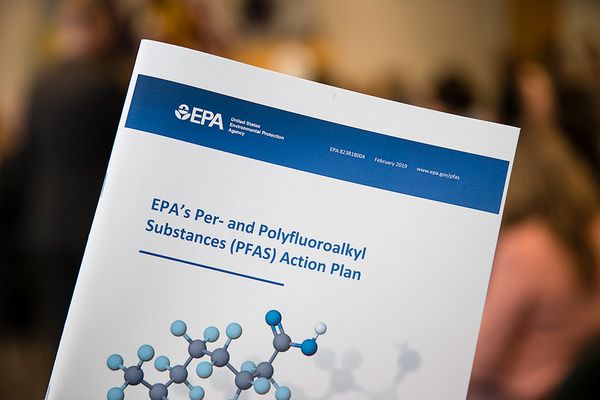
UCI expert: federal standards of chemicals in country's waterways
The Biden Administration announced today that they are prepared to finally set federal standards on the amount of PFAS chemicals in the country’s waterways. This is long overdue oversight into regulating chemicals, specifically perfluoroalkyl and polyfluoroalkyl substances, which when exposed to can cause debilitating, deadly diseases, and conditions such as cancer, liver damage, fertility and thyroid problems, asthma and more. For an expert source on this breaking news, Scott Bartell, MS, PhD, UC Irvine professor of environmental and occupational health, is available for interviews. For the past 25 years, Bartell has dedicated his research to quantifying human exposures and health effects caused by environmental contaminants such as PFAS – specifically the presence and epidemiology of PFAS in U.S. water sources. He is also the lead researcher on a study surveying Orange County, Calif. residents to find a link between PFAS and adverse health effects. To reach Prof. Bartell, reach out to Brianna Aldrich at brianna.aldrich@uci.edu or 760-809-5193.


How Colorism Impacts Professional Achievement
Melissa J. Williams is associate professor of organization and management at Emory University’s Goizueta Business School. She investigates what happens when social identities collide with workplace hierarchies, and the consequences of putting people in positions of power and leadership. Here she looks at something less documented: the extent to which our appearance is stereotypically Black or white. And what that means for our prospects. Rosa Parks made history on December 1, 1955, when she refused to relinquish her bus seat to a white passenger. Her simple gesture of defiance ignited a city-wide bus boycott in Montgomery, Alabama, and has gone down in the annals as a pivotal moment for the social justice movement in the United States. However, Parks was not the only African American to make a stand against racial segregation. Nor was she the first. In March of the same year in the same city, 15-year-old Claudette Colvin also refused to give up her seat to a white woman on a Montgomery bus. So why isn’t she a household name? In part, Colvin’s age was a factor. The National Association for the Advancement of Colored People and other Black civil rights groups got behind Parks, reasoning that an older woman would be better equipped to withstand the controversy. But as Colvin herself stated, there were other factors at play. There was something about Parks’ appearance that gave her more leverage, reasons Colvin explained in Philip Hoose’s award-winning book on the civil rights movement. She had the “right hair and the right look.” Not only that, but her appearance “was the kind that people associate with the middle class. She fit that profile.” Success isn’t black or white. It’s shades of…white. Colorism has long been documented in the U.S. and elsewhere. Discrimination against human beings on the basis of their facial features, hair, and skin color transcends race—it is prevalent even within groups that share the same ethnic identity, where lighter skin tones are perceived to be more valuable than dark. Research over the years has shed light on the nefarious effects of colorism or shadeism in terms of equity and access to opportunity. But a new landmark study by Associate Professor of Organization & Management Melissa Williams, and Goizueta colleagues, PhD student Tosen Nwadei and Roberto C. Goizueta Chair of Organization & Management Anand Swaminathan, looks at just how Black or white someone appears—and how this shapes the way others see their potential; as well as the kinds of professional outcomes they can expect. What Williams and her co-authors, who also include James B. Wade from George Washington University and C. Keith Harrison and Scott Bukstein of University of Central Florida, find in their studies, is that Black professionals are less likely to be promoted to leadership roles. What’s more, for Black professionals whose physical appearance is more Black-stereotypical, their chances drop from 12 percent to a mere seven percent. For white professionals, on the other hand, having a more white-stereotypical appearance is an advantage for leadership – looking more stereotypical as a white person increased their chances of holding a leadership role from 32 percent to 43 percent. Williams and colleagues ran both an archival study and a lab experiment with volunteers to discover the extent to which degrees of ethnicity in appearance influence perceptions of a person’s potential for leadership and actually predict their likelihood of success in an industry. While the science unequivocally shows that white people enjoy advantages over Black people in opportunity and outcome across the board, Williams et al. were also interested in exploring what she calls the “continuum of race:” the more nuanced racial characteristics and differences that shape how the world sees us. There’s an assumption that everyone within the same ethnic group—Black or white—will experience the same degree of bias and prejudice, or acceptance and success. And we wanted to push back on that idea to really explore how degrees of whiteness or Blackness play out in people’s minds and shape how they read you physically. -Associate Professor of Organization & Management Melissa Williams Previous research shows the link between persisting in STEM-based majors in college and how much students are perceived to look “like their race,” she says. Those who are perceived to look less typically Black tend to make more friends outside their ethnic group—a boundary-crossing behavior that can help drive careers. To test these ideas, Williams and co-authors ran two studies. First, they accessed publicly available data including photographs, professional background, and positions from one large industry within the U.S.: American college football. College football is really rich in data. You can access job titles, photos, leadership, and non-leadership roles; and you can separate individuals out into head coaches and position coaches who have overseeing roles but who are not leaders per se. Separately, Williams et al. recruited a group of volunteers to look at the images of the football coaches: a mix of Black and white head and position coaches. These volunteers were asked to rate how typical they perceived each individual’s appearance to be of European or white Americans, or of Black Americans, ascribing each person a score out of five based on features such as their skin color, hair, eyes, nose, cheeks, and lips. These scores were then regressed—or cross-referenced—with the position held by the individuals in the photos to determine the relationship between their racial stereotypicality and their leadership role. Crunching the numbers, Williams found a direct correlation between the degree of perceived whiteness or Blackness of the coaches and how likely they actually were to be successful leaders. “We do find a kind of consensus in people’s view of what it means to be Black or white straight off,” says Williams. “So we do all seem to agree on the physical attributes of race. But it gets really interesting when you regress the scores that these photos get and compare them with the actual jobs these guys hold.” What we see is that, controlling for their age, attractiveness, and professional experience, the white guys who look less stereotypically white are 32 percent likely to occupy leadership roles. This rises to 43 percent with the men who look more like a stereotypical white guy. For Black professionals, the inverse is true, she notes. The more typically Black an individual looks, the less probability there is that he occupies a leadership job. Specifically, that figure drops from 12 to seven percent. So benchmark leadership probability is not only already lower for Black individuals, but drops even further when people are deemed to look “more typically Black,” says Williams. A follow-up experiment invited volunteer football fans to compare how they saw the potential future success of two same-race college football players—one more stereotypical in appearance than the other. The results confirm what Williams et al. suspect: 70 percent of the time, participants chose the more-typical white individual over the less-typical white individual as having greater leadership potential. In other words, the more white a white person looks, the more they are seen as leadership material. These findings should translate into an imperative, says Williams; and that is to think more broadly about race and how it impacts life outcomes. Because race is not a uniform experience, she says. “Organizations might want to look beyond just ticking the box when it comes to diversity and inclusion, and give deeper thought to who they want to recruit, support and push forward in representation. For white people, paying attention to whiteness—the types of white people who enjoy advantages in leadership—can be useful in reframing certain questions. A good place to start might be for leaders to ask: do I want to support people who look like me? Because the face you choose can ultimately help disrupt, or reinforce, the stereotype.” Interested in learning more or connecting with Melissa J. Williams, associate professor of organization and management at Emory University’s Goizueta Business School? She's available to speak about this subject - Simply click on her icon now to arrange an interview today.



Protein engineer to explore route from DNA blueprint to synthetic antibodies – public lecture
Professor Anna Hine will explore how advances in protein engineering have enabled us to make both synthetic antibodies and their replacements Inaugural lecture will take place at Aston University on Tuesday 28 March 2023 at 6.30pm Members of the public may attend in person or online. Professor Anna Hine, a molecular biologist specialising in protein engineering in the College of Health and Life Sciences at Aston University, is to present her inaugural public lecture on Tuesday 28 March 2023. During her lecture, A route to synthetic antibodies (and their replacements), Professor Hine will take the audience from the basics of molecular biology to explaining her inventions in protein engineering, through to examining the ways in which her research is being applied internationally to develop synthetic antibodies. Professor Hine gained her PhD in molecular biology from The University of Manchester Institute of Science and Technology in 1992 and did her postdoctoral training at Harvard Medical School. She returned to the UK to take up a lectureship in molecular biology at Aston University in 1995. Professor Anna Hine, professor of protein engineering, said: “Antibodies are one of our major lines of defence against infection and we can create them very quickly to help incapacitate a multitude of biological invaders. Humans do this by changing the part of the antibody that recognises the invading pathogen, through a process of rapid, natural mutation. Protein engineers have learned to mimic this process in the laboratory to create synthetic proteins – particularly antibodies - for use in both therapy and fundamental research.” “I am delighted to have the opportunity to present our discoveries in a way that I hope will make just as much sense to non-scientists as to a scientific audience.” Similar to the natural mutation of antibodies, protein engineers can make vast numbers of tiny variations of a protein such as an antibody. Professor Hine added: “We will contemplate the vast numbers involved in protein engineering and present how our Aston University-based inventions have made the creation of DNA (and thus protein) ‘libraries’ as efficient as possible. “We will then examine the ensuing problem of how to find the few proteins that we really want from within a protein library. This includes collaborating with experts who specialise in computer-assisted library design and also working with those who have developed the latest methods to search the libraries that we make.” Professor Hine will also show how her latest collaborative projects are starting to move beyond the antibody itself. The lecture will take place at Aston University at 6.00pm for 6.30pm on Tuesday 28 March 2023. It will be followed by a drinks reception from 7.30 pm to 8.00 pm. The lecture is open to the public and free to attend. Places must be booked in advance via Eventbrite.


Optometry professor recognised for excellence in research at awards ceremony
Professor James Wolffsohn recognised for research excellence at London awards ceremony Professor Wolffsohn specialises in myopia management, dry eye disease and contact lenses research Excellence in eye care event is hosted by the Association of Optometrists. A world leading optometrist from Aston University has been recognised for his research excellence in the field of optometry specialising in myopia management, dry eye disease and contact lenses research. Professor James Wolffsohn was the recipient of the Recognising Research Excellence award on Sunday (26 February) at the Excellence in eye care event in London - hosted by the Association of Optometrists. Professor Wolffsohn, who is also the head of the School of Optometry said: “I was very surprised and truly honoured. It is lovely to have my research recognised.” “I have always been driven by wanting to know more. I think research is important because you want healthcare professionals to be working at the cutting edge and using techniques that are proven to work without bias.” James’s first experience of research occurred during his pre-reg placement at Moorfields Eye Hospital. He said: “They had a project on automatic teller machines – bank machines were fairly new and we were working for a major bank on the optimum colour combinations for people with visual impairment.” James went on to complete his doctorate in ocular motor research at Cardiff University, before travelling to Australia to work as a researcher at the University of Melbourne. During this time, Professor Wolffsohn continued to work in practice and would fly into the outback to provide low vision services to remote communities. Since returning to Aston University in 2000, he has worked in a variety of different academic roles – including as head of department across three different disciplines. “I will rarely turn down a collaborative proposal if there is an opportunity to make a difference to evidence-based clinical practice,” Wolffsohn said. James is also passionate about ensuring that scientific discoveries result in tangible change for patients. Three spin-out companies have been developed on the basis of research he has contributed to at Aston University. Alongside research and academic roles, Professor Wolffsohn continues to work a half-day in clinic each week. He has also played an influential role in spearheading consensus among the profession on evolving scientific fields, from myopia management to dry eye disease. James led the diagnostic committee for the Tear Film & Ocular Surface Society DEWS II report and chaired the Contact Lens Evidence-based Academic reports of the British Contact Lens Association. For more information about the School of Optometry and the Vision Sciences Research Group please visit our website.


• Institute of Health and Neurodevelopment to host children’s activities at Birmingham’s science museum Thinktank on Saturday 18 March • British Science Week is a ten-day celebration of science, technology, engineering and maths • Brain Awareness Week highlighted with research showcased in glass box exhibition space on University campus. Aston Institute of Health and Neurodevelopment (IHN) is celebrating British Science Week (10-19 March) and Brain Awareness Week (13-19 March) by hosting an activities day for children at the Birmingham science museum Thinktank, alongside a social media campaign to help educate and inform the public on its latest research. Each year, the British Science Association runs a ten-day celebration of science, technology, engineering and maths called British Science Week. It is closely followed by Brain Awareness Week, a yearly global campaign to increase public awareness of brain research. The week-long celebration is organised by the Dana Alliance with a goal to educate and highlight the importance of research in developing new treatments, preventions and possible cures for brain diseases. Both campaigns align closely with the work of the Aston Institute of Health and Neurodevelopment, with the Institute’s researchers keen to use the week to host activities and share their research and information about the brain health with the public. Activities to highlight both British Science Week and Brain Awareness week include a social media campaign sharing research updates from members and surprising brain facts on Twitter (@Aston_IHN), a brain research exhibition in the glass box space in the Aston University main entrance, as well as an activity session at the Birmingham science museum Thinktank in Millennium Point. The meet and greet with IHN researchers will take place on Saturday 18 March between 11.00 and 16.00. Children and families can speak to researchers about their work and take part in interactive activities, such as memory games and eye-tracking experiments. Professor Jackie Blissett, co-director of IHN said: “British Science week and Brain Awareness week are really important campaigns for us. Brain Awareness week is the perfect time to showcase our research and engage with the public on what we do here at IHN. “We work in close collaboration with the NHS to help research potential treatments for children who experience a range of brain related conditions. We put children at the heart of what we do, with the aim of unlocking the potential of research to support children’s health and development as well as answering the questions that matter to children, their families and the services that support them.” Visitors to the exhibition on the Aston University campus are encouraged to share their thoughts about the exhibition and their pictures on Twitter, tagging @Aston_IHN. For more information about Aston Institute of Health and Neurodevelopment visit its website and for more information about studying psychology and neuroscience at Aston University visit our course pages.


AI-powered cruise control system may pave the way to fuel efficiency and traffic relief
The CIRCLES Consortium, consisting of Vanderbilt University, UC Berkeley, Temple University and Rutgers University-Camden, in coordination with Nissan North America and the Tennessee Department of Transportation, concluded a five-day open-track experiment on Nov. 18. Congestion Impacts Reduction via CAV-in-the-loop Lagrangian Energy Smoothing (CIRCLES) Researchers tested an AI-powered cruise control system designed to increase fuel savings and ease traffic using 100 specially equipped Nissan Rogue vehicles. The experiment—which ran from Nov. 14 through Nov. 18 on a sensor-filled portion of Interstate 24—is based on the results from an earlier, closed-track study where a single smart vehicle smoothed human-caused traffic congestion, leading to significant fuel savings. A single AI-equipped vehicle could influence the speed and driving behavior of up to 20 surrounding cars, causing a kind of positive ripple effect in day-to-day traffic. The CIRCLES Consortium will spend the next several months analyzing data collected on the AI-equipped vehicles and their impact on the flow of traffic over the duration of the experiment. The test was conducted on the recently opened I-24 MOTION testbed, the only real-world automotive testing environment of its kind in the world. Stretching for four miles just southeast of downtown Nashville, the smart highway is equipped with 300 4K digital sensors capable of logging 260,000,000 vehicle-miles of data per year. The CIRCLES Consortium research is supported by the National Science Foundation and the U.S. Departments of Transportation and Energy. Support was also provided by Toyota North America and General Motors. The experiment included Toyota RAV4 and Cadillac XT5 vehicles. Preliminary vehicle and traffic flow detection in the I-24 Mobility Technology Interstate Observation Network (MOTION). “On November 16 alone, the system recorded a total of 143,010 miles driven and 3,780 hours of driving. The I-24 MOTION system, combined with vehicle energy models developed in the CIRCLES project, provided an estimation of the fuel consumption of the whole traffic flow during those hours. The concept we are hoping to demonstrate is that by leveraging this new traffic system to collect data and estimate traffic and applying artificial intelligence technology to existing cruise control systems, we can ease traffic jams and improve fuel economy,” the CIRCLES team said in a joint statement. “Nissan has always been a pioneer in automotive innovation, and with our long-term vision, Nissan Ambition 2030, we know our future is autonomous, connected and electric,” said Liam Pedersen, deputy general manager at the Nissan Alliance Innovation Lab in California’s Silicon Valley. “CIRCLES shares our common goal of building a safer, cleaner world by empowering mobility.” “When it comes to transportation and mobility in Tennessee, we are at a critical juncture,” said Deputy Governor and TDOT Commissioner Butch Eley. “Traffic congestion is now becoming more prominent throughout Tennessee, and not just in urban areas. Addressing these challenges will force us to think critically about solutions, as transportation infrastructure projects traditionally are not identified nor completed before traffic congestion more dramatically affects our quality of life. One of these solutions is greater use of technology to enhance mobility. We are confident that this project and others like it will further strengthen Tennessee’s reputation for being a hub of automotive excellence.” “The I-24 MOTION project is a first-of-its-kind testbed, where we’ll be able to study in real time the impact connected and autonomous vehicles have on traffic in an open road setting,” said Meredith Cebelak, adjunct instructor in civil and environmental engineering at Vanderbilt and Tennessee transportation and transportation systems management and operations department leader at Gresham Smith. “The permanent infrastructure has been designed and installed, meaning the testbed will always be ‘on’ and available to researchers. By unlocking a new understanding of how these vehicles influence traffic, vehicle, infrastructure, and traffic management strategies, design can be optimized to reduce traffic concerns in the future to improve safety, air quality and fuel efficiency.” “Partnership across universities, government and the private sector is the key to pioneering projects like this one,” Vice Provost for Research and Innovation Padma Raghavan said. “From its earliest inception, all the partners in this effort have played vital roles. That trusted collaboration continues as the team analyzes results to seek new insights to address pressing challenges in transportation in Tennessee and beyond.”


Public lecture: how can we have a good future with artificial intelligence?
Public lecture: how can we have a good future with artificial intelligence?AI expert and educator Professor Anikó Ekárt to discuss one of today’s most provocative topics Lecture will take place on 28 February at Aston University Talk to explore artificial intelligence’s capabilities, benefits and pitfalls. The potential impact of artificial intelligence (AI) on our daily lives will be explored in a public lecture at Aston University. The University is inviting the public onto its campus on Tuesday 28 February to hear Professor Anikó Ekárt discuss one of today’s most provocative topics. Research into AI began in the1950s and since then it has played an increasing role in daily lives, such as chatbots and digital assistants. As an AI researcher and educator, Professor Ekárt will take a pragmatic view of the technology, arguing that society will benefit from it – but only if it is used responsibly. She said: “Digital assistants based on speech recognition are now broadly accepted and successfully embedded in many business services. “However, the most recent release of a chatbot with amazing writing capabilities has divided the world; some are relieved that their job may now become substantially easier, but others have questioned the impact of this on education. “In the lecture, I’ll suggest three key directions; responsible use of AI, exploring many AI techniques rather than focusing on just one, and educating the public about AI’s capabilities, benefits and pitfalls.” She will illustrate the success and further potential of less well-known AI techniques, such as evolutionary computation, genetic programming and symbolic regression, based on her 25 years of research. Anikó who is a professor of artificial intelligence, joined Aston University in 2006 as a lecturer. She leads the artificial intelligence research theme within the School of Informatics and Digital Engineering. Her research interests are centred around AI methods and their application, focusing on evolutionary algorithms and genetic programming. She has successfully contributed to applications of AI techniques to health, engineering, transport, and art. In 2022 she was the winner of the Evo* Award for Outstanding Contribution to Evolutionary Computation in Europe. The free event will be taking place on 28 February from 6 pm to 8 pm and will be followed by a drinks reception. To sign up for a place visit https://www.eventbrite.co.uk/e/an-inaugural-lecture-by-professor-aniko-ekart-tickets-516518760517

Aston University professor elected Fellow of Royal Microscopical Society
Professor Igor Meglinski is a physicist, scientist and biomedical engineer He pioneered the application of circularly polarised light for cancer detection His research is at the interface of physics, optics and imaging modalities. Igor Meglinski, professor of mechanical, biomedical and design engineering in the College of Engineering and Physical Sciences at Aston University, has been elected as a Fellow of the Royal Microscopical Society (RMS). Professor Meglinski is a physicist, scientist, and biomedical engineer whose research interests are at the interface between modern physics, optics and imaging modalities, focusing on the exploration of novel photonics-based phenomena and their implementation to practical applications in medicine, biology, life sciences and health care industries. Among other achievements, Professor Meglinski pioneered the application of circularly polarised light for cancer detection. best known for his development of fundamental studies and translation research dedicated to imaging of cells and biological tissues utilising polarised light, dynamic light scattering and computational imitation of light propagation within complex tissue-like scattering medium. His current research projects include the application of coherent polarised light for cancer diagnosis, functional imaging of blood and lymph flows, neuroimaging and brain malformation studies. He is also exploring human visual perception of polarised light and helical wave fronts, the fundamentals of shaped light with orbital angular momentum and quantum entanglements transfer in turbid tissue-like scattering medium, screening of cells, cell’s organelles and cells interaction. He has authored and co-authored more than 400 scientific papers and presented over 800 presentations at major international conferences in the field, including over 200 keynote and plenary talks and invited lectures. The Royal Microscopical Society is a learned society dedicated to the promotion and development of microscopy and imaging. Its members come from a wide range of backgrounds, including undergraduates, research students, users of microscopy in industry and academia, microscopy manufacturers and suppliers and research leaders in their various fields within the biological and physical sciences. Professor Igor Meglinski said: “I was delighted to be invited to become a Fellow of the Royal Microscopical Society. “It is always a pleasure to be recognised for your work, such as my recent research which could provide a more accurate method of blood flow diagnosis in skin to help people with diabetes.”
Public lecture: Be kind - effective design of software with and for real people
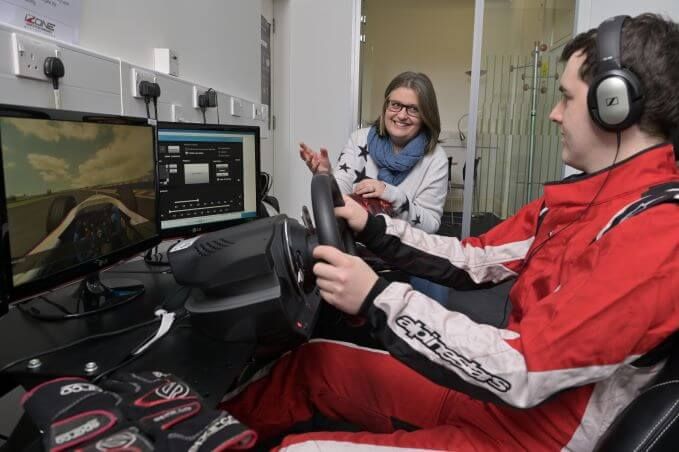
Public lecture: Be kind - effective design of software with and for real people Professor Jo Lumsden to give inaugural lecture on 9 March Will discuss need to approach software design with basic kindness. How software can be designed with kindness at its core is to be explored in a public lecture at Aston University. Professor Jo Lumsden is to give her inaugural lecture Be kind - effective design of software with and for real people on 9 March, which will be open to the public. Professor Lumsden said: “The approach to software development, however admirable, is often dominated by either the domain expert or the engineer who builds the software. “All too often, the voices of the real people who are destined to use the software are overlooked, or age-old techniques are adopted that do not support inclusive design or evaluation of such technologies.” Professor Lumsden will reflect on a wide range of examples which demonstrate novelty, or innovation. These could be in terms of designing with and interaction for end users, and evaluation to ensure feasibility and usability of technology that will be acceptable to end users. Professor Lumsden added: “Technology should be developed to help solve our problems or to improve our lives. “I am passionate about the fundamental need to approach software design with basic kindness. “I hope that the examples I will share in my lecture will inspire others to embrace empathetic approaches to future software design, so that collectively we can realise an effective and acceptable technological future.” Jo Lumsden is professor of human computer interaction in the College of Engineering & Physical Sciences at Aston University where she is also pro vice-chancellor (research integrity), head of the Computer Science Department and director of the Aston Interactive Media Lab. She has worked in research for more than 25 years and her recent work has centred on design and development of mobile assistive technologies which enhance the quality of life of those with special, typically healthcare-related, needs. Her multidisciplinary research brings together technologists, domain experts, and most importantly end users, to co-design technology, empowering end users to ensure their needs are met via the introduction of technology. The free event will be taking place on 9 March from 6 pm to 8 pm and will be followed by a drinks reception. To sign up for a place visit https://www.eventbrite.co.uk/e/an-inaugural-lecture-by-professor-jo-lumsden-tickets-530625183207