Experts Matter. Find Yours.
Connect for media, speaking, professional opportunities & more.
Aston University: From Metformin to modern obesity therapies
Early beginnings: from herbal medicine to modern drug The origins of a modern diabetes therapy can be traced back to Galega officinalis (goat’s rue), a herb used in European folk medicine for centuries to treat excessive thirst and urination. Its active chemical, guanidine, was found to lower blood sugar in animals in 1918, inspiring the synthesis of a family of drugs known as biguanides. Among these new drugs was metformin, created in 1922 and introduced as a treatment for diabetes in Europe in the late 1950s. However, by the 1970s, metformin was largely disregarded because other biguanide medicines were being withdrawn due to their side-effect of lactic acidosis. Revival in the 1990s: Aston’s role in rediscovery In the early 1990s, research at Aston University provided a decisive turning point. Professor Cliff Bailey and his colleagues revealed that metformin’s primary action occurred in the intestine, where it promoted glucose metabolism and reduced blood sugar without causing weight gain. Their studies clarified that concerns about lactic acid were largely due to misuse, not inherent toxicity. These findings reignited global interest in metformin. Professor Bailey presented his work as an expert witness to the US Food and Drug Administration in 1994, a critical step in securing approval of the drug in the US. He also assisted the European Medicines Agency during periodic reassessments. “My research has always focused on understanding how type 2 diabetes develops and how best to treat it.” Professor Clifford Bailey, Aston University. Establishing global first-line therapy Momentum built through the late 1990s. The UK Prospective Diabetes Study (1998) demonstrated that metformin not only improved blood sugar but also reduced cardiovascular risk, strengthening the case for its wider adoption. By 2012, the American Diabetes Association and the European Association for the Study of Diabetes recommended metformin as the preferred first-line treatment for type 2 diabetes. “We discovered that metformin worked somewhat differently from what was previously thought. By showing how it could be used safely and effectively, we helped pave the way for its wider acceptance.” Today, metformin is the most prescribed diabetes drug worldwide. It is included in the World Health Organization’s Essential Medicines List and has been taken by hundreds of millions of patients, profoundly reshaping global diabetes care. New directions: dapagliflozin and the SGLT-2 inhibitors After the success of metformin, Aston played a central role in the next wave of diabetes medicines. In the 2000s, Professor Bailey was principal investigator in clinical trials for dapagliflozin, the first of the sodium-glucose co-transporter-2 (SGLT-2) inhibitors. Unlike older therapies, SGLT inhibitors lower blood sugar by blocking reabsorption of glucose in the kidneys, causing excess glucose to be excreted in urine. Large international trials demonstrated additional benefits, including weight reduction, lower blood pressure, and improved outcomes for patients with kidney and heart disease. Since its launch in 2012, dapagliflozin has become the most widely prescribed SGLT-2 inhibitor, with more than five million patients treated. It is now embedded in global treatment guidelines, expanding therapeutic options to improve the control of blood glucose and body weight. Foundations for modern obesity therapies The influence of Aston University’s research extends beyond metformin and dapagliflozin. The University’s diabetes research team also studied gut hormones such as GIP (glucose-dependent insulinotropic peptide), which play a central role in regulating insulin secretion and fat metabolism. These early discoveries helped lay the groundwork for today’s incretin-based therapies, including combined GIP/GLP-1 receptor agonists such as tirzepatide. Now widely known as 'anti-obesity injections', these medicines emerged as diabetes treatments and are now transforming care for overweight people with and without type 2 diabetes. Key findings from the research at Aston University Metformin is now being investigated for its anti-ageing and fertility benefits Dapagliflozin shows promise against heart and kidney diseases and gout Gut hormones such as GIP may hold the key to entirely new treatment strategies Why does this matter? The work by Professor Bailey and his colleagues at Aston University has contributed to metformin’s recognition as the primary treatment worldwide for type 2 diabetes. Today, at least half of all patients in Western countries are prescribed metformin — an incredibly cost-effective medicine that continues to save lives. “We identified early on that gut hormones such as GIP were central players in the control of blood glucose and body weight — long before they became the basis for today’s new generation of anti-obesity medicines.” This original research helped lay the scientific foundation for breakthrough treatments like tirzepatide, widely hailed as a game-changer in obesity and diabetes care. Aston University also contributed to the development of dapagliflozin, the first in a new class of drugs that lower blood sugar while also protecting the heart and kidneys. “Millions of people worldwide are living longer and healthier lives because of therapies that have been underpinned by research at Aston University.” Looking ahead Type 2 diabetes remains one of the world’s most pressing health challenges, affecting more than 500 million people globally. Its progressive nature demands a continual search for safer, more effective treatments. From helping rescue a nearly forgotten drug in the 1990s to shaping the next generation of therapies, Aston University’s research has left an enduring mark on clinical practice, regulation, and patient outcomes. The legacy of this work is clear: millions of people worldwide are living longer, healthier lives because of medicines that Aston helped bring to the forefront of modern diabetes and obesity care. About Cliff Bailey is Emeritus Professor of Clinical Science and Anniversary Professor at Aston University in Birmingham, England. He has served on medical and scientific committees of Diabetes UK (formerly the British Diabetic Association), Society for Endocrinology, and European Association for the Study of Diabetes. He has served as a diabetes expert for the approval of new medicines by regulatory agencies including the European Medicines Agency and NICE. His research is mainly directed towards the pathogenesis and treatment of diabetes, especially the development of new agents to improve insulin action and reduce obesity, and the therapeutic application of surrogate beta-cells. Dr Bailey has published over 400 research papers and reviews, and four books, and he is particularly known for research on metformin. References to Case Studies and Key Sources Bailey CJ et al. Metformin: Changing the Treatment Algorithm for Type 2 Diabetes. Aston University REF Impact Case Study, 2014. Bailey CJ. Metformin: Historical Overview. Diabetologia, 2017. Bailey CJ & Day C. Treatment of Type 2 Diabetes: Future Approaches. British Medical Bulletin, 2018.



New Poll Measures Presidential Popularity
Dr. Meena Bose was interviewed by Newsweek regarding a new poll from Marquette University that found Americans view former President Barack Obama more favorably than President Donald Trump. Dr. Bose explained that Obama’s “personal appeal, inspirational rhetoric, and unanticipated success in the 2008 presidential race continue to have strong public support.” “The promise of hope and change are defining features of the Obama presidential campaign and still influence assessments of his presidency,” she said. Dr. Bose is a Hofstra University professor of political science, executive dean of the Public Policy and Public Service program, and director of the Kalikow Center for the Study of the American Presidency.


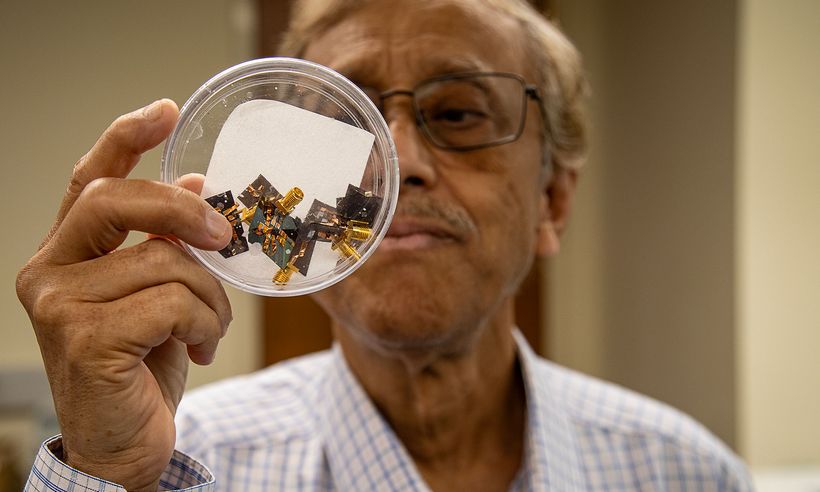
Supporting the development of advanced computing hardware, the National Science Foundation (NSF) awarded Supriyo Bandyopadhyay, Ph.D., Commonwealth Professor in the Department of Electrical and Computer Engineering at the Virginia Commonwealth University (VCU) College of Engineering with more than $300,000 to develop processor-in-memory architecture using quantum materials. “This is one of the first mainstream applications of quantum materials that have unusual and unique quantum mechanical properties,” Bandyopadhyay said. “Quantum materials have been researched for more than a decade and yet there is not a single mainstream product in the market that utilizes them. We want to change that.” The four-year project, titled “Collaborative Research, Foundations of Emerging Technologies: PRocessor In Memory Architecture based on Topological Electronics (PRIMATE),” aims to advance computing hardware and artificial intelligence by integrating topological insulators and magnetic materials. Topological insulators are a special material with an electrically conductive surface and an insulated interior. They have special quantum mechanical properties like “spin-momentum locking,” which ensures the quantum mechanical spin of an electron-conducting current on the surface of the material is always perpendicular to the direction of motion.This marks the first time such quantum materials will be used in a processor-in-memory system. “We place a magnet on top of a topological insulator,” Bandyopadhyay said. “We then change the magnetization of the magnet by applying mechanical strain on it. That changes the electrical properties of the topological insulator via a quantum mechanical interaction known as exchange interaction. This change in the electrical properties can be exploited to perform the functions of a processor-in-memory computer architecture. The advantage is that this process is fast and extremely energy-efficient.” If successful, this approach could reduce energy use and dramatically speed up computing by moving data processing into the memory itself. It addresses the longstanding “memory bottleneck,” the slowdown caused by computers constantly needing to move data back and forth between processor and memory. These efficiencies could make advanced AI more efficient and accessible, paving the way for the first commercially viable applications of quantum materials.. The research is a collaboration with University of Virginia professors Avik Ghosh and Joseph Poon. A VCU Ph.D. student will work on the project and receive training in fabrication, characterization and measurement techniques, preparing them to lead in the rapidly evolving field of computing hardware.



'Brain-on-a-chip': Engineering tomorrow’s breakthroughs today
A “brain-on-a-chip” technology might sound like science fiction, but it’s real-world hope. James McGrath, a biomedical engineer at the University of Rochester, leads a team that develops micro-scale tissue chips to study diseases in lieu of conducting animal experiments. The team’s “brain-on-a-chip” model replicates the blood-brain barrier — the critical membrane separating the brain from the bloodstream — to mimic how the barrier functions under healthy conditions and the duress of infections, toxins, and immune responses that can weaken it. Recent findings from McGrath’s team show how systemic inflammation, such as that caused by sepsis, can compromise the barrier and harm brain cells. The researchers also demonstrated how pericytes — supportive vascular cells — can help repair barrier damage, an insight that could guide new therapies for Alzheimer’s and Parkinson’s. The research culminated in a pair of recent studies published in Advanced Science and Materials Today Bio. “We hope that by building these tissue models in chip format, we can arrange many brain models in a high-density array to screen candidates for neuroprotective drugs and develop brain models with diverse genetic backgrounds,” McGrath says. McGrath aims to transform how scientists test drugs and predict neurological side effects before they occur — helping rewrite how we study, and one day safeguard, the brain. Contact McGrath by clicking on his profile



A global team of researchers using the new X-ray Imaging and Spectroscopy Mission (XRISM) telescope, launched in fall 2023, discovered something unexpected while observing a well-studied neutron star system called GX13+1. Instead of simply capturing a clearer view of its usual, predictable activity, their February 2024 observation revealed a surprisingly slow cosmic wind, the cause of which could offer new insights into the fundamental physics of how matter accumulates, or “accretes,” in certain types of binary systems. The study was one of the first from XRISM looking at wind from an X-ray binary system, and its results were published in Nature—the world's leading multidisciplinary science journal—in September 2025. Spectral analysis indicated GX13+1 was at that very moment undergoing a luminous super-Eddington phase, meaning the neutron star was shining so brightly that the radiation pressure from its surface overcame gravity, leading to a powerful ejection of any infalling material (hence the slow cosmic wind). Further comparison to previous data implied that such phases may be part of a cycle, and could “change the way we think about the behavior of these systems,” according to Joey Neilsen, PhD, associate professor of Physics at Villanova University. Dr. Neilsen played a prominent role as a co-investigator and one of the corresponding authors of the project, along with colleagues at the University of Durham (United Kingdom), Osaka University (Japan), and the University of Teacher Education Fukuoka (Japan). Overall, the collaboration featured researchers from dozens of institutions across the world. GX13+1 is a binary system consisting of a neutron star orbiting a K5 III companion star—a cooler giant star nearing the end of its life. Neutron stars are small, incredibly dense cores of supergiant stars that have undergone supernovae explosions. They are so dense, Dr. Neilsen says, that one teaspoon of its material would weigh about the same as Mount Everest. Because of this, they yield an incredibly strong gravitational field. When these highly compact neutron stars orbit companion stars, they can pull in, or accrete, material from that companion. That inflowing material forms a visible rotating disk of gas and dust called an accretion disk, which is extremely hot and shines brightly in X-rays. It’s so bright that sometimes it can actually drive matter away from the neutron star. “Imagine putting a giant lightbulb in a lake,” Dr. Neilsen said. “If it’s bright enough, it will start to boil that lake and then you would get steam, which flows away like a wind. It’s the same concept; the light can heat up and exert pressure on the accretion disk, launching a wind.” The original purpose of the study was to use XRISM to observe an accretion disk wind, with GX13+1 targeted specifically because its disk is persistently bright, it reliably produces winds, and it has been well studied using Chandra— NASA’s flagship X-ray observatory—and other telescopes for comparison. XRISM can measure the X-ray energies from these systems a factor of 10 more precisely than Chandra, allowing researchers to both demonstrate the capabilities of the new instrument and study the motion of outflowing gas around the neutron star. This can provide new insights into accretion processes. “It's like comparing a blurry image to a much sharper one,” Dr. Neilsen said. “The atomic physics hasn't changed, but you can see it much more clearly.” The researchers uncovered an exciting surprise when the higher-resolution spectrum showed much deeper absorption lines than expected. They determined that the wind was nearly opaque to X-rays and slow at “only” 1.4 million miles per hour—surprisingly leisurely for such a bright source. Based on the data, the team was able to infer that GX13+1 must have been even brighter than usual and undergoing a super-Eddington phase. So much material was ejected that it made GX13+1 appear fainter to the instrument. “There's a theoretical maximum luminosity that you can get out of an accreting object, called the Eddington limit. At that point, the radiation pressure from the light of the infalling gas is so large that it can actually hold the matter away,” Dr. Neilsen said, equating it to standing at the bottom of a waterfall and shining light so brightly that the waterfall stops. “What we saw was that GX13+1 had to have been near, or maybe even above, the Eddington limit.” The team compared their XRISM data from this super-Eddington phase to a set of previous observations without the resolution to measure the absorption lines directly. They found several older observations with faint, unusually shaped X-ray spectra similar to the one seen by XRISM. “XRISM explained these periods with funny-shaped spectra as not just anomalies, but the result of this phenomenally strong accretion disk wind in all its glory,” Dr. Neilsen said. “If we hadn’t caught this exact period with XRISM, we would never have understood those earlier data.” The connection suggests that this system spends roughly 10 percent of its time in a super-Eddington phase, which means super-Eddington accretion may be more common than previously understood—perhaps even following cycles—in neutron star or black hole binary systems. “Temporary super-Eddington phases might actually be a thing that accreting systems do, not just something unique to this system,” Dr. Neilsen said. “And if neutron stars and black holes are doing it, what about supermassive black holes? Perhaps this could pave the way for a deeper understanding of all these systems.”



Inside the Classroom: LSU Psychologist Shares Insight on Student Attention Spans
What large changes have schools seen over the past few years regarding attention spans? "Being distracted by something in nature when trying to do a task may have been the first type of distraction, along with internal distractions, such as thinking about something else when you are trying to complete a task. Thus, distraction is not new. What’s new today is that the types of distractions are more complex and can even be individually tailored to capture someone’s attention, which can lead to more temptations to shift our attention off of one task and over to something else." What are innocuous ways students can harm their attention spans? What effect do phones have on retention ability? "One way I think that students can harm their own task progress is to believe that they can truly multitask or do more than one thing at one time. If you are completing a homework assignment and you are tempted to check your social media feed, you are causing a switch of your attentional focus. It may seem quick and somewhat harmless, but numerous studies have indicated that trying to switch back and forth between two tasks results in more errors and has the overall effect of taking longer to complete the main task. Thus, put simply, do not multitask. Set aside a time limit, say 20 or 30 minutes, to solely focus on one assignment or one study guide. Then take a break." How can a depleted attention span affect general physical and mental health in children? "Mental effort can be as tiring as physical efforts. As a field, we now understand the importance of sleep and overall health for our cognitive systems. To support the efforts of sustained attention, it is important to recognize that learning takes time and it takes energy. In terms of young children, the many processes involved in the development of the body and the mind require more sleep than older children and adults. How may fixing a memory deficit look different in a teen versus a child? "Younger children need more breaks than older children, as well as needing more sleep. However, younger children are able to maintain their focus of attention. They may need more guidance and something we call “scaffolding." This term is used to indicate that the older learners may already have a framework to use to build their knowledge, whereas younger learners are starting from scratch. Providing extra support that is relative to their age and ability helps children to perform at their maximum level." Are schools set up to most efficiently stimulate students' minds? "When I think about the classrooms of early childhood settings, such as pre-K and lower elementary schools, the classrooms are set up to encourage learning. There are brightly colored pictures and words on the walls; there are reading nooks that are comfortable and easy to reach for smaller learners; there are spaces to move the desks around the room to allow for different configurations of the space; and so forth. As children get older, the classroom spaces start to reflect these changes and allow for different interactions between the students and the material. I think about a high school science lab with tables and equipment, as compared to a history classroom with classical book titles and historical figures displayed on the walls. I believe the physical spaces of many classrooms are well-suited to match the skills and capabilities of the children as they grow, because they are designed to meet the children where they are." What tools would you recommend teachers use to help students strengthen their learning skills? "As I mentioned earlier, learning new material takes time and effort. It is important for children and adults to realize this and to allow time and space for learning. Sometimes adults can forget what it was like to learn something new for the first time, because they already have a foundation for their knowledge. Children are acquiring new information, new skills, and making new connections in their neural networks every day. We learn by associating information with things we already know, and also by making new connections. I mean this in a figurative sense, such as thinking about how one vocabulary word may relate to another one, as well as in a literal neural sense. Our brains work by making connections between neurons to create neural networks." Does knowing what kind of learner you are (audio, visual, or descriptive) help you improve your memory? "In terms of learning styles, this has been a pervasive but misleading concept. I believe it has stuck around because it is also intuitive. People have preferences. We know this, and it is very apparent in almost all aspects of life (our fashion, our food choices, etc). However, having a preference is not the same thing as being limited to learning in only one modality. In fact, research has shown that teaching new information in more than one modality is the most effective way." What has been the most surprising result from your research? "Children are incredibly capable of vast amounts of learning. I do not think we give children enough credit for the acquisition of so many skills in a relatively short amount of time. As just one example, if an adult learner has ever tried to become proficient in a second language, they will realize that it is a difficult task. However, young children can pick up a second language in a manner that seems almost effortless. This is just one example of the fantastic capabilities and flexibilities of the young mind."



Taking discoveries to the real world for the benefit of human health
It takes about a decade and a lot of money to bring a new drug to market—between $1 billion to $2 billion, in fact. University of Delaware inventor Jason Gleghorn wants to change that. At UD, Gleghorn is developing leading-edge microfluidic tissue models. The devices are about the size of two postage stamps, and they offer a faster, less-expensive way to study disease and to develop pharmaceutical targets. These aren’t tools he wants to keep just for himself. No, Gleghorn wants to put the patented technology he’s developing in the hands of other experts, to advance clinical solutions in women’s health, maternal-fetal health and pre-term birth. His work also has the potential to improve understanding of drug transport in the female reproductive tract, placenta, lung and lymph nodes. Gleghorn, an associate professor of biomedical engineering, was named to the first cohort of Innovation Ambassadors at UD, as part of the University’s effort to foster and support an innovation culture on campus. Below, he shares some of what he’s learned about translating research to society. Q: What is the problem that you are trying to address? Gleghorn: A lot of disease has to do with disorganization in the body’s normal tissue structure. My lab makes microfluidic tissue models, called organ-on-a-chip models, that have super-tiny channels about the thickness of a human hair, where we can introduce very small amounts of liquid, including cells, to represent an organ in the human body. This can help us study and understand the mechanism of how things work in the body (the biology) or help us do things like drug screening to test therapeutic compounds for treating disease. And while these little microfluidic devices can do promising things, the infrastructure required to make the system work often restricts their use to high-end labs. We want to democratize the techniques and technology so that nonexperts can use it. To achieve this, we changed the way we make these devices, so that they are compatible with standard manufacturing, which means we can scale them and create them much easier. Gleghorn: One of the problems with drug screening, in general, is that animal model studies don’t always represent human biology. So, when we’re using animal models to test new drugs — which have been the best tool we have available — the results are not always apples to apples. Fundamentally, our microfluidic devices can model what happens in humans … we can plug in the relevant human components to understand how the mechanism is working and then ask questions about what drives those processes and identify targets for therapies to prevent the dysfunction. Q: What is innovative about this device? Gleghorn: The innovation part is this modularity — no one makes these devices this way. The science happens on the tiny tissue model insert, which is sandwiched between two pieces of clear acrylic. This allows us to watch what’s happening on the tissue model insert in real time. Meanwhile, the outer shell’s clamshell design provides flexibility: if we’re studying lung tissue and we want to study the female reproductive tract, all we do is unscrew the outer shell and insert the proper tissue model that mimics the female reproductive tract and we’re off. We’ve done a lot of the engineering to make it very simple to operate and use, and adaptable to common lab tools that everyone has, to eliminate the need for financial investment in things like specialized clean rooms, incubators and pumps, etc., so the technology can be useful in regular labs or easily deployable to far-flung locations or countries. With a laser cutter and $500 worth of equipment, you could conceivably mass manufacture these things for maternal medicine in Africa, for example. Democratizing the technology so it is compatible and useful for even an inexperienced user aligns with the mission of my lab, which focuses on scaling the science and the innovation faster, instead of only a few specialized labs being a bottleneck to uncovering new mechanisms of disease and the development of therapies. We patented this modularity, the way to build these tiny microfluidic devices and the simplicity of how it's used as a tool set, through UD’s Office of Economic Innovation and Partnerships (OEIP). Q: How have you translated this work so far? Gleghorn: To date, we've taken this microfluidic system to nine different research labs across seven countries and four continents — including the United States, the United Kingdom, Australia, France, Belgium and South Africa. These labs are using our technology to study problems in women’s health and collecting data with it. We’re developing boot camps where researchers can come for two or three days to the University of Delaware, where we teach them how to use this device and they take some back with them. From a basic science perspective, there is high enthusiasm for the power of what it can tell you and its ease of use. As engineers, we think it's pretty cool that many other people are using our innovations for new discoveries. Q: What support and guidance have you received from the UD innovation ecosystem? Gleghorn: To do any of this work, you need partners that have various expertise and backgrounds. UD’s Office of Economic Innovation and Partnerships has built a strong team of professionals with expertise in different areas, such as how do you license or take something to patent, how do you make connections with the business community? OEIP is home to Delaware’s Small Business Development Center, which can help you think about business visibility in terms of startups. Horn Entrepreneurship has built out impressive programs for teaching students and faculty to think entrepreneurially and build mentor networks, while programs like the Institute for Engineering Driven Health and the NSF Accelerating Research Translation at UD provide gap funding to be able to do product development and to take the work from basic prototype to something that is more marketable. More broadly in Delaware is the Small Business Administration, the Delaware Innovation Space and regional grant programs and small accelerators to help Delaware innovators. Q: How have students in your lab benefited from engaging in innovation? Gleghorn: Undergraduate students in my lab have made hundreds of these devices at scale. We basically built a little manufacturing facility, so we have ways to sterilize them, track batches, etc. We call it “the foundry.” In other work, graduate students are engineering different components or working on specific system designs for various studies. The students see collaborators use these devices to discover new science and new discoveries. That's very rewarding as an engineer. Additionally, my lab focuses on building solutions that are useful in the clinic and commercially viable. As a result, we've had two grad students spin out companies related to the work we've been doing in the lab. Q: How has research translation positively impacted your work? Gleghorn: I started down this road maybe five years ago, seriously trying to think about how to translate our research findings. Being an entrepreneur, translating technology — it's a very different way to think about your work. And so that framework has really permeated most of the research that I do now and changed the way I think about problems. It has opened new opportunities for collaboration and for alternate sources of funding with companies. This has value in terms of taking the research that you're doing fundamentally and creating a measurable impact in the community, but it also diversifies your funding streams to work on important problems. And different viewpoints help you look at the work you do in new ways, challenging you to define the value proposition, the impact of your work.


Who Decided 50 Means Beige Pants?
Recently, I was invited to my friend Paul's 80th birthday party. To his credit, he did it up right. We all dressed in an '80s theme, danced to '80s music, and he even hired a Michael Jackson impersonator. It was a blast—and it got me thinking. Why do we treat milestone birthdays as such big moments? And what flashes in your head when you read "80th birthday"? A rocking dance floor—or a rocking chair? The Big Deal About Big Birthday Numbers Somewhere along the way, we decided that birthdays ending in zero were cosmic mile-markers. Turn 50? Buy beige pants. Turn 70? Slow down. Turn 80? Put away your passport. Really? Who wrote this memo—and why weren't we asked to edit it? Here's the truth: age is a marker, not a mandate. You don't "have to" start coasting at 50. You might actually be hitting your stride. At 70, maybe you're still climbing mountains (literal or metaphorical). At 80, maybe it's not about stopping travel but upgrading to business class—because you've earned the legroom. The Year Before: A Release Valve Melissa Kirsch recently pointed out something fascinating in her recent New York Times article, "Banner Year: The Year Before a Milestone (39, 59, 79) Often Carries More Anticipation and Anxiety Than the Milestone Itself. You're approaching the summit," full of pent-up energy and maybe even dread. And then you get there—and it's oddly a relief. You've crested the hill. The anticipation is gone. You're not nearing 70 anymore—you are 70. Sometimes naming the number feels like releasing a pressure valve. The Psychology of Birthday Milestones Humans love structure. We love mental reset buttons—New Year's Day, Mondays, and yes, milestone birthdays. Psychologists refer to it as the "fresh start effect." It's why we so often decide to start new habits after birthdays or holidays. But here's where it gets tricky: we often judge our progress against societal norms we've internalized without question. Be married by 30. Have kids by 40—career set by 50. Start winding work down by 60. Head to the bleachers by 70—health issues by 80. You get the point. These invisible benchmarks can make milestone birthdays feel less like celebrations and more like report cards. Instead of asking "What awed me this decade?" we ask "Why haven't I achieved X by now?" UC Berkley, Psychologist Dacher Keltner, in his book titled Awe: The New Science of Everyday Wonder, reminds us that awe is a muscle we can develop through experiences such as music, nature, crowds, or small acts of gratitude. What if we countered our harsh self-judgments with awe instead? What if milestone birthdays became moments to marvel at what we've experienced rather than tally what we haven't accomplished? Instead of seeing milestones as end points, why not use them as launchpads? At 50, instead of coasting, maybe you finally train for that half-marathon—or half-marathon Netflix binge—both count. At 70, you don't have to slow down—you might adjust the pace. Hike the mountain, but pack the good snacks. At 80, don't stop travelling—travel better. Upgrade your flight, book the tour guide, or better yet, let your grandkids carry the luggage. Milestones are invitations, not limitations. The Self-Fulfilling Prophecy of Age What we whisper to ourselves about aging matters. A lot! Psychologist Robert Merton coined the now infamous term "self-fulfilling prophecy": hold an expectation, behave as though it's true, and—voilà—it becomes true. Becca Levy's Stereotype Embodiment Theory at Yale demonstrates how cultural age stereotypes become internalized, ultimately affecting our physical, cognitive, and psychological well-being. Decades of research confirm it: people who view aging positively live 7.5 years longer on average than those who don't. Your expectations are literally a health factor. So when we tell ourselves "70 means slowing down," guess what? We often slow down. But if we say, "70 means redirecting my energy," the body and mind rise to meet it. Real-Life Icons Who Didn't Get the Memo Need proof? Could you just look around? Barbara Walters retired at 84 and lived to 93. Andy Rooney continued to share his witty commentaries on 60 Minutes until the age of 92. Grandma Moses began painting in her 70s and built an entire art career. Laura Ingalls Wilder published her first Little House book in her 60s. Benjamin Franklin produced much of his most famous work after the age of 50. These aren't exceptions. They're reminders that energy, purpose, and influence aren't tied to the number of candles. Beyond Decades: Other Ways of Marking Time Why are we so obsessed with zero-ending birthdays? Some ancient Greek philosophers suggested dividing life into seven-year stages. Other traditions slice life into "seasons" or chapters. Victor Hugo famously quipped: "Forty is the old age of youth; fifty the youth of old age." I'd add: "Seventy is the mischievous middle age of wisdom, and eighty the encore tour." We may need to stop seeing decades as finish lines and start seeing them as chapters. The real story isn't the number—it's how you're writing the next page. Routines, Rituals, Traditions As I reflected on Paul's 80th birthday, I realized that birthdays are part of a bigger theme: how we structure our lives. We often use "routine," "ritual," and "tradition" interchangeably—but they aren't the same. Routines ground us—morning coffee, workouts, journaling. They stabilize our health and cater to every age group. These predictable patterns provide comfort, calmness, and a sense of direction. They're the scaffolding that holds our days together, especially during times of uncertainty or transition. And here's something beautiful: the best way to support someone older in your life is to make connection a routine. Tuesdays on the telephone with Toonie. Jeopardy on Wednesday with Gram. Sunday brunch with Dad. These aren't just nice gestures—they're anchors. They say "you matter" in the most reliable way possible: showing up, predictably, with love. Rituals connect us to meaning—lighting a candle, walking at dusk. They remind us of our values and create moments of intention in our lives. Rituals transform ordinary acts into sacred pauses. Traditions connect us to community—holiday dinners, family reunions. But some age as well as polyester leisure suits—time to remix them. Traditions connect us to community—holiday dinners, family reunions. But some age as well as polyester leisure suits—time to remix them. The key is to keep what serves us: comfort, connection, and a sense of continuity. However, we should abandon the "I should have accomplished X by now" narrative and replace it with one of celebration and gratitude. Ask not "Am I where society says I should be?" but rather "Am I building a life that feels meaningful to me?" One of my favourite traditions comes from Denmark: on birthdays, the Danish flag is placed at the celebrant's place setting. It's a small gesture, but it turns an ordinary meal into a moment of honour. Sometimes it's the little flags, not the giant balloons, that matter most. Practical Tips (With a Wink) Write Your Own Script: Stop asking, "What should I be doing at this age?" Ask instead, "What do I want to be doing?" Shrink the Feast, Keep the Fun: Big productions can be scaled down into smaller, more frequent micro-celebrations. Take a page from Frank Sinatra and do it "my way." Invest in Memories, Not More Stuff: Hot-air balloon ride VS another knick-knack. Say Yes First, Edit Later: Pickleball at 75? Say yes. Forget your shoes later. Celebrate in Advance: Start the party a month early. Stretch the milestone like an all-inclusive buffet. Here's a thought: the older we get—whether it's 80, 90, or more—the more we should celebrate. Why restrict joy to just one day? Turn it into a birthday week. Or even better, a birthday month. We've earned it. A Toast to Us Milestone birthdays aren't warnings to slow down; they're reminders to cherish the present. They're reminders to double down. They're invitations to rewrite rituals, remix goals, and re-ignite purpose. If younger generations can say "live your best life," then let's steal that line and run with it (but don't break a hip). At every age, every stage, we can choose growth over decline, curiosity over fear, and why over why not. So the next time you're invited to an 80th birthday, picture the dance floor, not the rocking chair. Paul sure did. When I asked what's next, he smiled and said: "Finding ways to make it to 90!" Raise a glass and repeat after me: "If not now…when?" Because we're not over the hill—we're still building trails on it, with snacks. Sue Don't Retire... ReWire!


Recently, Craig Albert, PhD, was published in the Journal of Political Science Education. The article, 'Cyber-Enabled Education Operations: Towards a Strategic Cybersecurity Curriculum for the Social Sciences,' looks into how U.S. cyber intelligence training is overly technical and should integrate political science and social science courses to build strategic thinkers who understand adversaries’ motives and policies, ultimately strengthening U.S. national security. Craig Albert, PhD, is a professor of Political Science and the graduate director of the PhD in Intelligence, Defense, and Cybersecurity Policy and the Master of Arts in Intelligence and Security Studies at Augusta University. His areas of concentration include international security studies, cybersecurity policy, information warfare/influence operations/propaganda, ethnic conflict, cyberterrorism and cyberwar, and political philosophy. View his profile here. Here's the abstract from the paper in Research Gate: Most cyber intelligence analysts within the United States Intelligence Community (USIC) typically enter the field with strong technical expertise, often derived from degrees in computer science or extensive technical training. However, a critical gap exists in education and training on the strategic dimensions of cyber threats. This paper advocates for the integration of cybersecurity-focused courses within social science disciplines, particularly political science, to cultivate strategic thinkers who can contribute effectively to the USIC. The inclusion of strategic policy coursework in political science curricula, as well as more broadly across social science programs, would better prepare students for careers in the USIC by deepening their understanding of the motivations, capabilities, and intentions of the United States’ strategic adversaries in cyberspace—specifically Russia, China, Iran, and North Korea. Such training would equip analysts with critical insights to improve their effectiveness in identifying, attributing, and mitigating cyber intrusions. Moreover, a stronger emphasis on the human behavior and policy dimensions of cybersecurity would enhance the overall competency of the USIC workforce, thereby strengthening U.S. national security policy. Looking to know more? Let us help. Craig Albert, PhD, is available to speak with media. Simply click on his icon now to arrange an interview today.



University Communications Needs a Bigger Role in the Research Conversation
While attending the Expert Finder Systems International Forum (EFS), several notable themes emerged for me over the 2-day event. It's clear that many universities are working hard to improve their reputation by demonstrating the real-world impact of their research to the public and to funders, but it's proving to be a challenging task - even for the largest R1 universities. Many of these challenges stem from how institutions have traditionally organized their research functions, management systems, and performance metrics. Engaging faculty researchers in this process remains a significant challenge, despite the need for rapid transformation. While this EFS conference was very well-organized and the speakers delivered a great deal of useful information, I appeared to be one of the few marketing and communications professionals in a room full of research leaders, administrative staff, librarians, and IT professionals. There's a certain irony to this, as I observe the same phenomenon at HigherEd marketing conferences, which often lack representation from research staff. My point is this. We can't build better platforms, policies, and processes that amplify the profile of research without breaking down silos. We need University Communications to be much more involved in this process. As Baruch Fischhoff, a renowned scholar at Carnegie Mellon University, notes: Bridging the gap between scientists and the public “requires an unnatural act: collaboration among experts from different communities” – but when done right, it benefits everyone. But first, let's dive in a little more into RIM's and Expert Finder Systems for context. What are Research Information Systems (RIMs) Research Information Management systems (aka Expert Finder Systems) are the digital backbone that tracks everything researchers do. Publications, grants, collaborations, patents, speaking engagements. Think of them as massive databases that universities use to catalog their intellectual output and demonstrate their research capacity. These systems matter. They inform faculty promotion decisions, support strategic planning and grant applications, and increasingly, they're what institutions point to when asked to justify their existence to funders, accreditors, and the public. But here's the problem: most RIM systems were designed by researchers, for researchers, during an era when academic reputation was the primary currency. The game has fundamentally changed, and our systems haven't caught up. Let's explore this further. Academic Research Impact: The New Pressure Cooker Research departments across the country are under intense pressure to demonstrate impact—fast. State legislators want to see economic benefits from university research. Federal agencies are demanding clearer public engagement metrics. Donors want stories, not statistics. And the general public? They're questioning whether their tax dollars are actually improving their lives. Yet some academics are still asking, “Why should I simplify my research? Doesn’t the public already trust that this is important?” In a word, no – at least, not like they used to. Communicators must navigate a landscape where public trust in science and academia is not a given. The data shows that there's a lot of work to be done. Trust in science has declined and it's also polarized:. According to a Nov. 2024 Pew Research study, 88% of Democrats vs. 66% of Republicans have a great deal or fair amount of confidence in scientists; overall views have not returned to pre-pandemic highs and many Americans are wary of scientists’ role in policymaking. While Public trust in higher education has declined, Americans see universities having a central role in innovation. While overall confidence in higher education has been falling over the past decade, a recent report by Gallup Research shows innovation scores highest as an area where higher education helps generate positive outcomes. Communication is seen as an area of relative weakness for scientists. Overall, 45% of U.S. adults describe research scientists as good communicators, according to a November 2024 Pew Research Study. Another critique many Americans hold is the sense that research scientists feel superior to others; 47% say this phrase describes them well. The traditional media ecosystem has faltered:. While many of these issues are largely due to research being caught in a tide of political polarization fueled by a significant rise in misinformation and disinformation on social media, traditional media have faced serious challenges. Newsrooms have shrunk, and specialized science journalists are a rare breed outside major outlets. Local newspapers – once a reliable venue for highlighting state university breakthroughs or healthcare innovations – have been severely impacted. The U.S. has lost over 3,300 newspapers since 2005, with closures continuing and more than 7,000 newspaper jobs vanished between 2022 and 2023 according to a Northwestern University Medill Report on Local News. Competition for coverage is fierce, and your story really needs to shine to grab a journalist's attention – or you need to find alternative ways to reach audiences directly. The Big Message These Trends are Sending We can’t just assume goodwill – universities have to earn trust through clear, relatable communication. Less money means more competition and more scrutiny on outcomes. That's why communications teams play a pivotal role here: by conveying the impact of research to the public and decision-makers, they help build the case for why cuts to science are harmful. Remember, despite partisan divides, a strong majority – 78% of Americans – still agree government investment in scientific research is worthwhile. We need to keep it that way. But there's still a lot of work to do. The Audience Mismatch Problem The public doesn't care about your Altmetrics score. The policymakers I meet don't get excited about journal impact factors. Donors want to fund solutions to problems they understand, not citations in journals they'll never read. Yet our expert systems are still designed around these traditional academic metrics because that's what the people building them understand. It's not their fault—but it's created a blind spot. "Impact isn't just journal articles anymore," one EFS conference panelist explained. "It's podcasts, blogs, media mentions, datasets, even the community partnerships we build." But walk into most research offices, and those broader impacts are either invisible in the system or buried under layers of academic jargon that external audiences can't penetrate. Expert systems have traditionally been primarily focused on academic audiences. They're brilliant at tracking h-Index scores, citation counts, and journal impact factors. But try to use them to show a state legislator how your agriculture research is helping local farmers, or explain to a donor how your engineering faculty is solving real-world problems? There's still work to do here. As one frustrated speaker put it: "These systems have become compliance-driven, inward-looking tools. They help administrators, but they don't help the public understand why research matters. The Science Translation Crisis Perhaps the most sobering observation came from another EFS Conference speaker who said it very plainly. "If we can't explain our work in plain language, we lose taxpayers. We lose the community. They don't see themselves in what we do." However, this feels more like a communication problem masquerading as a technology issue. We've built systems that speak fluent academic, but the audiences we need to reach speak human. When research descriptions are buried in jargon, when impact metrics are incomprehensible to lay audiences, when success stories require a PhD to understand—we're actively pushing away the very people we need to engage. The AI Disruption Very Few Saw Coming Yes, AI, like everywhere else, is fast making its mark on how research gets discovered. One impassioned speaker representing a university system described this new reality: "We are entering an age where no one needs to click on content. AI systems will summarize and cite without ever sending the traffic back." Think about what this means for a lot of faculty research. If it's not structured for both AI discovery and human interaction, your world-class faculty might as well be invisible. Increasingly, you will see that search traffic isn't coming back to your beautifully designed university pages—instead, it's being "synthesized" and served up in AI-generated summaries. I've provided a more detailed overview of how AI-generated summaries work in a previous post here. Keep in mind, this isn't a technical problem that IT can solve alone. It's a fundamental communications challenge about how we structure, present, and distribute information about our expertise. Faculty Fatigue is Real Meanwhile, many faculty are experiencing serious challenges managing busy schedules and mounting responsibilities. As another EFS panelist commented on the challenges of engaging faculty in reporting and communicating their research, saying, "Many faculty see this work as duplicative. It's another burden on top of what they already have. Without clear incentives, adoption will always lag." Faculty researchers are busy people. They will engage with these internal systems when they see direct benefits. Media inquiries, speaking opportunities, consulting gigs, policy advisory roles—the kind of external visibility that advances careers and amplifies research impact. And they require more support than many institutions can provide. Yet, many universities have just one or two people trying to manage thousands of profiles, with no clear strategy for demonstrating how tasks such as profile updates and helping approve media releases and stories translate into tangible opportunities. In short, we're asking faculty to feed a system that feels like it doesn't feed them back. Breaking Down the Silos Which brings me to my main takeaway: we need more marketing and communications professionals in these conversations. The expert systems community is focused on addressing many of the technical challenges—data integration, workflow optimization, and new metadata standards — as AI transforms how we conduct research. But they're wrestling with fundamental communication challenges about audience, messaging, and impact storytelling. That's the uncomfortable truth. The systems are evolving whether we participate or not. The public pressure for accountability isn't going away. Comms professionals can either help shape these systems to serve critical communications goals or watch our expertise get lost in translation. ⸻ Key Takeaways Get Closer to Your Research: This involves having a deeper understanding of the management systems you use across the campus. How is your content appearing to external audiences? —not just research administrators, but the journalists, policymakers, donors, and community members we're trying to reach. Don't Forget The Importance of Stories: Push for plain-language research descriptions without unnecessarily "dumbing down" the research. Show how the work your faculty is doing can create real-world benefits at a local community level. Also, demonstrate how it has the potential to address global issues, further enhancing your authority. And always be on the lookout for story angles that connect the research to relevant news, adding value for journalists. Structure Expert Content for AI Discoverability: Audit your content to see how it's showing up on key platforms such as Google Gemini, ChatGPT. Show faculty how keeping their information fresh and relevant translates to career opportunities they actually care about. Show Up at These Research Events: Perhaps most importantly, communications pros need to be part of these conversations. Next year's International Forum on Expert Finder Systems needs more communications professionals, marketing strategists, and storytelling experts in the room. The research leaders, administrators and IT professionals you will meet have a lot of challenges on their plate and want to do the right thing. They will appreciate your input. These systems are being rapidly redesigned - Whether you're part of the conversation or not. The question is: do we want to influence how they serve our institutions' communications goals, or do we want to inherit systems that work brilliantly for academic audiences but get a failing grade for helping us serve the public?