
Experts Matter. Find Yours.
Connect for media, speaking, professional opportunities & more.

Why pollen season arrives earlier each year: Q&A with Georgia Southern biology professor Alan Harvey
As a seasonal allergy sufferer, Alan Harvey, Ph.D., biology professor in Georgia Southern University's College of Science and Mathematics, was curious what types of pollen were causing his sniffles and sneezes. As a scholar and educator, Harvey did what any curious mind would do — he began exploring the types of pollen in the region while trying to narrow down the culprit of his symptoms. What he didn’t expect to find was an interesting narrative that led to a collaborative art-science project and soon a full exhibit on pollen at the Georgia Southern Museum. Read on to learn more about Harvey’s research on pollen, upcoming exhibit, “Pollen Nation,” and why pollen season begins earlier each year. Q: Tell us about yourself — Who are you? What do you teach? How long have you been a professor here? A: I’m a professor and faculty member at Georgia Southern. This is my 23rd year here and I teach a variety of biology courses including field biology, invasive species and evolutionary ecology. Q: How long have you studied pollen and what interested you in studying this? A: I’ve not actually studied pollen for that long. I really wanted to figure out how to deal with my own severe allergies to it. Q: What is the most common pollen in our region? A: The most common pollen depends on the time of year. Any plant that produces flowers will produce pollen. But if you’re looking at a plant with nice, pretty flowers, that pollen is not going to be what you’d normally encounter or notice causing your allergies because that pollen is being transmitted by insects or other pollinators who are specifically being attracted by the pretty flowers. The kind of pollen that you do encounter is from plants that you wouldn’t even notice have flowers like pine, oak, maple and birch trees. Those are all wind-pollinated, so they don’t need pretty flowers. They’re not trying to attract anybody, they just have to produce a lot of pollen for the wind to blow around. This time of year, pine and oak are going to be the two common pollens. Q: When does pollen season usually begin in our region? A: It starts in the early spring and ends in late fall. And again, it’s different plants blooming during the course of that year. So this time of year, as I mentioned, is going to be pines and oaks. In the middle of the year, it will be more grasses, and toward the end of the year, it’s going to be things like ragweed. What scientists have discovered is that every year the pollen season starts earlier and lasts longer. Q: Why will it begin early this year? A: This is where we get into a sort of controversial subject, but basically, climate change issues are the main culprit in a couple of ways. First of all, plant growth is tied to temperature. So the earlier temperatures get warmer, the earlier in the year the plant is going to start actively growing and producing pollen. So, warmer temperatures are leading to earlier seasonal starts. Temperatures are warmer than they were at this time a few decades or 100 years ago. Q: Why is pollen important? A: It’s an essential component of sexual reproduction in plants, so in the absence of pollen, we would lose many, if not virtually all of the plants around us that we depend upon. It’s fundamentally important to life on Earth that those plants are able to continue to reproduce. In terms of its impact on known pollinators, when a bee visits a flower, it is, of course, looking for nectar that the plants produce, but they also are looking for pollen. So it’s a food source for a lot of animals as well. Q: What is an interesting fact or little-known fact about pollen? A: Pollen plays a role in some various religious ceremonies of other cultures. The one I’m most familiar with is in the Navajo Nation. In particular, corn pollen is at the core of a great many, if not virtually all, of the Navajo religious ceremonies. It’s also been used to solve crimes and there is a whole field of forensic pollen analysis. It’s also an important tool for paleontologists, anthropologists and archaeologists who are trying to understand past civilizations. Because pollen is incredibly resilient, it may be small, but it is darn near indestructible. You would need a pretty powerful microscope to see any of these, but with that tool, you can study pollen grains that are hundreds of millions of years old. They will last that long. They’re so, so tough. Q: Tell us about the new mural in the Biological Sciences Building — What inspired it? Who helped work on it? A: A number of years ago, a colleague in the Betty Foy Sanders Department of Art, Jeff Shmucki, and his wife Wendy Deschene and I came together and started collaborating on art-science projects because we realized we both are observers of the natural world, we just approach it from somewhat different ways. One of those projects was creating a mural of ecologically or environmentally important organisms surrounding students that they may not be aware of. For the first mural, we looked at salamanders of Georgia. We got a bunch of photographs of the salamanders and we cut them away from the background, blew them up and installed the murals. It was a big community project and students got involved in all phases of it. So I thought, ‘Well, that was really successful.’ What can we do next? And because I was in the middle of allergy attacks, I thought, ‘Well, what about pollen?’ Q: Tell us how the mural inspired your upcoming exhibit, “Pollen Nation,” at the Georgia Southern Museum. A: There are a lot of interesting layers to this basic idea of pollen that can’t really be shown in a mural, and the Georgia Southern Museum is a perfect place to explore those kinds of ideas in one common theme. Q: What can people expect to see at the “Pollen Nation” exhibit? A: There’ll be a lot of big, spectacular images of pollen and the plants that produce them. It’s going to be a mix of striking imagery and some interactive sort of game-like activities. You’ll also have the opportunity to look at some of the pollen in a microscope. Interested in learning more? Let us help. Allan Harvey, Ph.D., is available to answer your questions - simply reach out to Georgia Southern Director of Communications Jennifer Wise at jwise@georgiasouthern.edu to arrange an interview today.

As the world watches Russia invade Ukraine – what’s next?
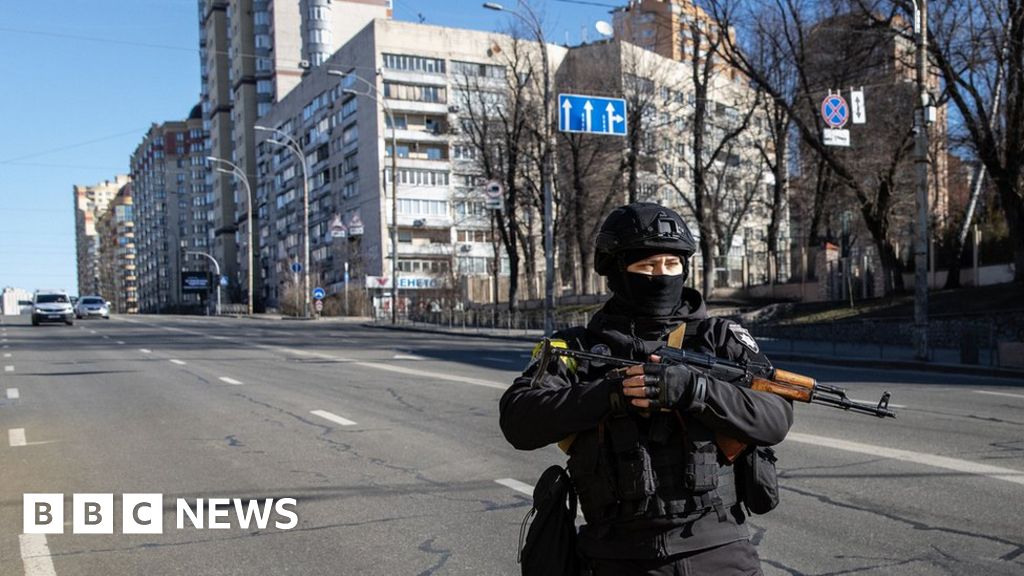
For a week the world has watched as Russian forces have pounded Ukraine from the sky and a full-on ground invasion is now underway. Support in the form of sanctions, speeches and supplies has poured in from NATO and non-NATO allies from across the globe. Ukraine’s army is out-manned and out-gunned, but their resistance has so far defied expectations. But how will this outright show of unprovoked forces that has shocked the world impact global relations moving forward? If you are covering the ongoing invasion of Ukraine by Russia, then let our experts help with your questions and coverage. University of Mary Washington Political Science and International Affairs Professor Jason Davidson is an expert in American foreign and security policy, and international security. To arrange an interview with Dr. Davidson, simply click on his icon.


UCI expert sources for the Russia/Ukraine Conflict
On Friday, Feb. 25, 2022, UCI’s School of Social Sciences hosted a webinar titled, “Understanding the Russia-Ukraine Crisis.” Several of the experts below offered perspective on key issues surrounding the escalating conflict between Russia and Ukraine. You can watch or listen to the webinar here: https://www.socsci.uci.edu/newsevents/news/2022/2022-02-25-understanding-the-russia-ukraine-crisis.php UCI faculty members available to comment, and their areas of expertise, are found below. Matthew Beckmann, Associate Professor, Political Science. Professor Beckman studies the organizational structures and operational strategies presidents can use to pick their team, invest their time, focus their attention, channel their effort, discipline their thinking, coordinate their subordinates, and, most importantly, make decisions. Contact: beckmann@uci.edu Jeffrey Kopstein, Professor, Political Science. In his research, Professor Kopstein focuses on interethnic violence, voting patterns of minority groups, and anti-liberal tendencies in civil society, paying special attention to cases within European and Russian Jewish history. As pertains to the Russia/Ukraine conflict, he can speak to politics in Russia and Ukraine, Authoritarianism, NATO and the transatlantic alliance, and European Union policy. Contact: kopstein@uci.edu Erin Lockwood, Assistant Professor, Political Science. Professor Lockwood’s research areas include international political economy and global financial politics. She can speak to questions related to economic sanctions, financial sanctions/financial infrastructure and payments systems more generally (for example, the prospect of cutting off Russian access to the SWIFT financial communications system.) Contact: eklockwo@uci.edu David Meyer, Professor, Sociology, Political Science and Planning, Policy & Design. Professor Meyer’s research examines the relationships between social movements and the political contexts in which they emerge. Topics surrounding the Russia/Ukraine conflict that align with his expertise include sanction strategy; the resistance strategy that might emerge in Ukraine in the face of occupation; the history of the Cold War and its influence today; and the possibility of a powerful peace/isolationist movement emerging in the U.S. Contact: dmeyer@uci.edu Gustavo Oliveira, Assistant Professor, Global & International Studies. Professor Oliveira is a specialist in global political economy and critical geopolitics, focusing on the BRICS countries (Brazil, Russia, India, China, and South Africa) and international commodity markets, especially agricultural trade and natural resource governance. He can speak to the basis of the Russia/Ukraine conflict on natural resources, and the repercussions of the conflict for international commodity markets, inflation, and disruptions to global food supply chains. He can also speak about the anti-war movements in Russia, Europe, the United States, and broader political repercussions of the conflict in Brazil, Latin America, and the U.S. Contact: gustavo.oliveira@uci.edu Stergios Skaperdas, Professor, Economics and Director of the Center for Global Peace and Conflict Studies. His general area of research is political economy, the interaction of economics and politics. Among other issues, he has studied conflict and wars, the role of the modern state in economic development, and the interaction of globalization and geopolitics. Contact: sskaperd@uci.edu Etel Solingen, Distinguished Professor, Political Science and Thomas T. and Elizabeth C. Tierney Chair in Peace and Conflict Studies. Solingen studies the reciprocal influence between international political economy and international security, globalization and its discontents. She can discuss the crisis in terms of historical precedents (of international crises), the utility of sanctions, bargaining in crisis, Russia’s economic decline and how it bears on the current crisis. Contact: etel.solingen@uci.edu Media Contacts: • Tom Vasich, Communications Officer, UCI | 949-285-6455 | tmvasich@uci.edu • Heather Ashbach, Executive Director of Marketing and Communications, School of Social Sciences | 719-651-3224 | hashbach@uci.edu


It’s official — President Biden has selected Ketanji Brown Jackson as his nominee to the Supreme Court. If confirmed, she will the first Black woman to sit on the highest court in the nation. This is a momentous occasion for American history and reporters are clamoring to learn more. Our experts are ready with answers to help with your stories. Dr. Martha Ginn, professor of political science at Augusta University, is an expert on the judicial process, constitutional law and the U.S. Supreme Court. She discussed Jackson's credentials and the significance of her nomination. What is Ketanji Brown Jackson’s background and what credentials would bring to the Supreme Court? Why is she President Biden's top choice? President Biden made a campaign promise to nominate a Black woman to the SCOTUS if he had a vacancy to fill. While he had several strong contenders, Judge Brown Jackson is an obvious choice for many reasons. Like all current Justices, excluding Justice Barrett, Judge Brown Jackson has an Ivy League education. She has also clerked at the Supreme Court for Justice Breyer (whom she would replace). Interestingly, Justice Kavanaugh clerked for the Justice he replaced (Justice Kennedy) as well. Background and experience: Judge Brown Jackson was a federal district court judge for eight years (appointed by President Obama) and was just confirmed to the DC Court of Appeals last summer. The DC circuit court is seen as a training ground of sorts for Supreme Court Justices, as many nominees serve there first. What makes Judge Brown Jackson different is her experience as a public defender and then vice chairman of the sentencing commission. Bringing that experience to the Court will provide a much needed perspective on the rights of the accused. The Court recently heard a case regarding implementing the First Steps Act retroactively and it was apparent in the oral argument that some Justices did not appreciate the realities and complexities of sentencing in our criminal justice system. Judge Brown Jackson’s background will help fill that void. What does her appointment signify, seeing as she would be the first Black woman (but only third Black justice) in the history of the Supreme Court, as well as the first former public defender? Having four women on the Court at the same time will be important. More women than men attend law school now but the higher ranks of the profession are still male dominated, so having near parity in the nation’s highest Court is meaningful. Her race is also significant, since she will be only the third Black member of the Court and this would be the first time we have two Black members serving together. It’s likely she and Justice Thomas will be very different ideologically but regardless, demographic representation matters. More than ever the Supreme Court is deciding very controversial matters that impact everyone. Having a Court that represents all voices is significant in maintaining its legitimacy and making sure opposing viewpoints are considered in decision-making. With everything going on currently the nation and world, when do you project a vote will happen, and do you see it going through? Even with all that is going on in the world right now, this will be a top priority to the Democratic Party, particularly with President Biden’s low polling numbers and the upcoming midterm elections. With the slimmest of voting margins possible, the sooner the vote occurs, the better for the Democrats. The Republicans set the precedent with the Barrett nomination that the process can be done in weeks rather than the months taken in previous nominations. I anticipate the Democrats will follow that expedited model. It will be interesting to see if the three Republican senators who voted for her Court of Appeals appointment less than a year ago will oppose her nomination here. Justice Breyer conditioned his retirement on the successful appointment of his replacement. He intends to retire at the end of this year’s term (likely early July), so I would anticipate her confirmation vote by then at the latest. If you are a journalist covering this story, that’s where our experts on this topic can help. Dr. Martha Ginn, professor of political science at Augusta University, is an expert on the judicial process, constitutional law and the U.S. Supreme Court. Ginn is available to speak with media about this topic — simply click on her icon to arrange an interview today.


Despite months of tension, weeks of pleas and diplomatic efforts – a full scale invasion of Ukraine by Russian forces has occurred. The situation is developing by the minute and media are scrambling to explain what has happened, why it happened, and tell stories of how this invasion is impacting people not just in Ukraine, but in America too. It’s why experts like Florida Atlantic University’s Robert Rabil is front and center to explain what’s going on to reporters. According to Robert Rabil, a political science professor at Florida Atlantic University, the crisis between Russia and Ukraine has been building since the 1990s. "This is on the account of two factors. The first factor is the expansion of NATO to the border of Russia, merely, especially to the Baltic states of Latvia, Lithuania and Estonia," Rabil said. "The second factor is from a Russian perspective they believe that they treated Russia like a bygone power." Rabil said with increased sanctions underway and formal diplomatic channels not working, the west could be pushing Russia to deepen its ties to other regimes globally. "It might go to Iran and it will support Iran in acquiring or hastening the acquisition of nuclear weapons," he added. "It will deepen its embrace with China." February 23 – WPTV NewsChannel 5 The invasion of Ukraine is historic and could lead to escalations of violence in other parts of Europe and further. And, if you are a reporter looking to cover this ongoing story – then let our experts help. Robert Rabil, Ph.D., is an expert in political Islam, terrorism, U.S. foreign policy, and U.S.-Arab relations. He is available to speak with media about the current situation in Ukraine, simply click on his icon now to arrange an interview today.


What the Basque Country tells us about 'levelling up' | Aston Angle
What the Basque Country tells us about using local governance to level up By Dr Caroline Gray Lecturer in Politics and International Relations School of Social Science and Humanities January 2022 In a recent interview on his vision of ‘levelling up’, Michael Gove, Secretary of State for Levelling Up, Housing and Communities, cited the Basque Country as one example of where ‘things have been done well’. The Basque Country, an industrial region of northern Spain with a population of just over two million, is widely admired for having undergone a remarkable, industry-focused economic transformation since it was hit by the decline of heavy industry in the 1980s. It is now one of the leading regions in Europe not only in terms of GDP per capita, but also in having a low percentage of population at risk of poverty or social exclusion. Within Spain itself, critics usually attribute this to the way the Basque fiscal autonomy model works, enabling the region to keep more of its own wealth to itself than other similarly prosperous regions in Spain – a form of internal ‘levelling up’ at the expense of other regions. This, however, is not the only contributing factor to the Basque Country’s economic transformation. Effective governance has also played a key role. What takeaways from the Basque experience might be relevant to levelling up in the UK and the devolution framework needed to facilitate it? Through my research on the Basque governance systems, I’ve discovered that some of the most valuable lessons relate to how multi-level governance works within the Basque region itself and how that contributes to economic and social transformation. Devolution does not stop with the powers devolved to regional governments or authorities; the relationship between different stakeholders and layers of governance within a region or locality is equally important. If the UK government wants to learn from what the Basque Country has done well, it should consider the following: 1. Devolution beyond metropolitan areas needs to be flexible and adaptable to place-based specifics In his July 2021 Levelling Up speech, Boris Johnson announced that levelling up would involve extending devolution beyond cities with new deals for the counties. The government must stick to the commitment it made then to shape new devolution deals with local input, avoiding one-size-fits-all approaches. The Basque Country provides valuable evidence for why it’s beneficial to shape governance approaches to the economic geography of an area. As one of Spain’s 17 regions called ‘autonomous communities’, the Basque Country is, in turn, divided into provinces (Araba-Álava, Bizkaia and Gipuzkoa) and municipalities. Counties, which don’t have an administrative body, but which do house county development agencies, make up an additional level between the provinces and municipalities. The economic activity of two of the provinces (Araba-Álava and Bizkaia) is typical of metropolitan areas in that it is centred heavily on their capital cities (Vitoria and Bilbao, respectively), where the provincial councils are based. However, in the third, Gipuzkoa, economic activity is more distributed across different hubs in the province. As a result, in Gipuzkoa, the county development agencies, created in the late 1980s, have acquired a particularly important role, as interviewees from the Basque Institute of Competitiveness explained to me. The counties map particularly well onto the different industrial areas in the province, thanks to the fact that they were designed with the bottom-up input of municipal leaders working together with the provincial council. The county development agencies have, in turn, become a key channel via which the provincial council in Gipuzkoa can reach SMEs more easily, as they are closer to the firms. Such local networks are particularly important in non-metropolitan areas where economic activity can be more dispersed. This is why the UK government must make sure any new devolution framework it designs is flexible enough to allow for local input and adaptations to place-based considerations. 2. Bottom-up, collaborative dynamics are essential to the design and implementation of placed-based strategies Basque economic development has undoubtedly benefitted from the fact that the regional government draws upon input from different levels of administration and a range of other public and private stakeholders in the region when designing its industrial policies. Experiments in collaborative governance have become increasingly innovative over the years, not only at regional but also provincial and local level, designed to reach beyond the largest firms and to engage wider society. The county development agencies in Gipuzkoa, for example, used to provide services to SMEs in an essentially one-way direction – for example, advising them on how to apply policy – but have since evolved more into facilitators of networks for cooperation and mutual learning among public and private actors at county level. This not only facilitates more efficient implementation of regional policies, but also channels local feedback upwards into the policy-making process, adding value. Collaboration among different tiers of governance and different areas, rather than competition, has been the goal of such approaches. Therefore, the UK government needs to reconsider the increasingly competitive dimension of current devolution arrangements. Having areas compete against one another for centrally controlled, often short-term pots of money doesn’t facilitate the formation of robust, collaborative partnerships that could ultimately add value and increase efficiency. Finally, institutional stability is important. From the Regional Development Agencies (RDAs) to the Local Enterprise Partnerships (LEPs), which are now under review, there has been frequent chopping and changing in the institutions and policies meant to tackle the UK’s place-based inequalities in recent decades. The Basque Country shows what can be achieved with a more stable, longer-term institutional and policy framework and vision. If it is to have a meaningful impact in tackling inequalities, the Levelling Up White Paper must provide the basis for a longer-term devolution framework that goes well beyond the current government term, with a clear allocation of resources and responsibility.


Troops are amassing along both sides of the border separating Russia and Ukraine. Diplomatic efforts from leaders from across Europe are in high gear as the concerns of an invasion and potentially all-out war between Russia and Ukraine could send the region into chaos. As the world watches and both sides gather allies for support, there are a lot of questions to ask, history to explore and explanations needed about what’s going on now and why. Dr. Craig Albert, associate professor of political science and director of the Master of Arts in Intelligence and Security Studies at program at Augusta University, sat down with ABC News to answer some of those lingering questions. Q: What is the reason for Russia’s interest in Ukraine? "If NATO allows Ukraine to become a member of NATO, which is what Putin is fearing here, he might think that they might want to go to Belarus next. Where else are they going to go? Georgia, the Republic of Georgia? Putin does not want NATO literally bordering the Russian federation. He thinks that’s a threat and would allow NATO to put missiles and missile defense in those countries, which as you know, is much more of a direct threat to Russia." Q: Maybe it comes down to the possibility of military threats. Why does the US care what’s happening way over there? "So, when you have any type of European possible land mass war, conventional war, that’s going to be a cataclysmic problem for the world. I think of the untold numbers of dead that would happen in some type of land conventional war, kinetic operations on Europe. The last time we had something like that was the wars in the former Republic of Yugoslavia in the early ’90s. That resulted in up to 300,000 to 400,000 dead in two or three years. So, we live in a globalized world, so if you have Eastern or Central Europe that gets confronted with a massive conventional war, that’s going to effect the security and the economy of the entire world including us." Q: So, is it just the US being world police again? "Each side is viewing the other as acting aggressively and I think both sides are just trying to sure up their defenses, just trying to make sure that they can handle the current situation. The United States is entering in what’s called a status quo power cycle, where the United States just wants the power of the international arena to stay where it is.” With news reports of an invasion potentially happening soon, there will be an enormous amount of coverage on this topic – and that’s where the experts from Augusta can help with your stories. Dr. Craig Albert is director of the Master of Arts in Intelligence and Security Studies at Augusta University. He is a leading expert on war, terrorism, and American politics. This is an important national and international issue. Albert is available to speak with media – simply click on his name to arrange an interview today.


Senior lecturer at Aston University appointed as a Champion of the Microbiology Society
Dr Jonathan Cox, a senior lecturer in microbiology at Aston University, has been made a Champion of the Microbiology Society for the Midlands area, U.K. Microbiology Society Champions are members who help to raise the Society’s profile in their local area by initiating activities and events of their own or participating in Society-led events. They are appointed because of their passion for their subject matter and an enthusiasm to communicate it widely. Jonathan’s research interests surround the discovery of new antibiotics. He leads the Mycobacterial Research Group at Aston University, a multidisciplinary team spanning microbiology, biochemistry, molecular genetics, structural biology and drug discovery. The team’s main focus is to study the physiology of various pathogenic mycobacteria and to discover new ways to treat infections. He also teaches at Aston University and currently leads the teaching for first year microbiology on courses in biomedical science, biology and biochemistry, Jonathan also regularly engages with the press to comment on news stories and issues related to microbiology, infectious diseases and antibiotic resistance. He has been a full member of the Microbiology Society for 10 years and has already contributed in many ways, including hosting the Microbiology Society Roadshow at Aston University in 2021. He has also been featured in Microbiology Today discussing his research. Speaking of his appointment, Jonathan said: “Anti-microbial resistance (AMR) accounts for around 700,000 deaths per annum globally and that number is predicted to rise to 10 million by 2050. The current economic burden of AMR is estimated to be at least €1.5 billion per year in the EU. New antibiotics and an improved understanding of how to use them will help to slow the progression of AMR, saving countless lives in the future. “I am delighted to have been appointed as a Microbiology Society Champion and to use this opportunity to raise the profile of the Society and, in particular, the importance of research into AMR.”


Most in-demand jobs in Ontario for newcomers
Ontario is one of the most popular provinces among newcomers. Its cultural diversity, economic prosperity, and ever-growing job market are just some of the reasons newcomers from across the world choose to settle in Ontario. The government of Ontario periodically invites newcomers with the skills and experience to meet the province’s growing labour requirements to work and settle in Ontario as Permanent Residents (PR) through the Ontario Immigrant Nominee Program. This article provides information on Ontario’s job market. This includes the top industries that contribute to its economy, the most in-demand occupations for newcomers in the region, NOC codes, and median wage estimates, so you can arrive prepared to kick-start your career in Canada. What are the top industries in Ontario? Services industry: The services sector is the largest contributor to the province’s economy and employs nearly 79 per cent of the people living in Ontario. Some of the key service industries include banking and financial services, professional, scientific and technical services, and arts and culture. Manufacturing industry: Ontario’s manufacturing industry is one of the biggest in North America. Some of the most prominent manufacturing industries are automotive, information and communication technologies, biotechnology, pharmaceuticals, and medical devices. Agriculture: Ontario’s farming sector contributes nearly 25 per cent of Canada’s farm revenue. Mining industry: In addition to being one of the world’s top 10 producers of nickel and platinum, Ontario is also rich in gold, silver, copper, zinc, cobalt, and non-metallic minerals. Southern Ontario also has a sizeable oil and gas industry. Forestry industry: The forestry industry in the province creates nearly 200,000 direct and indirect jobs. Which cities have the most job opportunities in Ontario? Toronto and the Greater Toronto Area (GTA): This is the most populous region in the province, and Toronto is the financial hub of Canada. Other large industries in Toronto and the GTA include technology, real estate, trade, and manufacturing. Ottawa: As the capital of Canada, Ottawa offers significant job opportunities in administration. It is also a major centre for the high technology and finance industries. Brantford: This city is a manufacturing hub and offers job opportunities in food and beverage manufacturing, advanced manufacturing, rubber and plastic production, and warehousing and distribution. In addition, Brantford also has a growing media and entertainment sector. Hamilton: Another manufacturing centre, Hamilton has a large job market in the food processing and agribusiness industry, as well as in advanced manufacturing. Waterloo: The Toronto-Waterloo region is often referred to as the ‘Silicon Valley of the North’ and presents significant opportunities in the technology sector. Which jobs are in demand in Ontario? Health care jobs in Ontario Managers in health care (NOC 0311): Managerial positions in health care typically require a degree in management and pay around $48.21 CAD per hour. • Registered nurses and psychiatric nurses (NOC 3012): You’ll need a nursing degree and a provincial nursing licence to qualify. The median hourly pay for registered nurses in Ontario is $36 CAD. • Medical laboratory technologists (NOC 3211): As a lab technologist in Ontario, you can earn a median income of $38 CAD per hour. • Opticians (NOC 3231): Opticians make between $27 CAD and $34 CAD in Ontario. • Licensed practical nurses (NOC 3233): Licensed nurses make a median hourly wage of $27 CAD. • Nurse aides, orderlies, home support workers, and patient service associates (NOC 3413, 4412): For these occupations, the hourly wage ranges between $17.50 CAD and $20 CAD. Service sector jobs in Ontario To qualify for service sector jobs, you’ll usually require at least an undergraduate or graduate degree from a university. Administrative services managers (NOC 0114): Managerial positions in administration typically pay a median salary of $41 CAD per hour. Banking, credit and other investment managers (NOC 0122): Managers in the finance sector earn a median income of $50 CAD per hour. You’ll usually need a degree in management or finance to qualify. Advertising, marketing, and public relations managers (NOC 0124): These roles require a degree in marketing or management and pay a median income of $40 CAD per hour. Business services managers (NOC 0125): These roles pay an average hourly salary of $43 CAD. Corporate sales managers (NOC 0601): Sales manager roles in Ontario can be fairly high paying, with a median hourly wage of $52 CAD per hour. Restaurant and food services managers (0631): Compared to other managerial positions, restaurant and food services managers have the lowest median wage at $19.23 CAD per hour. Construction managers and managers in transportation (NOC 0711, 0731): Employees in these roles earn a median hourly wage between $38 CAD and $40 CAD. Human resources professionals (NOC 1121): HR professionals make an average income of $35 CAD per hour. Professional occupations in business management consulting (NOC 1122): In Ontario, business consultants make a median hourly salary of $41 CAD. Mathematicians, statisticians, and actuaries (NOC 2161): As a mathematician, you can earn an average of $45 CAD per hour. However, you’ll need an advanced degree in mathematics, statistics, or a related subject. Technology sector jobs in Ontario To work as an engineer in Ontario, newcomers require a licence from the province in addition to an engineering degree. Engineering managers, computer and information systems managers (NOC 0211, 0213): Managerial level in-demand jobs in Ontario pay a median hourly wage between $52 CAD and $53 CAD. To qualify, you may require a degree in engineering, management, or both. Computer engineers (NOC 2147): As a computer engineer, you can earn a median income of $44 CAD per hour. Database analysts, software engineers and designers, computer programmers and interactive media developers (NOC 2172, 2173, 2174): These technology sector roles pay between $40 CAD and $46 CAD per hour in Ontario. While many such positions require an engineering degree, some roles may also be open to applicants with a degree in computer science. Web designers and developers (NOC 2175): Web designers in Ontario can earn a median hourly wage of $31 CAD. Manufacturing jobs in Ontario Manufacturing managers (NOC 0911): Managers in manufacturing make a median income of $43 CAD per hour in Ontario. Machine operators in the mining and processing, chemicals, plastics, woodworking, and food and beverage industries (NOC 9411, 9416, 9417, 9418, 9421, 9422, 9437, 9446, 9461): Machine operators and process control workers typically earn a median hourly wage between $15 CAD and $23 CAD, depending on the industry they are in. Assemblers, fabricators, inspectors, and testers in the electronics and mechanical industries (NOC 9523, 9526, 9536, 9537): The median hourly wage for these jobs is between $16 CAD and $22 CAD. Agriculture jobs in Ontario The median hourly wage for in-demand agriculture jobs is between $14.35 CAD and $20 CAD. General farm workers (NOC 8431) Nursery and greenhouse workers (NOC 8432) Harvesting labourers (NOC 8611) Industrial butchers, meat cutters, poultry workers (NOC 9462) What is the minimum wage in Ontario? The general minimum wage in Ontario as of October 1, 2021, is $14.35 CAD per hour. For student workers, the minimum wage is $13.50 per hour. What is the unemployment rate in Ontario? The unemployment rate in Ontario in September 2021 was 7.3 per cent. However, the province’s economy is still recovering from the impact of the COVID-19 pandemic and, with each quarter, the unemployment rate is inching back towards the pre-pandemic level of under six per cent. How can I move to Ontario? In addition to the federal Express Entry program, the province also invites permanent residents through the Ontario Immigrant Nominee Program. If you’re planning to work in Ontario temporarily, you may be able to qualify for a work permit if your skills align with the province’s in-demand occupations. Ontario also boasts of some of the best universities in Canada and, each year, thousands of students come to Canada on study permits, with the aim of receiving a world-class education and settling permanently in Canada. Original article located here, published by Arrive. About Arrive Arrive is powered by RBC Ventures Inc, a subsidiary of Royal Bank of Canada. In collaboration with RBC, Arrive is dedicated to helping newcomers achieve their life, career, and financial goals in Canada. An important part of establishing your financial life in Canada is finding the right partner to invest in your financial success. RBC is the largest bank in Canada* and here to be your partner in all of your financial needs. RBC supports Arrive, and with a 150-year commitment to newcomer success in Canada, RBC goes the extra mile in support and funding to ensure that the Arrive newcomer platform is FREE to all. Working with RBC, Arrive can help you get your financial life in Canada started – right now.


All eyes on Virginia as parents and school systems sue over mask-optional orders
Virginia has become the center of attention for lawmakers as seven school boards are taking Gov. Glenn Youngkin to court over mask-optional orders for students. A group of parents are also suing the new governor, who campaigned on ending mask mandates in public schools, and made it one of his first executive orders. It’s a complicated and no doubt controversial stance – and to fully comprehend what’s going on and the political implications for both sides, media organizations like The Washington Post are contacting experts like UMW’s Stephen Farnsworth to help break it all down. Fairfax School Board Chair Stella Pekarsky said in an interview Sunday that the lawsuit boils down to an issue of local control: “Can we make policies for our school system, or does the governor get to come and do that for us?” Youngkin, Pekarsky added, “does not tell us what to do.” Stephen Farnsworth, a political science professor at the University of Mary Washington, said the twin lawsuits place significant pressure on Virginia’s court system to step in quickly to resolve the debate. “In situations like this, where there is no middle ground and where neither side has any interest in backing down, only judges can be the necessary umpires,” Farnsworth said. “The sooner they do so, the better for all concerned.” But nobody knows when that will happen. This is a hot button topic, and the result of the lawsuits may have national implications. Dr. Stephen Farnsworth is a sought-after political commentator on presidential politics. He has been widely featured in national media, including The Washington Post, Reuters, The Chicago Tribune and MSNBC. If you are a reporter covering the midterms and especially Virginia politics, simple click on his icon to arrange an interview today.
