
Experts Matter. Find Yours.
Connect for media, speaking, professional opportunities & more.

Taylor Swift workshop helps fill a blank space for economics students
The University of Delaware's Kathyrn Bender developed a concept that professors could only conjure in their wildest dreams: A Taylor Swift-themed workshop that helps college students better understand data analytics through the music of the world's biggest pop star. Bender, assistant professor of economics in UD's Lerner College of Business and Economics, came up with the idea while teaching her Introduction to Microeconomics class in early October when the discussion turned to MetLife Stadium, home of the NFL’s New York Giants and Jets. “I noticed in that class there was a lot of excitement, and I had just about everybody’s attention in there, whether they were interested because of football or because of the Taylor Swift aspect. So I thought that was really cool,” Bender said. Using grant money, Bender quickly jumped on the idea and developed a Swift-themed data visualization workshop series entitled “Data Enchanted: Transforming Numbers into Knowledge.” She held three 90-minute workshops during the fall semester, which ran from late October through early December: “Ready for It,” an introduction to Stata; “You Belong with Me,” building and structuring data for analysis; and “I Knew You Were Trouble,” transforming and cleaning data for analysis. The workshops helped UD students learn to utilize Stata, a statistical software package used for data manipulation, visualization and automated reporting. They were an immediate success, as Bender received over 60 applicants, although she was limited to accepting just 32 due to space limitations. Though students don’t earn credit for completing the workshops, just a certificate, Bender said they help fill some gaps that aren’t covered in classes. “I think they’re kind of expected to learn about it, piecing it together from different classes,” Bender said. “This [workshop series] is a way for students to get introduced to thinking about data, how it’s set up, how you can create good visualizations with it … those basics before you get into the analysis.” Making the workshops Swift-themed helped students pick up concepts more easily in a fun environment. Before jumping into data sets, the students make friendship bracelets to the soundtrack of Swift's music. In one session, they pulled Spotify data and statistics to analyze the popularity of Swift’s songs. “We’ve stuck with Taylor Swift songs and albums so far,“ Bender said. “So all the data sets have been very easy for the students to understand as opposed to something that’s not as familiar for them to think about. They know what a song is, they know what the duration of a song is, those things are all very easy to understand. They’re able to practice these new data skills without having to worry about the content as much.” Due to the workshop’s immediate success, Bender is planning on expanding the program during the spring semester. She aims to hold eight workshops, the initial three and then five more, and hopes to make them available for all UD students (they were available only as an undergraduate program in the fall). Reporters who would like to write about the workshop and interview Bender can contact her directly by simply the contact button on her profile. Or, send an email to UD's media relations team.


Coping with Grief During the Holiday Season
Baylor experts suggest three strategies to help cope with grief during the holidays (Image Credit: D-Keine/Getty Images) The holidays are typically a time of joy and celebration for most people, but this time of year can be very different for grieving people. The death of a loved one can be especially hard during the holidays as they are full of memories, traditions, and sensations associated with the holidays – all reminders that this year is different, and someone is no longer here. What can someone in the midst of grief do to make this time more positive and step toward emotional healing? William (Bill) G. Hoy, D.Min, FT., clinical professor and associate director of Medical Humanities, and Candi Cann, Ph.D., associate professor of religion in the Honors College at Baylor, suggest three strategies for grieving people to cope with their loss during the holidays. “Holidays are also hard in grief because they are built around relationships,” Hoy said. “Family gatherings cannot ever be the same, and, of course, memories of bad relationships cause us to realize the past cannot be changed.” Acknowledge your pain The first step is to admit the pain of grieving. “Saying goodbye to a loved one is no easy task, and, undoubtedly, it feels different than you could ever have expected,” said Hoy. Cann pointed out that some deaths bring about complicated grief if the loss is from a difficult relationship. “It is okay to feel relief in addition to grief and it is important to validate all of your feelings – it’s a complicated grief because it was a complicated relationship.” Hoy said that culturally people tend to try to get around the pain without facing it, which only makes it harder later on. “There is an empty chair at the table on this special occasion. The grief following a death assault at every turn with the reality that they will not be returning to the table. Because holiday grief is so painful, there is no need to try to escape the pain this holiday season.” Take care of yourself Self-care is vital during this time, said Cann. She encourages grieving people to stay active, eat healthy, go outside to be in nature and get enough sleep. “It’s totally normal to need more sleep when you're depressed and grieving, you just have to be gracious with yourself about that,” she said. Hoy added, “Remember that grief is very tiring and - even under the best of circumstances - holidays are very taxing.” Give yourself permission to turn down invitations or leave parties early. In addition to taking care of your physical health, Cann recommends staying engaged in your community or church. “Being in community with others is very beneficial for your mental health.” At the same time, be honest with yourself about what you want to do and only accept invitations or participate in activities that you feel you can handle, said Hoy. Evaluate traditions and embrace memories When the holidays arrive, many people want to change everything about the holidays to avoid the sad feelings, said Hoy. Both he and Cann suggest evaluating family traditions, choosing those traditions that are most important to continue and including the dead through new traditions. “Don't forget to embrace your memories of past holidays and special events as you face this season,” Hoy said. “We cannot have things like they were, but we can hold in our hearts the memories of days gone by. You may want to light a special candle or purchase a special holiday decoration and hang it in your loved one's memory.” “A lot of people feel like when that person is gone, the love is gone too, but the love is still there,” Cann said. “You wouldn't feel the grief or the big hole that you now have if you didn't have all of this love in the first place.” She suggests embracing their presence by including a place at the table for Christmas dinner, making their favorite recipe or many other ways to continue the bonds and positively remember the dead in your life. By doing these things, “you're including them in your conversation, and you're making space for that person, both literally and symbolically.” How to support someone who is grieving Being supportive of someone grieving requires patience and vulnerability. “Engage with the person and ask how you can best support them,” Cann said. “And let them know that you are thinking about them during this time.” “A lot of people don't want to bring it up because they don't want to make people sad at a joyful time,” Cann said. “But the point is, they already are sad, so bringing it up allows them to express it” and feel accepted in their pain. Hoy said to remember that there is no set timeline for an individual grief journey. It is also important to remember that not all grief is related to death. There are many types of loss that people experience such as divorce or disease. We can’t decide or predict what defines another person's grief, but we can offer love and support. Approaching the holidays when experiencing grief over the death of someone or a deep loss may be painful at first, but using these strategies can help us face the future by celebrating with gratitude what we had in the past.


Aston University establishes Design Factory Birmingham as a global innovation hub for Midlands
• Birmingham becomes the latest city to join a global network of design and digital consultancies • Based at Aston University, expertise in areas such as 3D printing will be shared to boost the local economy • It will include a space named after the late Dame Margaret Weston, former director of the Science Museum. Birmingham has become the latest city to join a global network of design and digital consultancies set up to solve real world challenges through effective problem-solving. Design Factory Birmingham will be based at Aston University, one of just two hubs in the UK outside of London. The city officially joined the Design Factory Global Network on Wednesday 14 February and as a result Aston University will open the doors to its state-of-the-art facilities to other organisations. Shared understanding and common ways of working enable Design Factories in the network to collaborate efficiently across cultures, time zones and organisational boundaries fostering radical innovations. Businesses, industry partners, entrepreneurs, staff and students will be able to collaborate on projects that will involve technologies such as 3D printers and design software. The University will be sharing its expertise in artificial intelligence, additive manufacturing, data science and web, app and graphic design to boost the local economy. Currently there are 39 innovation hubs in 25 countries across five continents based in universities and research organisations. The Design Factory will include a space named after the late Dame Margaret Weston, former director of the Science Museum. Dame Margaret had studied electrical engineering at one of Aston University’s predecessor institutions and went on to be the first woman appointed to lead a national museum. She left a generous gift to Aston University in her will, which will be commemorated in the Birmingham Design Factory in honour of her engineering background. (l-r) Felipe Gárate, Professor Aleks Subic, Professor Stephen Garrett The Vice-Chancellor and Chief Executive of Aston University, Professor Aleks Subic said: “The Design Factory Birmingham is another key milestone in our ambition to be a leader in science, technology, and innovation, driving socio-economic transformation in our city and region. It is important to the Midlands because it will make a direct contribution to innovation led growth in partnership with industry and businesses. However, this is not only a local launch but also a global launch as Design Factory Birmingham is a global innovation hub, and an integral part of the Design Factory Global Network involving 39 innovation hubs around the world.” The head of the Design Factory Global Network Felipe Gárate from Aalto University in Helsinki, Finland attended the official launch in Birmingham. He said: “I am delighted to welcome Aston University as our latest member. “We are on a mission to create change in the world of learning and research through passion-based culture and effective problem-solving. “Shared understanding and common ways of working enable Design Factories in the network to collaborate efficiently across cultures, time zones and organisational boundaries fostering radical innovations.” The launch event was used to showcase design projects that are already running and companies attending were given the chance to meet placement students who could boost their existing expertise. Associate Pro-Vice-Chancellor and Deputy Head of the College of Engineering and Physical Sciences, Professor Tony Clarke said “This unique space on campus will bring together multi-disciplinary teams of hands-on innovators, collaborative thinkers and creators. “We will be delivering a wide range of services including software application development, product design, creating protypes using a variety of technologies including laser and water cutting, digital and design training courses, and helping companies obtain innovation grants for projects.” As a member of the global network the Birmingham Design Factory at Aston University will participate in two global design challenges - one run by McDonalds and the other run by the Ford Motor Company. ENDS Notes to Editors There are 39 Design Factory hubs around the world https://dfgn.org/ In the UK there are three; London, Birmingham and Manchester. About Aston University For over a century, Aston University’s enduring purpose has been to make our world a better place through education, research and innovation, by enabling our students to succeed in work and life, and by supporting our communities to thrive economically, socially and culturally. Aston University’s history has been intertwined with the history of Birmingham, a remarkable city that once was the heartland of the Industrial Revolution and the manufacturing powerhouse of the world. Born out of the First Industrial Revolution, Aston University has a proud and distinct heritage dating back to our formation as the School of Metallurgy in 1875, the first UK College of Technology in 1951, gaining university status by Royal Charter in 1966, and becoming The Guardian University of the Year in 2020. Building on our outstanding past, we are now defining our place and role in the Fourth Industrial Revolution (and beyond) within a rapidly changing world. For media inquiries in relation to this release, contact Nicola Jones, Press and Communications Manager, on (+44) 7825 342091 or email: n.jones6@aston.ac.uk


Countdown To the Big Game: Dr. Tyrha’s Top Five Super Bowl Commercials for the Past Five Years
Advertising executive and multicultural media expert Tyrha M. Lindsey-Warren, Ph.D., clinical assistant professor of marketing at Baylor University's Hankamer School of Business, , is a sought-after media commentator on the brands who win big during the game's commercial breaks. Commercials always are the most anticipated and talked-about aspect of the Super Bowl, but the expanding digital landscape requires advertisers to use more authentic and nuanced strategies to reach consumers. Advertising executive and multicultural media expert Tyrha M. Lindsey-Warren, Ph.D., clinical assistant professor of marketing at Baylor University’s Hankamer School of Business, is a sought-after media commentator on the brands who win big during the game’s commercial breaks. How do companies break through the noise and make a lasting impression on viewers? Lindsey-Warren – or Dr. Tyrha, as she is known – says the key is empowered storytelling. As a consumer behavior scholar, Dr. Lindsey-Warren’s research is rooted in narrative transportation theory – in other words, storytelling – that exudes the emotion of empowerment and its impact on consumer attitudes, behaviors, purchase intention and message recall. “There is a growing space for cleverly crafted and positive storytelling that can break through the clutter and competition and get the attention of Millennials, Gen Z and Alpha generations in an authentic and meaningful manner,” Lindsey-Warren said. At the top of every year, Dr. Tyrha always enjoys exposing the juniors and seniors in her advertising class to the joys of storytelling in advertising by way of the Super Bowl commercials. By leveraging the Super Bowl as an “edutaining” entry point for student learning, Dr. Lindsey-Warren finds it to be a fun and wonderful way to bring many advertising lessons to life for her students, including branding, consumer targeting and segmentation, social media campaign analysis, and more. To that end, here are Dr. Tyrha Lindsey-Warren’s top picks for the best Super Bowl commercials over the past five years. COUNTDOWN TO THE SUPER BOWL: DR. TYRHA’S TOP 5 SUPER BOWL COMMERCIALS FOR THE PAST 5 YEARS #5: Company/Brand: AMAZON Title of the commercial: “#BeforeAlexa” (With Ellen Degeneres and Portia de Rossi) Year it ran in the Super Bowl: 2020 Link to the commercial: https://www.youtube.com/watch?v=PLUwmnPJIGk Ad Agency that produced the commercial: Droga5 Dr. Tyrha’s rationale as to why this ad is so good: In my opinion, this was a wonderfully creative and clever introduction of the Alexa product by Amazon. The nostalgic storytelling in the spot humorously does make you wonder and realize how “did” we all live “before Alexa?” The commercial is multigenerational, incorporates women extremely well, and is so funny! #4. Company/Brand: NFL Title of the commercial: “Bring Down the House!” Year it ran in the Super Bowl: 2022 Link to the commercial: https://www.youtube.com/watch?v=8PhfMtZce1k Ad Agency that produced the commercial: Co-directed by Peter Berg of Film 47 and Arthur Mintz of Swaybox Studios Dr. Tyrha’s rationale as to why this ad is so good: In 2022, the NFL creatively leveraged the power of animation to get our attention with this wonderfully told story with children as the lead Talent and set in a situation that all families can relate to! The spot is so much fun and keeps you guessing as well as laughing with Grandma saving the day in the end. The commercial is multigenerational, multicultural, and incorporates women and girls extremely well. #3. Company/Brand: MOUNTAIN DEW & DORITOS (OWNED BY PEPSICO) Title of the commercial: “Doritos Blaze vs. Mountain Dew Ice” (with Morgan Freeman and Peter Dinklage) Year it ran in the Super Bowl: 2018 Link to the commercial: https://www.youtube.com/watch?v=C2tyVjEuqcY Ad Agency that produced the commercial: Goodby, Silverstein & Partners Dr. Tyrha’s rationale as to why this ad is so good: The “in your face” storytelling of this commercial – performed exquisitely by acclaimed actors, Peter Dinklage and Morgan Freeman, and accompanied by the perfect voiceover narrators in Rappers Missy Elliot and Busta Rhymes – is so much fun and truly unforgettable! The commercial also cleverly makes you pay attention to the presentation of the products being promoted as well as compels you to wonder as to “when did you last have a Mountain Dew and some Doritos?” This commercial is multicultural, multigenerational, multibodied, and incorporates women well and UBER memorable! #2. Company/Brand: NFL Title of the commercial: “The 100-Year Game” Year it ran in the Super Bowl: 2020 Link to the commercial: https://www.youtube.com/watch?v=tJjiIuH1VnY Ad Agency that produced the commercial: 72 and Sunny Dr. Tyrha’s rationale as to why this ad is so good: If you love the game of football, you have to love this ad that celebrates the fun and contagious spirit of the game. Truly, this commercial has something for everyone who loves the game of football! The unassuming opening of the ad’s storytelling set at an awards banquet and led by NFL Commissioner Roger Goodell quickly evolves into a fun and rambunctious game of football with NFL players of all ages in their tuxedos destroying the ballroom with their play. The musical hip-hop soundtrack alone for the spot is amazing, current, and supports the action of the storytelling extremely well. This spot is multigenerational, incredibly diverse in age ethnicity and more, as well as weaves women and girls into the spot ever so cleverly. A truly memorable ad and so much fun! #1. Company/Brand: Mr. Clean (OWNED BY P&G) Title of the commercial: “Cleaner Of Your Dreams” Year it ran in the Super Bowl: 2018 Link to the commercial: https://www.youtube.com/watch?v=ozuWoZITX3Y Ad Agency that produced the commercial: Leo Burnett Dr. Tyrha’s rationale as to why this ad is so good: Every year I show this commercial to my Advertising students at Baylor University and they absolutely LOVE this ad! The storytelling of this commercial leverages the animated Mr. Clean in such a clever manner, while showing the product benefits at the same time, and not being “in your face” with the product’s selling proposition. The music and the dancing accompaniment to the storytelling all help to bring an emotional connection to the viewer, especially the female audience. Plus, the spot is just super funny and so much fun! Every time I see this ad, I want to run and buy Mr. Clean. And, I tell my female students every year that when they get older, they are going to LOVE a man who can clean a house!!!! Additionally, this was an incredibly smart move by P&G to put this ad in the Super Bowl. This is due to the fact that the “current and future market power of women – as a whole and by segments – is undeniable and truly cannot be ignored by marketers, especially the NFL.” Today, women influence more than 80% of all consumer spending; 89% of the financial decisions are made by women; and globally, women control more than $20 trillion in worldwide spending. In addition, nearly 24.3 million African American women are brand loyalists and cultural trendsetters who have influence over the $1.2 trillion in Black spending power. And, Forbes reported in 2018 that “women constituted about 49 % of the 108 million-plus people who watched” that year’s Super Bowl – and they paid closer attention to the ads!


A 'super' economic boost for the big game, courtesy of Taylor Swift
Could NFL executives have imagined a better scenario for this year’s Super Bowl? Only in their wildest dreams, according to UD sports marketing experts who study the big game every year. The league has a built-in audience draw and revenue generator named Taylor Swift, who will be in attendance Sunday to root on boyfriend Travis Kelce and his Kansas City Chiefs. The world’s biggest pop star can easily fill any blank space – and then some – caused by a lack of bad blood between the Chiefs and San Francisco 49ers or advertisements that don’t exude enough style. And the NFL didn’t have to spend a dime or lift a finger to make it happen. Timothy DeSchriver and John Allgood, who teach and study sports marketing at the University of Delaware’s Alfred Lerner College of Business and Economics, see a number of ways that Swift can move the needle economically for a league that seemingly needs no extra publicity. The female audience is already growing for the NFL, but Allgood said that Swift delivers “a fresher audience” as witnessed by record viewership for the Chiefs-Ravens AFC Championship Game. “There are people tuning in just to see her in a suite for five seconds,” Allgood said. Gamblers wagering on Taylor Swift “prop bets” will keep tuning in even if it’s a blowout, DeSchriver noted. DeSchriver pointed to new advertiser interest from makers of beauty products, potentially to reach the new audience. The NFL will get its cut from products as well, Allgood said, thanks to an NFL licensing deal with a clothing designer after Swift wore one of her puffer coats and the continued rise in sales of Kelce jerseys. DeSchriver and Allgood, who can also discuss ticket pricing in the playoffs, and are available for interviews. To set one up, visit DeSchriver's profile and click on the "contact" button.


Research: Add space salad to the risks astronauts face
University of Delaware researchers grew lettuce under conditions that imitated the weightless environment aboard the International Space Station and found those plants were actually more prone to infections from Salmonella. It’s been more than three years since the National Aeronautics and Space Administration made space-grown lettuce an item on the menu for astronauts aboard the International Space Station. Alongside their space diet staples of flour tortillas and powdered coffee, astronauts can munch on a salad, grown from control chambers aboard the ISS that account for the ideal temperature, amount of water and light that plants need to mature. But as the UD researchers discovered, there is a problem. The International Space Station has a lot of pathogenic bacteria and fungi. Many of these disease-causing microbes at the ISS are very aggressive and can easily colonize the tissue of lettuce and other plants. Once people eat lettuce that’s been overrun by E. coli or Salmonella, they can get sick. With billions of dollars poured into space exploration each year by NASA and private companies like SpaceX, some researchers are concerned that a foodborne illness outbreak aboard the International Space Station could derail a mission. In the new study by UD's team, published in Scientific Reports and in npj Microgravity, researchers grew lettuce in a weightless environment similar to that found at the International Space Station. Plants are masters of sensing gravity, and they use roots to find it. The plants grown at UD were exposed to simulated microgravity by rotation. The researchers found those plants under the manufactured microgravity were actually more prone to infections from Salmonella, a human pathogen. Stomata, the tiny pores in leaves and stems that plants use to breathe, normally close to defend a plant when it senses a stressor, like bacteria, nearby, said Noah Totsline, an alumnus of UD’s Department of Plant and Soil Sciences who finished his graduate program in December. When the researchers added bacteria to lettuce under their microgravity simulation, they found the leafy greens opened their stomata wide instead of closing them. “The fact that they were remaining open when we were presenting them with what would appear to be a stress was really unexpected,” Totsline said. Totsline, the lead author of both papers, worked with plant biology professor Harsh Bais as well as microbial food safety professor Kali Kniel and Chandran Sabanayagam of the Delaware Biotechnology Institute. The research team used a device called a clinostat to rotate plants at the speed of a rotisserie chicken on a spinner. “In effect, the plant would not know which way was up or down,” Totsline said. “We were kind of confusing their response to gravity.” Additionally, Bais and other UD researchers have shown the usage of a helper bacteria called B. subtilis UD1022 in promoting plant growth and fitness against pathogens or other stressors such as drought. They added the UD1022 to the microgravity simulation that on Earth can protect plants against Salmonella, thinking it might help the plants fend off Salmonella in microgravity. Instead, they found the bacterium actually failed to protect plants in space-like conditions, which could stem from the bacteria’s inability to trigger a biochemical response that would force a plant to close its stomata. “The failure of UD1022 to close stomata under simulated microgravity is both surprising and interesting and opens another can of worms,” Bais said. “I suspect the ability of UD1022 to negate the stomata closure under microgravity simulation may overwhelm the plant and make the plant and UD1022 unable to communicate with each other, helping Salmonella invade a plant.” To contact researchers from the team, visit the profiles for Bais or Kniel and click on the contact button.


Image shows how tiny water channels control how water enters and exits cells through their membranes The Aston Institute for Membrane Excellence (AIME) will be set up with a £10m grant from Research England AIME will be led by Professor Roslyn Bill from Biosciences and Professor Paul Topham from Chemical Engineering and Applied Chemistry The globally unique institute will use biomimetic polymer membranes for applications such as water purification and drug development Aston University will establish the Aston Institute for Membrane Excellence (AIME), a globally unique, cross-disciplinary institute to develop novel biomimetic membranes, after receiving a major grant of £10m from Research England. AIME will be led by Professor Roslyn Bill, from the School of Biosciences, with co-lead Professor Paul Topham from the department of Chemical Engineering and Applied Chemistry (CEAC). Membranes, both biological and synthetic, are hugely important in many sectors. For example, the world’s top ten selling human medicines all target proteins in biological membranes, while synthetic polymer membranes are used in the US$100bn/year water purification industry. The team behind AIME believes that the full potential of membranes will only be realised by an interdisciplinary group spanning biology, physics and chemistry that can investigate membranes holistically. Professor Bill, a European Research Council (ERC) Advanced grantee leads Aston Membrane Proteins and Lipids (AMPL) research centre of excellence that studies the structure and function of membrane proteins and associated lipids. Professor Topham leads Aston Polymer Research Group (APRG), which investigates the nanoscale behaviour of block copolymers (a type of polymer with a structure made of more than one type of polymer molecule) and polymer technologies for membranes. AMPL and APRG have already begun collaborative research and AIME will bring together the complementary expertise of both research clusters into one institute. AIME will initially comprise the eight researchers from AMPL and APRG. Alongside the co-leads Professor Bill and Professor Topham, will be Dr Alan Goddard, Professor Andrew Devitt, Professor Corinne Spickett, Dr Alice Rothnie, Dr Matt Derry and Dr Alfred Fernandez. It plans to recruit three further academics, six tenure-track research fellows, three postdoctoral research assistants (PDRAs), six PhD students, a research technician and a business development manager. Importantly, AIME will work with many existing Aston University colleagues to build a comprehensive research community focused on all aspects of membrane science. The new AIME team will focus on the development of bioinspired, highly selective polymer structures for applications in water purification and waste remediation, nanoparticles loaded with therapeutic molecules to treat disorders ranging from chronic wounds to neurological injuries, and the purification of individual membrane proteins with polymers to study them as drug targets. The vision is for AIME to become a ‘one-stop shop’ for interdisciplinary, translational membrane research through its facilities access and expertise, ideally located in the heart of the country. Professor Bill said: “The creation of AIME is ground-breaking. Together with Aston’s investment, E3 funding will deliver a step-change in scale and the rate at which we can grow capacity. We will address intractable scientific challenges in health, disease, and biotechnology, combining our world-class expertise in polymer chemistry and membrane biology to study membranes holistically. The excellence of our science, alongside recent growth in collaborative successes means we have a unique opportunity to deliver AIME’s ambitious and inclusive vision.” Professor Topham said: “We are really excited by this fantastic opportunity to work more closely with our expert colleagues in Biosciences to create advanced technology to address real world problems. From our side, we are interested in molecular engineering, where we control the molecular structure of new materials to manipulate their properties to do the things that we want! Moreover, we are passionate about a fully sustainable future for our planet, and this investment will enable us to develop technological solutions in a sustainable or ‘green’ way.” Professor Aleks Subic, Vice-Chancellor and Chief Executive of Aston University, says: “Our new Aston Institute for Membrane Excellence (AIME) will be a regional, national, and international research leader in membrane science, driving game-changing research and innovation that will produce a pipeline of high-quality research outcomes leading to socioeconomic impact, develop future global research leaders, create advanced tech spinout companies and high value-added jobs for Birmingham and the West Midlands region. Its establishment aligns perfectly with our 2030 strategy that positions Aston University as a leading university of science, technology and enterprise.” Steven Heales, Policy Manager (Innovation) at the West Midlands Combined Authority, said: “WMCA is delighted to see Research England back the Aston Institute for Membrane Excellence. This will enable Aston University’s excellent academics and research community to work closely with businesses to make advances in membrane technology and applications. “In 2023 the West Midlands Combined Authority agreed a Deeper Devolution Trailblazer Deal with Government, which included a new strategic innovation partnership with Government. Projects like AIME are exactly the kind of impact we expect this new partnership to generate, so watch this space.” Lisa Smith, chief executive of Midlands Mindforge, the patient capital investment company formed by eight Midlands research-intensive universities including Aston University, said: “This grant is an important vote of confidence in the Midlands scientific R&D ecosystem. AIME will play an important role in the future research of pioneering breakthroughs in membrane science and enable the world-leading research team at Aston University to develop solutions to real world problems. We look forward to closely working with the Institute and nurturing best-in-field research being undertaken at Aston out of the lab and into the wider society so it can make a positive impact”. Rob Valentine, regional director of Bruntwood SciTech, the UK’s leading developer of city-wide innovation ecosystems and specialist environments and a strategic partner in Birmingham Innovation Quarter, said: "As a proud supporter of the Aston Institute for Membrane Excellence (AIME), I am thrilled at the launch of this groundbreaking initiative. AIME exemplifies Aston University's commitment to advancing cutting-edge interdisciplinary research and further raises the profile of the region’s exemplary research capabilities and sector specialisms. AIME's vision of becoming a 'one-stop shop' for translational membrane research, strategically located at the heart of the country, aligns perfectly with our strategy at Bruntwood SciTech. We are committed to working with partners, including Aston University, to develop a globally significant innovation district at the heart of the UK where the brightest minds and most inspiring spaces will foster tomorrow’s innovation.” Membrane research at Aston University has also recently received two other grants. In November 2023, Professor Bill received £196,648 from the Biotechnology and Biological Sciences Research Council’s Pioneer Awards Scheme to understand how tiny membrane water channels in brain cells keep brains healthy. In December 2023, a team led by AIME team-member Dr Derry received £165,999 from the Engineering and Physical Sciences Research Council to develop biomimetic membranes for water purification. For more information about AIME, visit the webpage.



Casting Light on the Dark Universe, Euclid's Mission Shows Promise
On December 7, 1968, the National Aeronautics and Space Administration (NASA) successfully launched the first functional space telescope into orbit. In the 55 years since, dozens of these crafts have embarked on missions of discovery, advancing and transforming our understanding of the cosmos. Among the latest is Euclid, a wide-angle space telescope developed by the European Space Agency (ESA). Equipped to chart portions of the universe that are not directly observable and currently shrouded in mystery, Euclid is working to generate a three-dimensional map unlike any other, surveying billions of galaxies out to 10 billion light-years. This past month, the first images from its journey were released. Joey Neilsen, PhD, is a world-renowned astrophysicist, a frequent collaborator with NASA and an assistant professor in Villanova University’s College of Liberal Arts and Sciences. From his perspective, Euclid’s early returns evidence its voyage’s incredible potential. “In Euclid’s first image of the Perseus cluster, the sheer number of galaxies is really astonishing,” said Dr. Neilsen. “We talk a lot about how the universe is mostly empty space—and it is!—but it’s also enormous, and it’s really stunning that there’s room for so many galaxies in just a small patch of sky. There are 1,000 galaxies here huddled together in this cluster and over 100,000 in the background. “I also note some pale purple patches in the image of NGC 6822. These are planetary nebulae, the layers of gas and dust blasted off by stars at the ends of their lives. It’s amazing to be able to see these so clearly in images that show the entire galaxy and its environment at the same time.” According to Dr. Neilsen, Euclid’s remarkable visuals are the product of a calculated tradeoff. The ESA craft sacrifices the fine resolution of images taken by other observatories, like NASA’s James Webb Space Telescope, to capture cosmic phenomena in greater breadth. By collecting these visuals, Euclid aims to spark breakthroughs on subjects as of yet understudied—breakthroughs that could benefit Dr. Neilsen’s field of research. “Euclid’s mission is to understand the evolution of the dark components of the universe: the invisible dark matter whose gravity holds large structures like galaxies and galaxy clusters together and the dark energy responsible for the accelerating expansion of the universe,” he explained. “Much of my research focuses on a different aspect of the dark universe (black holes), but there is a puzzle that might connect: observations of very distant galaxies show there were very massive black holes very early on. How did these behemoths grow so big so fast? If would be neat if Euclid helped us to better understand the early universe in a way that informed our understanding of the growth of black holes.” In tracking and investigating the dark entities that compose and mold the cosmos, Euclid could very well offer insights into the history and development of over 95% of all energy and matter—and perhaps into the very fabric of existence itself. It is reasonable to wonder whether, when its mission is complete in six years’ time, the telescope could provide us with answers to questions that have gone unaddressed for six billion years. “For me, the best-case scenario would be that Euclid would show clear evidence of something that’s hard to explain with our current models,” said Dr. Neilsen. “For example, right now, we have ‘Hubble tension,’ a discrepancy between measurements of the expansion of the universe from when it was young and from the current era… The moments when things don’t add up are the ones where we learn the most about how the universe works. So, I’ll keep my fingers crossed for a surprise and for more to learn over the next six billion years.”


Celebrating 140 years of the Gretsch Company
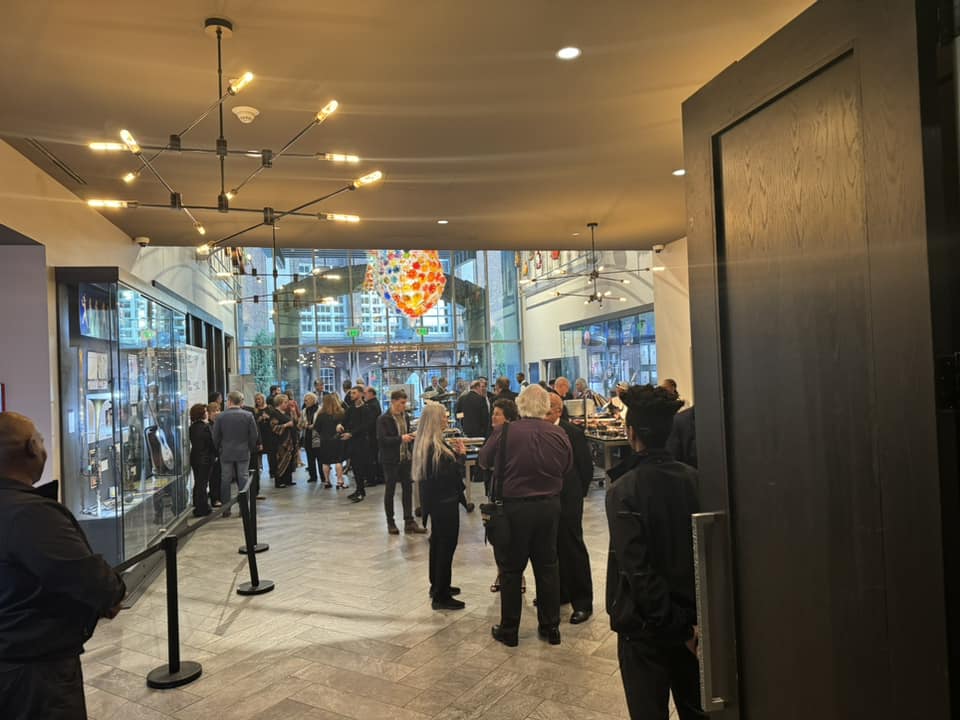
Georgia Southern University helped Fred and Dinah Gretsch – and a roomful of other supporters and musical friends – celebrate 140 years of the Gretsch musical instruments company and “that great Gretsch sound” at a recent anniversary celebration at Savannah’s Plant Riverside district. Benefitting the Georgia Music Foundation, the event was held in a space that is a living testament to the partnership between Georgia Southern and the Gretsches, whose name are on the University’s school of music. “That Great Gretsch Sound!” Museum is a spotlight destination in the heart of downtown Savannah that tells the rich history of the Gretsch family and company. The space celebrates Gretsch’s ever-growing worldwide musical community, honors the Gretsch family commitment to music education, and showcases hundreds of Gretsch’s most storied instruments. In addition to the instruments and artifacts on display in Savannah, Georgia Southern is working to build one of the most comprehensive digital document collections of music industry history, thanks to decades of resources collected by Fred and Dinah and donated to our University Libraries. Together, through innovative pathways, Gretsch and Georgia Southern are creating renewed interest in performance and music education amongst K-12 students throughout our region. And, this fall at Georgia Southern, the Fred and Dinah Gretsch School of Music saw a 25% increase in enrollment – with nearly 20% of the school’s students focused on our Music Industry program. “Fred and Dinah, we thank you for your tireless efforts to make Georgia Southern a more musical place,” Georgia Southern University President Kyle Marrero said. “Your guidance, resources, and imagination have helped us soar to new heights, and we look forward to our future together. “ The evening included performances by Georgia Southern Gretsch School of Music students, and Tony Arata, a member of the Nashville Songwriters Hall of Fame who grew up on Tybee Island and studied at Georgia Southern University. Interested in learning more about the Gretsch's involvement with Georgia Southern or the Gretsch School of Music? Contact Georgia Southern's Director of Communications Jennifer Wise at jwise@georgiasouthern.edu to arrange an interview today.


Expert reaction to the UK AI Safety Summit
Today the UK government announced a "world first agreement" on how to manage the riskiest forms of AI. It focuses on so-called "frontier AI" - what ministers consider highly advanced forms of the tech - with as-yet unknown capabilities. The agreement, signed by countries including the US, the EU and China, was announced at the UK's AI Safety Summit. Dr Alina Patelli, Senior Lecturer in Computer Science, Aston University, comments: “A summit on AI safety is long overdue. As is the case with all groundbreaking technologies, AI’s transformative potential for public good is only matched by its risks, which are unlikely to be successfully avoided, if AI tech design and deployment are left unregulated and therefore open to misuse, either intentionally or accidentally. The scope of the summit is appropriate, reflective of Government’s cautious approach to managing interactions with AI safety experts from multiple nations and disciplines: the summit focus is kept narrow, to five objectives only, and the number of participants is wisely limited to 100, to keep the conversation productive.” What is likely to come out of this summit? “The summit’s main output will most likely be a bare-bones regulatory document comprising (1) a shared understanding of AI (i.e., a generally accepted definition of the term reflective of all summit participants’ views, not just those of tech experts), (2) a list of major risks associated to AI misuse, both in terms of potential damage as well as likelihood of becoming a reality, and (3) a policy draft outlining the core elements that a yet-to-be-developed governance framework should include.” What AI safety could/should look like? “Although it would be premature to venture a definition of AI safety ahead of the summit, one thing that is certain is that a comprehensive, therefore effective, AI regulatory framework would encompass more than just laws. Non-legally binding codes of conduct, tech design and development processes that are bound by moral and ethical values, both in the commercial ecosystem, as well as when it comes to individual entrepreneurs, revised open-access licenses under which AI should be used in the public domain, etc. are equally important pieces. The best way to integrate all these in a cohesive, overarching governance plan is perhaps a topic to explore in one of the post-summit events.” What are the potential practicalities for a route forward towards safe AI? “The practical way to systematically regulate AI is incremental. Initially, the development and application of those AI tools deemed to be high-risk will most likely be restricted to controlled environments, where the potential benefits justify the risks and where sound mitigation procedures can be quickly and effectively enforced to mitigate those risks. As regulations become better prescribed, AI’s (safe and legal) application space will gradually expand, making its benefits available to larger groups of people without any of the downsides.” To interview Dr Alina Patelli or request further details contact Nicola Jones, Press and Communications Manager, on (+44) 7825 342091 or email: n.jones6@aston.ac.uk