Experts Matter. Find Yours.
Connect for media, speaking, professional opportunities & more.
Research Matters: 'Unsinkable' Metal Is Here
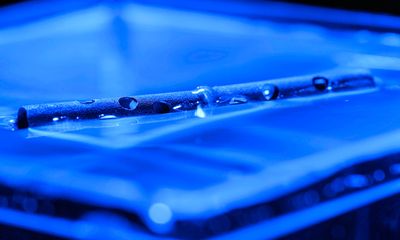
What if boats, buoys, and other items designed to float could never be sunk — even when they’re cracked, punctured, or tossed by an angry sea? If you think unsinkable metal sounds like science fiction. Think again. A team of researchers at the University of Rochester led by professor Chunlei Guo has devised a way to make ordinary metal tubes stay afloat no matter how much damage they sustain. The team chemically etches tiny pits into the tubes that trap air, keeping the tubes from getting waterlogged or sinking. Even when these superhydrophobic tubes are submerged, dented, or punctured, the trapped air keeps them buoyant and, in a very literal sense, unsinkable. “We tested them in some really rough environments for weeks at a time and found no degradation to their buoyancy,” says Guo, a professor of physics and optics and a senior scientist at the University of Rochester’s Laboratory for Laser Energetics. “You can poke big holes in them, and we showed that even if you severely damage the tubes with as many holes as you can punch, they still float.” Guo and his team could usher in a new generation of marine tech, from resilient floating platforms and wave-powered generators to ships and offshore structures that can withstand damage that would sink traditional steel. Their research highlights the University of Rochester’s knack for translating physics into practical wonder. For reporters covering materials science, sustainable engineering, ocean tech, or innovative design, Guo is the ideal expert to explain why “unsinkable metal” might be closer to everyday use than you think. To connect with Guo, contact Luke Auburn, director of communications for the Hajim School of Engineering and Applied Sciences, at luke.auburn@rochester.edu.


Univ. of Delaware child expert appears on Good Morning America to discuss latest book
Parents have a new manual for raising their young ones courtesy of child experts Roberta Golinkoff and Kathy Hirsh-Pasek. Their new book, "Einstein Never Used Flash Cards, Revised Edition", is all about how to give children their best shot at success while also making sure children don't feel the pressures of the world. Golinkoff, a professor in the School of Education at the University of Delaware. The pair appeared on Good Morning America to discuss play, children's development and how parents can thrive in a new digital age. Golinkoff spoke about the 6 C's that everyone – children and adults alike – need to be productive humans: Collaborate Communicate Content Critical Thinking Creative Innovation Confidence ABOUT Roberta Michnick Golinkoff is a professor in the School of Education at the University of Delaware. She also holds joint appointments in the Departments of Psychological and Brain Sciences and Linguistics and Cognitive Science. Golinkoff is also founder and director of the Child’s Play, Learning, and Development Lab.


Six University of Delaware online graduate degree programs are ranked among the best in the nation by U.S. News & World Report in its 2026 U.S. News Best Online Programs, released Jan. 27, 2026. Both UD’s online master’s in education and online MBA ranked among the top 10% of their respective programs, at No. 25 and 26, respectively. Announced on Jan. 6, the online MBA program recently rose nine spots to No. 32 in the Poets&Quants 2026 Online MBA rankings. UD’s online master’s in nursing program ranked No. 35 out of 209 programs, rising 99 places over the past year. New for UD, the online master’s in educational/instructional media design program was recognized by peers at No. 11 in this education specialty ranking. UD’s online master’s in computer information technology program and online master’s in engineering ranked No. 64 in their respective areas. “These latest rankings recognize the expertise and dedication of our faculty and staff in delivering UD’s outstanding online graduate programs,” Interim Provost Bill Farquhar said. “We are committed to continually enhancing these programs and all the transformative opportunities that enable our students to meet their educational and career goals throughout their lives.” U.S. News selects several factors, known as ranking indicators, to assess each program in the categories outlined above. A program's score for each ranking indicator is calculated using data that the program reported to U.S. News in a statistical survey and from data collected in a separate peer assessment survey. This year’s edition evaluates more than 1,850 online bachelor’s and master’s degree programs using metrics specific to online learning. The rankings include only degree-granting programs offered primarily online by institutions with accreditation from recognized commissions. While the overall rankings methodology remains largely unchanged, U.S. News reported increased participation in this year’s data collection cycle, with more programs submitting statistical data and completing peer assessment surveys. According to U.S. News, this broader participation may reflect continued growth in online education nationwide. The University of Delaware offers over 35 online credit and non-degree professional programs. An online program from UD offers the same quality and rigor as an on-campus program and provides the flexibility to accommodate your busy schedule. UD is accredited by the Middle States Commission on Higher Education, and its online and on-campus degree programs have rigorous curricula delivered by experts, offer affordable program options, and provide students access to student support services, career fairs, recruiting opportunities and graduation ceremonies to celebrate student success. “UD's high-level rankings are in large part due to the positive outcomes that our students experience as a result of taking one of our online degrees or programs,” said Associate Provost for Online Learning and Innovation George Irvine. “Students tell us how much they enjoy learning from our accessible faculty and doing so in engaging and interactive online courses.” For more information about UD’s online degree programs, visit online.udel.edu. A complete listing of UD’s high-profile rankings is available on UD’s Institutional Research and Effectiveness Rankings webpage. Please note that the programs and specialties used in rankings may differ slightly from the names of UD’s degree programs.

Streaks of white that coat roads and cars. Powdery footprints smudged into floors. It’s the time of year when much of the United States relies on road salt to keep ice at bay and accepts the nuisances that come with it. But beyond the inconvenience, all that salt has potentially serious, long-term effects on the environment, human health and infrastructure. Steven Goldsmith, PhD, an associate professor of Geography and the Environment at Villanova University, researches topics in watershed biogeochemistry and environmental health. A focus of his lab is the study of de-icing practices on water quality. Recently, Dr. Goldsmith shared insights from his work, exploring the widespread consequences of road salt and potential solutions to reduce its harm. Question: You have led or participated in research focused on the environmental impacts of road salt application, often locally, but with much broader implications. What have some of those studies found? Steven Goldsmith: In 2022, we published a paper showing that salt—sodium in particular—is seeping into Philadelphia's water supply, and it's timed with snow melts. We found that if you drank a glass of tap water during the peak period in the winter of 2018-19, your sodium intake would be six times what the Environmental Protection Agency (EPA) recommends within a glass of water for someone on a low-sodium diet. We are susceptible in this region because most of our water supply comes from rivers, and the rivers receive that salt runoff. Some of our findings indicate this is a chronic issue and not limited to winter months. All that contaminated shallow groundwater causes the concentration to rise year-round, even in the summer. In a recent paper, we discuss the issue of salt that lands on the side of the road. When it does, it infiltrates into soil, and then it goes into shallow groundwater before entering our streams. Oftentimes when salt is applied to the road and you receive that initial precipitation, you are left with runoff with salinity near the concentration of sea water, which is very bad for freshwater organisms. Q: Have those studies found other impacts beyond those created directly by sodium? SG: It’s certainly not just a sodium issue—it's also a chloride issue. Chloride does have a negative impact on aquatic organisms, but it can also corrode drinking water infrastructure. If you have lead pipes in that infrastructure, that can lead to a range of human health issues. Even just to prevent those problems, applying chemicals to protect from the corrosion of pipes increases costs. Perhaps the worst part is when road salt infiltrates shallow soil and groundwater, the sodium is left behind preferentially in soils because it's displacing other positively charged elements, which could then go into groundwater. The elements it replaces are metals. If we have more salt runoff on the side of the roads, chances are, if we look in those streams, we are going to see higher concentrations of heavy metals like copper, zinc and even lead. Q: You have mentioned the efficacy of brine. What is brine and why is it more effective than traditional road salt? SG: If you’ve ever driven behind a rock salt truck, you probably noticed it pelts your windshield and shoots salt everywhere. A lot of that rock salt ends up following the natural trajectory of the road, which is designed to drain towards the sides to keep water from pooling. As soon as a snowstorm happens, it's going to melt and flow into the storm drain. That, of course, is bad for the environment, but also doesn’t help remove ice from the road. With brine, the application is a diluted road salt with water mixture that is usually about 23 percent sodium chloride by volume, and it’s referred to as an “anti-icing” measure. The saltwater infiltrates the top layer of pavement and embeds in the roadway itself, which keeps ice from crystallizing when snow or water hits the surface. To use an analogy, let’s say you have a large rock that you placed on top of the pavement, but you also have a quarter of that rock’s volume in sand. If you put that sand onto the pavement, it will permeate into nooks and crannies. That's the same idea here: use less material and in a way that makes it stick better to the surface and reduces the need to reapply as often during and after storms. Q: What are potential positive impacts if municipalities switch from road salt to brine? SG: There are limited studies on this, but it's been shown that if done properly, brining can reduce salt runoff into streams by anywhere from 23 to 40 percent. If it's 40 percent, you have almost cut the problem in half, and that lower peak salt concentration and runoff would have a profound positive impact on aquatic organisms that are downstream. From a cost standpoint—and I say this theoretically because there are other up-front costs associated with brining at the municipal level—if you reduce salt concentrations by up to 40 percent it means you apply a lot less and therefore spend a lot less. Q: What can individuals do to decrease road salt runoff, and how much of an impact does individual use have? SG: We can start by addressing the household salt application problem. Another one of our recent papers suggests that other impervious surfaces, like driveways, sidewalks and parking lots, are probably contributing even more than the roadway application. The best estimate is that individual or private contractor use could be over 10 times what you see on roads. For researchers, part of addressing this is trying to understand why people apply so much salt on their personal properties: are they afraid of lawsuits? Keeping with the Joneses? Are they not aware of ordinances that say you have to shovel within a certain number of hours, which would negate the need for salt anyway? For homeowners and other individuals, one proposed solution is to use a coffee mug’s worth of salt for every 10 sidewalk squares. Think of it as a “low-sodium diet” to make sure you’re not overapplying. It’s a way we can limit our use of salt and do so in a way that doesn't jeopardize safety. These individuals can also sweep up salt applied before a storm that never materialized to use before the next one. This will prevent the possibility of rain needlessly dissolving the salt. Q: Are there effective alternatives to road salt that individuals can use? SG: The only truly effective alternative, unfortunately, is simply using less road salt. While some people apply sand, it also washes into local streams, causing environmental harm. Another option that has gained attention is beet juice—what I like to call the “Dwight Schrute” solution. Beet juice actually works better than road salt because its organic acids prevent ice from crystallizing at temperatures much lower than those at which rock salt is effective. However, from an environmental standpoint, beet juice contains high levels of nutrients, which can contribute to algae growth if it enters waterways. Additionally, recent studies suggest it may also be toxic to aquatic organisms. The growing consensus is that while some road salt is necessary, we need to use less of it.


How Higher Ed Should Tackle AI
Higher learning in the age of artificial intelligence isn’t about policing AI, but rather reinventing education around the new technology, says Chris Kanan, an associate professor of computer science at the University of Rochester and an expert in artificial intelligence and deep learning. “The cost of misusing AI is not students cheating, it’s knowledge loss,” says Kanan. “My core worry is that students can deprive themselves of knowledge while still producing ‘acceptable work.’” Kanan, who writes about and studies artificial intelligence, is helping to shape one of the most urgent debates in academia today: how universities should respond to the disruptive force of AI. In his latest essay on the topic, Kanan laments that many universities consider AI “a writing problem,” noting that student writing is where faculty first felt the force of artificial intelligence. But, he argues, treating student use of AI as something to be detected or banned misunderstands the technological shift at hand. “Treating AI as ‘writing-tech’ is like treating electricity as ‘better candles,’” he writes. “The deeper issue is not prose quality or plagiarism detection,” he continues. “The deeper issue is that AI has become a general-purpose interface to knowledge work: coding, data analysis, tutoring, research synthesis, design, simulation, persuasion, workflow automation, and (increasingly) agent-like delegation.” That, he says, forces a change in pedagogy. What Higher Ed Needs to Do His essay points to universities that are “doing AI right,” including hiring distinguished artificial intelligence experts in key administrative leadership roles and making AI competency a graduation requirement. Kanan outlines structural changes he believes need to take place in institutions of higher learning. • Rework assessment so it measures understanding in an AI-rich environment. • Teach verification habits. • Build explicit norms for attribution, privacy, and appropriate use. • Create top-down leadership so AI strategy is coherent and not fractured among departments. • Deliver AI literacy across the entire curriculum. • Offer deep AI degrees for students who will build the systems everyone else will use. For journalists covering AI’s impact on education, technology, workforce development, or institutional change, Kanan offers a research-based, forward-looking perspective grounded in both technical expertise and a deep commitment to the mission of learning. Connect with him by clicking on his profile.


Machiavellianism boosts CEO pay, study finds
In an extensive study examining the relationship between personality traits and executive pay, CEOs who exhibit more Machiavellianism, characterized by motivation to achieve personal goals and 'win' social interactions, are more likely to have higher total pay and severance pay and to secure higher pay for those on their top management team. Aaron Hill, Ph.D., an associate professor at the University of Florida Warrington College of Business, and his co-authors determined that CEO's who scored higher on Machiavellianism were more motivated and successful in their negotiations. The team used a longitudinal sample of S&P 500 firms to compare compensation data with the executives' personality traits collected by expert clinical psychologists’ analyses of public video recordings. “Broadly, we find that CEO Machiavellianism positively relates to their own pay, their severance pay and the pay of their C-Suite or top management team,” Hill said. “The latter effect – on top management team pay – we find then predicts CEO pay raises. Our findings suggest that in this way, CEOs higher in Machiavellianism may pay their top management team members more to set up their own pay raises.” The team’s research highlights an underlying bias in how this trait can affect pay decisions. In response, those who set pay, such as boards of directors, should work on policies that reinforce the behaviors they want in their executives. They should also place leaders in a position to succeed and accentuate the positive aspects of their innate tendencies. “We all have tendencies that present tradeoffs in terms of having some positive aspects and some negative aspects,” Hill said. “Hopefully, as managers, we can acknowledge those and work to accentuate the positives and limit the potential downsides – in effect, take advantage of the positives and work to mitigate the negatives.” This research is published in the Journal of Applied Psychology.


One year ago, after a campaign that toppled Bashar al-Assad's repressive dictatorship, Ahmed al-Sharaa assumed the Syrian presidency. Since then, the former rebel commander has worked to establish his credentials as a statesman, winning the support of regional powers like Türkiye, Saudi Arabia and Qatar—as well as recognition from the White House. Yet al-Sharaa and his transitional government have not been immune from criticism, particularly over their handling of domestic affairs. Samer Abboud, PhD, director of the Center for Arab and Islamic Studies at Villanova University, is an expert on modern Syria and the wider Middle East. A year into al-Sharaa's presidency, he believes the provisional government has made incredible strides in some areas, like international diplomacy, while struggling to find its footing in others. "There's no doubt that Syria's external image is becoming more positive. We see this kind of charm offensive, with President al-Sharaa taking to the world stage," says Dr. Abboud. "Also, most of the regional actors are very fond of al-Sharaa and were very happy for the Assad regime to have fallen. So, there's this external presentation of a transition government that is legitimate and has support, and I think that's largely true. "The problem in Syria right now, of course, is what's happening internally. To begin, across the country, you have completely collapsed infrastructure—limited electricity, restricted access to running water and unreliable internet." Much has been made of economic sanctions' role in contributing to these internal issues, with Western governments having historically limited the amount of aid and investment that could enter Syria. However, while Dr. Abboud sees these measures' elimination as crucial to the nation's progress, he also contends that ending restrictions alone is not enough to ensure the country's long-term stability and prosperity. Of particular concern, according to the professor, is the al-Sharaa administration's persistent claim "that 'free markets' could and would be a cure-all." As he explains, "The problem is that there's literally no evidence to demonstrate that private enterprise is interested in social betterment in reconstruction cases. You can't rebuild a state and a society on the profit logic. When you look at Lebanon, after all the wars Lebanon endured, what did free markets—without a strong public sector—do for that country? Roughly 80 percent of Lebanese people live in poverty." Beyond the troubles surrounding economic growth and infrastructural development, there also exist a series of fractures along ethnic and ideological lines. Wide swaths of Syria are currently controlled by militias with agendas at odds with that of the provisional government, and despite making inroads with one significant bloc of dissent (the Kurdish-led Syrian Democratic Forces), tensions are exceedingly high. Furthermore, a number of groups remain suspicious of the president and his intentions due to his past affiliation with Hayat Tahrir al-Sham, a Sunni Islamist group that traces its roots to al-Qaeda. Navigating this delicate situation with poise and precision is something that al-Sharaa needs to master, contends Dr. Abboud. And, over the course of the past several months, it seems Syria's new leader has started to refine the skill. "To illustrate, last year, at least 25 people were killed in a bombing at the Mar Elias Church in Damascus, and President al-Sharaa did not go to the site. In addressing the incident, he also didn't use the language of martyrdom, which is what you would typically do for any person—Christian or Muslim—who died in this context," says Dr. Abboud. "In June, however, they arrested the culprits, and he went and met the patriarch and went inside the church, and they publicized it. "The first time, he was too worried about these internal influences—of being perceived by his base as having moderated his views. Right now, he very much finds himself caught in a balancing act, working to temper the forces that are compelling him to possibly do something that could worsen an unstable situation. But I do think that the two contrasts [represented in the Mar Elias Church episode] suggest that the president is learning and gradually figuring out how to do politics a bit differently." In this vein, Dr. Abboud feels the next phase in al-Sharaa's evolution should center on reckoning with the history of the country's late civil war and encouraging a dialogue between those who supported the Assad regime and those who sought to overthrow it. In the professor's estimation, this step is essential to achieving a lasting peace in Syria. "Currently, there are some memory projects and knowledge projects that are happening, but those are not led or facilitated by the state. And that's troublesome, given what we've seen in other conflict contexts," he says. "In Lebanon, for instance, the state has amnesia. The civil war is not in the textbooks, officials don't talk about it, and it's not commemorated nationally. But then, in many ways, the narrative of how it happened—who are the victims, who are the perpetrators—can totally shape people's lives." Still, while much economic, social and humanitarian work remains to be done, Syria today finds itself in a position unlike any it's occupied in decades' time: one marked by possibility. "In general, I envision an extended period of grace for the government and an extended period of hope," concludes Dr. Abboud. "Syria did not have a future under the Assad regime. Or it had a future, but one characterized by generations of isolation. Today, people, both inside and outside Syria, have an entirely different outlook."

President Plans to Launch More of His Agenda in Year 2 of His Term
Newsday interviewed Hofstra presidential scholar Meena Bose about the issues President Donald Trump is most focused on in this second year of his second term. In the article, Dr. Bose explained, “In the modern presidency the window of opportunity for action is greatest in the first 12 to 18 months.” After that period the midterms and the focus on the next presidential election, “start to overshadow policy and legislative prospects.” Dr. Bose is a Hofstra University professor of political science, executive dean of the Public Policy and Public Service program, and director of the Kalikow Center for the Study of the American Presidency.


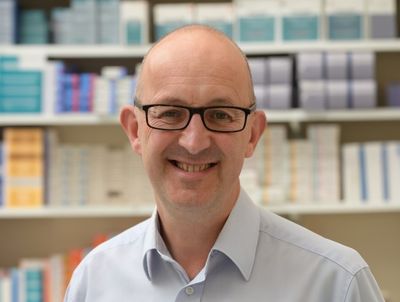
Professor Ian Maidment is a professor in clinical pharmacy at Aston Pharmacy School His inaugural lecture will explain why patients struggle with taking medication and present possible solutions to the problem Professor Maidment is a former practising pharmacist and an expert in medication optimisation and management in mental health and dementia. Professor Ian Maidment, professor in clinical pharmacy at Aston Pharmacy School, will give a public lecture about his life’s work on 5 February 2025. In his inaugural lecture, Professor Maidment will reflect on his journey from a childhood in Kent to becoming a leading researcher in clinical pharmacy. After more than two decades working in the NHS, in community pharmacy, mental health, dementia care, and leadership roles, he joined Aston University in 2012. His research focuses on the real-world challenges of medication optimisation for patients, carers, and healthcare professionals. The title of Professor Maidment’s lecture is ‘Medication adherence: Why it matters and how we can improve it’. Every year, the UK spends nearly £21 billion on medicines. Yet up to half of people with long-term conditions do not take their medication as prescribed—a problem known as non-adherence. This has profound clinical consequences and significant financial implications for the NHS. Professor Maidment will draw on his experience to explore how factors such as medication burden and side-effects influence adherence, the challenges posed by conditions such as dementia and severe mental illness, the role of pharmacy in supporting adherence and why tackling non-adherence requires a system-wide approach. He will also offer practical solutions to one of healthcare’s most persistent problems. Professor Maidment said: “We need to understand why patients struggle to take their medication and then develop and test solutions that work well.” The lecture on Thursday 5 February 2026 will take place at Aston Business School. In-person tickets are available from Eventbrite. The public lecture will begin at 18:00 GMT with refreshments served from 17:30 GMT. It is free of charge and will be followed by a drinks reception. The lecture will also be streamed online.


Natural defenses: UF researchers use living infrastructure to protect Florida’s shores
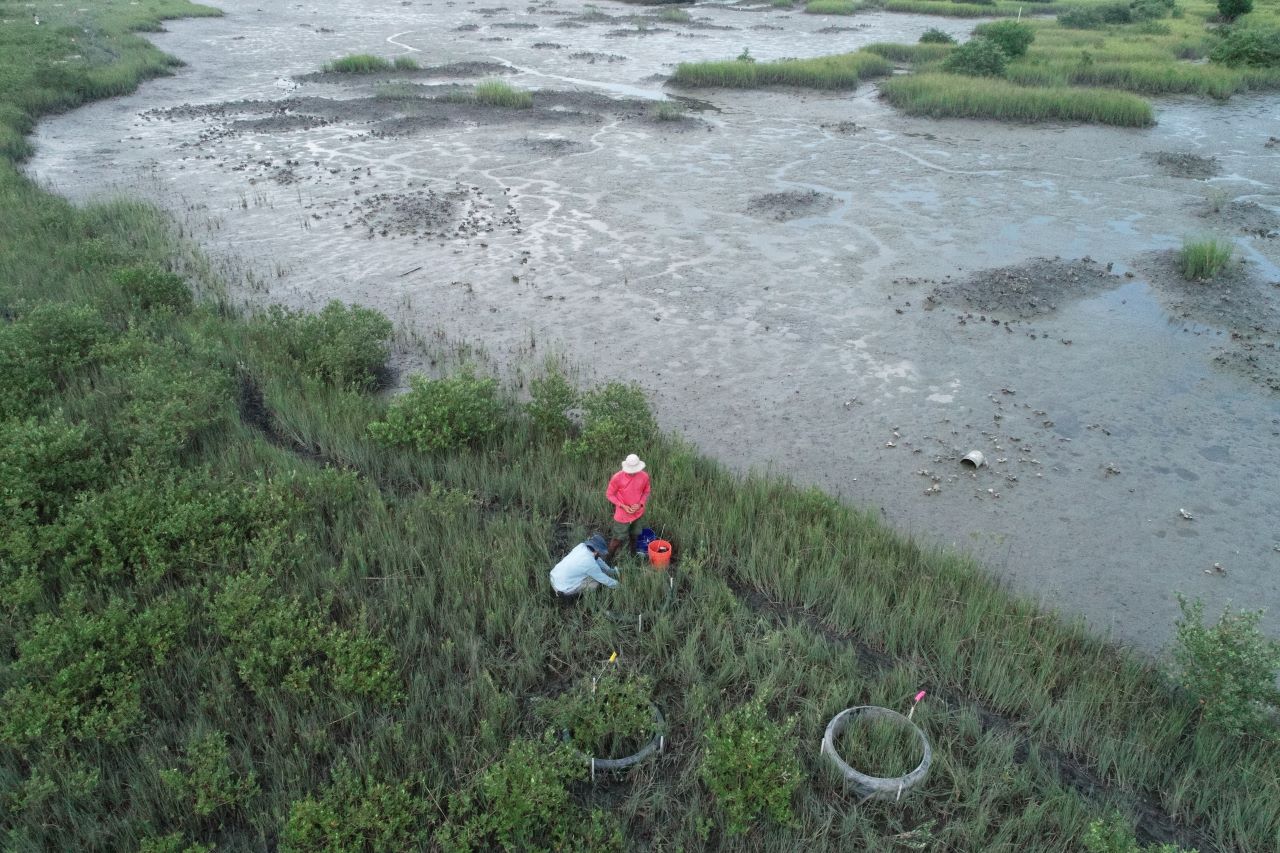
Armed with a $7 million grant from the Army Corp of Engineers, University of Florida researchers are working to bolster shoreline resilience and restore troubled wetlands in St. Augustine through nature-based solutions. “The idea of nature-based solutions is to build what we sometimes refer to as green infrastructure, to use living, natural components as the building blocks,” said Andrew Altieri, Ph.D., an assistant professor with the Engineering School of Sustainable Infrastructure & Environment and interim director of the Center for Coastal Solutions, also known as CCS. Instead of building man-made structures to protect wetlands, for example, restoration crews can move dredged natural sediment otherwise destined for costly disposal to increase wetlands’ size and elevation, restoring their ability to protect shorelines from storm surge, keep pace with sea-level change, filter toxins, store carbon and provide habitats for wildlife. The project is in concert with the Army Corps of Engineers’ goal to naturally reuse and repurpose at least 70% of dredged sediment into other natural areas to benefit habitats and restoration by 2030. “It is critical to understand, test and model how natural processes can be harnessed and strategically implemented to sustainably meet the challenge of rapidly intensifying coastal hazards while also providing environmental, economic and social benefits,” Altieri wrote in the project’s technical summary. Overall, the multi-disciplinary project closely examines patterns and processes of change in coastal landscapes. That includes wetlands — marshes and mangroves — and beach/dune systems. The project comes as these coastal areas are facing threats both natural and human. These areas are essential to wildlife, air quality, native vegetation, storm protection and the overall health of the ecosystem. A 2008 study by the U.S. Fish and Wildlife Service reported a net loss of about 361,000 acres of wetlands in the coastal watersheds of the eastern United States between 1998 and 2004 — an average net decrease of 59,000 acres each year, with experts citing sea-level rise as one of the primary factors. “We're trying to understand the patterns of that loss and what's leading to it,” Altieri said. “These systems are essentially the first and sometimes last line of defense against coastal hazards, risks that include storm surges and coastal flooding. They are forming a buffer, this kind of protective layer on our coast. But they're changing, generally for the worse and are in danger of being lost.” With this project, the CCS-led research team plans to advance the science, technology and engineering principles of nature-based solutions. With marshes, the primary concern is elevation loss, which can drown the vegetation critical to the ecosystem. They are sinking, eroding and succumbing to sea-level changes, Altieri said. “The plants are really important for trapping sediment and holding sediment,” he said. “You lose some of the plants, then you get more erosional loss and a lack of the accumulation of sediment.” Sediment is natural muck on the bottom of water bodies. “If we can add sufficient sediment to increase the elevation to a level where the plants thrive, then they will retain that sediment that's been added to hopefully trap more sediment and accumulate more biomass through their growth,” Altieri said. “It’s something that may need to be done periodically. You may stop that decline, but you may even reverse the process of loss and change the trajectory.” As a bonus, this process saves the cost of disposing of dredged sediment, which is usually piped offshore or to a materials-management area. This project is the next step for CCS-led coastal resilience efforts in St. Augustine. In 2024, CCS and WSP Environment & Infrastructure Inc. launched a coastal wetlands-restoration project to keep pace with sea level change and erosion. The 2025 work is a standalone project with separate funding, Altieri said. The current project also has more research disciplines and project partners, including UF researchers from Landscape Architecture, Geological Sciences and the School of Forest, Fisheries and Geomatic Sciences. “Storm surges, wave energy, coastal flooding – all of that can be slowed or reduced because of wetlands,” Altieri said. “They are basically like shock absorbers. These wetlands, beaches and dunes can be lost or eroded to some degree, but the upland area behind them is essentially protected.” Researching the resilience of dunes comes with a different set of dynamics. Here, they are looking at the plants that support the dunes – sea oats and panic grass, for example. That vegetation also provides a habitat for animals such as beach mice, turtles and birds. On the beach, the team also is looking at water energy and how grain size affects the stability of dunes. “It’s understanding water movement, water energy. How is that interacting with depositing sediment, moving sediment around, sorting sediment? With water, you tend to carry finer particles further than coarser materials,” he said. What does success look like after the award’s five years end? “We'll have an understanding of what's changing on our coasts and why,” Altieri said. “We'll have an understanding of how we can work within this system to modify the natural components and utilize the natural processes. And we will hopefully be working with partners through additional funding mechanisms to actually apply that towards implementation of solutions to increase coastal resilience.” The team also includes Peter Adams, Department of Geological Sciences; Julie Bruck, Department of Landscape Architecture, School of Landscape Architecture and Planning; Maitane Olabarrieta, ESSIE; Alex Sheremet, ESSIE; Nina Stark, ESSIE; Ben Wilkinson, Geomatics Program, School of Forest, Fisheries, and Geomatics Sciences; and Xiao Yu, ESSIE.