
Experts Matter. Find Yours.
Connect for media, speaking, professional opportunities & more.

The political math behind the numbers - let our experts explain why a census is suddenly a hot topic
Usually, there’s nothing particularly interesting, let alone controversial, about a census. It’s an objective collection of data that allows the government and other organizations to use pure evidence to determine things like population growth and shift, income rates and education participation rates. For those who rely on metrics, it means a lot. For everyone else — it’s a form we fill out once a decade. However, these are not normal times. There's an ongoing debate among politicians and the courts regarding the request to add a question about citizenship to the 2020 census. Here’s the question: So, is it right to inquire about citizenship in a census? What are the benefits? What are the concerns And why is this such a big deal? That’s where our experts can help. Dr. Martha Ginn, professor of political science at Augusta University, is an expert on the judicial process, constitutional law and the U.S. Supreme Court. Dr. William Hatcher, associate professor of political science and director of the Master of Public Administration program at Augusta University, focuses on public administration and social, economic and political institutions in local communities. Both are available to speak with media regarding the census issue. To arrange an interview, click on either expert’s icon.


Tuesday November 03, 2020 – it’s 17 months away. For most of us – that is two World Series and at least a one new iPhone released before the date even hits the calendar. But if you are a political junkie or a journalist – that date is the finish line for what is an expected election of historic proportions that is already underway. On the left, there are at least two dozen candidates vying to lead the Democrats. Some are brand name Washington players; some are rising stars and some are long shots – but each is trying to separate themselves from the peloton of politicians hoping to make that big splash in Iowa during the first week of February in 2020. And if Iowa doesn’t provide results – there’s always New Hampshire and then the Carolinas. On the other side, President Donald Trump has already declared his candidacy. He’ll rely on the economy and odds are...hoping his teflon that ensure nothing ever seems to sticks sustains through the next year and a half. Through it all there will be controversy, scandals, rhetoric, policies and promises. And if you are a journalist, you’ll need an expert to help you navigate through it all. That’s where we can help. Mark Caleb Smith is the Director of the Center for Political Studies at Cedarville University. Mark is available to speak with media regarding the long journey to lead the DNC in 2020 and the election. Simply click on his icon to arrange an interview.



A global commitment to democracy
When I was invited to attend the Global Forum on Academic Freedom, Institutional Autonomy, and the Future of Democracy held this June in Strasbourg, France, I jumped at the chance. I was proud to add Otterbein’s support to a movement of global leaders committing to protecting democracy. I attended the forum along with more than 100 higher education leaders from around the world. Since its founding, Otterbein has stood for the rights of academic freedom and autonomy, as well as the freedom of speech of individuals, and we continue to stand resolute today. Otterbein believes that all voices from different walks of life must be represented, respected and valued, and we are committing to be a national and global leader in preserving democratic societies and values. The Global Forum was co-organized by the Council of Europe; the International Consortium for Higher Education, Civic Responsibility, and Democracy; the Organization of American States; and other partners, notably the International Association of Universities and the Magna Charta Observatory. It gathered higher education leaders and representatives of public authorities and NGOs from Europe and the United States, as well as smaller numbers from Australia, Asia, Africa, the Middle East and Latin America. - John Comerford Are you a journalist covering topics about democracy and how it is being threatened around the world? What role does higher education play in global democracy? And what countries or regions are the most at risk? There are a lot of questions regarding this topic – and that’s where we can help. John Comerford is an expert in higher education, regional and national topics. He is the President of Otterbein University and is available to speak with media regarding this issue and how higher-education needs to be made available to everyone in America regardless of income, family name or background. Simply click on his icon to arrange an interview.

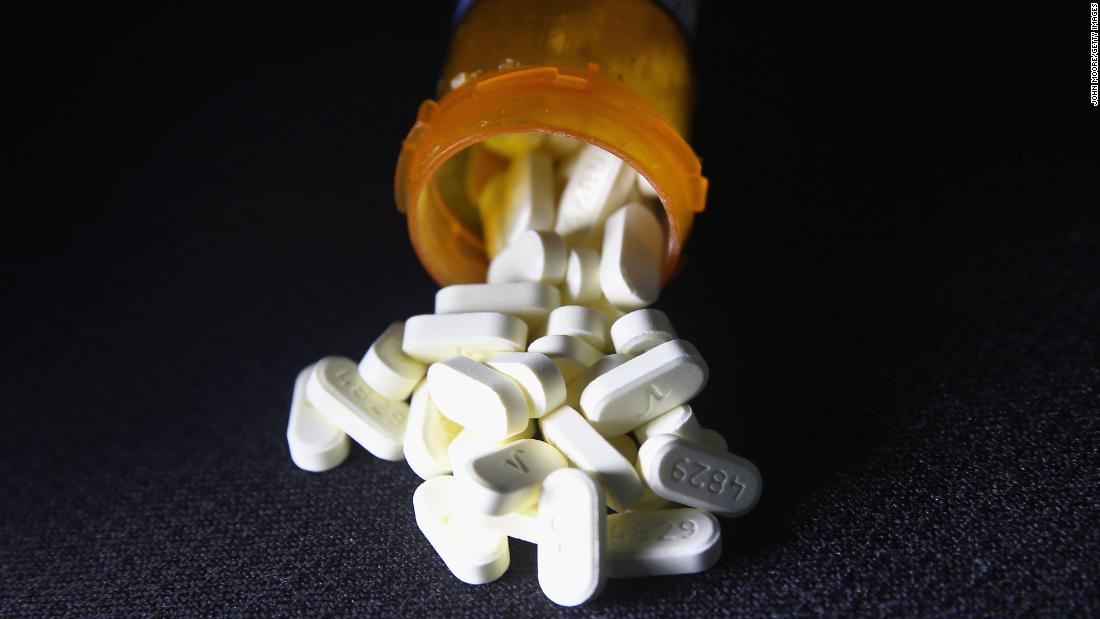
Big trouble for big pharma – let our expert explain
Things are sunny and bright for the usually family-friendly image of Johnson & Johnson. In fact, as more and more evidence and details are presented in a landmark lawsuit between the corporate giant and the State of Oklahoma. The company could be facing financial calamity and its reputation might be a near impossible mission for any PR expert to recover. “As the state of Oklahoma’s multibillion-dollar lawsuit against Johnson & Johnson has unfolded over the past month, the company has struggled to explain marketing strategies its accusers say dangerously misrepresented the risk of opioid addiction to doctors, manipulated medical research, and helped drive an epidemic that has claimed 400,000 lives over the past two decades. Johnson & Johnson profited further as demand for opioids surged by buying poppy growing companies in Australia to supply the raw narcotic for its own medicines and other American drug makers. One expert witness at the forefront of combatting the epidemic, Dr Andrew Kolodny, told the court he had little idea about Johnson & Johnson’s role until he saw the evidence in the case. “I think it’s fair to characterize Johnson & Johnson as a kingpin in our opioid crisis,” he said. – The Guardian, June 19 But what is next? Will this lawsuit be duplicated in other states? Are other big-pharma companies liable or in similar trouble? And is this the gamechanger the industry needs? There are a lot of questions and that’s where we can help. Dr. Marc Sweeney is the Founding Dean of the School of Pharmacy at Cedarville University and is an expert in the fields of drug abuse, prescription drug abuse and Opioid addiction. Marc is available to speak with media regarding this growing issue. Simply click on his icon to arrange an interview.

A closer look at deepfakes. Let our experts explain if there’s a reason to worry.
Deepfakes…they’re eerie, entertaining and getting a lot of attention. Deepfake videos are made using artificial intelligence technology which can manipulate someone's face in a video to make it look like they are saying something that they didn't. It's one level up from dubbing, or lip syncing, and can appear very convincing. One example is a video that was made using footage of Mark Zuckerburg in 2017; it was doctored and falsely portrays the Facebook CEO discussing how he had stolen data. – The Sun, June 26 The new concept is all the rage and has seen people spoofed, mocked and tricked. But as once again technology outpaces legislation and with an election approaching, deepfakes have some people going off the deep end. Every day, thousands of videos are posted online, which means that any potential filtering program would need to be able to quickly and efficiently detect fake content. Even then, such media would likely be removed only after being published, meaning that the video would likely have already had an impact. For these reasons, deepfakes are expected to contribute to the upcoming 2020 election in the United States, likely acting as an agent of spreading fake news. However, Edward Delp, a Purdue University professor who developed a computer program to help detect these videos, believes deepfakes pose a bigger threat. “Deepfakes pose a threat to more than just political videos,” he said. “It can be used in making fake child pornography, revenge porn and financial bribes. Just general criminal behavior.” – The Exponent (Purdue University), June 21 As deepfakes become more common on social media and the internet, odds are they will make their way – accidentally or not – into the actual media. And as America still battles with the fake news phenomenon, will Deepfakes further erode our trust in media and our leaders? As deepfakes become more common on social media and the internet, odds are they will make their way into the actual media. So, what can be done? How will these deepfakes affect the perception of news media? What simple advice can we apply to verify if something is real or fake? And do these videos represent a threat to democracy, as some experts are saying? Dr. Gregg R. Murray, professor of political science at Augusta University, is available to talk about the implications of this new threat. Murray’s research focuses on political behavior and psychology with specific interests in voter mobilization and turnout. He is also executive director of the Association for Politics and the Life Sciences.


The Hazards of Oil Refineries and Other Industries
The Philadelphia Energy Solutions refinery will shut down as a result of its recent explosions and fires. Scott Jackson, PhD, a visiting professor of chemical engineering at Villanova University, says there are two parts to contamination—surface contamination and contamination of the water underground beneath the oil refinery. The surface contamination can be naturally bioremediated to some extent. At the worst, the surface can be removed and taken to a secure landfill or decontaminated by other means. However, organics like benzene, toluene and xylene (commonly known at BTX) that have reached deep into the underground water table beneath parts of the older parts of the plant can be difficult to remediate. An area of contaminated ground water must be pumped out using wells and treated on the surface using standard wastewater treatment technologies. Remediating this pool of contaminated underground water can take years depending on its area and concentration. Looking ahead, contaminated concrete will need to be removed to a secure landfill, and contaminated topsoil will also need to be removed. Equipment can be sold for scrap metal. Depending on the extent of the ground contamination, the company could either encapsulate it with asphalt or concrete or return the land to a more natural condition with plantings. Refineries aren’t the only operations at risk for hazardous incidents. “All manufacturing operations, including processing of food, the manufacturing of electronic chips, plastics, paints, gasoline, and virtually everything that we use in our daily lives use potentially dangerous operations where risks associated with accidents must be managed. Some of the most dangerous industries might surprise you: Large breweries have recurrent incidents where workers die due to suffocation, caused by carbon dioxide, and dust explosions from the processing of sugar have caused terrible damage and loss of life—a fact that few people understand.” The hazards of a refinery are more apparent than in other industries, so consequently many more people believe refineries are dangerous places, but Jackson notes that, due to decision and risk analysis, refineries should be and generally are no more dangerous than someone driving their car to work.


Italy's Successful Bid to Host 2026 Winter Olympics
On Monday, June 24, the International Olympic Committee voted in favor of Milan and Cortina d’Ampezzo, Italy, to host the 2026 Winter Games. Committee members voted 47-34 in favor of Italy, which won the bid over Sweden. This will be the country’s third Winter Olympics. (Cortina hosted the 1956 games, with Turin hosting in 2006.) Italy was a scene of jubilation; and Luca Cottini, PhD, a Villanova University associate professor of Italian, was in the country to witness the excitement. Dr. Cottini spoke about the reasons for the successful bid by Milan and Cortina. “There are two elements that stand out. One is the ability of two iconic cities—Milan and Cortina—to construct and present a well-planned proposal from a political and economic standpoint, vis-à-vis the inability of the city of Rome to present a serious candidacy for the 2024 Summer Olympics. The topic of Rome’s candidacy immediately became political, because the Five Star Movement mayor was in opposition to it as a waste of public money.” “The second element of interest in this event is the continuity between the universal exposition of 2015 [Expo 2015], which Milan organized, and the Winter Olympics—confirming the ability of Milan to emerge as an exciting and appealing city in the international scene,” continued Dr. Cottini. “The energy generated by Expo 2015 certainly created and enforced the momentum that led Milan to be at the center of the world stage again in 2026.”


Anyone can experience PTSD – let our experts help answer questions about PTSD Awareness Month
June is PTSD Awareness Month. It’s not just an affliction that affects soldiers and first responders – it can also impact anyone who may have been in an accident, experienced abuse or witnessed a tragedy. According to the U.S. Department of Veterans Affairs, “Post-traumatic stress disorder (PTSD) can occur after you have been through a trauma. A trauma is a shocking and dangerous event that you see or that happens to you. During this type of event, you think that your life or others' lives are in danger.” According to Veteran’s Affairs: About 7 or 8 out of every 100 people (or 7-8% of the population) will have PTSD at some point in their lives. About 8 million adults have PTSD during a given year. This is only a small portion of those who have gone through a trauma. About 10 of every 100 women (or 10%) develop PTSD sometime in their lives compared with about 4 of every 100 men (or 4%). There is nothing new about PTSD, other than its terminology. In World War 1, it was labeled “shell shock” and many perceived it as a sign of weakness as opposed to an injury. Since then it has been called “combat fatigue” and in the 1970s, “post-Vietnam syndrome.” But what about now? With so many veterans returning from overseas and the public now being more informed of those who may have been afflicted domestically, questions include: Is acceptance of PTSD improving? Does the stigma still stick with those looking to return to their careers? Are there new and innovative ways to treat PTSD and how do they work? As we round out PTSD awareness month, let our experts help with your stories. Dr. Nagy Youssef is an associate professor of psychiatry at Augusta University and is a leading expert in PTSD and suicide prevention who treats civilians, active duty military and veterans. His research focuses on mechanistic and therapeutic innovation for treatment-resistant psychiatric disorders and suicide prevention. Dr. Youssef is also in the early stages of forming a study to better detect genetic markers associated with PTSD and resilience to trauma. Participation in this study is voluntary. Learn how to participate in “Epigenomics Association Study of PTSD and Resilience” at https://www.augusta.edu/research/studies/list.php.

Recently in Brainerd Lake…one lucky fisherman reeled in quite the catch. What looked like a giant goldfish was in fact a very old and very rare bigmouth buffalo fish. The catch left a lot of people confused – what was it and how did it get there? And that’s where our experts can wade in to help. “We’re starting to study them more, and they’re living far longer than we ever thought possible,” explained Dr. Josh Lallaman, assistant professor of biology at Saint Mary’s University, and large river fish expert. “It shows the importance of not always focusing on popular species; there are other species out there that need to be researched. “It’s often difficult for my students to understand that in fish identification color can be variable. Two individuals of the same species can look very different. That coloration (of the golden bigmouth buffalo) was pretty unique. It’s one of those situations similar to albinism. Every once and a while a rare set of genetic conditions makes species look very different from others. That’s what makes my job really interesting. There are these rare exceptions you don’t know are out there.” Climate change is definitely putting more pressure on fish and wildlife populations. If their habitat changes, then their ability to survive in that habitat changes. It relates to this story in that if there are these unique or old lived species, then climate change is a threat to these unique individuals. “In the end, we are decreasing species diversity within the populations. Climate change increases the temperature of the water, and it may not increase it more than a couple of degrees but how quickly it changes has big impact on food availability. Fish are adapted to very specific seasonal changes. Warmer water, even a couple of degrees, increases their metabolism so they’re hungrier and need more oxygen to survive but warmer water decreases the amount of oxygen in water. So it’s a double hit because they’re less active. It’s synergistic. That stress, but also new and synthetic chemicals being introduced to in the water, as well as flooding and navigation — all of this combines together to harm fish populations a lot more than we realize,” he said. Are you covering climate change and its impact on fish and other wildlife? Do you need to know more about fish populations in rivers and lakes across America? And what does the future look like for species and their ecosystems as the impacts of climate change starts to be seen and felt? There are a lot of questions, and that’s where our experts can help. Dr. Josh Lallaman is an assistant professor of biology at Saint Mary’s University, and large river fish expert. Josh is available to speak with media - simply click on his icon to arrange an interview.


Otterbein’s engineering program focuses on adding diversity to the profession
In April, Otterbein granted degrees to its first class of engineering graduates. While it’s a historic moment for the school, the class is important for another reason: it exceeds the national graduation rate for women in engineering. Otterbein is working in an intentional way to recruit a diverse class of engineers in a field that is increasingly looking for well-trained professionals who bring diverse opinions and ideas to the table. According to the American Society of Engineering Education, the national average for females earning bachelor’s degrees in engineering is 19.9%. The average for minority students graduating with engineering degrees is just 7%. Amongst the 21 students graduating from Otterbein, 29% are female and 29% are minority students. The inaugural class was also the first class to study in The Point at Otterbein University, an experiential learning facility focused on collaboration with businesses, community makers and academics. At The Point, students have opportunities to pursue industry projects and on-campus internships with resident professionals from some of the country’s largest and most respected businesses, like JPMorgan Chase and Nestle, and locally based companies, like Worthington Industries, Nikola Labs and edgeThingZ. Of the 21 graduating students, several are pursuing graduate studies at The Ohio State University and Santa Clara University, while others have already accepted full-time jobs at companies like Honda and Williams-Sonoma. “The students in this class helped us develop a strong program and accomplished a lot during their four years,” said Mike Hudoba, assistant professor of engineering. “Looking back on what they started with, it’s such a neat legacy they get to leave behind. They’re all hardworking students who entered into this new program with us.” Are you covering or would you like to learn more about Otterbein University and its engineering program? Let our experts help. Michael Hudoba is an assistant professor of engineering at Otterbein University and he is available to speak to media regarding this historic time at the school. Simply click on his icon to arrange an interview. To learn more, click on the link below: https://www.otterbein.edu/news/first-engineering-class-a-highlight-of-otterbein-universitys-commencement-weekend/