
Experts Matter. Find Yours.
Connect for media, speaking, professional opportunities & more.

'Shake it Off' - Do Grammy-Winning Pop Artists Take More Creative Risks Than Their Runners-Up?
Taylor Swift has had a career marked by an evolution in sound and style. Swift emerged into the industry a country star and was later rebranded a pop icon. She’s gone on to explore alternative rock and indie folk sounds. Research by Giacomo Negro, professor of Organization & Management and professor of Sociology (by courtesy), suggests Grammy award wins may be credited as the catalyst for these changes. Swift, who holds 11 Grammy awards, won her first in 2010, taking home Album of the Year for country album “Fearless,” then again for her first exclusively pop album “1989” and again in 2021 for her indie folk album “Folklore.” Each time she earned another Grammy, she tried something new. Swift is not the only one. After winning Album of the Year in 1988 for classic arena rock album “The Joshua Tree,” U2 released “Achtung Baby,” an album that dabbled with kraut rock and electronic music. Similarly, Fleetwood Mac’s “Rumours” won them Album of the Year in 1978, after which, they released their double album “Tusk,” an experimental record that incorporated punk-rock. Does Missing out on a Grammy Win Make Artists Timid? Negro’s research shows Grammy award winners tend to release albums that are more distinct from the work of other artists, whereas Grammy nominees who do not win create music that is more similar to other artists than they had prior to their nomination. Negro co-authored the research with Balázs Kovács from Yale University and Glenn Carroll from Stanford University–a culmination of more than five years of work. Negro says he has always been interested in cultural production, and he set out to study the patterns of differentiation in the music market. He chose the Grammys because these symbolic awards provide a situation similar to a natural experiment that is hard to find in real life or without a controlled environment. The Grammys are also unique because they share the names of both the award winners and the nominees, presenting a comparison among candidates of similar quality. To explore this question, Negro obtained data from four main sources: Grammy Awards Academy, online music database AllMusic, Spotify, and Billboard. From the academy information, he collected data for the Grammy nominated artists and winners from 1959 to 2018 in four “general” categories: Album of the Year, Record of the Year, Song of the Year,and Best New Artist. From AllMusic, they collected data based on the Grammy information that included artist name, recording name, year of release, record labels the artists released the music with, the production team they worked with, and the stylistic tags attached to each recording. Spotify holds a repository of popular songs; from here, they sourced data on the songs’ sonic features, which are the objective parameters of the music that qualify how the music sounds and is measured by algorithms, including tempo, genre, and key. Looking at the Billboard charts for the 2000s, they found the most albums that sold the most copies. “We combined all of this information coming from different sources, which was a challenge and an endeavor by itself, to attach information related to styles, sonic features, performance on the chart, and performance with the awards,” Negro says. They compared albums of Grammy winners with the albums of the nominees, then compared these with albums from a group of artists in the general market matched on a series of characteristics (such as genre and length of recording career). The researchers found that after artists win a Grammy, they become more experimental with their work, whereas the runners-up make music that is stylistically more conventional. This latter result was unexpected. Negro argues that there is value to be seen in the Grammys–even though it may be criticized for being too commercial or questioned for its relevance–because it has an impact on the music market and the careers of artists who are nominated and awarded. “These prizes celebrate creativity and innovation but may have unintended consequences in terms of their artists’ behavior,” he adds. “If more people become more conventional because of not receiving an award, one implication for cultural production is that awards have mixed impact. They benefit winners because they afford them more autonomy and, perhaps, confidence to explore new ideas, but they don’t necessarily benefit innovation in the field overall because more artists are just becoming more conventional.” He offers that, conversely, there may be a positive impact for artists who were not nominated at all. These artists may try to imitate the winners and try different things in the future. From this, it is clear that there is a benefit to mention who wins an award, but he says it is inconclusive whether there is a benefit to sharing the names of shortlisted candidates. What are the Greater Cultural Implications? “It’s interesting to observe how cultural production is sensitive to symbolic awards,” Negro says. “We tend to think that artists mainly follow their muse or their inspiration, but they respond to the stimuli around them.” Negro speculates that the results found in this study might apply to other industries in which producers or artists can combine different elements of styles to create their products, such as book publishing, visual arts, film, or television. He adds, these results may apply more generally to other markets and professional settings, in which employers create programs of rewards for employees. A bestowal of such awards may empower winners to continue with their behaviors, while discouraging those who were not recognized for their efforts, leading them to return to more typical behaviors. Negro is interested in following up this research by looking at the general impact of all Grammy Awards–not just the general ones–to see if specialized awards have a similar impact. He is also curious to investigate the patterns of collaboration between artists, and if stylistic changes are related to changes in the people artists work with. When Business Meets Research, What Can Students Take Away? Negro says this research also yielded findings that his team did not expect, as in the difference between winners and non-winning nominees. Where they thought they may see similarities, they, instead, saw differences, reiterating the importance of questioning how industries operate. To inquisitive students he advises, “Keep your eyes open and be curious about understanding why or how things work the way they do. Then, be persistent because it can take a long time to bring your idea to fruition.” Interested in knowing more or connecting with Giacomo Negro - simply click on his icon now to arrange an interview or time today.



Is too much of a good thing actually a bad thing? That’s what researchers in Georgia Southern’s Biodynamics and Human Performance Center aim to find out through a recent study of 75 ultramarathon runners during the 50th anniversary of the Western States 100-mile Endurance Run (WSER) in California. The study focuses on the benefits of physical activity beyond the typical recommended amount by examining the cardiovascular effects of extreme exercise in the WSER, a 100-mile trail race through the Sierra Nevada mountains that climbs more than 18,000 feet and descends nearly 23,000 feet before runners reach the finish. Drs. Grosicki and Babcock (University of Colorado, Anschutz Medical Campus) work through the night to collect cardiovascular measures on race finishers. “We know that exercise is beneficial for health, and national and international public health agencies, such as The American Heart Association, advise that adults get at least 150 minutes of moderate or 75 minutes of vigorous physical activity per week,” said Gregory Grosicki, Ph.D., associate professor in the Waters College of Health Professions Department of Health Sciences and Kinesiology. “Moreover, there is a dose-response relation between exercise and health, whereby an individual can gain even more health benefits by being active for up to 300 minutes per week,” he continued. “However, it is uncertain whether exercising for greater than 300 minutes will confer any additional health benefits, and importantly, excess exercise may actually detract from cardiovascular health.” It is important to note, Grosiciki said, that this apparent “partial loss of health benefits” from excess exercise is theoretical for the time being. “Studies such as ours will help to determine whether this hypothesis is valid, and if so, what can be done about it,” he said. This is the third year Grosicki and colleagues attended WSER to collect data on some of the world’s most extreme athletes. Previous studies focused on changes in gut health during exercise, which, believe it or not, may actually be linked to changes in cardiovascular health. Associate Professor Gregory Grosicki, Ph.D., and research colleagues stand at the start line of the Western States Endurance Run. Grosicki recruited 10 research faculty and students from Auburn University, Florida State University, San Francisco State University and the University of Colorado Anschutz to assist in the data collection. “We measured blood pressure, arterial stiffness, heart size and function and kidney blood flow, and we collected blood and urine from 75 athletes pre-race, 55 of which completed the race and returned for post-race measures,” stated Grosicki. “This is, without question, the largest and most comprehensive dataset ever to be collected at a single event like this.” WSER begins in Olympic Valley, California, and ends in Auburn, California, and is considered one of the oldest and most competitive ultramarathons in the United States. Participation is highly selective, and if chosen, athletes have only 30 hours to cover the distance. The Western States Endurance Run Research Foundation funded this project. This is exciting research and you are a reporter looking to contact Gregory Grosicki, Ph.D. from the Waters College of Health Professions Department of Health Sciences and Kinesiology - then let us help. Simply contact Georgia Southern's Director of Communications Jennifer Wise at jwise@georgiasouthern.edu to arrange an interview today.

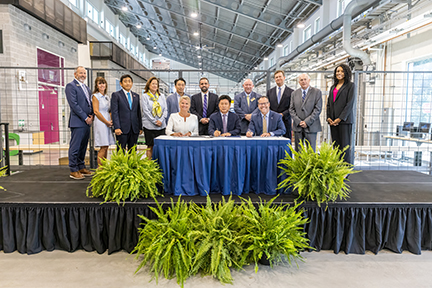
In a milestone collaboration aimed at fostering workforce development, innovation, and community enrichment, Hyundai Motor Group Metaplant America (HMGMA), Georgia Southern University and Ogeechee Technical College are signing a formal agreement to work together in addressing regional workforce needs while advancing academic excellence and technological innovation. Ogeechee Technical College President Lori Durden, HMGMA CEO and President Oscar Kwon, and Georgia Southern University President Kyle Marrero sign transformative agreement surrounded by officials from both institutions and HMGMA. The partnership will encompass a diverse range of initiatives that reflect the shared commitment HMGMA and its local education partners have to catalyze positive change for both the academic community and the broader society. Leveraging their respective strengths, this collaboration aims to address workforce demands, create transformative educational pathways, and drive impactful research endeavors. “Together, we are not just building cars; we are building futures, strengthening the community and driving progress,” said HMGMA CEO Oscar Kwon. “That is part of Hyundai’s mission: progress for humanity. Our partnership with these institutions reflects our shared vision for a brighter, more innovative future.” As part of this partnership, Georgia Southern University has committed to build on the success it has already seen in recruitment services for HMGMA. These services will include on-campus information sessions, dedicated company recruiting events, and on-campus interview days for graduating seniors. By bridging the gap between academia and industry, the University is ensuring that its students are well-prepared for the demands of the professional world. The university also will offer professional development certifications and courses for the company’s employees through its Continuing and Professional Education programs. “This partnership stands as a testament to the value of collaboration between academia and industry in driving holistic growth,” said Georgia Southern President Kyle Marrero. “By uniting forces, HMGMA and Georgia Southern University are forging a path that not only elevates educational opportunities but also cultivates a thriving community equipped to meet the challenges and opportunities of the future.” Georgia Southern also will strengthen its alliance with Ogeechee Technical College to create revised and expanded articulation agreements, pathway programs, and credit transfers. These initiatives will pave the way for the development of collaborative academic programs tailored to meet the specific workforce needs of the region. This includes exploring innovative degree pathways such as Advanced Manufacturing Engineering, as well as fostering additional academic collaborations that align with workforce-driven educational programs. Ogeechee Tech’s commitment includes continuing its record of providing training to local companies to include implementing the Electric Vehicle Professional Technical Certificate of Credit and Hybrid/Electric Vehicle Repair Technician Technical Certificate of Credit programs, and developing Industrial Maintenance Noncredit Training for HMGMA Employees. Additionally, Ogeechee Tech agrees to provide on-campus recruitment events and career fairs to current and past graduates. “Ogeechee Technical College is very excited about entering into this MOU with HMGMA,” said Lori Durden, president of Ogeechee Tech. “This has been several months in the making, and like other institutions and technical colleges in our region, we are going to do all that we can to support the efforts of our Governor to make Georgia the electric mobility capital of America. This is an exciting day for Ogeechee Technical College, and we look forward to supporting the evolving workforce development needs of this region.” With the Memorandum of Understanding, HMGMA will help promote educational opportunities in the region; develop internship, career pathway programs, and other appropriate work-based learning opportunities; and commit to exploring potential research, innovation, and commercialization projects. Interested in learning more or looking to talk with Georgia Southern President Kyle Marrero about this exciting new partnership ? Contact Georgia Southern's Director of Communications Jennifer Wise at jwise@georgiasouthern.edu to arrange an interview today.
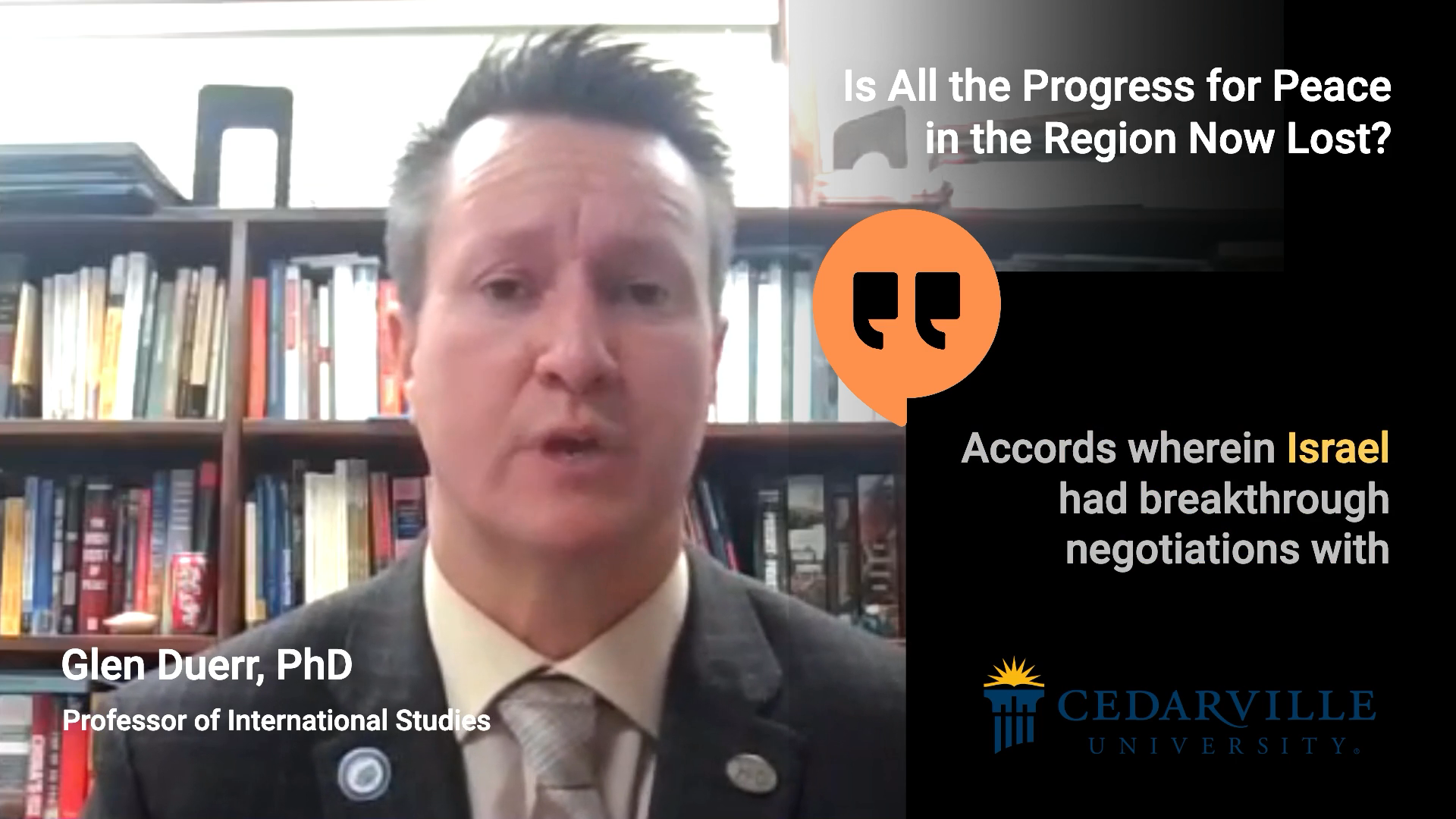
Progress lost? Is there any chance for lasting peace in the Middle East?
War is on again in the Middle East - and after years of talks, negotiations and most recently the Abraham Accords - has it all been lost now that war has returned? Glen Duerr, Ph.D. a Professor of International Studies at Cedarville University and a renowned expert in the areas of international relations and comparative politics, can explain the peace process and what might be next in Arab-Israeli relations. If you're covering this ongoing war and need to know more - then let us help with your questions and stories. Dr. Duerr is an expert on this subject and is available to speak to media regarding this topic– simply click on his icon to arrange an interview.


It's a fabulous fall - and our expert can explain why all those colors come out this time of year
Autumn has arrived. And as we all take time to welcome this wonderous palette that nature delivers year after year, those who are curious about all those colors are looking for answers. Why there are so many different shades, tints, and tones? What causes the colors to change? And where's the best place to find one of nature's finest displays of leaves? It's a topic that comes up every year, and recently Connecticut Public Radio connected with UConn's Bob Fahey to get some of the answers about autumn in New England. I ventured into a forest in northeastern Connecticut with two UConn tree experts. We met up at Horsebarn Hill, one of the best viewpoints in the state, surveying a rolling river valley showing off with fall colors. We see oaks just starting to turn red. Nearby hickories provide a dash of yellow – and, of course, the maples are already stealing the show, even on a cloudy day. Here’s what I found out: Our trees are diverse One reason the foliage is so good is simply due to the number of species we have. “We have a very diverse hardwood forest in this part of New England,” said Bob Fahey, an associate professor and forest ecologist at UConn. “We have both species that are more southern species and also some of the more northern species.” “In comparison to say, the Mid-Atlantic or other places that have lots of deciduous species, we have maples, which are just the best,” he said. “We also have a number of species that have nice yellow foliage,” he said. “Birches and beech. If you go a little bit farther south from here, mostly what you have is oaks. And oaks can have good fall foliage colors, but there are a lot of times they don't and they don't last for as long.” We have lots and lots of trees The diversity of species provides a diversity of color, said Tom Worthley, an associate extension professor and a forester at UConn. He asked me to remember the last time I flew over Connecticut. What did you see, he asked. Lots of trees, right? “Most of the ground is covered by a tree canopy,” Worthley said, noting that some estimates put that tree canopy cover at around 75% of the land area of the whole state. “Back where we were standing a few minutes ago, we had some cherry trees,” Worthley said, his eyes scanning the trees enveloping us. “There's a few remnant ash, there's some walnut around the edges here. And let's see, some hickory.” A walnut tree towers over us – and there are even some white pines. It’s that varied bioscape that sets New England forests apart. “Even in my two-acre forest behind my house, I have 22 different species of tree, which is more than some regions of the northern part of the U.S.,” Fahey said. Travel to the west, and what you’re likely to see are lots of evergreens and aspen trees. “Not that there aren't others, there are plenty of others, but not in the same abundance and not in the same kind of mix that we have around here,” Worthley said. Climate plays a role Across New England are rolling hills with microclimates that can contribute to vibrant fall colors. “You’ll see ... highly different color in different parts of the landscape, which has to do with temperature differences,” Fahey said. Combine that with Connecticut’s mix of southern and northern species and the colors here might not be as exciting and bright as what you would see in Vermont and New Hampshire, Fahey said. But our foliage season can sometimes last a little bit longer. One reason? Oaks. “We have so much more of that oak component,” Fahey said. “The oaks will hold their leaves until the end of October.” Moisture, temperature and the amount of daylight all contribute to how long it takes for a tree to shed its leaves. And, for each species, the calculation is different. “A tree makes an economic decision,” Worthley said. “It decides, ‘Well, it's costing more in energy to keep these leaves going than what they're producing for me and so it's time to shut them off.’” Why do leaves fall anyway? It’s when leaves are green that the most important work is happening, pulling carbon out of the atmosphere and giving us oxygen. And for that green color, we can thank the pigment chlorophyll. “The color that's in the leaves – is always there from the time the leaf is grown,” Worthley said. “As the growing season fades, the chlorophyll disappears,” he said. Then the other colors in the leaf can begin to show off. Pigments like anthocyanins (reds and purples) and carotenoids (yellows and oranges) peek out, tiny threads in an autumnal blanket transforming New England’s green forests into a richly colored landscape. The colors are out - but only for a limited time. If you're a journalist looking to know more about this topic before all the leaves fall, then let us help. Dr. Fahey is an Associate Professor in the Department of Natural Resources and the Environment and Center for Environmental Sciences and Engineering at the University of Connecticut. He is also the George F. Cloutier Professor in Forestry, director of the UConn Forest, and associate director of the UConn Eversource Energy Center. Simply click on his icon now to arrange a time to talk today.


“Three-Dimensional” Warfare Adds to Uniqueness, and Danger, of an Israeli Offensive in Gaza
In the weeks following the attacks perpetrated by Hamas in Israel, all signs indicate that the Israeli Defense Forces (IDF) are planning a ground offensive within the Gaza Strip. An incursion into the strip, where Hamas is headquartered, would be distinct by nature; Israel has engaged within Gaza only a handful of times since 2005, when it dismantled its own settlements there. But according to Frank Galgano, PhD, an associate professor of geography and the environment at Villanova University and an expert in military geography, any ground offensive in Gaza would be unique—and dangerous—given the geography of the territory. “It's not a traditional geography of a conflict,” Dr. Galgano said. “Gaza is basically the size of Philadelphia. When you go into it, you’re fighting in a city, or a densely populated urbanized area, and it becomes three-dimensional warfare.” By “three-dimensional,” Dr. Galgano is referencing the ability of Hamas combatants to engage by ground, from high up inside or on top of buildings and from below, using the vast network of tunnels Hamas has constructed throughout Gaza. These dimensions complicate planning and add to the danger for Israeli soldiers. Conversely, they provide a serious advantage to Hamas militants. “It's also a very confined area,” he said. “It's so densely populated and heavily urbanized. That's the operational environment… With all operations in urban environments, you’re dealing with cultural features, too. In Gaza, you’ve got mosques, schools, museums; you have civilian population integrated into the battlefield. That makes things very difficult. Hamas will take advantage of that urban geography.” That population density, which is among the highest in the world with more than 2.2 million people on 140 square miles of land, significantly impacts the strategy and abilities of Israeli ground forces. Galgano contrasted it with other operational environments, such as the Palestinian-controlled West Bank. “There are movement corridors, ridges, valleys, avenues of approach and communication—all this stuff that makes sense from moving units around the battlefield,” Dr. Galgano said. “It is not the same in Gaza. It’s highly condensed in that vein.” There are other unique factors at play, too. Hamas reportedly has nearly 200 hostages from their October 7 attack. Dr. Galgano believes they are being strategically held throughout Gaza. “[these hostages are] probably in subterranean areas and bunkers well underground,” he said. “That, or they will put them in their headquarters [as a deterrent to Israeli strikes]. Israel probably knows exactly where some of these hostages are, [but] what do they do?” Dr. Galgano also considers the battle inexperience of IDF reservists as well. The IDF are “very well trained,” he said, and have many professional standing units, but in an offensive like this, “they need manpower and that’s going to be their reservists. “In 1967, 1973 and 1983, when Israel called up their reservists, [many] were war veterans already. Now, it’s different. They haven’t fought a ‘big’ war since 1983, so there is an inexperience level at play too.” Ultimately, Galgano thinks that if the IDF enter Gaza, they are going to “go up the middle and split the Gaza Strip in half… They are going to take out Hamas infrastructure in [Gaza City and Khan Younis], their two centers of gravity.” He thinks they will be able to do so, barring something unforeseen, “fairly easily.”


Strong team culture will pull Phillies' through latest playoff disappointment
[Updated Oct. 25, 2023] The Philadelphia Phillies magic run in the MLB playoffs has ended, but there's no doubt their unusually strong "Brotherly Love" will continue to carry them through another tough end to the season. Kyle Emich, professor of management at the University of Delaware, can talk about the team's bond with each other and unique rituals. They include blaring the fluffy pop song "Dancing on My Own" after key victories and a potentially vulgar hand signal that players flash from the dugout after big hits. The study of love in teams is not entirely new, said Kyle Emich, professor of Management at the University of Delaware. Companionate love, as opposed to romantic love, focused on compassion, caring and feelings of affection toward one's teammates, has been linked to satisfaction and working together as a team, while preventing burnout (key to late-season performance), he said. Emich added: A positive clubhouse culture can help a team remain confident after failure (which every team endures at some point), develop and commit to innovative solutions that may be risky and feel safe voicing concerns, which may need to be overcome to move forward. We have all been on teams where members bottle up problems until, of course, they eventually burst ruining team performance. Positive teams don't do that. It's not just nice that the Phillies seem to get along so well, this sense of chemistry and support may underlie their stellar performance. To arrange an interview with Emich on this topic or any relating to teams – especially in the workplace – simply click the "contact" button on his ExpertFile profile.


Aston University fraud specialist continues ongoing engagement with UK Government
Dr Rasha Kassem advises UK government on countering fraud through the Government Counter Fraud Profession (GCFP) advisory group She shapes policies to combat £33 billion annual losses Dr Kassem influences fraud standards and shares vital research. Dr Rasha Kassem, a fraud specialist based at Aston Business School, remains actively engaged with the UK government through her advisory role in the Government Counter Fraud Profession (GCFP) advisory group. This advisory group, a vital component of the Government Counter Fraud Function, collaborates with cross-sector experts to shape policies and strategies aimed at countering fraud and other financial crimes. The Government Counter Fraud Profession Strategy 2023-25 underscores the severity of fraud within the public sector, estimating losses at a minimum of £33 billion annually due to fraud and error. As a dedicated member of the GCFP Cross Sector Advisory Group, Dr Kassem plays a pivotal role in advising and supporting the development of policies to combat these financial crimes. The GCFP serves as a professional body for counter-fraud experts within central government and beyond. Its mission is to unite the counter-fraud community under a common framework of standards, fostering growth and development to safeguard public services and combat economic crime. Dr Kassem's involvement in the advisory group holds significant impact, influencing the establishment of knowledge, skills and experience requirements for fraud professionals across various disciplines and levels. Additionally, she contributes to the publication of influential fraud research in the Public Sector Counter Fraud Journal and addresses UK government fraud conferences on recent research findings. Dr Kassem also collaborates with experts from diverse sectors to bridge training gaps, all while engaging in discussions through regular group meetings. The Government Counter Fraud Profession operates under the umbrella of the Public Sector Fraud Authority (PSFA), established in August 2022. The GCFP is positioned within the Practice, Standards, and Capability Function of the Authority. The PSFA, a collective effort by 17 public sector organisations, adheres to core principles of building capability, with the GCFP taking a lead role in advancing structures and services. Dr Kassem emphasises the critical nature of engaging with policymakers through knowledge exchange activities to amplify research impact. Her active participation in UK Government fraud conferences and contributions to the Public Sector Counter Fraud Journal serve to raise awareness on prevailing fraud issues. Furthermore, her feedback on existing and new fraud guidance aids the GCFP in crafting professional standards and guidance for countering fraud. Dr Kassem has been a valued member of the Cross-Sector Advisory Group of the UK Government Counter Fraud Profession since 2019. Dr Kassem said: “Collaborating with the UK government through the Government Counter Fraud Profession has been a rewarding journey. “It's through these engagements that we're shaping policies and standards to counter fraud and protect public resources. “The recent Annual GCFP conference was well attended by fraud investigators, law enforcement, and regulators from the public sector. My presentation was well received and some participants said it was wildly fascinating to hear the striking reality that insider fraud can be, especially in UK policing, given its impact on policing integrity and legitimacy. The presentation opened their eyes to the risk of insider fraud and its impact. “Together, we're making a significant impact on the battle against financial crime.” For further information and to explore Dr Kassem's recent research, click here.


Preparing the clean hydrogen workforce
The University of Delaware will play a leading role in workforce development efforts associated with the Mid-Atlantic Clean Hydrogen Hub (MACH2), which has been selected by the U.S. Department of Energy to receive up to $750 million in funding through the historic Regional Clean Hydrogen Hubs program. MACH2 was chosen as one of seven hydrogen hubs, totaling up to $7 billion in grants, announced by the Energy Department on Oct. 13. In stiff national competition, MACH2 ranked among the most pro-labor and greenest hubs in the nation, according to the Delaware Sustainable Chemistry Alliance (DESCA), which brokered the proposal, involving industries, academic institutions, local governments and community partners from across Delaware, southeastern Pennsylvania and South Jersey. Hydrogen is the most abundant element in the universe, and the Energy Department is working to accelerate its use as a clean energy source and as a means to decarbonize heavy industry, transportation and energy storage to meet President Biden’s goal of a 100% clean electrical grid by 2035 and net-zero carbon emissions by 2050, with the regional hydrogen hubs leading the way. MACH2 will encompass a network of hydrogen producers, consumers, local connective infrastructure for hydrogen deployment, and the education and training needed to develop the region’s clean energy workforce. UD will lead the higher education component of MACH2’s workforce development with Cheyney University, Rowan University and the University of Pennsylvania. MACH2 is projected to create 20,000 well-paying jobs in the production, delivery and use of zero-emission hydrogen to repower the region’s industrial facilities, transportation systems and agriculture sectors. What kinds of jobs will MACH2 help prepare people for? There will be a need for technicians for hydrogen-powered vehicles, construction workers for installing hydrogen pipelines, fuel cell power system operators, hydrogen production plant managers, and directors of research and development (R&D) programs, to name a few. Some of these roles may require a high school diploma and an apprenticeship or specific credential; others may require a college degree, from bachelor’s to master’s to Ph.D. Yushan Yan, the Henry Belin du Pont Chair in Chemical and Biomolecular Engineering at UD, will direct the hub’s higher education workforce development efforts. This work will complement high school, vo-tech and community college training programs in energy and construction that will be expanded through the hub, along with pre-apprenticeship programs, particularly those that recruit from underserved communities, offered by building trade unions. “The University of Delaware and our collaborators at Cheyney, Rowan and Penn are well-poised to prepare students for rewarding careers in the new hydrogen economy,” Yan said. “Several engineering, energy and hydrogen programs are already in place at our institutions and will be expanded through the hub, offering students exciting opportunities.” UD will enhance hydrogen technology training at the master’s level through a new “4+1” master’s degree in electrochemical engineering, which would allow highly qualified undergraduate students to earn a bachelor’s degree in an area such as chemical and biomolecular engineering or mechanical engineering and then continue on to earn a master’s degree in electrochemical engineering in the fifth year.


Net-zero emissions targets: Genuine goals or Fortune 500 greenwashing?
Moving towards “net-zero” emissions has become a popular “target” for multinational corporations that have committed to improving their sustainability. But is it a new tagline from marketing departments or something firms are actually committed to? About half of the U.S.-based Fortune 500 firms have declared their intent to reach net zero – the point at which the emissions from an entity equals the amount of greenhouse gasses being taken out of the atmosphere – as early as by 2030. The University of Delaware’s Kalim Shah, an expert on energy and climate policy, has some thoughts on these targets, their feasibility and why these companies are pursuing these goals. We should question why the language has changed in less than a decade from lowering emissions or low carbon options to “net-zero” when targets to meet lower emissions have not really been fulfilled in the first place. Part of the explanation could be to get ahead of would-be legislated pressure, that is, to dissuade legislative efforts which would imply compliance requirements, whereas now, these pledges are completely voluntary. Net zero is more technologically feasible in some sectors/ processes and not in others. In other words, there is likely not a cost effective, technological fix for net zero in the aluminum smelting or iron or concrete making industries in the immediate future. Lack of industry standards for measuring net zero – or perhaps more correctly, several competing methods of calculating net zero – can give some cover, for now, to firms attempting to “greenwash.” In effect, one firm's net zero may not be comparable to another's net zero. A company’s “emissions scope” must be examined closed. Are firms referring to direct emissions related to on-site fuel combustion or fleet vehicles; Indirect emissions related to emission generation of purchased energy, such as heat and electricity; and/or Other indirect emissions related to both emissions from upstream and downstream business activities when setting targets? We have to "read the fine print" as well, as terms that sound as ambitious but have slightly different strategies, such as “carbon neutral” and “carbon negative” targets can also complicate how we hold firms accountable. Where net zero is less possible, emissions could be “offset” through various schemes like carbon credits of forest offsets. A carbon offset is a reduction or removal of emissions of greenhouse gases made in order to compensate for emissions made elsewhere. En vogue since the 2000s, largely because it presented a way for indebted developed countries to capture market value by preserving endangered forests when multinationals ‘"offset" operations emissions by paying said developing countries, this mechanism has become highly questionable of late for its unverifiability. To arrange an interview, click on Dr. Shah's profile and press the contact button found there.
