
Experts Matter. Find Yours.
Connect for media, speaking, professional opportunities & more.

How Higher Ed Should Tackle AI
Higher learning in the age of artificial intelligence isn’t about policing AI, but rather reinventing education around the new technology, says Chris Kanan, an associate professor of computer science at the University of Rochester and an expert in artificial intelligence and deep learning. “The cost of misusing AI is not students cheating, it’s knowledge loss,” says Kanan. “My core worry is that students can deprive themselves of knowledge while still producing ‘acceptable work.’” Kanan, who writes about and studies artificial intelligence, is helping to shape one of the most urgent debates in academia today: how universities should respond to the disruptive force of AI. In his latest essay on the topic, Kanan laments that many universities consider AI “a writing problem,” noting that student writing is where faculty first felt the force of artificial intelligence. But, he argues, treating student use of AI as something to be detected or banned misunderstands the technological shift at hand. “Treating AI as ‘writing-tech’ is like treating electricity as ‘better candles,’” he writes. “The deeper issue is not prose quality or plagiarism detection,” he continues. “The deeper issue is that AI has become a general-purpose interface to knowledge work: coding, data analysis, tutoring, research synthesis, design, simulation, persuasion, workflow automation, and (increasingly) agent-like delegation.” That, he says, forces a change in pedagogy. What Higher Ed Needs to Do His essay points to universities that are “doing AI right,” including hiring distinguished artificial intelligence experts in key administrative leadership roles and making AI competency a graduation requirement. Kanan outlines structural changes he believes need to take place in institutions of higher learning. • Rework assessment so it measures understanding in an AI-rich environment. • Teach verification habits. • Build explicit norms for attribution, privacy, and appropriate use. • Create top-down leadership so AI strategy is coherent and not fractured among departments. • Deliver AI literacy across the entire curriculum. • Offer deep AI degrees for students who will build the systems everyone else will use. For journalists covering AI’s impact on education, technology, workforce development, or institutional change, Kanan offers a research-based, forward-looking perspective grounded in both technical expertise and a deep commitment to the mission of learning. Connect with him by clicking on his profile.



Machiavellianism boosts CEO pay, study finds
In an extensive study examining the relationship between personality traits and executive pay, CEOs who exhibit more Machiavellianism, characterized by motivation to achieve personal goals and 'win' social interactions, are more likely to have higher total pay and severance pay and to secure higher pay for those on their top management team. Aaron Hill, Ph.D., an associate professor at the University of Florida Warrington College of Business, and his co-authors determined that CEO's who scored higher on Machiavellianism were more motivated and successful in their negotiations. The team used a longitudinal sample of S&P 500 firms to compare compensation data with the executives' personality traits collected by expert clinical psychologists’ analyses of public video recordings. “Broadly, we find that CEO Machiavellianism positively relates to their own pay, their severance pay and the pay of their C-Suite or top management team,” Hill said. “The latter effect – on top management team pay – we find then predicts CEO pay raises. Our findings suggest that in this way, CEOs higher in Machiavellianism may pay their top management team members more to set up their own pay raises.” The team’s research highlights an underlying bias in how this trait can affect pay decisions. In response, those who set pay, such as boards of directors, should work on policies that reinforce the behaviors they want in their executives. They should also place leaders in a position to succeed and accentuate the positive aspects of their innate tendencies. “We all have tendencies that present tradeoffs in terms of having some positive aspects and some negative aspects,” Hill said. “Hopefully, as managers, we can acknowledge those and work to accentuate the positives and limit the potential downsides – in effect, take advantage of the positives and work to mitigate the negatives.” This research is published in the Journal of Applied Psychology.
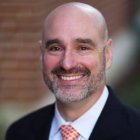


One year ago, after a campaign that toppled Bashar al-Assad's repressive dictatorship, Ahmed al-Sharaa assumed the Syrian presidency. Since then, the former rebel commander has worked to establish his credentials as a statesman, winning the support of regional powers like Türkiye, Saudi Arabia and Qatar—as well as recognition from the White House. Yet al-Sharaa and his transitional government have not been immune from criticism, particularly over their handling of domestic affairs. Samer Abboud, PhD, director of the Center for Arab and Islamic Studies at Villanova University, is an expert on modern Syria and the wider Middle East. A year into al-Sharaa's presidency, he believes the provisional government has made incredible strides in some areas, like international diplomacy, while struggling to find its footing in others. "There's no doubt that Syria's external image is becoming more positive. We see this kind of charm offensive, with President al-Sharaa taking to the world stage," says Dr. Abboud. "Also, most of the regional actors are very fond of al-Sharaa and were very happy for the Assad regime to have fallen. So, there's this external presentation of a transition government that is legitimate and has support, and I think that's largely true. "The problem in Syria right now, of course, is what's happening internally. To begin, across the country, you have completely collapsed infrastructure—limited electricity, restricted access to running water and unreliable internet." Much has been made of economic sanctions' role in contributing to these internal issues, with Western governments having historically limited the amount of aid and investment that could enter Syria. However, while Dr. Abboud sees these measures' elimination as crucial to the nation's progress, he also contends that ending restrictions alone is not enough to ensure the country's long-term stability and prosperity. Of particular concern, according to the professor, is the al-Sharaa administration's persistent claim "that 'free markets' could and would be a cure-all." As he explains, "The problem is that there's literally no evidence to demonstrate that private enterprise is interested in social betterment in reconstruction cases. You can't rebuild a state and a society on the profit logic. When you look at Lebanon, after all the wars Lebanon endured, what did free markets—without a strong public sector—do for that country? Roughly 80 percent of Lebanese people live in poverty." Beyond the troubles surrounding economic growth and infrastructural development, there also exist a series of fractures along ethnic and ideological lines. Wide swaths of Syria are currently controlled by militias with agendas at odds with that of the provisional government, and despite making inroads with one significant bloc of dissent (the Kurdish-led Syrian Democratic Forces), tensions are exceedingly high. Furthermore, a number of groups remain suspicious of the president and his intentions due to his past affiliation with Hayat Tahrir al-Sham, a Sunni Islamist group that traces its roots to al-Qaeda. Navigating this delicate situation with poise and precision is something that al-Sharaa needs to master, contends Dr. Abboud. And, over the course of the past several months, it seems Syria's new leader has started to refine the skill. "To illustrate, last year, at least 25 people were killed in a bombing at the Mar Elias Church in Damascus, and President al-Sharaa did not go to the site. In addressing the incident, he also didn't use the language of martyrdom, which is what you would typically do for any person—Christian or Muslim—who died in this context," says Dr. Abboud. "In June, however, they arrested the culprits, and he went and met the patriarch and went inside the church, and they publicized it. "The first time, he was too worried about these internal influences—of being perceived by his base as having moderated his views. Right now, he very much finds himself caught in a balancing act, working to temper the forces that are compelling him to possibly do something that could worsen an unstable situation. But I do think that the two contrasts [represented in the Mar Elias Church episode] suggest that the president is learning and gradually figuring out how to do politics a bit differently." In this vein, Dr. Abboud feels the next phase in al-Sharaa's evolution should center on reckoning with the history of the country's late civil war and encouraging a dialogue between those who supported the Assad regime and those who sought to overthrow it. In the professor's estimation, this step is essential to achieving a lasting peace in Syria. "Currently, there are some memory projects and knowledge projects that are happening, but those are not led or facilitated by the state. And that's troublesome, given what we've seen in other conflict contexts," he says. "In Lebanon, for instance, the state has amnesia. The civil war is not in the textbooks, officials don't talk about it, and it's not commemorated nationally. But then, in many ways, the narrative of how it happened—who are the victims, who are the perpetrators—can totally shape people's lives." Still, while much economic, social and humanitarian work remains to be done, Syria today finds itself in a position unlike any it's occupied in decades' time: one marked by possibility. "In general, I envision an extended period of grace for the government and an extended period of hope," concludes Dr. Abboud. "Syria did not have a future under the Assad regime. Or it had a future, but one characterized by generations of isolation. Today, people, both inside and outside Syria, have an entirely different outlook."


President Plans to Launch More of His Agenda in Year 2 of His Term
Newsday interviewed Hofstra presidential scholar Meena Bose about the issues President Donald Trump is most focused on in this second year of his second term. In the article, Dr. Bose explained, “In the modern presidency the window of opportunity for action is greatest in the first 12 to 18 months.” After that period the midterms and the focus on the next presidential election, “start to overshadow policy and legislative prospects.” Dr. Bose is a Hofstra University professor of political science, executive dean of the Public Policy and Public Service program, and director of the Kalikow Center for the Study of the American Presidency.


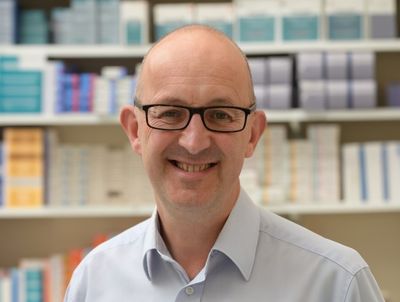
Professor Ian Maidment is a professor in clinical pharmacy at Aston Pharmacy School His inaugural lecture will explain why patients struggle with taking medication and present possible solutions to the problem Professor Maidment is a former practising pharmacist and an expert in medication optimisation and management in mental health and dementia. Professor Ian Maidment, professor in clinical pharmacy at Aston Pharmacy School, will give a public lecture about his life’s work on 5 February 2025. In his inaugural lecture, Professor Maidment will reflect on his journey from a childhood in Kent to becoming a leading researcher in clinical pharmacy. After more than two decades working in the NHS, in community pharmacy, mental health, dementia care, and leadership roles, he joined Aston University in 2012. His research focuses on the real-world challenges of medication optimisation for patients, carers, and healthcare professionals. The title of Professor Maidment’s lecture is ‘Medication adherence: Why it matters and how we can improve it’. Every year, the UK spends nearly £21 billion on medicines. Yet up to half of people with long-term conditions do not take their medication as prescribed—a problem known as non-adherence. This has profound clinical consequences and significant financial implications for the NHS. Professor Maidment will draw on his experience to explore how factors such as medication burden and side-effects influence adherence, the challenges posed by conditions such as dementia and severe mental illness, the role of pharmacy in supporting adherence and why tackling non-adherence requires a system-wide approach. He will also offer practical solutions to one of healthcare’s most persistent problems. Professor Maidment said: “We need to understand why patients struggle to take their medication and then develop and test solutions that work well.” The lecture on Thursday 5 February 2026 will take place at Aston Business School. In-person tickets are available from Eventbrite. The public lecture will begin at 18:00 GMT with refreshments served from 17:30 GMT. It is free of charge and will be followed by a drinks reception. The lecture will also be streamed online.


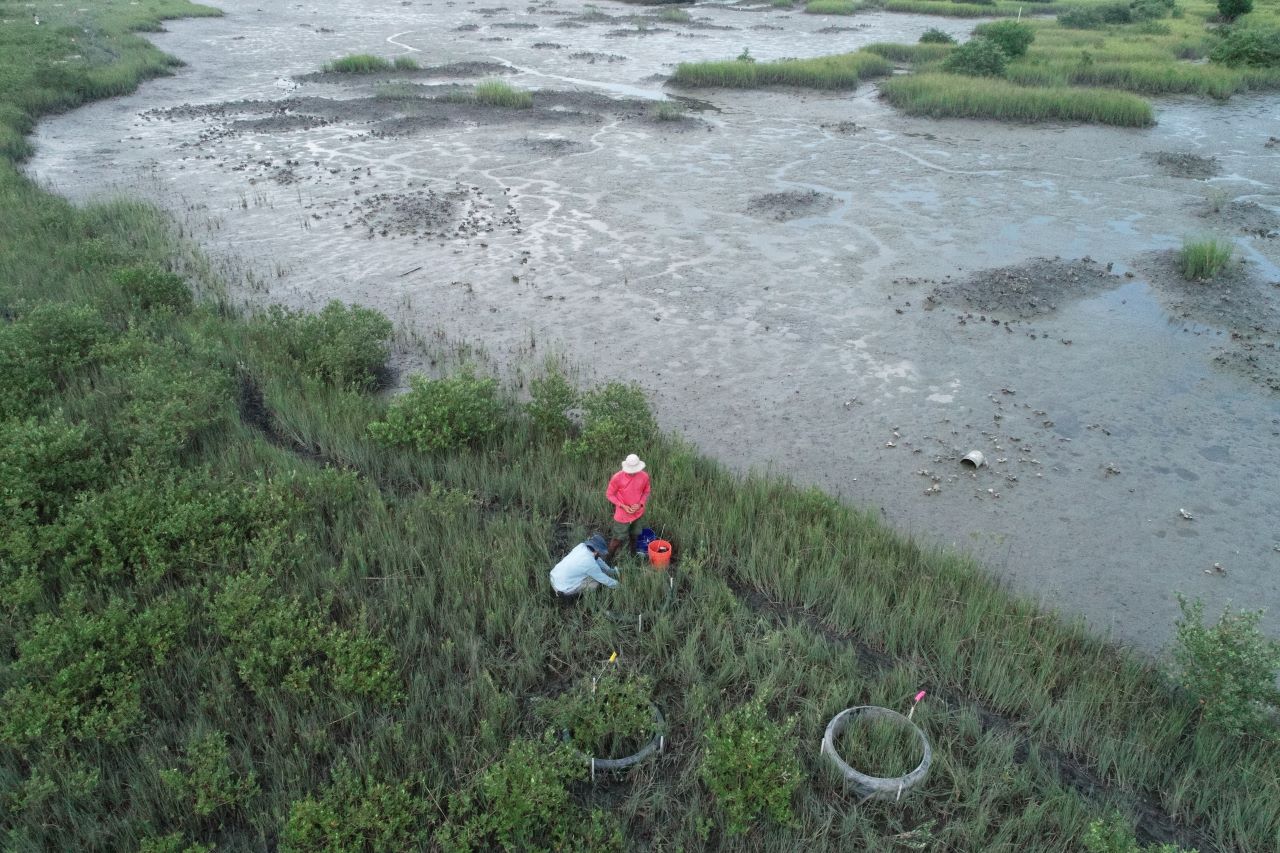
Natural defenses: UF researchers use living infrastructure to protect Florida’s shores
Armed with a $7 million grant from the Army Corp of Engineers, University of Florida researchers are working to bolster shoreline resilience and restore troubled wetlands in St. Augustine through nature-based solutions. “The idea of nature-based solutions is to build what we sometimes refer to as green infrastructure, to use living, natural components as the building blocks,” said Andrew Altieri, Ph.D., an assistant professor with the Engineering School of Sustainable Infrastructure & Environment and interim director of the Center for Coastal Solutions, also known as CCS. Instead of building man-made structures to protect wetlands, for example, restoration crews can move dredged natural sediment otherwise destined for costly disposal to increase wetlands’ size and elevation, restoring their ability to protect shorelines from storm surge, keep pace with sea-level change, filter toxins, store carbon and provide habitats for wildlife. The project is in concert with the Army Corps of Engineers’ goal to naturally reuse and repurpose at least 70% of dredged sediment into other natural areas to benefit habitats and restoration by 2030. “It is critical to understand, test and model how natural processes can be harnessed and strategically implemented to sustainably meet the challenge of rapidly intensifying coastal hazards while also providing environmental, economic and social benefits,” Altieri wrote in the project’s technical summary. Overall, the multi-disciplinary project closely examines patterns and processes of change in coastal landscapes. That includes wetlands — marshes and mangroves — and beach/dune systems. The project comes as these coastal areas are facing threats both natural and human. These areas are essential to wildlife, air quality, native vegetation, storm protection and the overall health of the ecosystem. A 2008 study by the U.S. Fish and Wildlife Service reported a net loss of about 361,000 acres of wetlands in the coastal watersheds of the eastern United States between 1998 and 2004 — an average net decrease of 59,000 acres each year, with experts citing sea-level rise as one of the primary factors. “We're trying to understand the patterns of that loss and what's leading to it,” Altieri said. “These systems are essentially the first and sometimes last line of defense against coastal hazards, risks that include storm surges and coastal flooding. They are forming a buffer, this kind of protective layer on our coast. But they're changing, generally for the worse and are in danger of being lost.” With this project, the CCS-led research team plans to advance the science, technology and engineering principles of nature-based solutions. With marshes, the primary concern is elevation loss, which can drown the vegetation critical to the ecosystem. They are sinking, eroding and succumbing to sea-level changes, Altieri said. “The plants are really important for trapping sediment and holding sediment,” he said. “You lose some of the plants, then you get more erosional loss and a lack of the accumulation of sediment.” Sediment is natural muck on the bottom of water bodies. “If we can add sufficient sediment to increase the elevation to a level where the plants thrive, then they will retain that sediment that's been added to hopefully trap more sediment and accumulate more biomass through their growth,” Altieri said. “It’s something that may need to be done periodically. You may stop that decline, but you may even reverse the process of loss and change the trajectory.” As a bonus, this process saves the cost of disposing of dredged sediment, which is usually piped offshore or to a materials-management area. This project is the next step for CCS-led coastal resilience efforts in St. Augustine. In 2024, CCS and WSP Environment & Infrastructure Inc. launched a coastal wetlands-restoration project to keep pace with sea level change and erosion. The 2025 work is a standalone project with separate funding, Altieri said. The current project also has more research disciplines and project partners, including UF researchers from Landscape Architecture, Geological Sciences and the School of Forest, Fisheries and Geomatic Sciences. “Storm surges, wave energy, coastal flooding – all of that can be slowed or reduced because of wetlands,” Altieri said. “They are basically like shock absorbers. These wetlands, beaches and dunes can be lost or eroded to some degree, but the upland area behind them is essentially protected.” Researching the resilience of dunes comes with a different set of dynamics. Here, they are looking at the plants that support the dunes – sea oats and panic grass, for example. That vegetation also provides a habitat for animals such as beach mice, turtles and birds. On the beach, the team also is looking at water energy and how grain size affects the stability of dunes. “It’s understanding water movement, water energy. How is that interacting with depositing sediment, moving sediment around, sorting sediment? With water, you tend to carry finer particles further than coarser materials,” he said. What does success look like after the award’s five years end? “We'll have an understanding of what's changing on our coasts and why,” Altieri said. “We'll have an understanding of how we can work within this system to modify the natural components and utilize the natural processes. And we will hopefully be working with partners through additional funding mechanisms to actually apply that towards implementation of solutions to increase coastal resilience.” The team also includes Peter Adams, Department of Geological Sciences; Julie Bruck, Department of Landscape Architecture, School of Landscape Architecture and Planning; Maitane Olabarrieta, ESSIE; Alex Sheremet, ESSIE; Nina Stark, ESSIE; Ben Wilkinson, Geomatics Program, School of Forest, Fisheries, and Geomatics Sciences; and Xiao Yu, ESSIE.
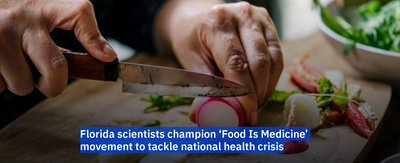
Florida scientists champion ‘Food Is Medicine’ movement to tackle national health crisis
University of Florida researchers are calling for a national transformation in how we address the ongoing epidemic of obesity and Type 2 diabetes, starting with a fundamental shift in how we approach health, agriculture and food. Published recently in the Proceedings of the National Academy of Sciences, the article argues that fruits and vegetables must be treated not just as food — but as medicine. With 73% of U.S. adults and 35% of children classified as overweight or obese, the authors warn that the crisis is not only an individual health issue but a national economic and security threat. Andrew Hanson, Ph.D., a co-author and professor of horticultural sciences at UF/IFAS, emphasized a sense of urgency and collective responsibility toward solving this health crisis. “This isn’t business as usual. We’re taking a public-interest view. This is the kind of thing we all need to be talking about. It’s too important not to,” he said. The article proposes a roadmap for change, including creating five National Institutes of Health-supported “Food Is Medicine” centers across the U.S., with Florida as a leading candidate; scaling up domestic fruit and vegetable production to meet national dietary needs; partnering with food producer and processors to make healthy foods more accessible, affordable and appealing; and reforming medical and nutrition education to include horticultural sciences and vice versa. The article highlights that only 1 in 10 adults meets the recommended daily intake of fruits and vegetables, and that U.S. production falls far short of what’s needed to support a healthy population. The authors call for a dramatic expansion of fruit and vegetable production, especially high-impact crops like berries, leafy greens and carrots. Christopher Gunter, Ph.D., professor and chair of the UF/IFAS Department of Horticultural Sciences, said the team’s goal is to push the role fruit and vegetables crops can play in improving human health into the national consciousness. “As a discipline, horticulture and the science of fruit and vegetables have been largely ignored in this conversation,” Gunter said. “Our goal is to move the needle on health with fruit and vegetables.” Hanson said about 80% of the nation’s cropland is used to grow soybeans, corn and wheat — most of which are processed into products with low nutritional value that contribute to the obesity and Type 2 diabetes epidemic. Mike Jaffee, M.D., a co-author and professor of neurology in the UF College of Medicine, stressed the broader implications of a high-vegetable diet on brain health. “Obesity and insulin resistance are linked to inflammation and neurodegeneration. We’re living longer, but our brains aren’t keeping up. That’s where the real cost to individuals and the health care system comes in,” he said. Gunter agreed, adding, “This epidemic reduces the longevity and productivity of our citizens. It limits the momentum communities need to grow healthy and resilient families.” Hanson pointed out that higher socioeconomic groups are better positioned to meet dietary recommendations, making this not just a health issue, but a deeply embedded social and economic one. “This crisis takes an unduly large toll on people with lower incomes and less time. To eat enough fruits and vegetables in the current system, you need substantial income and time to prepare food. That’s a luxury many don’t have,” he said. The authors argue that farmers bring essential knowledge to the table. “They understand how environmental factors impact nutritional quality,” Gunter said.


Anuradha Godavarty, Ph.D., has joined the Virginia Commonwealth University (VCU) College of Engineering, bringing more than two decades of research leadership in optical imaging, medical device innovation and interdisciplinary training to the Department of Biomedical Engineering. “We are thrilled to welcome Dr. Godavarty to our department,” said Rebecca Heise, Ph.D., Inez Caudill, Jr. Distinguished Professor and chair of the Department of Biomedical Engineering. “She is an outstanding scholar and teacher who will expand our collaborations with VCU Health in many applications of optical imaging. Our students and faculty alike will benefit from her experience and mentorship.” Godavarty comes to VCU from Florida International University (FIU), where she served as director of the Optical Imaging Laboratory at FIU. Her work centered on designing and translating near‑infrared optical imaging technologies for clinical use, with applications ranging from breast cancer detection to functional brain mapping to wound assessment. Godavarty has a national reputation for developing portable, low‑cost imaging systems that improve access to care, including hand-held and smartphone-based near‑infrared imaging devices. Her research portfolio includes funding from the National Institutes of Health (NIH), National Science Foundation, Florida Department of Health and American Cancer Society, among others. Godavarty is also a fellow of the American Institute for Medical and Biological Engineering, a senior member of the International Society of Optics and Photonics and the National Academy of Inventors At VCU, Godavarty will expand her research program in optical imaging technologies while collaborating with clinicians, engineers and industry partners across the university and region. Her long‑term goals include advancing bedside imaging tools for wound care, cardiovascular applications and plastic surgery; strengthening global research partnerships; and training the next generation of optical imaging experts. “Virginia Commonwealth University’s engineering and health sciences ecosystem is an ideal place to grow translational research,” Godavarty said. “I look forward to building new collaborations, developing technologies that can make a meaningful difference in patient care and translating these innovations for real-world use by medical professionals.” Godavarty has played a major role in undergraduate education, serving as the undergraduate program director for biomedical engineering at FIU from 2016 to 2022 and leading the department through a successful Accreditation Board for Engineering and Technology (ABET) cycle. She organized FIU’s Annual Diabetes Awareness Day for four consecutive years and regularly engaged K‑12 students through hands-on demonstrations. Throughout her career, Godavarty has been deeply committed to mentoring. In addition to supervising doctoral, master’s and undergraduate students at FIU, she also advised high school students through outreach initiatives and supported several postdoctoral researchers. Her students have earned multiple awards, including NIH and Department of Defense fellowships, national postdoctoral awards and multiple university‑level honors.



As Disney’s “Zootopia 2” barrels toward becoming the highest-grossing animated Disney movie of all-time, the box office isn’t the only place fans of the franchise are apparently flocking. Recently, CNN reported that “Zootopia 2” fans in China—where the wildly popular movie has already been crowned it’s highest-grossing foreign animated film ever—have expressed increased interest in owning Indonesian pit vipers, a striking blue and highly venomous snake portrayed as an anthropomorphic protagonist named Gary De’Snake in the film. The outlet spoke to individuals who purchased the animal after seeing “Zootopia 2” and noted surges in searches and prices among exotic pet retailers. The reported phenomenon prompts the question: can blockbuster movies really be drivers of the exotic pet trade? “I think they can,” said Ryan Almeida, PhD, an assistant teaching professor of Geography and the Environment at Villanova University who studies the exotic pet trade. “There have been a lot of anecdotal reports of movies and TV shows influencing the pet trade, but the peer-reviewed evidence isn’t there.” Causation or Correlation? Reasons for Pet Demand are Tricky to Single Out While the increased interest in the pit viper may be the latest pet trend influenced by the entertainment industry, it is certainly not the first, says Dr. Almeida, who has recently been conducting research at wildlife expos in an effort to understand more of the intricacies of various pet-related trends. In the 1980-90s, red-eared slider turtles became massively popular pets, and it just so happened to coincide with a popular new show based off the animal. “The Teenage Mutant Ninja Turtles craze, especially in the United Kingdom, probably helped drive demand for these turtles as pets,” Dr. Almeida said. “Turtle exports from the United States exploded in popularity during this time, there just is a not a peer-reviewed study demonstrating it was definitely caused by the show.” In the 2000’s, Pixar’s “Finding Nemo” and its sequel, “Finding Dory,” reportedly bolstered purchases of clownfish and blue tangs—the fish for whom those characters were modeled. Interest in owning owls as pets was also said to have spiked among Harry Potter fans in certain parts of the world amid the height of the joint movie/book popularity. Though much of the evidence of these trends is anecdotal, anecdotal doesn’t necessarily mean it didn’t happen. For instance, it’s difficult to completely discredit an exotic pet retailer who reported a 500% sales increase of an animal featured in a recent, very popular movie. But it’s also difficult to prove the causation, not to mention the scale. Dr. Almeida, who is interested in the qualities that make exotic pets desirous to consumers, says that even if sales of an animal from a movie did increase, the reasons are likely far more nuanced than just their appearance on screen. “Rarity is one important factor. We have good evidence that that certain [consumers] care a lot about rarity, that prices rise as animals become rarer and that retailers sell more animals if they are rare.” Another is morphology, or the physical structure of the animal. “Animals with unique morphology or distinctive colorations and patterns are more susceptible for these spikes in demand,” he said. “If Gary De’Snake was a brown, common garter snake and not a striking blue colored viper, I doubt we would see this attention. “I suspect that that's partially why this snake species, Trimeresurus insularis, was chosen for this movie, and why the fish representing Nemo and Dory are the ones they are, and not one of the millions of more boring looking fish species out there.” Even the on-screen portrayal, he suspects, makes a difference. “If the characters are protagonists, that could potentially either consciously or subconsciously, lead to more positive associations with the pet, especially for something like a pit viper, which probably has sort of a negative connotation to go with it in the first place. Also, the way these animals are anthropomorphized likely matters to some degree to people who report buying these animals because of the movie.” Case in point, one purchaser of the highly venomous viper told CNN that the movie helped give “reptile pets a better image,” saying of Gary De’Snake “I love his enthusiastic attitude and his sense of responsibility,” which would not be qualities associated with or displayed by the actual living species. “Attention to all of this falls in line with the same sort of things we are already know are drivers of demand in the pet trade,” Dr. Almeida said. Blockbuster Movies Probably Don’t Make Blockbuster Pet Trends Yet, while Dr. Almeida cedes that there is likely some degree of real demand for exotic pets based on movies (as evidenced by the self-reporting of people doing so for that reason), he cautions that there is very little to suggest these types of trends typically occur on large scales, especially those large enough to make any ecological impacts. He referenced a 2019 paper published by researchers at the University of Oxford, which looked at the purported increase of clownfish and blue tang sales after “Finding Nemo” and “Finding Dory.” “They found that there was an increase in the amount of people searching for the animal online, but not any evidence that retailers were importing more blue tangs, consumers were buying more blue tangs, or even that people were going to an aquarium to see them.” The findings, per the University of Oxford, suggested “that the impact of movies is limited when it comes to large scale buying of animals.” The authors also noted the role of viral media articles in suggesting this plausible causation was a hard-and-true phenomenon. Similarly, a 2017 study concluded that, contrary to popular belief, the Harry Potter series was unlikely to have increased demand for pet owls in the United Kingdom. Even if the demand was there at those larger scales, Dr. Almeida says meeting that demand could be a challenge, depending on the species. “You’d potentially have to poach them in large numbers from the wild, and that's challenging in and of itself. Or they would have to be captive bred, which for some animals is relatively easy but others not so much.” Not to mention the other roadblocks to mass exotic pet ownership. “Some of them may be tough to obtain or even illegal to own in the first place. Also, many of the consumers of films like ‘Zootopia 2’ who might feel a strong emotional pull to an animal are children, and children aren’t the ones going out and buying pets. And, even if something like this did become a large-scale trend, trends are fleeting. The long-term impact, ecologically, would be hard to predict.” But make no mistake. Pet trends certainly do happen on large scales, and whether they are caused by movies in part or not at all, they can have dire ecological consequences. Look at the case of the red eared slider. “Regardless of any possible influence from the show, these turtles are relatively easy to captive breed, so therefore relatively easy to acquire,” Dr. Almeida said. “But they are tough pets. They live a really long time and are kind of hard to care for, and that leads to people releasing them into the wild. They are now among the most invasive reptile species on the planet.” So much so, that the UK banned their sale in 1996. “It ties back to the complications of assessing certain aspects of the wildlife trade. There are so many factors, how do we get the entire picture? It’s a wicked problem.” Whether that problem includes movies with venomous, anthropomorphic snake protagonists appears unlikely, outside of a few highlighted cases. “It certainly wouldn’t be supported by much hard evidence… yet,” Dr. Almeida said. “But this is very much an under-researched phenomenon. I know I’ll keep my eye out for blue insularis next time I attend a pet expo.”


When Betting Goes Mobile: The Hidden Cost to Young Adults’ Finances
As online gambling and sports betting surge across the United States, concerns are mounting about the financial and social consequences—particularly for young people. Dr. Jared Pincin, Associate Professor of Economics at Cedarville University, offers journalists a data-driven economic lens on how the rapid expansion of digital gambling is reshaping personal finances and increasing financial risk among younger Americans. What's Happening Mobile betting apps have transformed gambling into an always-available activity, accessible anywhere and at any time. With aggressive marketing tied to professional and collegiate sports, online gambling has become normalized—especially among young adults. As participation rises, so do reports of debt, financial instability, and problem gambling, raising questions about consumer protection, regulation, and long-term economic impact. Dr. Jared Pincin primary research interests explore the intersection of public choice economics with foreign aid as well as issues in sports economics. Pincin has published in popular publications such as The Hill, Real Clear Markets, Foxnews.com, and USA Today and scholarly journals such as Oxford Development Studies, Applied Economic Letters, and the Journal of Sport and Social Issues. View his profile here Key Insights Online Gambling Is Built for Continuous Spending Modern gambling platforms are designed to encourage repeated engagement. Gamified interfaces, instant wagers, and constant prompts make it easy for users to lose track of spending, increasing the likelihood of financial loss over time. Young Adults Face Elevated Risk Young people, particularly college-age students and adults in their twenties, are among the fastest-growing users of online betting platforms. Limited financial experience, combined with easy credit access and social pressure, makes this group especially vulnerable to poor financial outcomes. Personal Finances Are Directly Impacted Gambling losses often come at the expense of savings, rent, tuition, and long-term financial planning. Dr. Pincin emphasizes that gambling platforms generate profit only when users lose, making sustained participation a negative-sum financial activity for individuals. Economic Incentives Drive Expansion From an economic standpoint, gambling growth is fueled by state revenue incentives and private profit motives. Dr. Pincin helps explain how these incentives can conflict with consumer well-being, particularly when regulatory safeguards lag behind technological innovation. About Jared Pincin Dr. Jared Pincin is an Associate Professor of Economics at Cedarville University. He holds a Ph.D. in economics and specializes in public choice, behavioral economics, and sports economics. His work examines how incentives shape individual decision-making and how policy choices affect financial outcomes at both the personal and societal levels. Let Us Help with Your Coverage Jared Pincin can assist reporters by: Explaining why online gambling participation has risen so quickly among young people Breaking down the economic mechanics of betting platforms and personal financial risk Providing context on the long-term financial consequences of habitual gambling Contributing expert insight to stories on regulation, advertising, and consumer protection Why This Matters As gambling becomes increasingly embedded in American culture, its financial consequences are no longer limited to isolated cases. Understanding how online gambling affects young people’s financial stability is essential for informed public reporting. Dr. Pincin offers clear, accessible analysis that helps audiences understand the economic realities behind the headlines.

