
Experts Matter. Find Yours.
Connect for media, speaking, professional opportunities & more.

The World Needs More MBAs! Let an expert from WGU explain how partnerships can make it work.
Recently, much talk has centered on the closing of business school programs, and the extreme debt that many students take on to achieve a business degree. New data from Bloomberg Businessweek reported that nearly half of students polled from 126 universities across the world finance $100,000 or more for their MBAs. “Bloomberg Businessweek surveyed more than 10,000 2018 graduates of MBA programs from 126 schools about the amount of debt they piled on earning their degrees. The survey found that almost half of students at leading business schools around the world borrowed at least $100,000 to finance their MBA. According to the survey, at minimum 40% of MBA graduates from U.S. News & World Report’s top-ranking business programs — those at Duke, Dartmouth, University of Michigan, Cornell and University of Chicago — reported incurring at least $100,000 in debt.” July 09 – CNBC MBAs have been widely accepted by employers, and the return on investment for students has historically been high. Over the years, business programs have adapted to the needs of employers, and the basic design of the MBA, combining a broad scope of valuable business skills, has remained relevant despite massive changes in the business world. But with the rise of tuition costs, rapid changes in technology, and a higher value being placed on specialization, the long-standing value proposition of the MBA is changing. Cost, flexibility of delivery and open-loop, customized micro-learning are more likely to meet the needs of students and employers going forward. At WGU, we live and breathe the mission of supporting student academic success and expanding opportunities with affordable, valuable and relevant degree programs. Collaborations with companies which are equally committed to provide their employees the opportunity to sharpen their skills, advance in their careers, and better their lives, are one step in this evolution of business education. An evolution not in the future, it’s here. Dr. Rashmi Prasad is Dean and Academic Vice President of Western Governors University's College of Business. Dr. Prasad is available to speak with media regarding the need for higher education and how partnerships will bolster MBA programs and help graduates find success after they leave school – simply click on his icon to arrange an interview.


Are America’s teachers equipped to help kids coping with trauma – let our experts explain.
At a time when roughly half of all U.S. children experience at least one adverse experience during their schooling, only 40% of the nation’s teachers feel they possess adequate strategies to help students develop social and emotional skills to cope with trauma. A recent survey (see attached) shows that there are serious gaps when it comes to helping America’s children handle and overcome adverse childhood experiences. The survey also revealed: 78% of teachers feel that it is part of their job to help students develop strong social and emotional skills. Nearly 92% feel that the teaching of social-emotional skills will improve student safety. Only 29% had received mental health training. 43% found finding ways to help students who appear to be struggling with problems outside of school difficult. 23% said their most challenging task was finding ways to help students who appear to be experiencing emotional or psychological distress. Social and emotional learning is critical to student development and should be prioritized in teacher education. That’s where the experts from Western Governors University are approaching education differently. The school is integrating social and emotional learning into its curriculum for teachers, helping graduates and the next generation of teacher bring trauma-informed education into tomorrow’s classroom. Are you a journalist covering education and the state of America’s classrooms? That’s where our experts can help. Dr. Deborah Eldridge is an expert in program strategy, curriculum development, accreditation, and licensure for teacher education. Dr. Eldridge is available to speak with media regarding this topic – simply click on her icon to arrange an interview.

It was a train running full speed and showed no signs of stopping – but America’s economy hit a bump last week and it sent a lot of people from Wall Street and beyond into a panic. The 800-point drop in the Dow Jones seemed to be the first sign of another severe recession. But before everyone cashes out, experts from Western Governors University are hoping we take a look back through the ages before rushing to worry. “What does history teach us? Even before the Great Depression of the 1930s, Nicolai Kondratieff discovered that the capitalist economy, going back to the 18th century was characterized by waves, or business cycles,” says Dr. Rashmi Prasad, Dean and Academic Vice President of Western Governors University's College of Business. “The Federal Reserve, under leadership of Ben Bernanke, claimed that while the business cycle had not been repealed, a ‘Great Moderation’ had emerged in the world post-1982. Independent central banking and the rise of the service economy were among the reasons cited. In a great irony of history, Bernanke was front and center as Chairman of the Federal Reserve during the ‘Great Recession’ of 2008-2009. Business cycles seem to be inevitable for capitalist economies. Will we return to the Great Moderation of 1982-2007, or are we in a new period of regular Great Recessions? Central Banks stabilize and soften the down-cycles of recessions, but the price of managing the Great Recession of 2008-09 has been the dramatic expansion of central bank balance sheets–no new investment cycles–property or finance often leads to recession.” So, where do we stand and what can we expect in the short-term? Prasad adds this perspective: “Conventional economic thinking indicated inflation by now, which may have added to interest rates and constrained the amount of debt that was sustainable. Rapidly rising interest rates posed the risk of a deep and extended downturn. If interest rates can be managed and kept low, then the next down-cycle could be shallowed and prolonged as monetary policy has little scope and fiscal deficits are already very high. Risks for a major downturn exist in extremely high debt levels and central bank balance sheets, but still may be a decade or two away, awaiting triggers that we cannot yet predict.” Are you a journalist covering the economy and do you need expert perspective and opinion for your stories? That’s where Western Governor’s University can help. Dr. Rashmi Prasad is Dean and Academic Vice President of Western Governors University's College of Business. He is an expert in the fields of economic and financial data and business analytics. Dr. Prasad is available to speak with media regarding the state of America’s economy – simply click on his icon to arrange an interview.
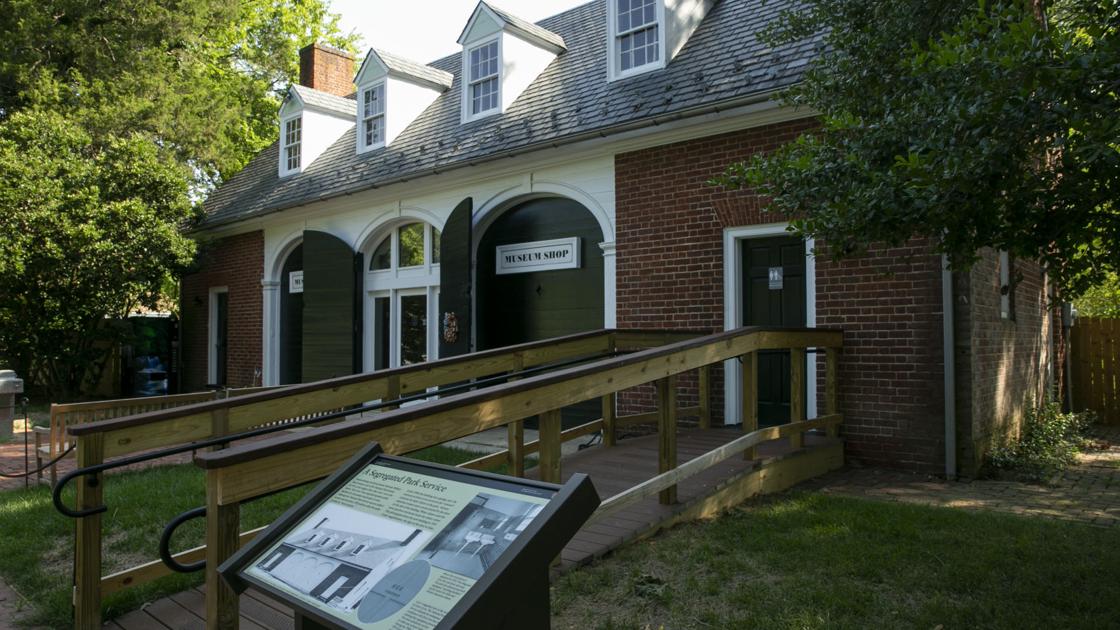
Racial segregation and National Parks – UMW experts are lending their expertise to the project
It’s a time of American history that is still raw and painful – segregation. It is, however, even more important to remember and preserve these moments so the country can move forward and learn from its past. It’s a project that University of Mary’s Washington’s Erin Devlin has taken on in collaboration with federal government. “The National Park Service has installed a wayside exhibit outside the Fredericksburg Battlefield Visitor Center on the history of segregation at Fredericksburg and Spotsylvania National Military Park. The exhibit highlights a former garage that in the 1930s and 1940s housed segregated restrooms for African American visitors. One of those restrooms is still in use and retains the original tile and fixtures. The larger building is now the park’s gift shop and bookstore. The new exhibit was a collaborative effort between the National Park Service and the University of Mary Washington to highlight surviving historic resources related to the local and national story of racial segregation at national parks. Erin Devlin, assistant professor of history and American studies at UMW, is working with the NPS to develop a historic resource study that will examine the practice of racial segregation in Virginia’s national parks during the first half of the 20th century.” August 06 – Fredericksburg.com Are you a journalist covering American history, or the place racial segregation has played in our country’s history? If so – let our experts assist with your stories. Erin Devlin's research focuses on race, public memory, and social justice, and she offers courses in both history and American studies. She is currently working on a historic resource study with the National Park Service focused on segregation and African-American visitation in Virginia’s national parks. Dr. Devlin is available to speak with media regarding this topic – simply click on her icon to arrange an interview.



High tensions in Hong Kong. Let our experts help with your ongoing coverage
It’s been more than 10 weeks of protests in Hong Kong and tensions are rising. With thousands taking to the streets, airports closed and clashes between protesters and police escalating – the world is watching to see just how patient the Chinese government will be with those demanding freedom and democracy. This isn’t the first time descent has taken place in China. But looking back 30 years to The Tiananmen Square, some are wondering if much has changed when it comes to actual calls for change in the new world power that is China? If you are a reporter covering this story and need a supporting source, expert opinion or global perspective on what is going on, why and what the potential outcomes may be – then let our experts help. Mark Caleb Smith is the Director of the Center for Political Studies at Cedarville University. Mark is available to speak with media regarding the current situation in Hong Kong, simply click on his icon to arrange an interview.


University of Rochester's John Covach gives perspective on Beatles Abbey Road Anniversary
September 26 marks the 50th anniversary of the worldwide release of the Beatles’ Abbey Road. While Let It Be was released in 1970, most of the tracks on that album were recorded earlier, making Abbey Road the band’s last album project. John Covach, director of the Institute for Popular Music at the University of Rochester, coauthor of What’s That Sound: An Introduction to Rock and Its History, and Beatles academic expert, notes: “It’s definitely the Beatles’ last statement. You’ve got a band that’s breaking up and everyone knows they’re breaking up. They’re arguing with each other, suing each other, and it’s ugly and goes against the band’s legacy. This all happens in 1969, so they decide to go back into the studio and do one last record to leave on a high note, which is Abbey Road. And there’s this moment where they come out with this album that it’s back to form; just a fantastic Beatles project after the last project had failed. Abbey Road is the group playing together, singing together, and working together in a way that they haven’t really done for some time and putting their personal differences aside.” The University of Rochester’s Institute for Popular Music and Eastman School of Music will host The Abbey Road Conference, from September 27 to 29. The conference will feature speakers Ken Townsend, recording engineer and former Abbey Road manager; Andy Babiuk, author of Beatles Gear, Walter Everett, author of The Beatles as Musicians; and Kenneth Womack, author of Maximum Volume: The Life of Beatles Producer George Martin.


Cybersecurity expert aims to protect the power grid by hacking would-be hackers
For hackers, the U.S. energy grid is a treasure trove of classified information with vast potential for profit and mayhem. To be effective, the power grid’s protection system has to be a bit like a hacker: highly intelligent, agile and able to learn rapidly. Milos Manic, Ph.D., professor of computer science and director of VCU’s Cybersecurity Center, along with colleagues at the Idaho National Laboratory (INL), has developed a protection system that improves its own effectiveness as it watches and learns from those trying to break into the grid. The team’s Autonomic Intelligent Cyber Sensor (AICS) received an R&D 100 Award for 2018, a worldwide recognition of the year’s most promising inventions and innovations. “An underground war of many years” Manic calls foreign state actors’ ongoing attempts to infiltrate the power grid — and efforts to thwart them — “an underground war of many years.” These criminals aim to enter critical infrastructures such as energy systems to disrupt or compromise codes, screens login information and other assets for future attacks. The nightmare result would be an infrastructure shutdown in multiple locations, a so-called “Black Sky” event that would erase bank accounts, disable cell phones and devastate the economy. In that scenario, engineers would have less than 72 hours to restore the grid before batteries, food supplies, medicine and water run out. With high stakes and increasingly sophisticated attackers, artificial intelligence and machine learning are key to respond to the challenges of protecting the grid’s interconnected systems, according to Manic. “Hackers are much smarter than in the past. They don’t necessarily look at one particular component of the system,” Manic said. “Often they can fool the system by taking control of the behavior of two different components to mask their attack on a third.” A nervous system for the power grid Using artificial intelligence algorithms, AICS can look holistically at an array of interconnected systems including the electrical grid and adapt continually as attacks are attempted. It is inspired by the body’s autonomic nervous system, the largely unconscious functions that govern breathing, circulation and fight-or-flight responses. Once installed, AICS acts as a similar “nervous system” for a power grid, silently monitoring all of its components for unusual activity — and learning to spot threats that were unknown when it was first installed. To “hack” the hacker, AICS often deploys honeypots, shadow systems that appear to be legitimate parts of the grid but that actually divert, trap and quarantine malicious actors. These honeypots allow asset owners to gather information that can help identify both a threat and a potentially compromised system. “Honeypots can make a hacker think he has broken into a real system,” Manic said. “But if the hacker sees that the ‘system’ is not adequately responding, he knows it’s a honeypot.” For this reason, the system’s honeypots are also intelligently updating themselves. Manic developed AICS with his INL colleagues Todd Vollmer, Ph.D., and Craig Rieger, Ph.D. Vollmer was Manic’s Ph.D. student at the University of Idaho. The AICS team formed eight years ago, and Manic continued to work on the project when he came to VCU in 2014. He holds a joint appointment with INL.


August is National Breastfeeding Month – Let our Experts Help with Your Coverage
It’s August…a month that celebrates breastfeeding and all the benefits that come with it. Breastfeeding is natural, healthy and cost-effective – and the American public is beginning to recognize a mother’s right to feed her child wherever and whenever she wants. Breastfeeding is a great benefit to the environment and society, according to the American Academy of Pediatrics. Breastfeeding families are sick less often and the parents miss less work. It does not require the use of energy for manufacturing or create waste or air pollution. There is no risk of contamination and it is always at the right temperature and ready to feed. A new website developed by researchers in Canada and Asia showed that the world could have saved $341 billion each year if mothers breastfeed their children for longer, helping prevent early deaths and various diseases, according to a July 12 article from Reuters. Known as the “Cost of Not Breastfeeding,” the online tool used data from a six-year study supported by the U.S.-based maternal and child nutrition initiative, Alive & Thrive. According to Augusta University Health’s Dr. Kathryn Strickler McLeod, breastfeeding protects against a variety of diseases and conditions in the infant, including diarrhea, respiratory tract infection, childhood obesity and much more. Additionally, there are also maternal health benefits to breastfeeding, including a decreased risk of breast and ovarian cancers. If you are covering this topic – let us help with your stories and questions. Dr. Kathryn Strickler McLeod is a nationally recognized expert in pediatric general and adolescent medicine. McLeod is available to speak with media – simply click on the icon to arrange an interview.


As Europe’s heatwave moves north toward the Arctic…just how worried do we need to be?
There’s no easier way to say it – Europe is baking. Record high temperatures are breaking the mercury in London, France, Germany and elsewhere across the continent. And, that warm air is not pushing north toward the Arctic. Greenland’s ice sheet is feeling the heat and it has some scientists worried. “So far this year, Arctic sea ice extent has hovered at record lows during the melt season. Weather patterns favorable for increased melt have predominated in this region, and an unusually mild summer has also increased melting of the Greenland ice sheet. Unlike with sea ice melt, runoff from the Greenland ice sheet increases sea levels, since it adds new water to the oceans. If the entire ice sheet were to melt, it would raise global average sea levels by 23 feet.” Washington Post, July 26 Are you a reporter covering climate change or weather? If so – we have an expert who can help with your stories. Dr. Pamela Grothe is an assistant professor in the Department of Earth and Environmental Sciences as the University of Mary Washington. She recently completed a Ph.D. in the Paleoclimatology Lab at the Earth and Atmospheric Sciences department at Georgia Institute of Technology. She’s an #expert in climate change and is available to speak with media – simply click on her icon to arrange an interview.


Detroit Rock City – Did any Rock Stars Emerge from Day 1 of the DNC Debates?
It was the first of two crucial days for anyone looking to lead the DNC into the 2020 election next fall. The reality is, with more candidates on the field than a World Cup soccer match, it’s too crowded for the very limited amount of airtime, fundraising and attention needed to win this race. Quite soon, there will need to be a substantial culling of this herd. Odds are, come the end of summer the field will be whittled down to three or four from the current two dozen (or so) currently contesting. Last night was Day 1 of the DNC debates in Detroit. Here were the key takeaways: Bernie Sanders came out spitting fire about health care and tried to reassert his prominence. Sanders has receded recently, was this the resurgence he needed? Pete Buttigieg made it clear he is the young, fresh and non-Washington choice – will it stick and can he gain traction? Montana Governor Steve Bullock knew this was his shot to get the attention a campaign needs. Late to the game, can he emerge as a credible candidate? And Elizabeth Warren and Beto O’Rourke seemed to fade into the crowd – is this a death knell for a campaign at this point? It was a long night and another one happens tonight. So, who emerged as the winner and who fell hard on Day 1? Who needs to leave? And what were the key policy planks that are starting to stick There is still a long way to go until the first Iowa primary in February, but if you are a journalist covering this long road – let us help. Dr. Stephen Farnsworth is professor of political science and international affairs at the University of Mary Washington. A published author and a media ‘go-to’ on U.S. politics, he is available to speak with media regarding the long journey to lead the DNC in 2020. Simply click on his icon to arrange an interview.
