
Experts Matter. Find Yours.
Connect for media, speaking, professional opportunities & more.

Covering Breast Cancer Awareness Month? Our experts are ready for your questions and coverage
October is Breast Cancer Awareness Month. Did you know that on average, every 2 minutes a woman is diagnosed with breast cancer in the United States. And according to the National Breast Cancer Foundation: In 2021, an estimated 281,550 new cases of invasive breast cancer will be diagnosed in women in the U.S. as well as 49,290 new cases of non-invasive (in situ) breast cancer. 63% of breast cancer cases are diagnosed at a localized stage (there is no sign that the cancer has spread outside of the breast), for which the 5-year survival rate is 99%. This year, an estimated 43,600 women will die from breast cancer in the U.S. Although rare, men get breast cancer too. In 2021, an estimated 2,650 men will be diagnosed with breast cancer this year in the U.S. and approximately 530 will die. 1 in 8 women in the United States will be diagnosed with breast cancer in her lifetime Breast cancer is the most common cancer in American women, except for skin cancers. It is estimated that in 2021, approximately 30% of all new women cancer diagnoses will be breast cancer. There are over 3.8 million breast cancer survivors in the United States. This year's theme is It's Time to Rise and the National Breast Cancer Foundation has a host of materials to watch and read for anyone looking to test themselves, find support or learn how they can help. If you're a journalist looking to know more about this topic or if you are covering Breast Cancer Awareness month - then let our experts help with your stories. Dr. Alicia Vinyard is a Board-Certified General Surgeon and Fellowship Trained Breast Surgical Oncologist at the Georgia Cancer Center and Medical College of Georgia at Augusta University. Dr. Vinyard is also an expert in breast cancer, cancer surgery and cancer survivorship. She is available to speak to media about Breast Cancer Awareness Month – simply click on her icon to now arrange an interview today.



Aston University to host event for new incoming students aimed at ‘building better democracy’
University experts have developed a unique online system which combines evidence and values to create effective decision-making The Deliberative Practice Network (DPN) has been used for creative teaching over the past three years and is now being looked at as a tool for online democracy The event will create a unique learning experience for new students and others using in-depth deliberation to consider a topical social issue. Aston University will host an event at the end of Welcome Week 2021 aimed at creating a unique learning experience for new students and others using in-depth deliberation to consider a topical social issue. Experts from the University have developed a unique online system called the Deliberative Practice Network (DPN) which combines evidence and values to create effective decision-making. Their system has been used for creative teaching over the past three years and is now being looked at as a tool for online democracy. As part of this pilot project, a ‘deliberative event’ will be held in the Wright Lecture Theatre on Saturday 25 September, at the end of Induction Week, open to everyone interested in 'building better democracy'. At the start of the day the newsworthy issue of ‘mandatory vaccination against Covid’ will be presented; complemented by talks: ‘Vaccination 101’, ‘Available Data’ and ‘Vaccine passport and live music events’. Voting and commenting on a controversial proposal will be encouraged via the DPN, and results will be instantly available. Speakers will then put the case for and against the proposal and delegates will be encouraged to debate in groups, and online. David Seedhouse, professor of Deliberative Practice at Aston Pharmacy School, said: “The event is open to all who wish to explore inclusive democracy, informed debate, and online decision-making. It will interest delegates from a wide range of backgrounds. “It can be difficult for citizens to have a say about decisions which affect us so we want to provide an example of a more inclusive form of democracy, based on detailed consideration over time, rather than a one-off show of hands.” Dr Patrycja Rozbicka, senior lecturer in politics and international relations at the School of Sciences and Humanities at Aston University, said: “This event will be an opportunity for new students to get engaged with what we do at Aston University and to have a bit of fun, before classes kick in. “Over a week there will be more information and discussion, culminating in a second vote on the original proposal." Dr Killian Mullan, lecturer in sociology and policy at Aston University, said: “This event is a fantastic opportunity for students to engage in critical, open, and informed debate on a crucial topic affecting society, helping students develop skills in evaluating competing arguments.” You can sign up to attend the free event HERE.

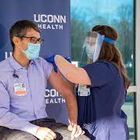
Experts in the Media – UConn’s Dr. David Banach is the go-to voice on COVID boosters
As COVID continues to wreak havoc across the globe, health systems in America are overwhelmed. And as the debate about a third shot continues, the FDA is prepared to allow Pfizer vaccine boosters as early as this week to those over 65 and to people at a higher health risk if exposed to the virus. UConn epidemiologist Dr. David Banach offered his expert perspective and insight on the need and effectiveness for those looking to learn more about booster shots and COVID vaccines: Booster shots of Pfizer’s COVID-19 vaccine may be administered as early as Friday, but who will get one is still up for discussion. “What the FDA review showed was in the general population, at this date and time, there wasn’t sufficient data to support booster doses,” said Dr. David Banach, hospital epidemiologist at UConn Health. Last week, the FDA’s advisory committee voted overwhelmingly not to recommend a third shot for people 16 and up. However, they did vote to authorize a booster dose at least six months after full vaccination for people who are 65 and older as well as individuals who are at high risk for severe COVID. “In older populations, there seems to be some potential benefit to giving a third dose within the Pfizer group,” said Dr. Banach. Dr. Banach said more information is expected in the days to come as this matter heads to the CDC’s independent advisory panel this week. “It’s going to provide more granular recommendations on how to proceed with that 65 and older group and potentially other groups as well,” said Dr. Banach. He added one of the groups up for discussion is healthcare workers. There continues to be an enormous amount of coverage and questions about vaccines and COVID-19, and if you are a journalist looking to know more and include an expert in your story, then let us help. Dr. David Banach is one of the lead experts on COVID-19 in America. He is available to speak with media regarding vaccination and what the future holds with COVID-19. To book an interview, simply click on his icon today.


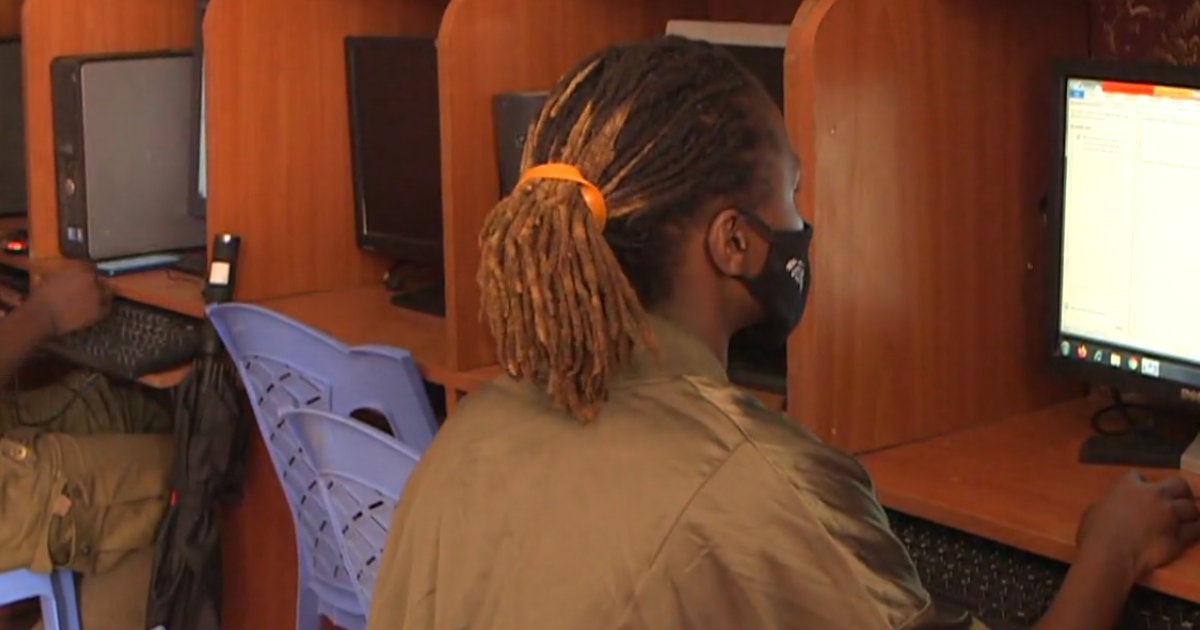
Offshore A’s – UMW’s David Rettinger is the go-to expert for the Varsity Blues trial
The Varsity Blues case captured headlines over two years ago, when news broke that wealthy parents paid upwards of $25 million in bribes to help their children cheat on test scores and secure college admission. As the trial gets underway this week, Professor of Psychological Science David Rettinger, who oversees Academic Integrity Programs at the University of Mary Washington, can provide unique insight into the scandal and the rise of contract cheating at colleges and universities across the country. He was recently interviewed by CBS News about the billion dollar cheating industry that has emerged in Kenya, where Americans are paying African students to do homework, write essays and in some cases, even complete degrees for them. "I think the state of cheating at colleges and universities is serious and getting more serious," David Rettinger ... told CBS News. He said that cheating is problematic because it means people can graduate from degree programs without actually being qualified in their fields. "We trust our doctors have been to medical school," Rettinger said. "Cheating leads us to overall social corruption because it leads us to having a cadre of professionals who can't actually do the work that they claim they can do." You can see the full interview and story here: Dr. David Rettinger is available to speak with media regarding this issue of cheating and academic integrity. Simply click on his icon now to arrange an interview today.


Infrastructure and extreme weather expert on recent weather events
Hiba Baroud, assistant professor of civil and environmental engineering, is available for commentary on recent extreme weather events, including hurricanes, tropical storms and flooding. Baroud is an expert on infrastructure and climate change as they pertain to extreme weather events. She can speak to the potential dangers of the destruction and the cleanup decisions affected areas must make, including those that can help prepare for the future. Topics she can discuss include: How weathers and disasters are becoming more frequent and intense, therefore costing us more. Why cities must prepare before extreme weather hits, making future-based predictions and not just relying on historical data to understand potential concerns. With that, cities must also focus on restoration after an event happens, rather than prevention Additional dangers to residents' lives to be considered once the weather has passed - such as a lack of food and water, lack of power and road infrastructure issues



UCI scholars discuss how 9/11 changed America
In recognition of the 20th anniversary of the Sept. 11, 2001, terrorist attacks in the U.S., we asked UCI scholars a single question: How did 9/11 change America? They responded according to their expertise – which ranges from collective trauma, media, air travel, foreign relations, false narratives, political divisiveness, and the war on terror. Contact Tom Vasich at 949-285-6455, tmvasich@uci.edu, to arrange interviews. Roxane Cohen Silver, Distinguished Professor of psychological science, public health and medicine E. Alison Holman, professor of nursing Topic: Media and collective trauma Quote: “The Sept. 11 terrorist attacks – which hijacked our television screens that Tuesday morning as people who sought to do us harm hijacked four airplanes – captured people’s attention throughout the days and weeks that followed. It also ushered in 24/7 media attention to what has become known as a “collective trauma,” transmitting the horrible events of that day throughout the country and, indeed, throughout the world in a matter of seconds. …The 9/11 attacks were tragic for American residents, but they also taught us that the media can broadcast distress alongside the news it’s covering.” Jan K. Brueckner, Distinguished Professor of economics Topic: Air travel Quote: “In response to the revenue shock of 9/11 and to new competition from low-cost carriers, the major airlines behaved conservatively in adding back capacity as traffic returned, so that the carriers eventually offered fewer seats to an ultimately larger number of passengers, leading to fuller flights and today’s less comfortable flying experience. Even though 9/11 is long past, the airline industry continues to operate in a climate of fear of terrorism from the air.” Erin Lockwood, assistant professor of political science Topic: U.S. foreign policy Quote: “The attacks – and the U.S. response – set in motion decades of war, anti-Arab and anti-Islamic bias and violence, and a willingness to sacrifice military and civilian lives and civil liberties for the perception of security. As we mark the withdrawal of U.S. forces from Afghanistan this month, it’s all too apparent that many of those trends continue to reverberate today.” David Kaye, clinical professor of law Topic: National security Quote: “Despite my hopes for something better that might emerge, the attacks reinforced a cult of national security that the United States transformed into the torture of terrorism suspects, drone warfare, the invasion of Iraq, Guantanamo Bay’s indefinite detentions, anti-Muslim discrimination at home and the emergence of the contemporary surveillance state. … The predominance of national security as an ideology and apologia remains among the most significant legacies of that day, a feature of American political life that continues to constrain creativity and a return to normalcy in American law and policy.” Matthew Beckmann, associate professor of political science Topic: War on terror Quote: “To understand the legacy of 9/11 is to define the legacy of George W. Bush. For after the deadliest terrorist attacks on U.S. soil in our nation’s history, American citizens and lawmakers gave President Bush broad support and broader authority to wage the “war on terror” as he saw fit. … Twenty years after the attacks, having seen those lofty aspirations dashed in Afghanistan and Iraq, disregarded in Guantanamo Bay and black site prisons, and discounted even by our staunchest allies, the biggest legacy of Sept. 11 for the United States is that the “shining city on a hill” has less luster and a shorter reach.” David Theo Goldberg, professor of comparative literature Topic: Rise of false narratives Quote: “The events of 9/11 lent themselves to make-believe. The smoke hadn’t yet cleared when conspiracies began to abound, from “weapons of mass destruction” to “the deep state.” That the Trump administration adopted this as its own playbook while insisting on “draining the swamp” required cooking the rules. … Fabrication had become the rule book of the game. Invention and inventedness, disruption and innovation fueled the movement. The “truth” was, well, oh so yesterday.”

Bye-bye Bonnie and Clyde – Brazil is taking bank robbing to a whole new level
The media coverage reads like a scene out of a Michael Bay movie. Bank robbers using drones, strategically planting bombs across the city and taking hostages and placing them atop getaway cars. It’s surreal … but in Brazil, over the top bank heists are becoming the new normal. And the media are looking for experts to try and explain just what it is going on. That’s why the Daily Beast recently contacted Georgia Southern’s expert on Latin America, José de Arimatéia da Cruz, Ph.D. In the predawn darkness last Monday, a group of about 20 heavily armed commandos seized control of the downtown financial block in Araçatuba, a mid-sized Brazilian city in the eastern state of São Paulo. They then proceeded to rob three banks, while the surveillance drones they had deployed kept watch over head. When the heist was complete they accosted several bystanders, shot a man who had been filming them on his phone, and then bound the hostages they’d taken to the tops of their getaway vehicles so as to dissuade police from interfering with their escape…. Since 2015 these kinds of attacks have become so common that Brazilians even have a name for them: Novo Cangaço, which roughly translates into English as “New Struggle.” The name refers to a “social banditry” movement that flourished in Brazil’s hardscrabble northeast in the late 19th and early 20th centuries. The original Cangaço sought to battle back against widespread poverty and inequality. It involved Robin-Hood like figures who plagued wealthy landowners, donated to the poor, and pushed the government to jumpstart economic reforms. “The New Cangaço’s modus operandi is similar” to that of their predecessors, José de Arimatéia da Cruz , Ph.D., told The Daily Beast. The tactics might be alike, but the strategy between the old and new incarnations are quite different, according to da Cruz, who is originally from Brazil but now teaches international relations at Georgia Southern University. “The difference today is that the traditional cangaceiros [peasant bandits] were fighting against politicians. The Novo Cangaço today are attacking banks and are most basically interested in money for different purposes.” This is a sensational chain of events – and if you are a reporter covering these escalating crimes in Brazil – then let us help with your stories. José de Arimatéia da Cruz is available to speak with media regarding this topic — simply reach out to Georgia Southern Director of Communications Jennifer Wise at jwise@georgiasouthern.edu to arrange an interview today.

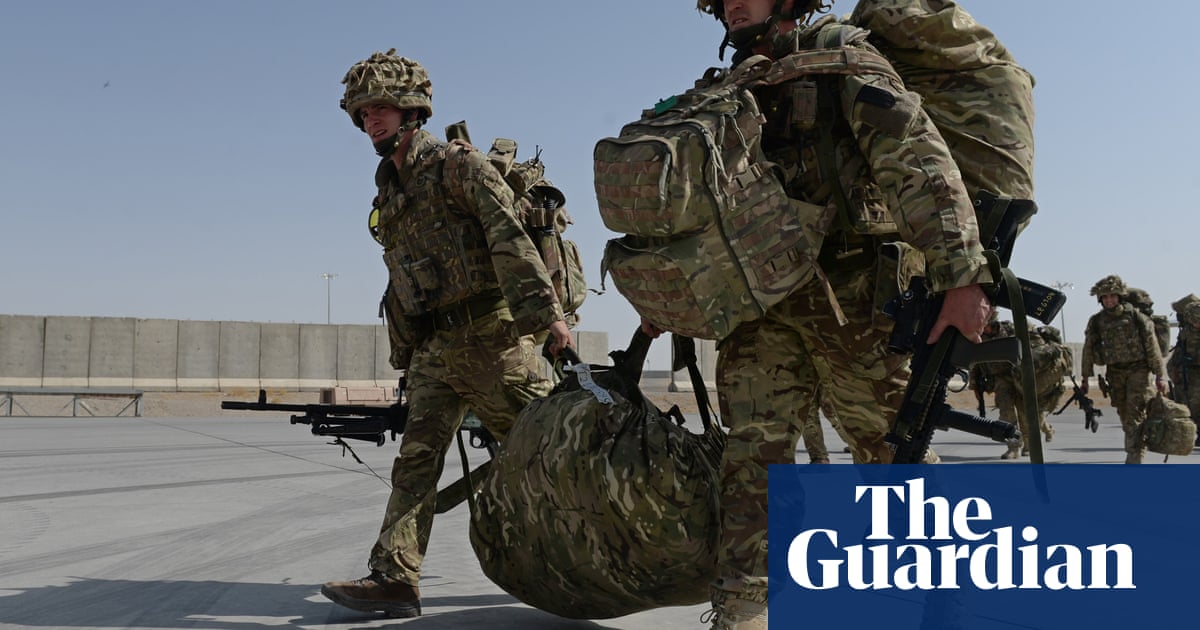
This Saturday marks the 20th anniversary of the September 11 terrorist attack. It was a day that forever changed how the United States viewed terrorism and its approach to foreign policy. The Middle East, especially Iraq and Afghanistan, has seen upheaval in the wake of 9/11. Over the last two decades, America’s approach to how it deals with enemies and how it collaborates with allies has also been drastically altered. University of Mary Washington Political Science and International Affairs Professor Jason Davidson is an expert in American foreign and security policy, and international security. He is also the author of the commissioned study, "The Costs of War to United States Allies Since 9/11," which focuses extensively on the human and monetary sacrifices made by America's allies in these conflicts. Davidson, and the document, made waves this spring, landing in the likes of Forbes, The Guardian and The Daily Mail. If you’re looking to arrange an interview with Dr. Davidson, simply click on his icon.


IDC Quarterly Tech Brief: Your Guide For The Digital-First World
September 2021 Editor's Comments Happy September! We hope you got a chance to recharge and enjoy the summer. Now that we’re looking into the last half of 2021, our experts agree that we’re not going back to the pre-pandemic normal, but we can’t help but be optimistic with recent news on vaccinations, lifting of restrictions, kids going back to school, and some of us returning to the office. As the world slowly moves from a pandemic to a digital-first state, we will see permanent shifts in the way we live, work, play and learn. IDC expects the next 3 years to remain highly fluid due to the growing range of global challenges. And now, more than ever, business and government leaders will need to operate and invest in increasingly digital-first markets, while building digital infrastructures, enabled by an intelligent, empowered, and a well-connected workforce. In this edition of IDC Canada's Quarterly Tech Brief, we’ll explore insights on the digital-first world, best practices, and digital transformation stories from Canadian tech leaders at our upcoming IDC CIO Series webinar on September 22, and as usual, we also reveal the latest research, survey results and market forecasts. And last but not least, we're happy to announce IDC Canada's biggest technology event of the year, IDC Connections 2021 is coming up on November 4th. Save your seat today! FEATURED IDC CIO Panel Series – Part 2: Building Resiliency & Innovation into Your Canadian Journey Join us on Wednesday, September 22 at 2 p.m. ET for the latest session of our IDC CIO Panel webinar series where we will dive into what digital resiliency means for you, and how to leverage the latest Digital Infrastructure and Digital Innovation trends to your advantage. Hear from industry-leading tech executives, Antoine Haroun, CIO at the Peel District School Board, Irene Zaguskin, CTO at The Printing House, and Michael Kurek, VP of Sales & Operations, Data Center Solutions at Dell Technologies as they unpack how the pandemic accelerated their digital transformation journey, and their best practices for planning and managing IT during uncertain times. Our experts will also host 3 sessions around how the Future Enterprise operates in a Digital-First World, a look ahead at the forces of change heading into 2022, the Future of Digital Infrastructure, and the need to strive for a balance between digital innovation and resiliency to remain relevant and competitive. Your Canadian Research Checklist Here are some of our most popular Canadian reports of the quarter to help you understand changing market conditions and succeed in 2021. ✓ IDC Market Glance: Service Providers in Canada, 2Q21 ✓ The Rise of Canadian Cloud Ecosystems ✓ Canadian Cybersecurity Market Snapshot, 2Q21 ✓ Canadian Cybersecurity Buyer Persona: Managed Security Services Benefits ✓ Canadian Managed Cloud Services Adoption, 2021 Forecast Highlights ✓ Canadian Wireless Services Forecast, 2021–2025: Wireless Wars 18 ✓ Canadian Internet of Things Forecast, 2021–2025 ✓ Outlook for Canadian SaaS Applications, 2021 ✓ Worldwide Managed Cloud Services Forecast, 2021-2025 ✓ IDC's Forecast Scenario Assumptions for the Canadian ICT Market, April 2021 IDC THOUGHT LEADERSHIP: DIGITAL RESILIENCY SCORECARD Explore IDC's new Digital Resiliency Scorecard Does resiliency still matter in a "post-pandemic" world? Quite simply, it does. In IDC's recent Digital Resiliency Benchmark Survey, we found that 65% of U.S. buyers and 55% of Worldwide buyers have plans to invest in resiliency over the April 2021-April 2022 timeframe. Watch The Digital Resiliency Scorecard webinar to learn more ICYMI: BLOG HIGHLIGHTS FROM THIS QUARTER Future of Customer - More Human Experience - Over 34% of executives point to transforming the customer experience as the top business function. Learn more about the Future of Customer framework with IDC’s Keyoor Adavani. Read More → Major Smartwatch Market Consolidation: A Canadian Take - In May Google announced a new unified smartwatch platform in partnership with Samsung. Learn how this partnership is expected to shake up the market dynamics in Canada with Shahd ElAshri. Read More → Telesat Vying For LEO Constellation Leadership - A new commercial space race has begun and among the entrants for Low Earth Orbit (LEO) satellite constellations, Telesat is an emerging leader in this multi-billion-dollar market. Learn more from IDC's Lawrence Surtees. Read More → Federal Budget Innovation Goals and What’s Next for Recovery - COVID-19 fast-tracked innovation and digitization. See how the federal budget plans to support digital transformation, and learn how customer centricity and AI can set you apart from the competition with IDC's Mark Schrutt. Read More → UPCOMING VIRTUAL EVENT IDC Connections 2021 Canada: Accelerating Your Path to a Digital-First Enterprise Mark your calendars! IDC Connections is back this year and we can't wait for you to take a front-row seat. Don't miss an afternoon full of IDC experts' insights, special guests, networking, and hear from the tech leaders who are driving this new era of rapid transformation. This year's highlights include: A special closing keynote on the Future of Sports and Entertainment with Humza Teherany, Chief Technology & Digital Officer at Maple Leaf Sports & Entertainment Creating digital innovation & experiences at your organization, with IDC's Chief Research Officer, Meredith Whalen Embracing digital infrastructure, with IDC Canada's Dave Pearson Leveraging new industry ecosystems, with IDC Canada's Nigel Wallis Guidance from our popular CIO Best Practices Panelists PODCASTS WORTH A LISTEN Find out why clients are raving about our new podcast series! In an era seemingly filled with uncertainty, the Future Enterprise podcast is a must-listen. It's a podcast for business and tech executives, aimed at helping you leverage technology to achieve innovative, disruptive, and productive business outcomes. Listen in as IDC host, Joseph Pucciarelli, Group Vice President & IT Executive Advisor interviews C-level executives from around the world on their digital transformation initiatives touching on each of the "Future of X" digital initiatives. Senior IDC research leaders often join in the conversation. Listen Now → Thanks for being a part of our IDC Quarterly Tech Brief Newsletter community! Don’t forget to subscribe to be notified quarterly when the next issue comes out.


Millennials at Work – Let our experts offer insight into the next generation of employees
Millennial workers now total 56 million, representing 35% of the total US labor force. How can organizations harness their unique talents and strengths? Goizueta Professor Andrea Hershatter recently joined the Goizueta Effect to explore this generation’s use of technology as a “sixth sense,” their inherent trust in organizations, and their tendency toward an extrinsic sense of fulfillment. In the interview Hershatter uses her expertise and years of experience to discuss a wide variety of topics such as: Defining Generations What Makes a Millennial? Exploring Boomers, GenX and Zoomers Millennials’ Relationship with Technology & Organizations How COVID-19 Has Impacted Millennials Dynamics & Interplay Between Generations The Next Generation and The Future Andrea Hershatter is Senior Associate Dean and Director of the BBA Program in Emory’s Goizueta Business School. She regularly provides consultation to corporations and academia on the Millennial generation and has been an outside expert to the Graduate Management Admission Council in enhancing undergraduate student outreach. She is a frequent presenter on the topics of entrepreneurship, generational workplace culture, and management education. Andrea is available to speak with media about this topic – simply click on her icon now to arrange an interview today.

