Experts Matter. Find Yours.
Connect for media, speaking, professional opportunities & more.
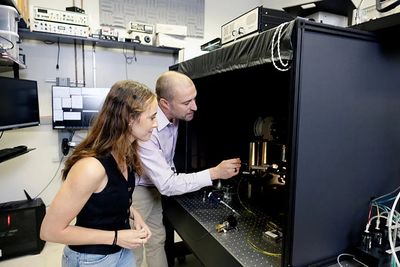
Study: What makes a smell bad?
You wouldn’t microwave fish around your worst enemy — the smell lingers both in kitchen and memory. It is one few of us like, let alone have positive associations with. But what makes our brains decide a smell is stinky? A new study from UF Health researchers reveals the mechanisms behind how your brain decides you dislike — even loathe — a smell. Or as first author and graduate research fellow Sarah Sniffen puts it: How do odors come to acquire some sort of emotional charge? In many ways, our world capitalizes upon the importance of smells to influence emotions, running the gamut from perfumes to cooking and even grocery store design. “Odors are powerful at driving emotions, and it’s long been thought that the sense of smell is just as powerful, if not more powerful, at driving an emotional response as a picture, a song or any other sensory stimulus,” said senior author Dan Wesson, Ph.D., a professor of pharmacology and therapeutics in the UF College of Medicine and interim director of the Florida Chemical Senses Institute. But until now, researchers have puzzled over what circuitry connects the parts of the brain vital to generating an emotional response with those responsible for smell perception. The team started off with the amygdala, a brain region that curates your emotional responses to sensory stimuli. Although all our senses (sound, sight, taste, touch and smell) interact with this small part of your brain, the olfactory system takes a more direct route to it. “This is, in part, what we mean when we say your sense of smell is your most emotional sense,” Sniffen said. “Yes, smells evoke strong, emotional memories, but the brain’s smell centers are more closely connected with emotional centers like the amygdala.” In the study, researchers looked at mice, who share neurochemical similarities with people. They can learn about odors and categorize them as good or bad. After observing their behavior and analyzing brain activity, the team found two genetically unique brain cell types that allow odors to be assigned into a bucket of good feelings or bad feelings. Initially, the team expected that one cell type would generate a positive emotion to an odor, and another would generate a negative emotion. Instead, the brain’s cellular organization gives the cells the capability of doing either. “It can make an odor positive or negative to you,” Wesson said. “And it all depends upon where that cell type projects in your brain and how it engages with structures in your brain.” But why is knowing more about how we categorize smells important? Well, for starters, smells — and our reactions to them — are a part of life. Sometimes, however, our reactions to them can be outsized, or take on a negative association so strong it disrupts how we live. “We’re constantly breathing in and out and that means that we’re constantly receiving olfactory input,” Sniffen said. “For some people that’s fine, and it doesn’t impact their day-to-day life. They might even think, ‘Oh, odors don’t matter that much.’ But for people who have a heightened response to sensory stimuli, like those with PTSD or anxiety or autism, it’s a really important factor for their day-to-day life.” In the future, the research could help clinicians adjust for heightened sensory response that some people struggle with in their everyday lives, Wesson added. One example? A patient associating a clinic’s smell with transfusions that made them queasy. Based upon the receptor systems in these specific brain pathways, the team members believe they might be able to change those associations. Potentially, medications could suppress some of these pathways’ activity to allow you to overcome stressful and aversive emotional responses. Conversely, these pathways could be activated to restore enjoyment to things that people might have grown indifferent to — like those who lose their appetite from illness. “Emotions in part dictate our quality of life, and we’re learning more about how they arise in our brain,” Wesson said. “Understanding more about how our surroundings can impact our feelings can help us become happier, healthier humans.” This research was supported by funding from the National Institute on Deafness and Other Communication Disorders and the National Institute on Drug Abuse. Sarah Sniffen was supported by a fellowship from the National Institute on Deafness and Other Communication Disorders.



Six University of Delaware online graduate degree programs are ranked among the best in the nation by U.S. News & World Report in its 2026 U.S. News Best Online Programs, released Jan. 27, 2026. Both UD’s online master’s in education and online MBA ranked among the top 10% of their respective programs, at No. 25 and 26, respectively. Announced on Jan. 6, the online MBA program recently rose nine spots to No. 32 in the Poets&Quants 2026 Online MBA rankings. UD’s online master’s in nursing program ranked No. 35 out of 209 programs, rising 99 places over the past year. New for UD, the online master’s in educational/instructional media design program was recognized by peers at No. 11 in this education specialty ranking. UD’s online master’s in computer information technology program and online master’s in engineering ranked No. 64 in their respective areas. “These latest rankings recognize the expertise and dedication of our faculty and staff in delivering UD’s outstanding online graduate programs,” Interim Provost Bill Farquhar said. “We are committed to continually enhancing these programs and all the transformative opportunities that enable our students to meet their educational and career goals throughout their lives.” U.S. News selects several factors, known as ranking indicators, to assess each program in the categories outlined above. A program's score for each ranking indicator is calculated using data that the program reported to U.S. News in a statistical survey and from data collected in a separate peer assessment survey. This year’s edition evaluates more than 1,850 online bachelor’s and master’s degree programs using metrics specific to online learning. The rankings include only degree-granting programs offered primarily online by institutions with accreditation from recognized commissions. While the overall rankings methodology remains largely unchanged, U.S. News reported increased participation in this year’s data collection cycle, with more programs submitting statistical data and completing peer assessment surveys. According to U.S. News, this broader participation may reflect continued growth in online education nationwide. The University of Delaware offers over 35 online credit and non-degree professional programs. An online program from UD offers the same quality and rigor as an on-campus program and provides the flexibility to accommodate your busy schedule. UD is accredited by the Middle States Commission on Higher Education, and its online and on-campus degree programs have rigorous curricula delivered by experts, offer affordable program options, and provide students access to student support services, career fairs, recruiting opportunities and graduation ceremonies to celebrate student success. “UD's high-level rankings are in large part due to the positive outcomes that our students experience as a result of taking one of our online degrees or programs,” said Associate Provost for Online Learning and Innovation George Irvine. “Students tell us how much they enjoy learning from our accessible faculty and doing so in engaging and interactive online courses.” For more information about UD’s online degree programs, visit online.udel.edu. A complete listing of UD’s high-profile rankings is available on UD’s Institutional Research and Effectiveness Rankings webpage. Please note that the programs and specialties used in rankings may differ slightly from the names of UD’s degree programs.


How to Make Your Experts “AI-Ready"
AI is changing how people discover expertise. Today, journalists, event organizers, researchers, and the public increasingly turn to tools like ChatGPT, Claude, Perplexity, and Google Search’s AI summaries powered by Gemini. Instead of clicking through pages of links, they expect clear, credible answers—often delivered instantly, with citations. That shift has major implications for organizations. It’s no longer enough for your experts to “rank well.” They need to be understood, trusted, and accurately represented by AI systems. So the real question becomes: When AI talks about your experts, does it get it right? This is where LLMs.txt plays an important role—especially when paired with an ExpertFile-powered Expert Center. What is LLMs.txt (In Plain English)? ...and why is it essential for expert content LLMs.txt is a small, machine-readable file placed on your organization’s website—in the case of your expert content alongside your main Expert Center. Its purpose is simple: to explain your expertise to AI systems clearly and unambiguously. “AI systems don’t just scan for keywords; they look for clear meaning, consistent context, and clean formatting — precise, structured language makes it easier for AI to classify your content as relevant.” Microsoft: Optimizing Your Content for Inclusion in AI Search Answers Rather than forcing AI to infer meaning from scattered pages, LLMs.txt explicitly tells systems: Who your experts are Which pages represent official, curated content How expert profiles differ from articles, Q&A, or research content How your organization’s expertise should be interpreted as a whole Think of it as a table of contents and usage guide for AI —helping large language models understand your site the way a communications professional would. Why This Matters for Visibility and Trust It Establishes Your Organization as the Source of Truth AI systems routinely synthesize information from multiple places. Without guidance, they may rely on outdated bios, scraped content, or secondary references. LLMs.txt provides a clear signal: This is our official expert content. This is what represents us. For ExpertFile clients, this matters because the platform already centralizes and curates expert content—from profiles and directories to Spotlights and Expert Q&A—ensuring that what AI sees is current, governed, and institutionally endorsed. The result: Greater accuracy, stronger attribution, and reduced risk of misrepresentation when your experts appear in the ever growing AI-generated overviews and answer. ahrefs: AI Overviews Have Doubled How It Improves Discovery Across AI Platforms It Makes Structured Expertise Easier for AI to Use ExpertFile is purpose-built to publish structured expert content at scale—content that goes well beyond static bios. LLMs.txt simply helps AI recognize and use that structure correctly. It clarifies the role of key ExpertFile content types, including: Expert Profiles → Canonical identity, credentials, and areas of expertise Spotlight Posts → Timely commentary, thought leadership, and research insights Expert Q&A → Authoritative answers to real-world questions Directories, Research Bureaus, and Speakers Bureaus → Curated collections of expertise by topic or audience This makes it easier for AI systems to: Match your experts to breaking news and trending topics Pull accurate summaries for AI-generated responses Identify the right expert for journalists, event organizers, and researchers Combined with ExpertFile’s extended distribution through expertfile.com and the ExpertFile Mobile App, your expertise is not only published—but actively discoverable across channels used by key audiences . How It Builds Organizational Authority It Connects Individual Experts to Institutional Credibility Without context, AI may treat expert pages as isolated profiles. LLMs.txt helps connect the dots. It tells AI that: Your experts are curated and endorsed by the organization Their insights are part of a broader expertise ecosystem Your institution has depth across priority subject areas This aligns closely with how ExpertFile structures content to support E-E-A-T (Experience, Expertise, Authority, Trust)—not just at the individual level, but across the organization . The outcome: Your organization is recognized not just as a collection of experts, but as an authoritative source of knowledge. How It Works with Google, Gemini, and AI Search Supports AI Summaries, Citations, and Knowledge Panels LLMs.txt helps ensure that when Google’s AI: Summarizes your organization Cites expert commentary Builds “about this topic” panels …it draws from your official, structured ExpertFile content, rather than fragmented third-party sources. This complements ExpertFile’s existing SEO and AI-discoverability foundation, which includes clean code, proper meta data, schema markup, and frequent crawling by both search engines and AI bots. How LLMS.txt Fits with SEO, Meta Tags, and Schema LLMS.txt doesn’t replace SEO—it builds on it. Traditional SEO elements such as page titles, meta descriptions, schema.org markup, and internal linking remain essential for helping search engines index and rank your content. ExpertFile already delivers these fundamentals out of the box, continually testing and evolving SEO and GEO (Generative Engine Optimization) standards as search changes . “Semantic SEO helps search engines understand context... it now helps bridge a critical gap between traditional SEO and newer generative engine optimization (GEO) and AI optimization (AIO) efforts.” Search Engine Land: Semantic SEO: How to optimize for meaning over keywords LLMS.txt adds a layer designed specifically for AI systems: Schema explains individual pages LLMs.txt explains your entire expertise ecosystem In simple terms: SEO helps your content get found LLMs.txt helps AI understand, summarize, and cite it correctly Together, they ensure your experts are not only visible—but accurately represented wherever AI is shaping discovery. Why This Is Especially Powerful on ExpertFile ExpertFile was designed to future-proof expert visibility—offering structured publishing, governance, distribution, inquiry management, analytics, and professional services as part of a continuously evolving SaaS platform . LLMS.txt acts as a multiplier on that foundation: Turning your Expert Center into a machine-readable expertise hub Strengthening AI discovery without adding operational burden Supporting emerging use cases like automated expert matching and AI-assisted research It’s not about chasing new technology. It’s about ensuring your expertise is clearly defined, properly attributed, and trusted—now and in the future. The Takeaway An LLMs.txt file on your ExpertFile organization page helps ensure that: Your experts are found by AI tools, not overlooked Your content is interpreted correctly, not flattened or misrepresented Your organization earns authority and trust in AI summaries, citations, and search results “AI search isn’t eliminating organic traffic. But it is reducing visits to source websites… Measure presence (citations, mentions) alongside traffic to see real impact.” Semrush: AI Search Trends for 2026 & How You Can Adapt As AI becomes the front door to information, LLMs.txt helps make sure that when people ask for expertise, your organization is the answer they get.



When Betting Goes Mobile: The Hidden Cost to Young Adults’ Finances
As online gambling and sports betting surge across the United States, concerns are mounting about the financial and social consequences—particularly for young people. Dr. Jared Pincin, Associate Professor of Economics at Cedarville University, offers journalists a data-driven economic lens on how the rapid expansion of digital gambling is reshaping personal finances and increasing financial risk among younger Americans. What's Happening Mobile betting apps have transformed gambling into an always-available activity, accessible anywhere and at any time. With aggressive marketing tied to professional and collegiate sports, online gambling has become normalized—especially among young adults. As participation rises, so do reports of debt, financial instability, and problem gambling, raising questions about consumer protection, regulation, and long-term economic impact. Dr. Jared Pincin primary research interests explore the intersection of public choice economics with foreign aid as well as issues in sports economics. Pincin has published in popular publications such as The Hill, Real Clear Markets, Foxnews.com, and USA Today and scholarly journals such as Oxford Development Studies, Applied Economic Letters, and the Journal of Sport and Social Issues. View his profile here Key Insights Online Gambling Is Built for Continuous Spending Modern gambling platforms are designed to encourage repeated engagement. Gamified interfaces, instant wagers, and constant prompts make it easy for users to lose track of spending, increasing the likelihood of financial loss over time. Young Adults Face Elevated Risk Young people, particularly college-age students and adults in their twenties, are among the fastest-growing users of online betting platforms. Limited financial experience, combined with easy credit access and social pressure, makes this group especially vulnerable to poor financial outcomes. Personal Finances Are Directly Impacted Gambling losses often come at the expense of savings, rent, tuition, and long-term financial planning. Dr. Pincin emphasizes that gambling platforms generate profit only when users lose, making sustained participation a negative-sum financial activity for individuals. Economic Incentives Drive Expansion From an economic standpoint, gambling growth is fueled by state revenue incentives and private profit motives. Dr. Pincin helps explain how these incentives can conflict with consumer well-being, particularly when regulatory safeguards lag behind technological innovation. About Jared Pincin Dr. Jared Pincin is an Associate Professor of Economics at Cedarville University. He holds a Ph.D. in economics and specializes in public choice, behavioral economics, and sports economics. His work examines how incentives shape individual decision-making and how policy choices affect financial outcomes at both the personal and societal levels. Let Us Help with Your Coverage Jared Pincin can assist reporters by: Explaining why online gambling participation has risen so quickly among young people Breaking down the economic mechanics of betting platforms and personal financial risk Providing context on the long-term financial consequences of habitual gambling Contributing expert insight to stories on regulation, advertising, and consumer protection Why This Matters As gambling becomes increasingly embedded in American culture, its financial consequences are no longer limited to isolated cases. Understanding how online gambling affects young people’s financial stability is essential for informed public reporting. Dr. Pincin offers clear, accessible analysis that helps audiences understand the economic realities behind the headlines.



The Ads are Coming ! OpenAI is testing ads inside ChatGPT starting this month.
But there's a catch: You can’t just buy your way in ChatGPT will soon include “clearly labeled sponsored listings” at the bottom of AI-generated responses. And while the mock-ups don't appear all that sophisticated, it's important to focus on the bigger picture. We're about to see a new wave of 'high-intent advertising' that combines the targeting sophistication of social media with the purchase-intent clarity of search advertising. More on that in a moment. How Do ChatGPT Ads Work? Starting later this month, free users of the ChatGPT platform and those under 18 will begin receiving Ads at the bottom of their screens. First, they will see ChatGPT's answer to their question, which provides a comprehensive, relevant response that builds trust. Then they will see an ad for a sponsored product/service below. An ad that suddenly doesn't feel like a blunt interruption. It feels like a natural next step. This is premium placement. The user has already received value. They've been educated. And now there's a clear call to action (CTA) that's in context. Open AI has stated that their new Ads “support a broader effort to make powerful AI accessible to more people.” Translation: As they approach 1 billion weekly users across 171 countries using ChatGPT for free, OpenAI needs to offset its astronomical burn rate with ads. Makes sense. This New Era of Conversational Ads Will be Complicated But there's a structural difference with these new ads. OpenAI has stated that ads will only appear when they're relevant to that exact conversation. This means you can't just buy your way into ChatGPT Ads. In fact, with ChatGPT you are being selected because you're the right answer the user needs at that time. Put another way: When ChatGPT evaluates which sponsored products to show, it will favor brands with demonstrated authority on the topic. So unlike traditional paid search, where a higher bid gets you ranked in sponsored results, ChatGPT Ads will reward the brands whose content has already been recognized as authoritative by the AI model. Brands with strong organic visibility, topical expertise, and content that aligns with user intent will have a distinct competitive advantage from day one. Brands without that foundation will be paying premium rates to compete with established authorities. How ChatGPT's Ad Strategy is Set to Change Digital Marketing For years, CMOs have treated organic search and paid search as separate budget lines, often managed by different teams. I saw this firsthand, as I helped my client DoubleClick launch it’s first Ad Exchange network in the US market. Programmatic exchanges brought a new efficiency to digital ad buying. It was a very groovy time. This feels very different. Why? Because, the conventional wisdom has always been that paid search and ads drive immediate results while organic search plays the long game. In 2026, that strategy isn’t completely obsolete. But that type of thinking is about to get a lot more expensive for clients if they don't start to appreciate quality "organic" content and its ability to improve their paid advertising ROI. Now organic and paid need to get along, to get ahead. ChatGPT Ads Are Looking for Topical Authority that Experts Can Demonstrate When ChatGPT evaluates which sponsored products to show, it will favor brands with demonstrated authority on the topic. Brands won't simply be able to "buy" visibility. OpenAI in its announcements, has been explicit: ads must be relevant to the conversation. Relevance is determined by topical alignment, not budget. A brand spending millions on generic bidding will lose to a smaller competitor whose product is more precisely aligned with what the user actually asked. The ads aren't live yet. But the infrastructure supporting them is. Open AI, Google and many of the other generative search platforms are building very sophisticated systems that track topical authority and content quality signals. They're already reshaping how organic search, AI recommendations, and paid advertising work together. Topical Relevance + Expert Authority is the Path to Visibility in Search Investing in well-developed thought leadership programs generates compound returns. You get the organic search results plus an improvement in your paid search metrics in Generative AI search platforms. When done right, you build authority for AI citations, which then positions you better for ChatGPT ads. Remember, your organic traffic gains are built on authoritative content. They're built on being the answer that search engines and AI systems select. And once you've built that authority, it works everywhere—traditional search, AI Overviews, ChatGPT, and soon… ChatGPT ads. What To Do Before AI Ad Networks Start to Scale The early advantage will go to brands that invest in quality content right now. Organizations that invest in expert-authored, intent-aligned content over the next six months will have more AI citation visibility from Google Overviews and similar LLM's like ChatGPT. That means more trust signals, making paid ads more effective when they run. Content that is aligned with user intent: Answers a specific question. Not tangentially, not after 2,000 words of context. The answer appears in the opening paragraph, structured for AI extraction. Includes expert perspective. Generic information that could come from anywhere doesn't differentiate you. Expert insight, original research, or proprietary frameworks do. Demonstrates topical authority. A single authoritative article matters less than a cluster of related content that shows comprehensive expertise on a topic. Is structured for scanning. Clear headings (H2, H3), bullet points, tables, Q&A blocks. This structure helps both human readers and AI systems parse meaning. Remember, the brands that get the most value out of ChatGPT Ads will be the ones that built intent-aligned content years before the ads launched. They'll have topical clusters, expert perspectives, and the authority signals that make them the natural choice for sponsorship. Questions CMO’s Should Be Asking their Teams Now to Prepare for ChatGPT Ads Q. Can I pre-purchase Chat GPT Ads? As of today, there are currently no ads in ChatGPT. Open AI has announced that they will begin internal testing ads in ChatGPT later this month for Free users in the US market. Q. Do Ads influence the answers ChatGPT gives you? What about privacy? Open AI in their release states that answers are optimized based on what's most helpful to you. Ads are always separated and clearly labeled from Answers. They also state that they keep your conversations private from advertisers and will never sell your data to advertisers. Q. How do we audit our site content to ensure we're aligned with user intent? For your top 20-30 decision-stage queries (the ones that drive revenue), here's a quick test. Does the content directly answer the question in the opening paragraph? Are you including question-and-answer formats in your content? If you're burying the answer in a 3,000-word article full of tangents, you're losing visibility in organic search, and you're already failing in ChatGPT's environment. Restructure. Q. How do we prepare for ChatGPT Advertising Opportunities? Build topical authority through content clusters. Don't publish isolated blog posts. Organize your content around core topics your audience cares about. Create a long-form hub article that comprehensively covers the topic, then develop additional linked articles that dive into sub-topics and questions. Link them together. This structure helps AI systems over time, recognize your brand as authoritative on that topic, which improves both organic rankings and AI citation rates. Q. Can we still get traction with content that is not authored by experts? Generic AI-written content won't differentiate you. Get expert voices into your content. Feature your subject-matter experts, partner with practitioners, and customers to contribute original insights, case studies, or frameworks. AI systems can detect authenticity, and original expert perspectives is now a ranking signal. This is especially critical as you prepare for ChatGPT ads. OpenAI has prioritized conversations that cite authoritative sources. Q. How does content need to be structured for citations? Implement proper schema markup and structured data. AI systems extract information by parsing content structure. If your pages include proper schema markup (FAQPage, HowTo, Review, Product schema), you're making it easier for AI to pull your content into answers. This increases citation rates, which builds authority before ChatGPT ads scale. Q. How do we allocate our organic and paid programs? Own the organic + paid intersection. For your highest-intent topics, if you have a budget, invest in both organic visibility and paid campaigns. Run ads targeting the same keywords where you rank organically. This takes up more real estate on the results page and signals authority. It also gives you direct feedback on keyword performance, messaging, and landing page effectiveness—data that informs your organic content strategy and drives more citations - a virtuous cycle. Q. What types of creative will work best in these new Ad products? Until they roll out, it's unwise to make too many predictions. The safe bet here is to prepare your team for conversational advertising. ChatGPT ads won't reward traditional ad copy. They'll reward clarity, specificity, and direct value messaging. If you're used to brand-heavy, aspirational creative, this will feel foreign. Start testing conversationally-appropriate messaging now. Short, clear, problem-focused. Test on existing paid channels and refine before ChatGPT ads launch. Our Prediction When ChatGPT ads fully launch and scale, many brands that have invested in organic visibility and content quality will start to pull away from the pack. Remember…The brands that win won't be the ones with the biggest ad budgets. They'll be the ones whose content has already proven they're the right answer. They'll be the ones users already trust, already cite, and already know. The ads are coming. Are you ready?


It's a recent news story that has captured international attention and has parents, experts and child care advocates swirling: US boy, 11, allegedly shoots father to death after Nintendo Switch taken away If you’re planning a story on screen-time conflict, Harshi, a Digital Dependency therapist, is available for on-the-record comment, rapid written quotes, and short interviews on practical de-escalation and safer screen-limit routines. “The headline is about a device. The deeper story is what happens when a predictable boundary becomes an unplanned confrontation without a de-escalation routine.” Offline.now is a new wellness platform dedicated to helping families achieve healthy digital balance. What Harshi can help journalists cover On-the-record context and practical guidance for stories touching screen-time conflict, including: Why device removal moments can trigger outsized reactions in some kids (transition & regulation) How parents can de-escalate safely without turning limits into power struggles How to design screen rules that rely on systems, not willpower What to do after a blow-up (repair & resetting the plan) When “this-is-bigger-than-screens” and families should seek professional support Insights from our expert Use any of these as on-the-record quotes: Start with regulation, not the rule. “When emotions spike, it’s not a teachable moment. The first goal is to help everyone get calmer, then you can talk boundaries.” Don’t match intensity with intensity. “If you argue, lecture, or negotiate in the heat of the moment, you keep the conflict alive.” Use a short script - and stop talking. “Two sentences is enough: ‘I’m not debating this. We’ll talk when we’re calm.’ Then pause. Silence can be a tool.” Avoid surprise confiscations. “Taking a device without warning can feel like an ambush. Predictable routines reduce the power struggle.” Offer an off-ramp, not a cliff. “Transitions are hard. A timer, a closing ritual, and a clear ‘what’s next’ can prevent escalation.” Make boundaries about the system, not the child’s character. “This isn’t ‘you’re bad’ or ‘you’re addicted.’ It’s ‘our home has screen rules and we follow them consistently.’” Repair matters more than punishment. “After a blow-up, repair is the reset - name what happened, reset the plan, and practice the next transition.” Know when this is bigger than screens. “If threats, aggression, or extreme reactions show up, that’s a signal to seek professional support - not just enforce a stricter rule.” What parents can do right now Create a neutral device ‘parking spot.’ Devices live in one predictable place (not a tug-of-war in someone’s hand). Use a consistent transition routine. When time’s up, share a “shut it down” cue, park the device, and then move on to a 2-minute action (teeth, pajamas, snack, shower). Pick one calm script and repeat it verbatim. “I’m not debating this. We’ll talk when we’re calm.” (Then disengage and model calm.) Important context Harshi does not speculate about individuals involved in the news story and does not claim that gaming or screens “cause” violent behavior. Her focus is on what families can do - before conflicts escalate - using practical de-escalation tools, predictable routines, and supportive repair strategies.


A team of researchers from ChristianaCare and the University of Delaware has uncovered a key early step in how colorectal cancer begins. Their new study shows that a common genetic mutation in colorectal cancer disrupts the colon’s normal tissue renewal process, causing immature cells to build up, tissue structure to break down and early tumors to form. Their findings were published in the journal Cancers. “This finding changes how we think about the very first steps of colon cancer,” said Bruce Boman, M.D., Ph.D., senior author of the study and a senior researcher at the Cawley Center for Translational Cancer Research at ChristianaCare’s Helen F. Graham Cancer Center & Research Institute. “Instead of cancer starting because cells grow too fast, we found that it may start because the normal tissue renewal process slows down, creating a backup of cells that should have moved on. That backup sets the stage for tumors to grow.” The study was led by a multidisciplinary team of engineers, mathematicians, pathologists and tumor biologists from four research institutions. Colorectal cancer is one of the most common and deadly cancers worldwide. According to the World Health Organization, more than 1.9 million people are diagnosed each year, and about 930,000 people die from the disease annually. How healthy colon tissue renews itself The lining of the colon is constantly renewing itself. Every day, billions of cells are shed and replaced to keep the tissue healthy and working properly. This process depends on a steady cycle. New cells form at the base of tiny pockets called crypts, mature as they move upward, and are eventually shed. The new study shows how this natural process breaks down when a mutation occurs in a gene called APC, which is altered in about 90 percent of colorectal cancers. Rather than speeding up cell growth, the APC mutation creates a slowdown, or bottleneck, in the colon tissue’s renewal cycle. According to Boman, this slowdown causes dividing cells to pile up instead of moving through the system as they should. The result is a kind of tumor cell “traffic jam” that leads to distorted tissue and the formation of adenomas, early growths that can become cancerous. What APC-mutant tissue looks like To see these changes up close, the team compared healthy colon tissue with tissue from patients who have familial adenomatous polyposis, or FAP, an inherited condition caused by APC mutations. The differences were clear: APC-mutant crypts contained more immature, rapidly dividing cells. Fewer cells matured into specialized cells needed for healthy tissue. The zone where cells divide extended higher than normal. The overall renewal cycle took longer. “These findings are significant because they show how cancer-driving mutations change tissues that normally renew themselves nonstop,” Boman said. Pairing patient tissue with computer modeling To see how these changes happen over time, the researchers studied patient tissue and used a computer model that shows how colon cells normally grow and renew. When they slowed this renewal process in the model, it matched what they saw in tissue with the APC mutation. Cells became crowded, the structures lost their normal shape, and early tumor-like growths, known as adenomas, began to form. This confirmed that delayed renewal alone can trigger the earliest changes linked to colon cancer, even before cells appear abnormal under a microscope. “Our findings show that APC mutation does more than turn on growth signals,” Boman said. “It changes the timing of renewal. Once that timing is off, the tissue becomes vulnerable to structural damage and early tumor growth.” Building on earlier research This study builds on earlier work by the same team that mapped how healthy colon tissue renews itself. In prior studies, the researchers identified five basic biological rules that guide how colon cells grow, move and replace one another in a steady, organized way. The new findings show what happens when that system breaks down. A common mutation called APC slows the normal renewal process. Young, stem-like cells begin to build up before they can mature. Over time, that imbalance creates the conditions for early tumor growth. To pinpoint how these changes unfold, researchers Gilberto Schleiniger, Ph.D., and Christopher Raymond, Ph.D., from the University of Delaware’s Department of Mathematical Sciences paired mathematical models with real patient tissue data. Their work shows that even small delays in cell renewal can push healthy tissue toward cancer. “This gives us a clearer picture of how cancer can start long before a tumor is visible,” said Schleiniger. “By understanding the rules that keep healthy tissue in balance, we can see where and how things begin to go off track.” A possible path toward future treatments The findings also point toward a potential new approach to treatment. The researchers found evidence that the disrupted renewal process may trigger a chain reaction that allows pre-cancerous cells to keep copying themselves and fueling tumor growth. By targeting this process, it may be possible to restore normal renewal timing and healthier tissue structure before cancer becomes established. “This study shows that cancer isn’t just about rogue cells, but about a system that’s fallen out of rhythm,” said Bruce Boman, M.D., Ph.D. “If we can reset that renewal process, we may be able to prevent or slow early tumor growth before it gains momentum.”


Sleep Is the First Casualty of Your Screen Habit
Everyone says they want to “sleep better” in the new year. Most start with new pillows, supplements or blackout curtains while the biggest sleep disruptor in the room is still glowing inches from their face. Digital wellness platform Offline.now, founded by author and strategist Eli Singer, has found that we now spend about 10 of our 16 waking hours on screens, roughly 63% of our day. Psychotherapist Harshi Sritharan, MSW, RSW, who specializes in ADHD and modern anxiety, says sleep is often the first system to collapse under that load. Harshi explains that phones and screens emit blue light that hits the retinal ganglion cells in our eyes and tells the brain it’s time to be alert, the opposite of what we need at night: “When we’re leaning towards using our phones right before bed, that blue light hits our system and says, ‘We should be awake.’ It disrupts our circadian rhythm. For people with ADHD or other neurodiversity, whose rhythms are already fragile, adding late-night screen exposure completely throws things off.” She notes that exposure between roughly 11 p.m. and 4 a.m. is particularly damaging for stress and sleep regulation, leaving people “tired all the time throughout the day.” Morning habits can be just as destructive. Sritharan warns that checking your phone first thing essentially programs your brain to chase distraction: “Don’t be on your phone first thing in the morning — it hijacks your attention and your dopamine for the rest of the day. After that kind of stimulation, everything else feels harder and less interesting.” She also calls the snooze button “a pattern that’s making us more tired,” because it fragments REM sleep instead of helping us feel rested. The good news: the data suggests you don’t need a perfect digital detox to see real benefits. A JAMA Network Open study on young adults found that reducing social media use for just one week, not quitting entirely; led to about a 24.8% drop in depression, 16.1% drop in anxiety, and 14.5% improvement in insomnia symptoms. Singer argues that the real barrier isn’t willpower, it’s confidence. Offline.now’s research shows 8 in 10 people want a healthier relationship with tech, but more than half feel too overwhelmed to know where to start. “When people tell us they feel overwhelmed, it’s not laziness. It’s a crisis of confidence,” says Singer. “Lasting change doesn’t require deleting Instagram or TikTok tomorrow. You need to win one personal victory today, and then another tomorrow. That’s how confidence rebuilds.” For journalists covering sleep, mental health, or digital dependency, this story connects the dots between phones, dopamine and insomnia and offers a realistic alternative to the all-or-nothing “digital detox.” Featured Experts Harshi Sritharan, MSW, RSW – Psychotherapist specializing in ADHD, anxiety, insomnia and digital dependency. She explains how blue light, dopamine cycles and “doomscrolling before bed” undermine sleep, especially for neurodivergent clients. Eli Singer – Founder of Offline.now and author of Offline.now: A Practical Guide to Healthy Digital Balance. He speaks to the behavioral data behind digital overwhelm, the confidence gap, and the Offline.now Matrix that turns vague resolutions into actionable micro-steps. Expert interviews can be arranged through the Offline.now media team.


The H³ Plan: How to Retire Without Losing Your Mind & How You Can Support Older Relatives
MEDIA ADVISORY Retirement planning expert Sue Pimento introduces her H³ Plan — a research-backed framework for maintaining mental and emotional health in retirement that goes beyond financial planning. The framework identifies three essential pillars — Hope, Help, and Horizon — that help combat the emotional flatness many retirees experience after leaving structured work. Drawing on neuroscience research and clinical insights, Pimento offers a practical "emotional pension plan" for the growing population of Canadians navigating this life transition. Sue Pimento is available for interviews on retirement wellness, healthy aging, and the psychology of life transitions. Retirement doesn't arrive with a crash. It arrives quietly. One day, you stop setting alarms, stop racing against the clock, stop feeling urgently needed—and no one gives you the mental and emotional playbook for what comes next. There should be a chapter titled: How to Keep Your Brain Engaged, Regulated, and Not Mildly Irritated by Everyone. Instead? 404 page not found. (Translation: the system is actively seeking guidance… and coming up empty.) And if you're nodding along thinking "yes… exactly" — IYKYK. (If You Know, You Know. And if you don't yet, give it time.) Understanding Your Emotional Pension Plan After years of writing, researching, listening, and living through this stage myself, three factors consistently emerge as essential to maintaining mental and emotional health as we age. I call it H³: Hope, Help, and Horizon. Here's why each one matters—and why neglecting any of them leaves you emotionally drained. Think of them as your emotional pension plan — not optional, not fluffy, but essential. 1. Hope: Not Just Wishful Thinking — Agency, Clarified In her reflective New York Times article, "Your Hopes," journalist and believing host Lauren Jackson examines increasing cynicism, waning trust, and—most importantly—what research indicates truly can turn the tide. One line sums up the difference perfectly: Optimism is believing the future will improve. Hope is believing you can make it so. Here's why that matters. Optimism versus Hope (Plain-English Edition) Optimism is passive: "Things will probably work out." Hope is active: "I can influence what happens next." Optimism awaits. Hope takes part. From a psychological perspective, hope is based on: • Agency (I am able to act) • Pathways thinking (I can find a way) Research from the University of Oklahoma's Hope Research Center indicates that hope is one of the strongest predictors of well-being, often surpassing income, education, and even past success. For retirees, this distinction is important because aging narratives often aim to gently remove us from the driver's seat. Hope replies with something more like: Back off, sister. I refuse to buy into outdated stereotypes. I've upgraded to a more modern version of aging—like a new iPod model. (Stereos are out of style. Keep up.) Hope maintains the nervous system in an engaged state rather than resignation. In fact, some see hope as far more nuanced. Frank O’Dea, best known for his personal comeback story — from being homeless to later becoming a very successful coffee entrepreneur as the co-founder of the Second Cup shares his thoughts in his book, “Hope is Not a Strategy.” His personal narrative reinforces a deep belief in hope as a powerful emotional engine, but never as a substitute for action. O’Dea, who later went on to be a co-founder of the Second Cup Coffee Company and is a recipient of the Order of Canada for his philanthropy and humanitarian work, speaks to the human tendency to confuse optimism with preparation — people often wish their way into opportunity, rather than work their way into readiness. I love this line from his book: “Hope is important — it gives us purpose. But without a strategy, it leaves us vulnerable. We win not by wishing, but by working.” — Frank O’Dea 2. Giving Back: Your Brain's Favourite (Unpaid) Job Giving back isn't about virtue. Or virtue signalling on social, for that matter. (It's not a branding exercise. No hashtag required.) It's about nervous system regulation. Over the holidays, I was listening to an interview on CBC Radio and found myself doing that thing where you stop playing Vita Mahjong mid-game because someone said something so logical but also completely fascinating. Gloria Macarenko’s episode with Vancouver-based psychologist and therapist Lawrence Sheppard explored in detail how giving back influences us and what he has personally observed in his practice. The message? Giving back is a key factor for mental health. Certainly, we've all heard the well-known phrase "tis better to give than receive"—or a version of it. But Sheppard wasn't referring to virtue or being kind. He was discussing what truly happens in the brain when we give. Here's the short version: Helping others shifts the brain out of threat mode and into meaning mode. So what's Happening Neurologically? Building on Sheppard's clinical work and broader neuroscience: • Chronic stress forces the nervous system to stay hyper-vigilant. • Rumination shifts inward and intensifies the sense of threat. • Contribution shifts focus outward • Helping activates reward pathways and emotional regulation. Giving back restores balance. • purpose • structure • connection • competence Giving back reminds your brain it's still engaged—just not earning money. (My definition of volunteering. Not Webster's.) And many retirees miss that feeling more than the salary. They also miss the tangibles: vinyl records, 99-cent bread, and the quiet satisfaction of being needed somewhere at 9 a.m. Importantly, giving back—like hope—helps regulate the nervous system by decreasing feelings of isolation and restoring a sense of predictability. Your brain prefers knowing where it belongs. 3. Something to Look Forward To: Anticipation Is Medicine This one is sneaky powerful—and well documented. Having something to anticipate generates excitement. And excitement is not merely a feeling. It's a nervous system event. Here's the connective tissue: All three pillars—hope, giving back, and anticipation—work because they shift the nervous system away from threat and stagnation, and toward engagement, reward, and regulation. The Science (Why Anticipation Works) Research by neuroscientist Wolfram Schultz showed that dopamine spikes most strongly before a reward—not during it. Later studies in affective neuroscience confirmed: • Anticipation boosts motivation and positive emotions. • Future-oriented thinking diminishes depressive rumination. • Predictable positive events enhance mood regulation. In plain English: Your brain lights up when it knows something good is coming. In many instances, anticipation offers more emotional uplift than the event itself. Think: • first date • first kiss • first solo trip • first "I can't believe I'm actually doing this" moment You cannot buy that feeling in a bottle. (Not even the little blue pill will do it.) Why This Matters in Retirement Work used to provide: • deadlines • milestones • future orientation • purpose • feedback • connection • a sense of accomplishment And yes—before anyone writes me a letter—stay-at-home moms, caregivers, and volunteers: that is work. Don't get me started. When structured work concludes, those inputs aren't automatically replaced. Without things to look forward to: • time flattens • mood dulls • life becomes emotionally beige Something—anything—on the calendar restores forward motion. What Giving Back Looks Like in Real Life My friend Janet retired at 63 with a solid financial plan and no emotional plan. Six months in, she was climbing the walls—bored, restless, wondering why she felt so flat when she "should" be enjoying herself. Then she started tutoring at the library (Help), signed up for a pottery course (Horizon), and realized she could actually shape this chapter however she wanted (Hope). Different person. Same retirement account. Completely different nervous system. Big Things Are Overrated Waiting for something big to look forward to is often just perfectionism wearing a sensible cardigan. We tell ourselves the next big milestone will fix everything, when in reality, progress usually happens in a game of inches. Small choices, taken consistently, create big shifts. Direction beats intensity every time. As I wrote in my last blog about my Everest Base Camp and MBA journey: Even Cs get degrees. And I'll add: Consistent B- work wins most races. Small counts: • weekly plans • standing dates • tickets bought months ahead • regular commitments Anticipation is hope with a calendar invite. The H³ Framework for a Happy Retirement (Hope. Help. Horizon.) All three regulate the nervous system and keep us engaged. Hope — I can still shape things Help — I'm useful and connected Horizon — My life has forward motion If life feels flat, add one from each column. That's the prescription. Retirement isn't just about slowing down. It's about re-wiring. In plain English: You are not done yet! Remember, hope keeps you engaged. Giving back keeps you grounded. Looking forward keeps you light. Or, translated: A happy retirement isn't passive. It's practiced. A Note for Those Supporting Older Relatives If you have aging parents, relatives, or friends in your life, be on the lookout for signs of depression, resignation, or apathy. The signs are obvious if you're paying attention: flat affect, repetitive complaints, withdrawal, that vague sense they're just going through the motions, or their smile doesn't reach their eyes. Here's what not to do: point it out directly or suggest they "find a hobby" or "volunteer somewhere." Here's what does work: create Hope and Horizon by scheduling regular outings—lunch, a walk, a movie, anything with a date attached. Sometimes we underestimate how much seniors look forward to our visits and connections. It's better than any tonic or medication to lift spirits, young and old. In this scenario, action speaks louder than words. Talking about depression often brings up shame and further withdrawal. Instead, think of love as a verb, not a noun. You don't need to fix anything. Just show up. Regularly. Predictably. No grand gestures. No reinvention required. Just presence with a pulse - and notifications on mute! Be that person! Don't retire. Re-wire. — Sue Want more of this? Subscribe for weekly doses of retirement reality—no golf-cart clichés, no sunset stock photos, just straight talk about staying Hip, Fit & Financially Free. Subscribe Here


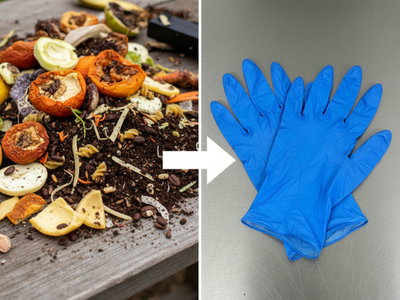
New research partnership to develop biodegradable gloves from food waste for healthcare sector
Knowledge Transfer Partnership between Aston University and PFE Medical to develop a biodegradable clinical glove from food waste The gloves will provide a low-cost, convenient and sustainable alternative to the 1.4bn disposable gloves used in the NHS each year The innovation will reduce clinical waste and costs and help the NHS reach its net zero goals. Aston University and Midlands-based company PFE Medical are teaming up to create biodegradable gloves made from food waste for use in the NHS. They will offer a low-cost, convenient alternative to disposable gloves without compromising patient safety. More than 1.4bn disposable gloves are used by the NHS each year. They create large volumes of clinical waste which has both an environmental and economic cost. The Knowledge Transfer Partnership (KTP) project will develop a more sustainable alternative made from polymers derived from food waste such as orange peel, able to degrade naturally. The gloves will initially be for use during low-risk tasks such as ultrasound scans, rather than in more critical situations such as operating theatres. The gloves would be designed to not only reduce clinical waste and costs in the NHS, but also carbon emissions, helping the NHS reach its goal to be the world’s first net-zero health service. With most personal protective equipment (PPE) currently sourced from Chinese manufacturers, the goal is to develop a biodegradable glove that can be manufactured using a UK supply chain. The challenging project draws on Aston University’s expertise in sustainable polymer chemistry, centred at Aston Institute for Membrane Excellence (AIME). Aston University has one of the largest research groups of polymer chemists in the UK. The project will be led at the University by Professor Paul Topham, director of AIME, and Dr James Wilson, AIME associate member. The research team have chosen to focus on polymers from food waste in order to ensure that the final product can be manufactured sustainably. Most polymers are currently made from petroleum. Polymers made from food waste, ranging from fruit waste to corn or dairy products, have the potential for antioxidant and antibacterial properties if designed appropriately. The team will manipulate the polymer molecules so that they include the right monomers (the smaller units which make up the molecules) in the right location to achieve the properties they require. Critical to the success of the project will be PFE Medical’s commercial and clinical experience of taking new innovations into medical use. It will be the third KTP between Aston University and PFE, following on from successful projects to develop an automated endoscope cleaner, now in use across University Hospitals Birmingham NHS Foundation Trust (UHB). Professor Topham said: “At Aston University, we have a long history of working with industry, of translating fundamental research into solutions for real world problems. This project with PFE Medical provides us with that route, to take our science and engineering and make a difference to peoples’ lives. That’s exactly where, as researchers, we want to be.” Rob Hartley, CEO of PFE Medical, said: “Our previous KTP with Aston University was a phenomenal success, thanks to the brilliant team we had on board. I’m just as excited by this project, which is looking to solve an equally long-standing problem. If we can achieve our goal, then the implications are huge, going far beyond the NHS to all the other situations where people are wearing disposable gloves.” KTPs, funded by Innovate UK, are collaborations between a business, a university and a highly qualified research associate. The UK-wide programme helps businesses to improve their competitiveness and productivity through the better use of knowledge, technology and skills. Aston University is a sector-leading KTP provider, ranked first for project quality, and joint first for the volume of active projects. For further details about this KTP, visit the webpage: www.aston.ac.uk/business/collaborate-with-us/knowledge-transfer-partnership/at-work/pfe-medical.