
Experts Matter. Find Yours.
Connect for media, speaking, professional opportunities & more.

Have Yourself a Sustainable Christmas: Five Tips for a Greener Holiday
As the holiday season approaches, there are multiple ways that individuals and families can employ mindful practices – both meaningful and eco-friendly – that reduce waste and support local communities. From reusable wrappings to sourcing meals locally and composting the leftovers to smarter Christmas tree choices, Baylor University’s Joshua King, Ph.D., professor of English and director of Environmental Humanities minor, and Gary Cocke, senior director of sustainability, offer five tips for embracing sustainability during the holidays to help us reconnect with simpler, more meaningful traditions. Five Tips to Make Your Holidays Meaningful and Eco-friendly 1. Thoughtful gift giving: Choose long-lasting gifts or experiences that recipients will use and appreciate. "Quality over quantity is always a good rule of thumb," Cocke said. “Giving gifts that are useful and durable is best – and if you think of what the recipient would actually be able to use, it is, by its very nature, a more thoughtful gift.” He also encourages exploring and supporting local businesses and the local economy while shopping for unique presents. King added that crafting a creative letter, poem or handmade gift “take us back to the gratitude that should be at the heart of our celebration.” "Experiences can also be wonderful gifts – they often foster lasting memories and meaningful connections," Cocke added. For those looking to give back, donating to a nonprofit organization that resonates with the recipient’s values is a thoughtful gesture. 2. Eco-friendly gift wrapping options An easy way to reduce holiday waste is with intentional gift wrapping. "Choose recyclable paper wrapping over shiny, plastic-laden alternatives and reuse materials when possible," Cocke said. King added that reusable options like fabric and premade bags can be stylish and sustainable. Do-it-yourself wrapping paper can be a fun family activity. “Grab some plain paper and decorate with stamps and markers,” Cocke said. “Grandparents especially love the personal touch of kid-decorated paper." 3. Eat locally and compost Another way to support local businesses is by “sourcing meals locally and making use of leftovers or composting what can’t be eaten,” King said. The Baylor Community Garden offers compost buckets for families to collect their food waste for composting. 4. Greener Christmas tree choices When it comes to Christmas trees, the debate between real versus artificial trees comes down to longevity and disposal. "Artificial trees can be the more sustainable option if used for at least 10 years," Cocke said. "However, real trees are a good choice if properly composted after use." Cocke highlighted the importance of composting and local options for live tree recycling or mulching: 5. A sustainable future “The holidays invite us to practice gratitude and to celebrate relationships we cherish, often by giving gifts, and at Christmas, Christians express gratitude for the ultimate gift: God’s pledge of love to creation through the incarnation, becoming one with us as a fellow creature,” King said. “What better time for practicing a revolution of gratitude through gift-giving and celebrations that are light on the earth and that respect the many relationships by which we live?” Cocke hopes that Baylor’s strategic initiatives and local partnerships will continue to foster sustainable practices, from increasing access to composting to raising awareness about holiday waste reduction. "A little mindfulness can go a long way toward making the holidays more meaningful and sustainable," he said. Looking to know more or arrange an interview? Simply contact: Shelby Cefaratti-Bertin today.


Trim the Clutter, Keep the Cheer
The holiday season brings warmth, joy and a touch of magic into our homes, but it also can bring excess clutter, waste and energy consumption, making it hard to feel festive. However, there are simple and creative ways to decorate sustainably without sacrificing the festive spirit. Baylor University human sciences and design professor Elise King, M.I.D., M.A., an expert in interior design and built environments, says embracing sustainable decorations, changing to energy-efficient lights, eliminating clutter and reducing waste can help maintain a tidy, eco-friendly home – and create a holiday atmosphere that resonates with joy and meaning. “The holidays can often feel busy and stressful, so it’s helpful to focus on traditions and decorations that bring joy and add meaning to the season,” King said. By taking simple steps to reuse materials, reduce energy consumption and focus on what matters most, families can celebrate the season with both heart and mindfulness, King said. Decorating sustainably One of the easiest ways to approach sustainable decorating is by reusing or repurposing materials you already have or finding decorations at resale shops. "Upcycling items from thrift stores or turning last year’s Christmas cards into garlands are simple and creative ideas," King said. “Beyond thriftiness, these practices add a personal and nostalgic touch to decorations.” King also said that it is important to consider the lifecycle of a product, beyond just being recyclable. "Also consider elements such as durability/longevity, manufacturing processes, transportation, energy consumption and disposal,” she said. “I recommend people make the best-informed decisions they can, while also remembering not to let it become overwhelming. Switch to LED Christmas lights Changing from incandescent to LED Christmas lights is good for both style and sustainability. LED lights reduce energy usage, are more durable and typically last longer than incandescent. Plus, they have come a long way over the past few years. “The criticism used to be that LEDs had a blue hue and were ‘cold’ compared to incandescent,” King said. “That isn’t really the case anymore. You have to be particular about what you purchase, but several companies offer lights that are virtually indistinguishable from vintage lights.” A clutter-free peaceful mindset While holiday decorations create a festive touch around the house, they can add to the clutter and busyness, which ultimately takes away the joy, King said. Decluttering and organization can help create a peaceful environment. “Most people enjoy Christmas decorations, but over the years we tend to accumulate a lot of them,” King said. “Sadly, for many, the thought of decorating for Christmas no longer brings feelings of excitement and joy. Instead, we dread going into the attic, dragging out the tree and boxes of ornaments, checking strands of lights, fixing broken bulbs, etc., only to know that we’ll have to put it all back in about a month. "Keep decorations that bring joy and let go of what no longer feels fulfilling can make a big difference in decreasing the excess while emphasizing what is important to you and your family," she said. By clearing both physical and mental space, families can better prioritize the activities and moments that truly matter. Reducing paper use It can be difficult to go fully paperless because of gift wrapping, but there are ways to reduce paper in the holidays from reusing materials or gifting experiences. “You can reuse paper shopping bags or even cut up the bags or other paper you have around the house and wrap gifts,” King said. Gifting experiences rather than physical items is another growing trend. “I find that many people are interested in receiving or gifting experiences, which can also reduce wrapping needs,” King said. “Not only does this minimize waste, but it also emphasizes shared moments over material possessions.” King noted that since COVID, there has been a trend to go paperless and people tend to be more comfortable with virtual communication and remote collaboration in general, which can also eliminate the need for Christmas cards and other paper products.


Giving with Purpose This Holiday Season
As the season of giving draws near, many people are searching for meaningful ways to support the causes that matter most. From local food banks to global humanitarian organizations, charitable giving offers an opportunity to make a genuine difference – for the organization and for the donor. Two Baylor University experts in consumer behavior and philanthropy – James A. Roberts, Ph.D., The Ben H. Williams Professor of Marketing in the Hankamer School of Business, and Andrew P. Hogue, Ph.D., associate dean in the Office of Engaged Learning and founder of Philanthropy and the Public Good program – share five practical strategies to help donors give with intention and impact. Five ways to give more thoughtfully and effectively 1. Choose a cause that resonates with you Begin by considering the issues that matter most –education, hunger, health care, the environment or another area close to your heart. Once you identify your passion, take time to research organizations working in that space. Look for transparency, measurable results and a strong record of directing funds to mission-focused programs. “A helpful shortcut is to see whether a nonprofit receives repeat grants from charitable foundations,” Hogue said. “Those grants typically follow a rigorous evaluation process.” 2. Decide what you can comfortably give Giving should feel fulfilling, not stressful. Roberts and Hogue recommend reviewing your household budget and determining an amount that fits comfortably. Even small donations can accumulate into meaningful support over time. 3. Consider how often you want to give Think about whether a single contribution or ongoing support works best for you. Regular giving helps nonprofits plan ahead and maintain steady programming. “Consistent donations allow charities to allocate resources more effectively throughout the year,” Hogue said. 4. Automate your contributions Setting up recurring gifts through your bank or directly with a nonprofit keeps your generosity on track with minimal effort. Automatic withdrawals ensure reliability for the organization and ease for the donor. “It’s a simple way to make sure you don’t forget to give,” Roberts said, “and it provides charities with predictable support.” 5. Offer your time and talent if money is tight Financial support is just one form of generosity. Time, skills and personal networks can be equally valuable. “Donating your time and skills can be just as impactful,” Roberts said. “Whether you’re mentoring, sorting donations or helping at events, your presence matters.” Hogue added that giving enriches both the recipient and the giver: “Charitable giving is about making a difference in others’ lives while adding purpose and connection to your own.” His advice: start small, stay consistent and simply take the first step. “Giving is deeply rewarding,” Hogue said. “And as you grow in your generosity, keep a beginner’s mindset – there is always room to improve how we steward the resources entrusted to us.” Looking to know more or arrange an interview? Simply click on the expert's icon below or contact: Shelby Cefaratti-Bertin today.

Nandi A. Marshall, DrPH, professor and associate dean for Georgia Southern University’s Jiann-Ping Hsu College of Public Health, has been named president of the American Public Health Association (APHA), the nation’s oldest and largest organization of public health professionals. Marshall began her presidential term on Nov. 5, following a year as president-elect. She will serve a three-year term on APHA’s executive board, including her current presidential year and a subsequent year as immediate past president. With more than two decades of experience in community-engaged public health, Marshall is widely recognized for her leadership in advancing maternal and child health equity, and for her dedication to preparing the next generation of the public health workforce. She holds a bachelor’s in religious studies from Spelman College, a master’s in public health from East Stroudsburg University and a Doctor of Public Health from Georgia Southern. “Dr. Marshall’s appointment to lead APHA is a tremendous national recognition of her contribution to public health — and a reflection of Georgia Southern’s growing impact on the global public health landscape,” said Avinandan Mukherjee, Ph.D., provost and executive vice president for Academic Affairs. “Her commitment to community partnership, workforce development and health equity exemplifies the values we strive to instill in every graduate of our distinctive public health college.” Marshall’s work has centered on bridging lived experience and scientific research to drive equitable health outcomes. “I’m deeply honored to serve as APHA president,” Marshall said. “Public health calls us to listen to communities, honor their wisdom and work together to build the equitable systems that recognize health as a human right. Equity is not an outcome — it’s a commitment. And I’m grateful to continue this work with purpose, courage and love alongside partners across the country.” Founded in 1872, APHA represents more than 25,000 members nationwide, serving as a convener, catalyst and advocate for equitable health and well-being for all. The association connects practitioners, researchers, educators and policymakers to advance evidence-based public health initiatives. Looking to know more about Georgia Southern University or connect with Dr. Marshall — simply contact Georgia Southern's Director of Communications Jennifer Wise at jwise@georgiasouthern.edu to arrange an interview today.


Acing AI interviews: Career expert on strategies for job seekers
AI-conducted interviews are becoming a standard step in the hiring process, but many job seekers still aren’t sure how to handle them. University of Delaware career expert Jill Gugino Panté says candidates should treat these algorithm-driven interviews with the same seriousness as traditional ones and details how this can be done. Panté, director of UD’s Lerner College Career Services Center, can discuss what today’s AI interview platforms really measure – from confidence and tone to eye contact and facial expressions – and how job seekers can stand out. She can also explain what recruiters are looking for in the AI-generated summaries that often determine who moves to the next round. Panté’s expert tips include: • Check equipment to make sure everything is working and the software is updated; turn off all notifications to avoid distractions and set up the space with good lighting, a neutral background. • Smile and maintain your energy, as some AI software will assess your tone and engagement. • Prepare as you would for any other interview - review the job description, research the organization, use the STAR method (Situation, Task, Action, Result) when providing examples. • Be sure to look at the camera and not the screen. It might feel awkward but that’s technically where the "eye contact" will be. • Some platforms will allow you to review your recording before submitting. Use this opportunity to take notes about your body language, pacing and clarity. To contact Panté directly and arrange an interview, visit her profile and click on the connect button. Interested journalists can also send an email to MediaRelations@udel.edu.


The missing AI revolution: Smarter leadership, not smarter machines, says workforce expert
Artificial intelligence has transformed industries, but its most overlooked potential lies in helping leaders themselves think more clearly and decide more effectively, according to Saleem Mistry, Associate Professor of Management at the University of Delaware’s Alfred Lerner College of Business & Economics. Mistry focuses on enabling leaders to be more productive, think clearly and make better decisions. Focusing on the leader, not just the organization Mistry’s work examines how leaders at every level can use AI to enhance productivity and decision-making. While most organizational conversations about AI focus on operational efficiency or customer service, he argues that the true frontier is leadership productivity. “Leadership productivity directly shapes organizational performance. AI can be transformative when it helps leaders think faster, decide better and regain the time they’ve lost to administration.” – Mistry As a professor of management and leadership, Mistry is often asked how AI will change the workplace. Those conversations usually revolve around automating workflows, not empowering leaders. Yet, as he notes, an MIT report found that 95 percent of generative AI pilots are failing — largely due to the absence of clear business use cases. That insight shaped his direction: leadership itself may be the missing use case. Having spent much of his earlier career in high technology, Mistry saw firsthand that innovation succeeds or fails based on how effectively leaders model new tools. Demonstrating practical applications Mistry recently analyzed the 2024-2025 U.S. Office of Inspector General reports on leadership challenges based. He analyzed each leadership challenge using three guiding questions: 1) Do the problems stem from leaders struggling with time, decisions or task management? 2) How might AI help? 3) Where could AI have the greatest impact? The results included: Executive Example (Amtrak): AI could power a real-time RACI dashboard to clarify accountability, track decisions and eliminate bottlenecks. Mid-Level Example (EPA): “Agentic AI” could cross-check allegations against verified data before termination decisions, preventing ethical and legal missteps. Supervisor Example (CISA): AI could scan incentive data for waste and anomalies, saving hours of manual review. Why it matters By automating repetitive, data-heavy tasks, AI gives leaders something they desperately need: time. Time to think strategically, coach teams and make better decisions. Mistry’s findings link AI adoption directly to mental well-being, arguing that improved decision productivity leads to improved organizational health. “Decision productivity is business productivity. Organizations that make faster, fairer and more informed decisions outperform those that don’t.” – Mistry Next steps: Building the framework for responsible AI leadership Mistry’s next milestone is to develop a set of leadership use cases that can be used by business leaders at all levels where AI can deliver the greatest impact. He is also developing frameworks for responsible AI adoption that help leaders determine when and how to deploy these tools ethically — across decision-making, communication, planning and task management. “AI won’t replace leaders,” Mistry concludes, “but leaders who learn to use AI effectively will outperform those who don’t.” ABOUT SALEEM MISTRY Associate Professor of Management Alfred Lerner College of Business & Economics Mistry’s research focuses on the future of work, with a particular emphasis on how individuals navigate workplace transitions. His research explores how people adjust to both minor and major changes in their careers, such as shifts in jobs, responsibilities, teams or entire organizations. A growing area of his expertise is the strategic use of artificial intelligence to enhance productivity for leaders, teams and human resource professionals. His research connects academic insights with practical applications, helping to shape how people and organizations adapt to an evolving professional landscape. Reporters who would like to speak to Mistry can click on his profile.


(Because “surviving” retirement is like saying you survived a salad bar—aim higher, my friend. Nobody hands out medals for dodging the croutons.) Retirement isn’t about hunkering down as if you’re waiting out a storm, counting your Werther’s Originals like gold coins until the grandkids arrive. It’s about creating Act Two—the remix of your life—that’s lively, connected, and wildly fulfilling. Think less “retirement home” and more “retirement launchpad.” The good news? You don’t need to be at any specific stage to benefit. Whether your pre-retirement and plotting your escape from the 9-to-5, mid-retirement and still adjusting your sails, post-retirement and wondering “what now?”, or simply looking for inspiration to “accidentally” leave on your spouse’s pillow, this guide is your playbook. So buckle up. Here are my "10 Commandments of Retirement Thrival"— think of them as your cheat codes for aging fabulously, with style, sass, and maybe even a standing ovation at the end of the show. 1. Thou Shalt Keep Moving Motion is lotion, darling. I’ve said this before, and I’ll keep saying it until it’s tattooed on your sneakers: your body doesn’t rust—it negotiates early retirement if you stop using it. Movement isn’t optional; it’s oxygen for your joints, muscles, and mood. Don’t ignore this commandment or file it under “tomorrow’s problem.” Tomorrow never squats, stretches, or gets 10,000 steps—you do. Start early and make it a routine. Walk, stretch, lift soup cans during commercials. If you feel daring, dance in the kitchen and startle the cat (extra points if the cat looks personally offended). The trick isn’t big gestures; it’s the small moves that add up to a second act full of energy instead of tired excuses. Fact check: The World Health Organization reports that inactivity causes 2–5 million preventable deaths annually. Translation: move it, or lose it. Maxim: Thou Shalt Keep Moving... lest ye creak louder than your old floorboards. And yes, jumping counts. Take it from someone who teaches four to five Zumba, Body Pump, RPM, Flex, and Flow, and yes, Kick Boxing to people of all ages. As a certified fitness instructor, I've seen the transformation that even the tiniest efforts can have. 2. Thou Shalt Guard Thy Health Hydrate, sleep, take your meds, and eat real food (and no, ketchup still doesn’t qualify as a vegetable, even if you put it on kale). Think of these as deposits into your “health account.” Skip too many deposits, and guess what? Your body’s cheques will bounce—hard. Let’s get specific: Water: Most of us aren't drinking enough of it. In fact, a 2024 Canadian study by Liquid I.V. reported that 63 per cent of respondents reported feeling regularly dehydrated. Yet, 74 percent of respondents were aware of the recommended daily amount of water they should drink (6-8 glasses of water per day). Yes, coffee helps a little, but wine doesn’t count. Also, keep in mind that as cooler weather approaches, dehydration can often become less noticeable. However, through skiing, snowboarding, skating, or simply the regular course of daily activity, hydration must be monitored just as much in the winter as in the summer. Hydration isn’t optional — it fuels your energy, digestion, and even cognitive sharpness. Forgetting to drink water? That's no excuse. Just download an app for your phone. The "Water Reminder" App is great and it's free! Sleep: Aim for 7–9 hours of sleep per night (CDC, 2024). Less than that doesn’t make you a hero; it makes you a cranky health risk. Chronic sleep deprivation is linked to heart disease, diabetes, obesity, and depression. Translation: bedtime is self-care, not surrender. Meds: Here’s the reality—According to the WHO, about 50% of people don’t take their medications as prescribed. Missing doses isn’t “oops, I forgot”—it’s a slow-motion sabotage of your health. Non-adherence leads to unnecessary hospital stays, complications, and yes, premature exits from the party. The solution? Create a system: use pill organizers, set alarms, download apps, or keep sticky notes on the fridge—whatever helps you stay consistent. Fact check: According to Harvard, good health routines can reduce the risk of chronic disease by up to 40%. That’s not a suggestion; that’s a bargain. Maxim: Guard thy health… lest thy golden years turn into waiting-room marathons 3. Thou Shalt Simplify Thy Finances Paper statements from 1983? Cute. But clutter isn’t just untidy—it’s risky. Scammers thrive on confusion nearly as much as raccoons love your green bin. Automate what you can, consolidate what you must, and shred the rest. Remember this fact: how we handle one aspect reflects how we handle everything. If your finances are a chaotic jumble of forgotten accounts and mysterious charges, you’re likely bringing that chaos into other areas of your life. Money can be daunting for many, but don’t make it worse by spreading it across multiple banks, credit cards, and half-finished spreadsheets. We want to engage with our finances, not withdraw from them because of overwhelm. And let’s be honest—leaving a financial mess for your heirs isn’t just uncool, it’s the opposite of building a legacy. Don’t be the reason your kids fight over who has to sift through shoeboxes of bank statements and expired loyalty cards. Make a pot of coffee, hold your nose, and simplify. If it feels too overwhelming, hire a trusted professional—yes, it’s an investment, but peace of mind pays dividends. Also, don’t wait. Tomorrow is not guaranteed, and too many people run out of tomorrows before they ever get around to cleaning up their finances. Here’s a simple formula: Simple = Automate, Consolidate, Eliminate, Delegate. (If it doesn’t fit one of those buckets, it’s clutter.) Fact check: Canadians aged 65 and older lose more than $500 million annually to fraud (Source: RCMP). A streamlined financial life makes you a smaller target. Maxim: Simplify thy finances… lest ye become the star of Scam-baiters: Seniors Edition. 4. Thou Shalt Build Emotional Resilience Retirement can be joyful or lonely. The key often lies in how you build your emotional toolkit. Start by finding a “third place” (somewhere outside of home or work): a coffee shop, gym, church, pickleball club, or karaoke night. Bonus points if it includes cake. But resilience isn’t just about where you go; it’s about what happens in your mind. Your self-talk is the constant soundtrack of your life. If there are many ways to get downtown, there must also be many ways to reframe what just occurred. Did you forget your keys? Maybe it’s an opportunity to practice your steps. Reframing is a vital life skill—it can turn setbacks into stepping stones, boost your confidence, and protect your self-image from unnecessary harm. Practicing resilience also involves enhancing your self-esteem. Read thinkers like Mel Robbins (famous for the “5 Second Rule”) who promote simple, actionable mindset shifts. Mental health pioneers such as Carl Rogers and Nathaniel Branden highlight self-compassion, strengths-based approaches, and Cognitive Behavioural Therapy (CBT) techniques as effective ways to reshape one’s self-image. Even parents and teachers have long recognized that positive reinforcement in childhood helps establish resilient adults. The good news? You can still re-parent yourself today by practicing gentler self-talk and focusing on your strengths. And remember: loneliness has a cost. According to the U.S. Surgeon General, chronic loneliness is as damaging as smoking 15 cigarettes a day. Emotional resilience isn’t optional—it’s a form of preventative health. Maxim: Build resilience... or you'll find yourself yelling at the weather forecast all alone. 5. Thou Shalt Know Thy Values Your values are your North Star. They guide your choices, shape your relationships, and keep you grounded when life gets messy. Forgive quickly, return Tupperware (with cookies, if you’re classy), and keep your promises—especially when caffeine is involved. As Teddy Roosevelt once said, “If you don’t stand for something, you will fall for everything.” And let’s be honest, falling gets riskier with age. For many of us, values become a cornerstone in later years—a kind of personal compass that points not just to what we do, but who we are. Passing on a good set of values is one of the greatest legacies you can leave. It’s something to be proud of, but here’s the trick: don’t hand them down like stone tablets from a mountaintop. Instead, offer them like an irresistible invitation—guidelines that inspire, not commandments that suffocate. Leave room for others to adapt, remix, and make them their own. That way, your values live on not as rigid rules, but as living gifts. Maxim: Know your values... lest you drift like a Costco cart with a broken wheel. 6. Thou Shalt Not Retire Without Purpose Purpose doesn’t have to mean curing cancer. It could be as simple as baking banana bread that makes your neighbours swoon, mentoring a younger colleague, painting watercolours, or volunteering at the food bank. What matters isn’t the scale—it’s the spark. Without purpose, retirement can feel like a never-ending long weekend, with Monday never arriving. That might sound good for a while, but trust me: eternal Saturdays get old fast. Here’s why this matters: Studies consistently show that purpose literally adds years to your life. A landmark 2002 Yale University study, led by psychologist Becca Levy, found that people with a positive outlook on aging lived an average of 7.5 years longer than those without. And Dan Buettner, author of The Blue Zones, has documented how centenarians around the globe credit purpose (or ikigai, as the Okinawans call it) as a key factor in their longevity. Purpose isn’t just a nice bonus; it’s a life extender. Finding your purpose can seem overwhelming, but start by taking small steps. Begin by removing what you don’t want—that’s often the most straightforward way forward. Purpose is also about creating a legacy. It’s not just about how you live, but how you’ll be remembered. You have the power to craft a story that outlives you, whether through relationships, creativity, community impact, or simple acts of kindness. This is why my personal mantra is: Don’t retire… rewire. Retirement isn’t an ending—it’s your opportunity to craft the most meaningful chapter yet. Maxim: Have purpose… lest ye binge more shows than Netflix can fund. 7. Thou Shalt Create Joy and Laughter Adults laugh about four times a day. Kids? Closer to 400. There is something drastically wrong with this statistic. Somewhere between filing taxes and misplacing our bifocals, we’ve lost our bearings—time to take them back. Joy and laughter aren’t luxuries—they’re vital for our survival. Here’s how to get your daily dose: watch I Love Lucy reruns (Lucy never fails), subscribe to a “joke-a-day” email, or better yet, send a funny joke to a friend or grandchild via text. Join a laughter yoga class, stream a comedy special, or dust off those “dad jokes” that make you roll your eyes. The goal isn’t polished comedy—it’s allowing yourself to be silly. And don’t overlook this: Laughter is both contagious and magnetic. People (yes, even your relatives) want to be around joy, not another monologue about your lumbago. Laughter is also a clever rebranding tactic. Instead of being “that cranky retiree,” you can update your image to “the one who brings the fun.” Need more on this? Check out my blog: What’s Your Brand, Boomer? Boomer?https://expertfile.com/spotlight/10790 Maxim: Create joy… lest ye petrify into a cranky old codger. 8. Thou Shalt Always Have Hope on the Calendar Hope is a date with tomorrow. It’s the promise of Taco Tuesday, a small road trip, or lunch with friends. It doesn’t need to be Paris—unless you’re offering, then yes, Paris (and I’ll pack light). Here’s why it matters: hope isn’t just feel-good fluff—it’s fuel. Research indicates that hope enhances resilience, reduces stress, and even strengthens the immune system. Viktor Frankl, a psychiatrist and Holocaust survivor, famously noted that prisoners in concentration camps who clung to hope—even a flicker—did better than those who gave up. Hope literally helps us survive, but more importantly, it allows us to thrive. Your mindset is the driving force behind how you present yourself to the world. A hopeful outlook radiates within you, affecting your energy, healing, and how you handle daily challenges. And here’s the surprise: hope is contagious. Surround yourself with hopeful people, read inspiring stories or books, and intentionally plan activities to look forward to. Pair it with gratitude—it’s the ideal companion—and you’ll cultivate a daily practice that enhances your mindful well-being. Remember: you have nothing to lose. Being “right” about your ailments, family drama, or the world’s troubles won’t help. But choosing happiness? That just might. I dare you. Maxim: Always have hope… lest thy days blur into “laundry o’clock.” 9. Thou Shalt Find Thy Person Everyone needs someone they can call at 8 p.m. who will actually answer (sorry, Siri doesn’t count—and Alexa is a terrible listener). Pick your person, and just as importantly, be theirs too. This isn’t about being needy — it’s about being human. Decades of research show that strong social connections aren’t just warm fuzzies; they’re lifelines. Harvard’s landmark Study of Adult Development — the longest-running study on happiness — found that close relationships are the single most significant predictor of long-term health and well-being, even more than wealth or fame. Meanwhile, the U.S. National Institute on Aging notes that loneliness is as harmful to physical health as smoking 15 cigarettes a day. Yes, fifteen. Your support system safeguards both your body and mind, resulting in lower blood pressure, enhanced immune function, sharper cognition, less depression, and a longer life. Friendship acts as preventive medicine. So don’t overlook this one. Arrange that coffee, send the silly meme, answer the late-night call. Your health relies on it. Maxim: Find thy person… lest ye end up pouring your heart out to Alexa, Alana or whatever her name is. 10. Thou Shalt Declutter Thy Life Decluttering isn’t just for closets—it’s for your mind, your finances, and your garage full of “vintage” ski poles that last saw snow in 1987. Think of it as spring cleaning for your soul. Bonus: Swedish Death Cleaning (döstädning, if you want to impress your friends at dinner parties) saves your kids from having to rent a dumpster in your honour. The Guardian popularized this movement, reminding us that downsizing possessions while we’re alive is the ultimate gift to loved ones—practical, compassionate, and oddly liberating. Here’s the flip side: hoarding—or its younger cousin, “not throwing anything out”—becomes more common as we age. It clutter not only our homes but also our minds, increasing stress, fall risks, and social isolation. The Mayo Clinic notes that hoarding is linked to depression and anxiety, and in older adults, it can seriously impact safety. Awareness is your first defence—don’t become a statistic. Follow the simple 1 item in, 1 item out” rule. When you bring home a new sweater, let go of an old one. If you buy a fancy gadget, put aside the bread maker that’s been collecting dust since 2002. Respect your space and maintain cleanliness, and you’ll enjoy more clarity, peace, and perhaps even more visits from relatives—who might stay for a cup of tea instead of rushing for the door. Maxim: Declutter your life... lest you become the star on Hoarders: Golden Years Edition. The Final Scroll As my friend Lottie often says, “Looking after yourself is a full-time job.” Authentic—but unlike your old 9-to-5, the boss is fantastic (you), the hours are flexible, and the benefits are, quite literally, life-extending—no HR paperwork needed. So live it. Share it. Laugh through it. Retirement isn’t about shrinking back — it’s about thriving forward. This is your encore, your second act, your chance to rewrite the script. You’ve got the commandments, the cheat codes, and hopefully, a few good jokes left in your pocket. Remember: joy, purpose, resilience, health, hope, and laughter aren’t extras—they’re essential. Add them daily like vitamins, and watch the years become richer, not just longer. And if all else fails? Put on some music, dance in your kitchen, and scare the cat or the neighbours if the curtains are open. Because retirement isn’t the end of the book—it’s the chapter where the hero (that’s you) finally gets to write their own plot twist. Don’t Retire—Rewire. Sue p.s. Want more retirement hacks (and a few laughs)? I share them weekly on my new Substack — with special offers and early invites to upcoming events. You can subscribe here: #RetirementReset #HealthyAging #FinancialWellness #PositiveAging #SecondActSuccess


This article is republished from The Conversation under a Creative Commons license. Read the original article here. The oil-rich states of Qatar, Saudi Arabia and the United Arab Emirates have a lot going for them: wealth, domestic stability and growing global influence. In recent months, these Gulf kingdoms also appear closer to something they have long sought: reliable U.S. support that has become stronger and more uncritical than ever, just as Iranian power in the region has significantly degraded. In Donald Trump, the nonelected Gulf Arab monarchs have an ally in Washington who has largely shed previous American concerns for democracy and human rights. That the American president made his first scheduled international trip of his second term to Saudi Arabia, Qatar and the UAE only underscores their international clout. Additionally, the popular overthrow of the Assad government in Syria and Israel’s war against Iran and its allies in Lebanon and Yemen have served to greatly weaken Tehran’s perceived threat to Gulf Arab interests. Yet, as an expert on Middle Eastern politics, I believe Gulf Arab countries must still navigate a regional political tightrope. And as the Israeli targeting of senior Hamas leaders in Qatar on Sept. 9, 2025, shows, events by other Middle Eastern actors have a nasty habit of derailing Gulf leaders’ plans. How these countries manage four particular uncertainties will have a significant effect on their hopes for stability and growth. 1. Managing a post-civil war Syria In Syria, years of civil war that had exacerbated splits among ethnic and religious groups finally ended in December 2024. Since then, Arab Gulf countries, which once opposed the Iranian-allied government of Bashar Assad, have been pivotal in supporting new Syrian President Ahmed al-Sharaa. They successfully lobbied the U.S. to drop sanctions. In addition to sharing mutual regional interests with Sharaa, the leaders of Gulf Arab states want a Syrian state that is free from internal war and can absorb the millions of refugees that fled the conflict to other countries in the Middle East. Gulf states can support postwar Syria diplomatically and financially. However, they can’t wish away the legacy of long war and sectarian strife. Israeli attacks on Syrian soil since Assad’s fall, as well as recent outbreaks of fighting in the Sweida region of southern Syria, underscore the ongoing fragility of the Syrian government and concerns over its ability to contain violence and migration outside of its borders. 2. The challenge of regional politics Syria illustrates a broader policy challenge for Gulf states. As their wealth, military strength and influence have grown, these countries have become dominant in the Arab world. As a result, Qatar, Saudi Arabia and the UAE have invested billions of dollars in efforts to influence governments and groups across the world. This includes the mostly authoritarian governments in the Middle East and North Africa, such as Egypt’s. But here, Gulf states are torn politically. If democratic systems form elsewhere in the Arab world, this could encourage Gulf citizens to push for elected government at home. Yet overly coercive Arab governments outside of the Gulf can be prone to popular unrest and even civil war. Propping up unpopular regional governments risks backfiring on Gulf Arab leaders in one of two ways. First, it can entice Gulf states into protracted and damaging wars, such as was the case with Saudi Arabia and the UAE’s failed military intervention in Yemen against the Houthis. Second, it can drive a wedge between Gulf states, as is seen with the current conflict in Sudan, in which the Saudis and Emiratis are backing rival factions. 3. Watching which way Iran will turn Always looming behind complicated Middle Eastern politics is Iran, the historically powerful, populous, non-Arab country whose governing Shiite Islam ideology has been the chief antagonist to the Sunni-led Gulf Arab states since the Iranian Revolution in 1979. Opposing Gulf Arab and American strategic interests, Iran has for years intervened aggressively in Middle Eastern politics by funding and encouraging militant Shiite groups in Iraq, Lebanon, Yemen and elsewhere. An assertive Iran has been especially a thorn in the side of Saudi Arabia, which strives to be the dominant Muslim majority power in the region. Dealing with Iran has required careful balancing from Qatar and the UAE, which are more directly exposed to Tehran geographically and have maintained relatively stronger relations. Given this, Gulf countries may silently welcome the decrease in Iran’s military power in the wake of Israel’s recent war against Iran and its allies, such as Hezbollah in Lebanon, while also fearing further Iranian-Israeli conflict. At the same time, a less powerful Iran runs two types of new potential dangers for Gulf states. Should Iran become more unstable, the resulting turmoil could be felt across the region. In addition, should Iran’s military, policy and economic turmoil lead to a new political system, it could disturb Gulf countries. Neither a Muslim majority democratic government nor a more hard-line nationalist variant in Iran would sit well with nearby Gulf monarchs. Conversely, concerns that the Israeli and U.S. bombing of Iran may actually lead to increased Iranian determination to pursue a nuclear program also worry Gulf leaders. 4. Living with Israel’s military assertiveness Israel, the unquestioned military power and sole nuclear weapons state in the region, has long posed particularly deep political dilemmas to Gulf Arab states. The current challenge is how to balance the immense global unpopularity of the Israeli government’s war in Gaza – including among Gulf Arab citizens – with common strategic interests the Gulf states hold with Israel. Gulf Arab leaders face domestic and regional pressure to show solidarity for Palestinians and their aspirations for statehood. Yet Gulf rulers also share strategic goals with Israel. Along with opposition to Iranian influence, Gulf states maintain strong military links to the U.S, like Israel. They also appreciate the economic and other security value of Israel’s high-tech products, including software used for espionage and cybersecurity. This helps explain the UAE’s 2019 decision to join the short list of Arab states with full diplomatic relations with Israel. Hamas attacked Israel in 2023 in part to stop Saudi Arabia from following suit – something that might have further sidelined Palestinians’ bargaining power. Indeed, moves toward open Saudi diplomatic recognition of Israel were stopped by Hamas’ attack and the global backlash that followed Israel’s ongoing devastation of Gaza. Gulf leaders may still believe that normalized ties with Israel would be good for the long-term economic prospects of the region. And Bahrain and the UAE – the two Gulf Arab states with diplomatic relations with Israel – have not backed away from their official relationship. Yet expanding open relations with Israel further, and taking in other Gulf states, is unlikely without a real reversal in Israel’s policy toward Palestinians in both Gaza and the West Bank. All this is more true in the immediate aftermath of Israel’s attack in Qatar – the first time Israel has launched a direct strike within a Gulf Arab state. That action, even if ostensibly directed at Hamas, is likely to exacerbate tensions not only with Qatar but place increasing stress on the calculus allied Gulf Arab countries make in their dealings with Israel. Tricky way forward for Gulf Arab states These challenges underscore an inescapable truth for Gulf leaders: They are hostage to events beyond their control. Insulating them from that reality takes regional unity. The Gulf Cooperation Council, nearly 45 years old, was established precisely for this purpose. While it remains the most successful regional organization in the Middle East, the GCC has not always prevented major rifts, such as in 2017 when a coalition of Arab states led by Saudi Arabia cut ties with and blockaded Qatar. The conflict was resolved in 2021. Since then, the six members of the GCC have worked together more closely. No doubt, rivalries and disagreements still exist. Yet Arab Gulf leaders have learned that cooperation is useful in the face of major challenges. This can be seen in the recent collaborative diplomatic approaches toward Syria and the U.S. A second lesson comes from the broader Middle East. Key issues are often interdependent, particularly the status of Palestinians. Hamas’ attack on Israel, and the resulting destruction of much of Gaza, resurfaced the deep popularity across the region of addressing Palestinian needs and rights. The monarchs of the Arab Gulf would like to maintain their unchallenged domestic political status while expanding their influence in the Middle East and beyond. However, even when Gulf leaders wish to be done with the region’s challenges, those challenges are not always done with them. Isabella Ishanyan, a UMass Amherst undergraduate, provided research assistance for this article.



No More Edits for “Face the Nation”
Mark Lukasiewicz, dean of Hofstra’s Lawrence Herbert School of Communication, is featured in an article in Variety: “CBS News Agrees Not to Edit ‘Face The Nation’ Interviews Following Homeland Security Backlash.” The report covers a CBS News decision to discontinue editing taped interviews with newsmakers who appear on “Face the Nation.” The agreement came after the Trump administration complained about an interview with Secretary of Homeland Security Kristi Noem. During the course of the segment, Noem made unsubstantiated statements about Kilmar Abergo Garcia, a Salvadoran man who was deported from the U.S., despite having protected legal status. CBS decided to air an edited version of the interview and to make the full exchange available online. “A national news organization is apparently surrendering a major part of its editorial decision-making power to appease the administration and to bend to its implied and explicit threats. Choosing to edit an interview, or not, is a matter for newsrooms and news organizations to decide. The government has no business in that decision,” said Dean Lukasiewicz.


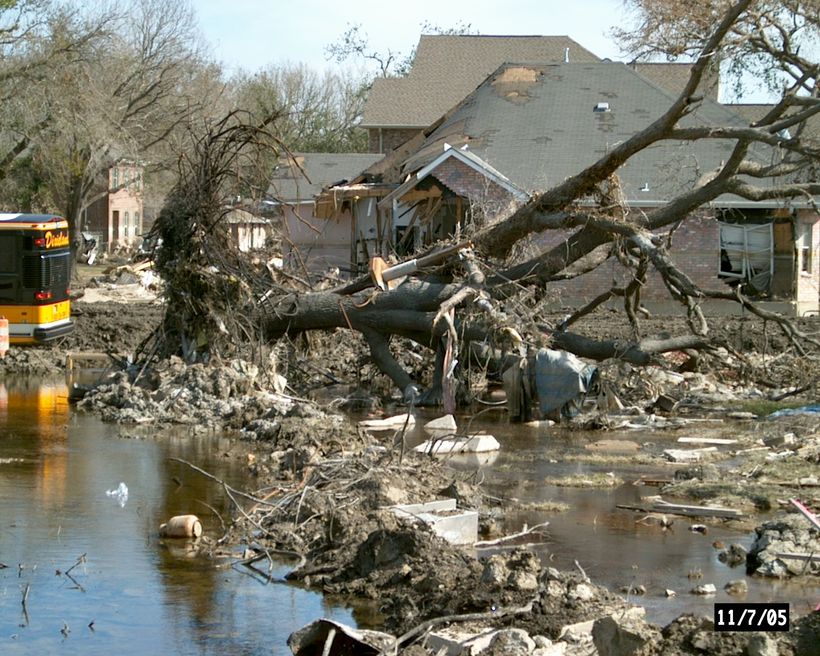
Twenty years ago, Hurricane Katrina hit the southeastern coast of the United States, devastating cities and towns across Louisiana, Florida, Mississippi, Alabama and beyond. The storm caused nearly 1,400 fatalities, displaced more than 1 million people and generated over $125 billion in damages. Rob Traver, PhD, P.E., D. WRE, F.EWRI, F.ASCE, professor of Civil and Environmental Engineering at Villanova University, assisted in the U.S. Army Corps of Engineers' (USACE) investigation of the failure of the New Orleans Hurricane Protection System during Hurricane Katrina, and earned an Outstanding Civilian Service Medal from the Commanding General of USACE for his efforts. Dr. Traver reflected on his experience working in the aftermath of Katrina, and how the findings from the investigation have impacted U.S. hurricane responses in the past 20 years. Q: What was your role in the investigation of the failure of the New Orleans Hurricane Protection System? Dr. Traver: Immediately after Hurricane Katrina, USACE wanted to assess what went wrong with flood protections that had failed during the storm in New Orleans, but they needed qualified researchers on their team who could oversee their investigation. The American Society of Civil Engineers (ASCE), an organization I have been a part of for many years, was hired for this purpose. Our job was to make sure that USACE was asking the right questions during the investigation that would lead to concrete answers about the causes of the failure of the hurricane protection system. My team was focused on analyzing the risk and reliability of the water resource system in New Orleans, and we worked alongside the USACE team, starting with revising the investigation questions in order to get answers about why these water systems failed during the storm. Q: What was your experience like in New Orleans in the aftermath of the hurricane? DT: My team went down to New Orleans a few weeks after the hurricane, visited all the sites we were reviewing and met with infrastructure experts along the way as progress was being made on the investigation. As we were flying overhead and looking at the devastated areas, seeing all the homes that were washed away, it was hard to believe that this level of destruction could happen in a city in the United States. As we started to realize the errors that were made and the things that went wrong leading up to the storm, it was heartbreaking to think about how lives could have been saved if the infrastructure in place had been treated as one system and undergone a critical review. Q: What were the findings of the ASCE and USACE investigation team? DT: USACE focused on New Orleans because they wanted to figure out why the city’s levee system—a human-made barrier that protects land from flooding by holding back water—failed during the hurricane. The city manages pump stations that are designed to remove water after a rainfall event, but they were not well connected to the levee system and not built to handle major storms. So, one of the main reasons for the levee system failure was that the pump stations and levees were not treated as one system, which was one of the causes of the mass flooding we saw in New Orleans. Another issue we found was that the designers of the levee system never factored in a failsafe for what would happen if a bigger storm occurred and the levee overflowed. They had the right idea by building flood protection systems, but they didn’t think that a larger storm the size of Katrina could occur and never updated the design to bring in new meteorological knowledge on size of potential storms. Since then, the city has completely rebuilt the levees using these lessons learned. Q: What did researchers, scientists and the general population learn from Katrina? DT: In areas that have had major hurricanes over the past 20 years, it’s easy to find what went wrong and fix it for the future, so we don’t necessarily worry as much about having a hurricane in the same place as we’ve had one before. What I worry about is if a hurricane hits a new town or city that has not experienced one and we have no idea what the potential frailties of the prevention systems there could be. Scientists and researchers also need to make high-risk areas for hurricane activity in the United States known for those who live there. People need to know what their risk is if they are in areas where there is increased risk of storms and flooding, and what they should do when a storm hits, especially now with the changes we are seeing in storm size.

