
Experts Matter. Find Yours.
Connect for media, speaking, professional opportunities & more.
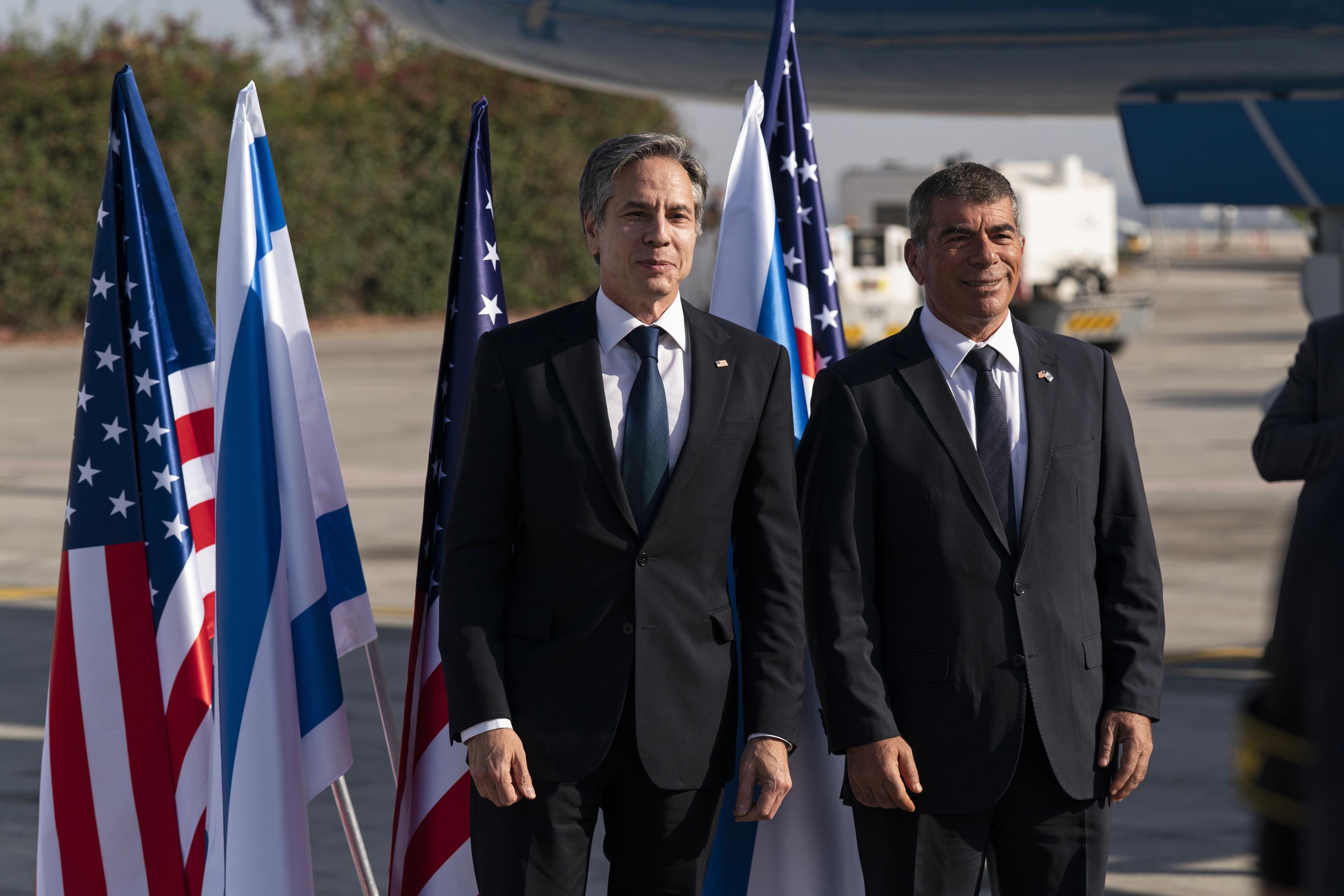
As the eleven-day war between Palestine and Israel sits on a razor-thin ceasefire, it is hoped that American intervention and influence can deliver support, aid and even a lasting truce between two warring factions. For diplomats, it will be like walking a tight rope in an effort to calm both the Israelis and Palestinians while also ensuring Hamas remains on the sidelines. U.S. Secretary of State Antony Blinken is in the region now, leading the cause. The truce that came into effect Friday has so far held, but it did not address any of the underlying issues in the Israeli-Palestinian conflict, something Blinken acknowledged after meeting with Israeli Prime Minister Benjamin Netanyahu. “We know that to prevent a return to violence, we have to use the space created to address a larger set of underlying issues and challenges. And that begins with tackling the grave humanitarian situation in Gaza and starting to rebuild,” he said. “The United States will work to rally international support around that effort while also making our own significant contributions.” He added that the U.S. would work with its partners “to ensure that Hamas does not benefit from the reconstruction assistance.” Blinken will not be meeting with Hamas, which does not recognize Israel’s right to exist and which Israel and the U.S. consider a terrorist organization. May 25 - Associated Press This will be a long and delicate process and there are a lot of questions to consider: Is it possible to negotiate in Gaza and not include Hamas? With Palestinian President Mahmoud Abbas and Israeli Prime Minister Benjamin Netanyahu both facing a political ousting - can a solution even be found? And what are the issues and is there any negotiating the long-sought after two-state solution? If you’re a journalist looking to cover the ongoing tensions between Israel and Palestine – then let us help with your stories and questions. Professor Ralph Carter is an expert in the areas of international politics, U.S. foreign policy, and Mideast conflicts. Dr. Carter is available to speak with media regarding the ongoing developments between Israel and Palestine – simply click on his icon now to arrange an interview today.



Baylor Expert Shares Four Keys to Leadership from Ulysses S. Grant’s Reflections on Civil War
Near the end of his life, as he battled spiraling health and an empty bank account, former United States President – and iconic Civil War General – Ulysses S. Grant penned his memoirs and gave the world a glimpse into the mind of one of the nation’s most celebrated figures. The book, “Personal Memoirs of U.S. Grant,” was published in 1885 and has been pored over for more than 135 years. Peter Campbell, Ph.D., author, associate professor of political science at Baylor University and a nationally recognized scholar on military strategy and international security, recently wrote an essay about Grant and his memoirs for Classics of Strategy and Diplomacy. He said Grant’s personal reflections provide valuable insights into his view and practice of leadership, specifically as he led Union forces in the Civil War. Below, Campbell offers four keys to leadership that he found in Grant’s writings. 1. Know Yourself. Grant was a careful observer of himself. He was able to reflect on his experience, see where he had made errors and learn from them. In July 1861, moments before what Grant thought would be his first engagement as a commander in the Civil War, he was terrified. His heart was in his throat. When he and his forces crested a rise that they thought would reveal the enemy force, they saw that the enemy had fled. “My heart resumed its place,” Grant wrote. “It occurred to me at once that [the enemy] had been as much afraid of me as I had been of him. This was a view of the question I had never taken before; but it was one I never forgot afterwards.” Grant absorbed this lesson and it transformed him as a leader and planner. 2. Know Your Enemy. The great Chinese strategists counseled that commanders must know their enemies. Grant shows us what this looks like in practice. Rather than dwelling on his fears, those things that his opponent might do that would spell disaster, Grant put himself in the shoes of his adversary and asked himself: What would my gravest fears be, were I in his position? He then designed his plan of campaign to raise the specter of his enemy’s fears, knowing that this would compel the enemy to be blinded by fear and compel them to react. To be fair, this was easier for Grant because in the Civil War he was fighting against fellow graduates of West Point and veterans of the Mexican War, including Robert E. Lee. Grant was not in awe of Lee. “I had known [Lee] personally,” Grant wrote, “and knew that he was mortal; and it was just as well that I felt this.” This does not diminish, but rather reinforces, the importance on studying one’s adversary carefully in any kind of competition. 3. Know Your People. As Grant rose in the ranks of the Union Army, he was pulled away from the sound of the guns and the command of troops in battle. This is true in any organization – the higher one rises the further one gets from the ground truth, whether in an army or a Fortune 500 company. Grant recognized that to influence the battles he could no longer superintend, he had to select the right subordinates for the job and then give them the authority to exercise the initiative in their area of responsibility. This meant that Grant also had to be a careful observer of the strengths and weaknesses of his subordinates. Even a hero of the Battle of Gettysburg like Major General Gouverneur Warren was not spared Grant’s penetrating character assessments. Warren’s weakness, Grant wrote, was that he could not trust his subordinates to carry out his orders, which meant that he could not be give a large command. “[Warren’s] difficulty was constitutional and beyond his control,” Grant wrote. “He was an officer of superior ability, quick perception, and personal courage to accomplish anything that could be done with a small command.” When you know your people, you know where to place them where their strengths will reinforce success and their weaknesses will be least disastrous. 4. Unleash the Power of Humility. The most decisive virtue that Grant practiced was humility. As a leader he did not allow pride in his own designs to blind him to the wisdom of his subordinates. Late in the war, Grant wrote up a campaign plan for attacking the Shenandoah Valley, the key source of supply to the Confederacy. He brought the plan to General Philip Sheridan for execution. However, when he met with Sheridan, the cavalry officer presented Grant with his own plan. Grant wrote that Sheridan “was so clear and so positive in his views and so confident of success, I said nothing about [my campaign plan] and did not take it out of my pocket.” When you lead, don’t let pride get in the way of the best ideas bubbling up from your subordinates. ABOUT PETER CAMPBELL, PH.D. Peter Campbell, Ph.D., is an associate professor of political science in Baylor University’s College of Arts & Sciences. He is the author of two books: “Military Realism: The Logic and Limits of Force and Innovation in the U.S. Army” and “Farewell to the Marshal Statesman: The Decline of Military Experience Among Politicians and its Consequences.” Campbell studies international security, civil-military relations, strategy and national security decision-making, international relations scholarship and policy relevance, insurgency and counterinsurgency, the just war tradition, unconventional warfare and advanced military technology, military culture, and the effects of cyber capabilities on conflict escalation. ABOUT BAYLOR UNIVERSITY Baylor University is a private Christian University and a nationally ranked research institution. The University provides a vibrant campus community for more than 19,000 students by blending interdisciplinary research with an international reputation for educational excellence and a faculty commitment to teaching and scholarship. Chartered in 1845 by the Republic of Texas through the efforts of Baptist pioneers, Baylor is the oldest continually operating University in Texas. Located in Waco, Baylor welcomes students from all 50 states and more than 90 countries to study a broad range of degrees among its 12 nationally recognized academic divisions. ABOUT THE COLLEGE OF ARTS & SCIENCES AT BAYLOR UNIVERSITY The College of Arts & Sciences is Baylor University’s largest academic division, consisting of 25 academic departments and eight academic centers and institutes. The more than 5,000 courses taught in the College span topics from art and theatre to religion, philosophy, sociology and the natural sciences. Faculty conduct research around the world, and research on the undergraduate and graduate level is prevalent throughout all disciplines. Visit baylor.edu/artsandsciences.



Taking on Super Polluters to Reduce Greenhouse Gases
If just the top five percent of carbon-emitting plants in the U.S. reduced emissions to the average intensity of all plants, overall emissions from the electricity sector would fall 22 percent. A new book co-authored by Wesley Longhofer, associate professor of organization and management at Goizueta Business School, offers new insights into a persistent problem—how to curb carbon emissions from top-polluting power plants around the world. In Super Polluters: Tackling the World’s Largest Sites of Climate-Disrupting Emissions (Columbia University Press), Longhofer and co-authors Don Grant and Andrew Jorgenson argue that reducing pollution from fossil-fueled power plants should start with the dirtiest producers. From data they gathered over eight years on the carbon emissions of every power plant in the world, they found that a small number of plants contribute the lion’s share of pollution. For instance, if just the top five percent of carbon-emitting plants in the U.S. reduced emissions to the average intensity of all plants, overall emissions from the electricity sector would fall 22 percent. The book also questions claims that improvements in technical efficiency will always reduce greenhouse gases. “It’s the paradox of efficiency,” Longhofer says. “Just because a plant produces power more efficiently doesn’t mean they’ll pollute less. It just becomes cheaper to produce.” As sociologists, the authors are the first to put the problem into context, investigating global, organizational, and political conditions that explain super-polluter behavior. They demonstrate energy and climate policies most effective at curbing power-plant pollution and show how mobilized citizen activism shapes those outcomes. “Climate change is fundamentally an organizational problem. Even if you think about the Paris Accords, it’s the power plants and the cars within those states that produce the emissions, not the states themselves,” Longhofer says. “What do we do with what we already know? How do we develop policies to help us achieve our climate goals?” If you’re a journalist looking to speak with Wesley Longhofer about his book or discuss big pollution and how to cut carb emissions - then let us help. Simply click on his icon now to arrange an interview today.



Maple Report - May 2021 Edition
May 2021 Welcome to our second edition of The Maple Report. This quarterly newsletter is designed to keep Canadian technology executives updated on the latest trends, market research, events and valuable resources from IDC Canada's expert analysts. In this edition, we want to show you how IDC can help Canadian executives like yourself make important technology decisions. We also want to invite you to our upcoming events and give you a sample of some of our thought leadership through our IDC blog. We hope you find these insights practical to help propel your business into a more resilient digital enterprise. Trust IDC to be your research partner in 2021. We welcome your thoughts about this newsletter. Please send them to askIDC@idccanada.com. HOW CAN IDC HELP YOU? IDC PeerScapes – Helping You Find Technology Best Practices An IDC PeerScape minimizes your missteps by identifying peer business practices worthy of emulating or avoiding, increasing the likelihood of positive impacts from a technology initiative. To assist your organization finding technology best practices, IDC publishes dozens of IDC PeerScape reports. Similar to IDC MarketScapes that we explored in the last edition of The Maple Report, IDC PeerScapes sit on the Engage part of our IDC DecisionScape framework , and include reports to help you launch, evaluate and optimize new technology initiatives. The report outlines key challenges your peers encountered when implementing a specific technology initiative, as well as key insights your peers learned along the way. IDC PeerScapes help you to increase the likelihood of a tech initiative’s success by giving you insight into best practices (and practices to avoid) through specific use case examples implemented by your peers who have already led a similar technology initiative. These documents can help your organization recreate successful implementations of technology and help you mitigate risk. To help you understand the value of these reports, we have included here our IDC PeerScape: Practices for Including Cloud Services into Outsourcing Contracts in Canada report. In it, you'll find Best practices from three areas of cloud adoption are discussed in the document: security, cost management, and skills gap. Companies created security checklists to mitigate security risks and retain control of security when working with external vendors. They also filled the skills gap and minimized cost unpredictability by collaborating with their outsourcing service providers. VIRTUAL EVENTS FOR IT EXECUTIVES IDC Fireside Chat | Content Cloud as a Critical Component of Virtual Work May 19, 2021 | 2:00 pm ET Does your organization have a holistic view of your customers when they contact you for assistance? Are your security protocols on your content systems up to snuff with your virtual workforce? Is your content customized for the different employee roles? If any of these content challenges sound familiar to your organization, then you need to attend this webinar to provide a seamless content experience for your customers and your employees. On our next webinar for Canadian technology executives on May 19th at 2pm ET, we'll hear how ATB Financial's Barry Hensch conquered multiple content management challenges to provide seamless experiences in its virtual workplace during a fireside chat with IDC's Megha Kumar. Walk away with a better understanding of what Cloud Content Management entails, why it's important to manage your content effectively and how you can leverage it to prosper in the digital future. Confirmed Speakers: Megha Kumar: Director, Software & Cloud Services, IDC Canada Barry Hensch: SVP & Head of Technology Enablement, ATB Financial Varun Parmar: SVP & Chief Product Officer, Box IDC CIO Panel Series | Accelerate & Simplify Your Canadian Digital Transformation Journey June 16, 2021 | 2:00pm ET Our IDC Canada research indicates that many Canadian organizations are not where they need to be yet to thrive in the digital economy. If you think your organization could benefit from simplifying and accelerating your digital transformation efforts, then you need to attend this upcoming webinar on June 16 at 2pm ET. Join this virtual webinar to understand where Canadian organizations are on their respective digital transformation journeys, what types of projects were accelerated as a result of the pandemic and what impact it had on Canadian industries. Then hear from our all-Canadian CIO panel on how they've stickhandled the impact of the pandemic at their organizations to set themselves up for future success in the digital economy. Learn what you need from your peers to get your organization moving in the right direction. Confirmed Speakers: Tony Olvet: Group VP, Research, IDC Canada Nigel Wallis: Research VP, IoT & Industries, IDC Canada Catherine Chick: SVP, IT, Canada Goose Pamela Pelletier: Canada Country Manager, Dell Technologies IDC THOUGHT LEADERSHIP HIGHLIGHTS DID YOU KNOW? You Can Get Actionable Research, KPIs, Benchmarks & Best Practices with IDC IDC Canada's IT Executive Programs (IEP) make it easy to access the relevant technology research and advice you need to make data-driven decisions as you lead your organization into the digital future. Get in touch today to learn more or visit our IT Executive Portal to learn more. IT EXECUTIVE RESOURCES Set Your Future IT Roadmap with IDC IT leaders need to rethink what is critical and evaluate where the organization stands as they manage complex changes. For strategies on transforming your organization's IT, read the new eBook from IDC: Future IT: Operating System of the Future Enterprise.


Research Reveals Uptick in Hostility toward Black Americans during Tough Economic Times
Goizueta Experts Encourage Business Leaders to Double Down on Diversity, Equity, and Inclusion Efforts. Do recessions stoke racial tension? When there’s an economic downturn, are White Americans more likely to feel distrust or even animosity towards their Black peers? Researchers have long wondered about the broader societal impact of financial recessions, but until recently their effects on race relations have been unclear. In a recent paper, Emily Bianchi, associate professor of organization and management, Erika Hall, assistant professor of organization and management, and Sarah Lee 19PhD, assistant professor of management, Dominican University of California and visiting professor of organizational behavior, Pepperdine University, find that there is indeed a subtle uptick in hostility towards Black Americans during bad economic times. Their paper, Reexamining the Link Between Economic Downturns and Racial Antipathy, examines publicly available data on attitudes, political trends, and behavioral patterns in the U.S. Sarah Lee 19PhD While businesses tend to cut diversity, equity, and inclusion efforts during economic downturns, Bianchi and Hall underscore that these efforts may be even more critical during these times. To study this phenomenon, the researchers analyzed more than 20 years of data from the American National Election Survey (ANES), a biannual survey capturing political affiliations and perceptions of political candidates from 1964 until 2012. They analyzed how White Americans’ attitudes towards Blacks changed depending on the state of the economy and found that in worse economic times, Whites felt more negatively about Blacks. As Bianchi notes: “we were able to analyze the responses of more than 30,000 individuals who identified as White. And we do find that for decades – between the 1960s and the first part of the 21 century – White Americans feel less warmly about Black Americans during times of financial hardship.” Emily Bianchi, associate professor of organization and management In a second study, Bianchi, Hall, and Lee examined data from Project Implicit, a popular website that allows people to test their own implicit bias and also gauges racial attitudes. Again, the authors found that in worse economic times, White Americans held more negative implicit and explicit attitudes about race. In particular, during the Great Recession, they found that White’s attitudes towards Blacks became substantially more negative in states that were hard hit by the economic crisis compared to states in which the economic downturn was less severe. Having established that economic conditions affected fluctuations in attitudes towards race, the authors then examined whether these emotional shifts translated into actual behavioral outcomes. In other words, if Whites felt more negatively towards Blacks during recessions would this mean that Black professionals were less likely to be successful when the economy floundered? They tested this possibility by looking at two domains of public activity: record sales and voting patterns. First, they examined data from the Billboard Top 10 American songs between 1980 and 2014 and recorded the race of each musician who secured a Billboard hit. They found that in bad economic years, Black musicians were 90% less likely to have a top 10 hit, presumably because White consumers (by far the biggest consumer group during this period) were less likely to support them. Next, they examined the results of more than 8000 elections to the U.S. House of Representatives over the same period. They found that in bad economic times, Black politicians were 21% less likely to win elections. Interestingly, the converse also appears to be true. In good times, Black musicians and politicians fared much better in the polls and the charts – pointing to a certain fluidity in attitudes, says Bianchi. “Across these very different domains, studies, and sample sizes, we find the same consistent pattern: when times are tough, White Americans feel more animosity towards Black Americans and are less likely to support Black musicians or politicians. When things pick up, White Americans have more positive attitudes towards Black Americans and are more likely to endorse Black musicians and Black candidates.” The authors attribute these effects to innate human feelings of fear in the face of threat. Economic threats or shocks tend to evoke uncertainty and fear about what is to come. This translates into greater distrust of others, particularly those perceived as different in some way. And it’s an effect, they argue, that should be very much on the radar of businesses and decision-makers. Erika Hall, assistant professor of organization and management The research cites, “Anecdotally, we know that when times are good, organizations will tend to prioritize their efforts in the area of diversity and inclusion. But while this is critically important at all times, our research suggest that these efforts are probably even more important when times are tough.” All of this points to a need to attend to these issues more acutely when there’s a downturn, says Bianchi. And she cautions that this is likely to be counterintuitive to most leaders, who are likely more inclined to sideline diversity efforts when the economy slides. In terms of the current debate around race relations in the US, however, Bianchi stresses that the economic dimension is just one piece of a “very complicated puzzle.” “What we have seen and are seeing in 2020 and 2021 is a confluence of many major factors: a pandemic that has put a lot of people out of work, and that has put everyone on edge, punctuated by some horrific and well documented instances of violence against Black citizens,” Bianchi says. “So many of these things are in the mixing pot, that it’s hard to pinpoint one specific cause behind the current race crisis in the U.S. So many things coming together at once that have put us in this moment.” Only time will tell how this might play out compared to what we saw in the 80s and 90s, which were economic fluctuations rather than a complete drop off a cliff, she says. It will be more difficult to tease apart the effect of the economy versus the effect of the pandemic versus the effect of police violence on America’s race relations – a situation that Bianchi describes as a “cauldron of mess.” That said, she stresses that for business leaders, now is a good time to double down on efforts to drive diversity and inclusion. “I’d suggest leaders be especially mindful that at times of economic stress such as we are currently experiencing, there is a very real danger of heightened racial animosity.” We’ve attached a full article with even more advice and helpful information from our experts – but if you are looking to learn more or cover this topic, we can help. All of our faculty are available to speak with media, simply click on either expert’s icon now – to book an interview today.


Bridge-Building as a Career Path
Yusuhara Wooden Bridge Museum / Kengo Kuma & Associates. © Takumi Ota For my entire life I’ve imagined myself as a bridge between the U.S. and Japan. I grew up in Japan from ages one to eighteen — my parents are Southern Baptist missionaries who have lived in our heartland now for over 40 years. As an American growing up in Hokkaido, I often found myself in the position of explaining to Japanese why Americans do certain things and act certain ways, and then trying to tell Americans why Japanese or people outside of the U.S. saw the country in a particular way. This dialogue became an extension of who I am. Of course, like many children growing up, I wanted to be like my dad, who is a gifted pastor and long-term missionary. But, along the way, I realized that the role of a missionary is actually very much like that of being an ambassador or bridge-builder who represents their country, alliances, and traditions. As reinforced recently by Prime Minister Suga’s visit to the White House, the first of any international visitor for the Biden administration, the alliance with Japan is our single most strategic international relationship. Walter Russel Meade laid this out eloquently in the Wall Street Journal, “For the foreseeable future, the U.S.-Japan alliance is likely to remain the cornerstone of American foreign policy. Building the social and cultural ties that can support that relationship is an urgent task for both countries.” In my lifetime, and perhaps never before, has there been a moment like the present where the U.S. and Japan are mutually reliant to such a degree. Therefore, my personal commitment to being a bridge-builder, and our mission at Japan Society, have never been more critical. Finding my path After college I went to Turkey as a Fulbright Scholar, where I worked with the State Department through the Ambassador’s Office and the Embassy, enriching my understanding of foreign diplomacy. As I explored my interests in other parts of the world, I didn’t intend to pursue a career in U.S.-Japan relations. However, all that changed on March 11, 2011, when the Great East Japan Earthquake, tsunami, and nuclear disaster devastated the Tohoku region of northeastern Japan. At that moment, I felt a deep personal mission to help bring people from around the world together and realized that I was uniquely situated to build bridges with Japan. I had the opportunity to serve three different times in the State Department along with the Defense Department and on various Commerce Department advisory boards as I completed my academic degrees culminating with a PhD from Princeton. My time in academia and government service taught me the important skill of storytelling. When I left the State Department, I joined the strategic communications company APCO Worldwide, where I helped establish their Japan office and became immersed in Japanese public relations. Next, I had the privilege of running the USA Pavilion at the World Expo in Kazakhstan in 2017, telling America’s story from the ground up. That led me to Eurasia Group, the foremost geopolitical risk consultancy group, where I led the largest geopolitical risk summit in Japan, the GZero Summit, taking my academic, government, and public relations experience and putting it into a practical context. Embracing my ikigai Today I’m the President and CEO of Japan Society, working to take the Society’s mission into its second century, to be the deep connection, or kizuna, that brings the United States and Japan together through its peoples, culture, businesses, and societies. One of the greatest things that I see these days is concepts from Japan that have been adapted into the English lexicon — like ikigai, the idea of life’s purpose, which has become a catchphrase in our pandemic world’s search for meaning. Ikigai resonates deeply with me, because it is about finding your reason for being, your passion and calling. For me, this means being dedicated to promoting global understanding and helping make the world a better place. I don’t think I would have told you two years ago that I would be the President and CEO of Japan Society. It is an opportunity that caught me by surprise in some ways. But in other ways, now that I am here, it feels like the most natural job I’ve ever done, and I cannot think of a better place I would rather be or a better way to live out my ikigai. At Japan Society’s founding luncheon on May 19, 1907, the guest of honor, General Baron Kuroki “wished the new organization a long and successful health.” As The New York Times reported, “The object of the new organization will be the promotion of friendly relations between the United States and Japan.” Now in its second century, our work of bridge-building continues today. Joshua Walker (@drjwalk) is president and CEO of Japan Society. Follow @japansociety. The views expressed in this article are the writer’s own.


New CBS Sitcom "United States of Al" Taps Experience of Social Work Student and Veteran
On April 1, 2021, CBS premiered United States of Al - a new comedy from producer Chuck Lorre (Two and a Half Men, Big Bang Theory) about a Marine combat veteran struggling to readjust to civilian life and the interpreter who served with his unit in Afghanistan and has just arrived to start a new life in America. The show explores the relationship between these two men and how they help each other adjust to their new lives. So, what does a CBS sitcom have to do with the USC Suzanne Dworak-Peck School of Social Work? Enter Master of Social Work (MSW) student Josh Emerson, who landed in the right place at the right time through his field internship at No One Left Behind. No One Left Behind (NOLB) is an all-volunteer, national nonprofit organization that supports recipients of the Special Immigrant Visa (SIVs), and those pursuing an SIV. The founders of No One Left Behind believe the U.S. has a moral obligation to protect these interpreters, and their families, who served side-by-side with American soldiers. Emerson, a veteran of the U.S. Army who deployed to Iraq and Afghanistan, is very familiar with Iraqi and Afghan interpreters. “I went on missions with these interpreters, got to know them, built relationships with them,” he said. “I was so very happy to be able to work with them in this capacity. In addition to providing resources for SIV ambassadors living in the United States, NOLB advocates on behalf of the SIV population to the executive and legislative branches of government provides subject matter expertise to the media, and partners with U.S. businesses to provide opportunities for what they call “this next generation of Americans.” Alea Nadeem, MSW ’15, is a board member of NOLB and reached out to USC with a field internship opportunity for social workers to do macro-level clinical work in a nonprofit setting. Nadeem became Emerson’s field instructor. “What Josh has brought to No One Left Behind has never been brought to the board before,” Nadeem said. “They now see the value in social work.” Bringing the issue to a larger audience Chase Millsap, a consultant and writer on United States of Al, is a former board member of No One Left Behind. “I am still very supportive, impressed and proud of all the work the NOLB team does on a daily basis,” he said. A veteran of the U.S. Marine Corps and U.S. Army Special Forces, he holds a master’s degree from USC Sol Price School of Public Policy. "USC helped me to learn the tools about how to connect entertainment and policy,” Millsap said. “United States of Al is a perfect example of those two worlds coming together in a powerful (and funny) way.” Millsap’s idea was to bring the issues around SIVs into America's living rooms, in a way that would make them relatable. Emerson’s experience as a veteran, his clinical and project management skills obtained through his social work studies and his stellar ability to work one-on-one with SIV recipients and applicants allowed him to inform the show’s stories with a wide breadth of knowledge. Emerson joined James Miervaldis, chairman of the NOLB board, in helping the writers and actors on the show understand the SIV issues, the ways in which NOLB provides assistance and advocacy, and sharing funny stories of cultural differences between Afghans and Americans. Emerson and Miervaldis have also been able to include some of NOLB’s SIV ambassadors in the process, those with an SIV who have already established themselves in the U.S. and are contracted by NOLB to help others assimilate. “They’re talking to the exact people they're portraying,” Emerson said. Nadeem sees Emerson’s contribution to the show as another platform through which to educate. “There are a lot of different tentacles to social work, and it may not seem like the most obvious place in TV and film, but it is,” she said. The show itself touches on everything social workers value ― service, challenging social injustice, dignity and worth of a person, the importance of human relationships and integrity. “This just makes so much sense that a social worker would be involved in this show because that's what we're always trying to communicate to a larger audience,” Nadeem said. “Through this show, you can make a greater impact for these folks to sort of assimilate them to be American citizens, and then also have the whole world appreciate their culture and appreciate what they've done for our nation to keep U.S. service members safe.” A valued member of the team Emerson, a father of five who resides in New Hampshire, knew he wanted to work with veterans after leaving military service. He felt that an MSW was the most versatile degree for this and chose the USC Suzanne Dworak-Peck School of Social Work because of its military social work track. “I think to be a good social worker you need to have experience in life,” Emerson said. “To have seen some things, or been through some things, to understand the population you're dealing with and what they're going through.” When Emerson began his internship at NOLB in 2020, Miervaldis immediately began working with him to focus on SIVs who recently had come to the United States. The first case Miervaldis assigned to Emerson was an SIV family with two young children who needed emergency surgery at a specialty hospital in Washington D.C. “This SIV packed up his family, his pregnant wife and the two kids, used up all his money to take them by bus from Texas to D.C. in the middle of a pandemic and ended up in a bad part of town,” Miervaldis said. As the SIV’s assigned caseworker, Emerson established a relationship and trust with the SIV, helped him obtain safe housing and a job interview, and coordinated details for the children’s surgery with the hospital. “He’s gone and done everything,” Miervaldis said. “We are very proud of Josh’s initiative and empathy for a family in such need. No One Left Behind is the safety net for our allies.” Last year, NOLB helped over 600 families with visas and resettlement. “Josh has exceeded all our expectations and done so while communicating with clients who speak in broken English, Dari and Pashtu, struggling during a pandemic,” Miervaldis said. “His professionalism and empathy are great credits to USC. We would not be where we are today without him. That is not hyperbole.” Miervaldis hopes NOLB will have more social work interns from USC to continue Emerson’s work. For him, Emerson’s project management skills have been the greatest asset, creating a new process for how NOLB provides help for SIV families. “We told Josh, you're a pathfinder, you're a pioneer,” Miervaldis said. “We need to figure out very quickly what works, what doesn't work, and he took it and said, ‘okay, point me in the right direction.’ He’s very much valued as a member of the team.” From advocacy to TV No One Left Behind gets about 20 messages every day from Iraqi or Afghan interpreters who served with U.S. forces in their countries, and who now receive daily death threats from the Taliban. “They're not allowed to live in their homes or their neighborhoods anymore because they helped the U.S.,” Emerson said. “Now the U.S. is withdrawing from all these countries, and the Taliban and terrorist activities in general are picking up, and these people are getting pressured and killed. NOLB has over 300 cases of SIVs who have been killed waiting for their visas.” Emerson hopes that the added exposure from United States of Al will bring awareness particularly to service members about what these interpreters are experiencing and how they can help. One of the requirements for an SIV is a letter of recommendation from the U.S. service member with whom they served, and those have been the most difficult items for SIV applicants to secure. “I have been able to provide some input to what should be addressed in the show,” Emerson said. “It's interesting to see how advocacy on an issue can turn into something this large scale.” See more news from USC Suzanne Dworak-Peck here.


ChristianaCare also ranks as No. 1 overall employer for diversity and inclusion in Delaware, No. 14 among U.S. health systems (WILMINGTON, Del. – April 23) magazine ranked ChristianaCare as one of the best employers for diversity and inclusion in the United States in its list of Best Employers for Diversity 2021. ChristianaCare also ranked as the No. 1 employer for diversity in Delaware and the No. 14 health system for diversity in the nation. ChristianaCare ranked 121st out of the 500 employers that were recognized. “At ChristianaCare, our mission is simple, but profound – we take care of people,” said Janice Nevin, M.D., MPH, president and CEO of ChristianaCare, which is Delaware’s largest private employer. “And caring for people means that we work together, guided by our values of love and excellence, to bring equity and inclusion to everyone we serve, including our own caregivers. We are committed to building a workforce that reflects the diverse communities we serve, as we aspire to deliver high-quality, accessible care and achieve health equity.” ChristianaCare has committed to being an anti-racism organization and works to ensure that commitment is reflected through the organization’s policies, programs, and practices. (Read more about ChristianaCare’s anti-racism commitment here.) ChristianaCare’s inclusion efforts also include the launch of 10 employee resource groups, which connect caregivers who have a common interest or bond with one another. Formed by employees across all demographics – such as disability, gender, race, military status, national origin, sexual orientation, etc. – these voluntary grassroots groups work to improve inclusion and diversity at ChristianaCare. More than 750 caregivers at ChristianaCare participate in employee resource groups. ChristianaCare also recently launched LeadershipDNA, a new leadership development program that is specifically targeted to underrepresented, diverse populations and is designed to foster professional and career development. “We are grateful for this recognition, which affirms that our organization is committed to taking on the meaningful work to help our caregivers be exceptional today and even better tomorrow,” said Pamela Ridgeway, chief diversity officer and vice president of Inclusion and Diversity at ChristianaCare. “The fact that our caregivers can see the value and feel the impact of our inclusion and diversity efforts illustrates the importance for us to continue to push onward.” Forbes’ Best Employers for Diversity were identified from an independent survey of more than 50,000 U.S. employees working for companies employing at least 1,000 people in their U.S. operations. The employees were asked to give their opinion on a series of statements surrounding the topic of age, gender equality, ethnicity, disability, LGBTQ+, and general diversity concerning their own employer. The survey also gave survey participants the chance to evaluate other employers in their respective industries that stand out with regard to diversity. Only the recommendations of minority groups were considered. Also factored in was diversity engagement amongst managers and diversity among leadership. About ChristianaCare Headquartered in Wilmington, Delaware, ChristianaCare is one of the country’s most dynamic health care organizations, centered on improving health outcomes, making high-quality care more accessible and lowering health care costs. ChristianaCare includes an extensive network of primary care and outpatient services, home health care, urgent care centers, three hospitals (1,299 beds), a freestanding emergency department, a Level I trauma center and a Level III neonatal intensive care unit, a comprehensive stroke center and regional centers of excellence in heart and vascular care, cancer care and women’s health. It also includes the pioneering Gene Editing Institute. ChristianaCare is nationally recognized as a great place to work, rated by Forbes as the 5th best health system to work for in the United States and by IDG Computerworld as one of the nation’s Best Places to Work in IT. ChristianaCare is rated by HealthGrades as one of America’s 50 Best Hospitals and continually ranked among the nation’s best by U.S. News & World Report, Newsweek and other national quality ratings. ChristianaCare is a nonprofit teaching health system with more than 260 residents and fellows. With the unique CareVio™ data-powered care coordination service and a focus on population health and value-based care, ChristianaCare is shaping the future of health care. ####


Find out how GSU is fighting fast fashion and promoting sustainability with students on campus
Sustainability Programs at Georgia Southern University recently teamed up with student organization Fashion Menagerie, a group of fashion merchandising and apparel design students, to fight fast fashion by hosting the first campus thrift store on the Statesboro Campus. Fast fashion is a textile trend where clothes are mass-produced to be quickly sold and thrown away. “Tons of textile waste gets dumped from people throwing away their clothes, even the ones that are lightly used, but more clothing is constantly being produced,” said Geneisa Ragin, president of Fashion Menagerie. “This thrift store can help our campus prevent that increase of waste and give students a sustainable way to donate and shop that can discourage fast fashion production.” Cami Sockow, Sustainability Programs coordinator, said in addition to being wasteful, fast fashion is often characterized by poor work conditions, such as underpayment, child labor, physical and verbal abuse, and working long hours. “The social costs of fast fashion are immensely under discussed,” Sockow said. “We largely leave out the social conversation when we discuss sustainability, but this is a great example of how many social costs ensue with our addiction to consumption. So while we pay a low economic cost, we need to start asking ourselves if it is worth the social and environmental ones.” Clothing donors received shopping credits at the thrift store for each item they donate. The thrift store also gave shopping credits for donations of nonperishable food items, hygiene products and cleaning supplies to the Eagle Essentials Food Pantry. On campus programs like this provide perspective and lived experiences from students and faculty – and if you are a journalist looking to know more about Georgia Southern’s Sustainability Programs – then let us help. Cami Sockow and Geneisa Ragin are available for interviews — simply reach out to Georgia Southern Director of Communications Jennifer Wise at jwise@georgiasouthern.edu to set and time and date.


Ten Years Later: Japan Society Remembers the Great East Japan Earthquake (3.11)
To Mark the 10th Anniversary of the Triple Disaster, Japan Society Will Present Programming Reflecting Upon the Aftermath, Recovery and Spirit of Resiliency After the Great East Japan Earthquake, tsunami and nuclear disaster devastated the Tohoku region of northeastern Japan on March 11, 2011 (3.11), Japan Society's Japan Earthquake Relief Fund (JERF) raised over $14 million from more than 24,600 donors from all 50 U.S. states and 55 countries, the largest amount raised by a nonprofit not specializing in disaster and emergency relief and the 7th largest fundraising campaign by a U.S. nonprofit organization. Through a series of events and videos leading up to the 10-year anniversary of 3.11, Japan Society invites our community to remember those who were lost, and to look toward Tohoku’s continued recovery. We also extend our sincere appreciation to all who donated to the Japan Earthquake Relief Fund (JERF), which was launched by Japan Society the day after the tragic events of 3.11. Since 2011, JERF has funded more than 65 grant projects and 45 organizations supporting Tohoku’s immediate relief and reconstruction efforts as well as the mid- to long-term recovery of these communities. In 2021, Japan Society has earmarked the remaining funds to support additional projects facilitating community-building and economic recovery in disaster-hit areas where challenges have become further exacerbated by the onset of the global pandemic and additional disasters that most recently struck the region on February 13. More information on these organizations and projects is available here. To mark the 10th anniversary of the triple disaster, Japan Society will report back on how JERF grants have contributed to Tohoku’s recovery, and highlight stories of what was witnessed in the aftermath of 3.11, including Tohoku’s resiliency, the bravery and initiative of all who responded to unprecedented challenges, the strength of U.S.-Japan relations, and the spirit of human generosity and goodwill. As we remember and draw lessons from the events of 3.11, we hope to nurture hope for the future of Tohoku and the world. “2021 is a year to reflect on resilience and recovery as we navigate the challenges of the COVID-19 pandemic and remember not just the tragedy of 3.11, but the strength of the Japanese people and the generosity of the world in its aftermath,” said Japan Society President and CEO Joshua W. Walker, Ph.D. “As we mark the 10-year anniversary of these events, we honor those who were lost, and extend our gratitude to the individuals and organizations who offered their support, including the donors to our relief fund.” Events include a contemporary theater performance “Ludic Proxy: Fukushima,” held live on March 6, 7 & 11 and available on demand from March 12 - 16. This video adaptation of Brooklyn-based theater-maker Aya Ogawa’s play Ludic Proxy follows a woman visiting her older sister, who lives on the outskirts of the Fukushima nuclear evacuation zone. The interactive play, which features a unique element of audience participation, explores the theme of human survival in the face of disaster. Taking advantage of our expertise in bringing together American and Japanese experts, a live U.S.-Japan symposium on March 9, 7-9pm EST, “Resilience & Recovery: A U.S.-Japan Dialogue Ten Years after 3.11”, will feature leading voices from Tohoku, Japan and the U.S. to discuss lessons learned from 3.11 on resilience and recovery from catastrophes. The symposium will be co-hosted with JERF recipient, ETIC., a Japanese nonprofit dedicated to nurturing social entrepreneurs and recovery efforts in Tohoku. As its first exhibition upon reopening to the public, Japan Society will also present When Practice Becomes Form: Carpentry Tools from Japan opening on March 11th. The exhibition celebrates the resilient spirit of Japanese architecture and craftsmanship through woodworking tools, architectural patterns, and models. The site-specific exhibition design, conceived by the esteemed architect Sou Fujimoto in collaboration with Brooklyn-based Popular Architecture, introduces major themes from the exhibition and is in dialogue with the gallery’s spaces, highlighting an enduring connection between traditional Japanese wooden construction and modern architecture. Viewing is available every Thursday through Sunday with advance timed-entry ticket reservations online. Further digital features include: Testimonials on the impact of JERF’s support from recipients and participants in fund-supported programs; A special season of Japan Society’s Tea Time series featuring six short interviews with key leaders from the U.S. and Japan including former U.S. Ambassador John V. Roos and retired General Ryoichi Oriki on their responses and lessons learned from the disaster; Dialogues between social entrepreneurs from Tohoku and their counterparts in New Orleans, LA and Wilmington, OH to discuss their work in using data, nurturing social entrepreneurship, and rebuilding communities recovering from natural disasters and economic crisis. These conversations feature alumni from “U.S.-Japan Leaders Exchange: Three-Year Training & Networking Program for Leaders in Tohoku’s Recovery and Reconstruction,” a multi-year program organized by Japan Society and ETIC from 2013-16. For a full list of programs and more information about JERF and the fund recipients, visit the Japan Society webpage. About Japan Society Founded in 1907, Japan Society in New York City presents sophisticated, topical and accessible experiences of Japanese art and culture, and facilitates the exchange of ideas, knowledge and innovation between the U.S. and Japan. More than 200 events annually encompass world-class exhibitions, dynamic classical and cutting-edge contemporary performing arts, film premieres and retrospectives, workshops and demonstrations, tastings, family activities, language classes, and a range of high-profile talks and expert panels that present open, critical dialogue on issues of vital importance to the U.S., Japan and East Asia. Japan Society is located at 333 East 47th Street between First and Second avenues (accessible by the 4/5/6 and 7 subway at Grand Central or the E and M subway at Lexington Avenue). www.japansociety.org