Experts Matter. Find Yours.
Search experts on 50,000+ topics. Or browse by topic category.
- Recent Searches


Featured
Global experts with a broad range of areas of expertise.








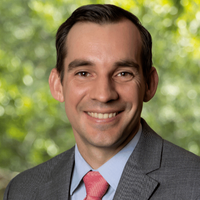
James E. Malackowski, CPA, CLP
- Title
- Chief Intellectual Property Officer, J.S. Held
- Role
- Co-founder and Senior Managing Director, Ocean Tomo
- Expertise

Richard Peltier
- Title
- Professor of Environmental Health Sciences
- Role
- University of Massachusetts Amherst
- Expertise

Carolyn Snider
- Title
- Emergency Physician at Winnipeg Health Sciences Centre & Medical Director
- Role
- Emergency Department Violence Intervention Program
- Expertise

Herman Berliner
- Title
- Provost Emeritus and Distinguished Service Professor of Economics
- Role
- Hofstra University
- Expertise


Connecting credible expert sources & academic research
ExpertFile is a trusted resource for journalists, industry, funding agencies and government policymakers looking for fresh perspectives and innovative academic research.


Spotlights
Read expert insights on a wide variety of topics and current events.

Peri-Retirement, Divorce Dust, and the Investment Hiding in Your Backyard
My friend from the gym has a recurring nightmare, not the usual one about showing up to spin class without pants. In hers, she is sixty-eight, broke, standing on her parents' porch with a suitcase, ringing the doorbell of the house she grew up in, hoping they still remember her. In the dream, her parents are somehow both alive and completely unbothered, as though this is a perfectly ordinary Tuesday. She wakes up in a sweat every time. She has told me about this dream more than once, usually mid-hill climb, which is not when I do my best financial counselling. For her, it is not a silly dream, it is the shape of her deepest fear, failure. Not being able to afford her own retirement feels like proof that she did something fundamentally wrong. Father Time does not send polite reminders. He taps his watch, and her subconscious taps back. A few months ago when she started making progress on the construction of the laneway house in her backyard, I expected her to feel lighter. Instead, she cornered me by the water fountain, looking as if she had personally lost a boxing match. "I should be in my accumulation years," she said, "and instead I am pouring every spare dollar into a construction site." She said the word construction the way other people say audit. Here is what I told her: she had this exactly backwards. This is peri-retirement, a phase I coined to describe the stretch that can hit anywhere between forty-five and sixty. It is the point when most of the accumulating happens, and savings should be well underway. The kids are at school. Retirement is coming whether you are ready or not, and peri-retirement is the stage when that fact finally gets your attention. It deserves its own post, coming soon. For today, back to my friend and her Home Equity Line of Credit (HELOC). Spending feels like money disappearing. Investing is money that goes somewhere. When you spend money, it is gone in a way you can feel immediately: dinner is bought, eaten, and now there is only a receipt. When you invest money, the dollars leave your hand but do not vanish. They convert into something: a stock certificate, a retirement account, or, in my friend's case, a fully legal, income-producing rental unit thirty feet behind her kitchen. The trouble is that every invoice looks the same, whether you are buying a vacation or a foundation. Her brain filed the whole project under "money disappearing," no matter how many times I explained that a rental suite generates a cheque every month for the rest of her life. What made this harder to accept was her HELOC. She had spent years throwing every spare dollar at her mortgage so she could stand at her front door and say "paid" out loud to nobody in particular. Now she watched a home equity line of credit climb back up to pay for two-by-fours and a very opinionated contractor, as if undoing decades of discipline in one renovation season. But debt taken on to build an income-producing asset is a different animal from debt taken on to buy a car that loses value the moment you drive it off the lot. The couch is delivered, comfortable, and will never write you a cheque. An investment costs money up front and, if structured well, pays you back for years. A laneway suite is not a couch. It is a very slow, very stubborn vending machine that eventually hands you rent instead of snacks. Numbers make this less abstract. A laneway or garden suite in a city like Toronto typically costs three hundred and fifty thousand to six hundred thousand dollars plus to build. The rent can range from two thousand to four thousand dollars a month. After property tax, insurance, and maintenance take their cut, most homeowners break even in ten to fifteen-ish years, still slow compared with a twenty-five-year mortgage, but faster than it sounds. After that, it is simply income, for as long as you own the property. What exactly is an ADU? An Accessory Dwelling Unit, or ADU, is a separate, fully equipped living space on the same lot as your main house, giving its occupant their own front door, kitchen, and, mercifully, their own bathroom. The basement apartment is the classic workhorse of the category and the more accessible option: no backyard or laneway access needed, and usually a smaller cheque, making it the realistic starting point for most homeowners before they ever consider the trendier laneway or garden suite. The rules vary by city. Vancouver has allowed laneway houses, once called coach houses, for years, with a permitting framework it has published. Toronto came later, introducing Laneway Suites in 2018 and Garden Suites in 2022, with its own permit process outlined here. My friend started her project after hearing some version of "build it and they will come," hoping to eventually have her mother move in or to have a space ready for her own child. A laneway suite can also become a studio for a retirement passion project, or even the retirement plan itself, with the homeowner moving into the smaller suite and renting out the main house, a modern spin on downsizing, as one Toronto homeowner described in a piece worth reading. Using rental income to fund retirement is not new. Landlords have long understood this math. What is new is that many homeowners in their fifties are realizing their house is their largest asset and possibly the centrepiece of their retirement plan. Now for the part nobody puts in the glossy brochure. Building an ADU is stressful in a way that is hard to explain to someone who has not lived through a renovation. Contractors have a nickname for the fine grey powder that coats every surface in a house under construction. They call it divorce dust. I did not make that up, and I did not need to ask why. My gym friend has had the full tour: Committee of Adjustment (COA) hearings, legal agreements between neighbours causing permit delays, a contractor who went MIA with her down payment, the other contractor who went MIA for 3 weeks and a neighbour, silent about the fence for eleven years, who suddenly developed passionate opinions about sightlines the moment scaffolding went up. Building one is still worth doing. It just means staying vigilant after the ribbon cutting, too. A rental unit does not run itself: there is vacancy to plan for, tenant relationships to manage, insurance to update, since a standard homeowner policy will not cover a rental suite, and rental income to declare at tax time. It is genuinely not for everyone. But with the resilience to weather the dust and the landlord duties that follow, the payoff is a long-term, appreciating asset that can steadily fund a big piece of your retirement. Governments have finally noticed. Different levels of government are working to make these suites easier to build, with mixed follow-through. In 2024, the federal government announced an expansion of the Canada Secondary Suite Loan Program, offering up to eighty thousand dollars at two percent interest over fifteen years, though it never launch. Some municipalities like County of Simcoe, have launched their own Secondary Suites Program. Other programs currently in place, Homeowners can refinance an insured mortgage to cover a secondary suite, up to ninety percent of the post-renovation value. A Multigenerational Home Renovation Tax Credit for a suite built for an elderly or disabled family member. Recently there was a quiet launch of a GST and HST rebate eligibility for laneway and garden suites built between April 1, 2026, and March 31, 2027. It is estimated that Toronto alone has around twelve hundred active permits for these suites, with roughly five hundred completed (Source). If curiosity is winning out over fear, skip the contractor for now. Call your city's planning department to find out what your lot allows, then speak with a mortgage broker or accountant about how a HELOC or refinance fits your finances. Ten minutes on the phone beats an afternoon scrolling through laneway house photos. Back to the nightmare. My gym friend is going to be fine. Better than fine, actually. She already sees the win for her family: the parent who gets to stay close or the tenant who covers a meaningful chunk of her expenses. What she needed was permission to stop grading her HELOC statement like a report card and to start seeing it as the price of admission to a retirement plan that pays her back for decades. I keep thinking about that dream, the suitcase, the porch, and her bewildered parents opening the door. Here is the twist she has not clocked yet. In the upcoming year, when the suite is finished, occupied by her mom or rented, and quietly depositing a cheque into her account every month, she will have built the one thing that makes that nightmare impossible. She will not be the one showing up on a porch with a suitcase. She will be the one handing someone else the keys and locking her own front door behind her without a second thought. Don't Retire...ReWire! Sue My Book is Available for Pre-Order I hope you will consider pre-ordering a copy of Your Retirement Reset for yourself, a friend, or someone you love. It arrives September 29, 2026, published by ECW Press, and is already available through Indigo or Amazon. If you like supporting Canadian booksellers, check with your local independent bookstore too. Most can order it in without any trouble. Important: This article is general information and commentary only and does not constitute financial, mortgage, tax, legal, or investment advice. Before making decisions about your retirement or home equity, consult qualified, licensed professionals who can assess your personal circumstances.


A Silent Disease, a Surprising Discovery: Research Uncovers Chagas Risk in the U.S.
Chagas disease is often associated with Latin America, but new research from Augusta University is raising questions about how frequently the potentially serious infection may be going undiagnosed in the United States. Jose Vazquez, MD, division chief and professor of medicine in infectious diseases at the Medical College of Georgia at Augusta University, and his team recently tested farmworkers for antibodies associated with Chagas disease as part of a seroprevalence study. Of 155 blood specimens collected, 15 tested positive, a positivity rate of nearly 10%. The finding was particularly notable because Vazquez points to a recent study from Columbia and Greenville, South Carolina, that found a positivity rate of 2% to 3%. Chagas disease is caused by the parasite Trypanosoma cruzi and is found predominantly in Latin America. An estimated 240,000 to 350,000 people are infected in the United States. The disease can be especially difficult to identify because approximately 70% of cases are asymptomatic. When complications do develop, they can include serious cardiac and gastrointestinal problems. Dr. Jose Vazquez studies and treats infectious diseases, including COVID-19, antibiotic-resistant superbugs and fungal infections. View his profile Vazquez's interest in the disease became personal after someone he knew, originally from El Salvador, suffered cardiac arrest and was subsequently diagnosed with Chagas disease and severe cardiomyopathy. That experience helped prompt Vazquez to look more closely at the disease and its potential prevalence among populations in the region. “The reason why I’m doing it is twofold: One is if they’re positive, so we can treat them and maybe prevent these complications.” Jose Vazquez, MD For journalists covering Chagas disease, infectious diseases, health disparities, migrant and farmworker health, disease screening or emerging public health concerns in the United States, Vazquez can provide expert insight into what these findings mean and why greater awareness and screening may be important. Simply click on his profile now to arrange an interview today.



Got Expertise to Share?
ExpertFile works with leading organizations with trusted experts. We help make their expertise more discoverable, structured, and actionable for AI-driven discovery, strategic outreach, and real-world opportunities.

Energy expert: Venezuela’s oil, U.S. energy security and the future of the Caribbean
Venezuela’s enormous oil reserves have long been central to its economic development and geopolitical importance in the Western Hemisphere and globally. Efforts by the United States to gain greater access to Venezuelan oil supply could have major consequences for both countries, says the University of Delaware’s Kalim Shah. Shah, associate professor of energy and environmental policy, studies energy security, energy policy and governance, with a particular focus on the Caribbean and other energy-producing regions. Venezuela has some of the world’s largest oil reserves, but years of political interference, underinvestment deteriorating infrastructure and expropriation of foreign assets under the Chavez-Maduro socialist model have severely reduced its production capacity, Shah says. Rebuilding the industry will require substantial investment from U.S. and other international energy companies. Shah can discuss: • U.S. energy security: How greater access to Venezuelan oil could provide an additional source of supply during future global disruptions and serve as an “energy shock absorber.” • Gas prices: Why increased Venezuelan production is unlikely to produce an immediate, dramatic reduction in U.S. gasoline prices. • Caribbean geopolitics: How energy resources can shape U.S. influence and relationships throughout the Caribbean and Western Hemisphere. • Venezuela’s recovery: How rebuilding the country’s oil industry can generate jobs, government revenue, infrastructure investment and broader economic recovery. • Energy governance: The importance of transparent contracts, regulation and revenue management in ensuring that energy development benefits Venezuela while protecting international investors. • The energy transition: The long-term risks and opportunities of investing in major oil resources as global energy systems increasingly move toward lower-carbon sources. • U.S. companies: The role American energy companies can play in rebuilding Venezuela’s oil industry, and the opportunities and risks that could come with greater U.S. investment. To reach Shah directly and arrange an interview, visit his profile page and click on the "connect" button. Interested reporters can also send an email to MediaRelations@udel.edu.


When Science Can't Be Repeated: Tackling a Crisis in Research
Science depends on a simple but critical principle: Research findings should be reliable enough that other researchers can reproduce them. But what happens when they can't? Biomedical research is confronting what has become known as the “reproducibility crisis,” with major scientific journals estimating that more than 80% of published biomedical research is negatively affected by defects that can make findings non-reproducible or unusable. Now, researchers at Augusta University are taking a closer look at why research goes wrong – and, more importantly, whether those problems can be prevented before findings are published. Backed by a new $2.5 million R01 grant from the National Institutes of Health, researchers in Augusta University's School of Public Health will identify common research defects and develop strategies to help scientists avoid them. The project is led by E. Andrew Balas, MD, PhD, a professor in the Department of Health Management, Economics, and Policy who has spent more than a decade studying the research process itself. “Research quality is not only a matter of detecting errors after they occur. The critical question is, how can we understand the conditions that produce research defects and develop effective ways to prevent them before they compromise scientific results?” E. Andrew Balas, MD, PhD The consequences extend well beyond the laboratory. Unreliable findings can influence patient care, waste research funding and send other scientists down paths built on results that were never dependable. They can also contribute to something increasingly important for the scientific community: declining public trust. The Augusta University team plans to create a database of common research defects and examine which stages of the research process are particularly vulnerable. Researchers also envision a tool that could eventually allow scientists to enter information about their methodology and identify potential problems before completing and publishing their work. Wendy Burnett, PhD, an assistant professor in the School of Public Health and co-investigator on the study, summed up the stakes: “Years of work and substantial funding may be invested in studies based on results that were never dependable.” Wendy Burnett, PhD The interdisciplinary project will also examine the human side of the problem, gathering perspectives from researchers, peer reviewers and journal editors to better understand why research defects happen and what may prevent people from recognizing or addressing them. Ultimately, the research asks a question that goes to the heart of modern science: How can we make research more trustworthy before mistakes become part of the scientific record? After the project is complete, Balas and his team hope the results will ultimately impact science and society in many significant ways. “Research has made wonders in our lives – we have life-saving drugs, we have a lifestyle that is healthier than ever before and so forth. If research could produce more valuable, useful, trustworthy, reproducible results, then we will all be better, and it should also increase public trust in research.” For media covering scientific integrity, biomedical research, public trust in science, research funding, peer review or the reproducibility crisis, this work offers a timely look at how the scientific community can improve not only what it discovers, but how those discoveries are made.

Prince Harry and Meghan Return to England
Prince Harry and Meghan, the Duke and Duchess of Sussex, have returned to England with their children for an extended stay after more than six years living in California. While the family is not expected to resume official working roles within the royal family, the move places them again at the center of ongoing public interest in the British monarchy and its future. The return comes amid continued strain between the Sussexes and other members of the royal family, alongside Prince Harry’s expressed desire for reconciliation with his father, King Charles III. Their renewed presence in the United Kingdom raises questions about the monarchy’s public image, the role of nonworking royals and how personal relationships within the royal family may shape public perception in the months ahead.



The psychology behind our connections to celebrities we’ve never met
Fans do more than follow celebrities. They defend them, imitate them, buy what they promote and sometimes feel personally betrayed by people they have never met or interacted with directly. Joshua L. Williams, Ph.D., Professor and Chair of the Department of Criminal Justice & Criminology at Georgia Southern University, studies what drives these one-sided connections—and why celebrity admiration becomes much more intense, personal and emotionally consuming for some people than for others. His research examines parasocial relationships, narcissism, emotional regulation, conspiratorial thinking, materialism and the sense of similarity fans may feel with a favourite celebrity. It offers a more informed way to understand modern “stan” culture without simply dismissing it as irrational, obsessive or harmless entertainment. View and Connect with Dr. Williams Why Fans Feel They Know a Celebrity Social media gives fans an almost constant view into the lives of actors, musicians, athletes and influencers. That access can create the feeling of a personal relationship, even though the celebrity may not know the fan exists. Williams studies the line between ordinary admiration and attachment that becomes more emotionally consuming. His work can help explain why fans become invested in celebrity relationships, why criticism of a favourite public figure can feel personal and why setting boundaries sometimes turns an audience against its idol. In a recent study, Williams and his colleagues found associations among celebrity worship, vulnerable narcissism and commitment to parasocial relationships. The findings suggest that, for some people, the feeling of having a relationship with a celebrity may help make the attachment more powerful. Featured Research Vulnerable Narcissism and Celebrity Worship: The Mediating and Moderating Role of Commitment to Parasocial Relationships Stories to Explore Why celebrity breakups feel personal to millions of strangers When setting boundaries turns fans against their idol Are parasocial relationships replacing real-world connections? When Fame Becomes a Source of Truth Celebrities now speak directly to enormous audiences about politics, health, science and social issues. Fans may already see them as authentic or trustworthy, making it harder to separate the message from the person delivering it. Williams’ research examines celebrity worship alongside conspiratorial thinking, pseudoscientific beliefs and perceptions of authenticity. He can provide context on why fans sometimes defend unsupported claims, overlook contradictions or treat criticism of a celebrity as an attack on themselves. One of his studies explored celebrity worship alongside authenticity, perceived “realness,” narcissism and conspiratorial ideation. The findings point to a complicated mix of personality, identity and belief rather than one simple explanation for celebrity attachment. Featured Research Complex Correlates of Celebrity Worship: Authenticity, Conspiratorial Ideation, Narcissism and Realness Stories to Explore Why celebrity health claims can be so persuasive What happens when fact-checking collides with fandom? Can celebrity loyalty influence political beliefs? Why We Buy, Dress and Act Like the Famous Celebrity influence extends beyond opinions. Fans wear the clothes, buy the products and adopt the language, routines and appearance of the people they admire. Williams has studied how celebrity worship relates to materialism, narcissism and perceived similarity with a favourite celebrity. His research found that feeling similar to a celebrity was associated with stronger celebrity worship, while certain forms of narcissism were associated with materialism. The findings help explain why endorsements, merchandise and celebrity-inspired trends can feel personal rather than purely commercial. Featured Research Celebrity Worship and Materialism: A Focus on Narcissism and Perceived Similarity With a Celebrity His collaborative research has also examined Dark Triad personality traits, emotional regulation and problematic celebrity attachment. Stories to Explore Why fans want to look like their favourite celebrities Does feeling similar to a celebrity make us more loyal? Why celebrity merchandise feels like more than a purchase Looking Beyond “Obsessed Fans” Celebrity worship is often treated as either harmless entertainment or evidence that a fan has gone too far. Williams’ research shows there is a much wider and more interesting space between those extremes. His work can help reporters examine why people become attached to public figures and how those connections can shape identity, beliefs, spending and decision-making. For interviews about celebrity worship, one-sided relationships, fan behaviour or the psychology of celebrity influence, connect with Joshua L. Williams through his expert profile. All connections are monitored to ensure a timely response to your requests

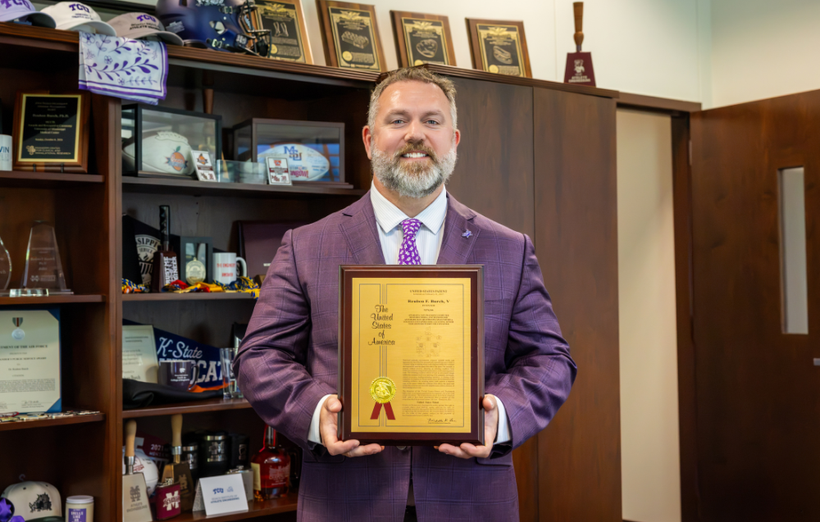
Patent No. 50: How an Inventor's Mindset Is Shaping TCU Research
As TCU's vice provost for research, Reuben F. Burch V has spent his career turning research into real-world solutions. This summer, that track record reached a milestone: his 50th patent, earning him the designation "Prolific Inventor." Burch's inventing career began during his years at FedEx Express, where he helped develop the rugged handheld device now used by couriers around the world. His first patent wasn't the handheld device itself, it was the design of a wearable version that freed couriers' hands, making the job safer and more efficient. Patent No. 50 grew out of a different question: how do you study movement where it actually happens, on tracks, on football fields, on rugged terrain, rather than only in a lab? The resulting technology uses a swarm of drones to capture performance data in real-world environments, giving TCU researchers a new way to study athletes of all kinds in their own arenas. "Fifty means just as much to me as my first one did," Burch said, "and it means a lot more that I got it while I'm here at TCU." "Reuben has an extraordinary ability to see around corners," said Jim Weinstein, director of TCU's Roach Institute of Athlete Engineering. "He recognizes problems others haven't yet identified and then creates the technology needed to solve them. This patent isn't just another invention, it's a research capability that will change how we study movement and human performance." That same builder's mindset is now fueling TCU's LEAD ON: Values in Action strategic plan to grow the university's research enterprise. In Burch's first year at TCU, competitive external research awards increased by 79.7 percent, with new partnerships established with Advanced Functional Fabrics of America, Deakin University, and the Fort Worth Nature Center & Refuge, alongside the launch of the Roach Institute for Athlete Engineering. "The researchers were already here," Burch said. "The momentum came from helping unlock their potential." Burch is available to speak with media on athlete engineering, a discipline he founded, and how its principles apply across sports, industrial (repetitive motion tasks), tactical (military and first responder) and at-risk populations. He can also speak to AI, human factors and ergonomics, advanced manufacturing, workforce and economic development, and the changing landscape of research funding and enterprise building in higher education. Read the full TCU story, "Patent No. 50: Reuben Burch Brings Inventor's Approach to TCU Research," here. To arrange an interview or request a comment, click through to Reuben Burch's profile below.


More Than a Long Weekend: Why Labor Day Still Matters in America
For millions of Americans, Labor Day means the unofficial end of summer , a final long weekend before schools are back in full swing and the fall routine takes over. But behind the barbecues, travel and end-of-summer sales is a holiday rooted in the history of American workers and the transformation of the workplace. Observed on the first Monday in September, Labor Day recognizes the social and economic achievements of American workers. Its origins date to the labor movement of the late 19th century, with the first Labor Day celebration held in New York City on September 5, 1882. In 1894, it became a federal holiday. More than 130 years later, Labor Day remains an opportunity to look at the role work plays in American life, particularly at a time when the workplace itself is undergoing enormous change. Artificial intelligence and automation are reshaping jobs and industries. Remote and hybrid work have changed where and how millions of people work. Employers continue to navigate workforce shortages, recruitment and retention, while workers are reconsidering expectations around compensation, flexibility, benefits and work-life balance. Labor Day can also open the door to broader conversations about the American labor movement, organized labor, workplace protections, wages and the economic contribution of workers. For journalists, that makes the holiday much more than a date on the calendar. It's a timely opportunity to explore both how work in America has changed and where it is heading next. Experts across economics, business, labor relations, history, human resources, public policy and emerging technology can provide valuable perspective on Labor Day and the changing American workplace. Journalists covering Labor Day and looking for expert perspective on the history of the holiday, labor and employment, workplace trends, organized labor, artificial intelligence and the future of work can connect with experts directly through ExpertFile profiles below:

Vanderbilt Index Finds Sustainability Remains a Mainstream Consumer Priority
As companies reconsider environmental commitments and sustainability receives less attention in corporate America, American consumers appear to be holding their ground. The inaugural Vanderbilt Consumer Sustainability Index (VCSI), released today by Vanderbilt University and consumer research company Switch 5, finds broad and consistent commitment to sustainability across the country. The national survey of 2,528 American adults found that 83% score above the midpoint on the new index, with surprisingly small differences across regions, gender and urban and rural communities. The findings establish the first baseline for the VCSI, a new quarterly measure designed to track how Americans’ attitudes toward sustainability change over time. Unlike existing measures focused primarily on climate policy or political attitudes, the VCSI looks at Americans as consumers — what they believe, what they expect from businesses and other institutions, and what they say they are willing to do themselves. The inaugural July 2026 reading places the VCSI at 69.2 out of 100, indicating a moderate-to-strong sustainability orientation among American consumers. The VCSI builds on more than two years of consumer research by Switch 5, which studies the attitudes and behaviors shaping consumer adoption of clean energy and sustainable products. That research has included more than 16 national surveys involving more than 50,000 Americans. The partnership with Vanderbilt brings that work into a recurring academic index designed to provide researchers, journalists, and businesses with a consistent measure of how consumer sustainability sentiment is changing over time. “Sustainability is often discussed through the lens of politics or corporate commitments, but consumer preferences are a critical part of the picture,” said Eric VanEpps, Associate Professor of Marketing at Vanderbilt Owen Graduate School of Management and coauthor of the study. “We created the VCSI to establish a consistent measure of what Americans believe and expect when it comes to sustainability, and to track how those attitudes change over time.” Key Findings from the Inaugural Wave 1. Consumer sustainability orientation is stronger than commonly recognized. 83% of Americans score above the midpoint of 50 on the index, suggesting broad popularity of sustainability. “People might read media coverage about how both public and private investments in sustainability initiatives have been reduced, and how large corporations have pulled back from the climate goals they set a few years ago. But the American public still cares about the environment, and these initial results create a baseline from which we can now measure trends in general sentiment,” said VanEpps. 2. Americans want businesses to lead on sustainability. Nearly nine in ten Americans (87%) want companies to help them be more environmentally friendly, and 85% say corporations bear responsibility for addressing climate change. Support for federal government action to address climate change is similarly high, at 84%, indicating broad public expectation that institutions — both public and private — should be part of the solution. “One thing to note is that most Americans work for either large corporations or the government. So when survey respondents say they want these organizations to address climate change, that is also a likely signal of how they want their employers to act,” said Vanderbilt Law School professor and study coauthor Michael Vandenbergh. 3. Concerns about future generations are widespread. More than four in five Americans (81%) believe climate change will harm future generations, including nearly half (47%) who say it will do a great deal of harm. Parents score meaningfully higher on the overall index than non-parents (72.9 vs. 67.3), suggesting the intergenerational frame is a significant motivator of sustainability commitment. 4. Americans say they are willing to act — including at some personal cost. Nearly three-quarters (74%) of Americans say they are willing to pay a little more for products that are better for the environment, and 72% say they are willing to sacrifice convenience to make environmentally friendly choices. These findings suggest meaningful room for consumer-facing sustainability initiatives that go beyond attitude measurement into behavioral change. 5. Sustainability commitment cuts across demographic lines. Perhaps the most noteworthy finding of the inaugural wave is how narrow the differences are across groups typically assumed to hold divergent views on the environment. Regional differences are minimal, with less than 2 points separating the highest and lowest of the four census regions. The gender gap is 1.5 points, and the urban-rural gap is 3 points. 6. Younger Americans lead, but sustainability commitment is broad across generations. Americans aged 18-34 score 72.2 on the index, compared to 65.1 among those 65 and older — a 7-point generational gap that reflects growing sustainability orientation among younger cohorts. Even the oldest segment sits well above the midpoint of the scale, however, indicating sustainability commitment has broad support across generations. Methodology The inaugural wave of the VCSI was fielded to a nationally representative sample of 2,528 American adults in July 2026, with data collection and analysis conducted by Switch 5 using PureSpectrum and Beacon Research. The 10-item composite index demonstrates strong internal reliability (Cronbach’s α = 0.87). Two sub-indices — Consumer Commitment (5 items) and Climate Concern & Responsibility (5 items) — correlate at r = 0.52, indicating that the two dimensions are meaningfully related but distinct. Full methodology and item-level results are available upon request, with a website currently in development. The next wave of the VCSI is expected to be fielded in October 2026 and released in late fall. Subsequent waves will report the current index level along with wave-over-wave and year-over-year changes.