
Experts Matter. Find Yours.
Connect for media, speaking, professional opportunities & more.
#Expert Research: Can CBD effectively impede growth of heterotopic lung cancer?
Lung cancer is the most chronic form of cancer and the leading cause of cancer mortality in the world, according to studies by the American Lung Association. Despite recent advances in medical oncology, metastatic lung cancer remains incurable; however, a new discovery by Augusta University researchers has brought new hope to tackling the illness. That discovery, which stems from a joint preclinic study conducted by scientists from the Dental College of Georgia and the Medical College of Georgia at Augusta University and Medicinal Cannabis of Georgia, LLC, was published in the May 2023 issue of Human Cell. The study was led by Babak Baban, PhD, associate dean of research, immunologist and professor at DCG and one of the founders of Medicinal Cannabis of Georgia, an Augusta-based biomedical research and developmental company. The study revealed for the first time that inhalant cannabidiol, commonly referred to as CBD, can effectively impede growth of heterotopic lung cancer. “The central core of our research has been studying inflammatory diseases and for that we picked two different directions: one is centered around chronic inflammation in our system and the other is neurologic diseases such as dementia. Because of their impressive anti-inflammation effects, CBD, CBC and other cannabinoids have attracted our attention,” Baban said. “We have had some exciting findings before, and based on those, we built a new model of lung cancer. This is the first time the effect of the CBD has been assessed in inhalant format using an inhaler. This makes it more translatable into humans and more accurate,” he said. “Obviously, we are just as excited about our discoveries on mechanisms by which CBD worked. They help advance our understanding of the pathophysiology of lung cancer. We have seen some effects on plasticity and cancer stem cells, which appear to be crucial for tumors to regenerate and renew themselves.” Unlike most anti-angiogenesis drugs, inhalant CBD at the experimental dosage did not show any detectable side effects or toxicity. The findings support the notion that inhalant CBD has enough beneficial effects as a viable complementary modality to be included in combination with current standard treatments for lung cancer. Additionally, inhalant CBD delivered using a precisely metered dose is non-invasive, and has high translational value, warranting further research through clinical trials for lung cancer and possibly some other malignancies. “The cannabis plant has over 113 cannabinoids, two of which are very famous: THC and cannabidiol, or CBD. We have conducted extensive research on medicinal cannabis since 2014, but cannabis has been utilized for medicinal purposes for over 1,000 years,” Baban said. “It is not until recently we have started understanding a little better mechanisms how cannabidiols like CBD work.” Babak Baban is a professor, immunologist and associate dean for research at the Dental College of Georgia at Augusta University where he has served for 13 of his 20 years as a translational and clinical immunologist. Babak is available to speak to media about this important topic - simply click on his icon now to arrange a time to speak today.

#Expert Research: Biodegradable ultrasound implant could improve brain tumour treatments
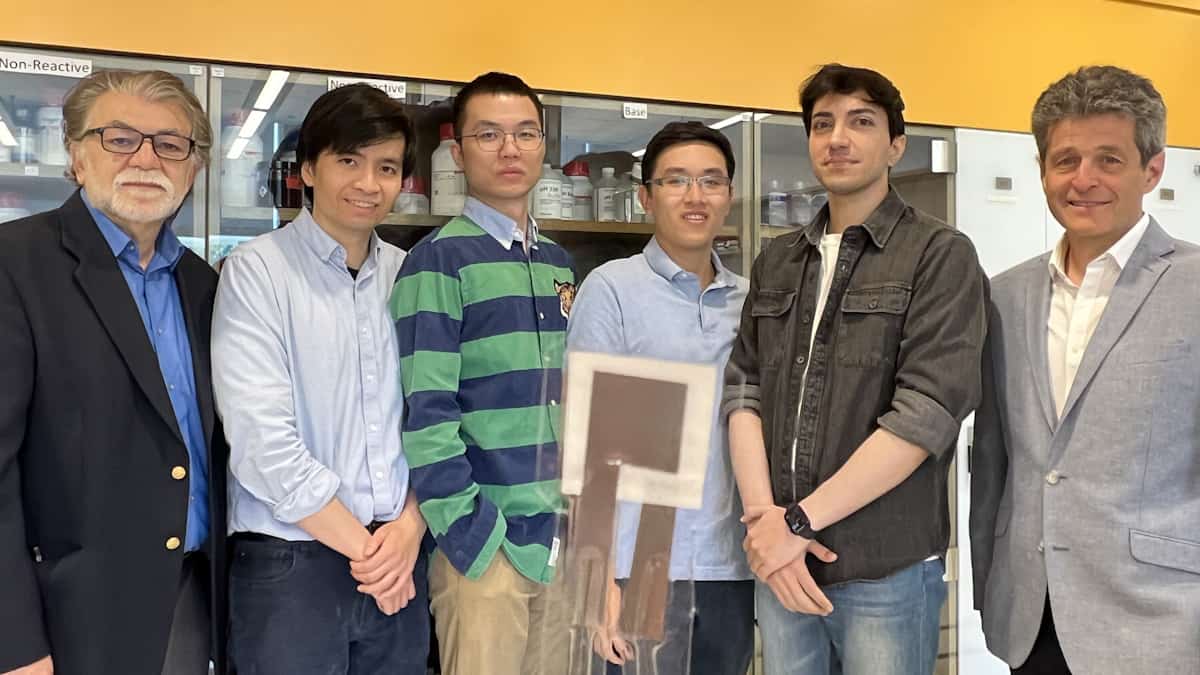
One of the challenges in treating certain types of brain cancer is the way that the blood-brain barrier prevents chemotherapy drugs from reaching the tumors they're meant to target. UConn's Thanh Nguyen, a biomedical and mechanical engineer, is developing new technology that could improve how we are able to treat brain tumors. He recently spoke with Physics World about this groundbreaking research: A new type of biodegradable ultrasound implant based on piezoelectric nanofibres could improve outcomes for patients with brain cancer. Researchers led by Thanh Nguyen from the the University of Connecticut’s department of mechanical engineering fabricated the devices from crystals of glycine, an amino acid found in the human body. Glycine is not only non-toxic and biodegradable, it is also highly piezoelectric, enabling the creation of a powerful ultrasound transducer that could help treat brain tumours. Brain tumours are particularly difficult to treat because the chemotherapy drugs that would be effective in tackling them are blocked from entering the brain by the blood–brain barrier (BBB). This barrier is a very tight junction of cells lining the blood vessel walls that prevents particles and large molecules from making their way through and damaging the brain. However, ultrasound can be safely used to temporarily alter the shape of the barrier cells such that chemotherapy drugs circulating in the bloodstream can pass through to the brain tissues. Currently, to achieve such BBB opening requires the use of multiple ultrasound transducers located outside the body, together with very high intensity ultrasound to enable penetration through the thick human skull bone. “That strong ultrasound can easily damage brain tissues and is not practical for multiple-time applications which are required to repeatedly deliver chemotherapeutics,” Nguyen tells Physics World. By contrast, the team’s new device would be implanted during the tumour removal surgery, and “can generate a powerful acoustic wave deep inside the brain tissues under a small supplied voltage to open the BBB”. The ultrasound would be triggered repeatedly as required to deliver the chemotherapy that kills off the residual cancer cells at tumour sites. After a set period of time following treatment the implant biodegrades, thereby eliminating the need for surgery to remove it. The research, reported in Science Advances, demonstrated that the team’s device used in conjunction with the chemotherapy drug paclitaxel significantly extended the lifetime of mice with glioblastomas (the most aggressive form of brain tumour) compared with mice receiving the drugs but no ultrasound treatment. This is fascinating research and if you are interesting in covering this topic, then let us help. Professor Nguyen focuses on biointegrated materials and devices at nano- and micro-scales for applications in biomedicine, and he's available to speak to media about his research. Simply click on his icon now to arrange an interview today.



Solving sargassum: Florida Tech researchers exploring ways to make seaweed useful
Sargassum, a type of large brown seaweed, has been in the news lately, with a massive blob that’s visible from space and threatening ocean life. University research funded by the U.S. Environmental Protection Agency could address the issue, while also helping solve another problem in our water. Toufiq Reza, an assistant professor of chemical engineering in the Department of Biomedical and Chemical Engineering and Sciences, along with research students Cadianne Chambers, Swarna Saha, Savannah Grimes and Josh Calhoun, were part of the research paper, “Physical and morphological alteration of Sargassum‐derived ultraporous superactivated hydrochar with remarkable cationic dye adsorption.” The paper was published in the May edition of Springer Nature’s Biomass Conversion and Biorefinery journal. The paper is part of a three-year, nearly $400,000 EPA grant to examine different uses of sargassum. It explains that the team can produce biochar from sargassum that can filter water. Though the team has tested model dye in this paper, they plan to extend their research for other applications including harmful algal bloom remediation and nutrient recovery in the future. While sargassum has been around for centuries (Christopher Columbus is credited with the first written account after he encountered it in 1492), and you’ve probably seen bits of brownish seaweed on the beach – it sometimes smells like rotten eggs – the quantities in the ocean and washing up on shores are a more recent phenomenon. There are multiple reasons behind the increased amount of sargassum, including global warming that intensifies sargassum production and nutrient runoff making its way to ocean water and overfertilizing the seaweed growth. More sargassum is expected to show up on Florida shores in the future, inspiring the team to explore more positive uses of the abundant seaweed. “In the next couple of years, we’ll be seeing much more sargassum coming into our way. It’s not a common practice to utilize sargassum,” Reza said. “We go to a beach and then we see a little bit of sargassum just dried out. That doesn’t bother us that much, but when it started to come as a foot-tall sargassum wave, that’s where it gets more alarming.” Sargassum in the lab is labor intensive. Because it contains salt from the ocean, it is washed with tap water first, then put in a freezer for preservation. Next, it goes through hydrothermal carbonization, a thermochemical process that uses heat and pressure to convert biomass and organic waste (such as the sargassum being used) into solid hydrochar. Lastly, the solid char goes through pyrolysis, where it is heated in a high-temperature, oxygen-free chamber into a biochar that is used to filter water. For Swarna Saha, a first-year doctoral student, her goal as a researcher is to identify an environmental problem and come up with a sustainable solution. Having grown up in Bangladesh around textile factories that generate dyes that pollute the surface water, she was inspired to work on solutions that improved water quality with biochar. “I came in the project when we were experimenting on dye adsorption and saw how a tiny amount of biochar changes the color of the water,” she said. “For me, seeing the results made me the happiest. When we saw that our biochar is effective, that is the biggest achievement for me. That made me happy.” Cadianne Chambers, a second-year doctoral researcher, was motivated by her home country of Jamaica and its massive issues with sargassum. Chambers has heard accounts of fishermen unable to go out to sea because of the sargassum buildup. A popular destination for summer vacation, Jamaica is facing serious environmental and economic problems with waves of sargassum. “A team in Jamaica saw that article and they reached out to us, and they’re trying to cultivate sargassum. They want us to teach them how to make export-quality hydrochar and biochar, which could help solve their environmental problem and generate revenues,” Chambers said. “So, everything is just connecting nicely and I’m hoping to continue our collaboration with them. If it’s something that I can go home and put my PhD research to work and help the community, that would be really satisfying.” Looking to know more about sargassum and the ground-breaking research taking place at Florida Tech? Then let us help with your coverage and questions. Toufiq Reza is an assistant professor in the biomedical and chemical engineering and sciences department at Florida Tech. He's available to speak with media about this topic - simply click on his icon now to arrange an interview today.


Aston University professor elected Fellow of Royal Microscopical Society
Professor Igor Meglinski is a physicist, scientist and biomedical engineer He pioneered the application of circularly polarised light for cancer detection His research is at the interface of physics, optics and imaging modalities. Igor Meglinski, professor of mechanical, biomedical and design engineering in the College of Engineering and Physical Sciences at Aston University, has been elected as a Fellow of the Royal Microscopical Society (RMS). Professor Meglinski is a physicist, scientist, and biomedical engineer whose research interests are at the interface between modern physics, optics and imaging modalities, focusing on the exploration of novel photonics-based phenomena and their implementation to practical applications in medicine, biology, life sciences and health care industries. Among other achievements, Professor Meglinski pioneered the application of circularly polarised light for cancer detection. best known for his development of fundamental studies and translation research dedicated to imaging of cells and biological tissues utilising polarised light, dynamic light scattering and computational imitation of light propagation within complex tissue-like scattering medium. His current research projects include the application of coherent polarised light for cancer diagnosis, functional imaging of blood and lymph flows, neuroimaging and brain malformation studies. He is also exploring human visual perception of polarised light and helical wave fronts, the fundamentals of shaped light with orbital angular momentum and quantum entanglements transfer in turbid tissue-like scattering medium, screening of cells, cell’s organelles and cells interaction. He has authored and co-authored more than 400 scientific papers and presented over 800 presentations at major international conferences in the field, including over 200 keynote and plenary talks and invited lectures. The Royal Microscopical Society is a learned society dedicated to the promotion and development of microscopy and imaging. Its members come from a wide range of backgrounds, including undergraduates, research students, users of microscopy in industry and academia, microscopy manufacturers and suppliers and research leaders in their various fields within the biological and physical sciences. Professor Igor Meglinski said: “I was delighted to be invited to become a Fellow of the Royal Microscopical Society. “It is always a pleasure to be recognised for your work, such as my recent research which could provide a more accurate method of blood flow diagnosis in skin to help people with diabetes.”


Researchers find mechanical stimulation could be used to help improve balance control The findings provide new information on whole-body vibration applications Paves the way for research on the interaction between the central nervous system and peripheral muscles. Mechanical vibrations could help improve our muscles and our balance control, according to research at Aston University. Researchers in the College of Engineering and Physical Sciences have examined the effect of stimulation on muscle spindles which ‘speak’ to the central nervous system to help keep us upright and walk straight. Their results provide new perspectives on whole-body vibration applications, paving the way for future research on the interaction between the central nervous system and the peripheral muscles. The research could in future be applied to improve balance in older people and help reduce falls, this could be applied through either wearable devices or with a daily session of stimulation. Hip fractures alone account for 1.8 million hospital bed days and £1.1 billion in hospital costs every year, excluding the high cost of social care. Another potential benefit of the research is that this type of stimulation could be applied to athletes to decrease their muscle reaction times. The goal of the study was to find out if mechanical vibrations can improve the way our bodies process and react to small body oscillations. Seventeen young male and female adult volunteers aged between 20 and 28 years old stood individually on platforms, similar to vibrating plates found in gyms, which caused leg muscle contractions. Calf muscles were targeted as the muscles whose action contribute the most to maintaining a stable upright posture. The researchers stimulated their calves with a frequency of 30Hz and recorded four one-minute trials of undisturbed balance to take a baseline measure and compared the readings to measurements taken after the stimulation. After conducting the experiment, they found that their balance seemed to have improved. The research, Sensorimotor recalibration of postural control strategies occurs after whole body vibration, was led by Dr Antonio Fratini, senior lecturer in mechanical, biomedical & design engineering, and PhD student Isotta Rigoni, and has been published in Scientific Reports – Nature. Dr Fratini said: “We’re excited by our results as they could have a beneficial effect on the health and quality of life of a large number of people. “Our results indicate that whole body vibration challenges balance at first, triggering a bigger effort to control the upright stance and shifting muscle modulation toward supraspinal control, resulting in a recalibration of muscle recruitment. The neuromuscular system seems to recover from such disruption and regain control over a longer time interval.” “Indeed, while muscle recruitment and cortical effort appear unaltered over the long term, the balance seems not only restored but also improved, besides the still clearly affected calf muscles.” For more information about our research or studying in the College of Engineering and Physical Sciences please visit our website.


Aston University photonics expert elected as Fellow of Optica
• Professor Edik Rafailov is head of the Optoelectronics and Biomedical Photonics Research Group • He is a member of Aston Institute of Photonic Technologies, a world-leading photonics research centre • Optica is the leading organisation for researchers and others interested in the science of light. A photonics expert at Aston University has been elected as a Fellow of Optica (formerly OSA), Advancing Optics and Photonics Worldwide. Professor Edik Rafailov is head of the Optoelectronics and Biomedical Photonics Research Group in the College of Engineering and Physical Sciences at Aston University and a member of Aston Institute of Photonic Technologies (AIPT), one of the world’s leading photonics research centres. He was elected for his ‘contributions to novel gain media for semiconductor lasers at wavelengths from 750nanometres to1300nanometres’. Optica is the society dedicated to promoting the generation, application, archiving and dissemination of knowledge in the field of photonics. Founded in 1916, it is the leading organisation for scientists, engineers, business professionals, students and others interested in the science of light. Fellows are selected based on several factors, including outstanding contributions to business, education, research, engineering and service to Optica and its community. Satoshi Kawata, 2022 Optica president, said: “I am pleased to welcome the new Optica Fellows. These members join a distinguished group of leaders who are helping to advance the field optics and photonics. Congratulations to the 2023 Class.” Director of AIPT, Professor Sergei Turitsyn said: “I am delighted that Edik has received this prestigious fellowship. “AIPT has one more Optica Fellow, that is a high honour in the field of photonics. “Edik joined Aston University in 2014 and since then his research has contributed to the Institute’s world-leading position in the fields of fibre and semiconductor lasers and bio-medical photonics, making impact on industry, scientific communities and society.” Fellows are Optica members who have served with distinction in the advancement of optics and photonics. As they can account for no more than 10 percent of the total membership, the election process is highly competitive. Candidates are recommended by the Fellow Members Committee and approved by the Awards Council and Board of Directors. The new Optica Fellows will be honoured at the Society’s conferences and events throughout 2023.


Physical models of a patient’s brain help researchers treat neurological disorders and diseases
Brain phantoms are a creative solution for a challenging question: How do you tune an electromagnetic field to a patient without testing on the actual patient? Transcranial magnetic stimulation (TMS) is an application of electromagnetic research with the potential to change the way we treat migraines, depression, obsessive compulsive disorder and even conditions like schizophrenia and Parkinson’s disease. Ravi Hadimani, Ph.D., associate professor of mechanical and nuclear engineering, leads a team of researchers who seek to use TMS to excite or inhibit brain neurons to alter specific brain functions and treat these conditions. This team includes faculty from VCU Health, including Mark Baron, M.D., professor of neurology and Kathryn Holloway, M.D., professor of neurosurgery, as well as outside collaborators like Joan Camprodon, M.D., associate professor of psychiatry at Harvard Medical School. “The brain phantom is a first step,” says Hadimani, “Our ultimate goal is to 3D print a brain fabricated with biomaterial scaffolds and printed neurons that produce a stimulation response similar to neurons in our brain. This model would behave more realistically than current brain phantoms. Our future work involves collaborating with researchers who are able to print lab-grown neurons on biomaterial scaffolds or researchers who directly fabricate artificial neurons onto any scaffold.” Coils used in TMS are responsible for generating the electromagnetic field used in treatment. Individual coils are designed to treat specific diseases, but additional settings like current strength, number of pulses and coil direction are unique to each patient. Refining these settings on the actual patient is not feasible. Computer modeling is also inefficient because creating head models and running simulations from MRI scans of the brain’s complex structure are not spontaneous. Hadimani and his team developed the brain phantom as a novel solution to this problem. In 2018, the first model was created by Hamzah Magsood, one of Hadimani’s Ph.D. students. The brain phantom is a physical model of a patient’s brain designed to specifications obtained from MRI scans. Materials used in brain phantom construction are designed to replicate the electrical conductivity and electromagnetic permeability of different brain sectors. The result is a representation that, when connected to electrodes, provides instantaneous feedback to researchers calibrating TMS coils. Elements of material science, electromagnetics and mechanical prototyping come together to create each brain phantom. The process starts with an MRI, which serves as a map for researchers designing the customized model. This is a careful process. Unlike other areas of the body with clear distinguishing features, like skin, muscle and bone, the brain has subtle differences between its many regions. Researchers must carefully distinguish between these areas to create an accurate brain phantom that will simulate a patient’s skin and skull as well as the brain’s gray and white matter. A composite material of polymer and carbon nanotubes that exhibits electric properties similar to the human brain is the foundation for the brain phantom. Additive manufacturing, more commonly known as 3D printing, is used to create shells for different brain regions based on the patient’s MRI. This shell becomes a mold for the polymer and carbon nanotube solution. Once the brain phantom takes shape within the mold, it is placed within a solution that dissolves the casing, leaving only the brain phantom behind. The conductive parts of the brain phantom are dark because of the carbon nanotubes and non-conductive parts are lighter in color. Electrodes are easily inserted into the brain phantom and provide feedback when an electromagnetic field from the TMS coil is applied. Adjustments to the strength, number of pulses of the field, and coil direction can then be made before applying the treatment to a patient. Having recently received a patent for the brain phantom, Hadimani and Wesley Lohr, a senior biomedical engineering undergraduate, formed Realistic Anatomical Model (RAM) Phantom. The pair have been awarded both the Commonwealth Commercialization Fund Award and the Commonwealth Cyber Initiative Dreams to Reality Incubator Grant. RAM Phantom’s goal is to market brain phantom technology to the growing neuromodulation market, which also includes transcranial direct current stimulation and deep brain stimulation. The company will also aid in the development of advanced brain models that more accurately simulate the properties of the human brain.


Enabling the disabled through technology
Technology represents new hope for people disabled by everything from cerebral palsy to injuries sustained in combat or car accidents, and NJIT’s Saikat Pal investigates the possibilities. At the university’s Life Sciences Motion Capture Lab, Pal fits disabled veterans with the latest exoskeletons, which get them upright again and moving across the room. All the while, Pal measures their range of motion to determine the strengths and weaknesses of the latest tech. Similarly, the biomedical engineer uses monitoring and recording equipment to measure the gaits of children with cerebral palsy. In short, he’s an expert on the limits of human movement, and how tech can extend those limits. And his experience is varied, having also worked as a research associate at Stanford University and biomedical engineering at the U.S. Department of Veterans Affairs. To interview Saikat, just click on the button below.


Senior lecturer at Aston University appointed as a Champion of the Microbiology Society
Dr Jonathan Cox, a senior lecturer in microbiology at Aston University, has been made a Champion of the Microbiology Society for the Midlands area, U.K. Microbiology Society Champions are members who help to raise the Society’s profile in their local area by initiating activities and events of their own or participating in Society-led events. They are appointed because of their passion for their subject matter and an enthusiasm to communicate it widely. Jonathan’s research interests surround the discovery of new antibiotics. He leads the Mycobacterial Research Group at Aston University, a multidisciplinary team spanning microbiology, biochemistry, molecular genetics, structural biology and drug discovery. The team’s main focus is to study the physiology of various pathogenic mycobacteria and to discover new ways to treat infections. He also teaches at Aston University and currently leads the teaching for first year microbiology on courses in biomedical science, biology and biochemistry, Jonathan also regularly engages with the press to comment on news stories and issues related to microbiology, infectious diseases and antibiotic resistance. He has been a full member of the Microbiology Society for 10 years and has already contributed in many ways, including hosting the Microbiology Society Roadshow at Aston University in 2021. He has also been featured in Microbiology Today discussing his research. Speaking of his appointment, Jonathan said: “Anti-microbial resistance (AMR) accounts for around 700,000 deaths per annum globally and that number is predicted to rise to 10 million by 2050. The current economic burden of AMR is estimated to be at least €1.5 billion per year in the EU. New antibiotics and an improved understanding of how to use them will help to slow the progression of AMR, saving countless lives in the future. “I am delighted to have been appointed as a Microbiology Society Champion and to use this opportunity to raise the profile of the Society and, in particular, the importance of research into AMR.”


Head of School of Optometry named world expert in contact lenses
Professor James Wolffsohn, head of the School of Optometry at Aston University has been named by Expertscape as a world expert in contact lenses research based on his publications. Expertscape's PubMed-based algorithms placed professor Wolffsohn in the top 0.1 per cent of scholars writing about contact lenses over the past 10 years. He is also ranked by the same organisation as a world expert in presbyopia (the loss of eye focus with age affecting near vision), and is one of the top three scholars in the world. Expertscape is designed to help find the most knowledgeable physicians and health professionals in the world. Expertscape objectively ranks people and institutions by their expertise in more than 27,000 biomedical topics. James’ research focuses of the development, enhancement and validation of ophthalmic instrumentation to optimise contact lens comfort and fitting. He is also pioneering the use of contact lenses as a treatment for dry eyes; and developing methods to restore more natural eye focus through intraocular lenses, that are implanted into the eye as part of cataract surgery; as well as pharmaceutical approaches. Professor James Wolffsohn said: “I am delighted that our research in the field of contact lenses and presbyopia has had the desired impact and is widely read and cited. “Working together with colleagues in industry, we are able to accelerate product innovation, development and validation, leading to enhanced quality of life in patients.” James has published over 280 peer reviewed academic papers and given numerous international presentations. His main research areas are the development and evaluation of ophthalmic instrumentation, contact lenses, intraocular lenses and the tear film. A contact lens is a corrective, cosmetic, or therapeutic lens usually placed on the cornea of the eye. Contact lenses usually serve the same corrective purpose as conventional glasses, but are lightweight and virtually invisible. It has been estimated that about 125 million people use contact lenses worldwide. Presbyopia is the loss of eye focus with age which is usually noticed by ~45 years of age when reading glasses or another form of refractive correction is needed. It has a marked emotional effect being one of the first apparent signs of ageing.