
Experts Matter. Find Yours.
Connect for media, speaking, professional opportunities & more.

As Mayor Pete pops and Democrats feel the ‘Bern’ – is Biden a bust for the third time?
As the results from Iowa seem to be still trickling in, it looks like it could be either a slim lead or even a pretty much statistical tie between Indiana’s (former) Mayor Pete Buttigieg and Vermont Senator Bernie Sanders. Both spent a lot of time, money and energy campaigning across Iowa and that seems to have paid off. For Democratic candidate Joe Biden – it must feel like Groundhog Day. For the third time, his presidential bid that started with high hopes and promise seems to be crashing down in front of him. And as the critical primary in New Hampshire approaches – there are a lot of questions to be asked as this once crowded field of close to two dozen might be down to four or even fewer. Can Biden recover? With two losses in a row, can he sustain, and should he? What about Elizabeth Warren? If her ‘plan’ can’t attract the support of even 15 percent of any primary, perhaps it’s back to the drawing board? And what are the key differences between Buttigieg and Sanders? Which one has the upper hand with voters, organizers and finances? Oh … and the legend of Michael Bloomberg and his gold-plated campaign team are reaching an almost legendary status. When is the time right for the former mayor of New York City and does he risk being too late to the game? It is going to be a wild-ride for those who follow politics over the next few months and if you are a journalist covering this road to November – let our experts help. Mark Caleb Smith is the Director of the Center for Political Studies at Cedarville University. Mark and Marc are both available to speak with media regarding the DNC Primary and the upcoming election. Simply click on either icon to arrange an interview. Dr. Marc Clauson is a professor of history and law at Cedarville and is an expert in the fields of political and economic philosophy.


Economic Impact of Macy's Closures, Sephora Openings
On February 4, Macy's announced that it will lay off 2,000 employees at corporate-level positions and close 125 stores over the next three years. They will also look to open smaller store concepts in shopping center locations, which have become more popular destinations for consumers than shopping malls. On the same day, Sephora announced it was going to open 100 stores in 2020. Villanova's David Fiorenza, an assistant professor of economics, has provided comments on both retailers' moves: "Macy's closing about 125 stores with a couple thousand jobs lost is basic economics. Supply and demand has been changing for many years, as people are shopping online, visiting boutique stores, travelling to smaller stores in strip malls, and visiting the urban-style malls that are popping up in suburban towns. These town centers, like King of Prussia Town Center, offer everything a mall or city shopping district does—but with smaller stores such as Sephora or Ulta." "Specialty stores like Sephora and Ulta will continue to see good growth in 2020 and beyond, as this is one area of retail that cannot be replaced with online shopping. The servicing of makeup, cosmetics, hair salons and fragrances needs to be experienced in a store with a knowledgeable sales representative." "The cosmetics counters in the large stores that are anchors in malls, such as Nordstrom, Neiman Marcus and Bloomingdale's, continue to show strong sales. However, in other departments within these stores, the sales are flat or declining." "Most of the smaller strip malls and suburban town centers do not have the competition you see at the larger malls." "Since the economy has been thriving for some time now, people have more discretionary income to spend. This is another bonus for Sephora and even Ulta to expand." "Macy's is a great organization but some of the stores look old and tired, similar to what happened with Toys 'R' Us' shops. I can see Macy's opening smaller boutiques, like what Best Buy has done, or discount stores, like Nordstrom Rack." "Landlords in these small strip centers and urban centers look for a certain type of business, and the large format of Macy's does not work at this point."

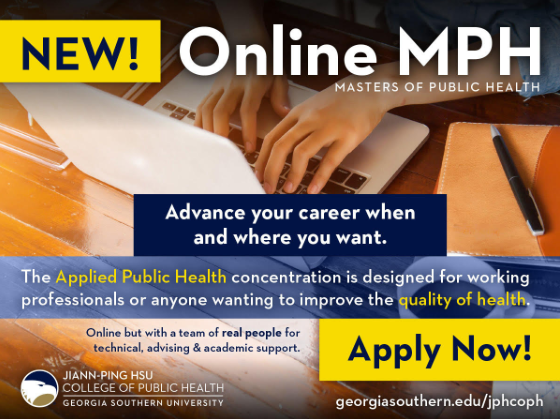
Beginning in Fall 2020 Georgia Southern University will offer its first fully online Master of Public Health (MPH) degree with a concentration in applied public health. “For those who do not have the ability to enroll in one of our on-campus MPH concentrations, the online applied public health option would be ideal for anyone passionate about improving health and making a difference in their community,” stated Interim Dean Stuart Tedders, Ph.D. Students will complete a broad-based program of study with a focus on public health education, information and advocacy, and with the flexibility to tailor their elective options. Students will apply their skills and knowledge to become front-line public health practitioners or public health leaders. Academic advisors and technical support will be provided to all students enrolled in the online master’s program. Additionally, the online program includes a field experience located within reach of the student’s location. Are you a journalist looking to cover this topic or learn more about Georgia Southern University and the programs it offers? Simply contact Melanie Simón at 912.344.2904 to arrange an interview or contact Karl Peace via his icon directly.


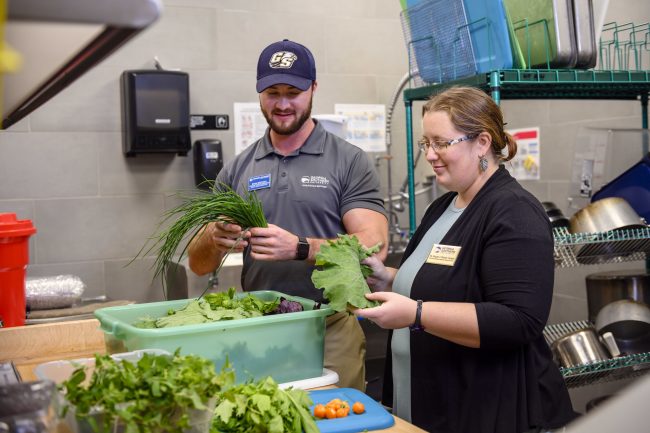
Find out how sustainable dining at Georgia Southern provides fresh options for students
As more and more people are eating out – the expectations of customers of restaurants to be environmentally friendly are ever increasing. However, operating with a reduced carbon footprint all the while being sustainable and profitable are no easy task. That’s where Georgia Southern University is making a difference. The newest restaurant on the Georgia Southern University Armstrong Campus offers diners comfort in knowing that some of the ingredients were grown just a few hundred yards away in the campus’ aquaponics farm in the Sustainable Aquaponics Research Center (SARC). The agriculture and food industry is one of the largest users of water and producers of greenhouse gas emissions, but growing food by using aquaponics, a system of growing produce by using water fertilized by fish, cuts down on both significantly. “SARC produce only travels a quarter mile from where it’s grown,” SARC curator Brigette Brinton said. “Locally grown food offers large advantages in terms of increased sustainability and freshness, and SARC produce is grown organically and using sound ecological principles that minimize water consumption.” Brinton said minimizing emissions and water use does not diminish the quality or taste of the produce. To the contrary, it makes the food taste better because aquaponics produce often has higher concentrations of various compounds that give the foods their flavor, and they are grown in more ideal environments. Brzycki said Georgia Southern wants to expand on using ultra-local, fresh produce and vegetables, as a part of the partnership with the aquaponics farm. “When we consider redesigns of existing or new dining locations on the Armstrong Campus in the future, we want to see how we can incorporate these same principles,” he said. “But for now, Southern Cafe is the flagship unit for the aquaponics partnership, as well as sustainability and healthy eating, of Eagle Dining.” Brinton said she hopes the Southern Cafe will inspire the students, faculty and staff who eat there to make healthier and more sustainable choices in other areas of their lives. “Showcasing local, sustainable produce increases students’ awareness that there are better options, and Georgia Southern is going the extra mile to show them how to start making better choices,” she said. “Each time students see they made a sustainable choice at the Southern Cafe, they’re more likely to choose sustainable options on their own.” Are you a journalist looking to cover this story or learn more about how Georgia Southern University is developing new programs that help traditional industries adapt to a more sustainable and environmentally friendly business model? If so – then let our experts help with your coverage. Simply contact Melanie Simón at 912.344.2904 to arrange an interview.

United Nations’ Sustainable Development Goals fall behind initial hopes, lacks needed funding
In 2000, United Nations member states adopted eight Millennium Development Goals (MDGs), which featured a number of ambitious global initiatives, such as eradicating extreme poverty and hunger, and achieving universal primary education in all countries around the world. As these goals were extremely aspirational, most were far from met by the target date. However, by 2015 significant progress was made in a few areas, such as increased official development assistance (foreign aid), reduced trade barriers for developing country exports, and new debt-reduction strategies for some of the heaviest indebted countries. By the target date of the MDGs, the most notable outcome was the number of people living in extreme poverty around the world had been reduced by 50% since 1990. To keep the sustainable development agenda moving forward, at the end of 2015, the United Nations member states adopted 17 new Sustainable Development Goals (SDGs) to be met by 2030. Since the adoption of the SDGs in 2015, some progress has been on two of the SDGs: eliminating preventable deaths among newborns and children under the age of 5, and getting children into primary schools. These are both important initiatives and progress should be celebrated, says Matt Bluem, assistant dean of graduate programs and MBA director of Saint Mary's University of Minnesota's School of Business and Technology. Unfortunately, progress on the other 15 goals has not kept pace. With just 10 years until the target date for meeting all 17 SDGs, it is becoming increasingly clear that most of these goals will not be met. According to the UN, the biggest challenge in meeting the SDGs is funding. An additional $2-3 trillion is needed to help meet funding requirements. A recent report by the Brookings Institution states that sub-Saharan Africa alone would need hundreds of billions of dollars in additional financial support every year in order to meet the SDGs by the target date of 2030, Bluem says. U.N. Secretary-General António Guterres has argued that public investment by governments is not enough, insisting that private industry is going to need to get involved. To meet the aggressive SDGs, the private and public sectors will need to work together to bring about the investment and policy change. In order to encourage governments and the private sector to put the resources and effort necessary into meeting the SDGs, it is imperative to let world leaders know that goals such as the SDGs are important to the international citizenry, Bluem says. Are you a journalist covering this topic and interested in an interview? That’s where we can help. Matt Bluem, Ph.D., assistant dean of graduate programs and MBA director, has taught business and marketing courses at Saint Mary’s University of Minnesota since 2008. Prior to Saint Mary’s, he worked in both the banking and the nonprofit sectors, most recently with a non-governmental organization (NGO) with operations in more than a dozen countries. Bluem is an expert in political and economic development and is available to speak with media. To arrange an interview with him, simply click below to access his contact information.


Proposed Fracking Ban Sent to U.S. Congress
If passed, bills introduced to the United States Congress could prevent federal agencies from issuing permits for expanded and new fracking in the country. Fracking is the use of a high-pressure fluid, being forced into a well to fracture or pulverize the rock next to a wellbore, to provide a pathway for oil and natural gas to flow and collect. "It's important for people to understand what fracking is and what it is not, and having an informed public is paramount in a democratic society," says the College of Engineering’s Scott Jackson, PhD, visiting assistant professor of chemical engineering. "There is a way to assure that oil and gas wells can be safely drilled and fracked with minimal impact on the environment." Fracking—a step in completing the installation of a gas or oil well—was first done in the 1940s as part of well stimulation in "tight" rock formations. Initially, it was done only in sandstone, not the shale that most people have heard about. "It has been used for more than 70 years prior to the shale revolution without controversy," Dr. Jackson says. Fracking and directional drilling are key technologies that have made the shale revolution possible; the ability to economically extract it has only come to fruition because of fracking and directional drilling. "The U.S. is now the world's largest producer of oil and natural gas. The shale revolution has driven the switch of electricity production from coal to a more environmentally friendly natural gas," says Dr. Jackson. Fracking has been controversial, and contentions concerning cariogenic chemicals being injected into "our fresh water" have been voiced by environmentalists, activists and the general public. Dr. Jackson says there is some basis for these statements, such as that water used in fracking has mostly undisclosed chemicals in it and that some of those chemicals may be carcinogenic. Because of this, Dr. Jackson says relaxing government oversight cannot be allowed. "Enforcing existing regulations and implementing and enforcing new regulations can only assure that oil and gas wells can be drilled and fracked safely with minimal impact on the environment."

If it's an election in America or Asia – Mary Washington’s experts are sought out by media
The election in Taiwan on January 10 saw a strong anti-China sentiment reinforced with the re-election of President Tsai Ing-wen. Elections in America, and even an ocean away can have ripple effects on economies, relations and even national security. As the world tuned in the results in Taiwan – it was the media that contacted the experts from Mary Washington for insight and opinion. Elizabeth Freund Larus, Professor of Political Science and International Affairs, offered commentary January 10 on CNBC Asia’s Capital Connection on the 2020 Taiwan presidential election. Professor Larus indicated that incumbent Taiwan President Tsai Ing-wen benefited from the Hong Kong protests and that she would likely be re-elected. Dr. Larus projected that a second Tsai administration will continue to diversify Taiwan’s economy and distance itself from China, and that Beijing will put more heat on Taipei, bringing the U.S. into play. Capital Connection is a television business news program aired every weekday on various CNBC channels around the world. It is broadcast live from Singapore. See more here: Are you a journalist covering Asian politics? That’s where our experts can help. Professor Elizabeth Freund Larus teaches political science at the University of Mary Washington and is an #expert on China and the field of Asian studies. She is available to speak to media – simply click on her icon to arrange an interview.



The election is on. In fact, it’s as if the campaign of the 2016 election has never come to a finish. U.S. President Donald Trump’s strategy of constant rallies, speeches and campaign stops has essentially meant the Republican incumbent has been on the stump for the better part of almost five years now. On the other side, at one time last year, there were more than two dozen contenders vying for the right to represent the Democrats. That field has been whittled down to about half of that, and it is expected to continue shrinking now that primaries are in play and the financial costs of keeping up will become a reality. So, if there were to be an actual starting point for the November election – this week could be it. On Monday, the Iowa Caucus kicks off what could be months of rigorous and aggressive campaigning for Democrats. The winner Monday will have a huge boost, but after that it’ll be all eyes on New Hampshire, Nevada, South Carolina and then Super Tuesday. Also, this week, the President will deliver the State of the Union. The timing of this speech could be the change of channel the President needs as the clouds of impeachment linger. As well, the speech and the huge audience it gathers could set the tone of what's to come on the campaign trail. For political junkies and journalists – it is going to be a busy nine months. And if you are a reporter covering the primaries, politics and the presidential election – then let our experts help. The team from FAU can help with a variety of topics that will inevitably be part of or influence the policies and platforms of each party and candidate. Kevin Wagner's research and teaching interests include presidential and judicial politics, political behavior and legislative behavior. He is also a research fellow of the FAU Business and Economics Polling Initiative (BEPI). Robert Rabil is an expert in political Islam, terrorism, U.S. foreign policy, and U.S.-Arab relations. Kelly Shannon specializes in the history of U.S. foreign relations, with particular attention to the Middle East and the 20th century. Colin Polsky is trained as a geographer, specializing in the human dimensions of global environmental change. He also oversees FAU's quarterly environmental poll. All of these experts from Florida Atlantic University are available to help with any of your questions or coverage – simply click on an expert’s icon to arrange an interview today.


Experts in the media – Augusta’s Dr. Jose Vazquez is becoming the go-to expert for the coronavirus
It’s the news story that has health officials concerned and reporters scrambling – on almost every continent on the planet. The coronavirus, originating from China has gone global with new cases popping up in 17 countries to date. And as media are trying their best to explain the situation and accurately report just what the coronavirus is, how it is spread along with the symptoms and precautions and preventative measures – they’re relying on experts to ensure their stories are accurate. That’s where Augusta is helping. Dr. Jose Vazquez is an expert in the realm of infectious diseases. He studies and treats infectious diseases, including antibiotic-resistant superbugs and fungal infections. He has been a reliable source for local, statewide and national media regarding the coronavirus outbreak. Dr. Vasquez is available to speak with media regarding this topic – simply click on his icon to arrange an interview.


Interested in the Ethics of EdTech Apps? Let our Experts Help with Your Coverage
There’s been a lot of talk lately about EdTech apps. There’s a long list of benefits and advantages for students looking to succeed in these modern and digital times. However, with anything app-related – user privacy and what’s being done with all of your data that’s collected always comes to the forefront of the conversation. EdTech apps are a billion-dollar industry, and recently the experts from the University of Mary Washington were asked their opinions on the industry, the apps and privacy. Jesse Stommel, senior lecturer of Digital Studies at the University of Mary Washington, said that EdTech providers had a responsibility to do more than just legally protect themselves with terms and conditions. “The onus has to be on the tech companies themselves to educate the users about data security and data monetisation…say ‘here’s why I’m collecting it, here’s what I hope to do with it, here’s why it should matter to you’,” he said. For Dr. Stommel there was also still a danger when technologies were adopted widely across campuses and every student or lecturer was required to use them. “When certain companies become universal, staff and students don’t have a way to say ‘I won’t use it because I don’t want them to have my data’,” he said. The fact that certain products had become so widely adopted, such as plagiarism tracking software Turnitin, was another reason to be cautious about data protection, he said. Turnitin, which was sold last year for $1.8 billion (£1.4 billion), has been accused of monetising students’ intellectual property, since it works by checking submitted papers against an ever-growing database of previously submitted essays and detecting any similarities. “Companies can start off small and they say ‘we will be good stewards of this data, we’re small, we talk to each other,’ but then that company achieves more and more success and it doesn’t necessarily have the standards in place to maintain that,” said Dr. Stommel, speaking generally. “Then what happens when they are bought out? What are the ethics of the company that has purchased them? What happens to the student data then?” Dr. Stommel said that the most “moral” thing to do was for companies to collect as little data as possible but admitted “no company is approaching it in that way”. January 14 - TimesHigherEducation.com Are you a journalist covering how EdTech is now becoming a regular part of modern-day higher education? Then let our experts help with your stories. Jesse Stommel is a senior lecturer of Digital Studies at the University of Mary Washington and is an expert in faculty development, digital education and modern learning. He is available to speak with media regarding EdTech apps – simply click on his icon to arrange an interview.