
Experts Matter. Find Yours.
Connect for media, speaking, professional opportunities & more.

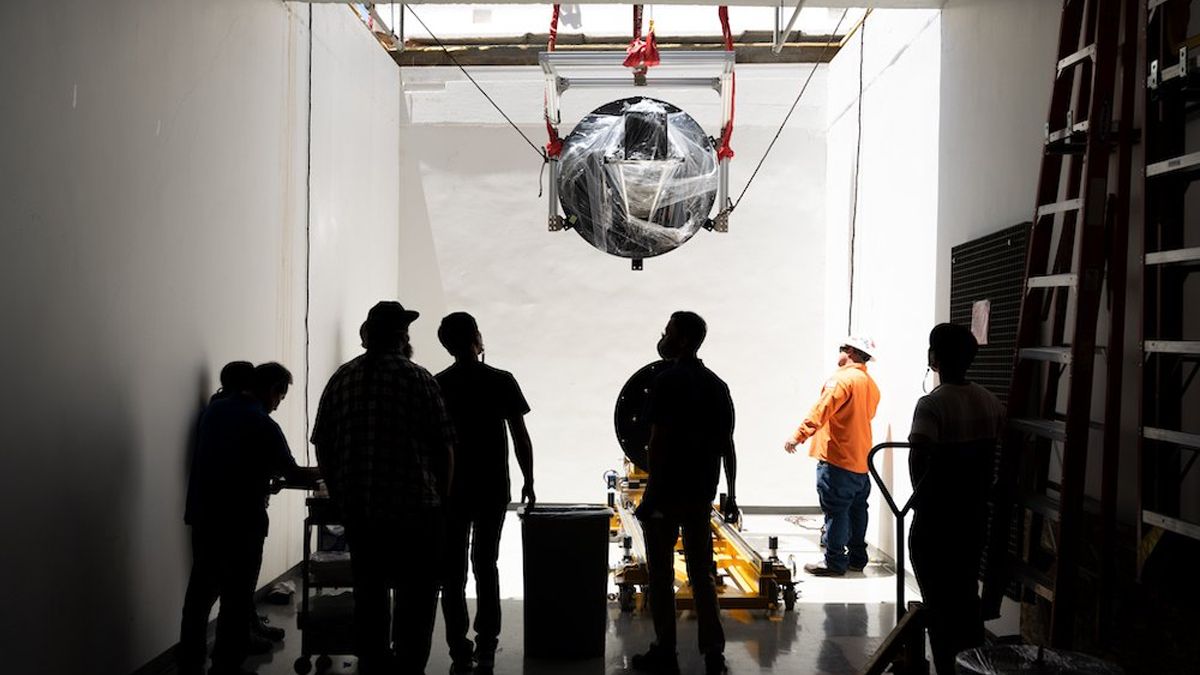
Chemical and Life Science Engineering Professor Michael “Pete” Peters, Ph.D., is investigating more efficient ways to manufacture biologic pharmaceuticals using a radial flow bioreactor he developed. With applications in vaccines and other personalized therapeutic treatments, biologics are versatile. Their genetic base can be manipulated to create a variety of effects from fighting infections by stimulating an immune response to weight loss by producing a specific hormone in the body. Ozempic, Wegovy and Victoza are some of the brand names for Glucagon-Like Peptide-1 (GLP-1) receptor agonists used to treat diabetes. These drugs mimic the GLP-1 peptide, a hormone naturally produced in the body that regulates appetite, hunger and blood sugar. “I have a lot of experience with helical peptides like GLP-1 from my work with COVID therapeutics,” says Peters. “When it was discovered that these biologic pharmaceuticals can help with weight loss, demand spiked. These drug types were designed for people with type-2 diabetes and those diabetic patients couldn’t get their GLP-1 treatments. We wanted to find a way for manufacturers to scale up production to meet demand, especially now that further study of GLP-1 has revealed other applications for the drug, like smoking cessation.” Continuous Manufacturing of Biologic Pharmaceuticals Pharmaceuticals come in two basic forms: small-molecule and biologic. Small-molecule medicines are synthetically produced via chemical reactions while biologics are produced from microorganisms. Both types of medications are traditionally produced in a batch process, where base materials are fed into a staged system that produces “batches” of the small-molecule or biologic medication. This process is similar to a chef baking a single cake. Once these materials are exhausted, the batch is complete and the entire system needs to be reset before the next batch begins. “ The batch process can be cumbersome,” says Peters. “Shutting the whole process down and starting it up costs time and money. And if you want a second batch, you have to go through the entire process again after sterilization. Scaling the manufacturing process up is another problem because doubling the system size doesn’t equate to doubling the product. In engineering, that’s called nonlinear phenomena.” Continuous manufacturing improves efficiency and scalability by creating a system where production is ongoing over time rather than staged. These manufacturing techniques can lead to “end-to-end” continuous manufacturing, which is ideal for producing high-demand biologic pharmaceuticals like Ozempic, Wegovy and Victoza. Virginia Commonwealth University’s Medicines for All Institute is also focused on these production innovations. Peters’ continuous manufacturing system for biologics is called a radial flow bioreactor. A disk containing the microorganisms used for production sits on a fixture with a tube coming up through the center of the disk. As the transport fluid comes up the tube, the laminar flow created by its exiting the tube spreads it evenly and continuously over the disk. The interaction between the transport medium coming up the tube and the microorganisms on the disk creates the biological pharmaceutical, which is then taken away by the flow of the transport medium for continuous collection. Flowing the transport medium liquid over a disc coated with biologic-producing microorganisms allows the radial flow bioreactor to continuously produce biologic pharmaceuticals. “There are many advantages to a radial flow bioreactor,” says Peters. “It takes minutes to switch out the disk with the biologic-producing microorganisms. While continuously producing your biologic pharmaceutical, a manufacturer could have another disk in an incubator. Once the microorganisms in the incubator have grown to completely cover the disk, flow of the transport medium liquid to the radial flow bioreactor is shut off. The disk is replaced and then the transport medium flow resumes. That’s minutes for a production changeover instead of the many hours it takes to reset a system in the batch flow process.” The Building Blocks of Biologic Pharmaceuticals Biologic pharmaceuticals are natural molecules created by genetically manipulating microorganisms, like bacteria or mammalian cells. The technology involves designing and inserting a DNA plasmid that carries genetic instructions to the cells. This genetic code is a nucleotide sequence used by the cell to create proteins capable of performing a diverse range of functions within the body. Like musical notes, each nucleotide represents specific genetic information. The arrangement of these sequences, like notes in a song, changes what the cell is instructed to do. In the same way notes can be arranged to create different musical compositions, nucleotide sequences can completely alter a cell’s behavior. Microorganisms transcribe the inserted DNA into a much smaller, mRNA coded molecule. Then the mRNA molecule has its nucleotide code translated into a chain of amino acids, forming a polypeptide that eventually folds into a protein that can act within the body. “One of the disadvantages of biologic design is the wide range of molecular conformations biological molecules can adopt,” says Peters. “Small-molecule medications, on the other hand, are typically more rigid, but difficult to design via first-principle engineering methods. A lot of my focus has been on helical peptides, like GLP-1, that are a programmable biologic pharmaceutical designed from first principles and have the stability of a small-molecule.” The stability Peters describes comes from the helical peptide’s structure, an alpha helix where the amino acid chain coils into a spiral that twists clockwise. Hydrogen bonds that occur between the peptide’s backbone creates a repeating pattern that pulls the helix tightly together to resist conformational changes. “It’s why we used it in our COVID therapeutic and makes it an excellent candidate for GLP-1 continuous production because of its relative stability,” says Peters. Programming The Cell Chemical and Life Science Engineering Assistant Professor Leah Spangler, Ph.D., is an expert at instructing cells to make specific things. Her material science background employs proteins to build or manipulate products not found in nature, like purifying rare-earth elements for use in electronics. “My lab’s function is to make proteins every day,” says Spangler. “The kind of proteins we make depends entirely on the project they are for. More specifically I use proteins to make things that don’t occur in nature. The reason proteins don’t build things like solar cells or the quantum dots used in LCD TVs is because nature is not going to evolve a solar cell or a display surface. Nature doesn’t know what either of those things are. However, proteins can be instructed to build these items, if we code them to.” Spangler is collaborating with Peters in the development of his radial flow bioreactor, specifically to engineer a microorganismal bacteria cell capable of continuously producing biologic pharmaceuticals. “We build proteins by leveraging bacteria to make them for us,” says Spangler. “It’s a well known technology. For this project, we’re hypothesizing that Escherichia coli (E. coli) can be modified to make GLP-1. Personally, I like working with E. coli because it’s a simple bacteria that has been thoroughly studied, so there’s lots of tools available for working with it compared to other cell types.” Development of the process and technique to use E. coli with the radial flow bioreactor is ongoing. “Working with Dr. Spangler has been a game changer for me,” says Peters. “She came to the College of Engineering with a background in protein engineering and an expertise with bacteria. Most of my work was in mammalian cells, so it’s been a great collaboration. We’ve been able to work together and develop this bioreactor to produce GLP-1.” Other Radial Flow Bioreactor Applications Similar to how the GLP-1 peptide has found applications beyond diabetes treatment, the radial flow bioreactor can also be used in different roles. Peters is currently exploring the reactor’s viability for harnessing solar energy. “One of the things we’ve done with the internal disc is to use it as a solar panel,” says Peters. “The disk can be a black body that absorbs light and gets warm. If you run water through the system, water also absorbs the radiation’s energy. The radial flow pattern automatically optimizes energy driving forces with fluid residence time. That makes for a very effective solar heating system. This heating system is a simple proof of concept. Our next step is to determine a method that harnesses solar radiation to create electricity in a continuous manner.” The radial flow bioreactor can also be implemented for environmental cleanup. With a disk tailored for water filtration, desalination or bioremediation, untreated water can be pushed through the system until it reaches a satisfactory level of purification. “The continuous bioreactor design is based on first principles of engineering that our students are learning through their undergraduate education,” says Peters. “The nonlinear scaling laws and performance predictions are fundamentally based. In this day of continued emphasis on empirical AI algorithms, the diminishing understanding of fundamental physics, chemistry, biology and mathematics that underlie engineering principles is a challenge. It’s important we not let first-principles and fundamental understanding be degraded from our educational mission, and projects like the radial flow bioreactor help students see these important fundamentals in action.”


5 Reasons Why Experts Should Drive Your Content Marketing Strategy
It’s a fact: buyers today don’t want to be prospected, demoed, or closed. Whether it’s a procurement officer on the other end of the phone, a prospect reviewing a product online, or a journalist assessing the credibility of a potential spokesperson, “buyers” today expect a more authentic, reliable and practical experience when getting to know an organization, product or service. That’s why understanding how your expertise fits into the buyer’s journey to attract attention, drive interactions and earn trust is becoming critical to success. For marketers today the purchase process has increased in complexity. Today, audiences advance through a process known as the buyer’s journey” – the research and decision-making process that customers go through which progresses from awareness to evaluation and ultimately purchase. The Shift to Expertise Marketing In the early days of marketing and sales, organizations practiced a features oriented “buy what I have” approach; however, these traditional product-oriented marketing approaches are failing to yield the benefits they once did. Audiences have become far more sophisticated. Research clearly shows that expert content is setting the bar for relevance, credibility and attractiveness for every stage of the buyer journey. Here’s 5 major trends you need to know plus some helpful tips to help you deal with this reality. #1 – Buyers Have Shifted into Self-Serve Mode When Researching Purchases Approximately 67% of the buyer’s journey is complete prior to contacting a vendor (Source: Sirius Decisions) The research continues to show that many buyers would sooner help themselves to content rather than speak to a salesperson, especially in the early stage of the buyer journey. Audiences are increasingly venturing online to doing more of their own research to validate the buying decision. And they are digging deeper into content and are looking to see the people you have on board to support their decision-making. Tip: Remember that people buy from people. Think about how you can create a more human user experience by giving your experts and their content more profile on your website to drive engagement and build trust. It’s time to go beyond simple headshots and biographies to develop a richer amount of supporting information that feeds your website and search engines. #2- The Buyer Journey is More Collaborative & Non-Linear Than Ever Its clear that the traditional linear sales funnel has disappeared. In B2B markets, buyers now engage with an average of 11.4 pieces of content prior to making a purchase (Source: Forrester Research). They are now more likely to bounce around in a variety of sites. Tip: Evaluate the touchpoints you provide with expert content across your websites and how they interact at various buyer stages, from initial search to content to the connection process. In the end are you making it easy for buyers to engage with the content your experts have to offer? #3 – Experts are a Top Source of Influence in Purchase Behavior Research by the Information Technology Sales and Marketing Association (ITSMA) has consistently ranked subject-matter experts as a top source of information influencing purchase behavior in B2B, higher consideration purchases. In this new model, buyers validate the purchase decision by seeking out reliable information from trusted sources. Decisions such as what lawyer to choose; what IT platform to invest in or where to study for graduate school can be very positively influenced by expert content. Tip: Ensure you have engaging expert content available online to support buyers across all stages of the buyer journey. Remember they may be looking for additional validation as well as education. #4 – The Buying Process is More Inclusive than Ever with Multiple Personas Playing a Part In addition to consulting industry peers on social media channels, buyers work with colleagues inside their organizations when making purchase decisions. Marketers and salespeople cannot be content with focusing on key decision makers. If you aren’t known company-wide this will present challenges. Tip: Marketers must reach the broader buying group in an organization, which means making larger amounts of expert content with messages targeted to specific personas. Weaving experts into the discussion and engaging more departments within a buyer’s organization will help wield influence on the final buying decision. #5 – Feeding the Search Engines The Right Content Matters More Than Ever According to a Google/Millward Brown study, 71% of business purchases begin with a non-branded search. These generic queries, are from people looking for product first, not for a specific brand or organization name. Huge improvements in organic search rank are possible once when your content is optimized to support the customer at all phases of the buyer journey. Expert content, in the form of articles, infographics, or videos, not only strengthens the trust relationship with your buyer, but also reinforces your value and expertise with search engines. you pay a little more attention to the information structure on your website and add assets such as multimedia content to expert profiles. Search engines continue to reward well developed expert content that has personal attribution with higher trust and authority rankings as it views this content as more relevant. Tip: Start with some tests using Google and Bing to assess how your experts are surfacing on key topics. Also do some searches on the names of your experts to see what position they surface at organically. Where possible add videos, photos, audio, books and social content that you can add to their profiles. Also ensure that the information is properly tagged to allow search engines to properly index this content. About ExpertFile ExpertFile is changing the way organizations tap into the power of their experts to drive valuable inquiries, accelerate revenue growth, and enhance their brand reputation. Used by leading corporate, higher education and healthcare clients worldwide, our award-winning platform helps teams structure, manage and promote their expert content while our search engine features experts on over 50,000+ topics. Learn more at: www.expertfile.com/getstarted.




Digital Dementia: Does Technology Use by ‘Digital Pioneers’ Correlate to Cognitive Decline?
As the first generation that interacted with digital technology reaches an age where dementia risks emerge, scientists have asked the question: Is there a correlation between digital technology use and an increased risk of dementia? With the phrases “brain rot” and “brain drain” circulating on social media, it would appear that most people would assume the answer is yes. However, a new study in Nature Human Behavior by neuroscientists at Baylor University and the University of Texas at Austin Dell Medical School reveals the opposite – digital technologies are actually associated with reduced cognitive decline. The study – A meta-analysis of technology use and cognitive aging – was sparked by the ongoing concern about the passive activity of digital technologies and their relation to accelerating risks of dementia. Study co-authors are Jared F. Benge, Ph.D., clinical neuropsychologist and associate professor of neurology at Dell Medical School and UT Health Austin’s Comprehensive Memory Center within the Mulva Clinic for the Neurosciences, and Michael K. Scullin, Ph.D., associate professor of psychology and neuroscience at Baylor. “You can flip on the news on just about any day and you’ll see people talking about how technologies are harming us,” Scullin said. “People often use the terms ‘brain drain’ and ‘brain rot,’ and now digital dementia is an emerging phrase. As researchers, we wanted to know if this was true.” The “digital dementia” hypothesis predicts that a lifetime of exposure to digital technology will worsen cognitive abilities. On the contrary, the study’s findings challenge this hypothesis, indicating instead that engagement with digital technology fosters cognitive resilience in these adults. Reviewing more than 136 studies with data that encompassed over 400,000 adults, and longitudinal studies with an average of 6 years of follow-up data, Scullin and Benge found compelling evidence that digital technology use is associated with better cognitive aging outcomes, rather than harm. The researchers’ study supported the “technological reserve” hypothesis, finding that digital technologies can promote behaviors that preserve cognition. In fact, their study revealed that digital technology use correlates with a 58% lower risk of cognitive impairment. This pattern of cognitive protection persisted when the researchers controlled for socioeconomic status, education, age, gender, baseline cognitive ability, social support, overall health, and engagement with mental activities like reading that might have explained the findings. Increase in problem-solving skills Scullin said that for some, these findings are surprising as technology use is often associated with being sedentary both physically and mentally. However, for the current generation of older adults who were introduced to the first technological advancements – computers, the Internet and smartphones – past their childhood, using technology is cognitively challenging because it is everchanging. “One of the first things that middle-age and older adults were saying is that ‘I’m so frustrated by this computer. This is hard to learn.’ That's actually a reflection of the cognitive challenge, which may be beneficial for the brain even if it doesn’t feel great in the moment.” Scullin said. Technology requires constant adaption, he said, such as understanding new software updates, troubleshooting Internet loss or filtering out website ads. “If you’re doing that for years and you’re really engaging with it, even though you might experience frustration, that may be a sign of you exercising your brain,” he said. Social connection Technology also enables communication and engagement like never before, which can expand opportunities for connectivity. Video calls, emails and messaging apps help maintain social networks, especially for people who would not otherwise regularly see their family members. “Now you can connect with families across generations,” Scullin said. “You not only can talk to them, you can see them. You can share pictures. You can exchange emails and it's all within a second or less. So that means there's a greater opportunity for decreasing loneliness.” Better social connectedness is a well-documented correlate of cognitive functioning in older adults, providing a link between decreased isolation from digital technologies and reduced risks of dementia. Impact of “digital scaffolding” A dementia diagnosis is indicated in part when cognitive changes lead to a loss of independence with daily tasks. Tools such as digital reminders, GPS navigation and online banking allow older adults to remain independent despite cognitive difficulties through digital scaffolding. According to the research article, this digital scaffold “facilitates better functional outcomes in older adults while general cognitive functioning declines.” Technologies can serve as a compensatory support system to maintain general independence and reduce the risk of a dementia diagnosis even with the presence of some cognitive decline. “As clinical practice continues to move toward an individualized, precision-medicine approach, it will be necessary for the field to identify for whom and for how long, such digital scaffolding is effective,” the researchers said. Promoting healthy technology use While Scullin recognizes the negative effects of technology, such as distracted driving or using technology over consistent face-to-face interaction, he also emphasizes how promoting a healthy use of digital tools in older adults is beneficial for their cognitive health. “If you have a parent or grandparent who’s just staying away from technology, maybe revisit that. Could they learn to use photo, messaging, or calendar apps on a smartphone or tablet? Start simple and be very patient while they learn,” he said. Social media use is another highly debated topic in terms of cognitive effects. While he says it’s hard to predict the cognitive effects of endlessly scrolling on TikTok, Scullin does argue that generating videos through creative cognition could be beneficial. In addition, he said that interacting with communities online can provide benefits by forming social connections. “We could spend a long time talking about all the specific ways in which technology use can be bad. However, the net effect since the 1990s has been positive for overall cognition in older adults,” he said. FUNDING The study was supported by funding from the National Institutes of Health (R01AG082783; M.K.S., J.F.B.). Michael Scullin was named Baylor’s inaugural Newsmaker of the Year in 2018, after his “to-do list” research was widely covered by media outlets, including ABC’s Good Morning America, TODAY.com, USA TODAY, Discover, LiveScience, HealthDay, BBC Radio and many more, reaching an international circulation and viewership of nearly 1 billion people. Looking to interview or chat with Michael Scullin? Simply click on his icon now to arrange an interview today.



Taking ACT-ion for Quality Improvement
“Learning is a journey. It is continuous,” said nurse Hellen Okoth, MSN, CCRN, RN-BC, of the Transitional Surgical Unit. She was one of the learners on that journey through ChristianaCare’s professional development program Achieving Competency Today (ACT). ACT, a 12-week graduate-level program dedicated to health care improvement, will celebrate its 40th session in 2025. Some 1,000 caregivers have graduated from ACT and have tested some 140 innovative project ideas since the program’s launch in 2003. On April 9, three ACT teams presented their quality improvement projects at the John H. Ammon Medical Education Center on ChristianaCare’s Newark campus. Interdisciplinary, experiential learning programs like ACT create a rich and dynamic learning environment,” said Tabassum Salam, M.D., MBA, FACP, chief learning officer for ChristianaCare. “The emphasis on continuous improvement and real-world applications of the educational content sets our ACT graduates up for lifelong learning and repeated application of these new skills.” The ACT course is a collaborative experience that brings together learners from diverse disciplines to tackle real-world health care challenges. Participants learn from health system leaders and gain a broad perspective on health care through coursework. They work in teams to complete problem-solving projects from start to finish using the Plan-Do-Check-Act (PCDA) model of continuous improvement. Facilitators, who are experts in improvement science and team effectiveness, guide the teams through the process, ensuring that each project is meticulously planned and executed. ChristianaCare offers many professional development opportunities. Click here for careers and benefits. “The hands-on projects in ACT enable learners to innovate and test out solutions in settings that directly benefit patients, leading to better outcomes and a higher quality of care,” Salam said. The three most recent teams presented improvement research that has the potential to expand beyond their pilot stage to other areas of the health system. ‘Hush! For the Love of Health’ In “Hush! For the Love of Health,” an interdisciplinary team worked to reduce noise levels on the Cardiovascular Critical Care Unit (CVCCC) at Christiana Hospital. Their goal was to decrease ambient noise levels by 10 decibels during the study period. Intensive care units often experience noise levels that can exceed 80 decibels. A quiet environment is 30 to 40 decibels. Members of the “Hush” project found creative ways to reduce noise on an intensive care unit. Ambient noise refers to all sounds present in the background, which research shows can interfere with communication, concentration and comfort. In a hospital setting, these sounds may include alarms, conversations, announcement and pages and carts moving by. The team looked for opportunities to safely reduce the number of alarms sounding. By collaborating with Philips technology company to lower alarm volumes and eliminate redundant alarms, they reduced the number of alarms sounding from 10,000 to 3,000 daily and successfully decreased noise levels by 13 decibels, exceeding their goal. “It’s good for patients to have a quiet environment and it fights alarm fatigue for caregivers,” said Dylan Norris, a pre-medical student from the University of Delaware and participant in the ACT course. ‘Show Up and Show Out’ Reducing the no-show rate among patients in primary care practices improves health outcomes and conserves resources. In “Show Up and Show Out: Boosting Patient Attendance in Primary Care,” the project team aimed to reduce the incidence of no-show appointments at the Wilmington Adult Medicine (WAM) practice by 10%. The “Show Up and Show Out” project team used personalized communication outreach to patients to encourage keeping their primary care appointments. “Our literature review showed that personal relationships with providers are one thing that can encourage people to attend appointments,” said team member Christi Karawan, MS, BSN, CCRN-CSC. The key to their problem-solving strategy was using a secure messaging platform for automatic appointment reminders specifically for WAM that were personalized with the provider’s name and thanking the patients for letting WAM be a part of their healthcare team. Other steps on the road to success were signage around the practice encouraging patients to update their contact information and calls from office assistants and medical assistants to unconfirmed patients the day prior to their appointments. The team achieved a 9.5% reduction in no-shows, just shy of their goal, over a two-week period. An office assistant who participated in the pilot said, “Outreach has been helpful not only in getting people in but in getting people to reschedule or cancel. We can catch it before it becomes a no-show.” ‘Magnetic Efficiency’ To address delays in patient transport from MRI testing at Newark campus, an ACT team created a new communication workflow to directly connect patient escort dispatch to the MRI charge technician. The ACT team aimed to decrease patient wait times following MRI completion for stretcher transport back to patients rooms by 25% — and “a bold goal,” said one colleague — during the study period. The “Magnetic Efficiency” team identified a new workflow to get patients back to their hospital rooms faster after MRI testing. Using Vocera wearable communications tools, the team created a thread for direct communication between Escort Dispatch caregivers and MRI charge technicians. Also, when an Escort transporter dropped off a patient for an MRI, the transporter asked MRI staff if any patients were ready to go back to their rooms. These changes in communication and empowerment consolidated transports and led to a 17% reduction in wait time during the two-week pilot. “We don’t want people to work harder,” said team member Tim Kane, BSN, RN. “We wanted to avoid preventable delays.” Both teams expressed satisfaction and improved communication with the new process and they expressed interest in continuing the process after the pilot ended. Future forward The ACT course has a rich history, originating from a specific initiative piloted by the Robert Wood Johnson Foundation with ChristianaCare among the early adopters along with Harvard University, the University of Pennsylvania, Johns Hopkins University and Beth Israel Deaconess Medical Center. Through the years, ChristianaCare ACT team members have seen their projects live on both as permanent changes throughout the health system and, more personally, in their professional growth. “I was able to enhance my creativity, organizational and problem-solving skills,” said Starr Lumpkin, a staff assistant who was on the “Hush” team. “This was a pivotal journey for me.” ChristianaCare is growing its program to develop a pipeline for the next generation of health professionals, said Safety and Quality Education Specialist Claire Rudolph, MSM, CPHQ. “We have a varied group of learners and facilitators who are making an impact on health care quality, cost and safety.” Dylan Norris was the first participant from a new partnership with the University of Delaware for pre-med students to get quality improvement experience. “I have learned so much about what goes into a quality improvement project. Buy-in from the stakeholders is key in implementing any new project successfully,” she said. “I have also learned about the importance of the initial research that goes into creating a new project and how much pre-planning goes into it.” Closing the event, Clinical Effectiveness Officer Christian Coletti, M.D., MHCDS, FACEP, FACP, called on the ACT graduates to use their newfound “superpowers” — “vision, seeing the future, catching something before it breaks. “It’s not a glitch in the matrix,” he said. “You are the most important people at the bedside – hearing the alarms going off or the stretchers piling up. Work to identify problems and move toward solutions in your own microenvironments. Pass on your powers with reckless abandon.”




A final disbursement of $8.8 million completes the $17.8 million grant awarded by the Department of Defense (DoD) to Virginia Commonwealth University’s (VCU) Convergence Lab Initiative (CLI). The funding allows CLI to continue advancing research in the areas of quantum and photonic devices, microelectronics, artificial intelligence, neuromorphic computing, arts and biomedical science. “The Convergence Lab Initiative represents a unique opportunity to drive innovation at the intersection of advanced technologies, preparing our students to tackle the critical challenges of tomorrow,” said Nibir Dhar, Ph.D., electrical and computer engineering professor and CLI director. “By combining cutting-edge research in electro-optics, infrared, radio frequency and edge computing, we are equipping the next generation of engineers with the skills to shape the future of both defense and commercial industries.” Working with Industry Partnership is at the heart of CLI and what makes the initiative unique. CivilianCyber, Sivananthan Laboratories and the University of Connecticut are among several collaborators focusing on cutting-edge, multidisciplinary research and workforce development. The lightweight, low-power components CLI helps develop are capable of transforming military operations and also have commercial applications. The Convergence Lab Initiative has 25 collaborative projects in this area focused on: Electro-optic and Infrared Technologies: Enhancing thermal imaging for medical diagnostics, search-and-rescue operations and environmental monitoring. This improves military intelligence, surveillance and reconnaissance capabilities. Radio Frequency and Beyond 5G Communication: Developing ultra-fast, low-latency communication systems for autonomous vehicles, smart cities and telemedicine. Accelerating advancements in this area also address electronic warfare challenges and security vulnerabilities. Optical Communication in the Infrared Wavelength: Increasing data transmission rates to create more efficient networks that support cloud computing, data centers, AI research and covert military communications. Edge Technologies: Creating low size, weight and low power-consuming (SWaP) computing solutions for deployment in constrained environments, such as wearables, medical devices, internet of things devices and autonomous systems. These technologies enhance real-time decision-making capabilities for agriculture, healthcare, industrial automation and defense. Benefits for Students College of Engineering students at VCU have an opportunity to engage with cutting-edge research as part of the DoD grant. Specialized workforce development programs, like the Undergraduate CLI Scholars Program, provide hands-on experience in advanced technologies. The STEM training also includes students from a diverse range of educational backgrounds to encourage a cross-disciplinary environment. Students can also receive industry-specific training through CLI’s Skill-Bridge Program, which facilitates direct connections between business needs and academic education. Unlike the DoD program for transitioning military personnel, the CLI Skill-Bridge is open to students from VCU and other local universities, creating direct connections between industry needs and academic training. This two-way relationship between academia and industry is unlike traditional academic research centers. With the College of Engineering’s focus on public-private partnerships, VCU becomes a registered partner with the participating businesses, collaborating to design individualized training programs focused on the CLI’s core research areas. This approach ensures students receive relevant, up-to-date training while companies gain access to a pipeline of skilled talent familiar with the latest industry trends and innovations. “The significance of this grant extends beyond immediate research outcomes. It addresses critical capability gaps for both the DoD and commercial sectors,” says Dhar. “This dual-use approach maximizes DoD investment impacts and accelerates innovation in areas that affect everyday life — from healthcare and environmental monitoring to communication networks and smart infrastructure. Breakthroughs emerging from these collaborations will strengthen national security while creating commercial spinoffs that drive economic growth and improve quality of life for communities both locally and globally. Advances in infrared technology, in particular, will position the VCU College of Engineering as a center for defense technologies and new ideas.”


Decoding the Future of AI: From Disruption to Democratisation and Beyond
The global AI landscape has become a melting pot for innovation, with diverse thinking pushing the boundaries of what is possible. Its application extends beyond just technology, reshaping traditional business models and redefining how enterprises, governments, and societies operate. Advancements in model architectures, training techniques and the proliferation of open-source tools are lowering barriers to entry, enabling organisations of all sizes to develop competitive AI solutions with significantly fewer resources. As a result, the long-standing notion that AI leadership is reserved for entities with vast computational and financial resources is being challenged. This shift is also redrawing the global AI power balance, with a decentralised approach to AI where competition and collaboration coexist across different regions. As AI development becomes more distributed, investment strategies, enterprise innovation and global technological leadership are being reshaped. However, established AI powerhouses still wield significant leverage, driving an intense competitive cycle of rapid innovation. Amid this acceleration, it is critical to distinguish true technological breakthroughs from over-hyped narratives, adopting a measured, data-driven approach that balances innovation with demonstrable business value and robust ethical AI guardrails. Implications of the Evolving AI Landscape The democratisation of AI advancements, intensifying competitive pressures, the critical need for efficiency and sustainability, evolving geopolitical dynamics and the global race for skilled talent are all fuelling the development of AI worldwide. These dynamics are paving the way for a global balance of technological leadership. Democratisation of AI Potential The ability to develop competitive AI models at lower costs is not only broadening participation but also reshaping how AI is created, deployed and controlled. Open-source AI fosters innovation by enabling startups, researchers, and enterprises to collaborate and iterate rapidly, leading to diverse applications across industries. For example, xAI has made a significant move in the tech world by open sourcing its Grok AI chatbot model, potentially accelerating the democratisation of AI and fostering innovation. However, greater accessibility can also introduce challenges, including risks of misuse, uneven governance, and concerns over intellectual property. Additionally, as companies strategically leverage open-source AI to influence market dynamics, questions arise about the evolving balance between open innovation and proprietary control. Increased Competitive Pressure The AI industry is fuelled by a relentless drive to stay ahead of the competition, a pressure felt equally by Big Tech and startups. This is accelerating the release of new AI services, as companies strive to meet growing consumer demand for intelligent solutions. The risk of market disruption is significant; those who lag, face being eclipsed by more agile players. To survive and thrive, differentiation is paramount. Companies are laser-focused on developing unique AI capabilities and applications, creating a marketplace where constant adaptation and strategic innovation are crucial for success. Resource Optimisation and Sustainability The trend toward accessible AI necessitates resource optimisation, which means developing models with significantly less computational power, energy consumption and training data. This is not just about cost; it is crucial for sustainability. Training large AI models is energy-intensive; for example, training GPT-3, a 175-billion-parameter model, is believed to have consumed 1,287 MWh of electricity, equivalent to an average American household’s use over 120 years1. This drives innovation in model compression, transfer learning, and specialised hardware, like NVIDIA’s TensorRT. Small language models (SLMs) are a key development, offering comparable performance to larger models with drastically reduced resource needs. This makes them ideal for edge devices and resource-constrained environments, furthering both accessibility and sustainability across the AI lifecycle. Multifaceted Global AI Landscape The global AI landscape is increasingly defined by regional strengths and priorities. The US, with its strength in cloud infrastructure and software ecosystem, leads in “short-chain innovation”, rapidly translating AI research into commercial products. Meanwhile, China excels in “long-chain innovation”, deeply integrating AI into its extended manufacturing and industrial processes. Europe prioritises ethical, open and collaborative AI, while the APAC counterparts showcase a diversity of approaches. Underlying these regional variations is a shared trajectory for the evolution of AI, increasingly guided by principles of responsible AI: encompassing ethics, sustainability and open innovation, although the specific implementations and stages of advancement differ across regions. The Critical Talent Factor The evolving AI landscape necessitates a skilled workforce. Demand for professionals with expertise in AI and machine learning, data analysis, and related fields is rapidly increasing. This creates a talent gap that businesses must address through upskilling and reskilling initiatives. For example, Microsoft has launched an AI Skills Initiative, including free coursework and a grant program, to help individuals and organisations globally develop generative AI skills. What does this mean for today’s enterprise? New Business Horizons AI is no longer just an efficiency tool; it is a catalyst for entirely new business models. Enterprises that rethink their value propositions through AI-driven specialisation will unlock niche opportunities and reshape industries. In financial services, for example, AI is fundamentally transforming operations, risk management, customer interactions, and product development, leading to new levels of efficiency, personalisation and innovation. Navigating AI Integration and Adoption Integrating AI is not just about deployment; it is about ensuring enterprises are structurally prepared. Legacy IT architectures, fragmented data ecosystems and rigid workflows can hinder the full potential of AI. Organisations must invest in cloud scalability, intelligent automation and agile operating models to make AI a seamless extension of their business. Equally critical is ensuring workforce readiness, which involves strategically embedding AI literacy across all organisational functions and proactively reskilling talent to collaborate effectively with intelligent systems. Embracing Responsible AI Ethical considerations, data security and privacy are no longer afterthoughts but are becoming key differentiators. Organisations that embed responsible AI principles at the core of their strategy, rather than treating them as compliance check boxes, will build stronger customer trust and long-term resilience. This requires proactive bias mitigation, explainable AI frameworks, robust data governance and continuous monitoring for potential risks. Call to Action: Embracing a Balanced Approach The AI revolution is underway. It demands a balanced and proactive response. Enterprises must invest in their talent and reskilling initiatives to bridge the AI skills gap, modernise their infrastructure to support AI integration and scalability and embed responsible AI principles at the core of their strategy, ensuring fairness, transparency and accountability. Simultaneously, researchers must continue to push the boundaries of AI’s potential while prioritising energy efficiency and minimising environmental impact; policymakers must create frameworks that foster responsible innovation and sustainable growth. This necessitates combining innovative research with practical enterprise applications and a steadfast commitment to ethical and sustainable AI principles. The rapid evolution of AI presents both an imperative and an opportunity. The next chapter of AI will be defined by those who harness its potential responsibly while balancing technological progress with real-world impact. Resources Sudhir Pai: Executive Vice President and Chief Technology & Innovation Officer, Global Financial Services, Capgemini Professor Aleks Subic: Vice-Chancellor and Chief Executive, Aston University, Birmingham, UK Alexeis Garcia Perez: Professor of Digital Business & Society, Aston University, Birmingham, UK Gareth Wilson: Executive Vice President | Global Banking Industry Lead, Capgemini 1 https://www.datacenterdynamics.com/en/news/researchers-claim-they-can-cut-ai-training-energy-demands-by-75/?itm_source=Bibblio&itm_campaign=Bibblio-related&itm_medium=Bibblio-article-related


'Chemtrails' and other climate conspiracies: Florida Tech's expert sets the record straight
When Florida Today columnist Tim Walters wanted to 'clear the air' about a popular conspiracy theory, he connected with Michael Splitt, an assistant professor at Florida Institute of Technology's College of Aeronautics with a focus on meteorology. The "chemtrail" conspiracy follows the erroneous belief that condensation trails (contrails) that trail behind jets are actually being used on a large scale to manage radiation and combat global warming. In the column, Splitt argued against the conspiracy by explaining what might happen if that level of "climate engineering" was actually going on. I recently wrote a column about the “chemtrail” conspiracy theory, and to say it caused quite a stir would be a serious understatement. My motivation for writing the piece came because there is a bill being looked at by the Florida legislature to address concerns of people who think the skies are being seeded by commercial airplanes with poisonous, weather-manipulating substances. Some of those raising concerns claim there are vague amorphous operatives in the federal government leading this charge. I decided I’d try to find answers, and I did so by asking someone credible in the field of weather sciences. Answers from climate expert Can the climate be altered by humans? The idea of trying to manipulate weather is called “climate engineering.” There is a form of this called solar geoengineering. “We've been doing things like this for decades in terms of, for example, fog management products. People have used this kind of methodology of adding things to the air to help get rid of fog, like the ice fog problem in Salt Lake City. So, there are places where people try to manage a local cloud layer,” Splitt said. However, it’s not done to a scale that would impact the country or globe. That’s where conspiracy theorists take climate engineering a step too far. There are those who say commercial airliners are spraying other substances like aluminum and barium (and other metallic) nano particles to reflect the sun's heat to reduce global warming. Splitt said if this were real, it might have the opposite effect. “When you have more contrails, it actually ends up warming the planet. The cirrus clouds created by aircraft and their reflective power isn't as much as let's say, the warming impact from below, from infrared radiation, so they end up being warmer." March 20 - Florida Today In the full column, Splitt also takes on other common misconceptions such as, "Why do some contrails last longer than others?" And, "Are ‘chemtrails’ steering, strengthening storms?" It's a worthwhile read for those interested in meteorology or conspiracy theories. Are you curious or looking to know more about those chasing clouds? Michael Splitt is available to speak with media. Contact Adam Lowenstein, Director of Media Communications at Florida Institute of Technology, at adam@fit.edu to arrange an interview today.


Virtual reality training tool helps nurses learn patient-centered care
University of Delaware computer science students have developed a digital interface as a two-way system that can help nurse trainees build their communication skills and learn to provide patient-centered care across a variety of situations. This virtual reality training tool would enable users to rehearse their bedside manner with expectant mothers before ever encountering a pregnant patient in person. The digital platform was created by students in Assistant Professor Leila Barmaki’s Human-Computer Interaction Laboratory, including senior Rana Tuncer, a computer science major, and sophomore Gael Lucero-Palacios. Lucero-Palacios said the training helps aspiring nurses practice more difficult and sensitive conversations they might have with patients. "Our tool is targeted to midwifery patients,” Lucero-Palacios said. “Learners can practice these conversations in a safe environment. It’s multilingual, too. We currently offer English or Turkish, and we’re working on a Spanish demo.” This type of judgement-free rehearsal environment has the potential to remove language barriers to care, with the ability to change the language capabilities of an avatar. For instance, the idea is that on one interface the “practitioner” could speak in one language, but it would be heard on the other interface in the patient’s native language. The patient avatar also can be customized to resemble different health stages and populations to provide learners a varied experience. Last December, Tuncer took the project on the road, piloting the virtual reality training program for faculty members in the Department of Midwifery at Ankara University in Ankara, Turkey. With technical support provided by Lucero-Palacios back in the United States, she was able to run a demo with the Ankara team, showcasing the UD-developed system’s interactive rehearsal environment’s capabilities. Last winter, University of Delaware senior Rana Tuncer (left), a computer science major, piloted the virtual reality training program for Neslihan Yilmaz Sezer (right), associate professor in the Department of Midwifery, Ankara University in Ankara, Turkey. Meanwhile, for Tuncer, Lucero-Palacios and the other students involved in the Human-Computer Interaction Laboratory, developing the VR training tool offered the opportunity to enhance their computer science, data science and artificial intelligence skills outside the classroom. “There were lots of interesting hurdles to overcome, like figuring out a lip-sync tool to match the words to the avatar’s mouth movements and figuring out server connections and how to get the languages to switch and translate properly,” Tuncer said. Lucero-Palacios was fascinated with developing text-to-speech capabilities and the ability to use technology to impact patient care. “If a nurse is well-equipped to answer difficult questions, then that helps the patient,” said Lucero-Palacios. The project is an ongoing research effort in the Barmaki lab that has involved many students. Significant developments occurred during the summer of 2024 when undergraduate researchers Tuncer and Lucero-Palacios contributed to the project through funding support from the National Science Foundation (NSF). However, work began before and continued well beyond that summer, involving many students over time. UD senior Gavin Caulfield provided foundational support to developing the program’s virtual environment and contributed to development of the text-to-speech/speech-to-text capabilities. CIS doctoral students Fahim Abrar and Behdokht Kiafar, along with Pinar Kullu, a postdoctoral fellow in the lab, used multimodal data collection and analytics to quantify the participant experience. “Interestingly, we found that participants showed more positive emotions in response to patient vulnerabilities and concerns,” said Kiafar. The work builds on previous research Barmaki, an assistant professor of computer and information sciences and resident faculty member in the Data Science Institute, completed with colleagues at New Jersey Institute of Technology and University of Central Florida in an NSF-funded project focused on empathy training for healthcare professionals using a virtual elderly patient. In the project, Barmaki employed machine learning tools to analyze a nursing trainee’s body language, gaze, verbal and nonverbal interactions to capture micro-expressions (facial expressions), and the presence or absence of empathy. “There is a huge gap in communication when it comes to caregivers working in geriatric care and maternal fetal medicine,” said Barmaki. “Both disciplines have high turnover and challenges with lack of caregiver attention to delicate situations.” UD senior Rana Tuncer (center) met with faculty members Neslihan Yilmaz Sezer (left) and Menekse Nazli Aker (right) of Ankara University in Ankara, Turkey, to educate them about the virtual reality training tool she and her student colleagues have developed to enhance patient-centered care skills for health care professionals. When these human-human interactions go wrong, for whatever reason, it can extend beyond a single patient visit. For instance, a pregnant woman who has a negative health care experience might decide not to continue routine pregnancy care. Beyond the project’s potential to improve health care professional field readiness, Barmaki was keen to note the benefits of real-world workforce development for her students. “Perceptions still exist that computer scientists work in isolation with their computers and rarely interact, but this is not true,” Barmaki said, pointing to the multi-faceted team members involved in this project. “Teamwork is very important. We have a nice culture in our lab where people feel comfortable asking their peers or more established students for help.” Barmaki also pointed to the potential application of these types of training environments, enabled by virtual reality, artificial intelligence and natural language processing, beyond health care. With the framework in place, she said, the idea could be adapted for other types of training involving human-human interaction, say in education, cybersecurity, even in emerging technology such as artificial intelligence (AI). Keeping people at the center of any design or application of this work is critical, particularly as uses for AI continue to expand. “As data scientists, we see things as spreadsheets and numbers in our work, but it’s important to remember that the data is coming from humans,” Barmaki said. While this project leverages computer vision and AI as a teaching tool for nursing assistants, Barmaki explained this type of system can also be used to train AI and to enable more responsible technologies down the road. She gave the example of using AI to study empathic interactions between humans and to recognize empathy. “This is the most important area where I’m trying to close the loop, in terms of responsible AI or more empathy-enabled AI,” Barmaki said. “There is a whole area of research exploring ways to make AI more natural, but we can’t work in a vacuum; we must consider the human interactions to design a good AI system.” Asked whether she has concerns about the future of artificial intelligence, Barmaki was positive. “I believe AI holds great promise for the future, and, right now, its benefits outweigh the risks,” she said.


Florida Tech Welcomes Visiting Australian Scholar to Aid in Antifouling Research
Florida Tech’s Center for Corrosion and Biofouling Control is welcoming a new teammate for the semester. Tamar Jamieson, a postdoctoral researcher hailing from Australia’s Flinders University, is in Melbourne, Fla. to collaborate on biofouling research with assistant professor of marine sciences Kelli Hunsucker and professor of oceanography and ocean engineering Geoffrey Swain. Biofouling is the growth of a bacterial film or larger marine life, such as barnacles, after an object’s surface is submerged in water. It can inhibit a ship’s functionality by creating drag and slowing it down, which forces the vessel to use more fuel and emit more greenhouse gases. Over the course of the semester, Jamieson will help Hunsucker’s team develop a collaborative experiment to test antifouling techniques, combining Jamieson’s expertise with that of the lab. “I’m excited to have someone here who has this kind of wealth of knowledge in her field,” Hunsucker said. “She’ll be able to use her knowledge to help move our research forward and then kind of in return, use our knowledge to help move hers forward.” The Center for Corrosion and Biofouling Control aims to understand and improve corrosion and biofouling control systems. Part of Hunsucker’s research involves evaluating materials that can protect surfaces, such as a ship’s hull, from unwanted growth. She is currently working with the U.S. Navy to see how antifouling techniques perform under different conditions. Jamieson’s research through Flinders’s ARC Training Centre for Biofilm Research & Innovation focuses on the small-scale microorganisms that make up biofilm. She also studies the genetic makeup of microbial communities, which Hunsucker wants to add to her own research. Jamieson is especially interested in learning how antifouling materials interact with local waters. Florida’s seascape is warmer than Australia’s, so fouling grows quicker here than it does there. She also wants to see how American antifouling materials vary from those used in Australia and collaborate on a versatile solution that can withstand a variety of conditions. “Materials that work well here will probably not work in other environments,” Jamieson said. “Seeing how to develop materials for all three environments will be an interesting pathway forward.” Hunsucker hopes this exchange will lead to even more collaboration with Flinders University. “The program that she’s involved with opens the door for collaborative efforts for us to maybe go to Australia in the future,” Hunsucker said. “Her colleagues can also similarly come back and work with us.” Jamieson’s scholarship is funded by the American Australian Association, a New York-based non-profit organization dedicated to deepening and strengthening ties between the United States and Australia. The South Australia Defense, Space and Cyber Scholarship funds scholars from the U.S. and South Australia undertaking Ph.D. or post-doctoral research in those fields. Kelli Hunsucker and Geoffrey Swain are available to speak with media. Contact Adam Lowenstein, Director of Media Communications at Florida Institute of Technology at adam@fit.edu to arrange an interview today.

Life Beyond Earth? Florida Tech's Expert's are Hoping SPHEREx Will Have The Answer
In March, NASA's SPHEREx — short for Spectro-Photometer for the History of the Universe, Epoch of Reionization and Ices Explorer — was launched to the skies and far into space. Its mission has received plentiful media coverage but demands the expert analysis of scholars like astrobiologist Manasvi Lingam, an assistant professor of aerospace, physics and space sciences at the Florida Institute of Technology. The space telescope is designed to [operate] with unmatched clarity, gathering a big-picture view that will help scientists tackle questions about the origin of the universe itself, the galaxies within and life's essential ingredients wafting in our home galaxy, the Milky Way. While scientists have previously detected lots of complex organic molecules in the interstellar medium and protoplanetary disks, "we still do not know a lot about the actual abundances of useful building blocks," astrobiologist Manasvi Lingam of the Florida Institute of Technology told Space.com. That means scientists don't have strong constraints about how efficiently frozen water molecules are transferred from interstellar clouds to protoplanetary disks, where they would eventually be incorporated into newborn planets, he said. "This mission can improve the data, and help make better forecasts about the probability of the origin of life on those worlds." Looking to know more about Astrobiology and the work Manasvi Lingam is doing at Florida Tech? March 01 - Space.com Looking to know more about this latest NASA mission? Let us help. Astrobiologist Manasvi Lingam, author and assistant professor of aerospace, physics and space sciences at Florida Tech, is available to speak with media regarding this and related topics. Simply click on his icon now to arrange an interview.
