
Experts Matter. Find Yours.
Connect for media, speaking, professional opportunities & more.

Simulations of Exoplanet Formation May Help Inform Search for Extraterrestrial Life
Florida Tech astrophysicist Howard Chen is offering new insights to help aid NASA’s search for life beyond Earth. His latest theoretical work investigates the TRAPPIST-1 planetary system, one of the most widely studied exoplanetary systems in the galaxy. It has captured scientists’ attention for its potential to host water, and thus possibly life, on its planets. Now, he’s offering an explanation for why telescopes have yet to find definitive signs of either. The paper “Born Dry or Born Wet? A Palette of Water Growth Histories in TRAPPIST-1 Analogs and Compact Planetary Systems” was authored by Chen, an assistant professor of space sciences, and researchers from NASA, Johns Hopkins University and Harvard University, was published in The Astrophysical Journal Letters in September. It explores the likelihood that TRAPPIST-1’s three innermost exoplanets contained no water when they formed, despite existing in a zone where water is viable. TRAPPIST-1 is a red dwarf star located about 40 light-years away from us. (One light year is about 6 trillion miles.) It is thought to be about 7.6 billion years old, or 3 billion years older than our Sun. Astronomers are captivated by the TRAPPIST-1 system because its seven known planets are rocky and Earth-like. They also fall within the star’s habitable zone: the distance range from a star at which temperatures are not too hot or cold to support liquid water. Researchers are searching for any evidence of water on these planets, but have yet to detect anything. Some think a lack of gas in the atmosphere is disrupting the light needed to pick up detailed visuals. Others predict water could have escaped the planets’ atmospheres throughout their evolution. Chen and his team, however, decided to research a different theory: that there was no water to begin with because there was no gas to contain it. He would test it not from an observational perspective, but with mathematical modeling of the planets’ initial formation. “You have astronomers who are using telescopes to see what’s out there. I come from a different perspective,” Chen said. “I’m both trying to explain what we’re seeing while trying to make predictions about what we can’t.” The researchers created models that examined the composition and growth of these planets starting when they were as small as one kilometer wide. They simulated how material aggregated during collisions with other celestial objects until they reached their final planetary formations. There are several key factors in collision events that heavily influence a planet’s final composition. Chen’s models incorporated impact delivery, which is the transfer of materials like water and gases during a celestial collision; impact erosion, which refers to the removal of materials in a planet’s atmosphere due to impact; and mantle-atmosphere exchange, which is the transfer of water and gases between a planet’s atmosphere and mantle to maintain its conditions. The team ran hundreds of collision simulations, which returned thousands of different possibilities for how TRAPPIST-1’s planets might have formed. They varied several components, such as the amount of water available to the system, the profile of the initial planet formation environment, the planets’ density profiles and the initial system conditions. For the inner worlds, specifically the first three planets, most of the simulations came back dry. “Whatever we did, we couldn’t get much water in these inner planets,” Chen said. He believes that the main reason the planets couldn’t acquire water is due to the nature of the collision events. Compact planet collisions are higher velocity, so they are more aggressive and energetic, Chen said. This means that instead of acquiring material for a gaseous atmosphere, planets’ atmospheres were completely cleared out by the power of the collisions. With no gas in the atmosphere to contain water, it’s possible that any previously existing water escaped back into space during these collision events. Understanding a planet’s earliest characteristics, its water, air and carbon content, builds the foundation for how they evolve. That way, when researchers identify a planet that seems viable for life at the surface level, they can use Chen’s model to simulate what these distant worlds might be like on the inside, on the surface and in the air. Combining the theoretical context of a planet’s formation with the state in which it was discovered can help researchers – and NASA – make informed, efficient decisions on which planets are worth investigating and when it’s time to move on to the next. If you're interested in connecting with Howard Chen about the search for life beyond Earth, let us help. Contact Adam Lowenstein, Assistant Vice President for External Affairs at Florida Institute of Technology, at adam@fit.edu to arrange an interview today.


MSU researchers develop wood-based material that improves safety and life of lithium-ion batteries
For consumers worried about the risks associated with using lithium-ion batteries — which are used in everything from phones to laptops to electric vehicles — Michigan State University has discovered that a natural material found in wood can improve battery safety while also improving the battery’s life. Chengcheng Fang, assistant professor in the College of Engineering, and Mojgan Nejad, an associate professor in the College of Agriculture and Natural Resources, collaborated to engineer lignin, a natural ingredient of wood that provides support and rigidity, into a thin film separator that can be used inside lithium-ion batteries to prevent short circuits that can cause a fire. “We wanted to build a better battery,” said Fang. “But we also wanted it to be safe, efficient and sustainable.” Inside a battery, the positively charged cathode and negatively charged anode electrodes help the flow of electricity. To keep these electrodes apart, a commercial separator is typically made from polyethylene and polypropylene plastic materials, which can shrink at temperatures near 100 degrees Celsius. Without the protection of the separator, the cathode and anode sides of the battery have the potential to touch, causing an accidental short circuit and possible fire or explosion. In contrast, the lignin-based separators developed remained stable and didn’t become smaller in size up to temperatures of 300 degrees Celsius. Fang and her team tested varying thicknesses of lignin and found that films measuring 25 micrometers, which is thinner than one quarter of a human hair, were the most effective at keeping the inside of the battery stable and keeping the anode and cathode from connecting. Using the lignin film inside the battery had another benefit: the increased stability inside the battery also resulted in an improved cycle life, or how many times the battery can be charged and used. “We were surprised to see that the lignin film also improved the battery’s cycle life,” said Fang. “We increased the battery’s cycle life by 60%.” A third advantage of this research is an environmentally friendly one. The team was able to manufacture the lignin separators using a low-cost dry processing method. This meant that the team was able to produce large quantities of the lignin film, on demand, while avoiding the use of harmful solvents commonly used in traditional separator manufacturing, which can be harmful to the environment. In this case, the researchers were able to use lignin and other materials that provided a 100% raw material conversion to create a film without creating any waste or pollution. “Lignin, particularly lignosulfonate, is naturally abundant and it doesn’t need any further treatment to function in batteries,” said Fang. “This work demonstrates a new design pathway to improve both the safety and manufacturability of battery materials.” This research was published in Advanced Materials, and the technology is patent pending through the MSU Innovation Center.

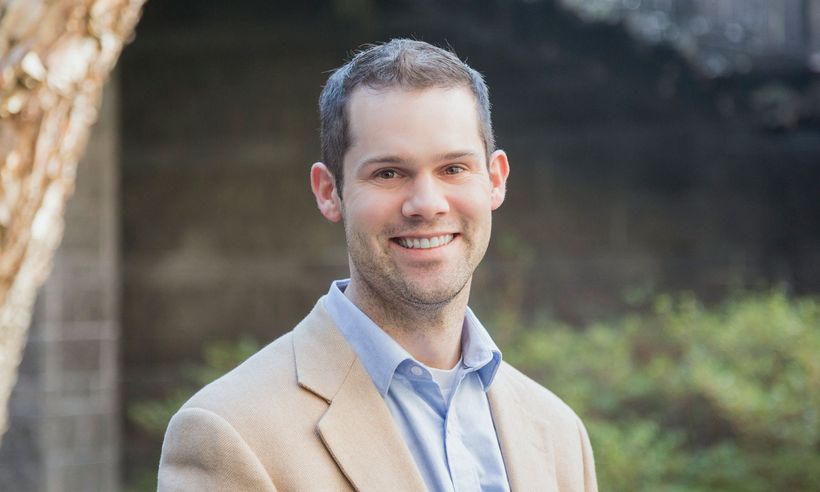
Michael McClure, Ph.D., associate professor from the Department of Biomedical Engineering and affiliate faculty in the Department of Orthopaedic Surgery and in the Institute for Engineering and Medicine, has been named chair of the Orthopaedic Research Society’s (ORS) newly launched Skeletal Muscle Section. The section began in August 2025, building on research interest groups and symposia to create a dedicated home for skeletal muscle studies within ORS. Its mission is to advance collaboration, innovation, education and translation in this field. Skeletal muscle disorders cause disability, chronic pain and high health care costs. Severe injuries and degenerative diseases, such as muscular dystrophies, remain difficult to treat. The section will strengthen research in muscle development, aging, trauma, disuse and disease. This work will expand the basic understanding of and identify therapeutic targets to restore function. In its first year, the section will measure success through increased skeletal muscle abstracts at the 2027 ORS Annual Meeting, growth in ORS membership and active participation in section programs. “We are thrilled to launch the Skeletal Muscle Section,” McClure said. “This home for translational muscle research will build on ORS progress over the past 10 years, help recruit new members and foster an environment that connects multiple areas of orthopaedic science.” McClure’s commitment to this work is shaped by his family’s experience with neuromuscular diseases, witnessing the impact of war-related injuries on patients’ quality of life from the Richmond Veterans Affairs Medical Center, and the momentum of translational discovery. Learn more about the ORS Skeletal Muscle Section.

#Expert Research: Incentives Speed Up Operating Room Turnover Procedures
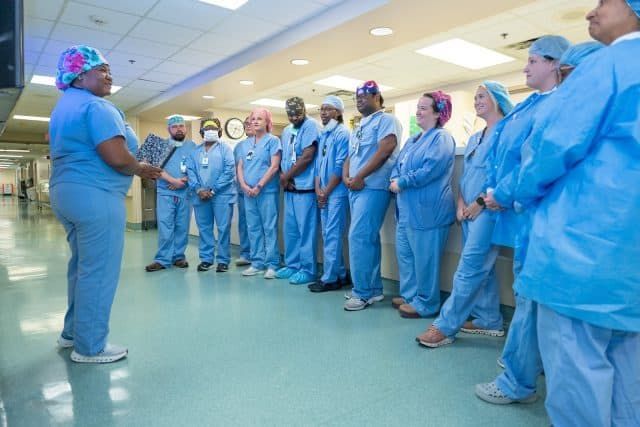
The operating room (OR) is the economic hub of most healthcare systems in the United States today, generating up to 70% of hospital revenue. Ensuring these financial powerhouses run efficiently is a major priority for healthcare providers. But there’s a challenge. Turnovers—cleaning, preparing, and setting up the OR between surgeries—are necessary and unavoidable processes. OR turnovers can incur significant costs in staff time and resources, but at the same time, do not generate revenue. For surgeons, the lag between wheels out and wheels in is idle time. For incoming patients, who may have spent hours fasting in preparation for a procedure, it is also a potential source of frustration and anxiety. Reducing OR turnover time is a priority for many US healthcare providers, but it’s far from simple. For one thing, cutting corners in pursuit of efficiency risks patient safety. Then there’s the makeup of OR teams themselves. As a rule, well-established or stable teams work fastest and best, their efficiency fueled by familiarity and well-oiled interpersonal dynamics. But in hospital settings, staff work in shifts and according to different schedules, which creates a certain fluidity in the way turnover teams amalgamate. These team members may not know each other or have any prior experience working together. For hospital administrators this represents a quandary. How do you cut OR turnover time without compromising patient care or hiring in more staff to build more stable teams? To put that another way: how do you motivate OR workers to maintain standards and drive efficiency—irrespective of the team they work with at any given time? One novel approach instituted by Georgia’s Phoebe Putney Health System is the focus of new research by Asa Griggs Candler Professor of Accounting, Karen Sedatole PhD. Under the stewardship of perioperative medical director and anesthesiologist, Jason Williams MD 02MR 20MBA, and with support from Sedatole and co-authors, Ewelina Forker 23PhD of the University of Wisconsin and Harvard Business School’s Susanna Gallini PhD, staff at Phoebe ran a field experiment incentivizing individual OR workers to ramp up their own performance in turnover processes. What they have found is a simple and cost-effective intervention that reduces the lag between procedures by an average of 6.4 percent. Homing in on the Individual Williams and his team at Phoebe kicked off efforts to reduce OR turnover times by first establishing a benchmark to calculate how long it should take to prepare for different types of procedure or surgery. This can vary significantly, says Williams: while a gallbladder removal should take less than 30 minutes, open-heart surgery might take an hour or longer to prepare. “There’s a lot of variation in predicting how long it should take to get things set up for different procedures. We got there by analyzing three years of data to create a baseline, and from there, having really homed in on that data, we were able to create a set of predictions and then compare those with what we were seeing in our operating rooms—and track discrepancies, over-, and underachievement.” Williams, a Goizueta MBA graduate who also completed his anesthesiology residency at Emory University’s School of Medicine, then enlisted the support of Sedatole and her colleagues to put together a data analysis system that would capture the impact of two distinct mechanisms, both designed to incentivize individual staff members to work faster during turnovers. The first was a set of electronic dashboards programmed to record and display the average OR turnover performance for teams on a weekly basis, and segment these into averages unique to individuals working in each of the core roles within any given OR turnover team. The dashboard displayed weekly scores and ranked them from best to worst on large TV monitors with interactive capabilities—users could filter the data for types of surgery and other dimensions. Broadcasting metrics this way afforded Williams and his team a means of identifying and then publicly recognizing top-performing staff, but that’s not all. The dashboards also provided a mechanism with which to filter out team dynamics, and home in on individual efforts. “If you are put in a room with one team, and they are slower than others, then you are going to be penalized. Your efforts will not shine. Now, say you are put in with a bigger or faster team, your day’s numbers are going to be much higher. So, we had to find a way to accommodate and allow for the team effect, to observe individual effort. The dashboards meant we could do this. Over the period of a week or a month, the effect of other people in the team is washed out. You begin to see the key individuals pop up again and again over time, and you can see those who are far above their peers versus those who, for whatever reason, are not so efficient.” Sharing “relative performance” information has been shown to be highly motivating in many settings. The hope was that it would here, too. Three core roles: Who’s who in the Operating Room turnover team? OR turnover teams consist of three roles: circulating nurse, scrub tech, and anesthetist. While other surgery staff might be present during a turnover, depending on the needs of consecutive procedures, these are the three core roles in the team, and they are not interchangeable in any way: each individual assumes the same responsibilities in every team they join. Typically, turnover tasks will include removing instruments and equipment from the previous surgery and setting up for the next: restocking supplies and restoring the sterile environment. Turnover tasks and activities will vary according to the type of procedure coming next, but these tasks are always performed by the same three roles: nurse, scrub tech, and anesthetist, working within their own area of expertise and specialty. OR turnover teams are assembled based on staff schedules and availability, making them highly fluid. Different nurses will work with different scrub techs and different anesthetists depending on who is free and available at any given time. With dashboards on display across the hospital’s surgery department, Williams decided to trial a second motivational mechanism; this time something more tangible. “We decided to offer a simple $40 Dollar Store gift card to each week’s top performing anesthetist, nurse, or scrub technician to see if it would incentivize people even more. And to keep things interesting, and sustain motivation, we made sure that anyone who’d won the contest two weeks in a row would be ineligible to win the gift card the following week,” says Williams. “It was a bit of a shot in the dark, and we didn’t know if it would work.” Altogether, the dashboards remained in situ over a period of about 33 months while the gift card promotion ran for 73 weeks. It was important to stress the foundational importance of safety and then allow individuals to come up with their own ways to tighten procedures. This was a bottom-up, grassroots experience where the people doing the work came up with their own ways to make their times better, without cutting corners, without cutting quality, and without cutting any safety measures. Jason Williams MD 02MR 20MBA Incentives: Make it Something Special and Unique Crunching all of this data, Sedatole and her colleagues could isolate the effect of each mechanism on performance and turnover times at Phoebe. While the dashboards had “negligible” effect on productivity, the addition of the store gift cards had immediate, significant, and sustained impact on individuals’ efforts. Differences in the effectiveness of the two incentives—the relative performance dashboard and the gift cards—are attributable to team fluidity, says Sedatole. “It’s all down to familiarity. Dashboards are effective if you care about your reputation and your standing with peers. And in fluid team settings, where people don’t really know each other, reputation seems to matter less because these individuals may never work together again. They simply care less about rankings because they are effectively strangers.” Tangible rewards, on the other hand, have what Sedatole calls a “hedonic” value: they can feel more special and unique to the recipient, even if they carry relatively little monetary value. Something like a $40 gift card to Target can be more motivating to individuals even than the same amount in cash. There’s something hedonic about a prize that differentiates it from cash—after all, you will just end up spending that $40 on the electricity bill. Asa Griggs Candler Professor of Accounting, Karen Sedatole “A tangible reward is something special because of its hedonic nature and the way that human beings do mental accounting,” says Sedatole. “It occupies a different place in the brain, so we treat it differently.” In fact, analyzing the results, Sedatole and her colleagues find that the introduction of gift cards at Phoebe equates to an average incremental improvement of 6.4% in OR turnover performance; a finding that does not vary over the 73-week timeframe, she adds. To get the same result by employing more staff to build more stable teams, Sedatole calculates that the hospital would have to increase peer familiarity to the 98th percentile: a very significant financial outlay and a lot of excess capacity if those additional team members are not working 100% of the time. These are key findings for healthcare systems and for administrators and decision-makers in any setting or sector where fluid teams are the norm, says Sedatole: from consultancy to software development to airline ground crews. Wherever diverse professionals come together briefly or sporadically to perform tasks and then disperse, individual motivation can be optimized by simple mechanisms—cost-effective tangible rewards—that give team members a fresh opportunity to earn the incentive in different settings on different occasions—a recurring chance to succeed that keeps the incentive systems engaging and effective over time. For healthcare in particular, this is a win-win-win, says Williams. “In the United States we are faced with lower reimbursements and higher costs, so we have to look for areas where we can gain efficiencies and minimize costs. In the healthcare value model, time and costs are denominators, and quality and service are numerators. Any way we can save on costs and improve efficiencies allows us to take care of more patients, and to be able to do that effectively. “We made some incredible improvements here. We went from just average to best in class, right to the frontier of operative efficiency. And there is so much more opportunity out there to pull more levers and reach new levels, which is truly encouraging.” Looking to know more or connect with Asa Griggs Candler Professor of Accounting, Karen Sedatole? Simply click on her icon now to arrange an interview or time to talk today.



LSU Expert Carol Friedland on Katrina’s Legacy: What’s Changed, What Still Needs to Be Done
After Hurricanes Katrina and Rita devastated Louisiana and brought billions of dollars of damage to the state, lawmakers worked with researchers, engineers and others to create and implement new codes and laws in an attempt to prevent such serious damage happening again. On Aug. 29, LSU and the LSU AgCenter hosted an event at the Energy, Coast and Environment Building in honor of the 20th anniversary of Hurricane Katrina, which made landfall in Louisiana on the same date in 2005. The daylong conference featured leading voices from LSU and government officials, who spoke about the impacts that hurricanes Katrina and Rita had on Louisiana and how policies and research have changed since those storms. As a part of the program, Carol Friedland, the director of the AgCenter LaHouse Research and Education Center, spoke alongside Brad Hassert, executive director of the Louisiana State Licensing Board for Contractors, for a seminar called “Innovating Resilience: Solutions Inspired by Katrina.” The two discussed recent developments in building materials and building codes that showed the changes, or lack thereof, since the two devastating hurricanes. At the time of the storms, building codes were not uniform in the state, and some parishes had almost no building codes at all. After Katrina and Rita, however, officials pushed for a unified code that better protected Louisiana residents from dangerous storms and weather events. “After Hurricane Katrina, we actually enacted very strong legislation to adopt the model code,” Friedland said. “Also, at the same time, the FEMA mitigation assessment team went out and documented a lot of the failures from Katrina. This program really helps us learn around the country what are the practices that are working and what are the practices that are not working and then getting those integrated into the code process.” Friedland went on to talk about some developments for houses that she has been working on, like “fortified roofs,” which are new roofs that will protect residents more efficiently than the codes required in Louisiana. Friedland also talked about the process of implementing new codes. Researchers must find agreement with governmental entities and other parties, like insurance adjusters and contractors, to succeed, she said. Hassert spoke about the importance for homeowners to find a licensed contractor after a weather event causes damage to their house. This is mostly to ensure that the house will be repaired to code and so the homeowners will not be scammed or stolen from. Hassert, who was recently appointed executive director of the Louisiana State Uniform Construction Code Council, urged researchers and other stakeholders to come together and participate in council meetings so they can make the most informed and beneficial decisions that they can. Both Hassert and Friedland believe there is work to do to improve the codes and building standards in Louisiana houses, but with communication and more involved research, enhancements can be made. “One of the ways I like to frame this is to think about are we happy with the level of losses that we have?” Friedland said. “Do we think that we’re doing well? Who is happy with the level of loss that we see? I think we can still do better.” Original article posted by the LSU AgCenter here.



Severe Weather Events Mean Officials Must Be Ready for the Unexpected
Dr. Jase Bernhardt, associate professor in Hofstra’s Department of Geology, Environment, and Sustainability, was interviewed by Newsday for the article “Long Island storm prep increasingly means expect the unexpected.” Supervisors in Suffolk and Nassau Counties must have response plans for extreme and sudden weather events, which have been occurring with more frequency due to climate change and inadequate drainage systems. Though meteorologists have the ability to issue a flood watch alert between 12 to 24 hours in advance of an approaching storm, the more actionable and localized alerts people want arrive much later. “It’s great to have that notice … but you still can’t always pinpoint that exact locality, which is always frustrating to people,” Dr. Bernhardt said. “To pinpoint at that level, like what county or what town, unfortunately might only come very close to when the flooding actually happens.”


Delaware INBRE Summer Scholars Complete Biomedical Research Projects at ChristianaCare
Eight undergraduate scholars recently completed a 10-week immersion in biomedical research through the Delaware IDeA Network of Biomedical Research Excellence (INBRE) Summer Scholars Program at ChristianaCare. Their projects, spanning oncology, emergency medicine and community health, culminated in a capstone presentation and celebration on August 13 at Christiana Hospital. This year’s cohort included students from University of Delaware, Delaware State University and Delaware Technical Community College, as well as Delaware residents attending college out of state. Each student was paired with expert mentors from across ChristianaCare, contributing to research designed to improve patient care and outcomes. In addition to their primary projects, the scholars explored ChristianaCare’s advanced facilities such as the Gene Editing Institute Learning Lab, gaining hands-on exposure to cutting-edge methods in biomedical research. “This year’s DE-INBRE program at ChristianaCare was a one-of-a-kind experience,” said Susan Smith, Ph.D., RN, program director of Technology Research & Education at ChristianaCare and the INBRE site principal investigator. “We brought together undergraduates from various academic backgrounds and immersed them in real, hands-on biomedical research with some of our most accomplished investigators. “Watching these students go from a little unsure on day one to confidently presenting their own findings by the end of the summer was inspiring, and proof that programs like this are building the next generation of biomedical researchers in Delaware.” Delaware INBRE is a statewide initiative funded by the National Institutes of Health to strengthen Delaware’s biomedical research infrastructure. It supports undergraduate research training, faculty development and core facility investments across partner institutions. At ChristianaCare, the program offers students immersive, hands-on research experiences guided by seasoned investigators, equipping them with the skills, mentorship and exposure essential for careers in science and medicine. Madeline Rowland, a Delaware resident and rising senior at Williams College in Massachusetts, collaborated with Hank Chen, senior medical physicist at the Helen F. Graham Cancer Center & Research Institute, to evaluate tattoo-free, surface-guided radiation therapy for breast cancer patients. She also worked with leaders of ChristianaCare’s Center for Virtual Health to explore how different patient populations experience virtual primary care. Rowland praised the program for the research skills and knowledge she gained as well as the meaningful relationships she built with mentors, health care professionals and fellow scholars she might not have otherwise met. “Dr. Chen and the whole Radiation team really adopted me into the department,” Rowland said. “From sitting on the CT simulation table in my first week to working on my project, I felt fully welcomed. I’ve learned so much, and the people I’ve met made this summer unforgettable.” Chen was recognized as the program’s inaugural “Mentor of the Summer” for his exceptional dedication and thoughtful approach to teaching. Having now mentored INBRE scholars for three years, Chen has a personal connection to the program. His own daughter participated as an undergraduate and recently began her general surgery residency after graduating from Sidney Kimmel Medical College at Thomas Jefferson University in Philadelphia. For Chen, mentoring represents an investment in health care’s future. “The greatest asset of any institution is its talent,” he explained. “When you welcome students into your environment, you draw good people to your field, and patients ultimately benefit from that.” Naana Twusami, a rising senior at Delaware State University, spent her summer with the Oral & Maxillofacial Surgery and Hospital Dentistry Department. She examined social determinants of health in facial trauma patients, analyzing how factors like income, education, transportation and insurance status influence recovery. “Being here showed me that things like income or transportation can matter just as much as the medical care itself,” she said. “The INBRE Summer Scholars Program gave me a real look at how health care works, and how places like ChristianaCare are helping shape where it’s headed.” Amy Minsker, continuing medical education manager, Academic Affairs, served as manager of the summer scholars program. Read more on news.christianacare.org.



In an age of fast-moving misinformation, our expert teaches students how to spot what’s credible
As the new academic year begins, and at a time when misinformation often travels faster than facts, University of Rochester’s Kevin Meuwissen offers educators and young learners clarity and practical strategies for identifying credible sources. As an associate professor and chair of teaching and curriculum at the Warner School of Education and Human Development, Meuwissen focuses on how children and teens learn about politics and history — and how they can be taught to critically evaluate what they consume. “Young people pay close attention to who’s been consistently accurate,” he says. “They’re more likely to trust someone over time if their information holds up.” To empower students in our complex information environment, Meuwissen champions the so-called SIFT method — an easy-to-remember acronym and evidence-based toolkit that breaks down like this: • Stop! Pause before reacting or sharing • Investigate the source • Find better coverage • Trace claims back to their origin He also warns about how emotional framing, AI-generated visuals, deep fakes, and repeated exposure can distort judgment through the illusory truth effect — making misinformation feel believable even when it isn’t. His "Ever Wonder: How Can You Tell If A Source Is Credible?" video is a handy teaching tool. Meuwissen and his colleagues encourage teachers grappling with resistance over topics like climate science to consider not just evidence depth, but also students’ identities — political, cultural, and otherwise — when designing lessons. His approach emphasizes building trust, modeling thoughtful verification, and nurturing classroom norms rooted in accuracy — traits essential for forming discerning digital citizens. Kevin Meuwissen is available for interviews about identifying misinformation. He can be contacted through Warner School of Education Director of Communications Theresa Danylak at tdanylak@warner.rochester.edu.

Play, Learn, Lead: How Aston’s Gamification-Driven MBA Is Redefining Business Learning
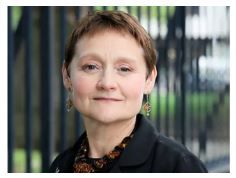
Professor Helen Higson OBE of Aston Business School, discusses why gamification is embedded in all of the School's postgraduate portfolio of degrees Give the students something to do, not something to learn; and the doing is of such a nature as to demand thinking; learning naturally results. (attributed to John Dewey, US educational psychologist (1859-1952) Imagine you’re the CEO of a cutting-edge robotics firm in 2031, making high-stakes decisions on R&D, marketing and finance; one misstep and your virtual company could collapse. You win, lose, adapt, and grow. This isn’t a case study, it’s your classroom experience at Aston Business School in Birmingham. Imagine you’re participating in Europe’s biggest MBA tournament, the University Business Challenge, where your strategic flair and financial acumen will be tested against the continent’s sharpest minds. Then you’re solving real-world sustainability crises in the Accounting for Sustainability Case Competition, crafting solutions that could be showcased in Canada. What if you could do all this from your classroom seat, armed with only your MBA learnings, teamwork and the thrill of gamified learning. At Aston, we believe the best way to master business is by doing business. That’s why we’ve embedded active learning through games, simulations, and competitions across all our postgraduate programs. The results? Higher engagement, deeper learning, and students who graduate with confidence and real-world skills. Research says gamified learning boosts motivation, lowers stress, and helps students adopt new habits for lifelong success. As educational researchers Kirillov et al. (2016) found, “Gamification creates the right conditions for student motivation, reduces stress, and promotes the adoption of learning material—shaping new habits and behaviours.” This has led to what Wiggins (2016), calls the “repackaging of traditional instructional strategies”. In Aston Business Sschool we have long embraced this approach as a way of increasing student outcomes and stimulating more student engagement in their learning. Our Centre for Gamification in Education (A-GamE), launched in 2018, is dedicated to advancing innovative teaching methods. We run regular seminars with internal and external speakers showcasing gamification adoption, design and research and we use these techniques across the ABS in a wide range of disciplines. (We have included two examples of this work in our list of references.) Furthermore, in 2021 we published a book which outlines the diverse ways in which we use these methods (Elliott et al. 2021). Subsequently, during 2024 we redesigned all our postgraduate portfolio of degrees, and as part of this initiative games and simulations were embedded across all programmes. Why Gamification Works Through simulations like BISSIM, students step into executive roles, steering futuristic companies through the twists and turns of a dynamic marketplace. A flagship programme running since 1981, BISSIM was developed in collaboration between academics from ABS and Warwick Business School, and every decision on R&D, marketing, or HR has real consequences as teams battle each other for the top spot. After each year of trading the results are input into the computer model. The results are then generated for each company in the form of financial reports, KPIs and other non-financial results and messages. Each team’s results are affected by their own decisions and the competitive actions of the other teams, as well as the market that they all influence. This year one of our academics, Matt Davies, has been awarded an Innovation Fellowship further to commercialise the game. Competitions with Global Impact We also encourage students to take part in national and international competitions which have the same effect of developing their engagement with real-life business problems on a global scale. Beyond the classroom, Aston students represent the university in major competitions like the University Business Challenge (in which ABS had the highest number of UK teams this year) and the Accounting for Sustainability (A4S) Case Competition, for which we are an “anchor business school”. Here, theory gets stress-tested against real-world scenarios and top talent from around the globe. The result? Award-winning teams, global experience, and friendships built under pressure. At the heart of this approach is Aston’s Centre for Gamification (A-GamE), dedicated to making learning interactive, motivating, and fun. Regular seminars, fresh research, and close ties to industry keep the curriculum evolving and relevant, so students graduate ready to lead, adapt, and thrive in any business environment. Why does it matter? In a volatile, fast-paced economy, employers appreciate agility, teamwork and decisiveness. At Aston, every simulation and competition is geared towards sharpening these skills. Graduates emerge not only knowledgeable, but prepared for the job market. Engagement Our students have been embracing these opportunities. Six MBA/Msc teams developed their A4S videos, hoping to reach the final in Canada early in 2025, and three teams out of nine reached the national UBC finals. Additionally, the BISSEM simulation has just finished inspiring another group of MBA students (particularly as the prize for the winning team was tickets to a game at our local Aston Villa premiership football (soccer) club, currently riding high in the league!). Typical feedback from non-Finance specialists is that they suddenly surprised themselves during their participation in the simulation and were reconsidering the options of taking a career in Finance. It seems that our original purposes have been met – increased confidence, passion, deep learning and engagement have been achieved. To interivew Professor Higson, contact Nicola Jones, Press and Communications Manager, on (+44) 7825 342091 or email: n.jones6@aston.ac.uk Elliott, C., Guest, J. and Vettraino, E. (editors) (2021), Games, Simulations and Playful Learning in Business Education, Edward Elgar. Kirillov, A. V., Vinichenko, M. V., Melnichuk, A. V., Melnichuk, Y. A., and Vinogradova, M. V. (2016), ‘Improvement in the Learning Environment through Gamification of the Educational Process’, International Electronic Journal of Mathematics Education, 11(7), pp. 2071-2085. Olczak, M, Guest, J. and Riegler, R. (2022), ‘The Use of Robotic Players in Online Games’, in Conference Proceedings, Chartered Association of Business Schools, LTSE Conference, Belfast, 24 May 2022, p. 79-81. Wiggins, B. E. (2016), ‘An Overview and Study on the Use of Games, Simulations, and Gamification in Higher Education’, International Journal of Game-Based Learning (IJGBL), 6(1), 18-29. https://doi.org/10.4018/IJGBL.2016010102


Planned Changes to EPA Policy Likely to Impact Public Health and Safety
Dr. Jase Bernhardt, associate professor in Hofstra’s Department of Geology, Environment, and Sustainability, was interviewed by Newsday about the planned revocation of 2009’s endangerment finding, and how it may impact health and safety on Long Island. The endangerment finding was a scientific declaration that determined carbon dioxide and other greenhouse gases endanger public health. Dr. Bernhardt said the consequences from rescinding the endangerment finding will be damaging but suggests they are likely to be incremental and slower for the public to discern. “It’s going to be more gradual,” he said. “There’s not going to be that singular event where you can say ‘this definitely had an immediate effect right here.’ It’s a long term change.”