
Experts Matter. Find Yours.
Connect for media, speaking, professional opportunities & more.

Bird flu resurfaces in chicken, turkey flocks, in midst of fall migration
Across the U.S., cases of highly pathogenic avian influenza are ramping up again in commercial chicken and turkey flocks as well as backyard flocks. HPAI, commonly known as bird flu, is a highly contagious viral disease that is fatal to chickens and turkeys. According to the U.S. Department of Agriculture, more than 60 million commercial and backyard birds in the U.S. have died from the disease or been killed to contain its spread, since the current, ongoing outbreak first hit U.S. commercial flocks in early 2022. Wild bird migrations are an especially important signal to the Delmarva Peninsula, a major broiler chicken producing region, that HPAI could be near. “In the Atlantic Flyway, extending from the northern Delmarva down to the Carolinas, that’s where the bulk of the Atlantic Flyway birds overwinter,” said Jeffrey Buler, a professor of wildlife ecology in the University of Delaware College of Agriculture and Natural Resources. “We get tens of thousands of snow geese that are here in the winter, and they’re just starting to arrive.” Wild birds, particularly waterfowl, can shed the virus through their saliva or feces. Around this time of year, waterfowl are migrating south, to their wintering grounds. Buler is part of a team of scientists from the University of Delaware, the University of California, Davis, and the U.S. Geological Survey that has been researching using weather radar to track migrating wild birds that could be carrying avian influenza viruses. “It gives us an idea of where and when these migrations are happening,” Buler said. “So ultimately, the poultry industry can ramp up their biosecurity.” Buler can talk about wild bird migrations, what types of migratory birds we tend to see in Delaware this time of year, trends in fall migration and climate, and ongoing weather radar research. To arrange an interview with Jeffrey Buler on this topic, click the “Contact” button in his ExpertFile profile.


Where Will Millennials Take Us?
They’ve been described as entitled, self-centered and shallow. “Selfie-stick wielding, ‘KeepingUp with the Kardashians’-watching, soft-in-the-middle whiners” – Psychology Today. Worldwide, though, millennials (to whom also are attributed awesome characteristics like adaptability and creativity) are 1.8 billion strong, the most populated age group in modern history. And they’re soon to be our political, economic and social leaders. Where will they take us? How will their views shape our world? Jared McDonald’s new book, Citizens of the World, Political Engagement and Policy Attitudes of Millennials Across the Globe, uses data to examine this generation, born into technology, the “war on terror,” global interconnectedness and high unemployment. Published by Barnes & Noble in October 2022, the text looks at millennials’ attitudes about lifestyle, family life, gender roles, politics, religion and the future to better understand how governance might change under their leadership … and the influence they already wield. Millennials are a hot topic ... and for better or worse always in the news it seems as journalists, employers, parents and even professors work to figure this generation out. And if you'd like to know more - that where we can help. Published author and Assistant Professor of Political Science and International Affairs, Jared McDonald is available to speak with media - simply click on his icon now to arrange an interview today.



In a new study funded by the Institute of Education Sciences, University of Delaware Associate Research Professor Leigh McLean and her co-authors found a strong connection between teachers’ math and science anxiety and the respective math and science anxiety of their low socioeconomic status (SES) students. When a teacher was more anxious in these content areas, their low-SES students were also more anxious; and, when teachers were less anxious, so were their low-SES students. Teachers play a significant role in shaping students' experiences and attitudes towards learning. When teachers themselves exhibit anxiety or stress about specific subjects, it can inadvertently send signals to students that these subjects are difficult or intimidating. McLean can speak more broadly about this phenomenon and discuss the interesting pattern of associations that emerged from their analysis. She has been featured in multiple publications including The Associated Press and Education Week. Click the "View Profile" to connect with her.

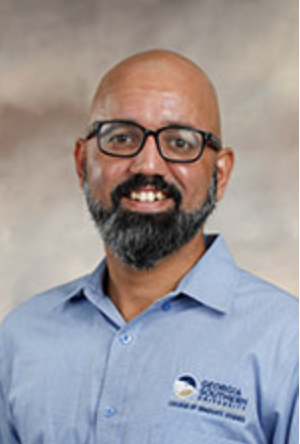
The National Science Foundation awarded nearly $3 million to Georgia Southern University to launch the Research and Mentoring for Postbaccalaureates (RaMP) program. At each university, RaMP supports approximately 10 students per year in gaining full-time research experience, mentoring for potential career paths and building a network of professional contacts. Georgia Southern’s project, “Mentoring and Research Opportunities for Careers in Coastal Science (MROC2S),” aims to aid those with little to no exposure to research or the resources to do so. Checo Colón-Gaud, Ph.D., associate dean of the Jack N. Averitt College of Graduate Studies and principal investigator for a National Science Foundation grant, totaling almost $3M, that will be used for a research and mentoring program. “The target is to benefit underrepresented minority students to increase diversity in the STEM (science, technology, engineering and mathematics) fields,” said Checo Colón-Gaud, Ph.D., associate dean of the Jack N. Averitt College of Graduate Studies and the project’s principal investigator (PI). Beginning in August 2024, participating students will be given an annual stipend. The postbaccalaureate fellows will have the opportunity to learn regional-specific natural resource science and participate in meaningful training with their peers before entering the field. “It would benefit those who are not yet sure if they want to pursue careers in natural resource science or graduate studies after earning their undergraduate degree,” Colón-Gaud added. Georgia Southern’s awarded fund will extend through 2027, and with 10 participants at a time, Colón-Gaud anticipates that this “significant and transformative” experience should strengthen the workforce. Interested in learning more about the Research and Mentoring for Postbaccalaureates (RaMP) program or looking to talk with Checo Colón-Gaud? Contact Georgia Southern's Director of Communications Jennifer Wise at jwise@georgiasouthern.edu to arrange an interview today.


Highlighting the Impacts of Insufficient WIC Funding on Low-Income Families
Since the beginning of the COVID-19 pandemic, the cost of food has risen 25%, and many are struggling to provide enough nutritious food to their families. Federal safety net programs – like the Special Supplemental Nutrition Program for Women, Infants, and Children (WIC) for example – are intended to provide needed support for healthy foods during hard times, serving millions each year. The WIC program, however, is not guaranteed to all that might need it. Instead it relies on budget appropriations, which for the first time in the history of the program may not be enough to cover those in need. There is a chance that as many as 600,000 young children, pregnant and new mothers who qualify for WIC will not be able to receive benefits in the upcoming year. Allison Karpyn is Co-Director of the Center for Research in Education and Social Policy (CRESP) and Professor in the Department of the Human Development and Family Sciences at the University of Delaware. She is able to speak holistically about WIC and other federal food programs and what this funding can accomplish. "Federal Nutrition and related programs also need to address issues of stigma," Karpyn says. Recent frameworks developed by Dr. Karpyn and colleague suggest that more needs to be done to adequately understand and support families to use the benefits intended for them. Research is clear that food and nutrition security are closely tied to our health, she notes. Karpyn is able to speak about this and more. If you would like to speak to her, click her "View Profile" link.


Expert reaction to the UK AI Safety Summit
Today the UK government announced a "world first agreement" on how to manage the riskiest forms of AI. It focuses on so-called "frontier AI" - what ministers consider highly advanced forms of the tech - with as-yet unknown capabilities. The agreement, signed by countries including the US, the EU and China, was announced at the UK's AI Safety Summit. Dr Alina Patelli, Senior Lecturer in Computer Science, Aston University, comments: “A summit on AI safety is long overdue. As is the case with all groundbreaking technologies, AI’s transformative potential for public good is only matched by its risks, which are unlikely to be successfully avoided, if AI tech design and deployment are left unregulated and therefore open to misuse, either intentionally or accidentally. The scope of the summit is appropriate, reflective of Government’s cautious approach to managing interactions with AI safety experts from multiple nations and disciplines: the summit focus is kept narrow, to five objectives only, and the number of participants is wisely limited to 100, to keep the conversation productive.” What is likely to come out of this summit? “The summit’s main output will most likely be a bare-bones regulatory document comprising (1) a shared understanding of AI (i.e., a generally accepted definition of the term reflective of all summit participants’ views, not just those of tech experts), (2) a list of major risks associated to AI misuse, both in terms of potential damage as well as likelihood of becoming a reality, and (3) a policy draft outlining the core elements that a yet-to-be-developed governance framework should include.” What AI safety could/should look like? “Although it would be premature to venture a definition of AI safety ahead of the summit, one thing that is certain is that a comprehensive, therefore effective, AI regulatory framework would encompass more than just laws. Non-legally binding codes of conduct, tech design and development processes that are bound by moral and ethical values, both in the commercial ecosystem, as well as when it comes to individual entrepreneurs, revised open-access licenses under which AI should be used in the public domain, etc. are equally important pieces. The best way to integrate all these in a cohesive, overarching governance plan is perhaps a topic to explore in one of the post-summit events.” What are the potential practicalities for a route forward towards safe AI? “The practical way to systematically regulate AI is incremental. Initially, the development and application of those AI tools deemed to be high-risk will most likely be restricted to controlled environments, where the potential benefits justify the risks and where sound mitigation procedures can be quickly and effectively enforced to mitigate those risks. As regulations become better prescribed, AI’s (safe and legal) application space will gradually expand, making its benefits available to larger groups of people without any of the downsides.” To interview Dr Alina Patelli or request further details contact Nicola Jones, Press and Communications Manager, on (+44) 7825 342091 or email: n.jones6@aston.ac.uk


Expert Insight: Fake News, Fake Reviews: Building Trust with Online Shoppers
Online customer reviews have become a critically important cog in the sales conversion process in recent years. Studies show that 97 percent of consumers read product reviews and ratings, and that positive reviews can almost triple the likelihood of making a purchase. As customers do more and more of their shopping online, they are turning in droves to the likes of Yelp, TripAdvisor, and Google Reviews to seek out opinions, recommendations, and feedback from other users before pushing through the final part of the sales funnel. As a result, these third-party review sites have experienced exponential growth. But there’s a caveat: and it’s trust. The success of Yelp and its competitors is wholly contingent on how trustworthy their users perceive them to be; on the transparency and authenticity of the content published and the sources of that content. In an era of disinformation with fake reviews and AI mass-generated content precipitously on the rise, securing—and keeping—user trust is paramount. The Five Keys to Fighting Fakery Goizueta Business School’s Sandy Jap has some suggestions. Together with colleagues Ben Beck of Brigham Young University’s Marriott School of Business and Stefan Wuyts of Penn State’s Smeal College of Business, Jap, who is the Sarah Beth Brown Professor of Marketing, put together a series of studies to test the kinds of measures and mechanisms that platforms can deploy to win user confidence. And it turns out there’s one tactic that works more effectively than any other: actively monitoring the authenticity of user reviews. That and being open and transparent about doing so. Jap and her colleagues scoured the latest research and data on marketing, governance, and identity disclosure to pinpoint the mechanisms that best mitigate online fakery, while simultaneously building trust among platform users. They identified five. “We worked through the literature and were able to whittle these down to five core practices that are robustly effective at building trust,” says Jap. “They are monitoring, exposure, community building, status endowment and identity disclosure. Doing these five things can signal to your users that you are committed to being a guardian of their trust, so to speak.” Monitoring or evaluating reviews for their authenticity and exposing firms that pay for and propagate fake content are mechanisms directed at the rogue firms that spread fakery and misinformation, explains Jap. Meanwhile community building and status endowment focus on reviewers. Community building is about enabling authentic, transparent interactions between consumers and reviewers. An example of this might be allowing consumers to ask questions and reviewers to respond directly. “Status endowment is where a platform verifies and acknowledges the credibility or helpfulness of a reviewer in some way. Yelp and others use things like badges or reviewer ratings which are earned over time and which make it hard for fake reviewers to game their systems,” says Jap. Identity disclosure is the practice of having reviewers provide personal information—their name, picture, or location, for instance—before they can post content. And while this approach can keep fabrication and false profiles in check, it also raises certain tradeoffs, says Jap. “Anonymity online has long been understood as something of an un-inhibitor—a factor that enables users to speak more freely and openly. It can be democratizing in the sense that it removes or lessens prejudice and bias around things like race, social class, or physical appearance,” she says. “Of course, having people share personal data on your platform can also open up a can of worms around privacy and identity theft which are major considerations; so there’s a balancing act needed with this.” To test the efficacy of all five trust building policies, including identity disclosure, Jap and her colleagues ran a series of experiments and studies. They invited volunteers to rate how the presence or absence of these mechanisms impacted the trustworthiness of a platform. One study saw them parse things like domain authority and traffic across 25 online review sites against how many (or few) of the five mechanisms each deployed. Elsewhere, the team used surveys to assess how users ranked the different mechanisms in terms of platform trust, above and beyond other factors such as the quantity of reviews published say, or the expertise of different reviewers. The Bottom Line: Bust Bogus Reviews After crunching the data, Jap and her co-authors found that while all five trust-building mechanisms were valued and important to platform users, the practice of monitoring for fake reviews and reviewers—and broadcasting the fact clearly—was by far the most effective. “Doing all of these five things—monitoring, exposing, community building, status endowment and ID disclosure—are important if you want to earn and keep the trust of your users,” says Jap. “We found that the more of these mechanisms that platforms incorporate, the better their domain authority, Alexa site ranking, backlinks, and organic site traffic.” Based on our findings, monitoring your content and communicating that you’re doing this is by far the most powerful cue that you are trustworthy. So that’s where we’d say platforms might want to focus their spend. Many of the biggest review platforms have already taken note of these insights. Yelp recently shared a post to its official blog welcoming the finding that of the 25 sites analyzed in Jap’s study, theirs is one of two platforms that actively implement all five mechanisms. “After examining 25 review platforms, the study found that Yelp is one of two platforms that applies all five mechanisms and as the research states, has become a guardian of trust for review information.” Meanwhile, Jap stresses that these findings should be relevant to any business that is focused on “combating online review fakery.” “All businesses today face the challenge of managing their word-of-mouth reputation. Any firm interested in sharing and leveraging points of view around its products or services, be it a small online retail store or an Amazon, is going to want to go the distance—and be seen to do so—in going to war on fakery and disinformation.” Are you a journalist interested in learning more about the importance and trustworthiness of online reviews? Sandy Jap is available to speak with media - simply click on her icon now to arrange an interview today.



• Rice straw could be a fuel of the future in rural Philippines • Across Asia 300 million tonnes of rice straw go up in smoke every year • New proposals includes scaling up harvesting system with straw removal, biogas-powered rice drying and storage and efficient milling. An Aston University bioenergy researcher has been explaining how rice straw could be a fuel of the future in rural Philippines. Dr Mirjam Roeder who is based at the University’s Energy & Bioproducts Research Institute (EBRI) is collaborating with the UK company Straw Innovations Ltd, Southeast Asian Regional Center for Graduate Study and Research in Agriculture (SEARCA) and Koolmill Systems Ltd to showcase their research. The Food and Agriculture Organisation (FAO) states that rice is the number one food crop globally and 91% of it is produced and consumed in Asia. As a crop it is responsible for 48% of global crop emissions and for every kilogram of rice, a kilo of straw is produced. Across Asia 300 million tonnes of rice straw go up in smoke every year when burnt after harvest, releasing emissions and air pollutants that triple risks of increased respiratory diseases and accelerate climate change. To raise awareness of sustainable uses for rice straw Dr Roeder has travelled to the sixth International Rice Congress in Manila, Philippines to explain the potential of the emerging technology. Rice straw is an underdeveloped feedstock and can be collected and digested to produce biogas, unlocking sustainable straw management options and renewable energy for farmers using anaerobic digestion (AD) from rice straw. Dr Roeder has been working with Straw Innovations on their UK Innovate project demonstration facility in the Philippines, the Rice Straw Biogas Hub, which is scaling up a complete harvesting system with straw removal, biogas-powered rice drying and storage, together with efficient milling. Craig Jamieson, Straw Innovations said: “The International Rice Congress is only held every four years and is a key event for coordinating and tracking progress in rice research. “Our partnership with Aston University and SEARCA adds independent, scientific rigour to the work we do and amplifies our message to government policy makers. We are grateful to Innovate UK for their ongoing support through the Energy Catalyst Programme, which is accelerating our development.” At the conference Dr Roeder has been explaining how independent environmental and social research can increase farmer incomes, equality of opportunity, food security and decarbonisation benefits. She said: “Engaging with stakeholders and working in partnership across organisations is vital to the successful adoption of new technologies. I am delighted to have had the opportunity to host an event with our project partners at this prestigious conference, bringing the cutting-edge research of using rice straw for clean energy to the forefront of the rice research community and supporting the pathway to net zero.” Dr Glenn B Gregorio, Center Director of SEARCA, added: "We are gaining insights into the environmental impact of rice straw utilisation and implementing policies to unleash its potential to empower us to make informed decisions that are instrumental to climate change mitigation and decarbonisation," Professor Rex Demafelis, University of the Philippines, is also working with SEARCA and is leading the project on life cycle analyses and measurements of rice straw greenhouse gas emissions. He said: “Rice straw is a valuable resource, and we are grateful to be part of this team which seeks to harness its full potential and promote circularity, which would ultimately contribute to our goal of reducing our greenhouse gas emissions.” ENDS The Supergen Bioenergy Hub works with academia, industry, government and societal stakeholders to develop sustainable bioenergy systems that support the UK’s transition to an affordable, resilient, low-carbon energy future. The Hub is funded jointly by the Engineering and Physical Sciences Research Council (EPSRC) and the Biotechnology and Biological Sciences Research Council (BBSRC) and is part of the wider Supergen Programme. For further information contact Rebecca Fothergill and Catriona Heaton supergen-bioenergy@aston.ac.uk Follow us on Twitter @SuperBioHub Visit our website at supergen-bioenergy.net Visit our YouTube Channel to watch the video on Carbon Balance FAO: RICE PRODUCTION IN THE ASIA-PACIFIC REGION: ISSUES AND PERSPECTIVES - M.K. Papademetriou* (fao.org) https://www.fao.org/3/x6905e/x6905e04.htm About Aston University For over a century, Aston University’s enduring purpose has been to make our world a better place through education, research and innovation, by enabling our students to succeed in work and life, and by supporting our communities to thrive economically, socially and culturally. Aston University’s history has been intertwined with the history of Birmingham, a remarkable city that once was the heartland of the Industrial Revolution and the manufacturing powerhouse of the world. Born out of the First Industrial Revolution, Aston University has a proud and distinct heritage dating back to our formation as the School of Metallurgy in 1875, the first UK College of Technology in 1951, gaining university status by Royal Charter in 1966, and becoming The Guardian University of the Year in 2020. Building on our outstanding past, we are now defining our place and role in the Fourth Industrial Revolution (and beyond) within a rapidly changing world. For media inquiries in relation to this release, contact Nicola Jones, Press and Communications Manager, on (+44) 7825 342091 or email: n.jones6@aston.ac.uk


Holiday Season is Almost Here and Goizueta Business School has Holiday Experts Ready to Help
The holidays are the difference between operating in the red and operating in the black for many retail businesses. The Goizueta Business School has experts who can provide insight and expertise on a wide range of stories. Economics of the Holiday Season - Economist Tom Smith can discuss seasonal hiring, retail expectations, and the importance of the holiday season to retailers. Black Friday - Doug Bowman can discuss retail expectations and the importance of the holiday season to retailers. He expects this year shoppers will go to fewer stores and not travel long distances, delivery capacity will be an issue, and work from home/school purchases will be hot. AI Changing How We Shop - David Schweidel can discuss how new AI tools are changing how we shop and how brands are using AI to reach prospective customers. Product Reviews See Huge Increases: How Reviews Impact Holiday Shopping - What do reviews mean for the shopping experience and do reviews impact purchase? Reshma Shah can discuss the impact reviews have on the point of purchase. Product Returns - Marat Ibragimov can discuss the retail strategy and impact of holiday gift returns, comparing online returns to brick and mortar. Food and Travel Pricing - Saloni Firasta Vastani can discuss the cost of this year’s holiday dinners. What’s gone up and what’s gone down? She can also discuss the cost of travel this holiday season and what consumers can do to get a better deal. Avoiding Holiday Overspend - Rohan Ganduri can discuss how holiday shopping can expose consumers to credit products like store credit cards that offer various incentives to take up the credit card, often resulting in overspending. Ganduri can discuss his latest research paper on how taking up store credit cards can impact consumers’ future credit outcomes. Social Media & Advertising - David Schweidel can discuss how micro influencers work, how using product placement can cut through the advertising clutter, and the power of product reviews. The Constantly Changing Online Retail Experience - Styling videos, personal shoppers, messaging, and even Augmented Reality (AR) are being used to generate purchases. Doug Bowman can discuss how stores are reimagining the shopping experience to attract customers in person and online. Influencers Influencing Our Purchases - How are creators impacting the economy and are influencers impacting our purchasing decisions? Marina Cooley looks at the creator economy and how TikTok and Instagram are impacting our holiday wish lists and what it takes for a product to go from unknown to trending. She can also discuss how this holiday season will help normalize in-app TikTok shopping (something Instagram has struggled to execute on). How to Attract Customers to the Store this Holiday: Merging Online and In-person Experiences May be the Answer - Shopping looks different and it is up to retailers to stand out not just in the brick and mortar world but also online. The success of a business can balance on the customer experience. Reshma Shah can discuss the policies brick and mortar retailers need to have in place to successfully merge online shopping and the in-person shopping experience. To book your expert interview, call Kim Speece at (404) 849-6579 or email her at kim@leffassociates.com or simply click on the icon available. To find an expert on a specific topic, click the “Search” feature at https://goizueta.emory.edu/faculty/profiles. To check out other recent research, visit https://www.emorybusiness.com/faculty-research/.






Think your city is ready for a cyber-attack? Think again according to our experts
There is no way around it; every day there are new cybersecurity threats to not only individuals, but governments at all levels as well. There have been some high-profile breeches that involve major cities like Atlanta and Baltimore. But those attacks are going to all levels, and recent research has shown most municipalities and cities are ill-prepared for cyberattacks. Research conducted by Donald Norris, PhD, and Laura Mateczun, JD, of the University of Maryland, Baltimore County along with William Hatcher, PhD, Wesley Meares, PhD, and John Heslen, PhD, of Augusta University, found various reasons why local governments struggle with cybersecurity. The research shows local governments recognize the need for cybersecurity but are not taking crucial next steps to ensure cybersecurity by integrating policies into daily management practices. Not just that, some local governments were unaware how often they were under cyberattack. Throw in budgetary constraints, and it leads local governments to be in a tough situation. That, unto itself, is a major sticking point, but the burden could be lessened. “Effective cybersecurity is expensive and too much of a strain on the budgets of many cities and counties,” said Hatcher, chair of the Department of Social Sciences in Pamplin College of Arts, Humanities, and Social Sciences at Augusta University. “This is why we suggest regional solutions to the program, so multiple governments carry the cost.” Meares, associate professor and MPA director in Pamplin College, added it’s not just the financial aspect, but said there’s a shortage of cybersecurity talent nationwide, which compounded with limited budgets, makes it tough to compete. In the quest for talent between private and public sector, usually the private sector can offer more to entice a cybersecurity expert to come work for them. There’s also an issue of many local governments using dated technologies, which may be easier for cyber criminals to attack. “Local government is increasingly being more digitally connected, with vital infrastructure, data and services connected which creates more opportunities for cyber-attacks. Additionally, local governments tend to lag in updating critical technology due to limited resources (both human and financial resources),” added Meares. None of this comes as a surprise in the lack of cybersecurity training. “It’s an expensive service for local governments to provide. This is why we suggest more budgetary support for the training,” said Heslen, assistant professor in Pamplin College. “We’re also unsurprised because local governments often struggle to fund professional training in other areas.” But researchers say there are ways to improve upon safety of critical data most notably adopting dedicated cybersecurity budgets funded at an appropriate level in all local governments. Those resources can help address many limitations in local government cybersecurity programs, from staffing and hardware and software deficiencies to awareness training for all parties in local governments. They also recommend the adoption and implementation of cybersecurity policies to manage and regulate actions taken by all that affect the organization’s cybersecurity. By taking the recommended actions, local governments will have a better chance to provide high levels of cybersecurity and protect their information assets more effectively. This is an important topic and if you are a journalist looking to know more about the importance of being ready and able to react if and when a municipality comes under threat from a cyber-attack - then let us help/. William Hatcher and John Heslen are both available to speak with media - simply contact them now to arrange an interview today.


