
Experts Matter. Find Yours.
Connect for media, speaking, professional opportunities & more.

Trump now a convicted felon.... let our experts explain this unprecedented situation.
Just six months before the upcoming election, former President Donald Trump has become the first U.S. president to be convicted of a felony, following his involvement in the hush money scandal. A Manhattan jury delivered a guilty verdict on 34 counts, raising profound questions about the implications for Trump's political future, the Republican Party, and the broader landscape of American politics. This unprecedented situation marks a historic moment in American politics, as no former president has ever faced such legal repercussions so close to an election. From constitutional debates to shifts in public opinion, and from international reactions to financial impacts, the scope of the story is immense. Here are several journalistic angles to explore this multifaceted issue: Constitutional implications of a felon running for presidency. Republican Party's internal conflicts after Trump's felony conviction. Public opinion on Trump's candidacy post-conviction. Trump's legal appeals and their impact on his campaign. Media's role in shaping perception of Trump's conviction. International reactions to Trump's felony and candidacy. Trump's campaign strategy adjustments after the conviction. Financial implications for Trump's businesses and fundraising. Historical instances of political candidates facing legal troubles. Impact of Trump's legal issues on down-ballot races. The ramifications of Trump's conviction are vast and unpredictable, potentially reshaping the political landscape in ways that are still unfolding. Let our experts assist with your understanding of this complex and evolving situation. Connect with an Expert about the Trump conviction: John Clinton | Vanderbilt University Abby and Jon Winkelried Professor of Political Science Brian Kalt | Michigan State University Professor of Law & Harold Norris Faculty Scholar Mean Bose | Hofstra University Professor of Political Science, Executive Dean for Public Policy & Public Service Programs Michael Genovese | Loyola Marymount University Professor of Political Science and International Relations, President of Global Policy Institute David RedHawks | University of Delaware Professor and Chair, Political Science Political Science and International Relations Tony Smith | UC Irvine Professor of Political Science James Sample | Hofstra University Professor of Law Todd Collins | WCU Steed Distinguished Professor Mark Caleb Smith | Cedarville University Professor of Political Science Stephen Farnsworth | University of Mary Washington Professor of Political Science and International Affairs To search our full list of experts visit www.expertfile.com

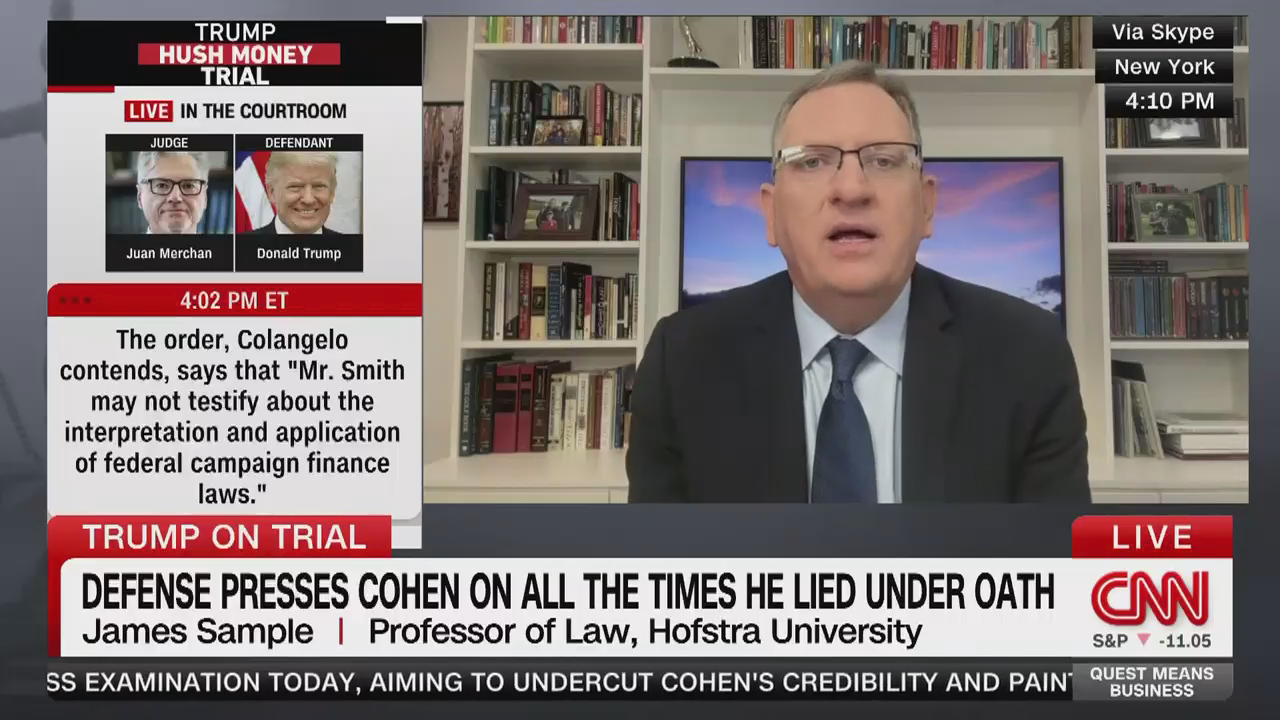
#Experts in the Media: Cohen Testifies in “Hush Money” Trial
The trials of Donald Trump are making headlines across the country and media are looking for key experts to offer opinion, perspective and insight to just about every angle and witness that's playing a part of this legal and political narrative day after day. Professor of Law James Sample was interviewed on CNN International’s Quest Means Business and in The Atlantic about the Michael Cohen’s testimony in former President Trump’s criminal trial in New York. These trials are daily news and if you're a journalist working this story - then let us help. James Sample is a Professor of Law at Hofstra University and previously served as an attorney in the Democracy Program at the Brennan Center for Justice at New York University School of Law. James is available to speak with media - simply click on his icon now to arrange an interview today.


New book explores minority languages in the digital age
Heritage Languages in the Digital Age. The Case of Autochthonous Minority Languages in Western Europe offers invaluable insights for educators, activists, policymakers and researchers The book describes the challenges faced by minority languages in today's interconnected world and asks whether digital communication could potentially reverse the decline of smaller and lesser used languages A researcher from Aston University has co-edited a book that explores the intricate relationship between technology, language policy and cultural identity, presenting case studies of digital communication in smaller languages such as Breton, Gaelic, Faroese, Frisian, Lombard, Low German, and Welsh. Heritage Languages in the Digital Age asks whether digital communication can help to prevent language loss of smaller languages and offers invaluable insights for educators, activists, policymakers and researchers navigating the challenges faced by minority languages in today's interconnected world. Edited by Gertrud Reershemius, a professor of linguistics and language contact at Aston University, and Birte Arendt from Greifswald University in Germany, the book's central focus is on minority languages which are facing a declining number of speakers and a loss of communicative domains in an increasingly globalising world. As these languages contend with the dominance of majority languages, stakeholders such as teachers, language activists, planners and researchers are re-evaluating traditional media strategies, language policies and teaching methodologies to counteract language shift trends. The book also discusses how online communities influence language usage and cultural exchanges for minority speakers and advocates for adaptive language policies and innovative teaching methods to support minority languages and bilingualism while fostering linguistic pride and identity. Professor Gertrud Reershemius said: “The languages examined in this book are still spoken by a considerable number of speakers and enjoy varying forms of institutional, legal, financial and ideological support. “While the overall numbers of speakers may be declining, their significance in identity construction and cultural commodification processes is undeniably growing. “As the global discourse on language diversity and cultural preservation gains momentum, this book serves as a comprehensive resource for understanding and addressing the multifaceted challenges and opportunities facing minority language communities.” You can purchase a copy of Heritage Languages in the Digital Age here.


Veterinary deal would increase UK agrifood exports to EU by more than a fifth, research shows
A veterinary deal would increase agri-food exports from the UK to the EU by at least 22.5%, say researchers Agri-food exports overall are worth £25 billion to the UK economy, but the two years since the new trading rules were put in place have seen a fall of 5% in exports to the EU from 2019 levels, during a period where the sector has otherwise grown. Team from Aston University and University of Bristol have analysed trade deals and export figures worldwide to estimate impact of a new veterinary deal on UK–EU exports A veterinary deal with the European Union could increase UK agricultural and food exports by over a fifth, according to new research. The team, from Aston University’s Centre for Business Prosperity and the University of Bristol, analysed the agricultural and veterinary aspects of trade deals around the world to estimate their impact on exports. They then modelled the potential impact of different types of agreement on UK exports to the EU. Veterinary Agreements specifically focus on regulations and standards related to animal health and welfare, as well as to the safety of animal-derived products such as meat, dairy, and seafood. They aim to align, harmonise, or recognise veterinary requirements and certifications, and reduce the number of inspections between countries to facilitate the safe and efficient trade of live animals and animal products. The EU–UK Trade and Cooperation Agreement (TCA), implemented in January 2021, eliminates tariffs and quotas but does not remove non-tariff barriers to trade. These can be particularly burdensome for agricultural and animal-derived food (agri-food) exports, involving complex rules and requirements, production of extensive documentation and veterinary checks. The UK agri-food sector is a cornerstone of the UK economy, with exports worth £25 billion and employing 4.2million people. Although the sector is growing overall, exports to the EU shrank in 2022 by 5% compared to 2019, in part due to the new trade arrangements. This has led to calls for an EU–UK veterinary agreement from business and agri-food organisations, including the Confederation of British Industry, British Chambers of Commerce, UK Food and Drink Federation, Chartered Institute of Environmental Health and British Veterinary Association. Analysing data from the World Bank on 279 trade agreements and export statistics from over 200 countries, the researchers found that shallow agreements, that went little further than provisions already covered by World Trade Organisation (WTO) rules, had significant negative impacts on agri-food exports. However, where trade agreements went beyond WTO provisions to include more commitments on sanitary and phytosanitary (SPS) measures (which aim to protect countries against risks relating to pests, diseases and food safety) and were legally enforceable, they had a robust, positive impact on exports, particularly exports of animal products and food. Applying this to the UK–EU relationship, the team estimate that a veterinary agreement that went beyond the existing TCA provisions would increase agri-food exports from the UK to the EU by at least 22.5%. Imports from the EU would also increase by 5.6%. In the 203 countries studied for the research, positive effects of deep trade deals that included provisions on agriculture took between 10 and 15 years to manifest. But the UK might not have to wait so long, according to report co-author Professor Jun Du, Director of Aston University’s Centre for Business Prosperity. “There is no blueprint out there that mirrors the UK–EU relationship. Most veterinary agreements are agreed as part of a trade deal between countries that haven’t previously had close alignment and it takes a while for the benefits to take effect. “Until recently, the UK had frictionless agri-food exports to the EU, so it’s possible that a supplementary veterinary agreement to reduce some of the frictions created by Brexit could allow trade that previously existed to pick up again quite quickly.” However clear the economic arguments, the legal and political barriers to a veterinary agreement still remain. The researchers address these in their report, suggesting that the best format for the additional measures would be as a supplementary agreement to the TCA. The key question for the UK government in negotiating such an agreement would be what the EU demanded in return. “The closest model is the EU-Swiss relationship, which sees Switzerland largely follow EU law,” said report co-author from the University of Bristol, Dr Greg Messenger. “That’s unlikely to be an option for the UK. As we wouldn’t expect to eliminate all paperwork, we could both agree that our rules meet each other’s standard for phytosanitary protection. As most of our rules are still essentially the same as the EU, that wouldn’t require any major change, though we’d have to agree a greater level of coordination in relation to the development of new rules.” The report was written jointly by Professor Du, Dr Messenger and Dr Oleksandr Shepotylo, senior lecturer in economics, finance and entrepreneurship at the Centre for Business Prosperity, Aston Business School.


Covering 4/20? Our experts can help you see through the smoke | Media Advisory
As 4/20 approaches, the spotlight once again turns to the evolving landscape of marijuana legalization and its broader societal impacts. This annual observance not only marks a cultural moment for cannabis enthusiasts but also prompts discussions about the legal, economic, and public health implications of marijuana use in the United States. Here are key story angles for journalists to explore: Legalization efforts and state-by-state updates: Tracking the progress of marijuana legalization initiatives across the country and analyzing the legal frameworks governing recreational and medicinal cannabis use. Economic opportunities and challenges: Investigating the economic impact of the cannabis industry, including job creation, tax revenue generation, and business opportunities, as well as regulatory hurdles and market fluctuations. Social justice and equity in cannabis legalization: Examining efforts to address historical inequities in drug enforcement and incarceration through policies such as expungement, social equity programs, and community reinvestment. Public health and safety considerations: Assessing the health effects of marijuana use, the regulation of cannabis products, and efforts to mitigate potential risks such as underage consumption and impaired driving. Cannabis culture and mainstream acceptance: Exploring the evolving perceptions of marijuana in society, including trends in consumption habits, cannabis tourism, and its portrayal in media and popular culture. International perspectives on marijuana policy: Comparing approaches to marijuana legalization and regulation in other countries and evaluating lessons learned for U.S. policymakers and stakeholders. Connect with an Expert about Marijuana in America: For journalists with questions or looking to cover the streaming wars? here is a select list of experts. To search our full list of experts visit www.expertfile.com Robert Mikos Professor of Law · Vanderbilt University Michael Ostrowsky Professor of Sociology · Southern Utah University Jennifer Whitehill Associate Professor of Health Policy and Management · University of Massachusetts Amherst Daniele Piomelli Distinguished Professor · UC Irvine Almut Winterstein Distinguished Professor · University of Florida Photo Credit: Dylan Mullins

Professor Leon Davies is interim head of the School of Optometry at Aston University He completes his two-year term as president of the College of Optometrists in April 2024 Professor Davies will formally take on his new role at the College of Optometrists’ annual general meeting on 29 April 2024. Professor Leon Davies, interim head of the School of Optometry at Aston University, has been appointed chair of the Board of Trustees at the College of Optometrists. The College of Optometrists is the UK’s professional body for optometry, and as well as representing its members, seeks to develop knowledge and skills in the field, define good optometric practice, support optical research and innovation and educate the public on eye health. Professor Davies has served as a council member and trustee at the College for nine years and began a two-year term as president in 2022. He will formally take on the role of chair at the College of Optometrists’ annual general meeting on 29 April 2024. His term as president will end at this time, and he will also become immediate past president. The Board of Trustees exists to ensure that the College of Optometrists meets its financial and legal responsibilities as a chartered body with charitable status and works with the chief executive to set the College’s strategy and policies. As chair, Professor Davies will help to guide the College’s strategic direction, foster collaboration and ensure effective governance. Professor Davies said: “I am delighted to have been appointed chair of the Board of Trustees at the College of Optometrists at an important time for the College, its members and the wider optometry profession. I look forward to working with the Board of Trustees and senior leaders at the College to define and achieve our strategic aims for the benefit of our members and the patients they serve.”


Municipalities around the world have invested significant resources to develop connected smart cities that use the Internet of Things (IoT) to improve sustainability, safety and efficiency. With this increased demand for IoT experience, the VCU College of Engineering formed the OpenCyberCity testbed in 2022. The 1:12 scale model city provides a realistic, small-scale cityscape where students and researchers can experiment with new and existing smart city technology. Sherif Abdelwahed, Ph.D., electrical and computer engineering professor, is director of OpenCyberCity. He recently answered some questions about new developments within the testbed. The OpenCyberCity is a smart city testbed, but are there any real-life cities that one could call a smart city? Several real-life locales are considered smart cities due to their extensive use of technology and data-driven initiatives to optimize infrastructure and services. Dubai is one of the most notable. They have implemented smart transportation systems, buildings and artificial intelligence to transform the city’s operations and make them more efficient. Other reputable smart cities include Singapore and Seoul, which utilize smart energy management, smart transportation and comprehensive data analytics for improved urban planning and services. Seoul, in particular, has an initiative with smart grids and connected street lights, which VCU Engineering’s own OpenCyberCity test bed is working to implement. How does the OpenCyberCity address privacy? With so much technology related to monitoring, how are individual citizens protected from these technologies? Privacy is a major concern for smart cities and it is one of the main research directions for VCU Engineering’s OpenCyberCity. We are developing several techniques to prevent unwanted surveillance of personal information. Sensitive data is protected by solid protocols and access restrictions that only allow authorized users to view the data. Our aim is to find a reasonable middle ground between technological progress and privacy rights, staying within legal and ethical bounds. Some techniques to address privacy concerns include: Data Anonymization: This makes it difficult to trace back information to individual identities. Within the testbed, we will evaluate how to protect individual privacy while maintaining data utility and assess the impact on data quality. Secure Data Storage and Transmission: Encrypt data to protect it from unauthorized access. In the smart city testbed, these access control mechanisms will be implemented within the testbed’s infrastructure. We will also test different data handling processes and access control models to determine their ability to safeguard sensitive data. Privacy Impact Assessments: Regularly evaluate potential privacy risks of new smart city projects in order to mitigate them and ensure the ethical handling of data by those with access. Policy and Regulation Development: Data and insights generated from OpenCyberCity experiments can inform the development of cybersecurity policies and regulations for smart cities. How is the College of Engineering’s OpenCyberCity test bed different from similar programs at other institutions? While other universities have similar smart-city-style programs, each has their own specialty. The VCU College of Engineering’s OpenCyberCity test bed focuses on real-world contexts, creating a physical space where new technologies, infrastructure, energy-efficient transportation and other smart city services can be tested in a controlled environment. Our lab monitors real-time data and develops smart buildings, smart hospitals and smart manufacturing buildings to enhance the city’s technologies. Recent additions to the OpenCyberCity allow for expanded research opportunities like: Advanced Manufacturing: Students can apply advanced manufacturing techniques in a controlled environment. They can also test new materials, processes and automation technologies to improve efficiency and product quality. Energy Efficiency Testing: Environmental engineers and sustainability experts can evaluate energy consumption patterns within the smart manufacturing unit to implement energy-saving measures and assess their impact on sustainability. Production Optimization: Manufacturers can use real-time data from the smart manufacturing unit to optimize production schedules, minimize downtime and reduce waste. Predictive maintenance algorithms also help prevent equipment breakdowns. Education and Training: Hands-on experience with state-of-the-art manufacturing technologies helps train the workforce of the future. Integration with Smart City Services: Data generated by the manufacturing unit can be integrated with smart city services. For example, production data can inform supply chain management and energy consumption data can contribute to overall city energy efficiency initiatives. How has the OpenCyberCity changed in the last year? Is the main focus still data security? What started with research examining, analyzing and evaluating the security of next-generation (NextG) applications, smart city operations and medical devices has expanded. Data security is now only one aspect of OpenCyberCity. Its scope has grown to encompass more expansive facets of cybersecurity like automation and data analytics in the domain of smart manufacturing systems. The implementation of a smart manufacturing system in 2023 is something students really enjoy. Thanks to the vendor we used, undergraduate students had the option to develop functionality for various features of the manufacturing plant. Graduate students were also able to research communications protocols and cybersecurity within the smart manufacturing system. What does the smart manufacturing system entail and what kind of work is occurring within that system? An automated system is there for students to work with. Robot arms, microcontrollers, conveyor belts, ramps, cameras and blocks to represent cargo form an environment that emulates a real manufacturing setting. We’re currently brainstorming an expansion of the smart manufacturing system in collaboration with the Commonwealth Cyber Initiative (CCI). We plan to set up two building models, one for manufacturing and one for distribution, linked by a sky bridge conveyor system that moves items between the locations. Students work to leverage convolutional neural networks that use images to facilitate machine learning. When paired with the advanced cameras, it forms a computer vision system that can accurately place blocks in a variety of lighting conditions, which can be a challenge for other systems. By having to optimize the communication protocols that command the smart manufacturing system’s robotic arms, students also get a sense for real-world constraints . The Raspberry Pi that functions as the controller for the system is limited in power, so finding efficiencies that also enable stability and precision with the arms is key. Is there an aspect of cybersecurity for these automated systems? Yes. Devices, sensors and communication networks integral to the IoT found in smart manufacturing systems and smart cities generate and share vast amounts of data. This makes them vulnerable to cybersecurity threats. Some of the issues we look to address include: Data Privacy: Smart systems collect and process vast amounts of data, including personal and sensitive information. Protecting this data from unauthorized access and breaches is a top priority. Device Vulnerabilities: Many IoT devices used in smart systems have limited computational resources and may not receive regular security updates, making them vulnerable to exploitation. Interconnectedness: The interconnected nature of smart city components increases the attack surface. A breach in one system can potentially compromise the entire network. Malware and Ransomware: Smart systems are susceptible to malware and ransomware attacks, which can disrupt services and extort organizations for financial gain. Insider Threats: Employees with malicious intent or negligence can pose significant risks to cybersecurity. Potential solutions to these problems include data encryption, frequent software updates, network segmentation with strict access controls, real-time intrusion detection (with automated responses to detected threats), strong user authentication methods, security training for users and the development of well-designed incident response plans.


2024 presidential and Michigan state elections: MSU experts can comment
MSU experts can discuss national political issues to the Supreme Court and constitutional issues to Michigan's state politics and races The 2024 presidential election is in full swing. As President Joe Biden is set to cruise to the Democratic nomination and former President Donald Trump is likely poised to receive the Republican nomination, 2024 is setting up to be a rematch of 2020. Michigan’s primary is now earlier on the calendar, Feb. 27, with the Republicans holding a caucus to award their remaining delegates on March 2. Despite being a presidential election year, Michigan has important statewide elections. An open U.S. Senate seat, vacated by retiring Sen. Debbie Stabenow, could tip the balance of power in the Senate, potentially deciding which party holds the majority. Michigan’s seventh and eight congressional races have incumbents leaving office, making those set to be some of the most nationally watched and funded races nationally. The state House currently has an exact bipartisan split, setting up races with very high stakes. Michigan State University experts are available to comment on many issues of the presidential election including: political parties and their evolution, campaign strategy and polling, Trump’s legal troubles and the U.S. Supreme Court, political diversity and messaging and local elections and voting. Additionally, several of these experts can comment on Michigan’s federal and state elections. General presidential and Michigan election issues Corwin Smidt is an associate professor of American politics and research methods in the Department of Political Science in the College of Social Science. He can comment on national elections and polling for the presidential election as well as statewide elections. Contact: smidtc@msu.edu "Michigan continues to trend toward being a battleground state, but right now it looks like a battle of attrition. Donald Trump's poll numbers really haven't improved as much since 2021 as Joe Biden's have declined, but Governor Whitmer's popularity remains high. The state Republican party continues to have fights over its management and will have a contested and possibly divisive Senate primary. Despite this, Republicans have a chance to pick up seats in the US House and state legislature because of Democratic retirements and ongoing redistricting changes." Matt Grossmann is the director of MSU’s Institute for Public Policy and Social Research and a professor of political science. He is an expert on a broad range of topics surrounding the 2024 election, including political parties ,campaigns and elections. He also oversees survey research, candidate development and legislative training at MSU. Additionally, he can discuss Michigan’s primary and elections. Contact: grossm63@msu.edu “The presidential nomination process evolved out of reforms to the delegate selection process for those conventions, which now means delegates are overwhelmingly selected based on presidential primary results. From the voters’ perspective, it often looks like any other election where you select your preferred candidate. But the parties still have power to coordinate their rules and selection procedures. Michigan has an opportunity to set the terms for future elections, showing that it can become engaged, with diverse interests, and earn the right to vote early in the process in 2028. Since Michigan does not have party registration, voters will be able to participate in the primary of their choice, which has provided an incentive for individuals to vote in the contest that presents the most uncertainty.” Read more from Grossmann on MSUToday. Dante Chinni is a research specialist in MSU’s School of Journalism and is the director of the American Communities Project in the College of Communication Arts and Sciences. He can discuss polling and changes in the parties over time, as well as the voting patterns among groups in specific places. He can also comment on various Michigan political issues. Contact: chinni@msu.edu “In Michigan, and in other states, the 2024 election will be determined by the margin of victory in different kinds of places. Can the Democrats get what they need out of the big city and college town communities, like Wayne, Ingham and Washtenaw counties? Can the Republicans get the numbers they need out of blue-collar middle suburbs, such as Macomb? The turnout and margins in those kinds of places, and others, will determine who wins in November.” Constitutional issues and the Supreme Court Jordan Cash is an assistant professor of political theory and constitutional democracy in James Madison College. He can comment on general requests about the presidency and national elections as well as issues surrounding the Supreme Court. Contact: cashjor1@msu.edu “The 2024 election is already shaping up to be one of the most unusual elections in American history, but one of the most unique aspects is the role that the judiciary is likely to play in the process. With former president and likely Republican nominee Donald Trump facing indictments at both the state and federal levels, the election season is as likely to be punctuated with legal news and updates as it is with campaign speeches and negative advertising. Moreover, the Supreme Court will be critical as it has heard or will likely be hearing cases surrounding whether states can disqualify Trump from the ballot under the 14th Amendment and whether he has absolute immunity from when he was president. When we also consider that President Joe Biden is facing his own investigations from House Republicans, the election seems poised to not only raise the political stakes but also considerable constitutional and legal questions.” Read more from Cash about presidential elections on MSUToday. Brian Kalt is a professor of law and the Harold Norris Faculty Scholar in the College of Law. He can comment on 20th Amendment issues, the electoral college and presidential prosecution and immunities. Contact: kalt@law.msu.edu “A lot of constitutional law questions that seemed purely theoretical are now front and center in our election campaign. Hopefully, the Supreme Court will move quickly and provide some clarity and certainty on these issues so that when November rolls around, voters can make a fully informed choice.” Ryan Black is a professor of American politics in the Department of Political Science in the College of Social Science, and a faculty affiliate in the College of Law. His expertise includes public opinion and the Supreme Court, and he can speak to appointments and vacancies. Contact: rcblack@msu.edu “Results of the 2024 election have the potential to profoundly shift the center of gravity in the politics of appointments to the federal judiciary, which includes, most importantly, the Supreme Court. There is no doubt that a president's most enduring legacy is who they put on the High Court, but confirmation politics today make the partisan makeup of the Senate a prominent roadblock in a president’s path to success.” Erica Frantz is an associate professor of comparative politics in the Department of Political Science in the College of Social Science. She is a specialist on issues and themes relating to authoritarianism. Contact: frantzer@msu.edu “Today’s democracies typically fall apart at the hands of their elected leaders, such that elections are critical focal points for understanding democratic trajectories. Importantly, research shows that where leaders come to power backed by personalist parties – or parties that are synonymous with the leader’s persona – the risk of democratic erosion increases substantially. For the U.S., this implies that the more the Republican Party becomes indistinguishable from Trump, the more American democracy is vulnerable to collapse from within should Trump return to the presidency.” Political messaging and diversity Dustin Carnahan is an associate professor in the College of Communication Arts and Sciences. His work focuses on how exposure to political information influences people’s attitudes, beliefs and decisions. His recent research focuses on how people come to encounter and believe misinformation and the effectiveness of messages designed to correct misinformed beliefs. Contact: carnaha9@msu.edu “While research suggests that political misinformation does not have a profound impact on voters’ decisions, the proliferation of misinformation can have more subtle effects on voters and elections – such as fostering toxic discourse around issues and candidates, promoting political polarization and distracting from more substantive matters. Concerns around misinformation are likely to be of great interest during the upcoming election cycle as advances in AI technology pose significant challenges to voters’ ability to identify what is real and what is fake.” Eric Juenke is an associate professor of American politics in the Department of Political Science in the College of Social Science. He can comment on issues relating to minority candidates, specifically the candidacy and election of minority candidates. Additionally, he teaches in the Chicano/Latino Studies program. Contact: juenke@msu.edu “While we do seem to have a rematch at the top of the ticket, with a vice president who is a woman of color and another vice president who has yet to be announced but could also be a woman candidate, we will be seeing a continued diverse candidate pool this cycle, I expect. It’s still early yet in the congressional races, but there should be a number of high-profile races in the country and in Michigan that should highlight a more diverse candidate pool. While the parties still have a long, long way to go in recruiting and supporting women and racial and ethnic minority candidates to run for office, the trajectory is positive.” Daniel Bergan is an associate professor and the director of master’s studies in the College of Communication Arts and Sciences, who also has an appointment in James Madison College. His research focuses on constituent communications with policymakers. Contact: bergan@msu.edu “When communicating with a policymaker, especially one with whom you disagree, you want to prevent them from discounting your opinion. One way to do this is by citing quality evidence to support your position. When contacting a policymaker about an issue, be aware that they may discount your opinion if they disagree. But note also that carefully crafted communications can convey your position without being written off — and could improve how accurately the policymaker understands public attitudes about public policies.” Read more from Bergan on MSUToday. Importance of local elections Sarah Reckhow is a professor of American politics in the Department of Political Science in the College of Social Science. She can comment on topics related to education policy in the presidential election. She is a specialist on local elections and school board elections. Contact: reckhow@msu.edu “Partisan polarization is having a growing impact on education politics, and we can see growing disagreement between Democrats and Republicans on key issues such as school choice and curriculum. This polarization is playing a role in elections, even nonpartisan school board elections, and it will be an important trend to watch in 2024.” Erin Kramer is the community liaison coordinator for MSU Community and Student Relations. She also advises MSUVote to support students and the local community voting. She can comment on efforts to promote voting efforts and resources that can be offered by universities and municipalities. Contact: kramere6@msu.edu “Michigan State University is home to MSUvote, an Initiative that strives to support students in their civic engagement. Student participation in voting is both a right and a responsibility. MSUvote is committed to getting out the vote,getting out the vote, reducing barriers to registration, and supporting all educational initiatives. Over the years, Michigan State has been fortunate to work with the East Lansing, Lansing, Meridian Township, and Bath Clerks to support our students in exercising their right to vote. Participation is foundational to the function of democracy, and we are committed to supporting students in that activity. MSUvote has hosted registration rallies, absentee parties, and worked to facilitate awareness of elections through multiple campus channels over the years to support participation and education. This year, the MSU STEM Building will be home to one of East Lansing’s Early Voting Centers, it will be operating Saturday Feb. 17 through Sunday Feb. 25.” Top issues for voters David Ortega is an associate professor in the Department of Agricultural, Food and Resource Economics in the College of Agriculture and Natural Resources, where he is also a faculty laureate. He can comment on consumer, producer and agribusiness decisions that affect the agricultural and food sectors, including the cost of food, which remains a concern for many Americans. Contact: dlortega@msu.edu “Persistent high food prices are a constant reminder of the economic difficulties facing voters. Although overall inflation has cooled and grocery price increases have moderated, food costs 25% more today than it did four years ago. And given the frequent nature of grocery shopping, food costs have a disproportionate impact on how voters perceive inflation.” Robert Brathwaite is the associate dean for research and an associate professor with a specialization in international relations in James Madison College. He can comment on foreign conflict and relations, including how it will impact U.S. policy and the presidential election. Contact: brathwa1@msu.edu “As the war between Russia and Ukraine approaches it two-year mark, the political and economic ramifications of this conflict are becoming more profound. Some political dynamics to watch this year associated with this conflict include changes in NATO’s military posture, political unity of the European Union, deepening Sino-Russian strategic cooperation, and the 2024 US presidential election. This conflict will also impact important global economic trends this year that include global energy supplies, food security, technology export controls, and the role of the US dollar in the global economy. More importantly, this ongoing conflict is a catalyst to evolving changes in the global security architecture with costs and consequences that are unknown.” Jason Miller is the interim chairperson of them Department of Supply Chain Management and the Eli Broad Professor in Supply Chain Management in the Broad College of Business. He can comment on various supply chain issues such as the impact of Suez Canal diversions on disruptions and inflation as well as the impact of tariffs on U.S. firms and consumers, as foreign conflict and trade are top of mind this presidential election. Contact: mill2831@broad.msu.edu “Business leader across industries ranging from manufacturing and mining to retailing are closely watching the 2024 election cycle, as the outcome could substantially shape the business landscape in the form of tariffs, foreign policy toward China and Russia, and the extent of military escalation in the Mideast. All of these policies affect strategic, long-term decisions regarding global sourcing, market entry strategies, and capacity and demand planning.” Antonio Doblas Madrid is an associate professor in the Department of Economics in the College of Social Science. He can comment on the economy and the effect of inflation, which remains a top issue for voters this year. Contact: doblasma@msu.edu “The economy and inflation is an issue on the minds of many Americans.Forecasters and market-based measures of expectations both predict that inflation is likely to continue falling gradually in 2024, to about 2.5%. Thus, the inflation shock that hit the economy is expected to continue fading, although it may take some time to go that last mile from 3% to 2%. The Fed also appears to be quite optimistic on inflation, given its latest forward guidance.” Read more from Doblas Madrid on the economy and inflation on MSUToday.


Since 2022, the U.S. Food and Drug Administration has been actively urging consumers to avoid purchasing or consuming tianeptine -- a synthetic drug commonly called "gas station heroin" that can mimic the actions of opioids like fentanyl. Now, the FDA is upping the urgency of it's warnings as vendors continue to market the drug as a so-called "dietary supplement." UConn's C. Michael White, a Distinguished Professor of Pharmacy Practice, spoke with The Conversation about the problem with tianeptine in a must-read Q-and-A: What is tianeptine and why is it risky? Tianeptine stimulates the same receptors as well-known opioids such as fentanyl, heroin and morphine. When these drugs make their way from the blood to the brain, they bind to the “mu” type opioid receptor that triggers the sought-after pain relief and euphoria of those drugs as well as the dangerous effects like slowed or stopped breathing. High doses of tianeptine can bring euphoric effects similar to heroin and can also bring about the dissociative effect – the perception of your mind being disconnected from your surroundings and body – that is reminiscent of ketamine, an anesthetic that has a role in treating post-traumatic stress disorder and depression but has also commonly been abused as a street drug. Products containing tianeptine are often called “legal high drugs” – sometimes dubbed “gas station drugs” – a term used for all non-FDA-approved synthetic drugs that are sold casually in gas stations, online and elsewhere. What are the major adverse effects that people can experience? Data from clinical trials, case reports and poison control centers shows that tianeptine commonly induces agitation. This is typically accompanied by a fast heart rate and high blood pressure, confusion, nightmares, drowsiness, dry mouth and nausea, among other conditions. The most serious adverse events are slowed or stopped breathing, coma, heart arrhythmia and death. When long-term users try to stop tianeptine use, they often experience withdrawal symptoms reminiscent of opioid withdrawal. Consumers need to be aware that products containing tianeptine may not adhere to good manufacturing practices. This means they could contain lead or have other heavy metal contamination or be contaminated by microorganisms such as salmonella or mold. They could also contain other drug ingredients that are not disclosed. Knowingly or unknowingly combining active ingredients can increase the risk of adverse events. Additionally, the amount of the active ingredient contained in the product can vary widely, even with the same manufacturer. So past use does not guarantee that using the same amount will provide the same effect. How are these drugs sold in the US if they are not FDA-approved? If a drug product is not FDA-approved for prescription or over-the-counter-use, it is the Drug Enforcement Agency that is responsible for controlling market access. Before the DEA can ban an active ingredient in a drug product, it must be designated Schedule I, meaning the drug has no legitimate medical purpose and has high abuse potential. Manufacturers do not have to alert the DEA before selling their products to U.S. citizens. This means the DEA must detect an issue, identify the products causing the issue, identify the active ingredients in the product in question and do a full scientific review before designating it as Schedule I. Tianeptine came to market masquerading as a dietary supplement in gas stations and smoke shops, even though it is a synthetic compound. Tianeptine is also sold online allegedly for research purposes and not for human consumption. Tianeptine is undergoing clinical trials for the treatment of pain and depression, but sellers do nothing to make this type of labeling clear to consumers or to restrict purchases to researchers. What can people do to protect themselves and their families? Non-FDA-approved products containing synthetic drugs are very risky to use and should be avoided. FDA-approved drugs are available by a prescription from a health professional or over the counter with active ingredients on an approved list. If someone in a gas station, smoke shop or over the internet touts the benefits of a non-FDA-approved drug product – for pain or anxiety relief, to increase energy or for a buzz – be aware. It could be dangerous the first time you use it, but using it successfully once also doesn’t mean the experience will be the same the next time, and continued use can cause addiction. If a product is being sold “not for human consumption” or “for research purposes only,” you are at a high risk if you take it. Before you take any dietary supplement, make sure you check the active ingredient to be sure that it is, in fact, a natural product and not a synthetic chemical. If someone you know has bags with unmarked powder, a product labeled for research use or not for human consumption, or tablets or capsules not in standard drug bottles, that is a sign of a potentially dangerous situation. Standard drug tests sold over the counter are not designed to pick up tianeptine. One of the main reasons that people use these alternative substances of abuse over regular opioids, cannabis or amphetamines is that they are much harder to detect through work- or at-home drug screens by parents, schools, employers, probation officers and so on. If the DEA is not responding to emerging threats quickly enough, individual states can also act to ban sales of dangerous active ingredients in products. As of January 2024, at least 12 states have banned the sale of tianeptine, according to the FDA, although people in those states can still illegally procure it from the internet. So contacting your state legislators could be a place to start exercising your power to help prevent the harms from these products. This is an important piece, and if you are looking to know about tianeptine and the threat it poses to consumers in America, then let us help. Dr. C. Michael White is an expert in the areas of comparative effectiveness and preventing adverse events from drugs, devices, dietary supplements, and illicit substances. Dr. White is available to speak with media -- click on his icon now to arrange an interview today.


Aston University AI project aims to make international health data sharing easier
Project to improve sharing data while complying with general data protection regulation (GDPR) guidelines Aston Institute of Photonic Technologies awarded almost £300k to work on European-wide project Will develop secure data sharing system to allow access to large sets of multi-source health data via tailor-made AI tools. Aston University is to explore the use of AI to improve sharing health data internationally. Dr Sergei Sokolovski of the University’s Aston Institute of Photonic Technologies has been awarded €317,500 to work on a European-wide project. Called BETTER (Better real-world health data distributed analytics research platform) the spans16 academic, medical and industrial partners. Although data-driven medicine is currently used to improve diagnosis, treatment and medical research ethical, legal and privacy issues can prevent sharing and centralising data for analysis. The research at Aston University’s involvement in the BETTER project aims to overcome these challenges so health data can be shared across national borders while fully complying with the general data protection regulation (GDPR) guidelines. Dr Sergei Sokolovski will lead the development of a secure data sharing system which will allow access to large sets of multi-source health data via tailor-made AI tools. Scientists and healthcare professionals will be able to compare, integrate and analyse data securely at a lower cost than current methods to improve people’s health. The BETTER project will focus on three health conditions; childhood learning disabilities, inherited degenerative retina diseases and autism, involving seven medical centres across the European Union and beyond. Dr Sergei Sokolovski said: “Data protection regulations prohibit data centralisation for analysis purposes because of privacy risks like the accidental disclosure of personal data to third parties. “Therefore, to enable health data sharing across national borders and to fully comply with GDPR guidelines this project proposes a robust decentralised infrastructure which will empower researchers, innovators and healthcare professionals to exploit the full potential of larger sets of multi-source health data. “As healthcare continues to evolve in an increasingly data-driven world projects like BETTER offer promising solutions to the challenges of health data sharing, research collaboration, and ultimately, improving the well-being of citizens worldwide. “The collaboration between multiple stakeholders, including medical centres, researchers, and innovators, highlights the importance of interdisciplinary efforts in addressing these complex issues.” The research will last 42 months. ENDS Better Real-World Health-Data Distributed Analytics Research Platform, Grant agreement 101136262 https://www.better-health-project.eu/ Research Universities taking part are: Aston University, Klinikum der Universitaet zu Koeln, Universiteit Maastricht, Universitat Politecnica de Valencia, Universitetet i Tromsoe, About Aston University Founded in 1895 and a university since 1966, Aston University is a long-established university led by its three main beneficiary groups – students, business and the professions, and the West Midlands region and wider society. Located in Birmingham at the heart of a vibrant city, the campus houses all the University’s academic, social and accommodation facilities for our students. Professor Aleks Subic is the Vice-Chancellor & Chief Executive. In 2022 Aston University was ranked in the top 25 of the Guardian University Guide, based on measures including entry standards, student satisfaction, research quality and graduate prospects. The Aston Business School MBA programme was ranked in the top 100 in the world in the Economist MBA 2021 ranking. For media inquiries in relation to this release, contact Nicola Jones, Press and Communications Manager, on (+44) 7825 342091 or email: n.jones6@aston.ac.uk