
Experts Matter. Find Yours.
Connect for media, speaking, professional opportunities & more.
Survival analysis: Forecasting lifespans of patients and products
How long will you live? Should you spring for that AppleCare+ warranty for your iPhone? When will your buddy pay you back for that lunch? For centuries, soothsayers have striven to understand the lifespan of things – be they patient longevity, product lifecycles, or even time to loan default. Nowadays, scientists have turned away from reading tea leaves and toward survival analysis – a complex data science method for predicting not only whether an event will happen (the death of a patient, the failure of a product or machine, default on a payment, and so on) but when this event is likely to occur. But it’s problematic. Until now, the tools of survival analysis have only been applicable in certain settings. This is due to the inherent heterogeneity of what is being analyzed: differences in patient lifestyles, demographics, product usage patterns, and so on. New research by Goizueta Business School’s Donald Lee, associate professor of information systems and operations management and of biostatistics and bioinformatics, has yielded a new tool that greatly extends survival analysis to broader use cases. “Historically, scientists have used classic survival analysis tools to predict the lifespan of different things in different fields, from products to patients,” Lee said. “Since the 1950s, the Kaplan-Meier estimator has been the benchmark for analyzing lifetime data, particularly in clinical trials. The next breakthrough came in the 1970s when the Cox proportional hazards model was introduced, which allows researchers to incorporate variables that can affect the predictability of things like patient mortality.” The problem with the existing survival analysis tools, Lee said, is that they make certain assumptions that can skew the predictions if the assumptions are not met. “There are very few existing tools that can incorporate variables without imposing assumptions on how they affect survival, let alone when there are a lot of variables that can also change over time. For example, two iPhones will have different lifespans depending on the temperature at which they are stored, amongst many other factors. But it’s unlikely that storing your phone at 30 degrees will halve its lifespan compared to storing it at 60 degrees. This sort of linear relationship is commonly assumed by existing tools.” Lee’s team developed a new survival methodology based on something called gradient boosting: a machine learning technique that combines decision trees to yield predictions. The method, Lee said, is totally assumption-free (or nonparametric in technical parlance) and can deal with a large number of variables that can change continuously over time, making it significantly more general than existing methods. Nothing like it has been seen until now, he noted. “Calculating the survival rate of anything is super complex because of the variables. Say you want to create an app for a smart watch that monitors the wearer’s vitals and use this information to create a real-time warning indicator for stroke. Doing this accurately is difficult for two reasons,” Lee explained. “First, a large number of variables may be relevant to stroke risk, and the variables can interact in ways that break the assumptions central to existing survival analysis methods. And second, variables like blood pressure vary over time, and it is the recent measurements that are most informative. This introduces an additional time dimension that further complicates things.” The software implementation of Lee’s method, BoXHED, overcomes both issues and allows scientists to develop real-time predictive models for conditions like stroke. The trained model can then be ported to a watch app to tell its wearer if and when they’re likely to have a stroke, a process known as inferencing in machine learning lingo. The implications, Lee said, are huge. “BoXHED now opens the door for modern applications of survival analysis. In previous research, I have looked at the design of early warning mortality indicators for patients with advanced cancer and also for patients in the ICU. These use other methods to make predictions at fixed points in time, but now they can be transformed into real-time warning indicators using BoXHED.” He cited the case of end-stage cancer patients who are often better served by hospice care than by aggressive therapy. “Accurate predictions of survival are absolutely critical for care planning. In previous analyses, we have seen that using existing predictive models to inform end-of-life care planning can potentially avert $1.9 million in medical costs and 1,600 days of unnecessary inpatient care per 1,000 patient visits in the United States. BoXHED is likely to lead to even better results.” Lee’s research paper is forthcoming in the Annals of Statistics. He has also created an open-source software implementation of BoXHED, which can radically improve the accuracy of survival analysis across a breadth of applications. The paper describing BoXHED was published in the International Conference on Machine Learning, and the latest version of the BoXHED software can be found online. If you are a journalist or looking to speak with Donald Lee – simply click on his icon now to arrange an interview or appointment today.



Evaluating the Impact of Facebook's Ban on Vaccine Misinformation
A new Facebook policy has banned misinformation about all vaccines on its platform. Villanova University professor Jie Xu, PhD, who specializes in science and health communication, examined this decision. "On one hand, there clearly is a lot of mis/disinformation on social media regarding vaccines; some of them are simply uninformed and, of course, harmful to public health," said Dr. Xu. "On the other hand, many details relating to the COVID-19 vaccine, in my view, are still open to scientific debate." So, what determines what is labelled misinformation? Dr. Xu believes this is a complicated determination. "Science itself is evolving with falsification and revision to previous claims when new evidence comes in," Dr. Xu noted. "Who is to say that some claims deemed true at this moment won't be overturned in the future? What are the standards to be used in defining what is true information or misinformation? And perhaps more importantly, who are the 'fact-checkers' that are considered trustworthy to the majority of Americans?" However, there are some benefits to Facebook's decision. "On a more positive note, there is some preliminary evidence indicating that labeling misinformation on social media may help to alleviate the negative influence of vaccine misinformation claims," Dr. Xu said. "The challenge is that the people that are most susceptible to misinformation, and those that health professionals really want to reach out to, are the ones that have the least level of trust on this type of intervention. In some corners, this will likely to be viewed as violation to free speech and perhaps backfire." How does Facebook's banning align with free speech? "My understanding of free speech is that it's not that we don't pay a price for it—unless it's inciting violence, most information has been allowed to flow relatively freely—but it's that the alternative could be much worse," said Dr. Xu. "At the end of the day, we need to create an environment in which honest, open and critical conversations are welcomed, and we do need each other to find the truth."


Villanova Professor Discusses the Presidency and Future Use of Social Media
During his presidency, Donald Trump heavily utilized Twitter and other social media platforms as a key communication mechanism. But President Joe Biden’s use of social media will likely look very different according to Villanova University political science professor Matt Kerbel, PhD. “I think we’re going to see a return to something resembling normalcy in the way President Biden communicates with the public and runs his office,” says Dr. Kerbel. “President Trump was singular in his ability to use Twitter as a mouthpiece for his unfiltered thoughts because that was his brand and the basis for his campaign and presidency. Social media was an extension of his personality and a forum to amplify his message.” But President Biden’s campaign did not follow the same strategy. Dr. Kerbel predicts his social media use will vastly differ: “I expect President Biden to use social media to communicate his message of unity and publicize his plans and accomplishments. Expect a return to routine press conferences and planned media events along with social media outreach resembling what we’ve seen from the transition team.” Dr. Kerbel is an expert on political communication, including how politicians or political parties utilize traditional and new media. Due to his experience as a television and radio writer, researcher and author, he is frequently interviewed regarding politics and the media. He also writes political analyses for his blog, Wolves and Sheep.

A Free App Can Help School and College Administrators Contain COVID-19
With COVID-19 infection rates rising across the country as students return to school for the spring semester, how will schools and colleges control the spread? COVID Back-to-School can help. It’s a free online tool that predicts the outcome of taking specific measures to curtail the spread of the virus. The algorithm powering the app was developed by Rensselaer Polytechnic Institute computer science professor Malik Magdon-Ismail and builds upon the success of COVID War Room, an algorithm that can predict the spread of COVID-19 in smaller cities and counties across the United States and select international locations. Administrators at Rensselaer consulted COVID Back-to-School when devising a COVID-19 management plan that successfully kept the infection rate on campus well below 0.5% during the fall 2020 semester, even with most students attending in-person classes. Magdon-Ismail, an expert in machine learning, designed the algorithm to allow administrators at schools of all levels, as well as ordinary citizens, to quantitatively analyze various strategies for containing the virus. Users can enter details about their institution — like the zip codes students come from, the size of the school, how often students are tested, the number of expected interactions during a class or meal — and COVID Back-to-School will project outcomes like the proportion of students likely to arrive infected, the proportion of students likely to be infected over time, and the number of likely new infections every 14 days. “This is a publicly available tool that we’re hoping schools can use to quantitatively analyze re-opening strategies,” Magdon-Ismail said. “Schools can use it, at least, to evaluate how their current strategy will play out assuming an infection on campus. Better still, COVID Back-to-School allows schools to try out various strategies before actually implementing them, to see what works and what doesn’t.” Magdon-Ismail is available to discuss how the algorithm works and the utility it may provide to colleges and universities across the country in the spring semester.


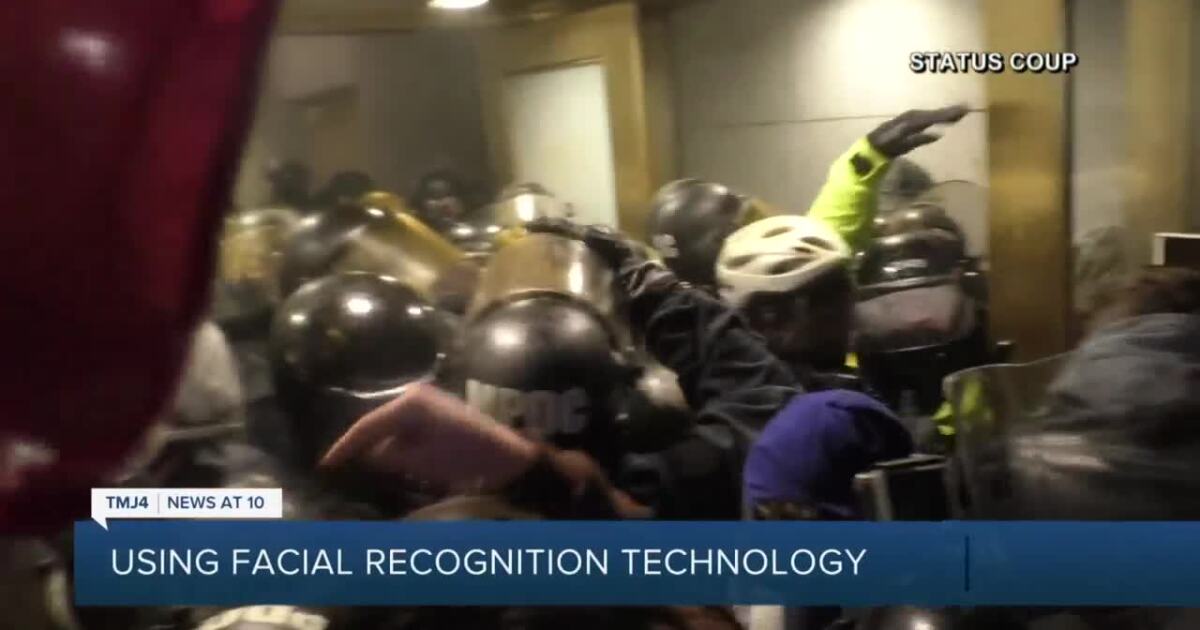
On January 06, America watched with shock as a mob of protesters stormed the gates in Washington, D.C. and invaded the Capitol buildings. For hours, the rioters looted and occupied America’s halls of power and though some were apprehended, many found a way to get out and get back home avoiding arrest. However, media coverage was substantial and some of the protesters were even bold enough to be caught posing for social media. Slowly, authorities are tracking them down, and Dr. Derek Riley, an expert at Milwaukee School of Engineering (MSOE) in the areas of computer science and deep learning, has been explaining how artificial intelligence (AI) technology that’s taught at MSOE is capable of enabling law enforcement's efforts to identify individuals from pictures. "With these AI systems, we’ll show it example photos and we’ll say, 'OK, this is a nose, this is an ear, this is Billy, this is Susie,'" Riley said. "And over lots and lots of examples and a kind of understanding if they guess right or wrong, the algorithm actually tunes itself to get better and better at recognizing certain things." Dr. Riley says this takes huge amounts of data and often needs a supercomputer—like MSOE's "Rosie"— to process it. To get a computer or software to recognize a specific person takes more fine-tuning, Riley says. He says your smartphone may already do this. "If you have a fingerprint scan or facial recognition to open up your phone, that’s exactly what’s happening," Riley said. "So, they’ve already trained a really large model to do all the basic recognition, and then you provide a device with a fingerprint scanning or pictures of your face at the end to be able to fine-tune that model to recognize exactly who you are." Riley says this technology isn't foolproof—he says human intelligence is needed at every step. He added we might be contributing to the data sources some of the technology needs by posting our pictures to social media. "Folks are uploading their own images constantly and that often is the source of the data that is used to train these really, really large systems," Riley said. January 14 – WTMJ, Ch. 4, NBC News The concept of facial recognition and the use of this technology in law enforcement (and several other applications) is an emerging topic – and if you are a reporter looking to cover this topic or speak with an expert, then let us help. Dr. Derek Riley is an expert in big data, artificial intelligence, computer modeling and simulation, and mobile computing/programming. He’s available to speak with media about facial recognition technology and its many uses. Simply click on his icon now to arrange an interview today.



The U.S. House of Representatives is set to vote Wednesday to impeach President Donald Trump for inciting the deadly insurrection at the United States Capitol last week. Many House Democrats have called for Trump’s resignation and urged Vice President Mike Pence to remove him under the 25th Amendment. However, with those two options looking extremely unlikely, Democrats are preparing to impeach the president for a second time. The question is how quickly will impeachment happen? On Monday, the House introduced a single article for "incitement of insurrection," which could allow a fast-tracked floor vote on impeachment by Wednesday. Upon receiving the article, the Senate must take it up either through a vote to dismiss the charge or, if that fails, moving ahead with a trial to determine whether to convict the 45th president. There’s been a lot of coverage – and a lot of opinions shared. If you are a journalist covering this ongoing story, that’s where our experts on this topic can help. Dr. Martha Ginn, professor of political science at Augusta University, is an expert on the judicial process, constitutional law and the U.S. Supreme Court. If you have questions, let Ginn share her expertise and experience to ensure your coverage is accurate. Ginn is available to speak with media about this topic – simply click on her name to arrange an interview today.


Lockdown teleworking impacts productivity of women more than men
When the COVID-19 pandemic led countries all over the world to lock down their economies in early 2020, there was an unprecedented global shift to teleworking in white collar sectors. A trend that had been gathering traction was suddenly and exponentially accelerated and many of the world’s largest corporations, Google and Facebook among them, have announced plans allowing employees to work from home well into 2021 or indefinitely. Remote working not only appears to work, but it appears to have a number of advantages—savings in office maintenance costs and time spent commuting, not to mention enabling organizations to safeguard productivity when there’s a major shock or crisis. But is it all good news? Or good news for all? A new paper by Ruomeng Cui, assistant professor of information systems and operations management at Emory’s Goizueta Business School, reveals an important drop in the productivity of female academics around the world in the wake of the COVID-19 lockdowns. In fact, in the ten weeks following the initial lockdown in the United States, their productivity fell by a stunning 13.9 percent relative to that of male colleagues. And it’s likely to do with the disproportionate burden of responsibility for household needs and childcare that persistently falls on women, Cui said. “We know that gender inequality persists both in the workplace and at home, and we were curious to see how the lockdown scenario would attenuate or exacerbate the situation for women,” Cui said. Anecdotal evidence from her own field—academia—showed that in the weeks following the stay at home mandate in March, there was an upswing of around 20 to 30 percent of papers submitted to journals. However, the overwhelming majority of these were being authored by men. Intrigued, Cui teamed up with Goizueta doctoral student Hao Ding and Feng Zhu from Harvard Business School to conduct a systematic study of female academics’ productivity and output during this period. “We knew that the lockdown had disrupted life for everyone, including academics. With schools and kindergartens closed and people taking care of work and household obligations at home, we intuited that women would be affected more than men as they are disproportionately burdened with domestic and childcare duties,” Cui said. For female academics this would theoretically be particularly acute, as the critical thinking that goes into research calls for quiet, interruption-free environments. To put this to the test, Cui and her co-authors created a large data set covering all the new social science research papers produced by men and women, across 18 disciplines and submitted to SSRN, a research repository, between December 2018 to May 2019 and then from December 2019 to May 2020. From this set, they were able to extract information on titles, authors’ names, affiliations, and addresses to identify their countries and institutions, as well as faculty pages to distinguish between men and women. In total they collected just under 43,000 papers written by more than 76,000 authors in 25 countries. Looking at the data, Cui and her colleagues were able to compute the total number of papers produced by male and female academics each week and then compare the productivity of both before and after the start of the lockdown. Prior to the pandemic, the 2019 period showed no significant changes in productivity in either gender. But in the 10 weeks following the shock of lockdown, a clear gap emerges between men and women, with female academics’ productivity falling by just under 14 percent in comparison to their male colleagues. Interestingly the effect was more pronounced in top-ranked research universities. This is likely because top schools require faculty to publish research as the primary requisite for promotion, so men would be motivated to continue authoring papers before and after the lockdown. These findings lend solid, empirical clout to the notion that women do take a hit to productivity when care and work time are reorganized, Cui noted. “We see clearly that women are producing less work as a consequence of working from home. In the field of academia, that has huge implications as achieving a permanent position, or tenure, is generally linked to your research output,” she said. “So, there is a serious fairness issue there. If women are producing less because the burden of household responsibility is greater for them than for men, then you’re likely to see fewer female academics get tenure through no fault of their own.” Indeed, one of the other findings of the study shows that while productivity fell, the quality of female-authored research measured by downloads and citations did not. Then there’s the issue of teleworking and gender. With a significant proportion of the world’s white-collar organizations still working from home and unlikely to head back to the office any time soon—and as many schools and childcare facilities remain closed due to the pandemic—Cui is concerned that productivity as a measure of value and a marker of success might mean the odds are further stacked against women. And not just in academia. “We looked at universities in particular, but our findings can really be externalized to any other industry because the underlying issues here are universal. So, with remote working becoming normalized, I think there’s a real onus on organizations of every type to think about how to mitigate these unintended consequences,” she said. “There needs to be more thought about how we measure value or potential of employees.” Cui calls for organizations and institutions to consider these factors when they evaluate male and female workers in the present context and looking to the future. Among the kinds of proactive moves they might consider are to make training programs for male and female employees that explore fairness and encourage a more even distribution of responsibility in the home and for children. “There’s nothing to be gained in prioritizing productivity as a tool for evaluation and just giving women more time, say, to produce as much,” Cui warned. “You’re just left with the same scenario of women doing more than their fair share. Solving this issue is really much more about being aware of it, getting educated about it, and changing your mindset.” If you are a journalist looking to cover this research or speak with Professor Ciu about the subjects of telework and productivity, simply click on her icon now to arrange an interview today.


Are vaccine passports legal in a post-COVID-19 era? Let our experts explain
As America and the world look to slowly round the corner of the safety measures enacted during the COVID-19 pandemic, the new coronavirus vaccines are giving hope of an eventual return to normal. However, with an active anti-vaccination movement afoot and many still skeptical of getting that essential poke in the arm, the World Health Organization said some government officials are suggesting the idea of vaccine passports. A simple piece of identification would end the uncertainty that comes with travel, work and the much sought-after leisure that often means crowded places and smaller spaces. The idea has already caught on in countries in Europe and South America. It may be the safety blanket many seek, but are vaccine passports actually legal? It is a question that’s beginning to get serious coverage. “Having proof of vaccination can be essential for a number of sectors other than health, but we cannot overlook the potential discriminatory consequences that may arise,” said Dr. William Hatcher, an expert in public policy and interim chair of the Department of Social Sciences at Augusta University. Another idea being floated is immunity passports, but Hatcher suggests¬ allowing only people with immunity to work might disadvantage those who haven’t gotten sick or those without the antibodies to prove it. It’s as if, in the eyes of their employer, their lack of infection constitutes a disability. The inequality that immunity passports could foster in these situations may be illegal under the Americans with Disabilities Act. There are also other ethical, practical, and cultural aspects to consider as well. If you are covering this emerging topic and are looking to know more, our experts can help. Dr. Hatcher is a professor of political science and interim chair of Augusta University’s Department of Social Sciences. He is an expert in the areas of public administration and social, economic, and political institutions in local communities. Hatcher is available to speak with media regarding the concept of vaccination and immunity passports. To arrange an interview, simply click on his name.

Political playoffs – if you are covering the run-off election in Georgia, let our experts help.
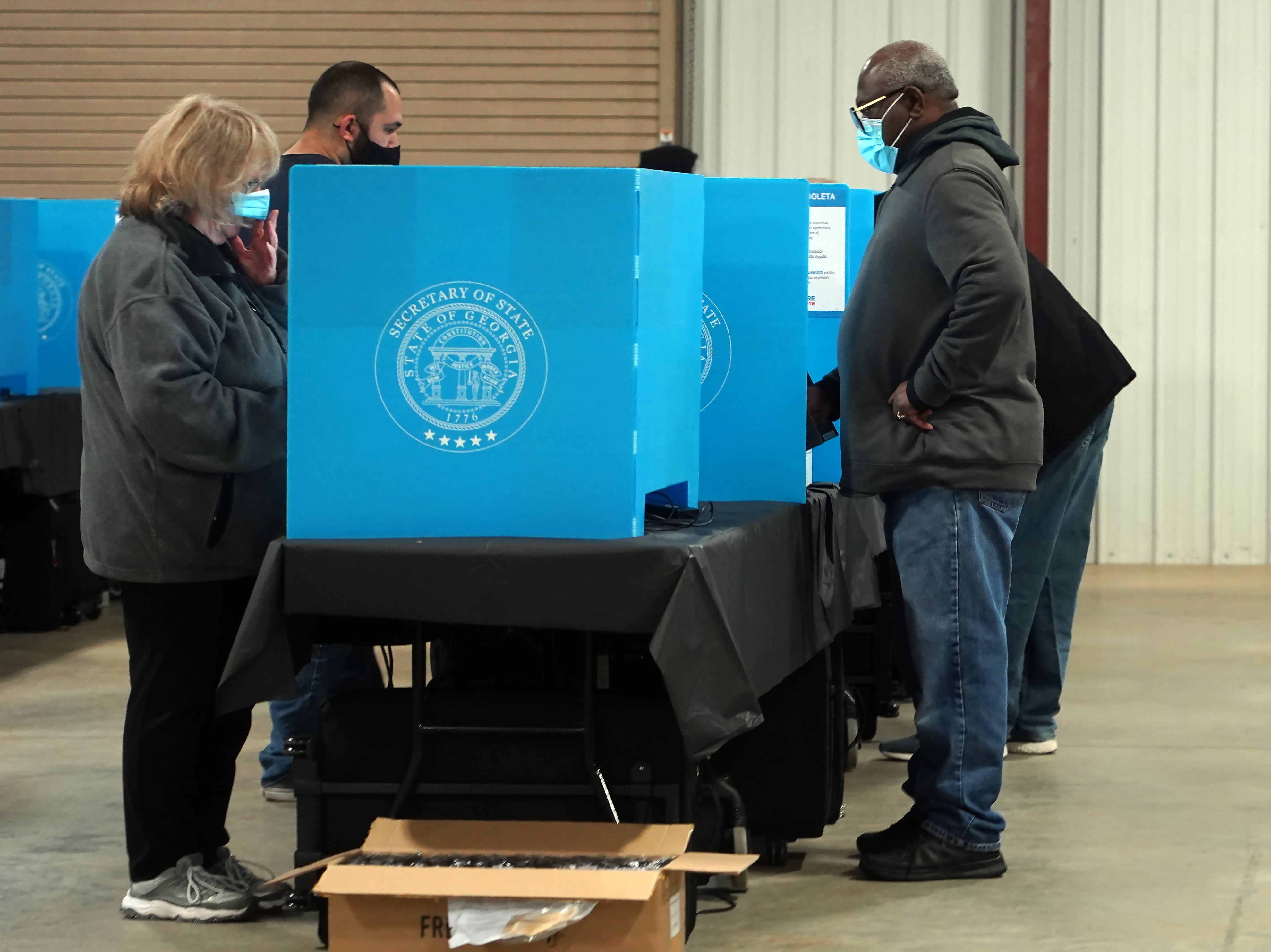
It’s a political junkie’s dream. After a drawn-out and contentious presidential election – the question over who will hold the balance of power in Washington now rests in two Georgia senate races that have each gone into overtime. There’s a lot on the line for both parties and especially President-elect Biden, who faces high expectations from not just Americans, but from various factions across the broad spectrum of the Democratic party who feel owed for their part in narrowly defeating President Donald Trump. In the final push before the crucial Georgia U.S. Senate run-offs on Tuesday, Republicans and Democrats share this closing message: The stakes can’t be any higher, and the fate of each party’s agenda rests on the two races. Incumbent GOP Sens. David Perdue and Kelly Loeffler face respective challenges from Democrats Jon Ossoff and Rev. Raphael Warnock. The races will decide which party controls the Senate, and thus, the extent to which Democratic President-elect Joe Biden can enact his legislative priorities. “The future of the country is on the ballot here in Georgia,” Loeffler told Fox News on Tuesday. If at least one Republican candidate wins their race, the GOP will maintain control of the upper chamber. If Ossoff and Warnock win, the Democratic caucus and GOP would each have 50 members, giving Vice President-elect Kamala Harris the tiebreaking vote. January 04 - CNBC If you’re a journalist covering Tuesday’s run-offs, then get in touch with our experts to help with your questions and stories. Dr. Rosalyn Cooperman, professor of political science at the University of Mary Washington and member of Gender Watch 2018, is an expert on women in politics. Dr. Cooperman is available to speak to media – simply click on her icon to arrange an interview today.



Network Science Offers Key Insights into Polarization, Disinformation, and Minority Power
People tend to think of the arena of politics as being driven by human decision and emotions, and therefore unpredictable. But network scientists like Boleslaw Szymanski, a computer science professor at Rensselaer Polytechnic Institute, have found that the country’s political activity – from American society’s ever-growing partisan divide to its grappling with the spread of misinformation online – can be explained by abstract and elegant models. These models provide insights — and even answers — to a number of pressing questions: Is increasing access to information driving us apart? Can an entrenched minority ultimately prevail? Could structural changes be made that insulate us from misinformation and reduce the polarization that divides us? Szymanski studies the technical underpinnings of our choices, how we influence one another, and the impact of the algorithms we rely upon to navigate a growing ocean of information. His work has yielded fascinating insights, including research on how a committed minority will overcome less determined opposition and the development of a parameter to determine what drives polarization in Congress. Through his research on the influence of minority opinions, Szymanski found that when just 10 percent of the population holds an unshakable belief, it will ultimately be adopted by the majority of the society. “When the number of committed opinion holders is below 10 percent, there is no visible progress in the spread of ideas. It would literally take the amount of time comparable to the age of the universe for this size group to reach the majority,” said Szymanski, a computer science professor at Rensselaer Polytechnic Institute. “Once that number grows above 10 percent, the idea spreads like flame.” In his present work, Szymanski is researching tools for measuring the level of polarization in specific news sites, search engines, and social media services, and developing remedies, like algorithms that offer better data provenance, detect misinformation, and create internal consistency reasoning, background consistency reasoning, and intra-element consistency reasoning tools. “Informed citizens are the foundation of democracy, but the driving interest of big companies that supply information is to sell us a product,” Szymanski said. “The way they do that on the internet is to repeat what we showed interest in. They’re not interested in a reader’s growth — they’re interested in the reader’s continued attention.” With the political environment becoming increasingly bitter and dubious information becoming ever more prevalent, Szymanski is available to discuss his research on polarization, disinformation, and the power of a committed minority.
