
Experts Matter. Find Yours.
Connect for media, speaking, professional opportunities & more.

Expert Insight: The Hidden Costs of Staying Neutral
Considering the number of hot-button issues and divisiveness in American culture, choosing a middle-of-the-road attitude might be seen as the best way to navigate an often volatile environment. But what about those individuals who choose neutrality as a means of staying below the radar and, thereby, avoiding the need to take any action? This is the question that Laura Wallace, assistant professor of organization and management at Emory’s Goizueta Business School, and coauthors ask in their new paper, The Preference for Attitude Neutrality. Published in the Journal of Experimental Psychology: General, the researchers explore individuals with a preference for neutrality and how their uncompromising commitment to neutral opinions, not only discourages rigorous debate but could have a deleterious impact on society. Emory Business recently caught up with Wallace to discuss her research. Emory Business: What sparked your interest in the preference for neutrality? Wallace: When we think about the problems in the world, often people point to too many extreme opinions as the source of much social ill, and, of course, they can be. But, when I thought about a lot of the issues that I cared about, like addressing climate change or gun violence, I felt that sometimes the issue was too much neutrality in the face of issues that were themselves pretty extreme. When I talk about this work, people can often picture someone who seems like a “Pref Neutral,” as we have affectionately nick-named them, that is someone who in the face of information suggesting that there is an extreme problem is not moved to address the issue. I could think of people in my life who had these reactions, and I was interested in understanding more about them. Emory Business: How did you identify these individuals? Wallace: We developed a scale to assess the extent to which people view neutrality as truer, more socially desirable, and more moral. For example, we ask people how much they agree with items like, “If you have all the facts about a topic, your opinion will generally end up somewhere neutral” and “There is something noble about remaining in the middle about controversial topics.” The more someone agrees with these items, the more we would say they have a preference for neutrality. Emory Business: How does this study fit in with your larger body of work? Wallace: I generally think of my program of research as studying the “psychology of social change.” Within that broad category, I study 1) how to change minds and build trust and 2) how to address societal disadvantage. I view this work as fitting in the first bucket about how we change people’s minds. What interests me about people who are high in the preference for neutrality is the fact that they seem to NOT change their minds in the face of extreme information suggesting that they should. These individuals represent a significant barrier to our ability to address pressing issues, so I view this work as very much tied into the overarching goal of my research program to understand social change (or the lack thereof). Laura Wallace is an assistant professor of organization and management at Emory University’s Goizueta Business School. Wallace studies how to build trust with implications for addressing societal disadvantage, changing minds, and fostering growth. View her profile Emory Business: Would you describe a preference for neutrality to be a mindset, strategy, or attitude/value? Wallace: I think of the preference for neutrality like an ideology or value system that guides people’s reactions across many issues and situations. Emory Business: Talk about the study design. It’s quite detailed and multilayered, with eight hypotheses and six different measures to account for potential bias that were then randomized to create different questionnaires given to a large pool of individuals. How did the coauthors agree on the structure? Wallace: First, I should take the opportunity to shout out Thomas Vaughan-Johnston, who led this work. He is a faculty member at Cardiff University and is just a very thoughtful, interesting researcher, and he’s great to work with. Second, there are a number of studies in the paper. For each, our research team worked together to design and interpret the studies. The paper paints a relatively negative view of Pref Neutrals. We did take measures to resist bias in our design. For instance, we didn’t just ask people how much they dislike extremists (which would have been biased towards making those with a preference for neutrality look bad), but also asked about attitudes towards neutrals (where those with a preference for neutrality may seem like “the nice people”). We are now starting research on contexts where a preference for neutrality can offer some advantages, hopefully without artificially striking a false balance. For instance, we are considering whether they can help reduce group polarization effects, especially where groups drift towards radicalism in conversation. Also, we have some preliminary data where they seem to be a bit more accurate when detecting neutral emotions and attitudes in others, which is a remarkable plus side. Basically, we think the preference for neutrality is a social concern, but we are trying to be fair-minded when considering why they think this about neutrality and when this trait is useful for the world. Emory Business: In the study, you note that preference for neutrality can be a sign of arrogance and that Pref Neutrals are uninterested in learning more or changing their stance. How is this arrogance exhibited? Wallace: I would say that they are more close-minded than arrogant and that they don’t seem to be particularly thoughtful. One way we have assessed this is by measuring their “intellectual humility,” which essentially captures how much people recognize the limits of their own perspectives and are open to changing their minds. Pref Neutrals tend to score low on intellectual humility. They also score a little low on the “need for cognition,” which captures how much people like to think. Emory Business: In one section it reads: “preference for neutrality (preference for extremity) should relate to seeing other people as moral, competent, and likeable, when those individuals have generally neutral (extreme) opinions.” Does this mean that they align with people who have their same opinion structure? Wallace: We find that people who score high on the preference for neutrality scale tend to have more favorable impressions of others who are more neutral and tend to be more persuaded by others who are labeled as holding neutral attitude positions. Emory Business: How would one identify this trait in a person, particularly, when the research shows they tend to self-censor? Wallace: In general, they are really hesitant to take stances on issues or they tend to avoid taking sides or expressing strong positions. And yes, they tend to self-censor, meaning they often avoid sharing their opinion at all. Emory Business: How does this preference for neutrality play out in a political sense? Specifically, if they are averse to extremes would they vote based on their values? Wallace: We have a lot of evidence that Pref Neutrals tend to be political centrists. We don’t have evidence for this, but I suspect that they sit out a lot of elections, and to the extent that they do vote, they favor more moderate candidates. They probably would not vote for a position or individual with an extreme view unless it was framed as neutral. This may sound like a silly, cerebral point, but I actually think it’s critical to the point we are making, as what is viewed as “extreme” in a given time is often socially determined. For example, now it would be viewed as an extreme stance to support slavery. However, in the early 1800s in the U.S., it would have been viewed as an extreme stance to oppose slavery. I imagine at the time, many Pref Neutrals were supportive of slavery as a means of being politically moderate. Emory Business: What was the most interesting result in this study for you? Wallace: We find that if you give Pref Neutrals the exact same information but label it as extreme or neutral, they are more persuaded by the exact same information when it is labeled as neutral. This results in a kind of ironic effect where they actually end up with a more extreme opinion when information has been labeled as neutral. Emory Business: Research wise, what’s next for you? Wallace: There are a few ways that we are following up on our work that I am excited about: First, we’re trying to understand more about how Pref Neutrals maintain neutral opinions in the face of extreme information. So, we are giving Pref Neutrals true, extreme facts, and then examining their thoughts to determine how they resist taking the extreme positions information would suggest that they should. Second, we thought that Pref Neutrals would be particularly likely to trivialize social issues, to say they are unimportant. We are actually finding that they rate all social issues as extremely important, which we are trying to understand more about. We suspect they might do this as a strategy to avoid taking action on social issues. If stubbed toes and human trafficking are both “extremely” important, then there are just too many issues to take action on, and so they are able to justify a lack of action. Third, we are interested in understanding what it is like to make decisions in a group with a Pref Neutral. There is a lot of evidence that groups tend to make bad decisions because people want to agree with each other. This might actually be an area where Pref Neutrals would shine – the fact that they don’t want to take a stance may force groups they are a part of to really think things through and make better decisions. This is all super preliminary, but it reflects the exciting work ahead and that there is much more to understand about these folks!



The Biggest Study Yet on School Cellphone Bans Shows Results Aren’t So Simple
As more schools move to restrict or completely ban smartphones in classrooms, the largest study ever conducted on school cellphone bans is challenging assumptions about what these policies actually achieve. The new U.S. study, involving roughly 4,600 schools and researchers from institutions including Stanford, Duke, the University of Michigan, and the University of Pennsylvania, found that strict cellphone bans dramatically reduced phone use during the school day. In some schools, classroom phone use dropped from 61 percent to just 13 percent. It's a popular topic and media coverage of the results has been extensive. But the findings became more complicated from there. Researchers found little immediate evidence that phone bans significantly improved test scores, attendance, classroom attention, or bullying rates. Some schools even saw short-term increases in student discipline issues and declines in student well-being immediately after bans were introduced. Still, the study suggested that longer-term outcomes may improve as students adjust and schools refine enforcement strategies. Teachers consistently reported fewer classroom distractions and stronger learning environments. Mizuko Ito is a cultural anthropologist of technology use, focusing on children and youth's changing relationships to media and communications. She recently completed a research project supported by the MacArthur Foundation a three year ethnographic study of kid-initiated and peer-based forms of engagement with new media. View her profile The findings arrive as governments across North America continue expanding school cellphone restrictions amid growing concerns about distraction, screen addiction, anxiety, and the impact of social media on youth mental health. The study highlights a growing debate among educators, parents, and researchers: while limiting phone access may reduce distractions, the relationship between young people, technology, mental health, and learning is far more complex than simply removing devices from classrooms.



Professor James Sample Provides National Commentary on Voting Rights, Key Supreme Court Cases
Professor James Sample of the Maurice A. Deane School of Law at Hofstra University continued to serve as a prominent national commentator this month, appearing across ABC News, MS NOW (formerly MSNBC), SiriusXM, and Newsday to analyze fast-moving developments in election law, constitutional doctrine, and executive power. Across these appearances, Professor Sample focused on the evolving legal and practical implications of the SAVE America Act, including its potential burdens on married voters and broader access concerns. He also examined a series of high-stakes Supreme Court matters, including disputes over mail-in ballot deadlines and the constitutional debate surrounding birthright citizenship, offering insight into how the Court’s rulings could reshape election administration and individual rights. In addition, Professor Sample provided analysis of expanding presidential authority following the Court’s immunity ruling, situating current developments within a broader conversation about the scope and limits of executive power.


The Political Ripple of Iran at Home
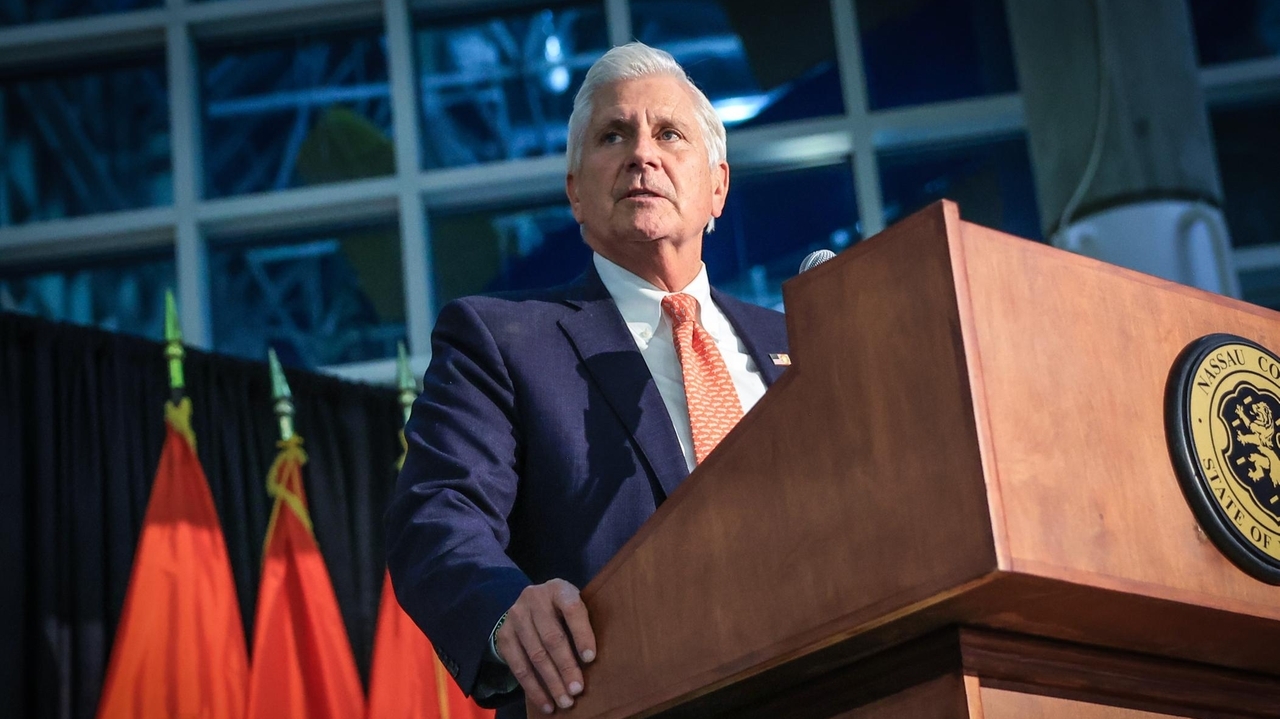
Lawrence Levy, associate vice president and executive dean of the National Center for Suburban Studies, provided analysis to Newsday on how national political dynamic are shaping the electoral landscape on Long Island ahead of the midterms. In coverage of the ongoing U.S. military operation in Iran, Levy highlighted the political ripple effects of the conflict at home. While the war itself has prompted debate over national security and economic consequences such as rising gas prices, Levy emphasized its electoral implications, noting that voter perceptions of President Trump’s performance are likely to be the dominant factor in upcoming congressional and state races. He pointed out that even though the president will not be on the ballot, his influence will loom large, particularly among swing voters and segments of the Republican base.


When the Cheque Stops Coming: Canada Post, Seniors, and the Quiet Cost of Modernization
There’s an old line that has saved more awkward conversations than most of us care to admit: “The cheque is in the mail.” It has been used to buy time, soften bad news, and occasionally stretch the definition of truth. But it worked because, deep down, everyone believed the premise. The mail would come. Eventually. Reliably. Without negotiation. That quiet assumption carried a surprising amount of weight — especially for the 79-year-old navigating an icy driveway. Now, it seems, even that assumption is up for review. I understand the economic argument. Big Losses: The official Canada Post 2024 Annual Report shows they have racked up $3.8 billion in losses since 2018. Lower Letter Volumes: The shift to email has hit Canada Post hard. Letter volumes have dropped dramatically. Less in the mailbag equals far less revenue to offset costs. Increasing Costs Factors: The number of Canadian addresses continues to grow. The math is not subtle, and change is clearly required. But this deserves more attention. Modernization is not the problem. Thoughtless modernization is. Cuts to Canada Post Service May Not Land Equally Not all Canadians experience change the same way, and this particular shift will land unevenly if proper consultation isn't done. We're getting older: According to Statistics Canada, nearly one in five Canadians is now over the age of 65, and that proportion continues to rise. A meaningful share of those older Canadians also live outside major urban centers. We're spread out geographically: Depending on how you measure it, we're also far apart compared to most other countries. According to the Public Health Agency of Canada & the Vanier Institute of the Family, roughly one-quarter to one-third of seniors live in rural or small communities, where services are more dispersed, and distances are longer. Rural Canada is also aging faster than urban Canada. In other words, the places most likely to lose convenient access are often the places with the highest concentration of people who rely on it. This is not a niche issue. It is a structural one. The Real Issue Isn’t the Mailbox. It’s the Journey. Policy discussions tend to reduce this to a simple question of location. Move the mailbox, problem solved. But the issue is not where the mailbox is. The issue is whether someone can get to it safely, consistently, and without turning a routine task into a risk calculation. I am thinking of a client. She is 79, sharp, organized, and fully in charge of her life. Her bills are paid on time, her paperwork is immaculate, and she has no interest in becoming dependent on anyone. In the summer, she walks daily without a second thought. In the winter, she studies the ground before every step. Ice changes everything. A short walk becomes a decision. A slightly longer one becomes a concern. For her, a community mailbox is not a mild inconvenience. It is a variable she now has to manage. That is the difference between designing for the ideal user and designing for the real one. Mail Still Matters More Than We Pretend There is a quiet assumption that everything important has already moved online. That assumption works well for people who are comfortable navigating digital systems. It does not work for everyone. For many seniors, mail remains the backbone of how they manage their lives. Pension statements, government notices, insurance documents, tax slips, prescription information, and replacement banking cards still arrive in envelopes, not inboxes. And yes, occasionally, an actual cheque. The phrase “the cheque is in the mail” may be fading, but the need behind it has not disappeared. For some Canadians, that envelope still represents income, security, and peace of mind. Digital systems are efficient when they work. When they do not, they can be frustrating and, at times, risky. One expired password or one convincing phishing email can turn a simple task into an afternoon of confusion. It is easy to underestimate the value of paper systems when you no longer rely on them. It is harder to replace them when you still do. Efficiency Has a Way of Moving Downward There is a pattern in modern service design worth naming. Call it effort laundering: the practice of shifting work from institutions to individuals in the name of efficiency. We see it in banking, where branches quietly disappear. We see it in healthcare systems that assume patients are comfortable online. We see it in customer service models built around apps and automated menus. And now we may see it in mail delivery. Where the service moves from your front door to a location you must reach yourself. For many Canadians, this is manageable. For others, it is not. When the burden of efficiency lands on those least able to absorb it, the system may be efficient on paper but inequitable in practice. If Change Is Necessary, It Should Be Smarter I understand that change is necessary. The cost differences between door-to-door delivery and centralized delivery are real, and the financial pressures on Canada Post are not going away. But the choice is not between doing nothing and eliminating access. There is a middle path, and other countries have already explored it. In Norway, proposed postal reforms included reducing delivery frequency to once per week. Following public consultation, the government stepped back earlier this year from that plan and maintained more frequent delivery, recognizing the impact on certain populations (Norwegian Ministry of Transport, 2026). In the United Kingdom, the regulator Ofcom has examined reducing delivery to 5 or even 3 days per week as a way to manage costs while preserving universal service (Ofcom, 2025). Research from Sweden and New Zealand shows that older adults rely more heavily on traditional mail systems than the general population, particularly for official and financial communication (Crew & Kleindorfer, 2012; New Zealand Ministry of Business, Innovation and Employment, 2021). These examples point to a practical conclusion. Reducing frequency can achieve savings without removing access. Eliminating access altogether is a different decision with different consequences. Canada Is Not Denmark Denmark has gone further than most, effectively ending traditional letter delivery after a dramatic decline in mail volumes of roughly 90 percent since 2000. The move is often cited as a model of modernization. It should be considered with caution. Denmark operates within a context of high digital adoption, a compact geography, and milder weather conditions. Notably, Canada’s digital divide among seniors is more pronounced than Denmark’s, meaning the proportion of older Canadians who cannot easily go online is higher to begin with. Even so, a significant number of Danish residents have been classified as "digitally exempt" and continue to rely on alternative arrangements to receive essential communications (PostNord, 2025). Canada is not Denmark. Our geography is larger, our winters are harsher, and our population is more dispersed. Also, we play better hockey. If Home Delivery Changes, People Will Adapt Canadians are remarkably adaptable, and seniors are often the most resourceful of all. If home delivery is reduced, practical solutions will emerge. Neighbours will organize. Families will build mail pickup into regular visits, turning a logistical task into a reason to connect. Some seniors will finally set up paperless billing, one account at a time. These are workable adjustments. But they should be supported by thoughtful policy, not forced by avoidable design choices. The Problem With Accommodation Accommodation programs will likely exist, but their effectiveness depends on how easy they are to access. Systems that require people to search, apply, document their needs, and follow up repeatedly tend to favour those with the time and persistence to navigate them. The seniors who most need support are often the least inclined to engage in that process. The real test is not whether accommodation exists. It is whether it is simple, visible, and available before a problem becomes a crisis. This Is About More Than Mail At its core, this debate is not really about mail. It is about independence. It is about whether people can continue to manage their own lives without unnecessary friction. It is about whether public systems are designed for real users rather than ideal ones. The ideal user is mobile, tech-savvy, and well-supported. The real user may be older, living alone, and quietly determined to remain independent. That determination deserves to be supported, not complicated. Modernization, With a Memory Home delivery is not just a legacy feature. For many seniors, it remains a small but meaningful part of how life stays organized and manageable. When that support disappears, the burden does not disappear with it. It shifts to individuals, to families, and to systems that will eventually feel the impact. If the greatest disruption falls on those least able to absorb it, the design needs a second look. And About That Cheque... We may be moving toward a world where fewer things arrive by mail. That is probably inevitable. But before we retire the idea entirely, it is worth remembering why that old line worked in the first place. “The cheque is in the mail” was believable because the system behind it was dependable. It showed up. It connected people. It did its job quietly and consistently. Modernization should aim for the same thing. Not nostalgia. Not resistance to change. Just reliability that works for everyone. Because if the day comes when the cheque is no longer in the mail, we should at least be able to say that whatever replaces it works just as well for the people who need it most. Ideally, without requiring ice cleats, a flashlight, and a willingness to sign a waiver. Sue Don’t Retire…ReWire! My Book is Now Available for Pre-Order I hope you will consider pre-ordering a copy of Your Retirement Reset for you, a friend or loved one. It's available September 8, 2026 - You can now order on the ECW Press site here. And if you love supporting Canadian booksellers, please also check with your local independent bookstore. Most can easily order it for you.



What the Meta/YouTube Verdict Still Misses About Youth Social Media Harm
The verdict against Meta and YouTube has reignited debate over addictive design and youth social media harm. But according to Harshi Sritharan, clinician and digital dependency expert with Offline.now, one key issue is still being overlooked: digital emotional regulation. Sritharan works with young people and families dealing with the real-life fallout of harmful platform design, including compulsive scrolling, sleep disruption, body-image distress, emotional dysregulation, and conflict at home. “The goal isn’t to remove technology from their lives entirely,” says Sritharan. “It’s to help young people and their families build healthier relationships with it.” She can speak to why regulating platform design matters, why digital resilience and online emotional regulation should be treated as core life skills, and why simply restricting access without healthier alternatives can push vulnerable youth into harder-to-monitor spaces. As news coverage focuses on liability and platform accountability, Sritharan offers a frontline clinical perspective on what these harms actually look like inside homes - and what young people, parents, schools, and policymakers may still be missing. ABOUT THE EXPERT Harshi Sritharan is a clinician and digital dependency expert with Offline.now, a digital wellness platform connecting individuals and families with therapists, coaches, and social workers who specialize in healthier relationships with technology.




ExpertSpotlight: The Surprising (and Slightly Dark) History of Valentine’s Day
Valentine’s Day may now be synonymous with chocolates, flowers, and heart-shaped everything, but its origins are far more complex, blending ancient Roman traditions, Christian martyrdom, and medieval storytelling. What began as a mid-winter festival tied to fertility and renewal eventually evolved into a celebration of romantic love - one shaped as much by poets and pop culture as by saints and religious history. Ancient Roots: Before Romance, There Was Ritual Long before Valentine’s cards, ancient Romans celebrated Lupercalia, a mid-February festival focused on fertility, purification, and the coming of spring. The event included symbolic rituals meant to ward off evil spirits and promote health and fertility, far removed from today’s candlelit dinners. As Christianity spread through the Roman Empire, many pagan festivals were re-interpreted or replaced with Christian observances, laying the groundwork for what would become Valentine’s Day. Who Was Valentine, Anyway? There isn’t just one Valentine. Historical records point to multiple early Christian martyrs named Valentine, the most famous being Saint Valentine, executed in the 3rd century CE. One popular legend claims he secretly performed marriages for young couples despite a Roman ban, acts that ultimately led to his execution. While historians debate the accuracy of these stories, they helped cement Valentine’s association with love, sacrifice, and devotion. Love Enters the Story: Medieval Poets Change Everything Valentine’s Day as a romantic holiday didn’t truly take shape until the Middle Ages. English poet Geoffrey Chaucer is often credited with linking February 14 to romantic love in his poetry, helping popularize the idea that it was the day birds chose their mates. From there, the connection between Valentine’s Day and courtly love spread across Europe, especially among the nobility, eventually giving rise to handwritten love notes and tokens of affection. From Handwritten Notes to Hallmark By the 18th and 19th centuries, Valentine’s Day had become a popular occasion for exchanging cards, flowers, and gifts. The Industrial Revolution made printed cards widely available, transforming a once-elite tradition into a mass-market celebration. Today, Valentine’s Day is a global cultural phenomenon, equal parts romance, commerce, and tradition, evolving to include friendships, self-love, and inclusive expressions of connection. It isn’t just about romance, it reflects how traditions evolve over time, absorbing layers of culture, religion, and storytelling. Understanding its history helps explain how societies redefine love, relationships, and celebration across generations. Our experts can help! Connect with more experts here: www.expertfile.com


Op-Ed: Crypto innovation needs stability, not shortcuts
After months of bipartisan negotiations, Congress continues to debate crypto market structure legislation, though questions remain whether common sense investor protections will be included in a new federal framework for digital assets. These proposals address fundamental questions aimed at providing needed clarity for digital asset markets, including around agency jurisdiction, and trust and confidence for mainstream adoption of modern markets. At times, the negotiations fractured over stablecoin yields, while provisions addressing decentralized finance and developer liability and the importance of investor safeguards have proven similarly divisive. The GENIUS Act prohibits stablecoin issuers from paying interest, recognizing such payments transform digital tokens into bank deposits requiring regulatory oversight. Platforms opposing restrictions on stablecoin yields prioritize business models generating revenue by offering deposit-like products without deposit-like regulation – an unfair regulatory arbitrage that disadvantages prudentially supervised banks, drains funding from local lending and introduces systemic risk without corresponding accountability. While these complex issues require careful calibration, there is no substitute for keeping investor-first reforms at the center of market structure legislation and prioritizing clear rules and robust investor safeguards that ensure digital assets benefit everyday investors and that America strengthens its economic competitiveness and leads the next era of financial innovation. Such impasses reflect a pattern where narrow interests prevail over broader economic considerations. Platforms opposing restrictions on stablecoin yields prioritize business models generating revenue by offering deposit-like products without deposit-like regulation. Banking institutions recognize that unregulated competition operating under lower-cost structures will drain funding from local lending. Both positions are economically rational for the parties involved. Neither serves the public interest in financial stability. Likewise, opponents argue that regulation stifles innovation, especially in decentralized finance. But this conflates innovation with regulatory arbitrage. Genuine technological progress creates value by improving efficiency or reducing costs. Regulatory arbitrage extracts value by exploiting gaps between economically equivalent activities subject to different rules. The alternative claim – that existing securities laws suffice – ignores that those frameworks were designed for different market structures. Securities laws assume centralized issuers. Commodity regulations assume physical delivery. Digital assets often fit neither category cleanly, creating uncertainty that inhibits legitimate activity while failing to prevent abuse. The choice is not between perfect legislation and the status quo but between establishing clear rules now or waiting for the next crisis. Financial regulation written in crisis tends toward overcorrection that stifles markets for years. Regulation developed deliberately better balances stability with innovation. Both House and Senate committee versions share core elements providing needed clarity on agency jurisdiction, registration requirements and disclosure standards. International considerations reinforce urgency. The European Union's Markets in Crypto-Assets regulation provides comprehensive frameworks for issuers and service providers. Continued U.S. regulatory ambiguity cedes leadership to jurisdictions that may not share American economic interests. More immediately, delay allows risks to accumulate as digital assets become interconnected with traditional finance through retirement plans and institutional portfolios. Recent market failures demonstrate why regulatory clarity and investor safeguards matter. The 2022 collapse of crypto exchange FTX revealed an $8 billion dollar deficit in customer accounts, spreading losses to pension funds and individual retirement accounts. Investigators identified conflicts of interest and leverage that standard regulation would have prevented. When Silicon Valley Bank failed, one major stablecoin had 8% of reserves tied to that institution. The crisis resolved only because uninsured depositors received public support. These episodes reveal a pattern where institutions operating outside prudential supervision accumulate risks requiring public intervention. Markets function best when rules are clear, consistently enforced and apply equally to all participants. This principle applies whether the market involves energy commodities, agricultural credit or digital assets. Louisiana's economy depends on community banks that understand local conditions and maintain lending relationships through economic cycles. When regulatory gaps allow deposit flight to lightly supervised alternatives, these institutions lose capacity to serve small businesses and agricultural operations. Congress has made meaningful progress on consensus-driven legislation. Completing that work would provide clarity allowing legitimate innovation while preventing regulatory arbitrage that creates systemic risk. The alternative is waiting for the next crisis to demonstrate why such frameworks were necessary.



As tensions escalate over the possibility of the United States seeking control of Greenland — including threats of annexation that have drawn international backlash — seasoned international relations expert Glen Duerr, Ph.D. offers critical context for journalists reporting on the diplomatic, legal, and geopolitical dimensions of this unfolding crisis. What's Happening In early 2026, high-level rhetoric from U.S. political figures has revived debates about Greenland’s status as a strategic territory. What began as discussions of acquisition has evolved into broad international concern over sovereignty, alliance cohesion, and Arctic security. Denmark and Greenland have reaffirmed their commitment to autonomy, while NATO allies and the European Union warn that any forceful move by the U.S. could undermine alliance unity and violate international norms — raising profound questions about territorial integrity, international law, and the politics of national interest. Dr. Glen Deurr's teaching and research interests include nationalism and secession, comparative politics, international relations theory, sports and politics, and Christianity and politics. View his profile here How Dr. Glen Duerr Can Help Journalists Cover This Story 1. Understanding Strategic National Interests Dr. Duerr’s expertise in international relations provides journalists with a framework to explain why Greenland has become such a focal point for U.S., European, and Arctic security policy — from its strategic location to its role in broader defense calculations. 2. Explaining Nationalism, Sovereignty & Self-Determination His research on nationalism and secession is especially relevant as Greenlanders and Danish authorities assert self-determination and reject external control, a central narrative in the current debate. 3. Contextualizing International Norms & Legal Constraints As commentators and policymakers discuss potential annexation, treaty obligations, and alliance commitments, Dr. Duerr can unpack how international law, treaties (such as NATO agreements), and norms against territorial conquest shape policy choices and diplomatic responses. 4. Making Sense of Geopolitical Fallout With European leaders labeling aggressive claims as a form of “new colonialism” and threatening economic countermeasures, Dr. Duerr can help journalists interpret how Greenland could become a flashpoint affecting transatlantic relations, alliance politics, and global perceptions of U.S. foreign policy. About Glen Duerr, Ph.D. Dr. Glen Duerr is a Professor of International Studies at Cedarville University with deep expertise in international relations theory, nationalism, secession, and comparative politics. He holds a Ph.D. in Political Science and Government and is widely available to speak with media on geopolitics, sovereignty disputes, and the intersection of national interest and international order. Why This Matters The evolving crisis over Greenland is not merely a diplomatic dispute — it touches on fundamental questions of sovereignty, global strategic balance, alliance credibility, and international legal norms. Dr. Duerr is positioned to help journalists go beyond headlines, offering analysis that clarifies motivations, stakes, and implications for audiences tracking one of the most talked-about international issues of 2026.


Have Yourself a Sustainable Christmas: Five Tips for a Greener Holiday
As the holiday season approaches, there are multiple ways that individuals and families can employ mindful practices – both meaningful and eco-friendly – that reduce waste and support local communities. From reusable wrappings to sourcing meals locally and composting the leftovers to smarter Christmas tree choices, Baylor University’s Joshua King, Ph.D., professor of English and director of Environmental Humanities minor, and Gary Cocke, senior director of sustainability, offer five tips for embracing sustainability during the holidays to help us reconnect with simpler, more meaningful traditions. Five Tips to Make Your Holidays Meaningful and Eco-friendly 1. Thoughtful gift giving: Choose long-lasting gifts or experiences that recipients will use and appreciate. "Quality over quantity is always a good rule of thumb," Cocke said. “Giving gifts that are useful and durable is best – and if you think of what the recipient would actually be able to use, it is, by its very nature, a more thoughtful gift.” He also encourages exploring and supporting local businesses and the local economy while shopping for unique presents. King added that crafting a creative letter, poem or handmade gift “take us back to the gratitude that should be at the heart of our celebration.” "Experiences can also be wonderful gifts – they often foster lasting memories and meaningful connections," Cocke added. For those looking to give back, donating to a nonprofit organization that resonates with the recipient’s values is a thoughtful gesture. 2. Eco-friendly gift wrapping options An easy way to reduce holiday waste is with intentional gift wrapping. "Choose recyclable paper wrapping over shiny, plastic-laden alternatives and reuse materials when possible," Cocke said. King added that reusable options like fabric and premade bags can be stylish and sustainable. Do-it-yourself wrapping paper can be a fun family activity. “Grab some plain paper and decorate with stamps and markers,” Cocke said. “Grandparents especially love the personal touch of kid-decorated paper." 3. Eat locally and compost Another way to support local businesses is by “sourcing meals locally and making use of leftovers or composting what can’t be eaten,” King said. The Baylor Community Garden offers compost buckets for families to collect their food waste for composting. 4. Greener Christmas tree choices When it comes to Christmas trees, the debate between real versus artificial trees comes down to longevity and disposal. "Artificial trees can be the more sustainable option if used for at least 10 years," Cocke said. "However, real trees are a good choice if properly composted after use." Cocke highlighted the importance of composting and local options for live tree recycling or mulching: 5. A sustainable future “The holidays invite us to practice gratitude and to celebrate relationships we cherish, often by giving gifts, and at Christmas, Christians express gratitude for the ultimate gift: God’s pledge of love to creation through the incarnation, becoming one with us as a fellow creature,” King said. “What better time for practicing a revolution of gratitude through gift-giving and celebrations that are light on the earth and that respect the many relationships by which we live?” Cocke hopes that Baylor’s strategic initiatives and local partnerships will continue to foster sustainable practices, from increasing access to composting to raising awareness about holiday waste reduction. "A little mindfulness can go a long way toward making the holidays more meaningful and sustainable," he said. Looking to know more or arrange an interview? Simply contact: Shelby Cefaratti-Bertin today.
