
Experts Matter. Find Yours.
Connect for media, speaking, professional opportunities & more.

Caught in a Rip Current? Virtual Reality May Help Save Your Life
A recent USA Today article highlighted a new rip current simulator in Florida designed to help beachgoers experience the power of these dangerous currents in a safe, controlled environment. The initiative reflects a growing focus on innovative approaches to water safety education as rip currents continue to account for the majority of surf rescues and numerous drowning deaths each year. Jase Bernhardt is an associate professor in the Department of the Geology, Environment and Sustainability at Hofstra University and also director of the department's MA Sustainability program. View his profile For years, Hofstra University researcher Dr. Jase Bernhardt has been exploring how technology can improve public understanding of coastal hazards. His work has led to the development of a virtual reality experience that places users in a simulated rip current, allowing them to experience the situation firsthand while learning the techniques needed to escape safely. The immersive training helps participants understand why fighting directly against a rip current can be dangerous and teaches the recommended strategies for reaching safety. Bernhardt's research focuses on weather hazards, risk communication, and public safety, with a particular emphasis on how emerging technologies can help people better understand and respond to real-world threats. His work offers valuable insight into the challenges of educating the public about rip currents and how innovative tools can improve preparedness and potentially save lives. As beaches across North America enter peak summer season, journalists covering beach safety, drowning prevention, coastal hazards, public education, or emerging safety technologies can connect with Dr. Jase Bernhardt for expert commentary on rip currents and the role virtual reality may play in helping people stay safe in the water.



My friend, Linda, retired at 66 after 35 years as a school principal. She had done everything right. Pension. Savings. No debt. A financial plan so airtight that her advisor framed it. On her first Monday of retirement, she drove to the grocery store, stood in front of the fancy olive oil, and put the $23 bottle back on the shelf. She grabbed the $10 one instead. That night, she called me, genuinely distressed. "Sue," she said, "I don't know how to spend the money." Linda is not alone. Her problem is not a math problem. It is a brain problem. Welcome to the neuroscience of aging and money, where biology is ageist, your prefrontal cortex is quietly retiring before you do, and the financial industry has somehow spent decades teaching you to save without ever explaining how to stop. What Is Actually Happening in That Brain of Yours As we age, the prefrontal cortex, the part of your brain responsible for planning, decision-making, and impulse regulation, starts to lose its edge. Meanwhile, the amygdala, the emotional centre, gains more influence. The result? Decisions that feel more emotional, more risk-averse, and sometimes more impulsive, depending on which way your wiring maps. Research published by Agarwal, S., Driscoll, J. C., Gabaix, X., & Laibson, D. found that financial decision-making peaks around age 53 and then declines steadily. This is not because older adults are less intelligent, but because the cognitive systems that weigh risk and reward begin to operate differently. Biology is ageist, as evidenced by the fact that your brain begins to change its relationship with money before you have even figured out what to do with it. A recent study from the National Bureau of Economic Research found that older adults are significantly more likely to make financial mistakes on both ends of the spectrum: excessive caution and excessive spending. The brain does not uniformly tighten the purse strings. It amplifies whatever pattern was already there. If you were a careful saver, you would become an Olympic penny-pincher. If you were a spender, you would become a one-person economic stimulus package. You become an exaggerated version of your younger self. Which is charming in theory and occasionally catastrophic in practice. Team Tight-Wad: All Chips, No Salsa You know the type. Actually, you might be the type. These are the people who still have their first chequebook, who compare per-unit prices for paper towels with the focus of a neurosurgeon, and who have not eaten at a restaurant without a coupon since the second Harper government. They are not cheap. They are terrified. As the prefrontal cortex loosens its grip on rational future planning, the fear of running out, what I call FORO (Fear of Running Out), takes the driver's seat. It whispers things like: what if the market crashes, what if I get sick, what if I live to 102 and run out of money at 99? And so the tight-wad doubles down. The $23 olive oil goes back on the shelf. The vacation gets postponed. The grandchildren's birthday gifts get slightly less grand. All chips, no salsa. You have built a pile of financial security and are sitting on it, stiff, virtuous, and mildly hungry, while the dip goes untouched. The tight-wad's greatest risk is not poverty. It is regret. Researchers at Cornell University found that people in the final chapters of their lives consistently reported regretting what they did not do far more than what they did. That trip not taken. That renovation not done. That bottle of good olive oil not purchased. FORO kept them safe and small, and the memory of that smallness stings. Team Spend-Thrift: All Salsa, No Chips On the other side of the spectrum, we have the spend-thrifts. As the emotional centres become more active and impulse regulation less reliable, some people lean into the "you only live once" philosophy. They book the trip to Portugal. They buy the golf club they do not need. They pick up the tab for dinner for eight people they met three hours ago. They are generous, spontaneous, and occasionally mystified by their bank statements. Research from Harvard Business School confirms that spending money on experiences and on others generates a meaningful boost in wellbeing. Spend-thrifts are onto something. The problem is sustainability. If the prefrontal cortex is not doing its job by asking "do we actually need this," the credit card bill arrives, and this is why we can't have nice things. Spend-thrifts also tend to underestimate longevity. A 65-year-old Canadian woman today can expect to live, on average, past 87. That is more than two decades of retirement to fund. All salsa, no chips is a delicious way to start a party and a terrible way to sustain it. The Gap Nobody Talks About: Permission to Spend Here is where I want to say something that gets almost no airtime in the financial services industry. We have an enormous education gap on this side of retirement. The entire financial industry, including the advisors, the institutions, the calculators, the seminars, and the books, has spent decades teaching people how to accumulate money. How to save. How to invest. How to sacrifice the latte. The message has been so relentless that it has rewired the way people feel about spending. And then retirement arrives. And nobody says: Okay, you can stop now. You can actually use this. This is what it was for. Switching from accumulation to decumulation requires real support, real education, and genuine permission. It is not a switch you flip. It is a gear shift that many people never make successfully. They arrive at retirement financially prepared but psychologically stuck. Honestly? The mother of all eye rolls is reserved for the financial institution that still calls it a savings account when you are 72. You are not saving anymore. You are managing a spending pool. Here is my modest proposal: once you turn 65, your savings account becomes your spending account. Not a radical rebranding. A psychological one. Words matter. Framing matters. Every time you log in and see the word "spending," your brain starts to normalize the idea that this money has a purpose, and that purpose is your life. Clients need financial therapists as much as they need financial planners. They need someone to look them in the eye and say: you earned this, you saved this, and spending it wisely and joyfully is not a failure of discipline. It is the entire point. Self-Awareness Is the Cheapest Investment You Will Ever Make Recognizing your pattern is step one. If you have not bought anything for yourself that was not on sale in the past calendar year, that is data. If you cannot remember the last time you checked your balance before a purchase, that is also data. Neither is a character flaw. Your brain is doing what it is supposed to do. Step two is to get the right support and give yourself explicit permission. A good retirement income specialist asks what you want your money to do for you now, not just how long it needs to last. A financial therapist helps you untangle your emotional history with money. At some point, you write it down: I am allowed to spend on things that bring me joy, keep me healthy, and connect me to the people I love. Post it somewhere you will see it when you are standing in front of the fancy olive oil. The Punchline Linda eventually bought the $23 olive oil. It took four months, a conversation with her advisor, and an honest chat with her daughter, who pointed out that Linda had about 90 jars of tomato sauce in her basement and no good reason to be rationing condiments. The brain changes that come with ageing are real. They are not personal failures. They are biology doing biology things, loudly and without your consent. But brains are also remarkably responsive to information, reframing, and the occasional kick in the pants from someone who loves you. You spent decades building financial security. The goal was never to die with the most money. It was a good life. All chips AND salsa. The full spread. The $23 olive oil on the good bread, with the people you love. Your spending account is waiting. Honestly, it has been waiting long enough. Because nobody wins a prize for being the richest person in the graveyard. Don’t Retire…Re-Wire! Sue



LSU Vet Med urges animal owners to be vigilant for New World screwworm
The LSU School of Veterinary Medicine is encouraging pet owners, livestock producers, horse owners, and veterinarians to remain vigilant following the recent detection of New World screwworm (NWS) confirmed cases in Texas and New Mexico. What is NWS? New World screwworm is a parasitic fly whose larvae, commonly known as maggots, feed on the living tissue of warm-blooded animals. Unlike most maggots that feed on dead tissue, screwworm larvae burrow into healthy flesh, causing painful wounds, severe infections, and, if left untreated, death. The pest can affect livestock, horses, wildlife, dogs, cats, and, in rare cases, people. Currently, there are no confirmed cases of New World screwworm in Louisiana, but awareness and early detection are critical. Animal owners should routinely inspect their animals for wounds and seek veterinary care immediately if they notice anything unusual. Government Response The U.S. Department of Agriculture and Texas animal health officials are actively responding to the detection through quarantines, surveillance, movement controls, and the release of sterile male screwworm flies to help stop the pest's spread. According to the Louisiana Department of Agriculture and Forestry, additional animal movement requirements are being implemented to reduce the risk of the pest entering Louisiana. These measures include enhanced health certificate requirements for certain animals entering the state from Texas, specifically lowering the validity of health certificates for animals entering Louisiana from 30 to seven days. Learn more at ldaf.la.gov. What to Look For Screwworm larvae most commonly enter through open wounds, surgical incisions, tick bites, the navels of newborn animals, or natural body openings such as the nose, ears, eyes, and genital regions. Animal owners should watch for: Wounds that fail to heal Bloody or foul-smelling discharge from wounds Visible maggots or egg masses in wounds or body openings Excessive licking, chewing, or irritation around a wound Signs of discomfort, depression, or reduced appetite There are currently no vaccines available to prevent New World screwworm. Rapid detection and response remain the most effective tools for preventing its spread. Diagnosis LSU Diagnostics (Louisiana Animal Disease Diagnostic Laboratory) is working with the Louisiana State Animal Health Officials (SAHO) for identification of all suspected cases. All confirmatory testing and reporting are being performed by the National Veterinary Services Laboratories, which will communicate results to the SAHO. What to Do if You Suspect NWS Animal owners who suspect New World screwworm should contact their veterinarian and the State Animal Health Official (SAHO) immediately at vetreports@ldaf.state.la.us or 225-925-3980. In Louisiana, the SAHO is Louisiana State Veterinarian Dr. Daniel Myrick (LSU 2001) with the Louisiana Department of Agriculture and Forestry. The public should be aware that New World screwworm does not affect the safety of the U.S. food supply. Federal inspection programs are designed to identify affected animals and prevent contaminated products from entering commerce. For more information about New World screwworm, visit Screwworm.gov or the LSU AgCenter webpage on NWS. About LSU Vet Med: Bettering lives through education, public service, and discovery The LSU School of Veterinary Medicine is one of only 33 veterinary schools in the U.S. and the only one in Louisiana. LSU Vet Med is dedicated to improving and protecting the lives of animals and people through superior education, transformational research, and compassionate care. We teach. We heal. We discover. We protect.


Tick Population Surge Raises New Lyme Disease Concerns
A surge in tick activity across Connecticut is renewing concerns about Lyme disease, prompting experts to examine the environmental factors driving tick populations, the challenges of prevention, and the future role of vaccines. Recently reported by CT Community News and CTNewsJunkie, researchers are seeing unusually high numbers of ticks infected with the bacteria that causes Lyme disease, with infection rates reaching levels typically not observed until peak season. Experts point to a combination of environmental conditions, including a snowy winter that insulated overwintering ticks, milder seasonal temperatures, and continued residential expansion into wooded areas where ticks thrive. According to Dr. David Banach, an infectious disease specialist and epidemiologist at UConn Health, the increase in Lyme disease cases is influenced by multiple factors. While improved reporting may account for some of the rise, environmental conditions continue to play a significant role in the number of infections seen by clinicians each year. “Lyme disease is chronically underreported.” Dr. David Banach Dr. David Banach is an infectious diseases physician who leads UConn Health's Infection Prevention Program and serves as hospital epidemiologist. View his profile The article also explores ongoing efforts to develop new Lyme disease vaccines. Dr. Paulo Verardi, head of UConn's Department of Virology and Vaccinology, notes that vaccines could become an important tool in reducing disease risk, but cautions that vaccination alone will not solve the broader challenge posed by expanding tick populations and changing environmental conditions. Effective control, he argues, will require a combination of public education, land management, and efforts to reduce tick abundance. “To really control tickborne diseases, there needs to be more land management, public education and a drop in the overall tick population.” Dr. Paulo Verardi Dr. Paulo Verardi is a virologist who specializes in vaccine research and development. He is a Department Head and Associate Professor at UConn and a member of the Center of Excellence for Vaccine Research. View his profile As Lyme disease continues to spread across North America, understanding the intersection of climate, ecology, public health, and vaccine development is becoming increasingly important. Researchers are working to better understand why tick populations are expanding, how disease risk is changing, and what strategies can best protect people who live, work, and spend time outdoors. Covering Lyme or other tickborne diseases? We can help. To learn more about Lyme disease, tick-borne illnesses, vaccine development, infectious disease trends, and public health preparedness, connect with experts such as Dr. David Banach and Dr. Paulo Verardi, whose research and expertise help explain the growing challenges posed by tick-borne diseases.


Make your university the visible authority
DATA & TIME Monday, June 22, 2026 - 11:00 am EDT (1 hour) Your university has the expertise. The question is whether the world can find it. In this webinar, we'll show you exactly how leading institutions are building topical Authority Hubs that get their faculty in front of journalists, students, and partners at the moments that matter most. We'll walk through three real examples: Performing Arts -- Carnegie Mellon University The exclusive higher education partner of the Tony Awards since 2014. With 60+ alumni wins and 15 consecutive years of nominations, CMU built an Authority Hub that makes decades of genuine institutional strength finally visible and media-ready. Papacy & Catholic Studies -- Villanova University When Pope Leo was elected, Villanova had qualified scholars ready. Their topical hub connected journalists with the right experts within hours -- showing what it looks like when a university moves at the speed of the news cycle. Sports Events & Research -- University of Delaware Multiple topical hubs built around major events and enduring institutional strengths -- serving media relations, prospective students, and research partners with one repeatable, scalable approach. WHAT YOU'LL LEARN How to identify the moments and topics where your institution already has authority How to structure faculty expertise so journalists and AI platforms can find it How to go from idea to live hub fast -- without technical resources or coding What makes an Authority Hub perform over time, not just at launch WHO SHOULD ATTEND University communications and media relations teams, research communications leads, and anyone responsible for faculty visibility and institutional reputation.



Georgia Southern recognized by Forbes on list of America’s Best Employers for Company Culture 2026
Georgia Southern University has received high honors from Forbes in recognition of its commitment to institutional culture with the recent announcement of the publication’s list of “America’s Best Employers for Company Culture 2026.” Out of 600 companies on the list, Georgia Southern impressively landed in the top tier at #33. “At Georgia Southern, we prioritize investing in our people, being accountable leaders, and fostering an environment of high performance, evidenced by results aligned with institutional goals and ultimately, student success. It is that alignment and commitment to continuous growth (growing ourselves to grow others) that creates a positive institutional culture at Georgia Southern University,” said Georgia Southern University President Kyle Marrero. “The successful implementation of our strategic plan and the achievement of our institutional goals, aligned with our strategic priorities, are only accomplished if each and every faculty and staff member is actively engaged.” This is the second year Forbes has published the list, and the University was recognized this year for the first time. Representing the education industry, Georgia Southern was second on the list behind Columbia University (#10). Marrero emphasized that persistent efforts to strengthen institutional culture must produce measurable results that positively impact faculty and staff. To support this, the institution tracks its initiatives, evaluates them through ongoing feedback, and uses key performance indicators to assess their effectiveness. “A positive culture is maintained through continuous communication and connecting to the ‘why’ and ‘how,’ empowering the collective intellect to help be part of solving the challenges (solve and evolve),” he added. “We are in this together, always focused on the ‘why’ of student success!” Georgia Southern University has also been recently recognized on the Forbes lists for America’s Best Large Employers 2026 (#171), America’s Best Employers by State 2025 (#58 – Georgia), and America’s Top Colleges 2026 (#243 in Research Universities and #100 in the South). Looking to know about these awards or Georgia Southern University? Simply contact Georgia Southern's Director of Communications Jennifer Wise at jwise@georgiasouthern.edu to arrange an interview today.


Georgia Southern selected as Census Bureau hub
Georgia Southern University’s Statistical Consulting Unit (SCU) in the College of Science and Mathematics has been selected as the Census Bureau Higher Education Consortium – Southern Hub. The partnership places the University as an access point between regional experts and the public to make the vast data of Census reports usable for research, business and individual discovery. SCU director Divine F. Wanduku, Ph.D., says that cooperation is the key element of the program. “We want to facilitate high-level access to this data and the tools to apply it,” noted Wanduku. “We are the liaison between other universities, the government and those who could use this information if they can learn how it works.” As a regional Census hub, Georgia Southern will host a series of webinars. Experts from Georgia Southern, partner universities and the Census Bureau will address specific methods to access and analyze otherwise overwhelming data. Wanduku says the partnership opens up development opportunities for everyone involved. “This will help students prepare for jobs in the federal government or anywhere that uses government data because they get to try it out themselves,” said Wanduku. “It also helps to show how faculty are able to impart knowledge of research and then make recommendations to the Census Bureau about what works. So the federal government helps higher education institutions provide access to the raw material and then we help the Census Bureau by making recommendations on where our research is going and what data is most useful.” Beyond the webinar series, Wanduku sees the partnership as a stepping stone to future collaborations. “This expands our network with everyone from other universities to contractors,” said Wanduku.”We get to meet each other and find out what we’re all working on separately and turn it into projects we can work on together.” Looking to know more about the Census Bureau Higher Education Consortium or Gerogia Southern University? Simply contact Georgia Southern's Director of Communications Jennifer Wise at jwise@georgiasouthern.edu to arrange an interview today.
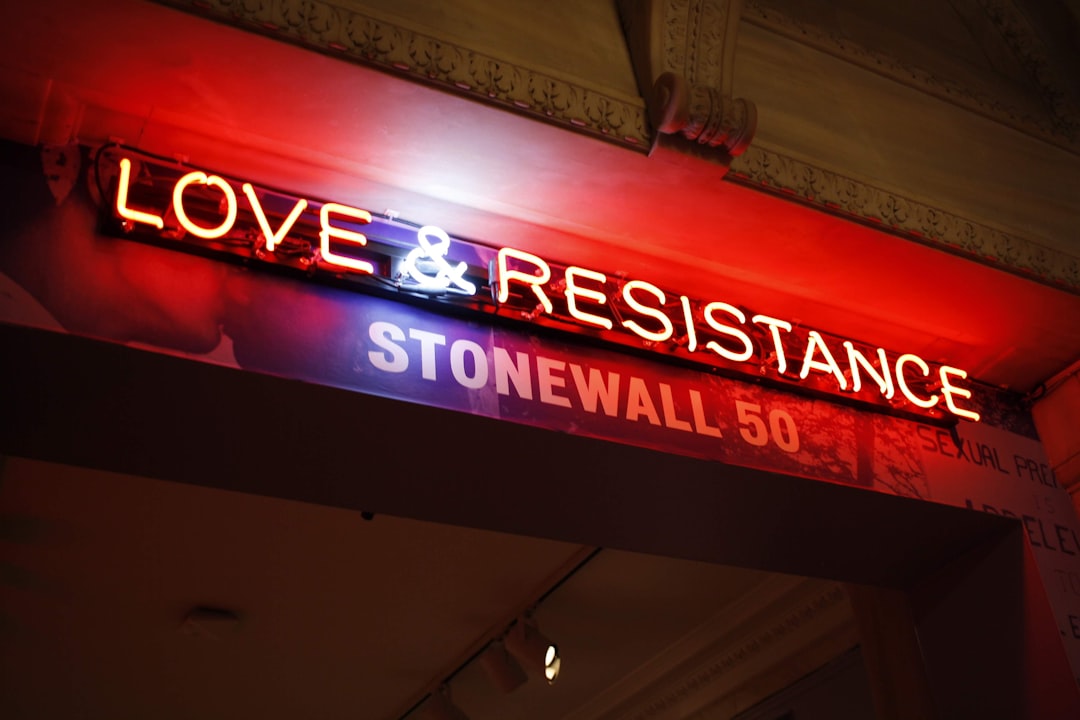
Pride Month: From Protest to Global Celebration
Pride Month is celebrated each June to honour the 1969 Stonewall Uprising in New York City, when LGBTQ+ patrons resisted a police raid at the Stonewall Inn. The uprising lasted several days and became a defining moment in the modern LGBTQ+ rights movement. One year later, the first Pride marches were held, transforming public protest into an annual call for visibility, dignity, safety, and equality. Today, Pride is marked around the world in many different ways. In Canada, the United States, and much of Europe, celebrations often include parades, festivals, concerts, flag-raisings, community events, and public education campaigns. In places such as Brazil, Mexico, South Africa, Japan, India, and Australia, Pride can blend celebration with activism, reflecting local histories, cultures, and legal realities. In countries where LGBTQ+ rights remain restricted or unsafe, Pride may take the form of smaller gatherings, private events, online campaigns, or human-rights advocacy rather than large public parades. What makes Pride powerful is that it is both celebration and protest. It recognizes progress, honours those who fought for change, and draws attention to the discrimination, violence, and legal barriers still faced by LGBTQ+ people in many parts of the world. For journalists, Pride Month offers a timely opportunity to explore history, human rights, culture, public policy, youth identity, corporate participation, faith communities, education, health, and the changing meaning of inclusion across borders. Connect with experts who can speak to the history of Pride, LGBTQ+ rights, identity, culture, and how communities around the world continue to mark this important month. Discover all of our experts here: www.expertfile.com

Georgia Southern University has named Jennifer Schroeder, Ph.D., as dean of the Jack N. Averitt College of Graduate Studies, effective July 1. Schroeder will lead efforts to expand graduate education, enhance student success and strengthen research and workforce alignment across the university. Schroeder joins Georgia Southern from East Texas A&M University, where she serves as dean of the Graduate School, supporting more than 3,000 graduate students across a wide range of programs. Throughout her career, she has focused on improving access to graduate education, strengthening academic programs and building systems that support student success. “Dr. Schroeder brings a strong record of leadership in graduate education and a deep commitment to student success,” said Avinandan Mukherjee, Ph.D., provost and executive vice president for Academic Affairs. “Her collaborative approach, experience in program innovation and focus on aligning graduate education with workforce needs make her an outstanding addition to Georgia Southern. I am confident she will play a key role in advancing our graduate and research programs and expanding opportunities for our students.” Schroeder is recognized for her ability to bring together faculty, staff and institutional partners to create new opportunities for students. During her tenure at East Texas A&M, she helped launch a master’s degree in artificial intelligence and worked across campus to enhance admissions processes, student support services and program development. Her background includes experience as a program coordinator, department head and dean, with academic training in school psychology. Her leadership reflects a commitment to access, quality and innovation in graduate education. “I am excited to begin this new chapter at Georgia Southern University,” said Schroeder. “I’m looking forward to working with faculty, staff and students to build on the university’s strong foundation and advance graduate education to expand opportunity, strengthen research and support student success.” Schroeder’s appointment marks a continued investment in graduate education at Georgia Southern, positioning the University to meet evolving student and workforce needs while strengthening its academic and research mission. Looking to connect with Jennifer Schroeder in person or virtually? Simply contact Georgia Southern's Director of Communications Jennifer Wise at jwise@georgiasouthern.edu to arrange an interview today.
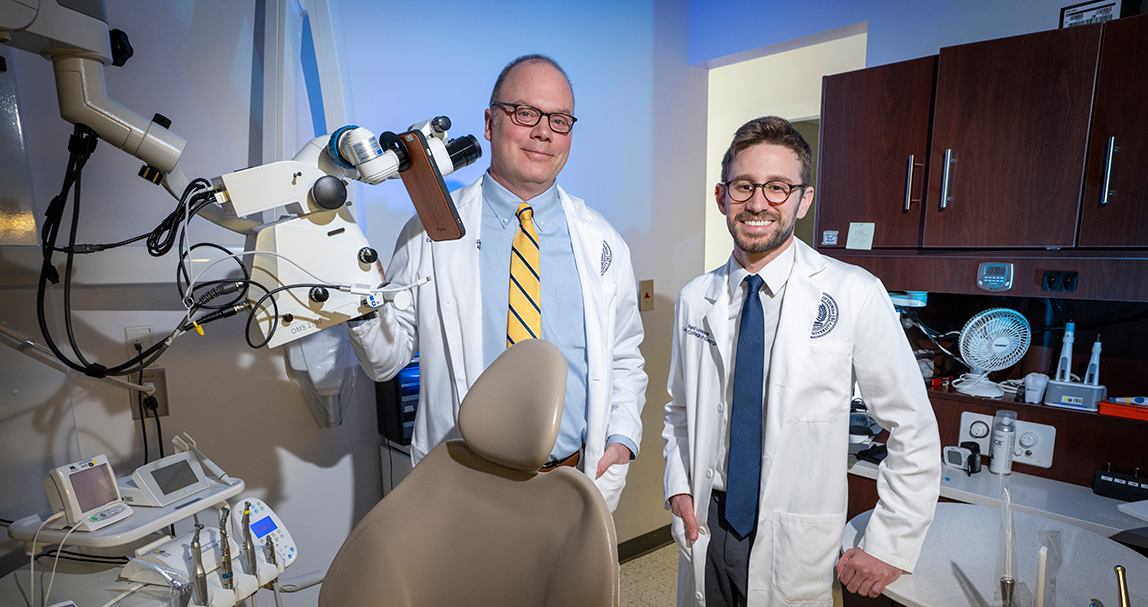
Beyond the Chair: How AI Is Transforming Modern Dentistry
A recently published article from Augusta University’s Jagwire is highlighting how artificial intelligence is rapidly changing the future of dentistry not only in patient care, but also in education, research and clinical decision-making. The article features insights from Theodore Ravenel and third-year dental student Reid Loveless, who discuss both the opportunities and risks associated with AI integration in the profession. Ravenel explains how AI-powered tools are already assisting dentists with cavity detection, orthodontic planning, bone-loss analysis, and treatment forecasting, while also helping researchers process enormous amounts of clinical data more efficiently. He also emphasizes the importance of ethical safeguards, patient privacy and ensuring that AI tools are trained using diverse and accurate datasets. “It is really reshaping dentistry and how we practice dentistry.” Theodore Ravenel, DMD Loveless offers the perspective of a future clinician learning in an increasingly technology-driven environment. He describes how AI-supported educational tools developed by faculty such as Rafael Pacheco are helping students navigate complex patient scenarios, receive immediate feedback, and strengthen clinical reasoning skills. The article also highlights emerging technologies being used at the Dental College of Georgia, including virtual reality simulators and AI chatbots that provide students with real-time evaluations of dental procedures. Researchers such as Zoya Kurago are also leveraging AI to analyze large-scale datasets tied to cancer and oral disease research. Despite the excitement surrounding these advances, the article stresses that AI is intended to support, not replace, human clinicians. Empathy, communication and patient trust remain essential components of quality care. To learn more about how Augusta University is preparing future dental professionals for an AI-driven healthcare landscape, contact Rafael Pacheco at rapacheco@augusta.edu.
