
Experts Matter. Find Yours.
Connect for media, speaking, professional opportunities & more.

Maureen Leffler, D.O., Named ChristianaCare’s Chief Wellbeing Officer
Maureen “Mo” Leffler, D.O., MPH, has been appointed chief wellbeing officer of ChristianaCare, effective Nov. 25. In her role, Leffler leads the ChristianaCare Center for WorkLife Wellbeing and strategies to enhance the professional fulfillment and well-being of ChristianaCare’s nearly 14,000 caregivers, overseeing advocacy programs and initiatives to optimize their experience and foster a culture of well-being throughout the organization. She works closely with leaders across key departments to address factors impacting caregiver well-being. Leffler most recently served as the inaugural chief wellbeing officer at Nemours Children’s Health, where she helped the organization to achieve the 2022 Joy in Medicine distinction from the American Medical Association for prioritizing proven efforts to enhance the professional fulfillment of physicians. There, she established a Center for Associate Wellbeing; led the first systemwide assessment to strategically address well-being and burnout; and implemented a peer support program and expanded the scope of resources available to support the emotional and mental health needs of employees. In collaboration with organizational leaders, she supported targeted clinical team assessments and systems-based interventions to foster well-being. Prior to this role, Leffler served as a pediatric rheumatologist at Nemours and as an assistant professor of pediatrics in the Division of Rheumatology at Thomas Jefferson University. Since 2017, Leffler has served as the course director of the Chief Resident Leadership Training Program for the Accreditation Council for Graduate Medical Education (ACGME). In response to the COVID-19 outbreak, she co-chaired ACGME’s National Task Force on Well-Being. She and her team developed a national graduate medical education well-being community, which she continues to convene, to understand the evolving challenges and share strategies to improve well-being. She represents the ACGME as a coach for the National Academy of Medicine Action Collaborative on Clinical Well-Being and Resilience. She also serves as a consultant to the Professional Satisfaction team at the American Medical Association. Leffler earned her medical degree from the Philadelphia College of Osteopathic Medicine, followed by a residency in pediatrics at Nemours and Thomas Jefferson University Hospital, where she served as chief resident. She subsequently trained in pediatric rheumatology at Nemours and Jefferson. She also earned a Master of Public Health from Temple University and studied chemistry at St. Joseph’s University. Recently, Leffler completed the Georgetown Executive Leadership Certification Program.


Study: Intuitive introverts lead the most successful teams
An unwritten law of leadership states the loudest voices in the room are not always the wisest. Some of history’s most notable and successful leaders were known introverts who wrangled loads of information for sizable teams: Abraham Lincoln, Bill Gates and Oprah Winfrey, to name a few. New research from the University of Delaware found introverted leaders who rely on intuition to handle this large bundle of information lead the most successful teams. The research, co-authored by professor Dustin Sleesman, explored the concept of intuition and when it's helpful for leaders who are in charge of large teams. Sleesman and his co-authors from Michigan State University studied more than 3,000 U.S. Air Force captains at a military base in Alabama. As part of their leadership training, the captains participated in a team-based battlefield simulation, which gave the researchers an opportunity to observe and analyze their behavior. Sleesman and his co-authors accurately predicted that teams performed better when their leaders were armed with high amounts of information. But they made two interesting findings they didn't expect: • Introverted leaders led more successful teams when intuitively handling large amounts of information. • Intuitive leaders, in general, led more successful teams when they had to handle a lot of information. "Introverted people tend to be more reflective, more introspective, they tend to be more observational than extroverted leaders," Sleesman said. "So pairing intuition with introversion tended to be very effective for team performance." Sleesman, an associate professor of management in UD's Lerner College of Business & Economics, studies the psychology of decision-making, negotiation and conflict resolution, as well as team effectiveness. To set up an interview, click on the link below.


The social media platform TikTok is on the verge of a U.S. ban—unless it can be stopped by President-elect Donald Trump. The policy will take effect on January 19, requiring that TikTok find a U.S. parent company or face a ban in the United States. This comes after concerns about user data falling into possession of the Chinese government and fears that they could use TikTok to spread misinformation. Derrick Green, communication expert at Cedarville University, has spoken about the motive behind this ban and why Trump may reverse it. Here are three key points from his recent interview: Trump has pointed out that he would not let TikTok be banned, if elected as president. How could he actually implement this and block this ban from taking effect? The President-elect used TikTok as a part of his campaigning strategy and found success on the app, this coming after he proposed to ban it in 2020. Did his use of TikTok influence his desire to save the app? The proposed ban of TikTok was based on national security and the mental health of young people in the United States. If TikTok was shut down in the United States, what would the effects be? If you are a journalist covering the TikTok ban or the effects of social media, our experts are here to help with all of your questions and stories. Derrick Green is the Chair of the Department of Communication at Cedarville University. Green is available to speak with the media regarding digital media and its effects. Simply click on his icon or email mweinstein@cedarville.edu to arrange an interview.


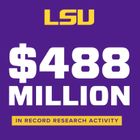
National Science Foundation Confirms Record Research Growth at LSU
The National Science Foundation confirmed LSU’s record research expenditures of $488 million in fiscal year 2023. This historic growth of 14% compared to 2022 was previously announced by LSU and represents top performance alongside research university peers such as the University of Kentucky and the University of Tennessee. The growth reflects increased research activity across the LSU Family—especially on the flagship campus and at LSU Health New Orleans and LSU Health Shreveport. The national ranking of LSU’s five research campuses—the flagship in Baton Rouge, the LSU AgCenter, Pennington Biomedical Research Center, and the two LSU Health campuses—increased from 71 to 69, a rise moderated by the average growth of U.S. research universities around 11%. Compared to its peers, LSU is a leader in win-win partnerships with state and local government, with strong and continued investment in research. LSU research adds an estimated $1.3 billion to the Louisiana economy each year. The numbers that were just confirmed by the National Science Foundation recognize LSU as especially strong in federally grant-funded research in life sciences, geosciences, math and statistics, and computer and information sciences. These strengths align with the data-driven research priorities of the LSU Scholarship First Agenda to create new solutions for agriculture, biomedicine, coast, defense, and energy. “This NSF report confirms our focus on research growth to meet the needs of the state as well as our dedication to LSU’s Scholarship First Agenda,” said Robert Twilley, LSU vice president of research and economic development. “The significant increase in federal grants to LSU and Louisiana represents growing investment in our competitiveness and capacity to solve problems for the state and nation.” Read the full NSF report: https://ncses.nsf.gov/surveys/higher-education-research-development/2023


The new device is designed to reduce the risk of injuries when medicines being delivered into a vein enter the surrounding tissues It detects this problem at the earliest stages, before it is visible to the human eye The project is being supported by SPARK The Midlands at Aston University, a network to support technology development for unmet clinical needs. Clinicians at Birmingham Women’s and Children's NHS Foundation Trust (BWC) have joined with academics at Aston University to create an innovative sensor to reduce the risk of injuries caused when drugs being delivered into a vein enter the surrounding tissue. This complication, called extravasation, can cause harm and, in the most severe cases, life-changing injuries and permanent scarring. It happens most often when infusing medicines into peripheral intravenous (IV) devices, such as a cannula, but can also occur when infusing into a central venous access device. By joining together, BWC and Aston University are combining clinical, academic and engineering expertise to create a sensor that can detect extravasation at its earliest stages. Karl Emms, lead nurse for patient safety at BWC, said: “We've done lots of work across our Trust that has successfully reduced incidents. While we've made fantastic progress, there is only so much we can do as early signs of extravasation can be difficult to detect with the human eye. “The next step is to develop a technology that can do what people can't - detection as it happens. This will make a huge impact on outcomes as the faster we can detect extravasation, the less likely it is that it will cause serious harm.” The focused work to date addressing the issue has recently been recognised by the Nursing Times Awards 2024, winning the Patient Safety Improvement title for this year. This new project is supported by SPARK The Midlands, a network at Aston University dedicated to providing academic support to advance healthcare research discoveries in the region. SPARK The Midlands is the first UK branch of Stanford University's prestigious global SPARK programme. It comes as a result of Aston University’s active involvement in the delivery of the West Midlands Health Tech Innovation Accelerator (WMHTIA) – a government-funded project aimed at helping companies drive their innovations towards market success. The SPARK scheme helps to provide mentorship and forge networks between researchers, those with technical and specialist knowledge and potential sources of funding. SPARK members have access to workshops led by industry experts, covering topics such as medical device regulations, establishing good clinical trials, and creating an enticing target product profile to engage future funders. Luke Southan, head of research commercialisation at Aston University and SPARK UK director, said: “I was blown away when Karl first brought this idea to me. I knew we had to do everything we could to make this a reality. This project has the potential to transform the standard of care for a genuine clinical need, which is what SPARK is all about.” Work on another potentially transformative project has also begun as the team are working to develop a medical device that detects the position of a nasogastric feeding tube. There is a risk of serious harm and danger to life if nasogastric tubes move into the lungs, rather than the stomach, and feed is passed through them. Emms explained: “pH test strips can usually detect nasogastric tube misplacement, but some children undergoing treatment can have altered pH levels in the stomach. This means this test sometimes does not work. “A medical device that can detect misplacement can potentially stop harm and fatalities caused by these incidents.” SPARK will bring together engineers, academics and clinicians for both projects to develop the devices for clinical trial, with a goal of the technologies being ready for clinical use in three to five years. Southan said: “BWC is one of our first partners at SPARK and we're really excited to work with them to make a vital impact on paediatric healthcare in the Midlands and beyond." Notes to editors About Aston University For over a century, Aston University’s enduring purpose has been to make our world a better place through education, research and innovation, by enabling our students to succeed in work and life, and by supporting our communities to thrive economically, socially and culturally. Aston University’s history has been intertwined with the history of Birmingham, a remarkable city that once was the heartland of the Industrial Revolution and the manufacturing powerhouse of the world. Born out of the First Industrial Revolution, Aston University has a proud and distinct heritage dating back to our formation as the School of Metallurgy in 1875, the first UK College of Technology in 1951, gaining university status by Royal Charter in 1966, and becoming the Guardian University of the Year in 2020. Building on our outstanding past, we are now defining our place and role in the Fourth Industrial Revolution (and beyond) within a rapidly changing world. For media inquiries in relation to this release, contact Helen Tunnicliffe, Press and Communications Manager, on (+44) 7827 090240 or email: h.tunnicliffe@aston.ac.uk About Birmingham Women’s and Children’s NHS Foundation Trust Birmingham Women’s and Children’s NHS Foundation Trust (BWC) brings together the very best in paediatric and women’s care in the region and is proud to have many UK and world-leading surgeons, doctors, nurses, midwives and other allied healthcare professionals on its team. Birmingham Children’s Hospital is the UK’s leading specialist paediatric centre, caring for sick children and young people between 0 and 16 years of age. Based in the heart of Birmingham city centre, the hospital is a world leader in some of the most advanced treatments, complex surgical procedures and cutting-edge research and development. It is a nationally designated specialist centre for epilepsy surgery and also boasts a paediatric major trauma centre for the West Midlands, a national liver and small bowel transplant centre and a centre of excellence for complex heart conditions, the treatment of burns, cancer and liver and kidney disease. The hospital is also home to one of the largest Child and Adolescent Mental Health Services in the country, comprising of a dedicated inpatient Eating Disorder Unit and Acute Assessment Unit for regional referrals of children and young people with the most serious of problems (Tier 4) and Forward Thinking Birmingham community mental health service for 0- to 25-year-olds. Birmingham Women’s Hospital is a centre of excellence, providing a range of specialist health care services to over 50,000 women and their families every year from Birmingham, the West Midlands and beyond. As well as delivering more than 8,200 babies a year, it offers a full range of gynaecological, maternity and neonatal care, as well as a comprehensive genetics service, which serves men and women. Its Fertility Centre is one of the best in the country, while the fetal medicine centre receives regional and national referrals. The hospital is also an international centre for education, research and development with a research budget of over £3 million per year. It also hosts the national miscarriage research centre – the first of its kind in the UK - in partnership with Tommy’s baby charity. For interview requests please email the Communications Team on bwc.communications@nhs.net



NYS Elected Officials Worry About Retribution
Meena Bose and Lawrence Levy were interviewed for the Newsday article, “NYS Democrats facing a red reality with Trump’s return to power.” New York Democrat officials worry that President-Elect Trump’s return to office may have consequences for federal aid, environmental and public health regulations, and immigrants and marginalized groups. “New York residents and those of others in blue states that again weren’t hospitable to Trump have to hope that he and his allies won’t declare a war of retribution,” said Dean Levy. “If nothing else, it could punish millions of Republicans who live in the same neighborhoods as the Democrats who voted against him.” Dr. Bose added that states have a better chance under the U.S. Constitution to push back on federal measures involving reproductive rights, but less legal authority to fight the White House or Congress on immigration and environmental issues that require national policies. Dr. Bose is a Hofstra University professor of political science, executive dean of the Public Policy and Public Service program, and executive director of the Kalikow Center for the Study of the American Presidency. Lawrence Levy is associate vice president and executive dean of Hofstra’s National Center for Suburban Studies.


Higher Education Enters the Ring
Why it matters Yesterday’s announcement that Linda McMahon is President-elect Donald Trump’s pick to lead the Department of Education ushers in a new era for universities and colleges. This signals a sharp pivot toward decentralization and pro-business policies, and it's expected that McMahon’s leadership will focus on dismantling traditional federal education structures, expanding school choice, and aligning education priorities with a business-first agenda. Higher education faces funding uncertainties, new accountability pressures, and the need to demonstrate its relevance in supporting economic growth. The Big Picture McMahon’s appointment reflects Trump’s broader strategy to reframe education policy in a way that prioritizes state control, entrepreneurship, and conservative cultural values. This will likely have significant consequences for higher education, including: Decentralization: Shifting control of education policy and funding to the states. School Choice Expansion: Redirecting public funds to private, religious, and homeschooling options. Economic Alignment: Pressuring institutions to support industry, small business, and workforce development through research, partnerships, and entrepreneurship/startup programs. Cultural Shifts: Rolling back policies on diversity, equity, and inclusion while emphasizing “patriotic” education. What’s at Stake Federal Funding Cuts: Threat: Research funding, Pell Grants, and other federal supports may face cuts. Reality Check: Congressional approval is required to eliminate funding streams like Title I, making complete federal withdrawal unlikely but changes and funding disruptions possible. Policy Shifts: Threat: Federal oversight will likely weaken, and policies favoring vocational and workforce-aligned education will likely put increased pressure on programs such as liberal arts. Universities will also likely face increasing pressure to align with ideological goals, such as restricting DEI (diversity, equity, and inclusion) initiatives. The new administration could wield considerable control over the school accreditation process, which has been seen by some to force ideological changes on campuses. There has been a movement to decentralize accreditation authority, reduce federal oversight, and align educational standards with conservative values. According to the Council for Higher Education, many of the ideas put forward focus on empowering states to authorize accrediting agencies and even serve as accreditors themselves, shifting control from federal to state governments. Action: Institutions must better identify their options amidst a rapidly evolving agenda at both the state and federal levels, develop strategies and secure the resources necessary. For instance, there are calls to prohibit accreditors from requiring institutions to implement Diversity, Equity, and Inclusion (DEI) policies. Institutions also need to understand what the implications of a more diverse accreditation landscape could be, with standards varying significantly across states, potentially affecting the uniformity and transferability of academic credentials nationwide. Reputational Risks: Concern: Growing public skepticism toward higher education undermines enrolment and support. Impact: Conservative narratives favoring alternatives like apprenticeships and other programs that support the economy and job growth will likely gain traction. Preserving Institutional Independence: Pressure: Universities face increased scrutiny of their course curriculum and research priorities that may be deemed ideologically contentious. Opportunity: Institutions must tangibly demonstrate their value to society. The more they can do to break down barriers between “town and gown” and counter the narrative that paints them as too expensive, elitist, and out of touch. Demonstrating Economic Impact: Need: Universities must showcase their role in driving economic growth through research, commercialization, and support for small businesses and entrepreneurs. Opportunity: Institutions should communicate their relevance in relatable ways that engage with businesses, emphasizing tangible contributions to research innovation and job creation as a positive return on investment that can be messaged to taxpayers. Key Questions for Higher Ed Leaders Funding: How can we diversify revenue streams and reduce reliance on federal support? Advocacy: How should universities engage state and federal leaders to protect their interests? Reputation: How can higher education rebuild public trust and counter skepticism? Relevance: How do we better communicate the value of university research and its role in supporting a pro-business agenda? Adaptation: Can institutions innovate by expanding industry partnerships, online education, and workforce-aligned programs? Implications of Project 2025 Project 2025 is a comprehensive initiative spearheaded by the Heritage Foundation, a conservative think tank, aiming to reshape the U.S. federal government through a conservative lens. Launched in April 2023, it serves as a strategic blueprint for a potential conservative administration, detailing policy proposals, personnel strategies, training programs, and a 180-day action plan. Analysis from the Brookings Institution states that "many proposals in Project 2025 would require an unlikely degree of cooperation from Congress, though others could be enacted unilaterally by a second Trump administration.” While we don’t know the full extent to which Project 2025 will be implemented, its agenda seeks to reshape federal agencies, including the Department of Education, with a significant impact on the sector. Key areas of focus include: Title I and Student Aid Proposals to give parents more control over federal funds could deprioritize public education. Tax Credits for School Choice Incentives to support private school tuition may shift K-12 pipelines, impacting university enrolment. Economic Realignment Universities will need to align with business priorities, emphasizing innovation, commercialization, and job creation. Diversity Equity & Inclusion Project 2025 explicitly calls for reducing federal spending on what it deems unnecessary or politicized initiatives, and DEI programs are likely to fall under this categorization. This could have wide-ranging impacts, including changes to school ranking systems that have a DEI component. Ranking bodies such as US News & World Report may need to adjust their methodologies to account for changes in diversity initiatives and data availability. With potential reductions in diversity-related data, rankings might place greater emphasis on other factors such as academic performance, faculty qualifications, and post-graduate outcomes. This also could extend to endowments, which direct funding toward diversity programs through scholarships and fellowships. For institutions that rely heavily on DEI as a cornerstone of their fundraising and donor relations strategies, they may experience reduced donor enthusiasm, particularly from philanthropic organizations or alumni committed to these causes. Regulatory Rollbacks There is the potential for significant changes to Title IX protections and federal loan forgiveness programs, creating legal and financial uncertainty. What Universities Can Do Now: Secure Funding Build relationships with private donors, businesses, and industry partners. Strengthen advocacy efforts at the state level to safeguard funding & other resources. Adopt proactive strategies to mitigate potential policy impacts, such as diversifying revenue sources, engaging donors with aligned government priorities, and ensuring compliance with evolving regulations. Reinforce Public Trust Explain complex topics in accessible ways to help the public and policymakers make informed decisions. Help promote and support faculty who can serve as credible sources for the media, countering misinformation and fostering informed dialogue. Strengthen community connections with your experts through public speaking engagements, workshops, and local events. Position the university as a hub for knowledge and innovation that benefits the community. Capitalize on the reach and influence of alumni. Highlight their successes to show how they benefitted from educational programs and research. Position them as important role models and advocates in the community who are contributing to economic growth. Demonstrate Relevance Showcase faculty and their research breakthroughs. Demonstrate how their work benefits industries, supports entrepreneurship and addresses societal challenges. Speak to real-world outcomes in health, technology, the environment, and more. Use accessible language to connect with policymakers, business leaders and taxpayers. Strengthen Advocacy: Partner with peer institutions to shape policy discussions. Position universities and colleges as vital contributors to a pro-business agenda. Innovate: Expand stackable credentials and micro-credential programs that are aligned with private and public sector requirements and emerging skills-based models. Look at new online education options. Embrace partnerships that connect academic research to real-world economic impact. Universities must deliver a more compelling, data-driven, yet humanized story about their institution’s contributions, fostering stronger relationships with government, the private sector, and taxpayers. What's Next This new era will most certainly challenge higher education to rethink its approach to funding, policy, and public engagement. For all institutions, both public and private, there is no place to hide. As they step into the ring, Higher Education leaders will need lots of support as they look to forge new paths for research, teaching, and community service while engaging their stakeholders in ways that more powerfully communicate their vital contributions to society. The bell has rung—are you ready?



Holiday shopping season set to begin with questions about Black Friday, consumer behavior
Is Black Friday still a thing? Online sales have been outpacing brick-and-mortar sales for years, resulting in shorter lines and less of a frenzy at stores on the day after Thanksgiving. Many stores have also gone online with deals to compliment in-person shopping. University of Delaware experts can comment on this and other topics related to the holiday shopping season and gift-buying behavior. Andong Cheng: Can provide tips on what to prepare for during this unique holiday shopping season. Her research focuses on defining and identifying the picky consumer segment, and explores how pickiness impacts other judgments and decisions. She advises consumers to consider the phenomenon of double mental discounting, where shoppers experience a “mental accounting phenomenon” when offered promotional credit. Jackie Silverman: Research examines several facets of judgment and decision making and consumer psychology. According to Silverman, there are many potential benefits of online shopping for consumers, including some unconventional approaches to gift giving this season. Philip Gable: Can talk about the science behind the art of gift-giving that goes beyond the material exchange — emotional nuances that also can be applied to charitable work and philanthropy. He says that significance contributes to the happiness we experience in gift-giving. Matthew McGranaghan: Studies the economics of consumer attention and the indirect effects of marketing interventions. He explains that there is a difference in how businesses are innovating and utilizing online retail methods to connect with consumers this holiday season. Bintong Chen: Can discuss the systematic nature of supply chain issues. He recommends shoppers use major retailers like Amazon and Walmart, whose companies use their own shipping fleets to minimize disruptions. Caroline Swift: Examines supply chain transparency and the interactions between regulation and business performance.


The Anxiety of Election Season
After the results of the U.S. presidential election were announced, many Americans celebrated. But many voters instead found only stress and anxiety. After an election of rhetoric that foretold the end of democracy if the opposing candidate won, there seems to be a unique amount of post-election stress. How did election rhetoric affect this outcome, and can we expect future elections to cause this same stress? Political expert, Dr. Mark Caleb Smith, discussed the anxiety that many Americans felt even before the election and how it can be dealt with moving forward. Here are some key takeaways from his recent interview: This election cycle caused so many Americans to lose sleep that the term "electsomnia" was coined. Has the anxiety of election season always been present, or has the presence of social media paved a way for this problem? Constant access to information about the election is a probable reason for many voters' anxiety. How can Americans keep themselves informed without causing unnecessary damage to their mental health? This is not the first complicated or difficult election that the United States has faced. Now that this election season is over, how can Americans—both those who are satisfied and those who are frustrated by the results—move forward while recognizing that politics does not define them? If you are a journalist covering the election results and voters' responses, our experts are here to help with all of your questions and stories. Dr. Mark Caleb Smith is the Director of the Center for Political Studies at Cedarville University. Mark is available to speak with the media regarding election emotions and the election results. Simply click on his icon or email mweinstein@cedarville.edu to arrange an interview.


Is America Not Ready for a Woman President?
Newsday interviewed Dr. Meena Bose for the article, “After Kamala Harris loses, is America just not ready for a woman to be president? Experts say it’s not that simple.” Dr. Bose said that while gender may have played a role in Harris’ defeat, it’s the “not the dominant explanation” for Trump’s victory. “I don’t think that 2024 is a referendum on whether a woman can be president,” she said. “That’s not the dominant message here. The dominant message really is the economy and immigration. And for multiple reasons, the Democratic agenda was less persuasive to voters than the Republican agenda.” Dr. Bose is a Hofstra University professor of political science, executive dean of the Public Policy and Public Service program, and executive director of the Kalikow Center for the Study of the American Presidency.