
Experts Matter. Find Yours.
Search experts on 50,000+ topics. Or browse by topic category.
- Recent Searches


Featured
Global experts with a broad range of areas of expertise.





Connecting credible expert sources & academic research
ExpertFile is a trusted resource for journalists, industry, funding agencies and government policymakers looking for fresh perspectives and innovative academic research.


Spotlights
Read expert insights on a wide variety of topics and current events.

Having property insurance is one thing. Understanding what it covers is another. CAA Insurance Company has released a new Property Insurance Guidebook to help Ontario homeowners, condo owners and renters better understand property insurance, including what different types of coverage mean, questions to ask about their policy and what to consider before making a claim. “Insurance is there to help protect the places and belongings that matter to us, but understanding a policy can sometimes feel overwhelming,” says Elliott Silverstein, Director of Government Relations, CAA Insurance Company. “This guidebook gives Ontarians a practical starting point so they can ask informed questions and have more confident conversations with their insurance agent or broker.” What does property insurance cover? Coverage varies by policy, but common property insurance concepts include dwelling coverage, detached structures, personal belongings or contents, and additional living expenses. The CAA Insurance Property Insurance Guidebook explains these and other common insurance terms in clear, everyday language. What Ontario consumers can learn from the Property Insurance Guidebook The guide provides plain-language information to help consumers understand: Common property insurance terminology Coverage considerations for homeowners, condo owners and renters How replacement value differs from market value How renovations may affect insurance coverage What to consider before a property insurance claim Questions to ask an insurance agent or broker Understanding your property insurance before making a claim Consumers should not wait until they need to make a property insurance claim to learn what their policy covers. Understanding the basics of a policy ahead of time can help consumers identify questions about their coverage and reduce the chance of unexpected surprises. Updated guide helps Ontario drivers navigate auto insurance CAA Insurance has also updated its Auto Insurance Guidebook with information about changes to auto insurance in Ontario. Originally introduced in 2022, the guidebook takes a back-to-basics approach to common auto insurance terms and helps Ontario drivers have more informed conversations about their policies and coverage needs. “Whether someone is protecting their home, condo, apartment or vehicle, they should feel comfortable asking questions about their coverage,” adds Silverstein. “These guides are designed to make insurance information more approachable, so consumers can make informed decisions based on their individual needs.” The guidebooks are educational resources and are not intended to replace the expertise of a licensed insurance agent or broker or provide advice about an individual policy. Consumers with questions about their coverage should speak directly with their insurance representative. Both the Property Insurance Guidebook and Auto Insurance Guidebook are available for download through the CAA Insurance website.


Why Does a Phone at Thanksgiving Dinner Sting So Much? New Study Points to Belonging
A study published Oct. 29 in NeuroImage found that a glance at a phone stung more when it came right after a warm welcome. Eli Singer, founder of Offline.now, says that is exactly the setting of a holiday dinner. What the study found Researchers call it phubbing, short for phone snubbing. A team at Chongqing Normal University ran two lab experiments with 213 people (Shi and colleagues, NeuroImage, 2026). After a warm welcome, a glance at a phone left people feeling more neglected and less willing to keep talking. Their brains reacted more strongly too. The authors suggest warmth raises the expectation of attention. These were lab tasks, not real dinners. "Thanksgiving is set up to make people feel welcome. A phone right after that welcome can feel like a small rejection, even if you're only checking a score." Eli Singer, founder of Offline.now Plan it before people arrive Singer's advice is to agree on phones ahead of time, so nobody is surprised at the table. Ask your guests what would work for them before the day. Send a short note in advance: phones go away for the meal. Put a basket by the door for anyone who wants to drop their phone when they walk in. Take the photos before everyone sits down. Offline.now's piece on phubbing in quiet family moments looks at why people reach for the phone when the conversation pauses. "Ask for one meal without phones. It's a small promise, and a family that keeps it once is more likely to try it again." Eli Singer Parents set the pattern. A 2026 review of 22 studies found the phubbing habit tends to pass between family members (Jakhar, Gupta and Vyas, Acta Psychologica). "If you want the kids off their phones at dinner, put yours away first, where they can see you do it." Eli Singer Where to start Lasting change runs on confidence, not willpower. Two questions find your starting place: Find Your Starting Place. Every family is different. Use what fits and consider professional support if conflict or distress feels severe. About the expert Eli Singer is the founder of Offline.now, a directory of therapists and coaches who work on screen and phone use. He created the Offline.now Matrix and wrote Offline.now: A Practical Guide to Healthy Digital Balance. He is available to comment through Thanksgiving: eli@offline.now, or the Contact button below. The study: Shi J, Huang R, Yu J, et al. Does Phubbing Always Elicit Social Pain? The Role of Belonging Context. NeuroImage, Oct. 29, 2026. doi:10.1016/j.neuroimage.2026.122325



Got Expertise to Share?
ExpertFile works with leading organizations with trusted experts. We help make their expertise more discoverable, structured, and actionable for AI-driven discovery, strategic outreach, and real-world opportunities.

How Electric Vehicles Could Power Homes and Support the Electric Grid
University of Delaware researchers Willett Kempton and Rodney McGee are advancing technologies and standards that allow electric vehicles to send electricity back to homes and the power grid. Known as vehicle-to-grid (V2G) technology, this approach could help consumers manage electricity costs, provide backup power and improve grid reliability. Kempton pioneered vehicle-to-grid research at the University of Delaware nearly three decades ago, helping establish the foundation for using electric vehicles as mobile energy storage systems. McGee chaired the development of SAE J3068, an automotive communications standard that supports more affordable bidirectional charging. As automakers, including Ford, move toward bringing bidirectional power technology to more affordable electric vehicles, Kempton and McGee can explain how it works, what it means for consumers and utilities, and how it could shape the future of transportation and energy. Areas of Expertise • Electric vehicles • Vehicle-to-grid (V2G) technology • Bidirectional charging • Energy storage • Electric power grids • Automotive engineering • Renewable energy • EV charging standards To connect with Kempton directly and arrange an interview, visit his ExpertFile profile and click on the "contact" button. Interested journalists can also email MediaRelations@udel.edu to email Kempton or McGee.


Cuba Opens the Door to Tourism Investment - But Will Anyone Walk Through?
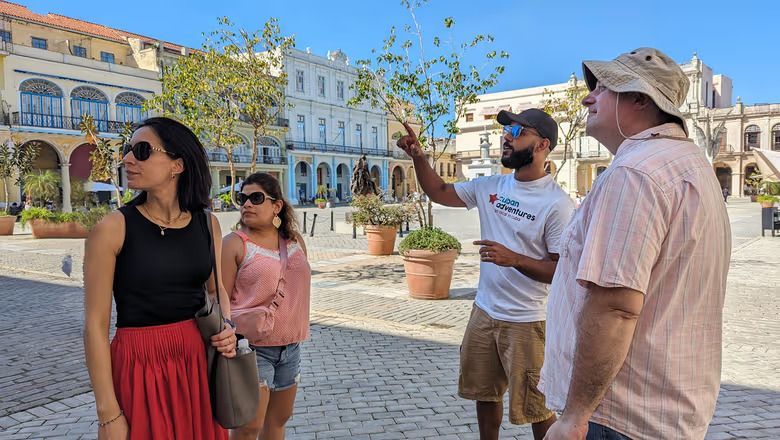
Cuba is making a significant move to revive its struggling tourism industry, opening the door to foreign investment, private hotel ownership and greater participation by independent businesses. But will these changes be enough to bring tourists and investors back to the island? That's the question being examined by Dr. Paolo Spadoni, associate professor of political science at Augusta University, in a recent Travel Weekly article titled Experts laud Cuba reforms but don't see quick travel rebound, published Oct. 26. The reforms would allow hotels to become fully foreign-owned and private businesses to operate travel agencies, tour companies and car rental services. While the changes represent a departure from Cuba's traditionally state-controlled tourism model, Spadoni cautions that the economic and political environment remains a major obstacle. Paolo Spadoni, a recognized authority on Cuba's political economy and co-author of the 2025 book The Cuban Tourism Industry: Evolution, Challenges and Prospects, told Travel Weekly that the reforms are necessary but arrive at a particularly difficult moment. View his profile They want to change the model, which is, I think, a good thing to do, but the conditions are not there now to actually reap the benefits,” Spadoni told Travel Weekly. He also warned that attracting substantial foreign investment remains unlikely under current conditions, pointing to the departure of international hotel operators, declining visitor numbers and continuing U.S. economic restrictions. Spadoni noted that U.S. tourist arrivals between January and August were just 9.9% of their levels during the same period in 2019. He also explained that Cuba's state-controlled tourism model was showing signs of exhaustion even before the pandemic. His analysis raises important questions about the future of one of Cuba's most important industries, the potential for private-sector growth and whether economic reforms can succeed without broader changes in U.S.-Cuba relations. For journalists covering international tourism, foreign investment, economic reform or U.S.-Cuba relations, Dr. Spadoni offers timely insight into the challenges facing Cuba and what it will take to rebuild its tourism economy. An internationally recognized expert on Cuba, Spadoni specializes in Latin American political economies, international relations, foreign investment and U.S.-Cuba relations. To arrange an interview or connect with Dr. Paolo Spadoni, visit his ExpertFile profile below.


Rising Measles Cases Put Public Health Communication in Focus
The continued spread of measles is drawing attention to both disease prevention and how health officials explain risks to the public. The Centers for Disease Control and Prevention reported 4,852 confirmed U.S. cases through October 29, more than twice the 2,289 cases recorded during all of 2025. With 96% of this year’s cases associated with outbreaks, the figures underscore the importance of helping communities understand how the disease spreads and who faces the greatest risks. Measles spreads through the air and can cause complications including pneumonia and brain inflammation. Young children, pregnant women and people with weakened immune systems are among those at higher risk of severe complications. The CDC identifies vaccination as the best protection, with two doses of the measles, mumps and rubella vaccine approximately 97% effective at preventing measles. Communicating those facts clearly gives families a foundation for discussing their circumstances with health professionals. The communication challenge extends beyond publishing case totals. Families need understandable explanations of what an exposure means, how local conditions affect their risk and where to turn with questions. Effective outreach must also distinguish established evidence from uncertainty, acknowledge concerns respectfully and explain the reasoning behind recommendations. Those tasks become particularly consequential when people encounter conflicting claims about the same disease. How can health professionals communicate urgency while building trust? Dr. Zach Jenkins, professor of pharmacy practice at Cedarville University, has training and clinical experience in infectious diseases and has helped community stakeholders, policymakers and media outlets understand public health issues. His background provides a relevant perspective on explaining outbreak risks and translating medical evidence into information families can use.


Diabetes Awareness Month: Why Early Action Could Change Millions of Lives
World Diabetes Day is Nov. 14 and the theme for 2026-2027 is Early Action. Worldwide, one out of nine adults are currently living with diabetes and in the United States, over 40 million people have diabetes. However, many people are undiagnosed and remain aware of their risk of diabetes. Currently, 635 million adults worldwide are at high-risk for diabetes and 12 million persons in the United States are undiagnosed. Undoubtedly, we have a lot of work to do. Early action and prevention are key in the fight against the epidemic of diabetes. Early action "accelerates care, reduces the risk of diabetes, and leads to better health for all." As a nurse for the past 40 years, I have provided care for countless people living with type 2 diabetes. I have witnessed the struggles of people living with diabetes and the many associated complications that can occur. Diabetes can be a very devastating disease, but I am hopeful that there are new emerging treatment options for diabetes, such as GLP-1 medications, and new user-friendly technologies, including the use of continuous glucose monitoring. Lynn Glenn's research and practice promotes high quality, equitable health care and enhanced outcomes in underserved, diverse communities. View her profile Since being at Augusta University, I have focused my efforts on diabetes prevention in younger adults and rural populations. I have developed an adaptation of the Diabetes Prevention Program that incorporates flexibility and socioecological needs amidst competing priorities in young adulthood. My objectives also include improving access to screening and early detection of diabetes which have been implemented in several community events and health fairs, as well as other non-traditional settings. I have addressed the need for enhanced access for persons at high-risk for diabetes, such as Hispanic populations, at the annual AU College of Nursing Costa Layman International Health Outreach Fair and diabetes screening of Hispanic adults at the Dental College of Georgia. Most recently, I am working in partnership with Georgia Center for Diabetes Translational Research at Emory University to advance the science of diabetes prevention research. For Diabetes Month in November, TAKE ACTION and consider the following: Increase awareness of diabetes risk with friends and family members. Know your risk factors for diabetes and take the diabetes risk test. Approximately 115 million people and more than 42% of adults 18 years and older have prediabetes and at high for developing diabetes in the future. Encourage others to get diabetes screening. Almost one-third of adults with diabetes are undiagnosed or unaware of their condition. With the latest recommendations, more than 11 million adults are now eligible for diabetes screening. All adults aged 35 years and older should undergo screening for prediabetes and diabetes annually. Regardless of age, adults should undergo screening for prediabetes and diabetes if they have risk factors such as being overweight/obese, family history of diabetes, history of gestational diabetes (diabetes in pregnancy), or history of high blood pressure or hear disease. Participate in or organize a community-based screening for diabetes. Local events are an easy, non-threatening alternative to traditional health care office visits to receive preventive screenings. Advocate for increased awareness, screening, and early detection of diabetes in your local community. Increase equitable access to healthy food and physical activity at home and work. There is strong evidence that a healthy lifestyle has numerous benefits, such as prevention of cancer, diabetes, and other chronic conditions. We spend a large proportion of time outside the home, yet our workplace environments may not be conducive to our health, such as prolonged sitting time, inadequate time or access to healthy meals, and a high burden of stress. Try to make healthier choices, such as less sitting time, eating healthier meals and snacks, and having quick exercise "snacks" at work. More research is needed to understand how healthy workplace environments can have a positive impact on health outcomes. Please help support people at risk or living with diabetes and TAKE ACTION! Connect with an Expert Dr. Lynn Glenn, PhD, MSN, of Augusta University's College of Nursing, is available to speak with media about diabetes prevention, early detection, emerging treatments and the importance of expanding access to screening, particularly among younger adults, rural communities and underserved populations. To arrange an interview or learn more about her research, click Dr. Lynn Glenn's ExpertFile profile below.


How Do You Follow Election Night Without Doomscrolling Until 3 a.m.?
The 2026 US midterm elections are Tuesday, Nov. 3, and some close races may not be called for days (NPR). Eli Singer, founder of Offline.now, says the hardest part for most people will be the night itself. "People have been in this news cycle for months. They've seen the ads and had the hard conversations, at home and at work. On both sides, people feel their future is at stake. A strict phone rule for one night won't hold up against that." Eli Singer, founder of Offline.now What the research says Election stress shows up in sleep. In a study of the 2020 presidential election, 437 people in the US reported on their sleep every day before and after the vote (Cunningham and colleagues, Sleep Health, 2022). Election Day brought less sleep and more stress, and disrupted sleep that night went along with changes in mood. It was a volunteer sample, so it may not match the country as a whole. The worry starts early. In a 2024 survey of 2,006 US adults, 46% said they had lost sleep worrying about the presidential election (American Academy of Sleep Medicine, 2024). Make a plan you can keep Singer's advice is to decide the shape of the night ahead of time, ideally with someone else. Talk it through with someone in your house before the polls close. Pick the point when you accept you won't know until morning. Plan something for the evening besides the phone, like a walk. Decide how you'll wind down. You'll be keyed up, and sleep will be harder than usual. Keep the phone out of the bedroom if you can, and set an early alarm to check the results. Offline.now's guide to doomscrolling covers the daytime habits that make a night like this easier. "Election night asks for the most self-control at the hour you have the least. Make your plan at dinner, while you're still thinking clearly." Eli Singer "The results will be there in the morning. Waking up early to check them is a perfectly good plan." Eli Singer Where to start Lasting change runs on confidence, not willpower. Two questions find your starting place: Find Your Starting Place. If election stress feels persistent or overwhelming, a qualified professional can help you tailor support. About the expert Eli Singer is the founder of Offline.now, a directory of therapists and coaches who work on screen and phone use. He created the Offline.now Matrix and wrote Offline.now: A Practical Guide to Healthy Digital Balance. He is available to comment this week on election-night phone use and news stress: eli@offline.now, or the Contact button below.
Georgia's Health Warning: New Report Reveals Troubling Gaps in Care and Well-Being
How healthy is Georgia? A new report from Augusta University reveals some troubling answers, with the state ranking among the nation's poorest performers in several important measures of health and well-being. The 2026 Healthy Georgia: Our State of Public Health report, released by Augusta University's School of Public Health, examines 31 health indicators, offering a comprehensive picture of the challenges facing residents across the state. Biplab Datta, PhD, assistant professor in the Department of Health Management, Economics, and Policy and the report's lead analyst, identifies healthcare affordability, kidney disease, loneliness and substance misuse as particularly concerning issues. View his profile A State Facing Serious Health Challenges Among the report's findings, Georgia ranks 48th in healthcare affordability, seventh highest in kidney disease prevalence and second highest in loneliness. The state also faces significant challenges involving mental health, opioid misuse and access to dental care. Datta emphasized that affordability and social isolation deserve particular attention because of their consequences for individual and community health. The findings also reveal a persistent divide between rural and urban communities. Rural Georgians experience higher rates of cigarette smoking, vaping, chronic obstructive pulmonary disease, cardiovascular disease and kidney disease. Beyond the Numbers The report highlights the interconnected nature of Georgia's public health challenges. Limited access to affordable care, geographic disparities and social isolation can complicate efforts to improve health outcomes. While Georgia has maintained comparatively low rates of heavy drinking and made progress on annual wellness visits, the findings suggest that substantial work remains to address health inequalities. Now in its fifth edition, the Healthy Georgia Report provides policymakers, health professionals and community leaders with data to guide decisions about prevention, access to care and public health priorities. “Healthcare affordability and dental visit rates were persistently lower in Georgia in the last five years,” Datta said. “Prevalence of kidney disease has been increasing nationally, but the gap between Georgia and the rest of the nation remains persistent. While some declining trends in child asthma have been observed, Georgia prevalence remained persistently higher than the national and regional averages.” An Expert Voice on Public Health As Georgia confronts rising healthcare costs, rural health disparities and growing concerns about mental well-being, Datta offers valuable expertise on the economic and policy dimensions of public health. His work provides important context for journalists examining healthcare affordability, chronic disease, health disparities and the challenges facing communities across Georgia. Biplab Datta, PhD, is available to speak with media about the findings of the 2026 Healthy Georgia Report and their implications for the state's public health priorities. To connect with Datta or arrange an interview, click on his profile below.


Manufacturing Gains Highlight the Tension Between Growth and Rising Costs
U.S. manufacturing activity strengthened in October, offering an encouraging sign for the economy while highlighting continued pressure on business costs. The Institute for Supply Management’s report released November 2 showed its manufacturing index rising to 55.5 from September’s 54.5. A reading above 50 indicates expansion. Production accelerated, but manufacturers also reported rising input prices and slower supplier deliveries, illustrating why stronger factory activity does not necessarily bring immediate relief from inflation. The report’s pricing measure declined from September but remained well above the threshold indicating increasing costs. That distinction matters: fewer manufacturers reporting price increases does not mean the materials they purchase have become cheaper. Survey respondents also described uncertainty surrounding pricing, trade policy and delivery times. Together, those pressures can complicate decisions about purchasing equipment, adding employees and committing to long-term contracts, even when orders remain strong. For consumers, the question is how businesses respond. Manufacturers facing higher expenses may absorb some costs through lower profit margins, seek more efficient production methods or pass increases along to customers. Stronger production could help meet demand, but its effect on affordability depends partly on whether supply keeps pace and cost pressures ease. These developments raise a broader question: How much can manufacturing grow before rising expenses begin to limit its gains? Dr. Jared Pincin, associate professor of economics at Cedarville University, brings relevant expertise to examining how business costs, consumer prices and economic policy interact—and why encouraging production figures can coexist with financial strain.
